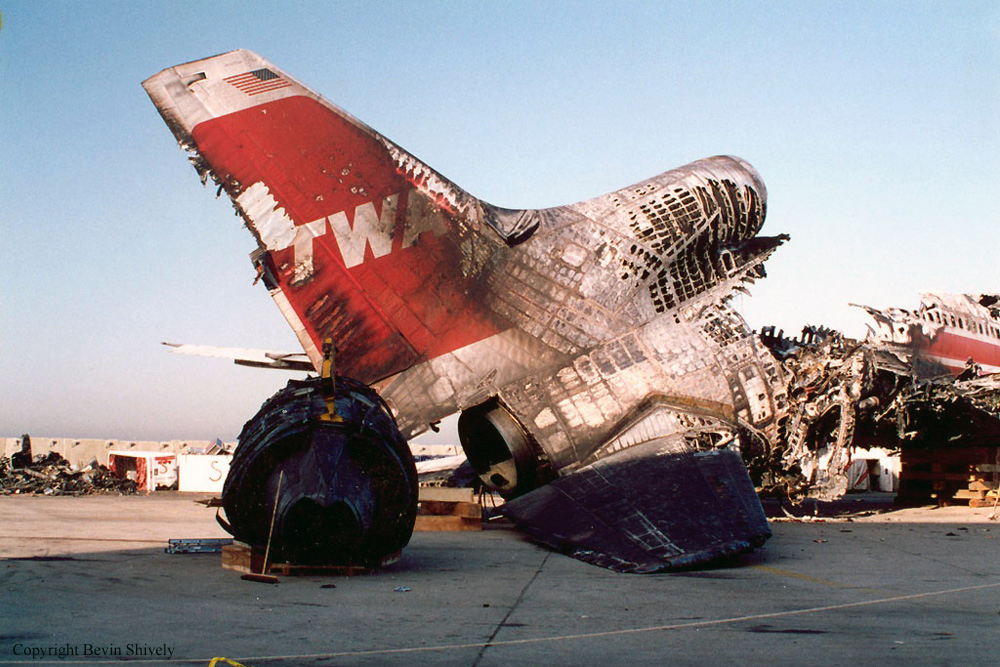
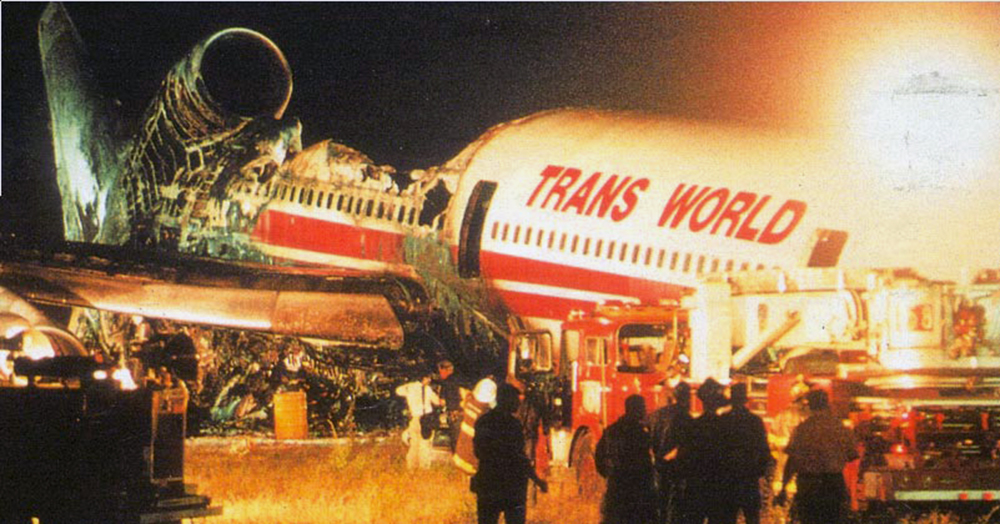
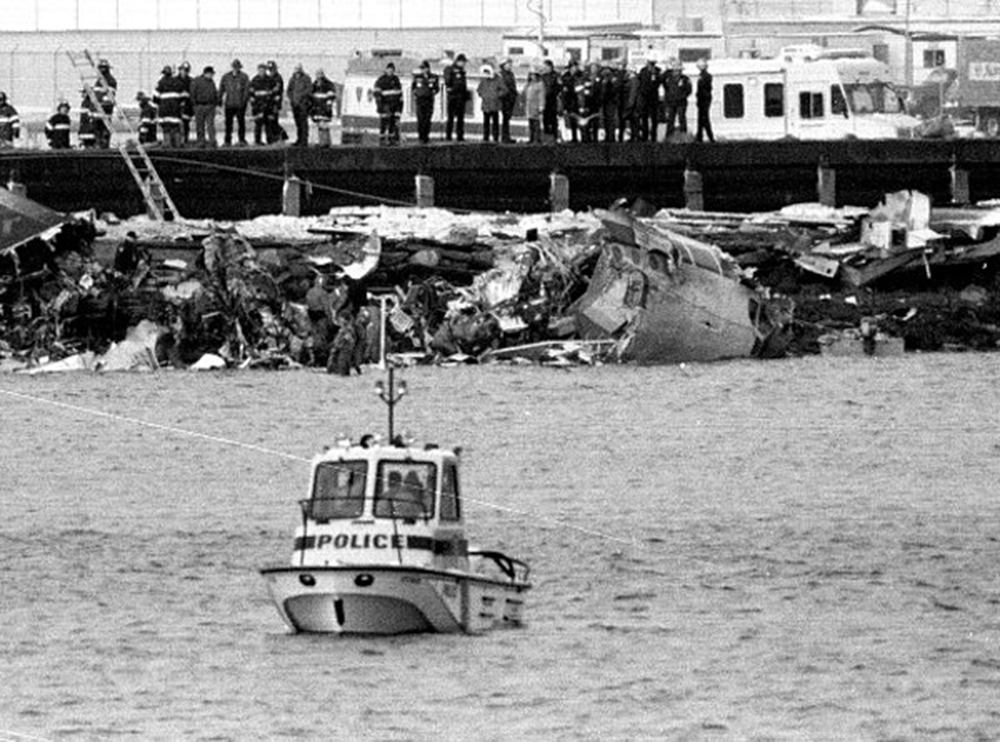
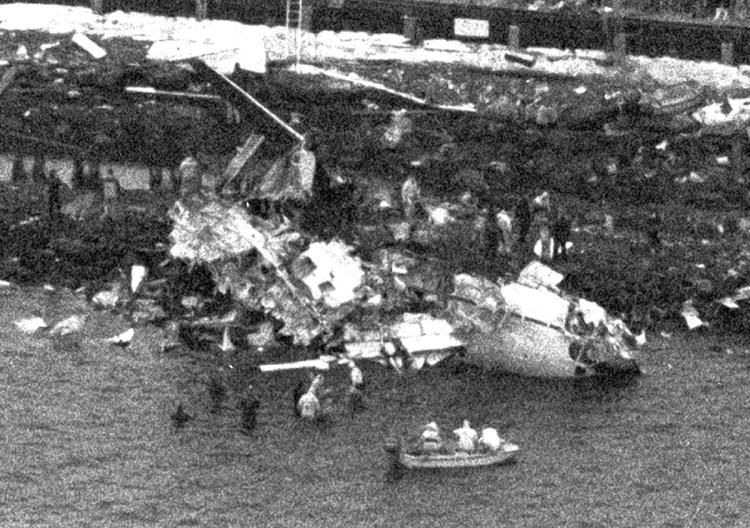
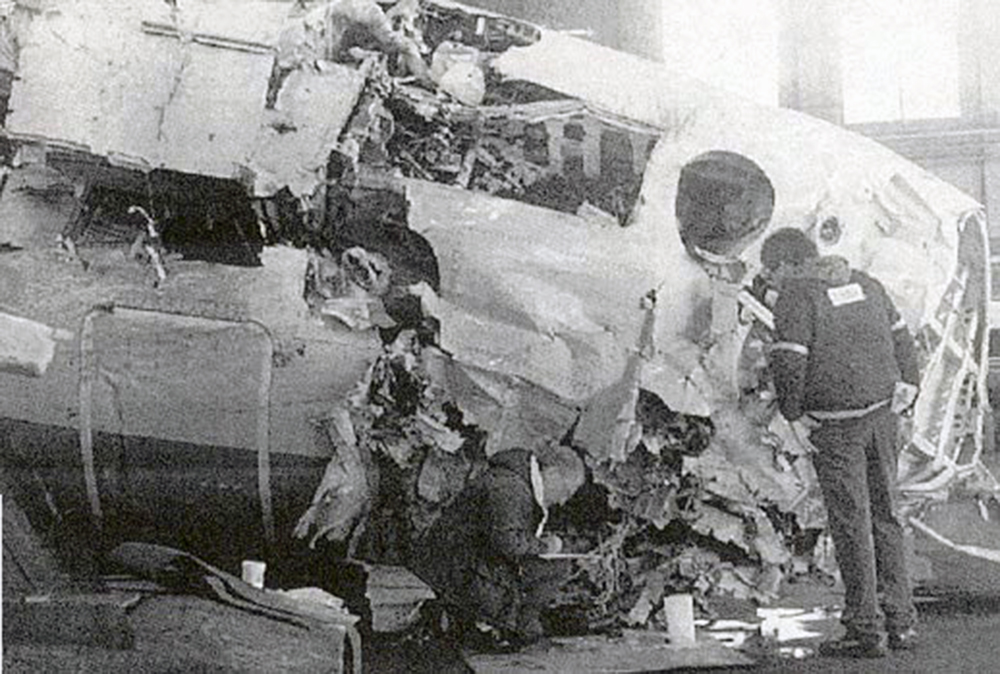
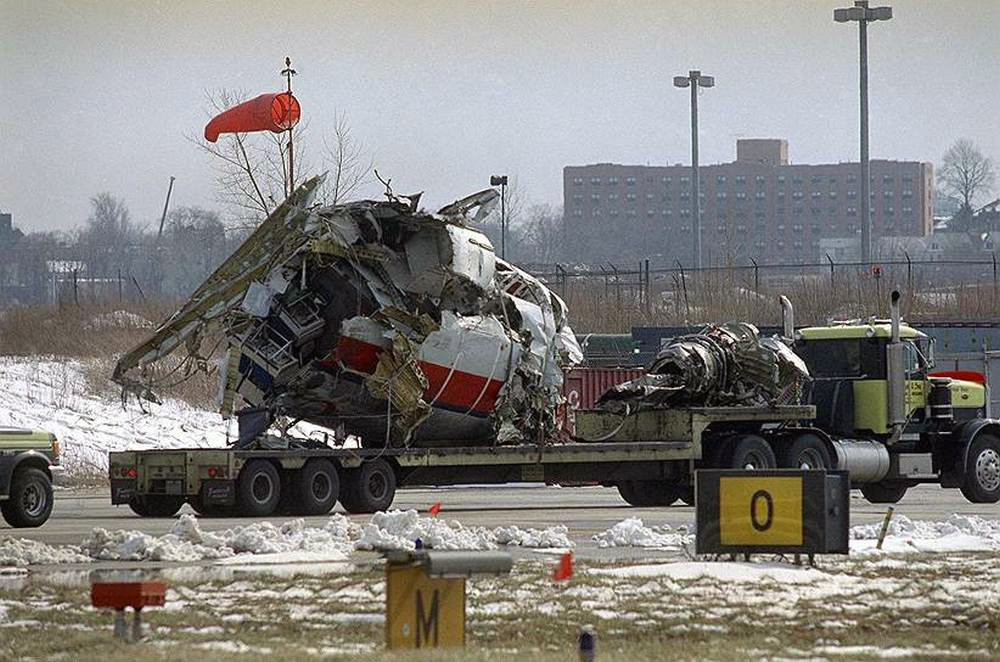
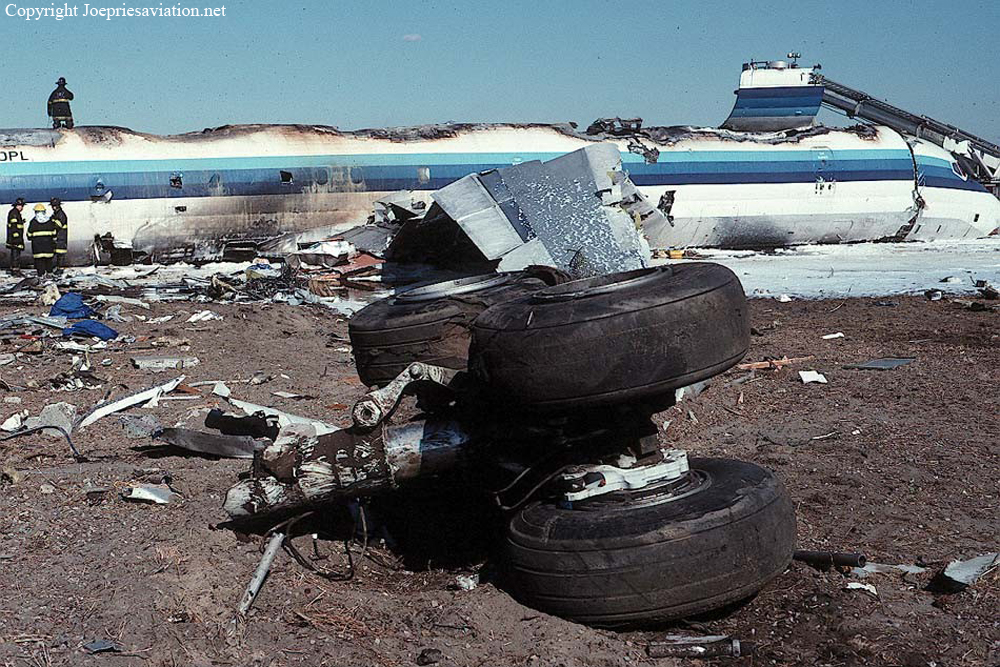
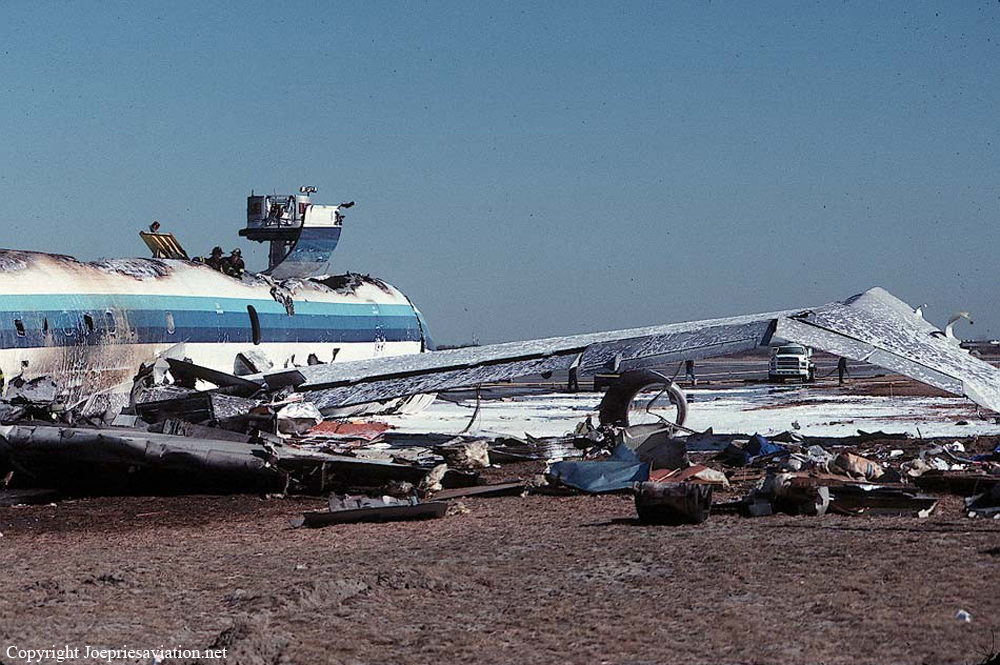
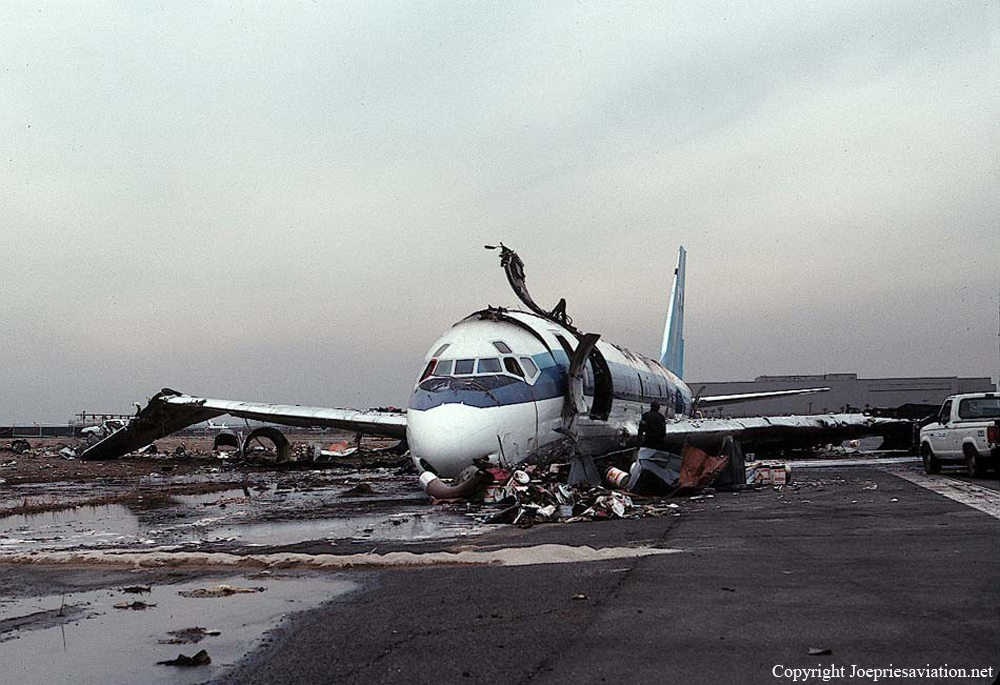
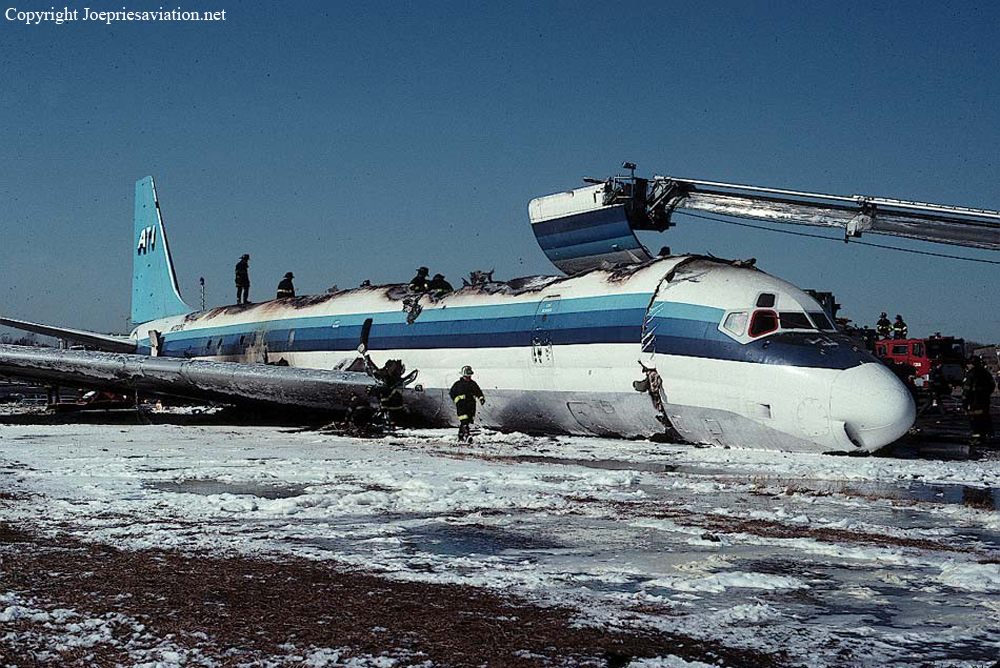
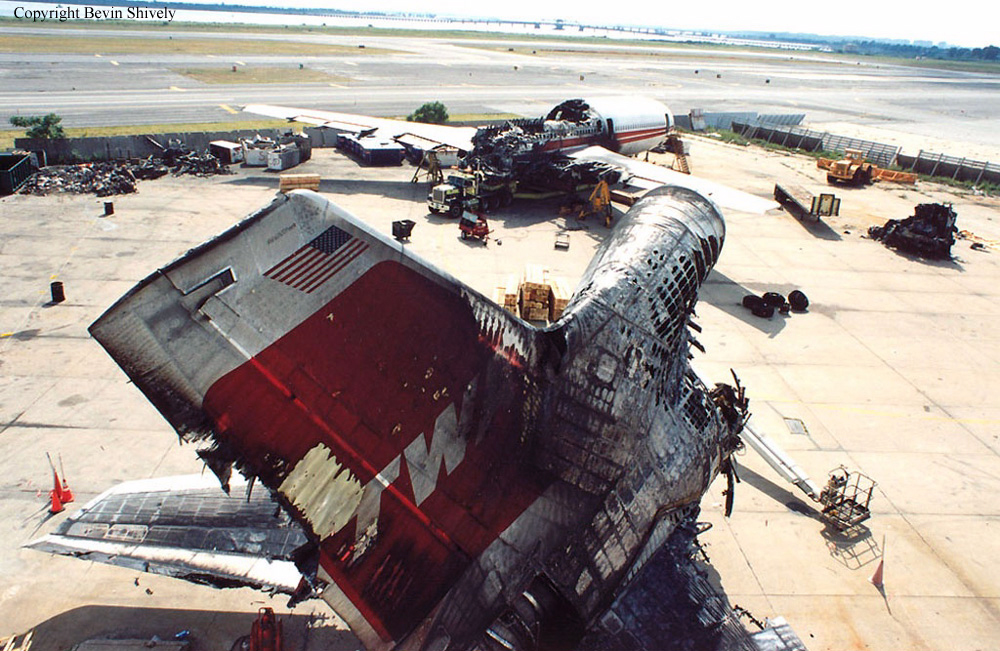
Crash of a Lockheed L-1011-385-1 TriStar 1 in New York

Date & Time: Jul 30, 1992 at 1741 LT
Type of aircraft:
Operator:
Registration:
N11002
Flight Phase:
Survivors:
Yes
Schedule:
New York - San Francisco
MSN:
193B-1014
YOM:
1972
Flight number:
TW843
Crew on board:
12
Crew fatalities:
Pax on board:
280
Pax fatalities:
Other fatalities:
Total fatalities:
0
Captain / Total flying hours:
20149
Captain / Total hours on type:
2397.00
Copilot / Total flying hours:
15242
Copilot / Total hours on type:
2953
Aircraft flight hours:
49662
Aircraft flight cycles:
19659
Circumstances:
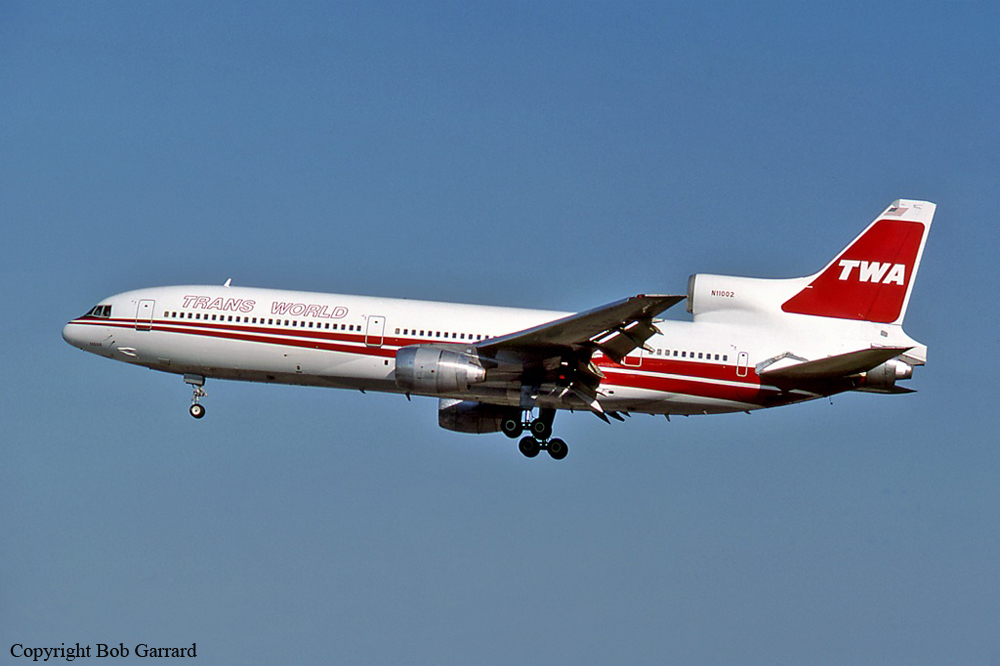
Immediately after liftoff the stick shaker activated, and the first officer, who was making the takeoff, said 'you got it.' The captain took control, closed the thrust levers, and landed. He applied full reverse thrust and maximum braking, and turned the airplane off the runway to avoid a barrier at the end. A system design deficiency permitted a malfunctioning aoa sensor to cause a false stall warning. The sensor had experienced 9 previous malfunctions, and was inspected and returned to service without a determination on the reason for the intermittent malfunction. The first officer had incorrectly perceived that the airplane was stalling and gave control to the captain without proper coordination of the transfer of control. All 292 occupants were rescued, among them 10 were injured, one seriously.
Probable cause:
Design deficiencies in the stall warning system that permitted a defect to go undetected, the failure of twa's maintenance program to correct a repetitive malfunction of the stall warning system, and inadequate crew coordination between the captain and first officer that resulted in their inappropriate response to a false stall warning.
Final Report:
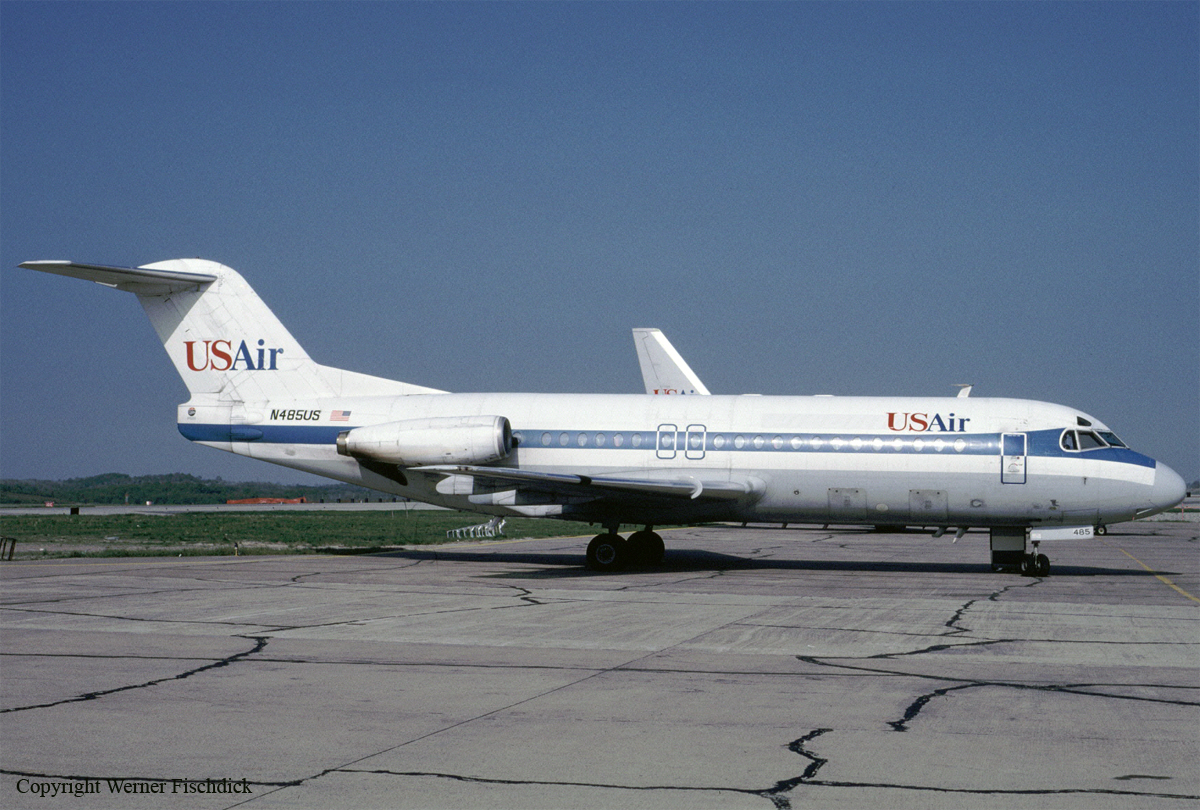
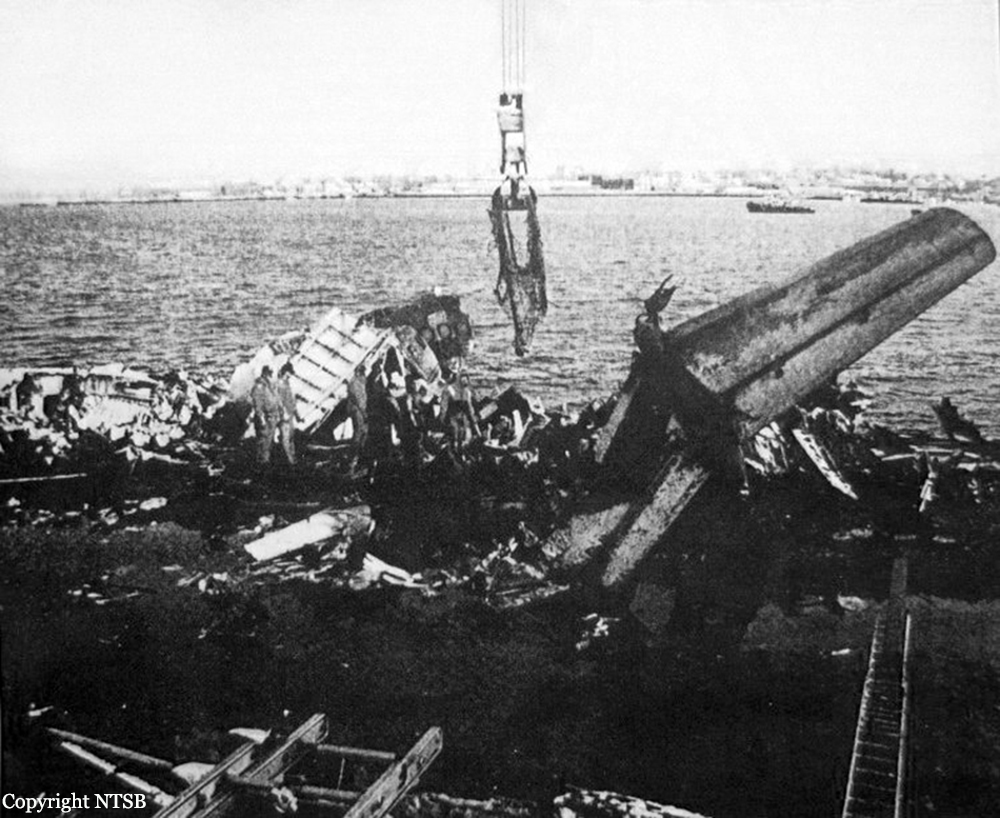
Crash of a Fokker F28 Fellowship 4000 in New York: 27 killed

Date & Time: Mar 22, 1992 at 2135 LT
Type of aircraft:
Operator:
Registration:
N485US
Flight Phase:
Survivors:
Yes
Schedule:
Jacksonville – New York – Cleveland
MSN:
11235
YOM:
1986
Flight number:
US405
Crew on board:
4
Crew fatalities:
Pax on board:
47
Pax fatalities:
Other fatalities:
Total fatalities:
27
Captain / Total flying hours:
9820
Captain / Total hours on type:
2200.00
Copilot / Total flying hours:
4507
Copilot / Total hours on type:
29
Aircraft flight hours:
12462
Aircraft flight cycles:
16280
Circumstances:
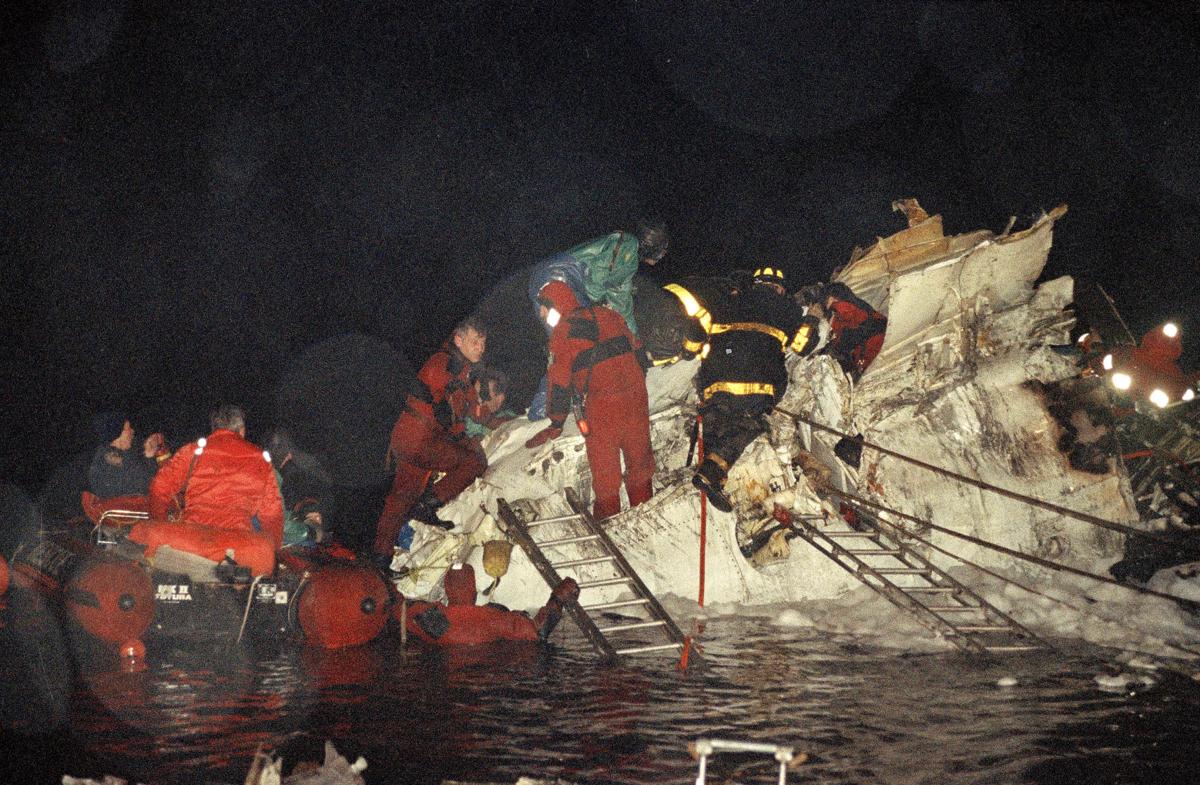
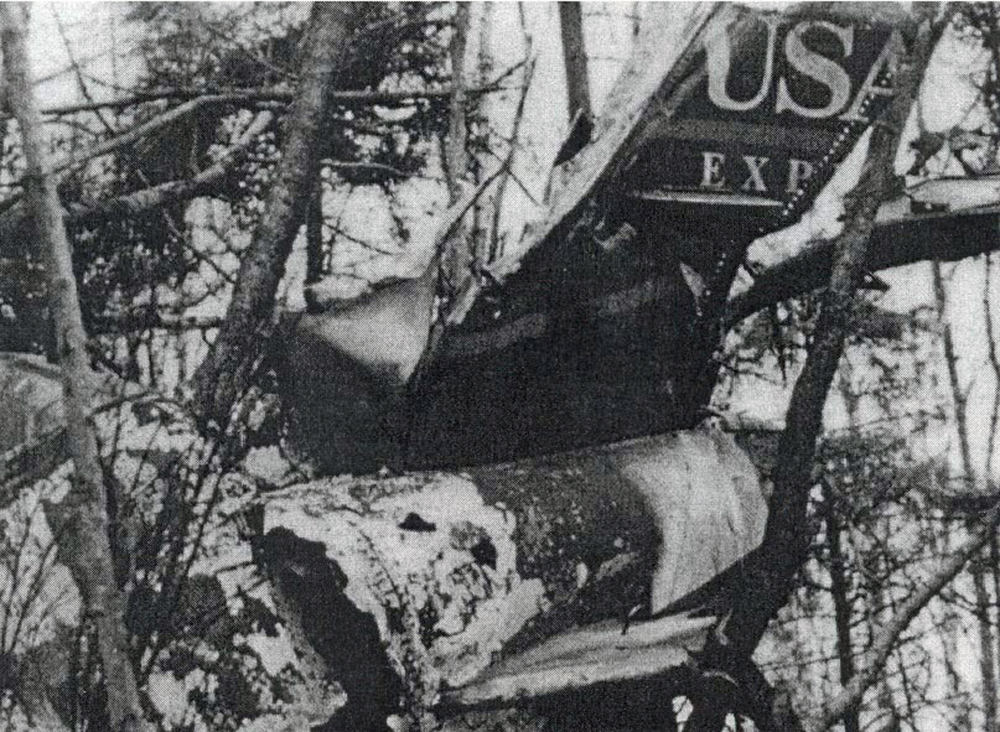
USAir flight 405 was scheduled to depart Jacksonville, FL (JAX) at 16:35 but was given a ground delay because of poor weather in the New-York-LaGuardia (LGA) area and was further delayed in order to remove the baggage of a passenger who chose to deplane. The Fokker F-28 jet departed Jacksonville at 17:15 and was cleared into the LaGuardia area without significant additional delays. The first officer accomplished an ILS approach to LaGuardia's runway 04 to minimums and initiated braking on the landing roll. Ramp congestion delayed taxiing to the parking gate. The airplane was parked at Gate 1 at approximately 19:49, 1 hour and 6 minutes behind schedule. After the airplane was parked at Gate 1, the line mechanic who met the flight was advised by the captain that the aircraft was "good to go." The captain left the cockpit and the first officer prepared for the next leg to Cleveland , OH (CLE) that had originally been scheduled to depart at 19:20. Snow was falling as the F-28 was prepared for departure. The airplane was de-iced with Type I fluid with a 50/50 water/glycol mixture, using two trucks. After the de-icing, about 20:26, one of the trucks experienced mechanical problems and was immobilized behind the airplane, resulting in a pushback delay of about 20 minutes. The captain then requested a second de-icing of the airplane. The airplane was pushed away from the gate to facilitate de-icing by one de-icing truck. The second de-icing was completed at approximately 21:00. At 21:05:37, the first officer contacted the LaGuardia ground controller and requested taxi clearance. The airplane was cleared to taxi to runway 13. At 21:07:12, the flightcrew switched to the LaGuardia ground sequence controller, which they continued to monitor until changing to the tower frequency at 21:25:42. The before-takeoff checklist was completed during the taxi. Engine anti-ice was selected for both engines during taxi. The captain announced that the flaps would remain up during taxi, and he placed an empty coffee cup on the flap handle as a reminder. The captain announced they would use US Air's contaminated runway procedures that included the use of 18 degrees flaps. They would use a reduced V1 speed of 110 knots. The first officer used the ice (wing) inspection light to examine the right wing a couple of times. He did not see any contamination on the wing or on the black strip and therefore did not consider a third de-icing. Flight 405 was cleared into the takeoff and hold position on runway 13 at 21:33:50. The airplane was cleared for takeoff at 21:34:51. The takeoff was initiated and the first officer made a callout of 80 knots, and, at 21:35:25, made a V1 callout. At 21:35:26, the first officer made a VR callout. Approximately 2.2 seconds after the VR callout, the nose landing gear left the ground. Approximately 4.8 seconds later, the sound of stick shaker began. Six stall warnings sounded. The airplane began rolling to the left. As the captain leveled the wings, they headed toward the blackness over the water. The crew used right rudder to maneuver the airplane back toward the ground and avoid the water. They continued to try to hold the nose up to impact in a flat attitude. The airplane came to rest partially inverted at the edge of Flushing Bay, and parts of the fuselage and cockpit were submerged in water. After the airplane came to rest, several small residual fires broke out on the water and on the wreckage debris.
Probable cause:
The failure of the airline industry and the Federal Aviation Administration to provide flight crews with procedures, requirements, and criteria compatible with departure delays in conditions conducive to airframe icing and the decision by the flight crew to take off without positive assurance that the airplane's wings were free of ice accumulation after 35 minutes of exposure to precipitation following de-icing. The ice contamination on the wings resulted in an aerodynamic stall and loss of control after lift-off. Contributing to the cause of the accident were the inappropriate procedures used by, and inadequate coordination between, the flight crew that led to a takeoff rotation at a lower than prescribed air speed.
Final Report:

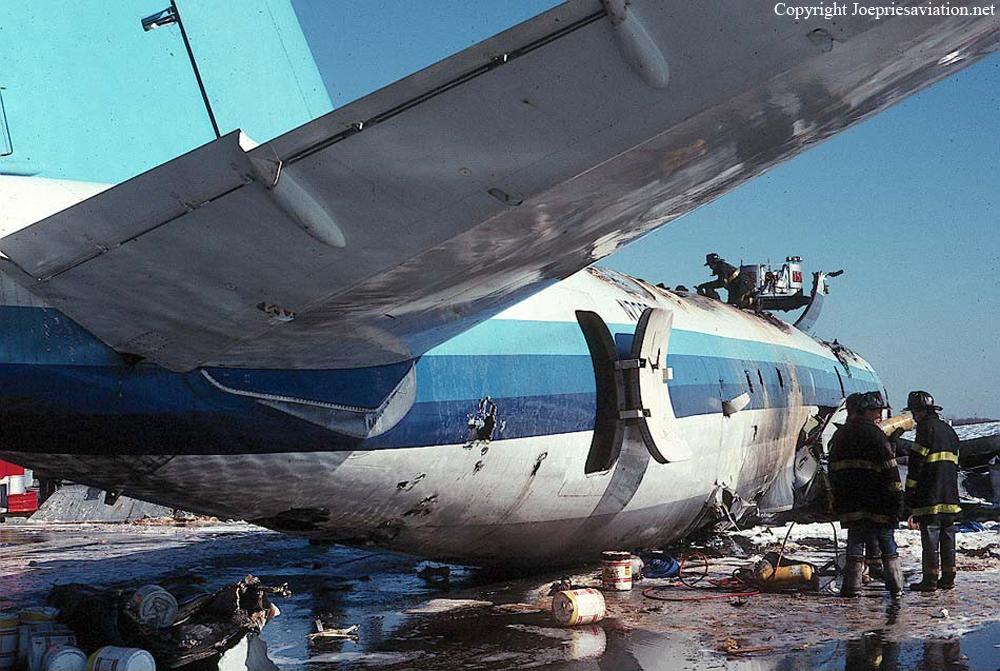
Crash of a Douglas DC-9-31 in Elmira

Date & Time: Jan 18, 1992 at 1028 LT
Type of aircraft:
Operator:
Registration:
N964VJ
Survivors:
Yes
Schedule:
Ithaca - Elmira
MSN:
47373
YOM:
1969
Flight number:
US305
Crew on board:
5
Crew fatalities:
Pax on board:
36
Pax fatalities:
Other fatalities:
Total fatalities:
0
Captain / Total flying hours:
19000
Captain / Total hours on type:
9500.00
Aircraft flight hours:
59251
Circumstances:
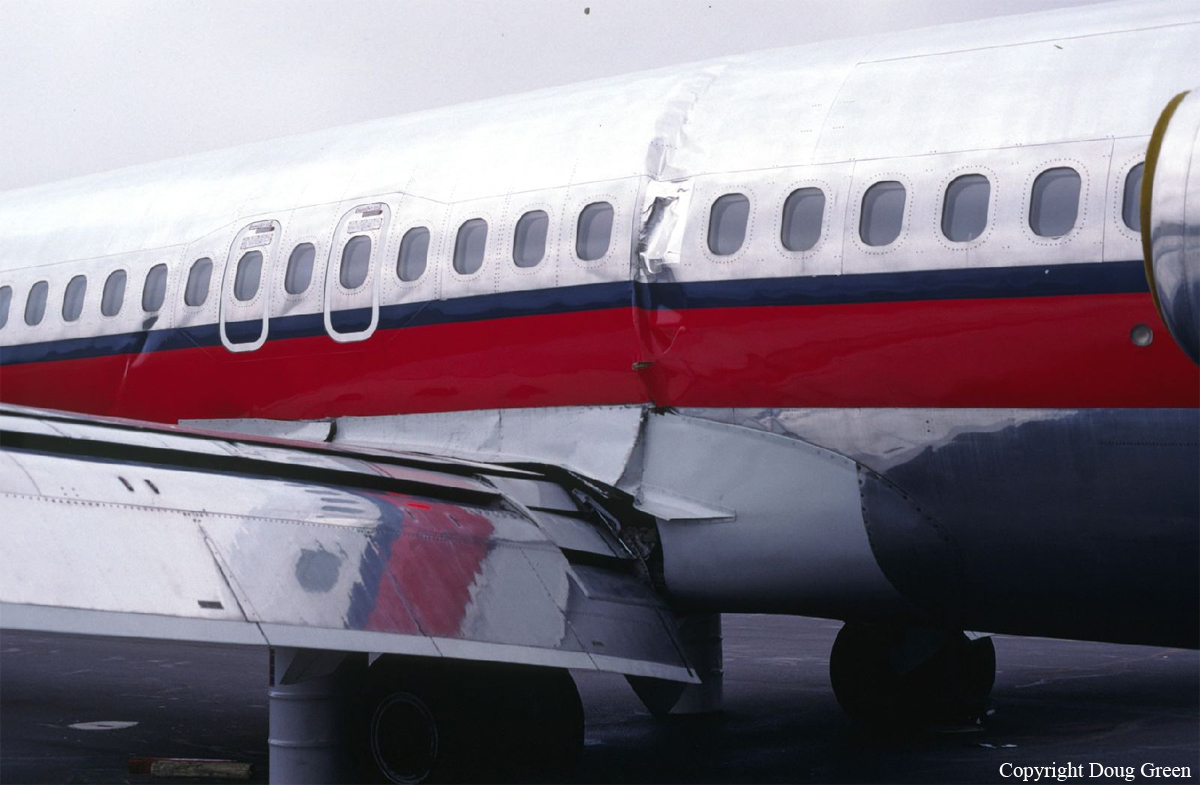
At the time of the accident, gusty winds were forecast for the surface to higher altitudes. The copilot was flying and configured the airplane about four miles out for landing on runway 24. The flightcrew received progressive wind information during the approach; the last report was wind at 310° and 25 knots. The approach speed was v ref + 10. According to the flightcrew, during the landing flare a wind gust occurred, and the airplane lifted in a nose down attitude. The gust stopped and then the airplane descended to the runway and landed hard. The examination of the airplane revealed the fuselage cracked near where the wings were attached and the aft fuselage was bent down about 7°. Two passengers were seriously injured.
Probable cause:
The aircraft encountered a sudden wind gust during landing flare, which resulted in a hard landing.
Final Report:
Crash of a Beechcraft 1900C in Saranac Lake: 2 killed

Date & Time: Jan 3, 1992 at 0546 LT
Type of aircraft:
Operator:
Registration:
N55000
Survivors:
Yes
Schedule:
Plattsburgh – Saranac Lake – Albany
MSN:
UC-135
YOM:
1990
Flight number:
US4821
Crew on board:
2
Crew fatalities:
Pax on board:
2
Pax fatalities:
Other fatalities:
Total fatalities:
2
Captain / Total flying hours:
7700
Captain / Total hours on type:
3700.00
Aircraft flight hours:
1675
Circumstances:
On IFR arrival, flight 4821 was cleared to intersection 17 northeast of airport at 6,000 feet, then for ILS runway 23 approach. Radar service was terminated 6.5 east of intersection. Radar data showed that flight crossed and then bracketed localizer. Flight intercepted glide slope from below about 7 miles outside of outer marker and thence deviated above glide slope. About 2 miles outside of marker, flight was at a full fly down deflection when it entered a descent varying from 1,200 to 2,000 fpm. Aircraft struck wooded mountain top 2.0 miles inside of outer marker (3.9 miles from runway) at elevation of 2,280 feet. Minimum altitude at marker was 3,600 feet. Glide slope elevation at point of impact was approximately 2,900 feet. Evidence was found of inadequate electrical ground path between radome and fuselage which, when combined with existing weather conditions, may have produced electrostatic discharge (precipitation static). Although post-accident tests were not conclusive, the safety board believes that the glide slope indications might have been unreliable due to precipitation static interference. Two occupants survived while two others (one pilot and one passenger) were killed.
Probable cause:
Failure of the captain to establish a stabilized approach, his inadequate cross-check of instruments, his descent below specified minimum altitude at the final approach fix, and failure of the copilot to monitor the approach. Factors related to the accident were: weather conditions and possible precipitation static interference, caused by inadequate grounding between the radome and fuselage that could have resulted in unreliable glide slope indications.
Final Report:

Crash of a Piper PA-60 Aerostar (Ted Smith 601P) in North Salem: 2 killed

Date & Time: Dec 30, 1991 at 0748 LT
Registration:
N36362
Flight Type:
Survivors:
No
Schedule:
Clarksville – Danbury
MSN:
60-0787-8063400
YOM:
1980
Crew on board:
1
Crew fatalities:
Pax on board:
1
Pax fatalities:
Other fatalities:
Total fatalities:
2
Captain / Total flying hours:
2700
Aircraft flight hours:
1624
Circumstances:
The pilot was on a personal trip that he had flown many times. On the day of the accident, additional fuel was not available at the departure airport. As he neared his destination, the pilot left one of his engines in a fuel crossfeed configuration causing a partial power loss. The airplane has the capability to climb at more than 500 feet per minute using only one engine. After declaring his emergency to the control tower, radio contact was lost. The aircraft was observed flying 90° to the ILS final approach course at very low altitude banking side to side. The airplane crashed in a 70° nose down position. Heavy snow had started falling just before the accident. A post crash fire destroyed much of the airplane. Both occupants were killed.
Probable cause:
A loss of control due to a distraction caused by a partial loss of power. Contributing to the accident was adverse weather near the destination airport.
Final Report:
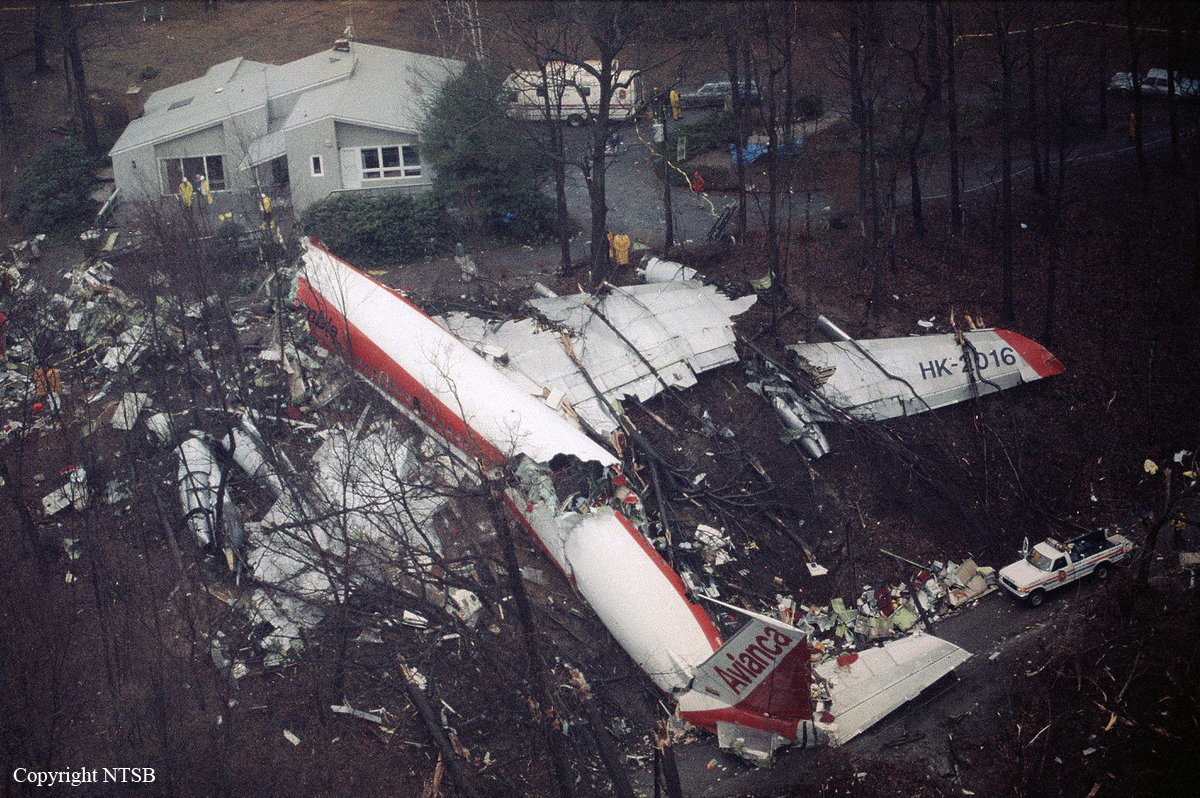
Crash of a Douglas DC-8-62F in New York

Date & Time: Mar 12, 1991 at 0906 LT
Type of aircraft:
Operator:
Registration:
N730PL
Flight Phase:
Flight Type:
Survivors:
Yes
Schedule:
New York - Brussels
MSN:
46161
YOM:
1971
Flight number:
8C102
Crew on board:
3
Crew fatalities:
Pax on board:
2
Pax fatalities:
Other fatalities:
Total fatalities:
0
Captain / Total flying hours:
12800
Captain / Total hours on type:
3000.00
Aircraft flight hours:
50145
Circumstances:
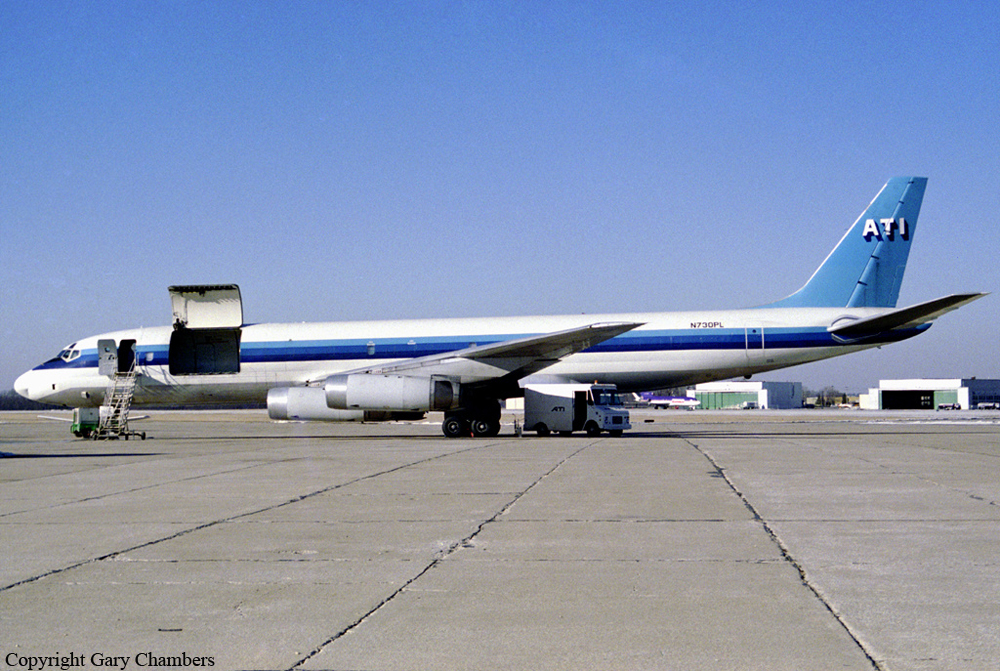
Before flight, the flight engineer (f/e) had calculated 'v' speeds and horizontal stabilizer trim setting for takeoff, but neither the captain nor the 1st officer (f/o) had verified them. During rotation for takeoff, the captain noted that the forced needed to pull the yoke aft was greater than normal and that the aircraft would not fly (at that speed). Subsequently, he aborted the attempted takeoff. Realizing the aircraft would not stop on the remaining runway, he elected to steer it to the right to avoid hitting traffic on a highway near the departure end. The aircraft struck ILS equipment; the landing gear collapsed and all 4 engines tore away. Subsequently, the aircraft was destroyed by fire. Investigations revealed the f/e had improperly computed the takeoff data. He had calculated the 'v' speeds and horizontal stabilizer trim setting for 242,000 lbs; however, the actual takeoff wt was 342,000 lbs. Rotation speed (Vr) for this weight was 28 knots above the speed that was used. Investigations revealed shortcomings in the operator's flightcrew training program and questionable scheduling of qualified (but marginally experienced) crew members for the accident flight.
Probable cause:
Improper preflight planning/preparation, in that the flight engineer miscalculated (misjudged) the aircraft's gross weight by 100,000 lbs and provided the captain with improper takeoff speeds; and improper supervision by the captain. Factors related to the accident were: improper trim setting provided to the captain by the flight engineer, inadequate monitoring of the performance data by the first officer, and the company management's inadequate surveillance of the operation.
Final Report:
Crash of a Rockwell Grand Commander 690B in Byram Lake Reservoir

Date & Time: Sep 22, 1990 at 1005 LT
Registration:
N81628
Flight Phase:
Flight Type:
Survivors:
Yes
Schedule:
Charleston - White Plains
MSN:
690-11396
YOM:
1977
Crew on board:
1
Crew fatalities:
Pax on board:
5
Pax fatalities:
Other fatalities:
Total fatalities:
0
Captain / Total flying hours:
11000
Captain / Total hours on type:
1243.00
Circumstances:
During an IFR flight the pilot executed a forced landing in a reservoir after the engines quit due to fuel exhaustion. The pilot reported that the airplane was fueled, topped off, the night before departure from Charleston. Examination of the airplane showed the outboard fuel filler port cap on the left wing was not present. The majority of the liquid drained from the main fuel sump was water. The inboard and outboard fuel filler caps were present on the right wing. All six occupants were rescued.
Probable cause:
The pilot's improper aircraft preflight (fuel cap not properly secured) which resulted in fuel siphoning and fuel exhaustion.
Final Report:
Crash of a Cessna 208B Super Cargomaster in Plattsburgh: 1 killed

Date & Time: Jan 29, 1990 at 2033 LT
Type of aircraft:
Operator:
Registration:
N854FE
Flight Phase:
Flight Type:
Survivors:
No
Schedule:
Plattsburgh - Syracuse
MSN:
208B-0172
YOM:
1989
Crew on board:
1
Crew fatalities:
Pax on board:
0
Pax fatalities:
Other fatalities:
Total fatalities:
1
Captain / Total flying hours:
4999
Captain / Total hours on type:
1482.00
Aircraft flight hours:
390
Circumstances:
The Cessna 208B made a takeoff with light wet snow falling, at night. The airplane reached an altitude of 700 feet agl prior to making a steep descent, striking trees and impacting inverted. Radar data showed the aircraft lift off point and initial climb rate approached that shown in the flight manual for short field technique. Two other Cessna 208's preceded the accident aircraft from the same airport, one 13 minutes prior and the other 3 minutes prior. Radar data showed they climbed at a slower rate. The accident airplane had come from a hangar and was not deiced prior to departure. A pilot flying a identical airplane with a similar load commented that his climb rate was lower than normal. Another pilot commented that this was the first wet snow of the year and it was sticking to his engine cowling. The pilot, sole on board, was killed.
Probable cause:
Loss of control inflight after the airplane stalled during climbout. The stall resulted from a loss of lift due to a contaminated wing surface. Contributing to the accident was the failure of the pilot to de-ice the aircraft prior to departure.
Final Report:
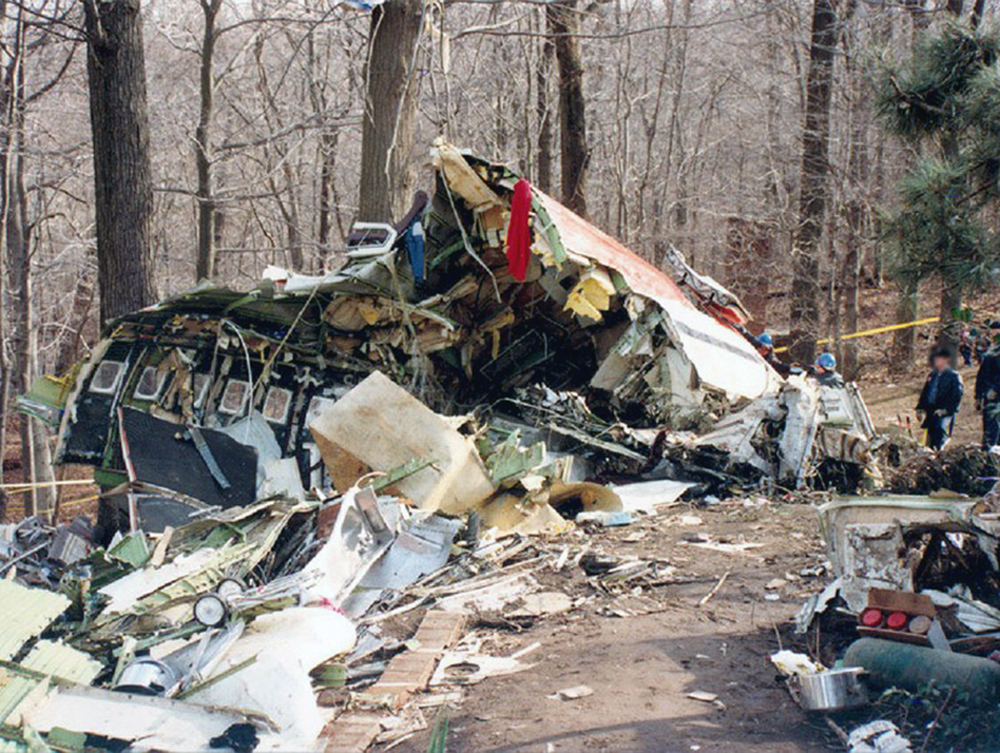
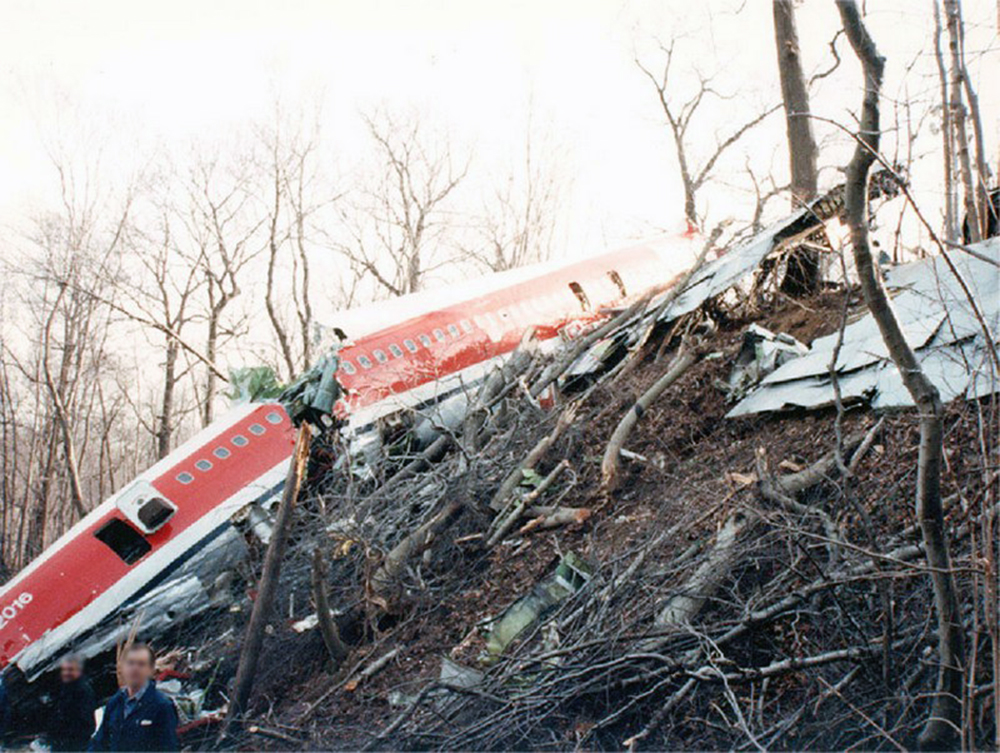
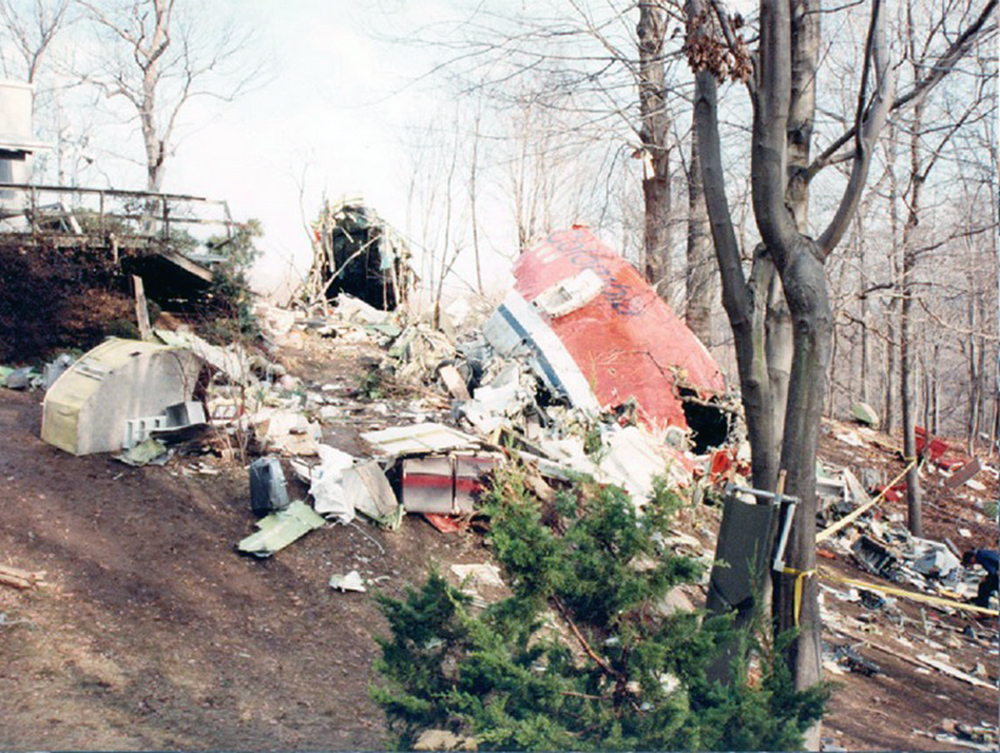
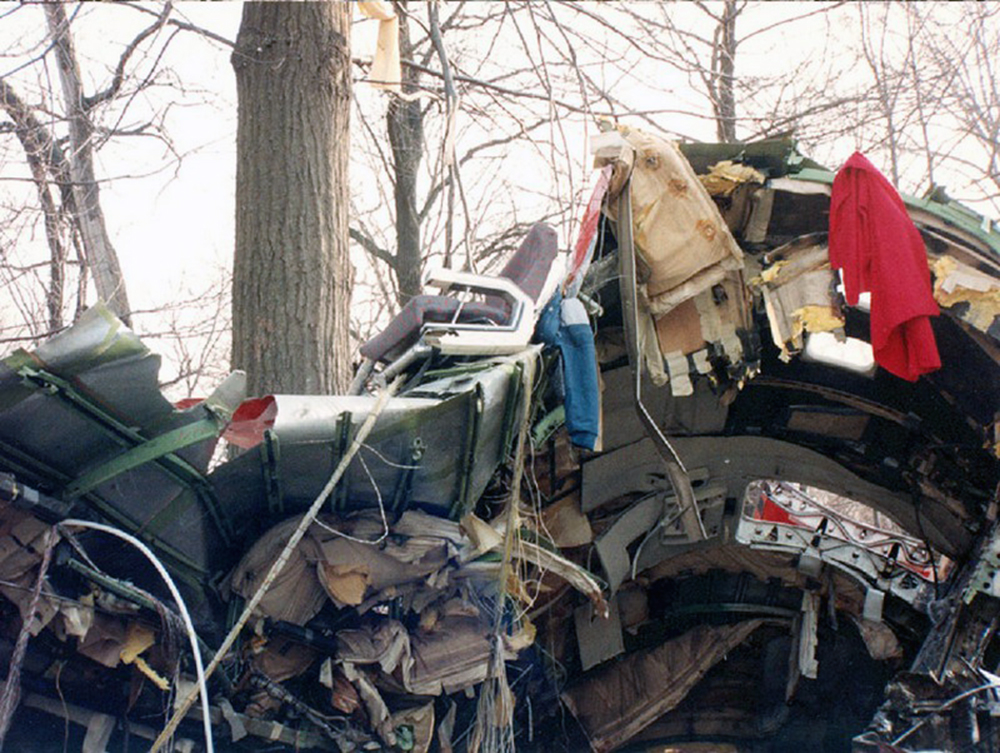
Crash of a Boeing 707-321B in Cove Neck: 73 killed

Date & Time: Jan 25, 1990 at 2134 LT
Type of aircraft:
Operator:
Registration:
HK-2016
Survivors:
Yes
Schedule:
Bogotá – Medellín – New York
MSN:
19276/592
YOM:
1967
Flight number:
AV052
Crew on board:
9
Crew fatalities:
Pax on board:
149
Pax fatalities:
Other fatalities:
Total fatalities:
73
Captain / Total flying hours:
16787
Captain / Total hours on type:
1534.00
Copilot / Total flying hours:
1837
Copilot / Total hours on type:
64
Aircraft flight hours:
61764
Circumstances:
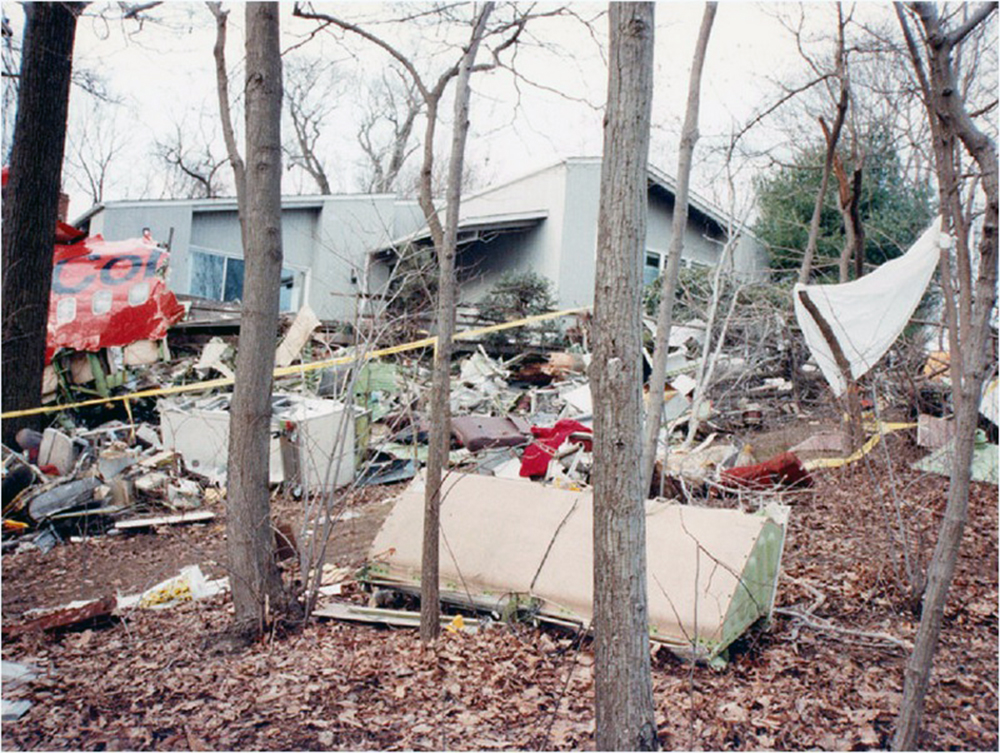
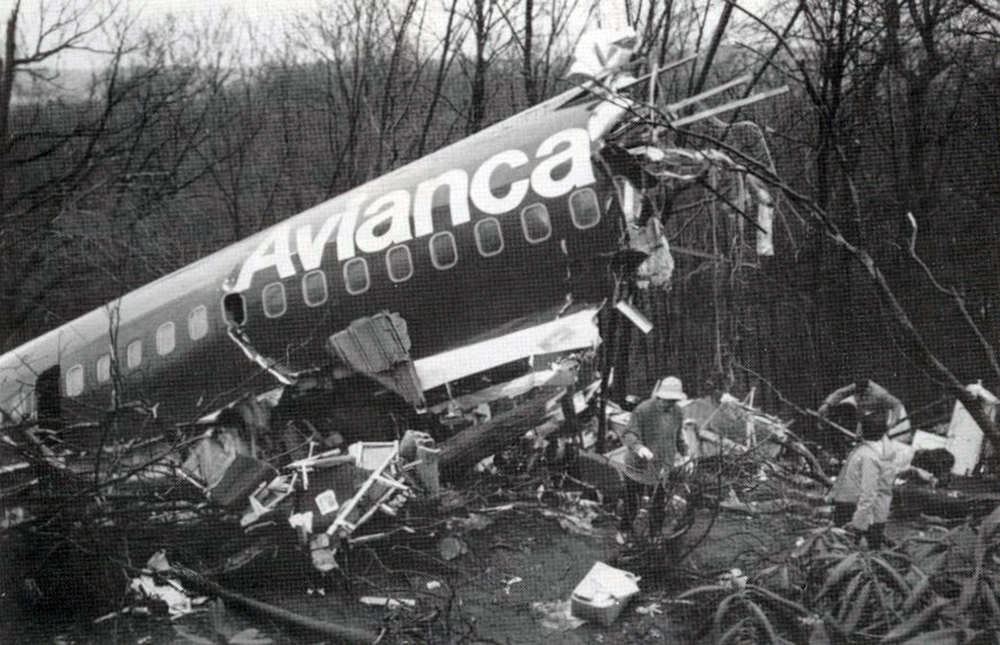
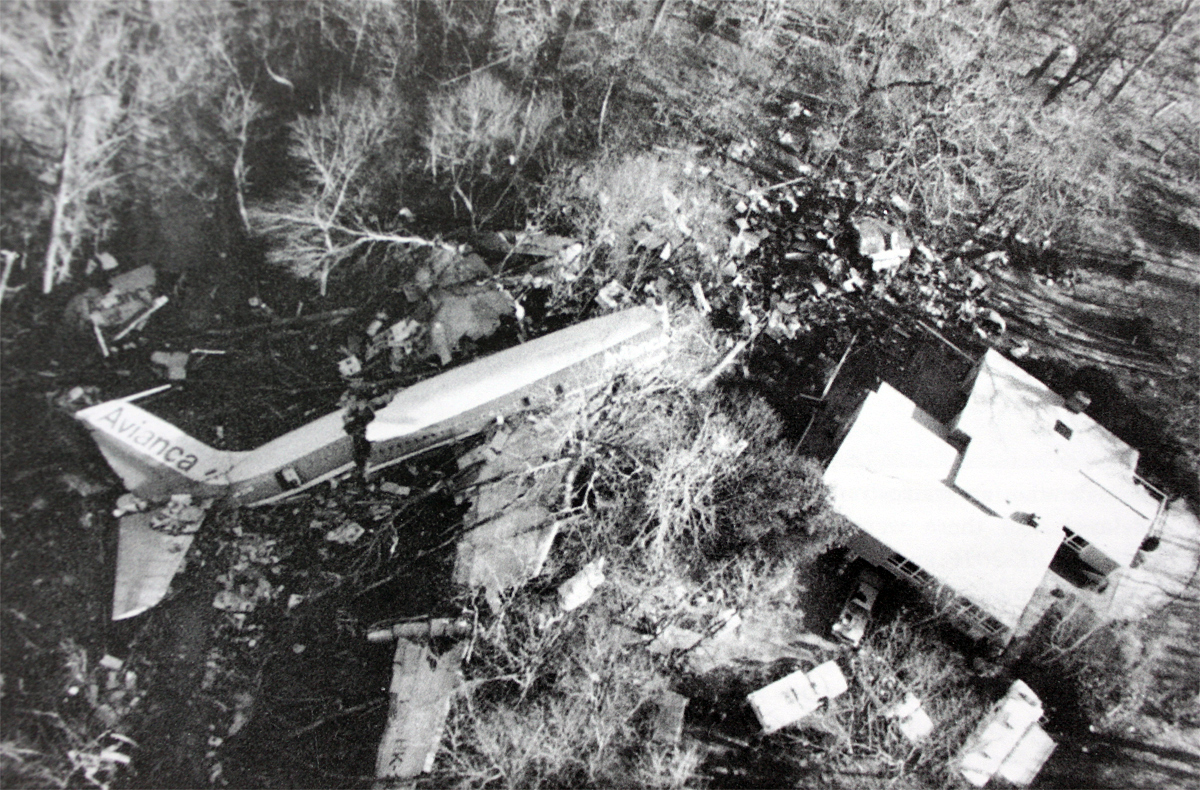
Avianca flight 052 (AV052), a Boeing 707-321B with Colombian registration HK-2016, crashed in a wooded residential area in Cove Neck, Long Island, NY. AV052 was a scheduled international passenger flight from Bogotá, Colombia, to New York-JFK Intl Airport, NY, with an intermediate stop at Jose Maria Cordova Airport, near Medellín, Columbia. Of the 158 persons aboard, 73 were fatally injured. Because of poor weather conditions in the northeastern part of the United States, the flightcrew was placed in holding 3 times by ATC for a total of about 1 hour and 17 minutes. During the 3rd period of holding, the flightcrew reported that the aircraft could not hold longer than 5 minutes, that it was running out of fuel, and that it could not reach its alternate airport, Boston-Logan Intl. Subsequently, the flightcrew executed a missed approach to JFK Intl Airport. While trying to return to the airport, the aircraft experienced a loss of power to all 4 engines and crashed approximately 21 miles northeast of JFK Airport.
Probable cause:
The failure of the flightcrew to adequately manage the airplane's fuel load, and their failure to communicate an emergency fuel situation to air traffic control before fuel exhaustion occurred. Contributing to the accident was the flightcrew's failure to use an airline operational control dispatch system to assist them during the international flight into a high-density airport in poor weather. Also contributing to the accident was inadequate traffic flow management by the faa and the lack of standardized understandable terminology for pilots and controllers for minimum and emergency fuel states. The safety board also determines that windshear, crew fatigue and stress were factors that led to the unsuccessful completion of the first approach and thus contributed to the accident.
Final Report:
Crash of a Piper PA-31-350 Navajo Chieftain near Cairo: 6 killed

Date & Time: Dec 15, 1989 at 1738 LT
Operator:
Registration:
N45CH
Flight Phase:
Survivors:
No
Site:
Schedule:
Glens Falls - Montgomery
MSN:
31-7852002
YOM:
1978
Location:
Crew on board:
1
Crew fatalities:
Pax on board:
5
Pax fatalities:
Other fatalities:
Total fatalities:
6
Captain / Total flying hours:
3500
Captain / Total hours on type:
100.00
Aircraft flight hours:
2500
Circumstances:
During a preflight weather briefing, the instrument rated pilot was told by the AFSS specialist that marginal VFR and IFR conditions would prevail along the route of flight. The pilot did not file a flight plan. The airplane was last depicted on radar at 2,500 feet msl and heading towards high terrain. A NY state trooper leaving his office about the time the accident occurred stated snow was falling very hard and visibility was low. The state trooper's office was about 5 miles from the crash site. The airplane hit a 3,400 foot mountain at an elevation of 2,500 feet. The airplane was missing 4 days and was found by the crew of a NY state police helicopter. All six occupants were killed.
Probable cause:
The pilot's decision to fly into the known adverse weather and his failure to select an altitude that would provide terrain clearance. Factors were: the adverse weather and the pilot's disregard for the forecasted conditions.
Final Report: