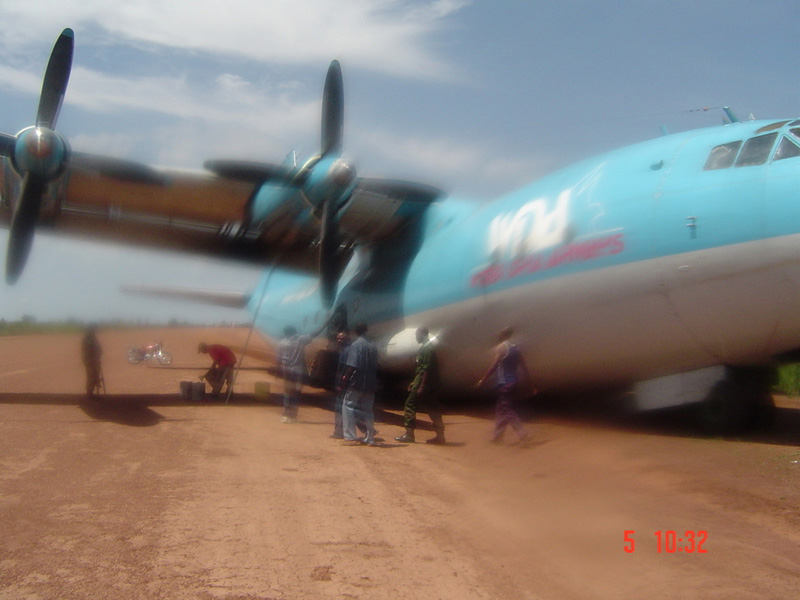
Crash of an Antonov AN-12 in Aru: 2 killed

Date & Time: Oct 4, 2005
Type of aircraft:
Operator:
Registration:
9Q-CWC
Survivors:
Yes
Schedule:
Kisangani – Bunia
MSN:
2 40 09 01
YOM:
1962
Location:
Region:
Crew on board:
4
Crew fatalities:
Pax on board:
96
Pax fatalities:
Other fatalities:
Total fatalities:
2
Circumstances:
The aircraft departed Kisangani on a flight to Bunia, carrying 96 soldiers and four crew members on behalf of the Congolese Army Forces. Upon landing at Aru Airstrip, the right main gear collapsed and the aircraft veered to the left and came to rest on the left side of the runway. Two soldiers were killed while walking into the still running propellers. Eleven people were injured.

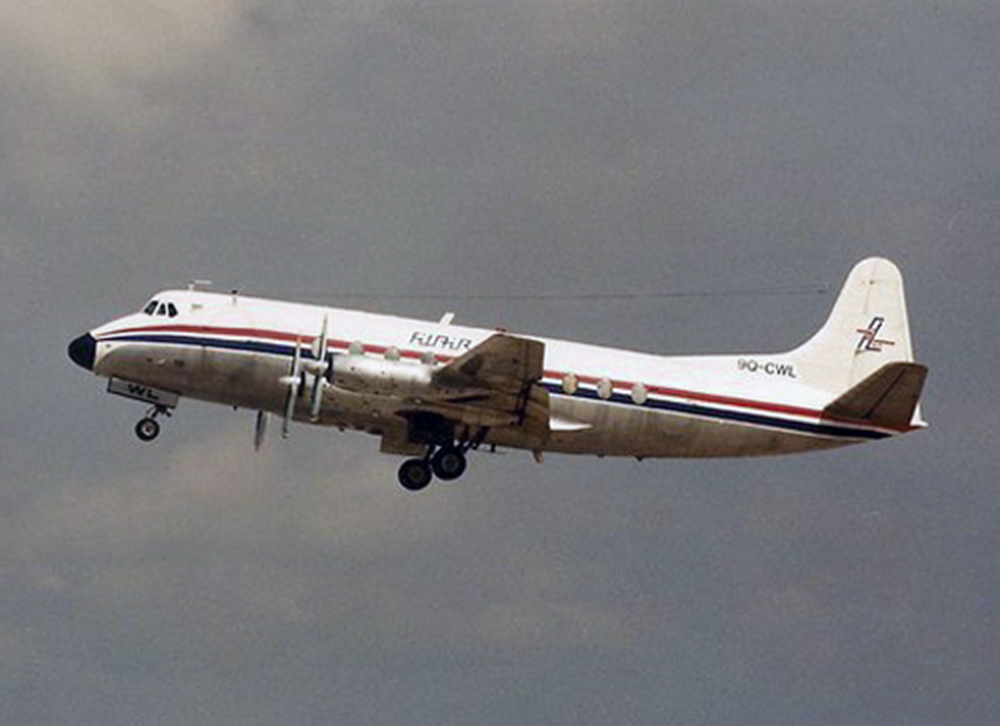
Crash of a Vickers 781D Viscount near Bunia: 23 killed

Date & Time: Jun 6, 1997
Type of aircraft:
Operator:
Registration:
9Q-CWL
Flight Phase:
Survivors:
No
Schedule:
Bunia - Kisangani
MSN:
280
YOM:
1958
Location:
Region:
Crew on board:
3
Crew fatalities:
Pax on board:
20
Pax fatalities:
Other fatalities:
Total fatalities:
23
Circumstances:
After takeoff from Bunia Airport, the captain informed ATC about engine problems and reported fire in the cabin. Shortly later, the four engine aircraft went out of control and crashed about 40 km southwest of Bunia, in the region of Irumu. All 23 occupants were killed.

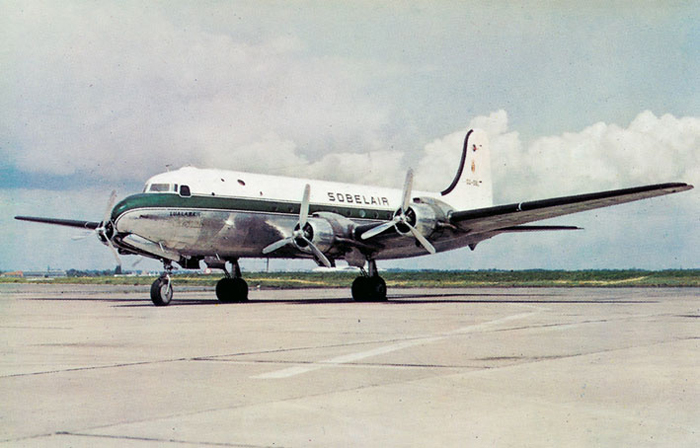
Crash of a Douglas C-54A-DO Skymaster in Bunia: 35 killed

Date & Time: Apr 22, 1960 at 0755 LT
Type of aircraft:
Operator:
Registration:
OO-SBL
Survivors:
No
Site:
Schedule:
Brussels – Rome – Cairo – Bunia – Usumbura – Elisabethville
MSN:
3099
YOM:
1943
Location:
Region:
Crew on board:
7
Crew fatalities:
Pax on board:
28
Pax fatalities:
Other fatalities:
Total fatalities:
35
Captain / Total hours on type:
6462.00
Copilot / Total hours on type:
2764
Aircraft flight hours:
30594
Circumstances:
Following an uneventful flight from Cairo, the crew started the descent to Bunia. Nevertheless, visibility was poor due to a low ceiling. On final approach, the four engine airplane impacted the slope of the Bogoro Peak located 8 km short of runway. The wreckage was found 100 metres below the summit and all 35 occupants have been killed.
Probable cause:
The accident occurred because the pilot, the captain, carried out a descent while the height of cloud base (ceiling) was below the minimum required by the Administration and the Operator.
The following findings were identified:
- Seeing that the weather was rapidly deteriorating below minima, the captain should have decided to divert. The ceiling dropped from 16,000 to 700 feet in two hours and 30 minutes. It was between 700 and 800 feet at the time of the accident, which was below minima.
- The captain should have noticed the abnormally long time elapsing between exiting the procedural turn and passing the locator (a distance of 8 kilometers), which, at an approach speed of 220 km/h (120 knots), amounts to no more than 2 minutes and 30 seconds.
- A combination of unforeseen circumstances made the pilot’s carelessness fatal. It is highly likely, in fact, that if the VHF had not failed at the start of the procedure, the airfield operator could have warned the pilot that the beacon was out of service, and the pilot would not have continued the procedure. The operator at the Stanleyville Protection Office can be blamed for serious negligence for failing to relay to the aircraft the latest weather report from Bunia (at 7:50 a.m.): 8/8 stratus at 200 metres. He was not required to determine whether this communication was useful or not. This latest communication was of great importance at the time the pilot was in the procedure.
- It is regrettable that Bunia, being a regular stopover airport for DC-3s, DC-4s, and CV-440s, is not a controlled airport.
Final Report: