Crash of a Learjet 60 in Aspen

Date & Time: Jun 7, 2012 at 1224 LT
Type of aircraft:
Registration:
N500SW
Flight Type:
Survivors:
Yes
Schedule:
Miami-Opa Locka - Aspen
MSN:
60-017
YOM:
1993
Crew on board:
2
Crew fatalities:
Pax on board:
6
Pax fatalities:
Other fatalities:
Total fatalities:
0
Captain / Total flying hours:
18000
Captain / Total hours on type:
600.00
Copilot / Total flying hours:
13500
Aircraft flight hours:
6456
Circumstances:
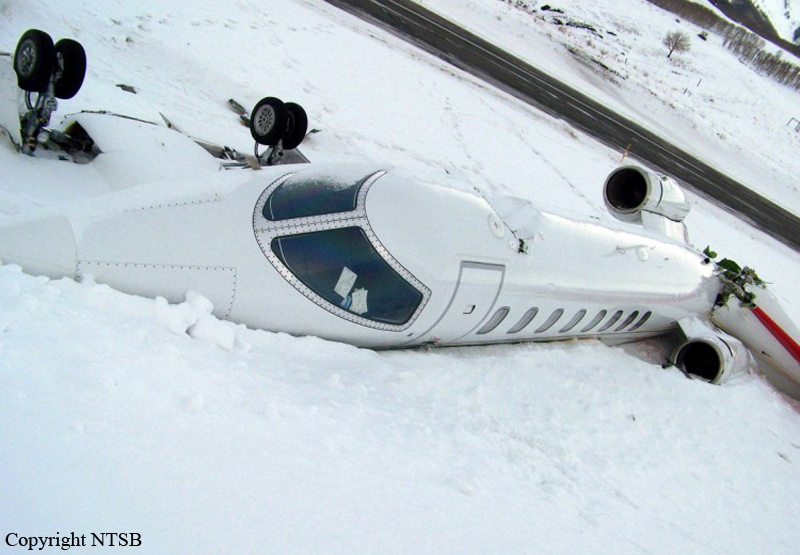
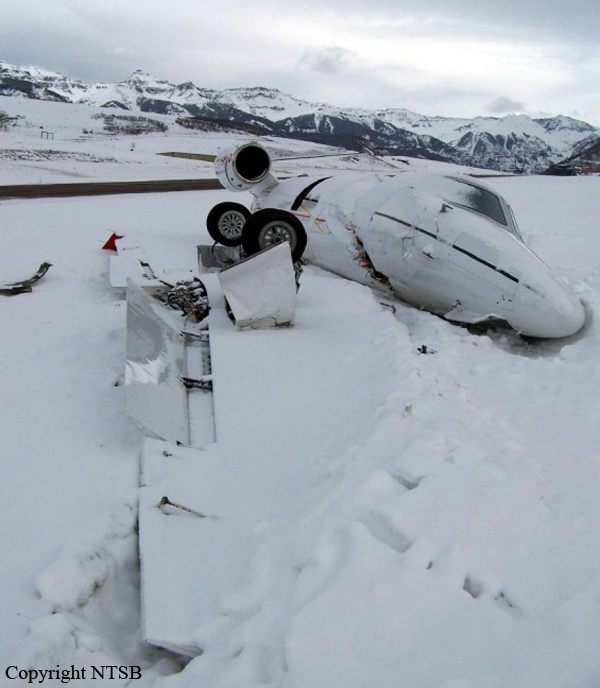
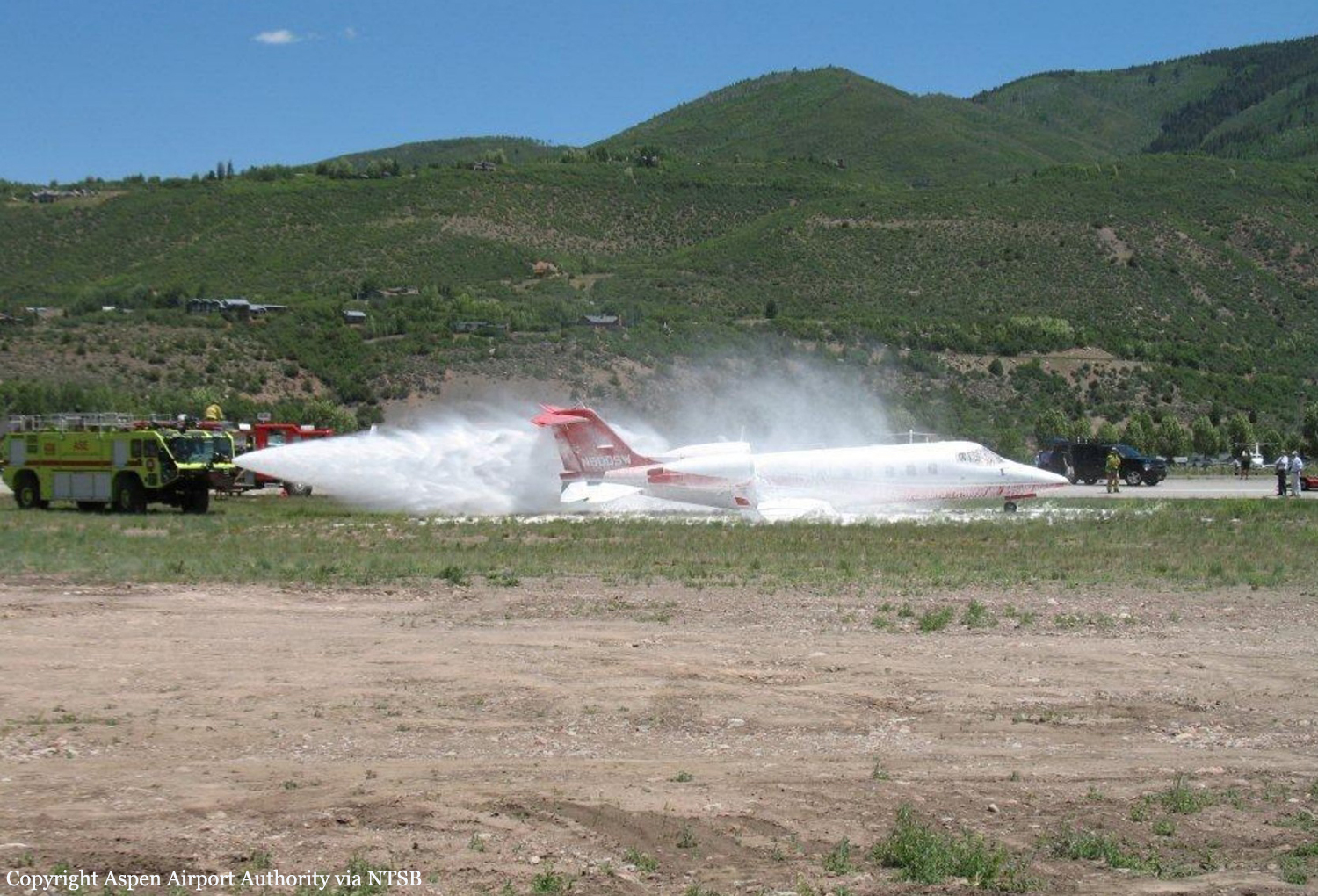
While the first officer was flying the airplane on a visual approach to the airport located in a steep mountain valley, the tower controller informed him that the pilot of a Citation that had landed about 10 minutes earlier had reported low-level windshear with a 15-knot loss of airspeed on short final. The first officer used the spoilers while on the left base leg and then maneuvered the airplane in an "S-turn" on the final leg to correct for a too-steep approach. Just as the airplane was about to touch down with the airspeed decreasing, the captain made several calls for "power" and then called for a "go around." However, the first officer did not add power for a go-around, and the captain did not take control of the airplane. Both pilots reported that, when the airplane was about 30 ft above ground level (agl), they felt a sensation that the airplane had "stopped flying" with a simultaneous left roll, which is indicative of an aerodynamic stall, followed by an immediate impact with terrain. After striking obstructions that completely separated the right main landing gear and the right flap, the airplane came to rest upright in the dirt on the side of the runway about 4,000 ft from the initial impact point. The airplane sustained substantial damage to the fuselage and both wings. All eight occupants evacuated through the main cabin door. There was a substantial fuel spill but no postimpact fire. Both pilots reported no mechanical malfunctions or failures of the airplane, and neither pilot reported an uncommanded loss of engine power. Data from the enhanced ground proximity warning system showed that seven warning events occurred in the last 3 minutes before the accident. The first warning was for "sink rate," and it occurred when the airplane was about 1,317 ft agl and in a 3,400-ft-per-minute descent. The last warning was for "bank angle," and it occurred about 10 seconds before touchdown as the airplane exceeded 42 degrees of bank when it was about 200 ft agl. The wind recorded at the airport at the time of the accident would have resulted in a 12-knot variable tailwind with gusts to 18 knots. The evidence is consistent with the first officer flying a non stabilized approach with a decreasing airspeed during low-level windshear conditions. The first officer did not properly compensate for the known low-level windshear conditions and allowed the airspeed to continue to decrease and the bank angle to increase until the airplane experienced an aerodynamic stall.
Probable cause:
The first officer's failure to maintain adequate airspeed and his exceedance of the airplane's critical angle-of-attack during the final approach in known low-level windshear conditions, which resulted in an aerodynamic stall. Contributing to the accident were the first officer's failure to initiate a go-around when commanded and the captain's lack of remedial action when he recognized that the approach was unstabilized.
Final Report:

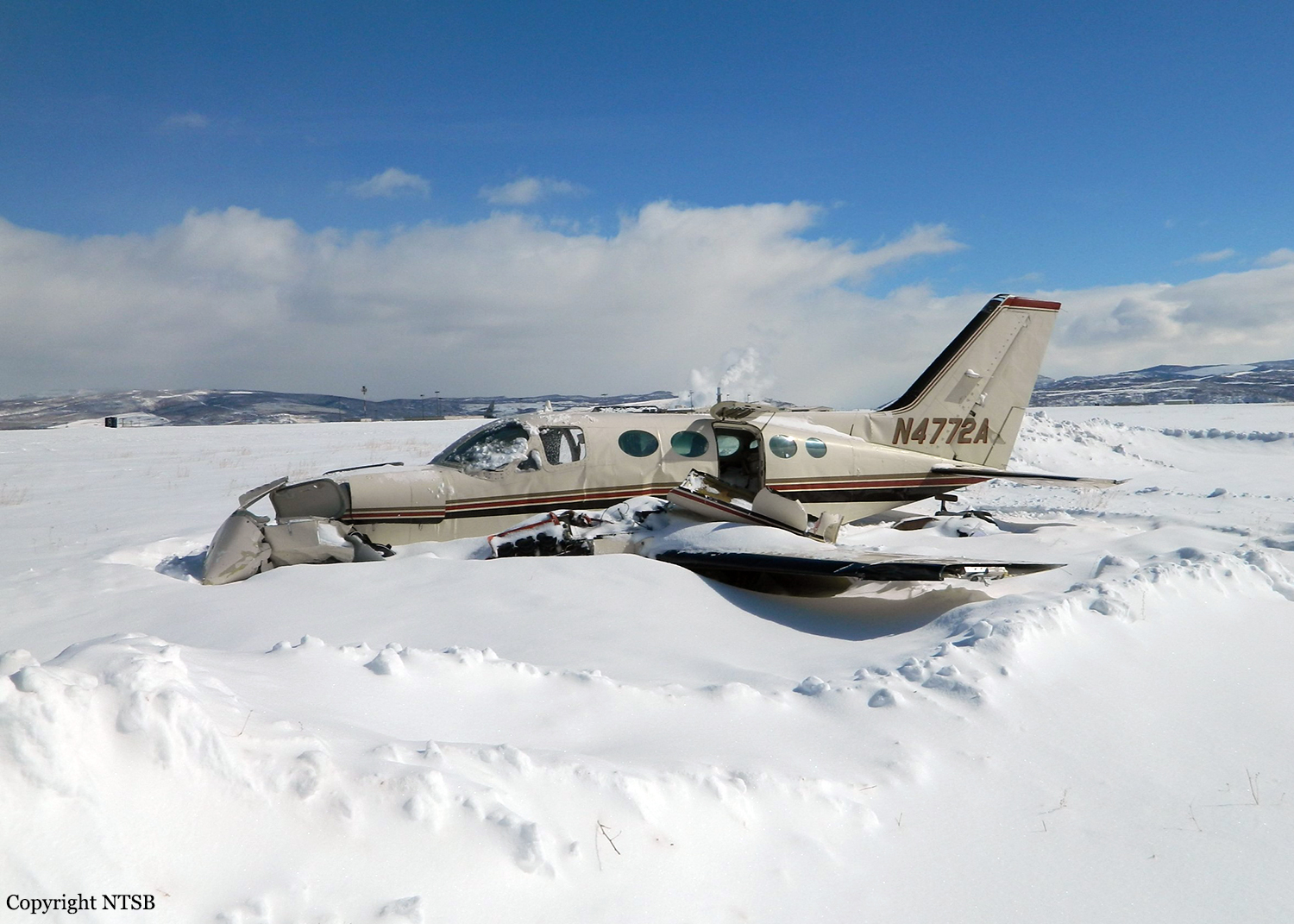
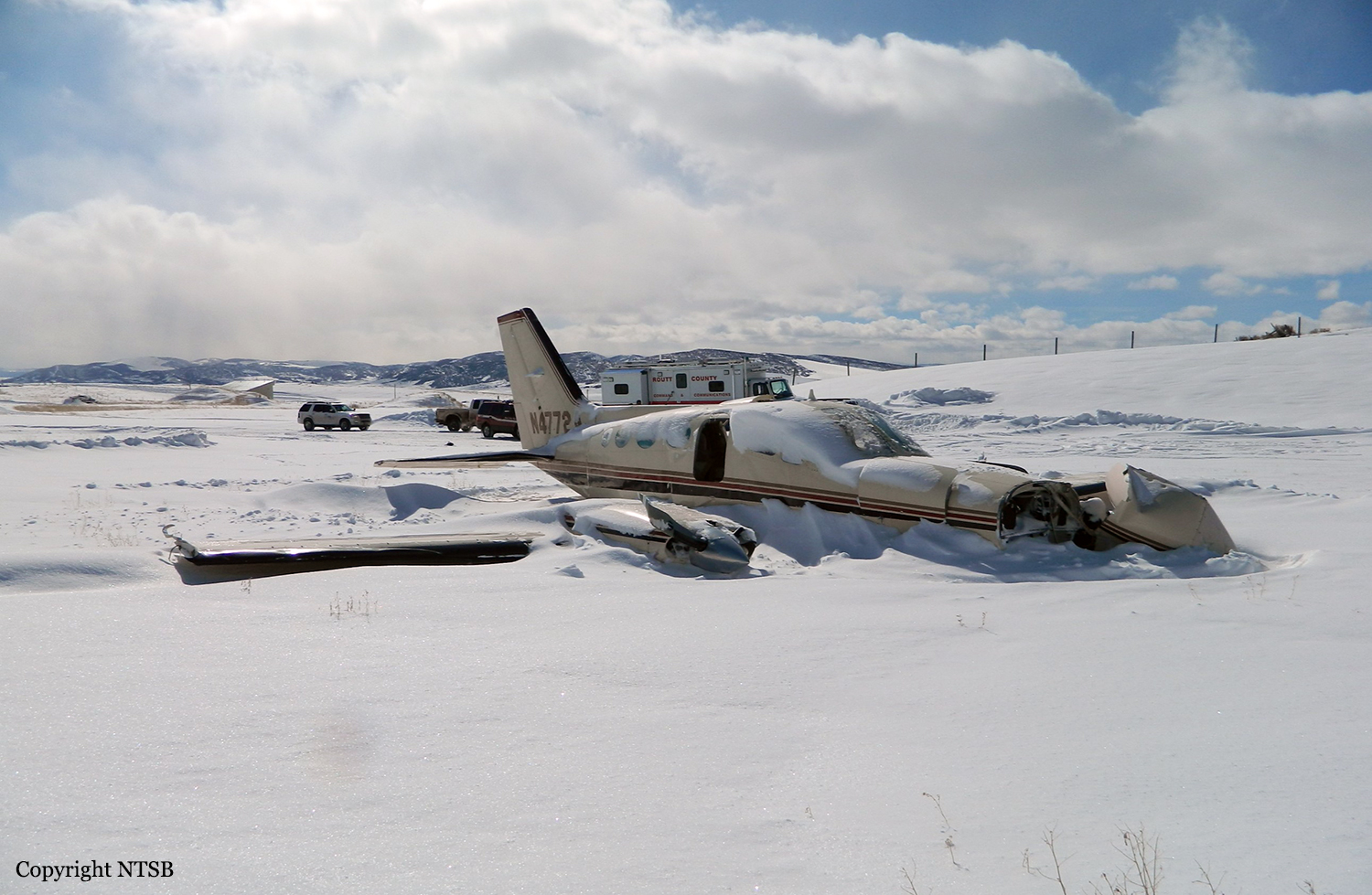
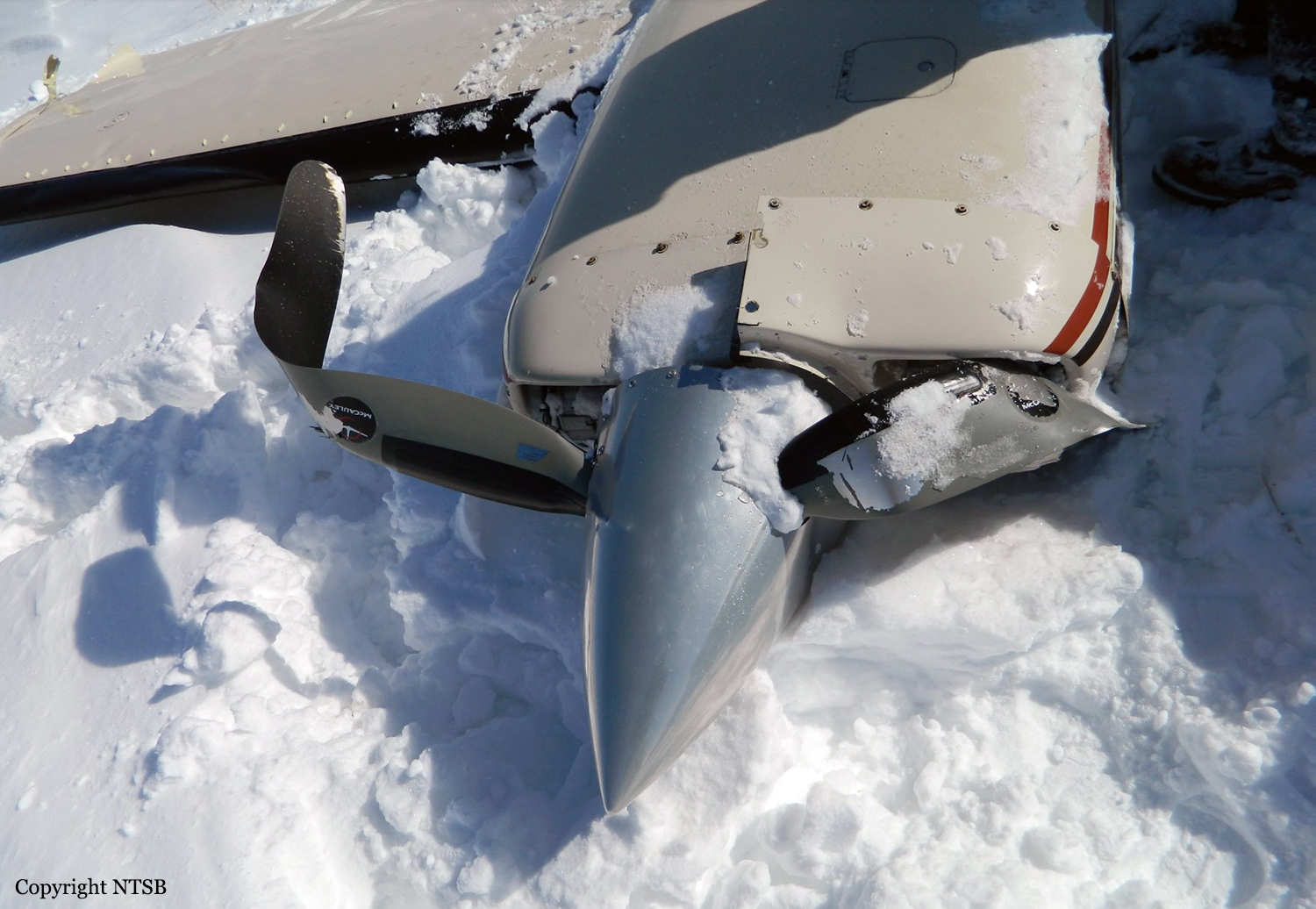
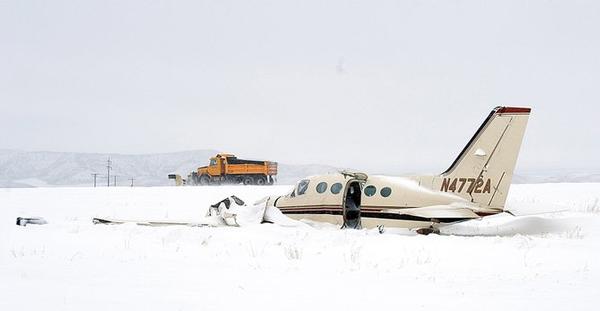
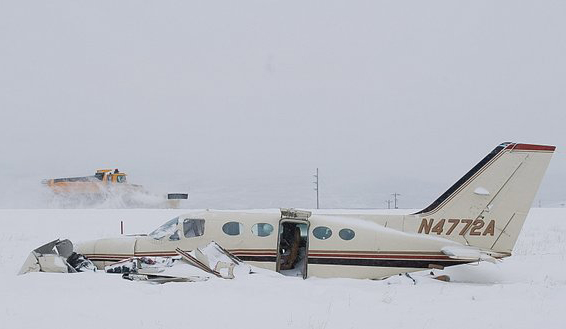
Crash of a Cessna 414A Chancellor in Hayden: 2 killed

Date & Time: Feb 19, 2012 at 1525 LT
Type of aircraft:
Registration:
N4772A
Flight Type:
Survivors:
Yes
Schedule:
Dalhart - Hayden
MSN:
414-0095
YOM:
1978
Crew on board:
1
Crew fatalities:
Pax on board:
5
Pax fatalities:
Other fatalities:
Total fatalities:
2
Circumstances:
The pilot performed an instrument approach to the runway with an approaching winter storm. A review of on-board global positioning system (GPS) data indicated that the airplane flew through the approach course several times during the approach and was consistently below the glideslope path. The airplane continued below the published decision height altitude and drifted to the right of the runway’s extended centerline. The GPS recorded the pilot’s attempt to perform a missed approach, a rapid decrease in ground speed, and then the airplane descend to the ground, consistent with an aerodynamic stall. Further, the airplane owner, who was also a passenger on the flight, stated that, after the pilot made the two “left turning circles” and had begun a third circle, he perceived that the airplane “just stalled.” An examination of the airframe and engine did not detect any preimpact anomalies that would have precluded normal operation. The airplane’s anti-ice and propeller anti-ice switches were found in the “off” position. A review of weather information revealed that the airplane was operating in an area with the potential for moderate icing and snow. Based on the GPS data and weather information, it is likely that the airframe collected ice during the descent and approach, which affected the airplane’s performance and led to an aerodynamic stall during the climb.
Probable cause:
The pilot’s inadvertent stall during a missed approach. Contributing to the accident was the pilot’s operation of the airplane in forecasted icing conditions without using all of its anti-ice systems.
Final Report:

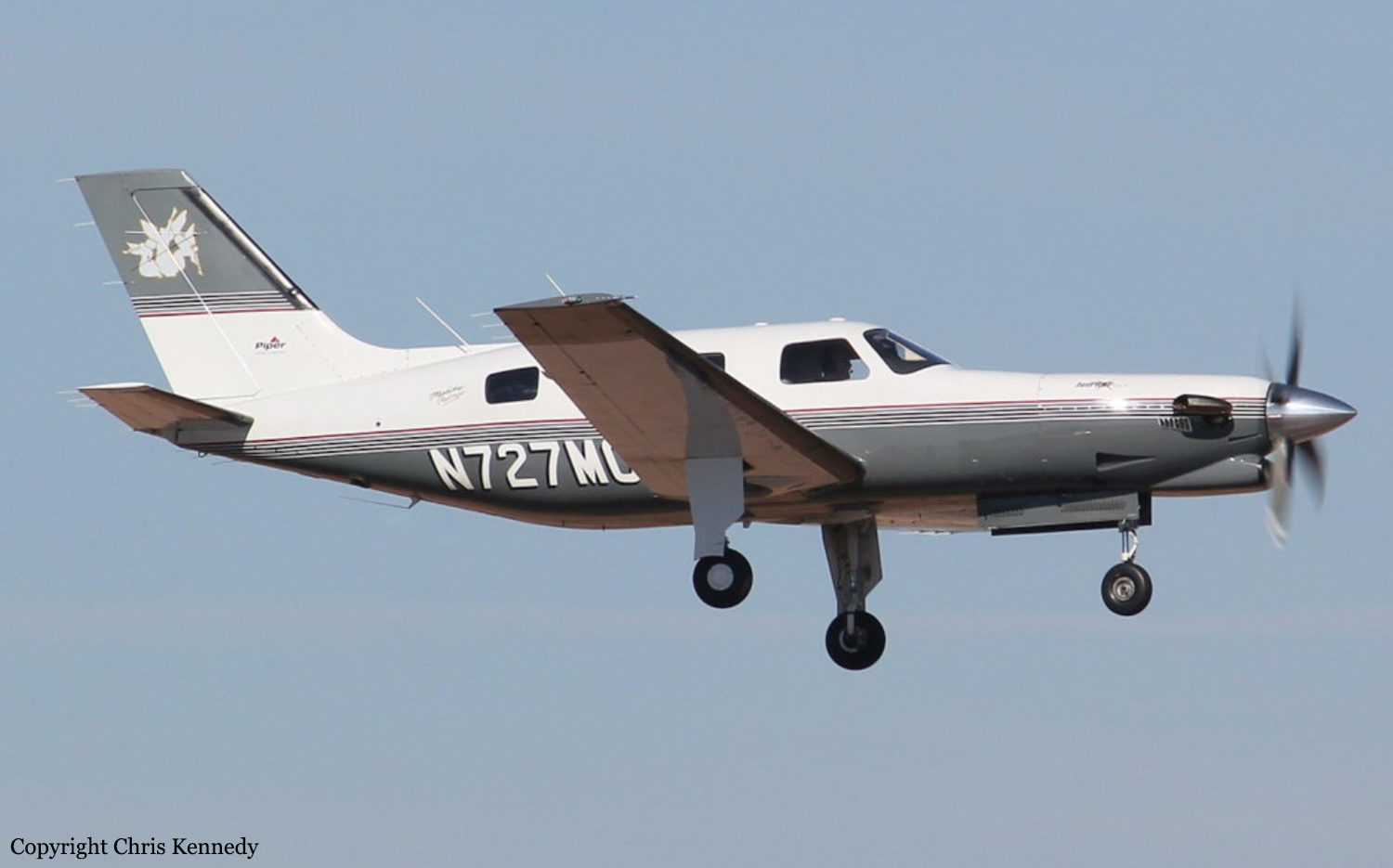
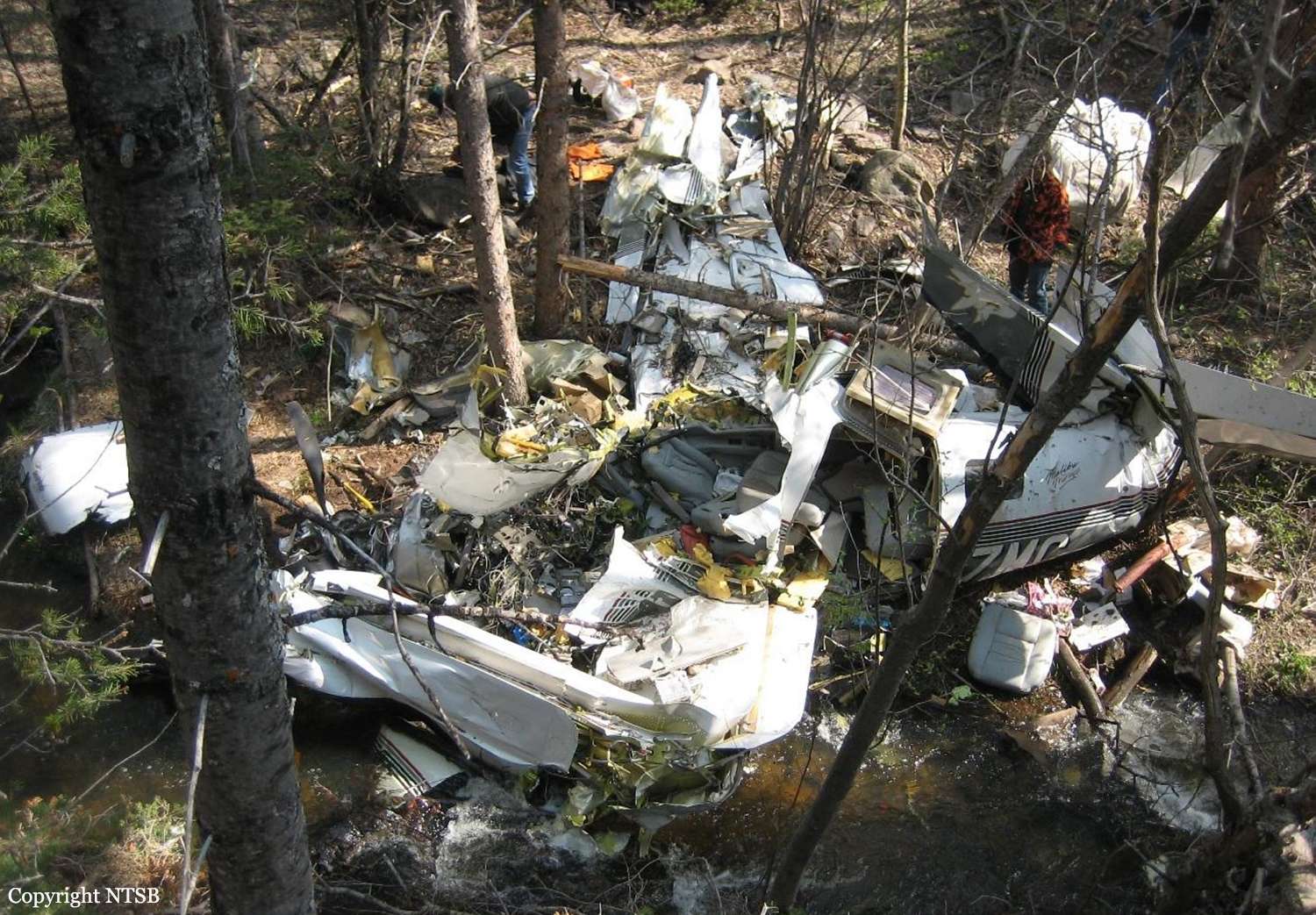
Crash of a Piper PA-46-350P Malibu Mirage near Westcliffe: 2 killed

Date & Time: Jan 9, 2011 at 1340 LT
Registration:
N727MC
Flight Phase:
Flight Type:
Survivors:
No
Site:
Schedule:
Phoenix – Pueblo
MSN:
46-36085
YOM:
1997
Crew on board:
1
Crew fatalities:
Pax on board:
1
Pax fatalities:
Other fatalities:
Total fatalities:
2
Captain / Total flying hours:
3030
Captain / Total hours on type:
467.00
Aircraft flight hours:
3734
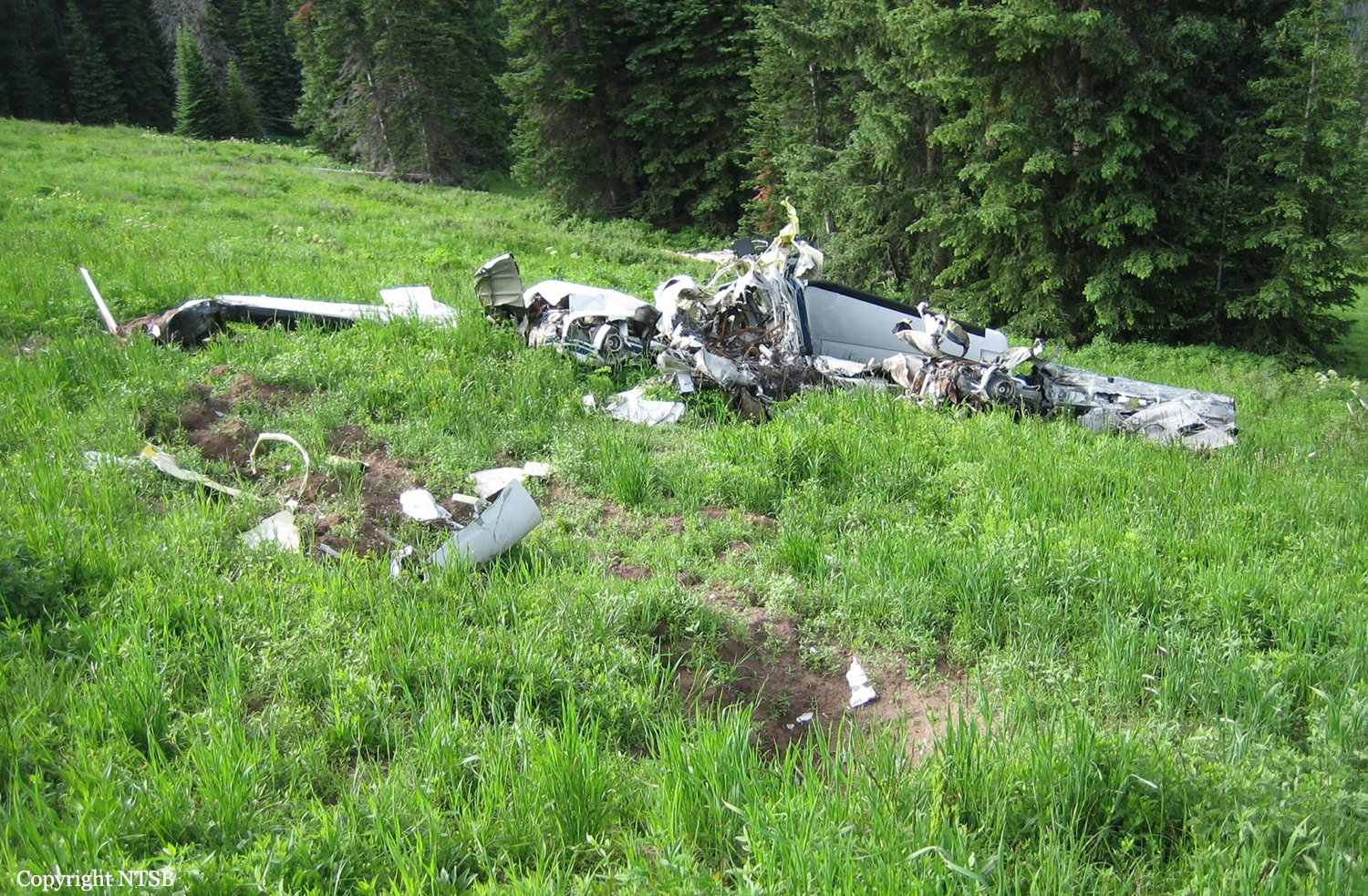
Circumstances:
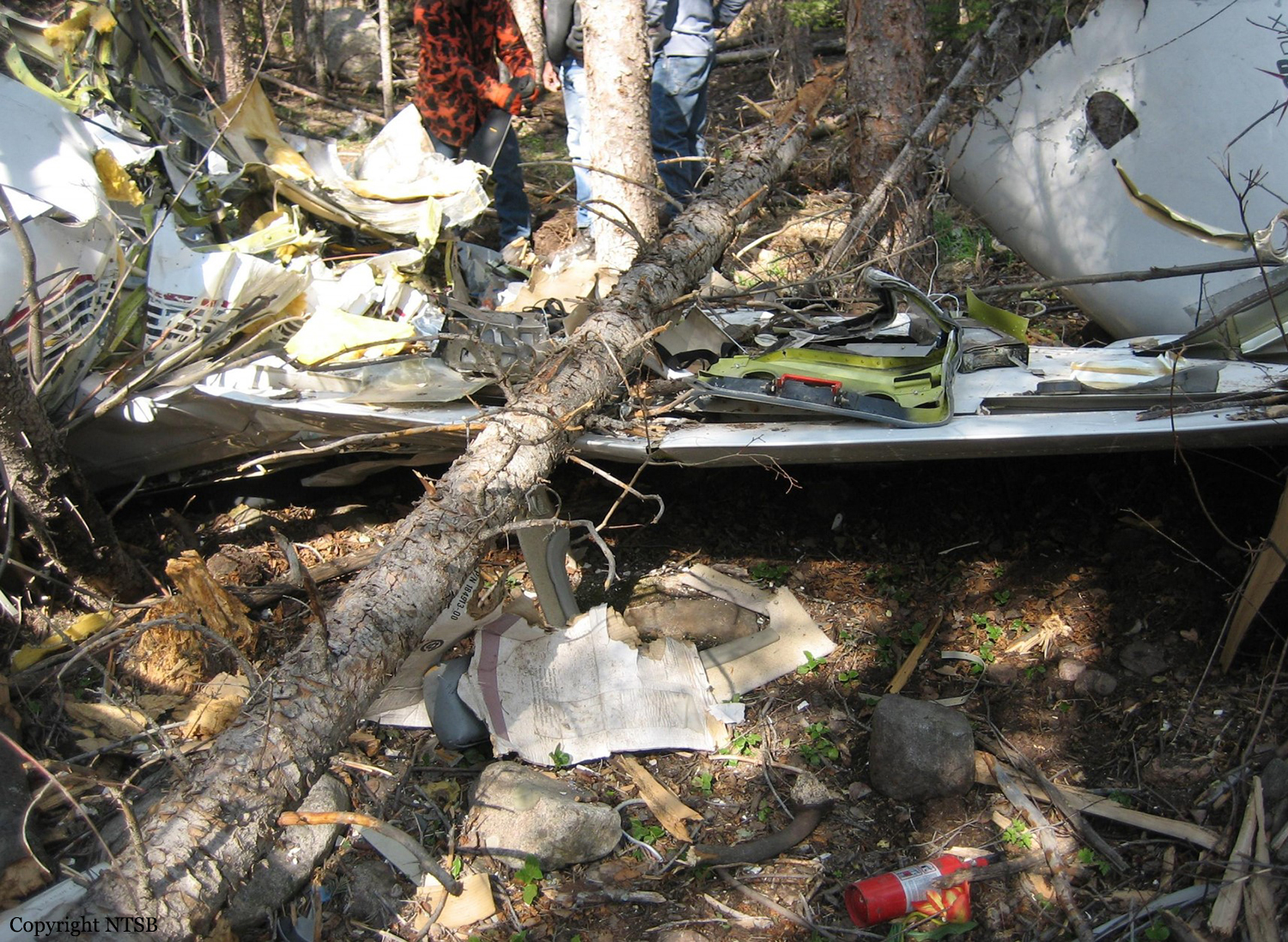
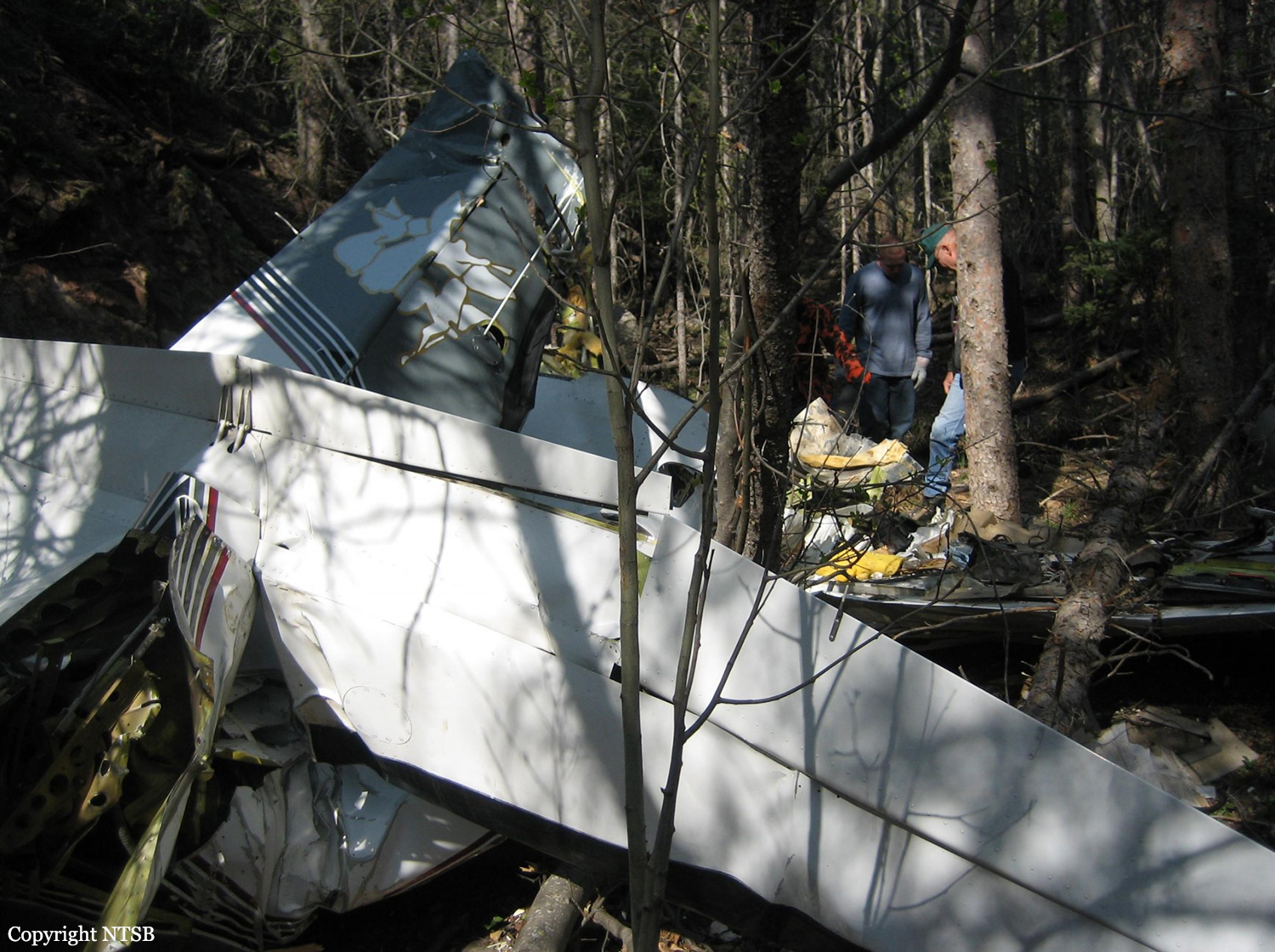
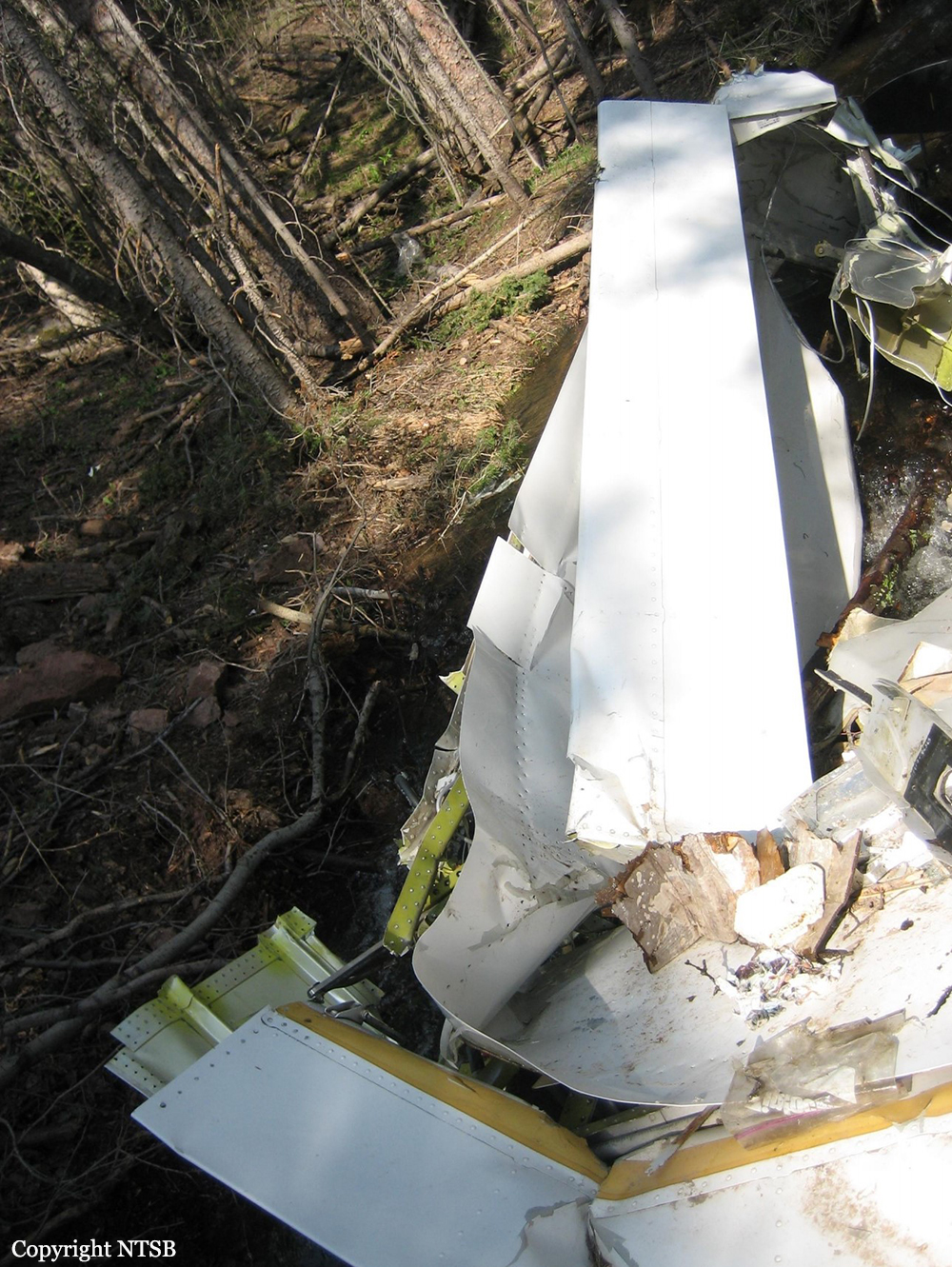
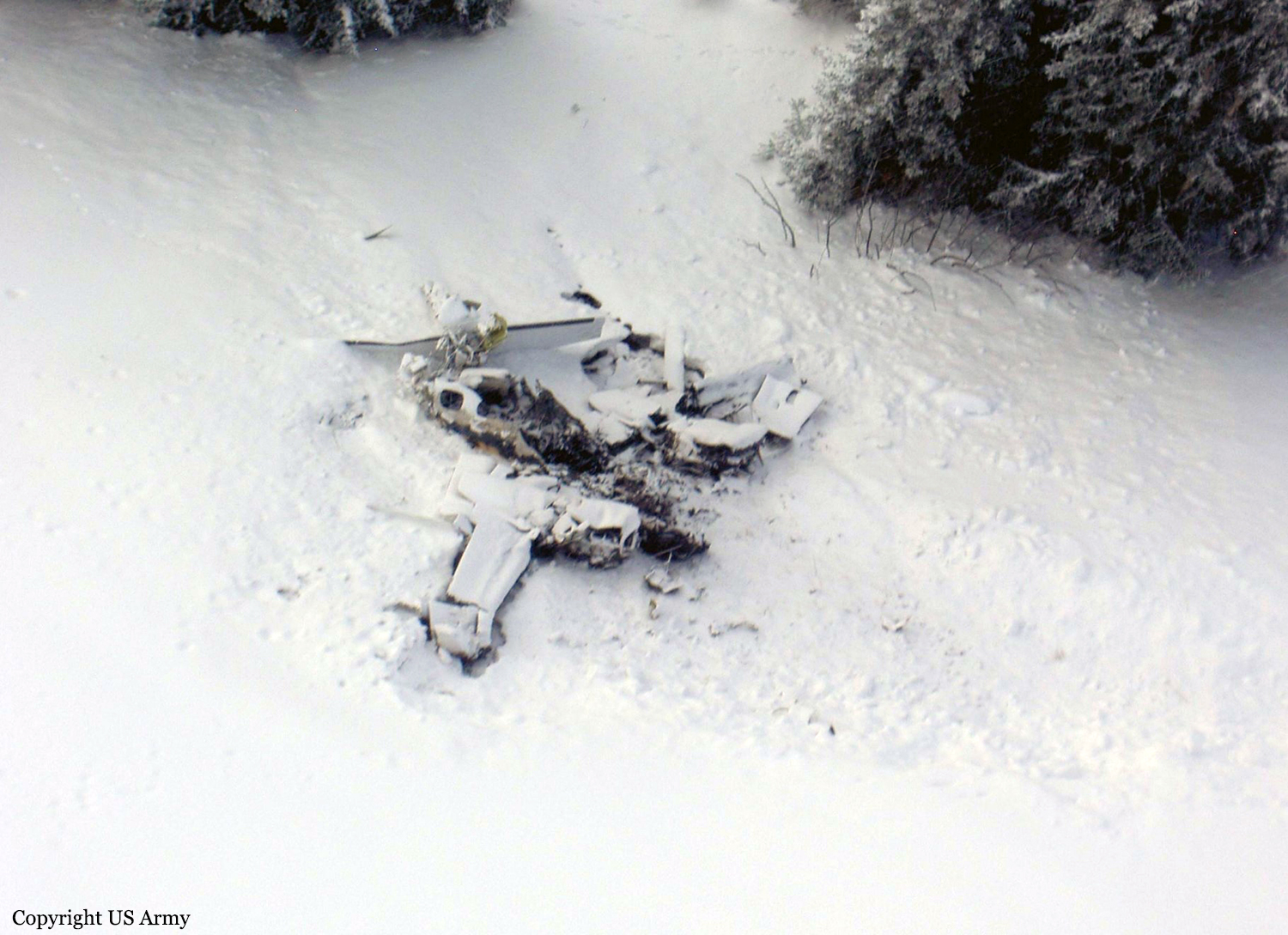
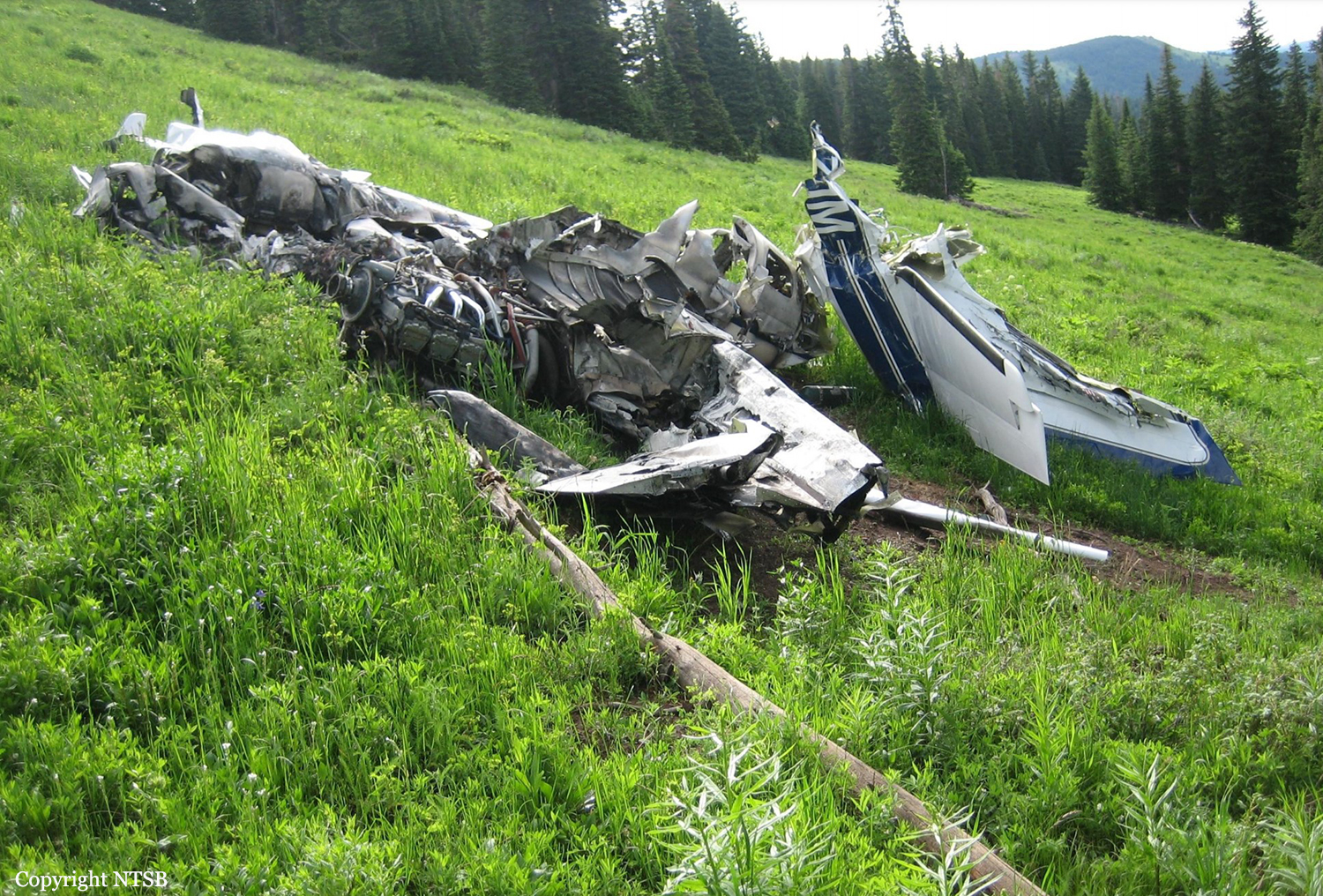
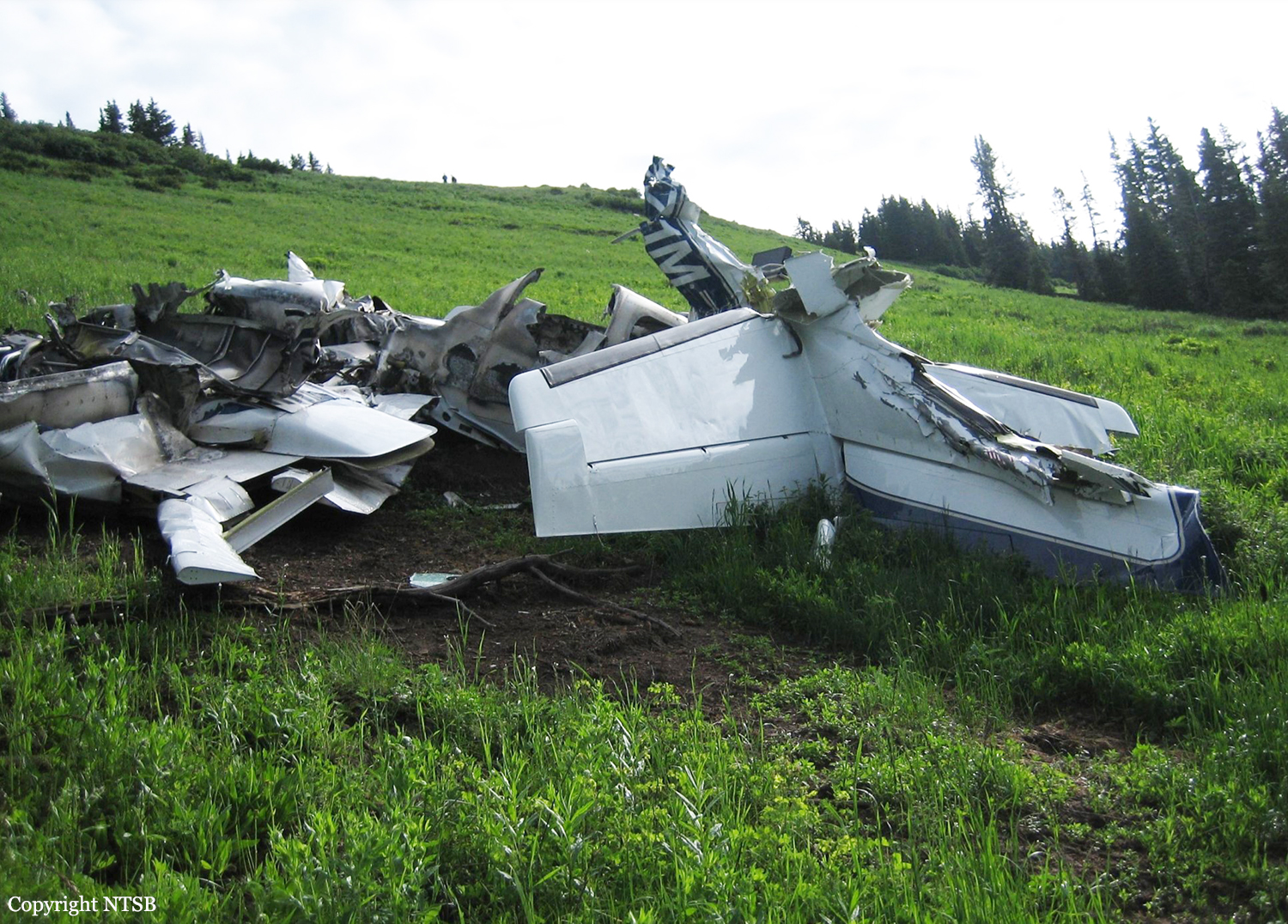
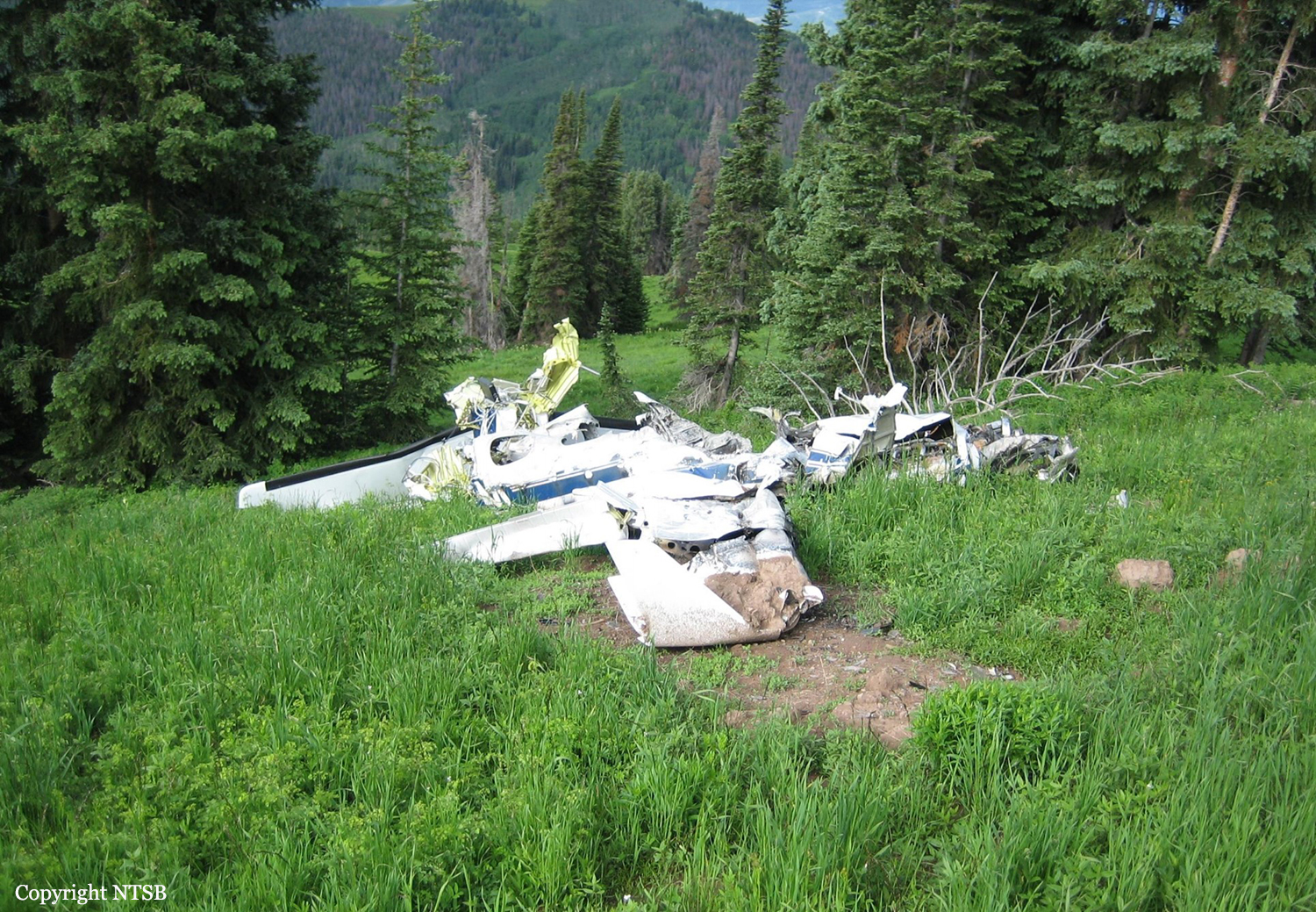
While en route to the destination airport, the pilot was issued a clearance to descend. As the airplane descended to the assigned altitude, radar plots depicted the airplane entering a right turn, climbing rapidly, and then descending rapidly in a spiral-like pattern. The airplane wreckage was found the following day in mountainous terrain. Several tall trees surrounded the perimeter of the wreckage. Many of the trees showed scuff marks down the trunks consistent with the airplane impacting the terrain in a near-vertical descent. All airplane components were accounted for at the accident site. A postaccident examination of the airplane showed no preimpact failures of the airframe or the engine. A weather analysis revealed that the airplane was descending in the immediate vicinity of a stationary front. The weather conditions in the area were conducive to the production of moderate to severe turbulence, mountain wave activity with updraft/downdrafts in excess of 750 feet per minute, and moderate icing. The radar data confirmed that the airplane began its rapid descent shortly after entering cumuliform clouds. The radar information along with the wreckage at the accident site was consistent with the pilot losing control while trying to maneuver the airplane in an area of turbulent weather.
Probable cause:
The pilot's loss of control following an encounter with moderate to severe weather.
Final Report:
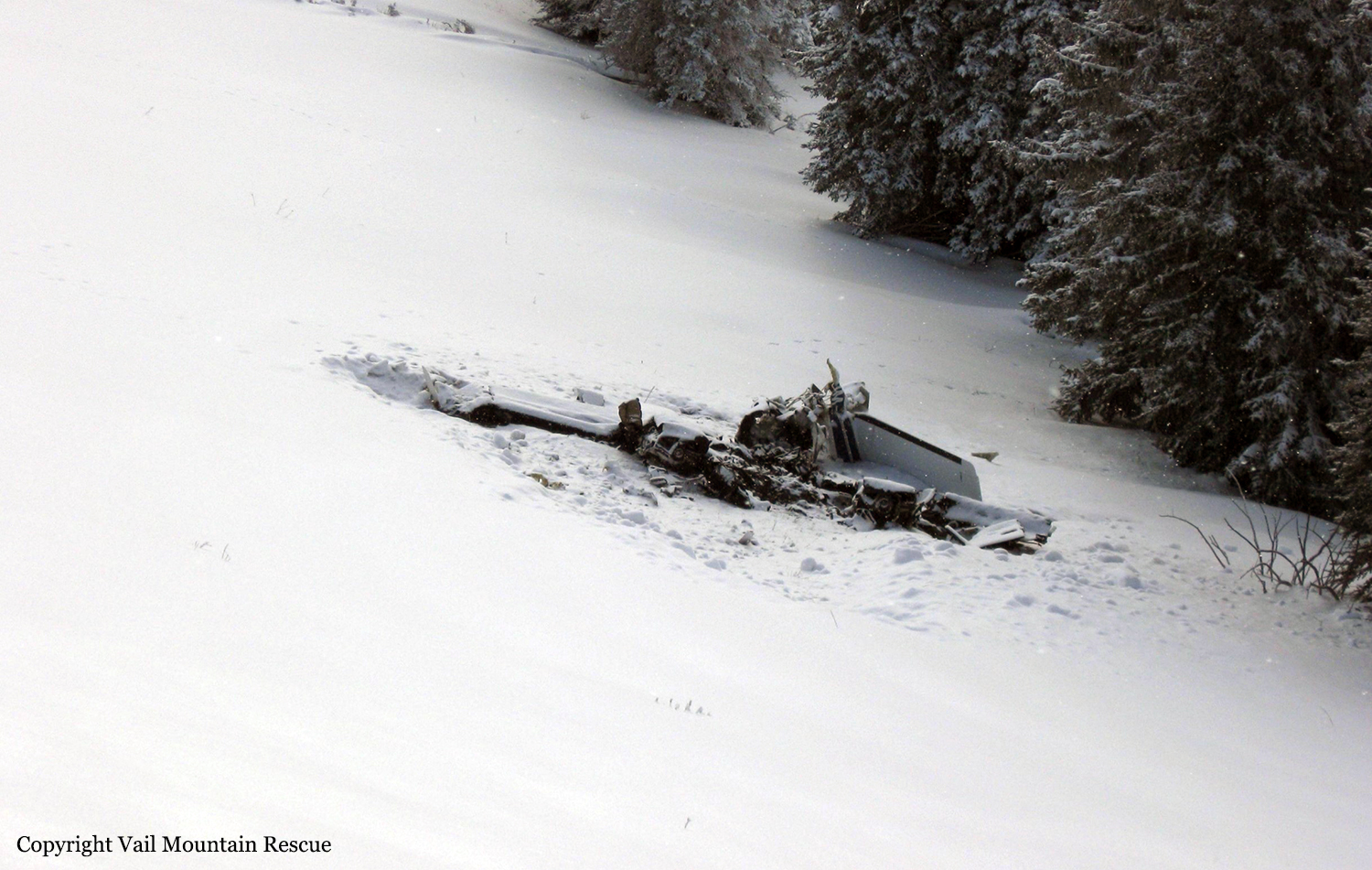
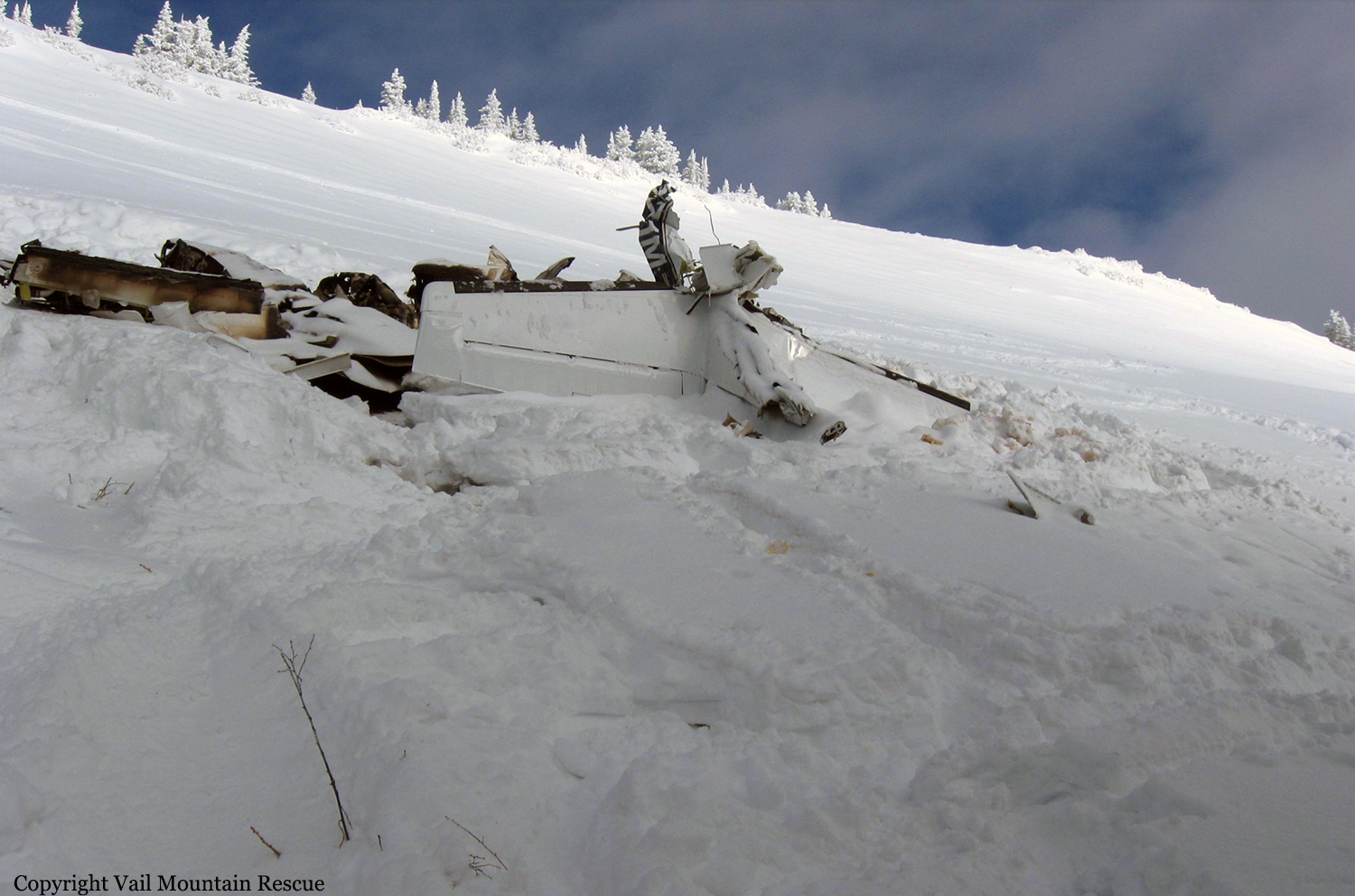
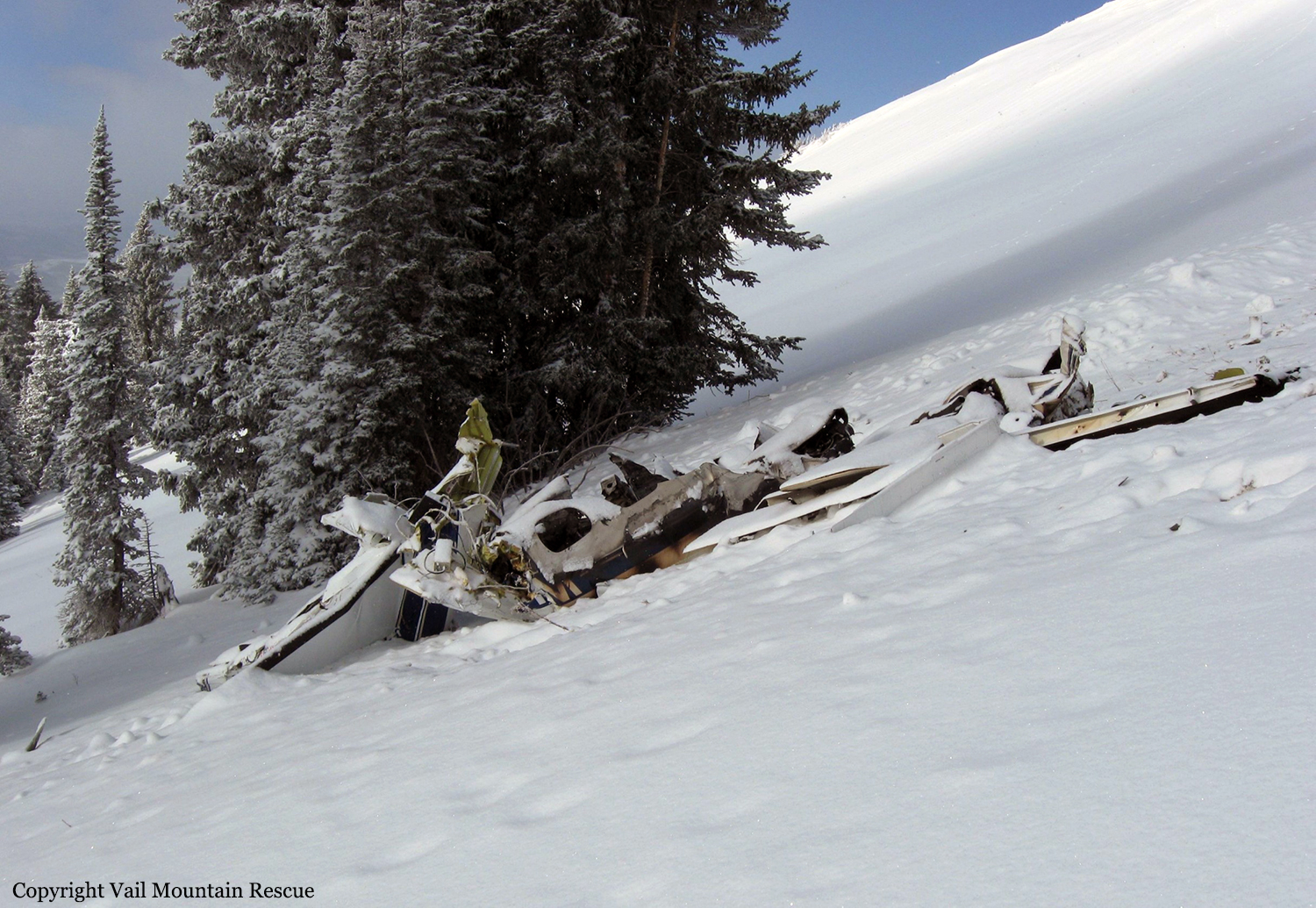
Crash of a Beechcraft B60 Duke in Edwards: 2 killed

Date & Time: Dec 15, 2010 at 1602 LT
Type of aircraft:
Registration:
N571M
Flight Type:
Survivors:
No
Site:
Schedule:
Pueblo - Eagle
MSN:
P-534
YOM:
1980
Crew on board:
1
Crew fatalities:
Pax on board:
1
Pax fatalities:
Other fatalities:
Total fatalities:
2
Captain / Total flying hours:
1300
Aircraft flight hours:
2456
Circumstances:
The air traffic controller had cleared the flight for the instrument approach and the pilot acknowledged the clearance. Radar data depicted the airplane turning toward the final approach course and then continuing the turn 180 degrees before disappearing from radar at 11,200 feet. The wreckage was located at an elevation of 10,725 feet. Examination of the terrain and ground scars indicated the airplane impacted terrain in a nose down, right turn. Impact forces and a postimpact fire resulted in substantial damage to the airplane. Examination of the airplane, engines, and de-icing systems revealed no mechanical anomalies. Weather at the time of the accident was depicted as overcast skies, reduced visibility, with snow showers in the area. An icing probability chart depicted a probability of moderate rime and mixed icing. Both AIRMETs and SIGMENTs advised of moderate icing between the freezing level and flight level 220 and occasional severe rime and mixed icing below 16,000 feet. During his weather briefing, the pilot stated that he was aware of the adverse weather conditions.
Probable cause:
Controlled flight into terrain, while on an instrument approach in instrument meteorological conditions, for undetermined reasons.
Final Report:

Crash of a Dassault Falcon 20C in Vail

Date & Time: Jan 8, 2010 at 1225 LT
Type of aircraft:
Registration:
XA-PCC
Flight Phase:
Survivors:
Yes
Schedule:
Vail - Chihuahua
MSN:
159
YOM:
1968
Location:
Crew on board:
2
Crew fatalities:
Pax on board:
5
Pax fatalities:
Other fatalities:
Total fatalities:
0
Captain / Total flying hours:
11000
Captain / Total hours on type:
5000.00
Circumstances:
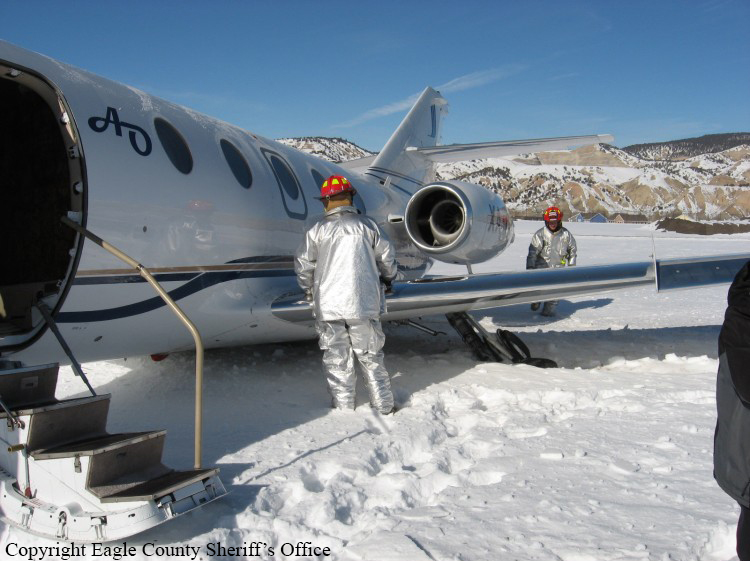
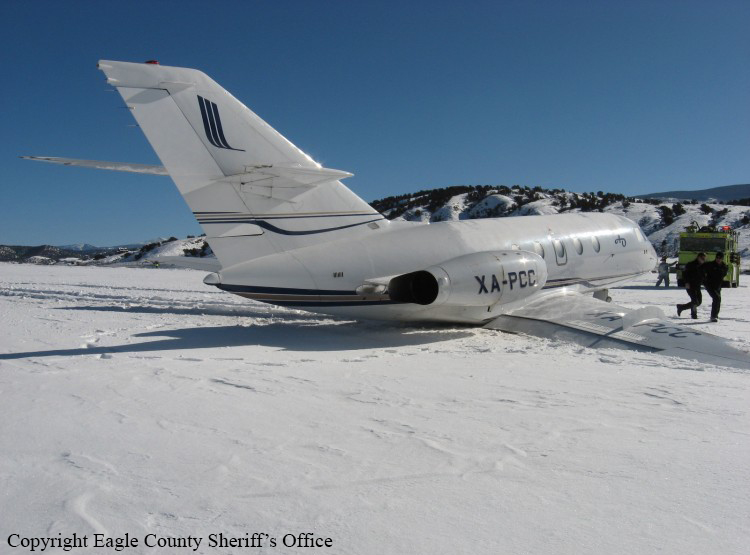
During taxi the airplane was observed to run over a tire chock with the left main gear tire. During a turn out of the ramp, the left main gear was observed to run over the nose gear chock that had been removed from the nose gear by the pilot during pre-flight. During the departure roll, the left main gear tire failed and the pilot elected to abort the takeoff attempt. The airplane did not stop on the remaining runway surface and departed the runway overrun area, coming to rest in snow-covered terrain. An examination of the airplane's systems revealed no anomalies.
Probable cause:
The flight crew’s improper preflight inspection and failure to remove the main landing gear wheel chock, resulting in damage and subsequent failure of the main landing gear tire during the takeoff roll.
Final Report:
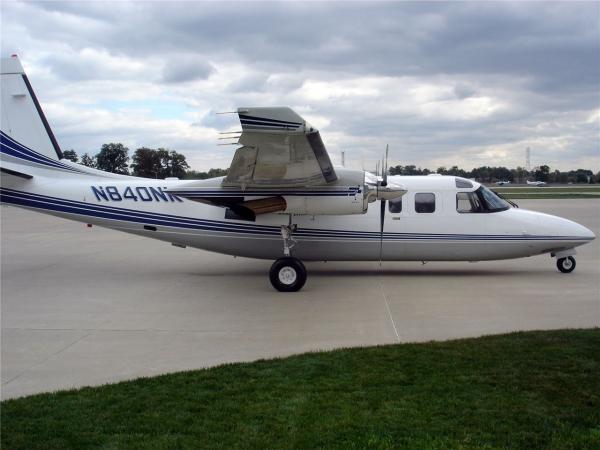
Crash of a Rockwell Gulfstream 690C Jetprop 840 in Wray: 3 killed

Date & Time: Jan 15, 2009 at 0700 LT
Operator:
Registration:
N840NK
Survivors:
No
Schedule:
Denver - Wray
MSN:
690-11734
YOM:
1978
Location:
Crew on board:
2
Crew fatalities:
Pax on board:
1
Pax fatalities:
Other fatalities:
Total fatalities:
3
Captain / Total flying hours:
10221
Copilot / Total flying hours:
2728
Aircraft flight hours:
7215
Circumstances:
The airplane, a Rockwell Grand Commander 690C Jetprop 840, was "cleared for the approach" and approximately eight minutes later was observed emerging from the clouds, flying from west to east. Witnesses reported that the nose of the airplane dropped and the airplane subsequently impacted terrain in a near vertical attitude. Impact forces and a post impact fire destroyed the airplane. Examination of the airplane's systems revealed no anomalies. Weather at the time of the accident was depicted as overcast with three to six miles visibility. An icing probability chart depicted the probability for icing during the airplane's descent as 76 percent. AIRMETS for moderate icing and instrument meteorological conditions had been issued for the airplane’s route of flight. Another airplane in the vicinity reported light to moderate mixed icing. It could not be confirmed what information the pilot had obtained in a weather briefing, as a briefing was not obtained through a recorded source. A weight and balance calculation revealed that the accident airplane was 1,000 pounds over gross weight at the time of departure and 560 pounds over gross weight at the time of the accident. It was estimated that the center of gravity was at or just forward of design limitations.
Probable cause:
The pilot’s failure to maintain aircraft control during the approach resulting in an aerodynamic stall and subsequent impact with terrain. Contributing to the accident was the pilot’s improper preflight planning and conditions conducive for structural icing.
Final Report:
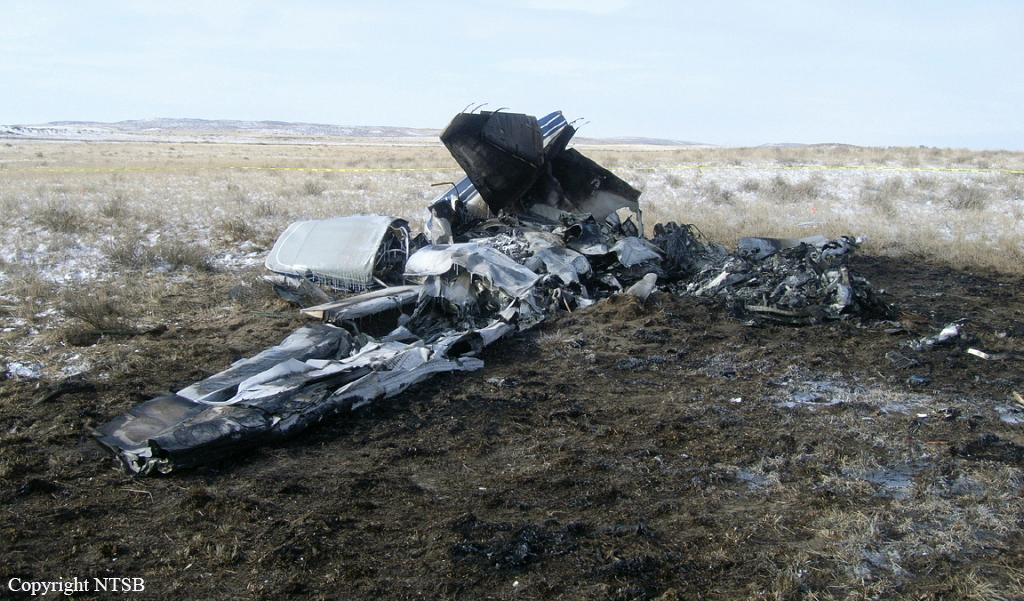
Crash of a Pilatus PC-12/45 in Hayden: 2 killed

Date & Time: Jan 11, 2009 at 0942 LT
Type of aircraft:
Registration:
N604WP
Flight Phase:
Flight Type:
Survivors:
No
Schedule:
Hayden - Chino
MSN:
604
YOM:
2004
Crew on board:
1
Crew fatalities:
Pax on board:
1
Pax fatalities:
Other fatalities:
Total fatalities:
2
Captain / Total flying hours:
867
Captain / Total hours on type:
82.00
Aircraft flight hours:
558
Circumstances:
The pilot had filed an instrument flight rules flight plan with a planned departure time of 0700 in order to arrive at his intended destination in time for a planned engagement. He and his passenger arrived at the airport approximately 0800 and requested that the airplane be fueled. The airplane was pulled from its heated hangar into heavy snowfall and fueled at 0917. As the airplane sat outside in the heavy snowfall, a measurable amount of wet slushy snow accumulated on the airplane. The Fixed Base Operator manager suggested to the pilot that the airplane be deiced, but he declined. The airplane was then pulled out to the taxiway in an effort to prevent it from becoming stuck in the snow. At 0939, approximately 22 minutes after the airplane was pulled out if its hangar, the pilot departed with a visibility of 3/4 of a mile in snow and with a 4-knot direct tailwind. The pilot then made a right turn and announced that he was heading to his first waypoint. The airplane continued into an ever tightening right turn until it impacted the ground while in an inverted position about one mile north-northwest of the runway. An examination of the airplane’s wreckage revealed no anomalies with either the engine or airframe that would have contributed to the loss of control. The airplane’s Pilot Operating Handbook and Airplane Flight Manual contained the following limitation: "The aircraft must be clear of all deposits of snow, ice and frost adhering to the lifting surfaces immediately prior to takeoff."
Probable cause:
The pilot's loss of control due to snow/ice contamination on the airplane's lifting surfaces as a result of his decision not to deice the airplane before departure.
Final Report:
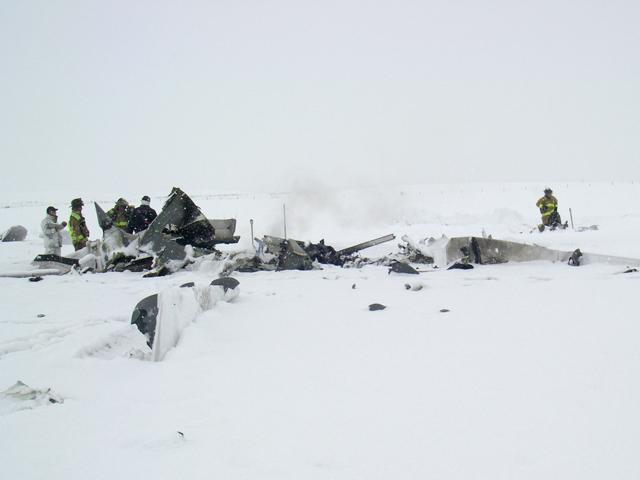
Crash of a Learjet 45 in Telluride

Date & Time: Jan 3, 2009 at 1659 LT
Type of aircraft:
Operator:
Registration:
N279AJ
Flight Type:
Survivors:
Yes
Schedule:
Scottsdale - Telluride
MSN:
45-279
YOM:
2005
Crew on board:
2
Crew fatalities:
Pax on board:
0
Pax fatalities:
Other fatalities:
Total fatalities:
0
Captain / Total flying hours:
3520
Captain / Total hours on type:
831.00
Copilot / Total flying hours:
3520
Copilot / Total hours on type:
831
Aircraft flight hours:
2338
Circumstances:
The airplane and two-person crew departed on a positioning flight. The pilot-in-command was not flying the airplane and sat in the right seat. The second-in-command was the pilot flying and sat in the left seat. The accident occurred on the second attempt to land at the destination airport on a snow-covered runway. While descending for the airport, the pilot not flying the airplane called the runway in sight. After assessing that they were too high the pilot not flying convinced the pilot flying to circle the airplane down to land on the runway. Circling at speeds greater than allowed by the approach categories, the crew performed a 360-degree turn to align themselves with the runway. The pilot flying did not have the runway in sight, and was verbally assisted by the pilot not flying. Both pilots stated that they were aligned with the center of the runway. During the flare to touchdown the pilot flying reported an unexpected gust of wind from the left requiring a correction. The airplane touched down about 20 feet off and to the right of the runway edge. Substantial damage was sustained to the airplane's wing and fuselage.
Probable cause:
The failure of both pilots to positively identify the runway prior to landing.
Final Report:

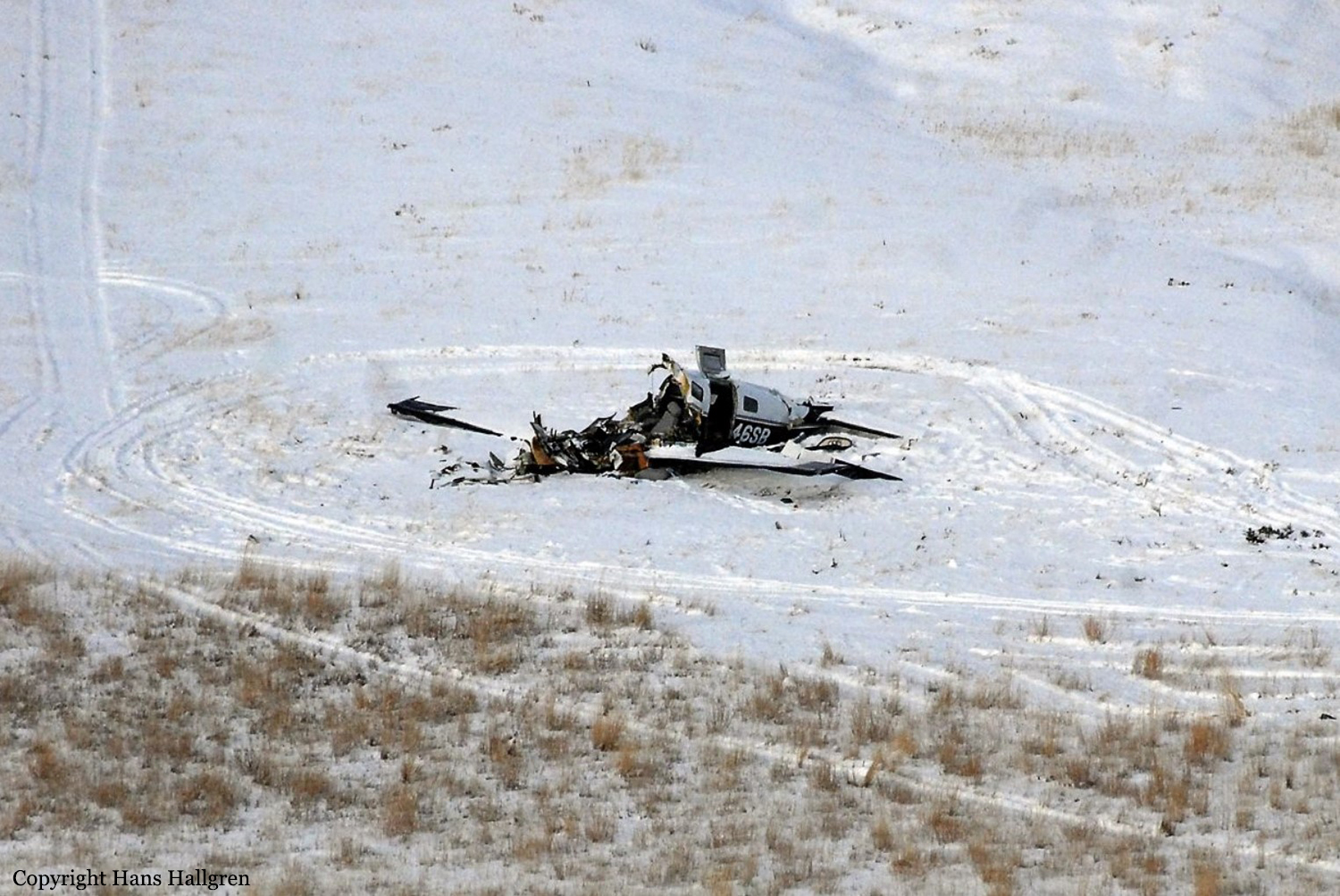
Crash of a Piper PA-46-310P Malibu in Hayden: 2 killed

Date & Time: Dec 22, 2008 at 1218 LT
Registration:
N46SB
Flight Type:
Survivors:
No
Schedule:
Hutchinson – Hayden
MSN:
46-8608039
YOM:
1986
Crew on board:
2
Crew fatalities:
Pax on board:
0
Pax fatalities:
Other fatalities:
Total fatalities:
2
Captain / Total flying hours:
1967
Captain / Total hours on type:
823.00
Copilot / Total flying hours:
2067
Copilot / Total hours on type:
798
Aircraft flight hours:
3302
Circumstances:
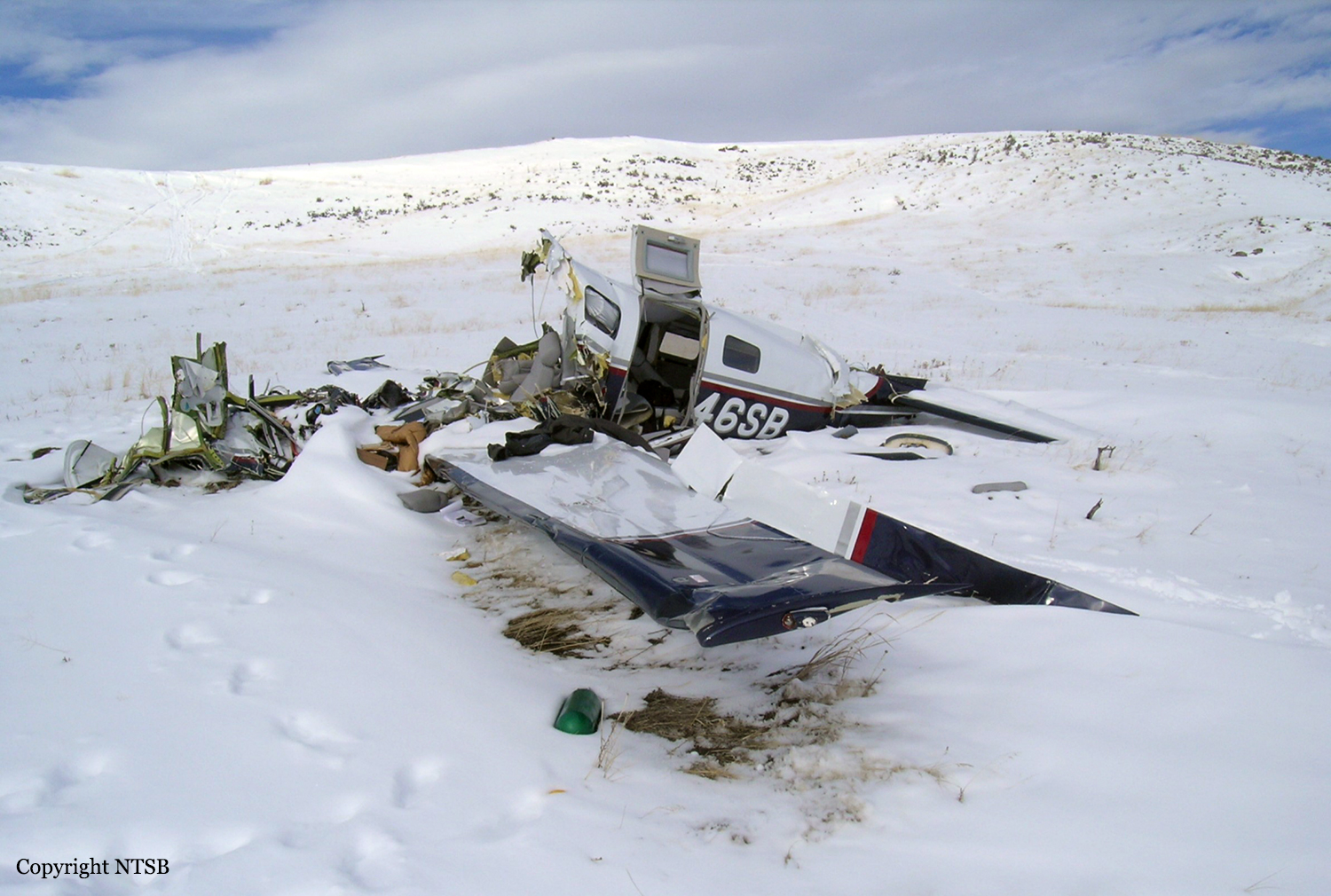
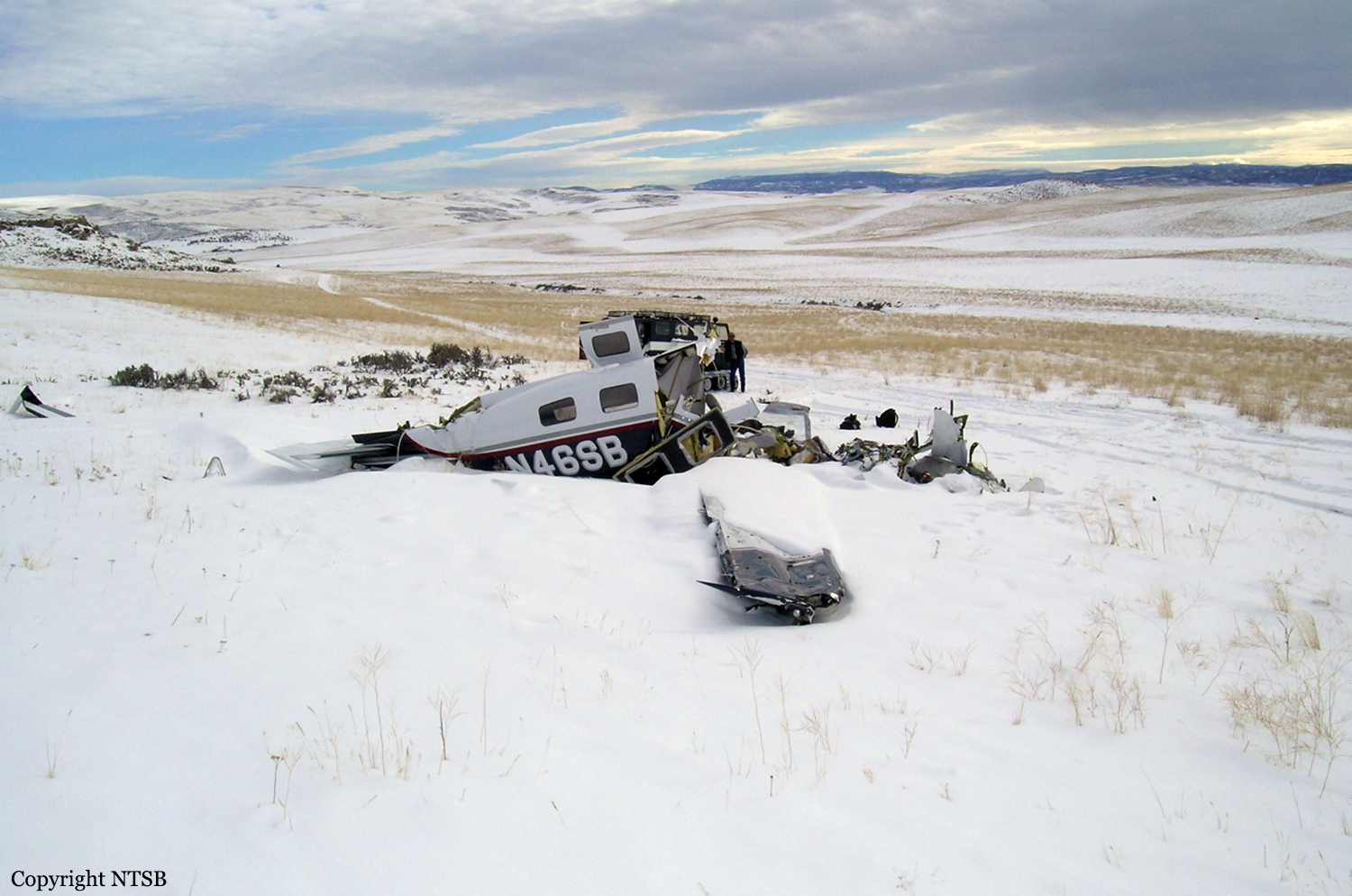
Radar data showed the airplane proceeding outbound for the procedure turn. The pilot reported that they were having trouble extending the landing gear and stated, " ... we’re trying to turn back in and do our gear here all at the same time." Shortly thereafter, the other pilot reported that they had extended the gear and had "three good, three green lights, so we’re hoping the gear is down." The pilot also said, "we are now turned inbound." She was told to contact Unicom. This was the last recorded radio transmission from the flight. The Unicom operator said that she heard the pilot say that they were "coming in." Radar data indicated the airplane crossed the localizer at almost a 90-degree angle and continued turning right until it started to intercept the localizer. The data then indicated that the airplane made a left turn away from the localizer that continued and terminated near the accident site. The turn was captured by six plots. The first plot showed the airplane had descended from 9,400 feet to 9,200 feet and its ground speed had increased from 85 knots to 152 knots. The second plot showed the altitude had increased to 9,700 feet and ground speed had decreased to 132 knots. The third plot showed the altitude had increased further to 10,200 feet and ground speed had dropped to 76 knots. The fourth plot showed the airplane had made almost a 180-degree turn and was at 8,900 feet and at a ground speed of 120 knots. The fifth plot showed the airplane was at 8,700 feet and 20 knots. The sixth and final plot showed the airplane at 8,400 feet and 38 knots. An examination of the airplane showed both wing flap jackscrews retracted and the landing gear actuators extended. The landing gear control switch was in the down position and the emergency gear extension knob was pulled out to full travel. Reduced visibility and clouds were in the vicinity of the airport at the time of the accident.
Probable cause:
The pilot's loss of situational awareness while maneuvering in adverse weather conditions, resulting in spatial disorientation.
Final Report:
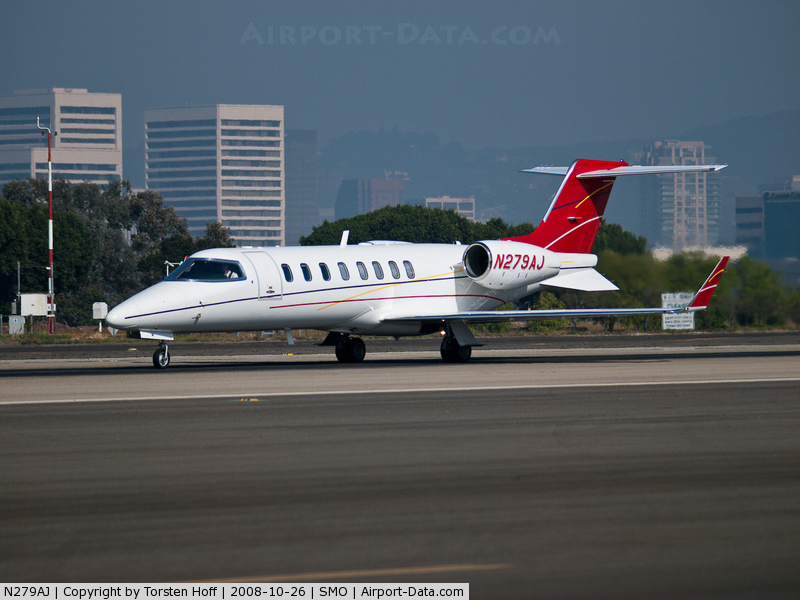
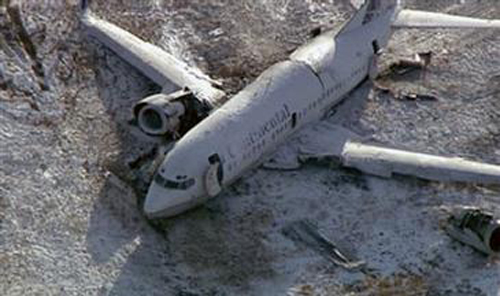
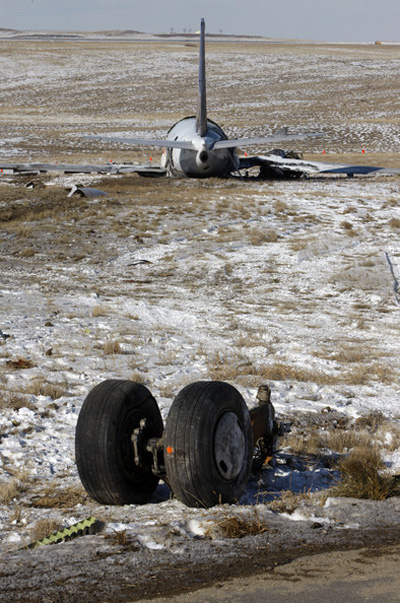
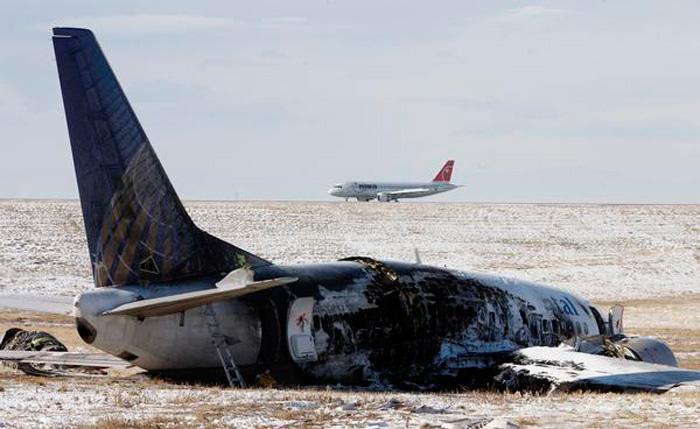
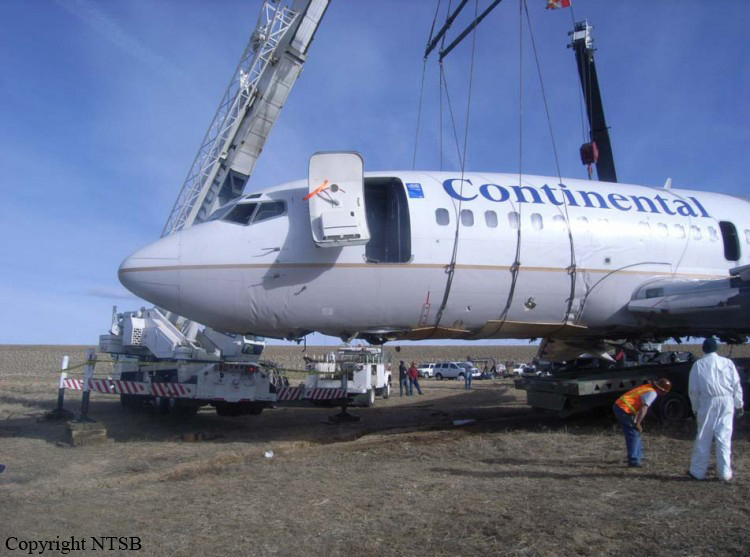
Crash of a Boeing 737-524 in Denver

Date & Time: Dec 20, 2008 at 1818 LT
Type of aircraft:

Operator:
Registration:
N18611
Flight Phase:
Survivors:
Yes
Schedule:
Denver - Houston
MSN:
27324/2621
YOM:
1994
Flight number:
CO1404
Crew on board:
5
Crew fatalities:
Pax on board:
110
Pax fatalities:
Other fatalities:
Total fatalities:
0
Captain / Total flying hours:
13100
Captain / Total hours on type:
6300.00
Copilot / Total flying hours:
8000
Copilot / Total hours on type:
1500
Aircraft flight hours:
40541
Aircraft flight cycles:
21511
Circumstances:
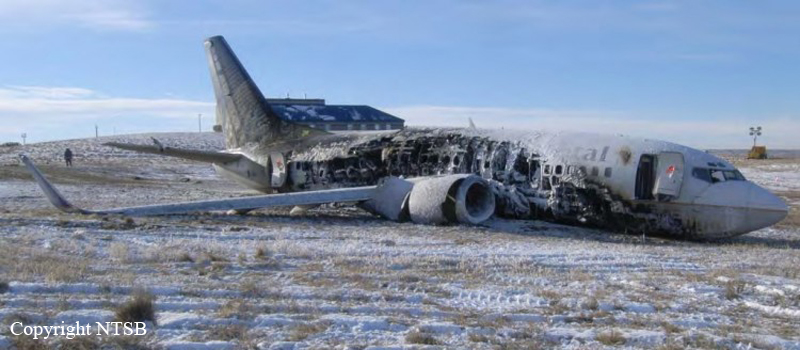
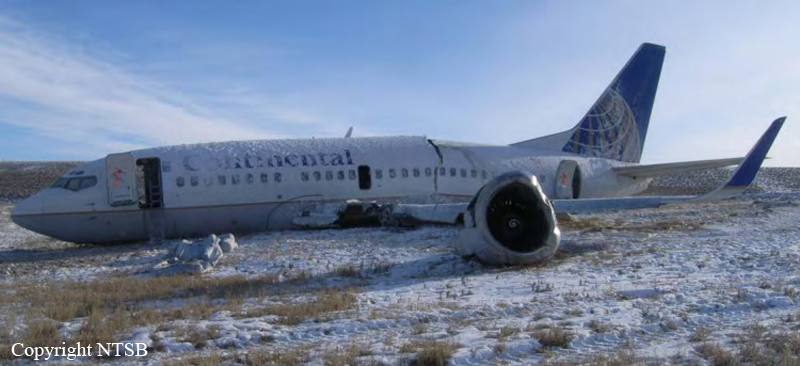
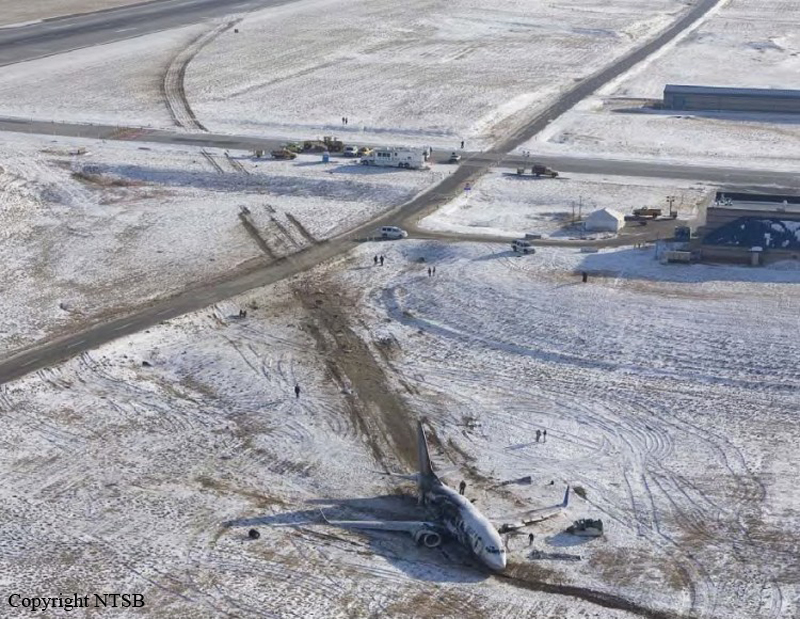
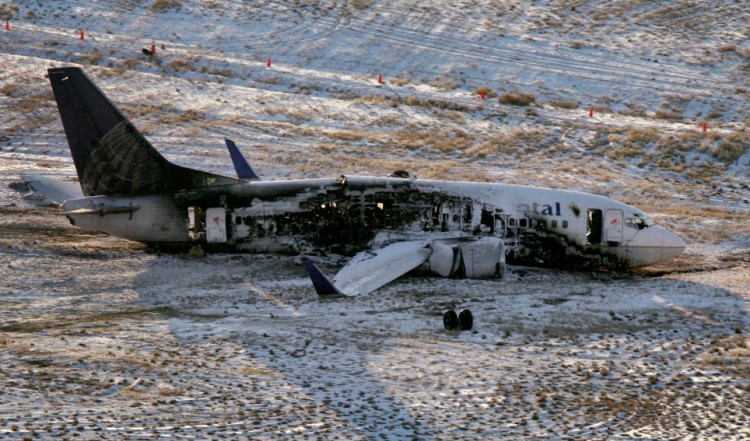
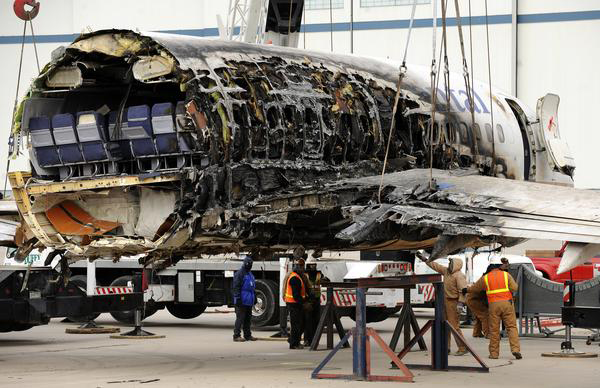
On December 20, 2008, about 1818 mountain standard time, Continental Airlines flight 1404, a Boeing 737-500, N18611, departed the left side of runway 34R during takeoff from Denver International Airport (DEN), Denver, Colorado. A postcrash fire ensued. The captain and 5 of the 110 passengers were seriously injured; the first officer, 2 cabin crewmembers, and 38 passengers received minor injuries; and 1 cabin crewmember and 67 passengers (3 of whom were lap-held children) were uninjured. The airplane was substantially damaged. The scheduled, domestic passenger flight, operated under the provisions of 14 Code of Federal Regulations Part 121, was departing DEN and was destined for George Bush Intercontinental Airport, Houston, Texas. At the time of the accident, visual meteorological conditions prevailed, with strong and gusty winds out of the west. The flight operated on an instrument flight rules flight plan.
Probable cause:
The captain’s cessation of right rudder input, which was needed to maintain directional control of the airplane, about 4 seconds before the excursion, when the airplane encountered a strong and gusty crosswind that exceeded the captain’s training and experience.
Contributing to the accident were the following factors:
1) an air traffic control system that did not require or facilitate the dissemination of key, available wind information to the air traffic controllers and pilots; and
2) inadequate crosswind training in the airline industry due to deficient simulator wind gust modeling.
Final Report: