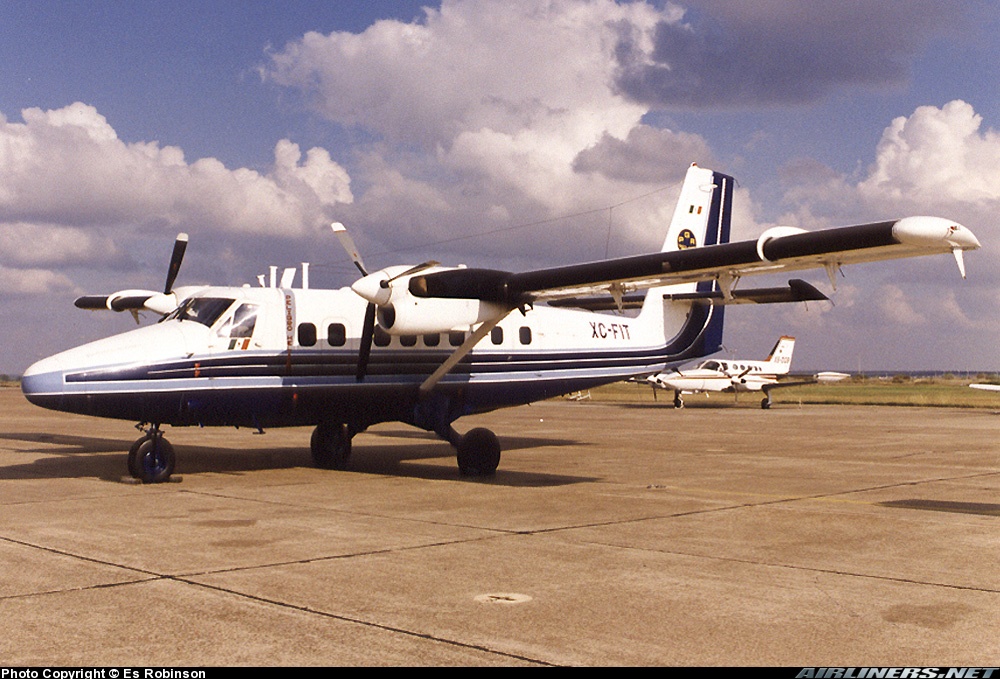
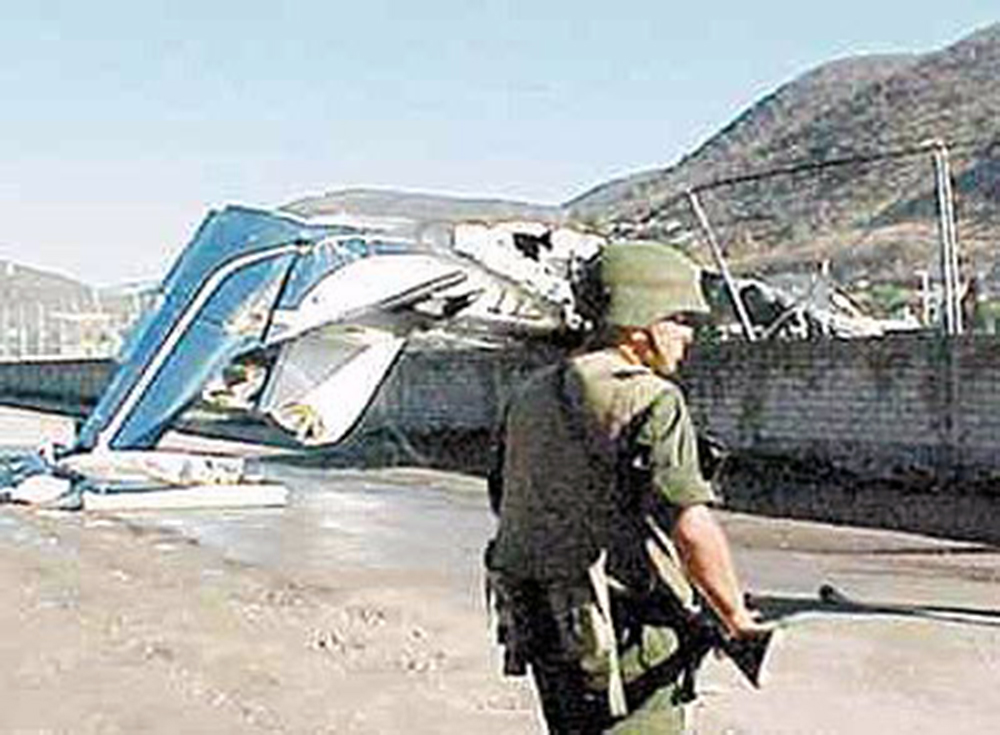
Crash of a De Havilland DHC-6 Twin Otter 300 in Chilpancingo: 4 killed

Date & Time: Jan 15, 2002 at 0845 LT
Operator:

Registration:
XC-FIT
Flight Type:
Survivors:
Yes
Schedule:
Mexico City – Chilpancingo
MSN:
752
YOM:
1981
Country:
Crew on board:
3
Crew fatalities:
Pax on board:
15
Pax fatalities:
Other fatalities:
Total fatalities:
4
Circumstances:
After touchdown on runway 15 at Chilpancingo-Doctor Alfonso G. Alarcón Airport, the aircraft went out of control, veered off runway to the right, struck several earth mounds and eventually collided with a concrete wall, coming to rest upside down. Four passengers were killed and 14 other occupants were injured. It was reported that the aircraft' speed was excessive at touchdown.
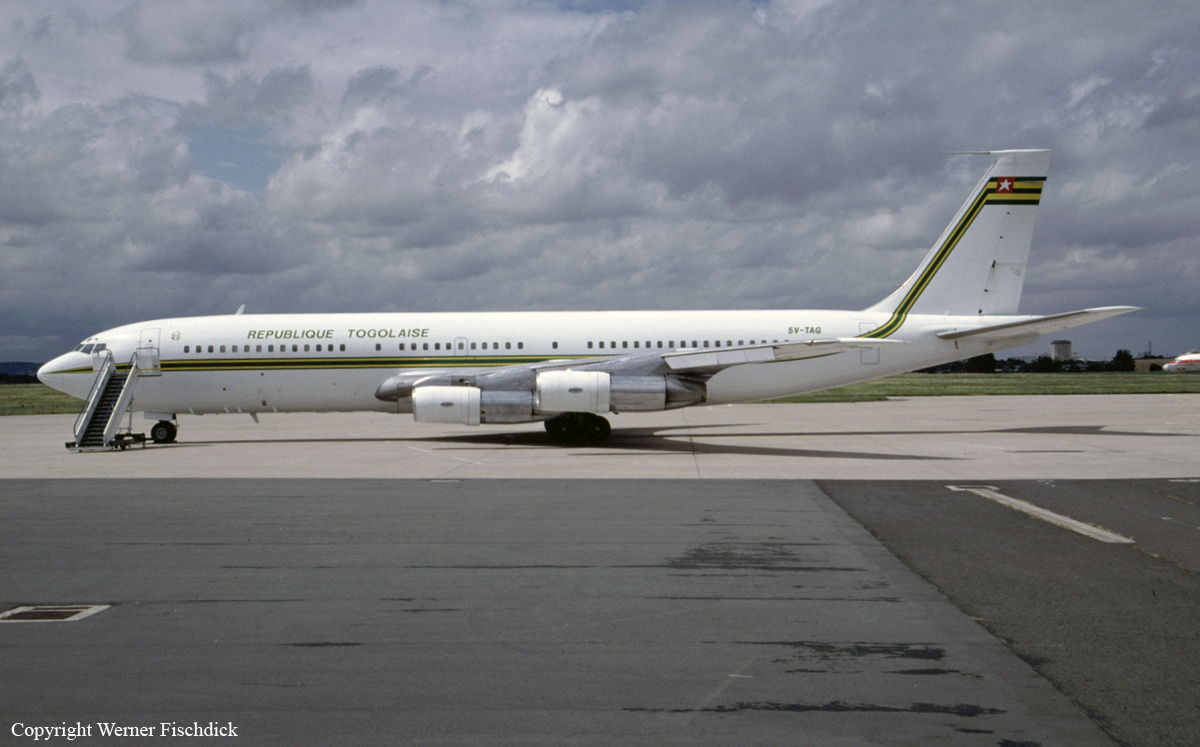
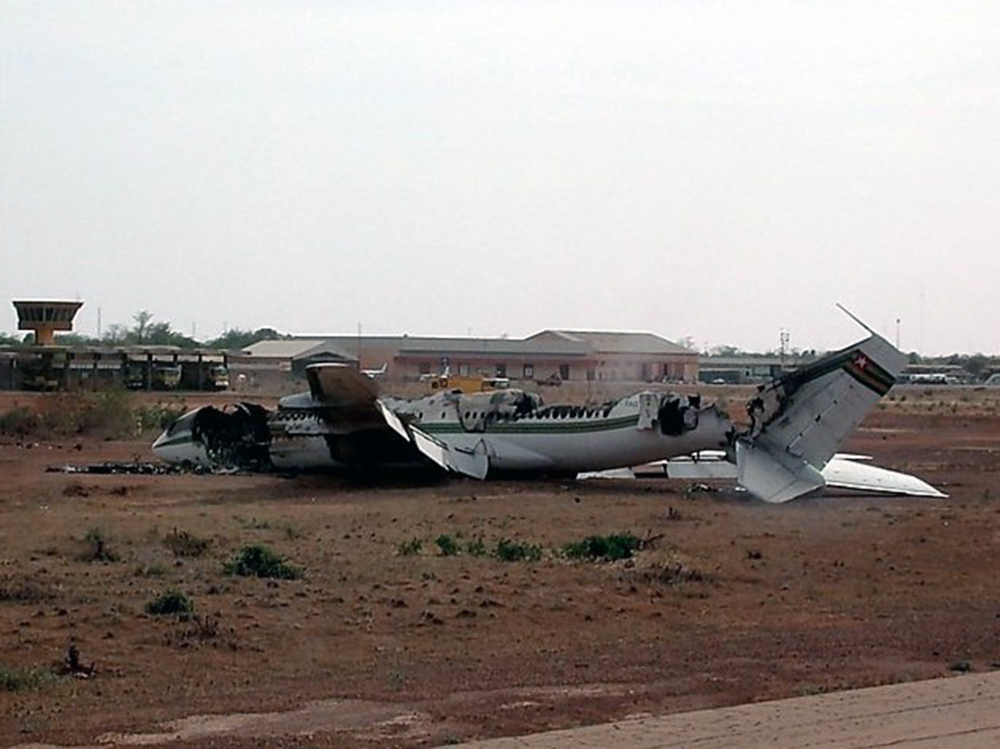
Crash of a Boeing 707312B in Niamey

Date & Time: Sep 21, 2000 at 2050 LT
Type of aircraft:
Registration:
5V-TAG
Flight Type:
Survivors:
Yes
Schedule:
Paris - Valencia - Niamey
MSN:
19739
YOM:
1968
Country:
Region:
Crew on board:
8
Crew fatalities:
Pax on board:
2
Pax fatalities:
Other fatalities:
Total fatalities:
0
Circumstances:
The four engine aircraft departed Paris-Le Bourget Airport on a flight to Valencia, Spain, where members of the chorus of the University of Bénin-Togo were dropped off. At the end of the afternoon, the crew departed Valencia on the final leg of the day to Lomé, Togo. While in cruising altitude over the Niger territory, the crew informed ATC about smoke spreading in the cockpit and was cleared for an emergency descent and landing at Niamey-Diori Hamani Airport. On approach, due to the failure of the hydraulic systems, the crew was unable to lower the undercarriage so a belly landing was completed. The aircraft slid for few dozen metres before coming to rest, bursting into flames. All 10 occupants escaped uninjured while the aircraft was destroyed by fire.
Probable cause:
It is believed that the in-flight smoke and fire was the consequence of an electrical short-circuit.

Crash of a Beechcraft 300 Super King Air in Ensenada: 3 killed

Date & Time: Aug 26, 2000 at 0245 LT
Operator:
Registration:
XC-AA72
Flight Type:
Survivors:
No
Site:
Schedule:
Hermosillo – Ensenada
MSN:
FA-87
YOM:
1986
Country:
Crew on board:
2
Crew fatalities:
Pax on board:
1
Pax fatalities:
Other fatalities:
Total fatalities:
3
Captain / Total flying hours:
8260
Copilot / Total flying hours:
1529
Aircraft flight hours:
3125
Circumstances:
The twin engine aircraft departed Hermosillo Airport at 0121LT on a flight to Ensenada, carrying one passenger and two pilots. On approach by night, the crew initiated a last turn to join the runway 11 approach path when the aircraft struck the slope of mountain and crashed about 14 km from the airport. The aircraft was destroyed and all three occupants were killed.
Probable cause:
Controlled flight into terrain while completing a turn on final approach, in night conditions, towards an airport of daytime operations only, as mentioned in the Aeronautical Information Publication (AIP).
Final Report:

Crash of an Ilyushin II-76MD at Privolzhskiy AFB

Date & Time: Jun 20, 2000 at 1750 LT
Type of aircraft:
Operator:
Registration:
RA-76723
Flight Type:
Survivors:
Yes
Schedule:
Makhatchkala – Privolzhskiy – Vozzhayevka – Khabarovsk
MSN:
00734 75245
YOM:
1987
Country:
Region:
Crew on board:
7
Crew fatalities:
Pax on board:
221
Pax fatalities:
Other fatalities:
Total fatalities:
0
Circumstances:
The aircraft departed Makhachkala on a flight to Khabarovsk with intermediate stops at Privolzhskiy AFB and Vozzhayevka AFB, carrying 221 passengers and a crew of seven on behalf of the Russian Ministry of Defense. Some 23 minutes after takeoff from Privolzhskiy AFB, while cruising at an altitude of 6,100 metres, the crew encountered technical problems with the fuel system and was cleared to return for an emergency landing. While descending to Privolzhskiy AFB, the flaps could not be lowered and a fire erupted in the left wing. After touchdown, the aircraft was unable to stop within the remaining distance, overran, lost its undercarriage and came to rest 200 metres further, bursting into flames. All 232 occupants evacuated safely while the aircraft was destroyed by a post crash fire.
Probable cause:
An in-flight fire occurred in the area between the second and third flap tracks on the left wing, which led to a failure of the fuel lines, hydraulic systems and flap control systems. The most likely cause of the fire was a production flaw, causing electric wires to touch the hydraulic system pipeline, which led to a chafing of the insulation of the wires, their short circuit with subsequent piercing of the pipeline and ignition. The unsuitability of fire extinguishing means and the unpreparedness of the fire brigade of the Privolzhskiy AFB to extinguish fires on aircraft with a flight mass of more than 50 tons led to the destruction by fire of the aircraft on the ground.

Crash of a Beechcraft E90 King Air near Goiânia

Date & Time: May 30, 2000 at 1620 LT
Type of aircraft:
Operator:
Registration:
PP-EFC
Flight Type:
Survivors:
Yes
Schedule:
Itapuranga - Goiânia
MSN:
LW-15
YOM:
1972
Location:
Country:
Crew on board:
2
Crew fatalities:
Pax on board:
7
Pax fatalities:
Other fatalities:
Total fatalities:
0
Captain / Total flying hours:
5756
Captain / Total hours on type:
2000.00
Copilot / Total flying hours:
13000
Copilot / Total hours on type:
500
Circumstances:
The twin engine aircraft departed a private strip in Itapuranga on a flight to Goiânia, carrying seven passengers and two pilots. About 10 minutes after takeoff, while in cruising altitude, the captain informed ATC about the failure of the right engine. Because the flight was short (25 minutes in total), he decided to continue to Goiânia. Twelve minutes later, the left engine failed as well. The crew declared an emergency and as he was unable to reach Goiânia Airport, he attempted an emergency landing in a pasture. The aircraft crash landed 13 km short of runway 14 threshold. All nine occupants were rescued, among them seven were injured, three seriously.
Probable cause:
Both engines failed 12 minutes apart due to fuel exhaustion. The following contributing factors were identified:
- Fuel tanks were empty,
- The fuel quantity was insufficient to cover the requested flying distance,
- Poor flight preparation and planning,
- Complacency on part of the copilot,
- Wrong decisions on part of the captain,
- Failures in the organization of flights within the operations of the Government of the State of Goiás,
- Miscalculations in fuel consumption.
- Operating an airplane with faulty fuel gauges,
- Failures in monitoring related to flight safety culture,
- Poor crew resources management,
- Poor crew coordination,
- Lack of crew interactions.
Final Report:

Crash of an Antonov AN-32B in Huambo: 3 killed

Date & Time: Mar 25, 2000
Type of aircraft:
Registration:
D2-MAJ
Flight Phase:
Flight Type:
Survivors:
Yes
Schedule:
Huambo - Luanda
MSN:
3201
YOM:
1992
Country:
Region:
Crew on board:
4
Crew fatalities:
Pax on board:
29
Pax fatalities:
Other fatalities:
Total fatalities:
3
Circumstances:
During the takeoff roll at Huambo-Albano Machado Airport, the pilot-in-command made a manoeuvre to avoid a hole in the runway when control was lost. The aircraft veered off runway, struck a ditch and came to rest, broken in two. Three passengers were killed.

Crash of an Embraer EMB-110P1 Bandeirante in Envira

Date & Time: Jan 31, 2000 at 1030 LT
Operator:
Registration:
PP-EAM
Flight Type:
Survivors:
Yes
Schedule:
Tefé - Eirunepé
MSN:
110-498
YOM:
1990
Location:
Country:
Crew on board:
2
Crew fatalities:
Pax on board:
17
Pax fatalities:
Other fatalities:
Total fatalities:
0
Captain / Total flying hours:
4800
Captain / Total hours on type:
4000.00
Copilot / Total flying hours:
2000
Copilot / Total hours on type:
1600
Circumstances:
En route from Tefé to Eirunépé, weather conditions deteriorated and the crew decided to divert to the non controlled Envira Airport. Following a visual approach in heavy rain falls, the aircraft landed 500 metres past the runway threshold. After touchdown, the crew started the braking procedure but the aircraft encountered aquaplaning conditions and was unable to stop within the remaining distance. It overran and came to rest 100 metres further in a ravine. The captain was seriously injured, the copilot suffered minor injuries and all 16 passengers escaped uninjured.
Probable cause:
The aircraft suffered aquaplaning after landing and was unable to stop within the remaining distance. The following contributing factors were identified:
- The operator authorized the crew to divert to an unapproved airport with an aircraft weighing more than the limits specified in the operations manual without performing adequate supervision in the execution of the flight;
- Deviations on part of the crew;
- Lack of Crew Resources Management;
- Lack of crew coordination and communication;
- Lack of crew instruction and training on part of the operator;
- Poor weather conditions with heavy rain falls;
- The runway surface was wet and the aircraft suffered aquaplaning;
- The aircraft was overloaded;
- The landing was completed with a tailwind component;
- The crew failed to perform the approach briefing according to published procedures.
Final Report:

Crash of a Cessna 404 Titan II in Guadalajara: 5 killed

Date & Time: Jan 25, 2000 at 1225 LT
Type of aircraft:
Operator:
Registration:
XC-AA91
Flight Phase:
Flight Type:
Survivors:
No
Schedule:
Guadalajara - Uruapan
MSN:
404-0451
YOM:
1979
Country:
Crew on board:
2
Crew fatalities:
Pax on board:
3
Pax fatalities:
Other fatalities:
Total fatalities:
5
Circumstances:
The twin engine aircraft departed Guadalajara-Miguel Hidalgo y Costilla Airport on a flight to Uruapan, carrying three engineers and two pilots. Shortly after takeoff from runway 28, while in initial climb, the aircraft lost height and crashed. All five occupants were killed.

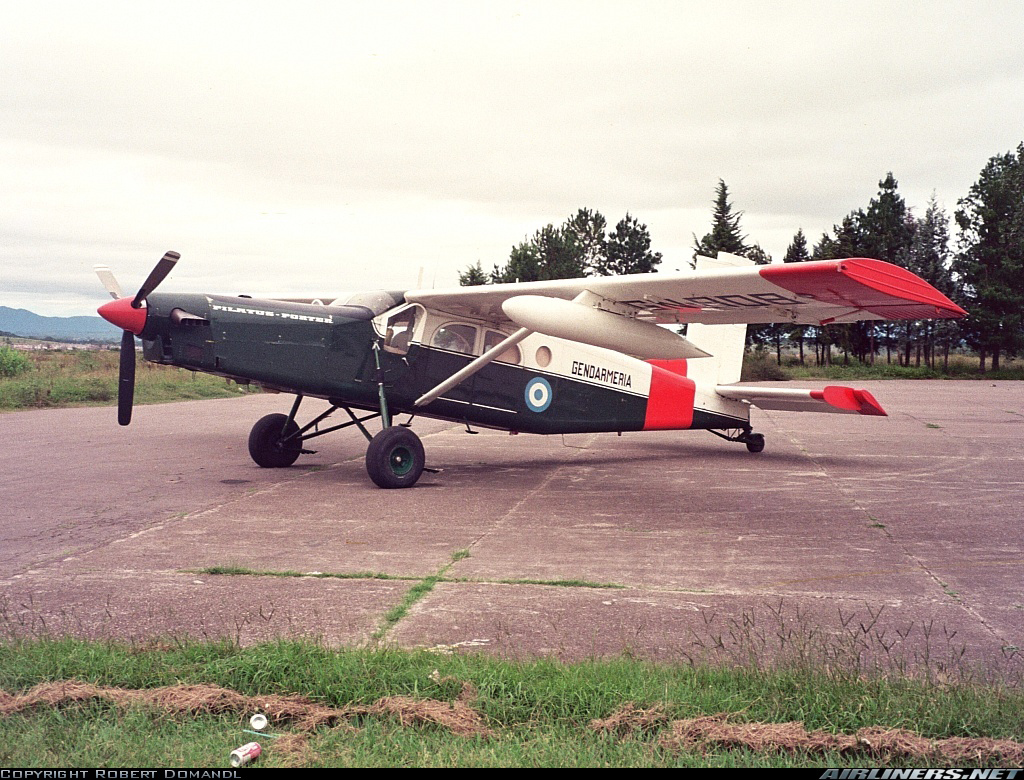
Crash of a Pilatus PC-6/B2-H2 Turbo Porter in Malargüe

Date & Time: Aug 2, 1999
Operator:
Registration:
GN-808
Flight Type:
Survivors:
Yes
MSN:
806
YOM:
1979
Country:
Crew on board:
3
Crew fatalities:
Pax on board:
0
Pax fatalities:
Other fatalities:
Total fatalities:
0
Circumstances:
The single engine aircraft crashed in unknown circumstances upon landing at Malargüe Airport. The aircraft was destroyed and all three occupants were seriously injured.

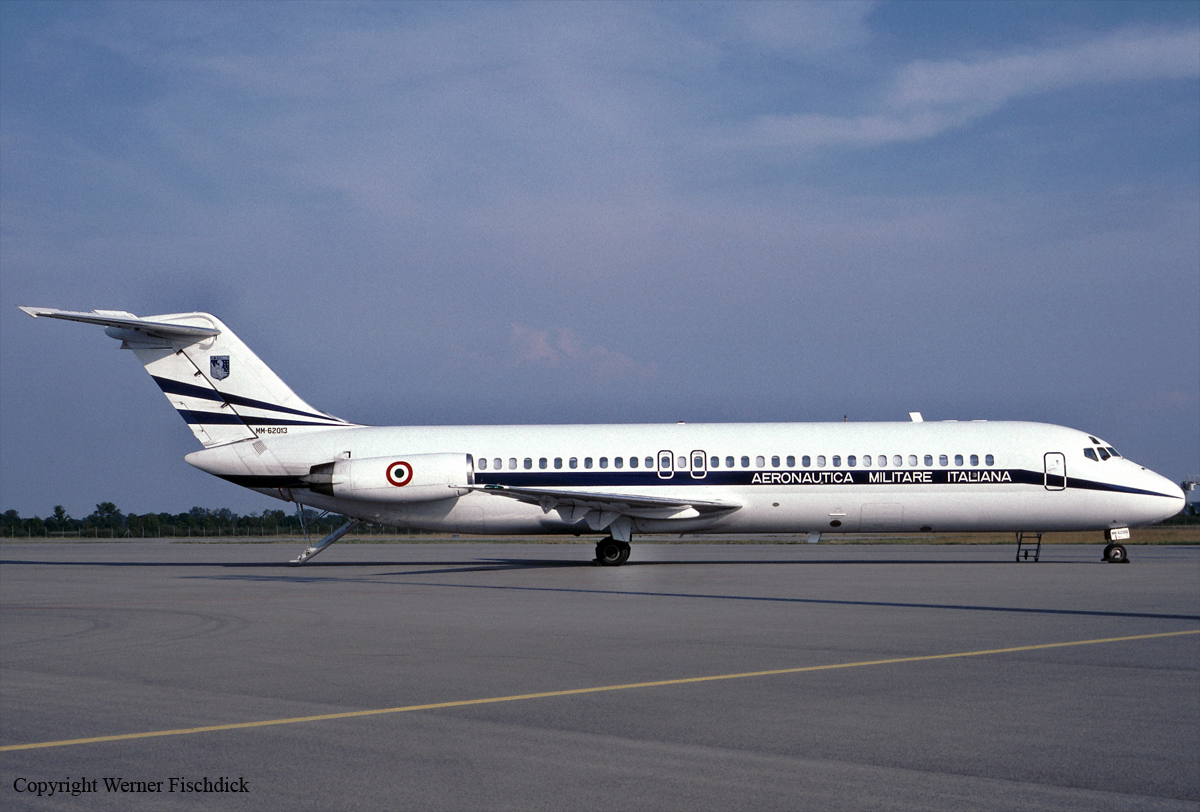
Ground collision of a Douglas DC-9-32 in Moscow

Date & Time: Feb 8, 1999 at 2018 LT
Type of aircraft:
Operator:
Registration:
MM62013
Flight Phase:
Flight Type:
Survivors:
Yes
MSN:
47600
YOM:
1974
Country:
Region:
Crew on board:
0
Crew fatalities:
Pax on board:
0
Pax fatalities:
Other fatalities:
Total fatalities:
0
Circumstances:
While parked at Vnukovo Airport, the aircraft was hit by a Rossiya Ilyushin II-96 that was taxiing to its position. The II-96 just landed at Vnukovo Airport following an official flight from Amman, carrying a delegation of the Russian Government who took part to the funerals of the King Hussein of Jordan. While taxiing by night on a snow covered taxiway, the II-96 hit with its right wing the tail of the DC-9 that was parked 28 metres to the right of the taxiway. While the II-96 was slightly damaged, the DC-9 was damaged beyond repair. There were no injuries. The DC-9 was scheduled to leave Moscow in few hours on an official flight to Rome, carrying the Italian Prime Minister Massimo D'Alema who made an official visit in Moscow.