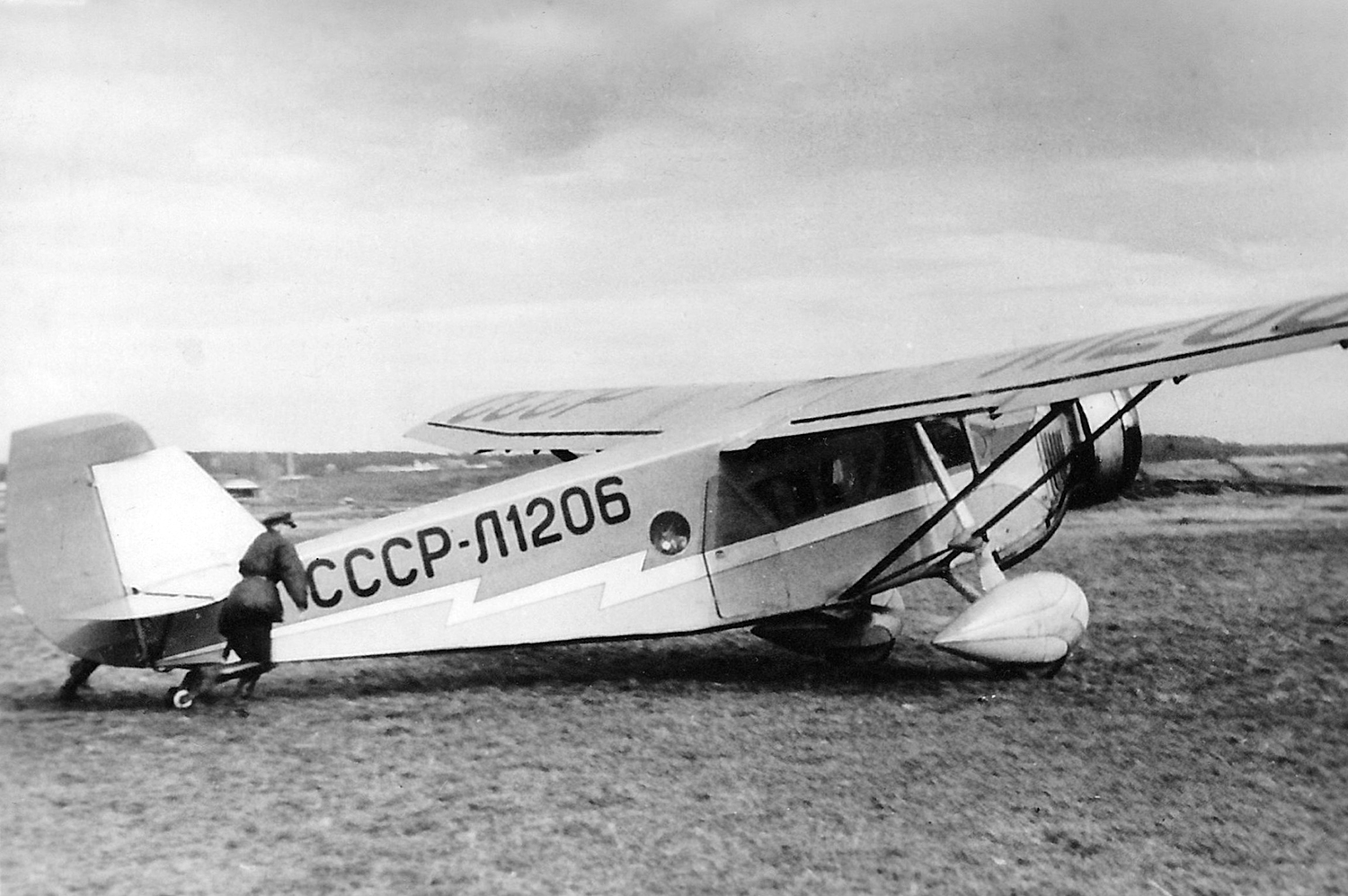
Crash of a Putilov Stal-3 in Strogino: 6 killed

Date & Time: Jun 22, 1938 at 1500 LT
Type of aircraft:
Operator:
Registration:
CCCP-L1206
Flight Type:
Survivors:
No
Schedule:
Moscow - Moscow
MSN:
206
YOM:
1935
Country:
Region:
Crew on board:
1
Crew fatalities:
Pax on board:
5
Pax fatalities:
Other fatalities:
Total fatalities:
6
Aircraft flight hours:
453
Circumstances:
The single engine airplane departed Moscow-Tushino on a local post maintenance test flight. On board were one pilot, one technician, one engineer, one guard and two firefighters from the airport. After 15 minutes of flight, the pilot initiated the approach. As he was not properly aligned, he raised the flaps but did not increase the engine power, causing the aircraft to glide the to 'slid' to the left and to descend. From a height of about 100 metres, the aircraft stalled and crashed in a field. All six occupants were killed.
Probable cause:
It was determined that the accident was the consequence of a wrong approach configuration on part of the pilot who failed to increase engine power to initiate a go around procedure.

Crash of a Tupolev ANT-9 in Novosibirsk

Date & Time: May 15, 1938
Type of aircraft:
Operator:
Registration:
CCCP-L125
Flight Phase:
Survivors:
Yes
Schedule:
Novosibirsk – Moscow
MSN:
126
YOM:
1931
Country:
Region:
Crew on board:
0
Crew fatalities:
Pax on board:
0
Pax fatalities:
Other fatalities:
Total fatalities:
0
Circumstances:
After takeoff from Novosibirsk Airport, while climbing to an altitude of 850 metres, the crew realized that the water temperature on the left engine was about 100° C. The pilot decided to attempt an emergency landing and reduced his altitude. At a height of about 200 metres, the mechanic made a mistake, positioning the elevator in a wrong angle. This caused the aircraft to nose up, to stall and eventually to crash. All occupants evacuated with minor injuries and the aircraft was damaged beyond repair.
Probable cause:
It was determined that the left engine overheated because of a loss of water in the cooling system, this following the loss of the collector's cap. This resulted in a stall at low altitude due to the fact that the aircraft's speed was insufficient.

Crash of a Polikarpov P-5 in Tambov

Date & Time: Jan 7, 1938
Type of aircraft:
Operator:
Registration:
CCCP-E41
Flight Phase:
Flight Type:
Survivors:
Yes
Schedule:
Tashkent – Penza – Moscow
MSN:
8079
YOM:
1934
Country:
Region:
Crew on board:
1
Crew fatalities:
Pax on board:
1
Pax fatalities:
Other fatalities:
Total fatalities:
0
Circumstances:
The single engine airplane was completing a special flight from Tashkent to Moscow with an intermediate stop in Penza, carrying one passenger (a mechanic) and one pilot. Weather conditions at takeoff from Penza were excellent. About 40 minutes into the flight, these conditions deteriorated with fog. The pilot elected to gain height and climbed to the altitude of 1,400 metres when he encountered icing conditions. He decided to returned to Penza and initiated a 180 turn in the clouds when he lost control of the airplane that entered a dive. At a height of 200 metres, he regained control but lost it again at a height of 100 metres before the airplane crashed near Tambov, west of Penza. Both occupants were injured.
Probable cause:
Loss of control in clouds after the pilot suffered a spatial disorientation.
The following contributing factors were identified:
- The information transmitted to the pilot concerning weather conditions en route were inaccurate,
- Icing conditions,
- The pilot was not sufficiently trained to fly in IFR conditions.

Crash of a Polikarpov P-5 in Drachevka

Date & Time: Oct 10, 1937
Type of aircraft:
Operator:
Registration:
CCCP-L1538
Flight Phase:
Flight Type:
Survivors:
Yes
Schedule:
Kharkiv – Moscow
MSN:
8064
YOM:
1934
Country:
Region:
Crew on board:
1
Crew fatalities:
Pax on board:
0
Pax fatalities:
Other fatalities:
Total fatalities:
0
Circumstances:
The aircraft departed Kharkiv on a mail flight to Moscow, carrying one pilot and a load of 400 kg of mail. About 50 minutes into the flight, the engine started to vibrate. A smell of fuel spread in the cabin and the engine caught fire. The pilot bailed out and abandoned the aircraft that dove into the ground and crashed in an open field. The pilot was burned to his legs and the aircraft was destroyed.
Probable cause:
It was determined that the engine caught fire after a fuel line ruptured in flight, causing the fuel to spill and to ignite while in contact with high temperature components. The line in question had already been repaired but the hose that had been placed to seal the line failed because it was corroded by the fuel.

Crash of a Bolkhovitinov DB-A in Russia: 6 killed

Date & Time: Aug 12, 1937
Type of aircraft:
Operator:
Registration:
URSS-N209
Flight Phase:
Flight Type:
Survivors:
No
Schedule:
Moscow – Fairbanks – Chicago – New York
Country:
Region:
Crew on board:
6
Crew fatalities:
Pax on board:
0
Pax fatalities:
Other fatalities:
Total fatalities:
6
Circumstances:
The crew was performing a transpolar flight from Moscow to New York with intermediate stops in Fairbanks and Chicago. While flying probably over the north part of Siberia, maybe over the Arctic Ocean, the aircraft disappeared after all radio communications ceased. Important SAR operations were initiated but were eventually suspended few weeks later as no trace of the aircraft nor the six crew members was found. Among the six aviators was the famous Soviet aviation pioneer Sigismond Levanevsky.
Crew:
Sigismond Levanevsky, captain,
Nikolai Kastanayev, second pilot,
Nikolai Galkovsky, radio operator,
Grigory Pobezhimov, flight engineer,
Nikolai Godovikov, flight engineer,
Viktor Levchenko, navigator.
Probable cause:
According to Soviet Authorities, weather information transmitted to the crew were inaccurate and did not reflect the truth.

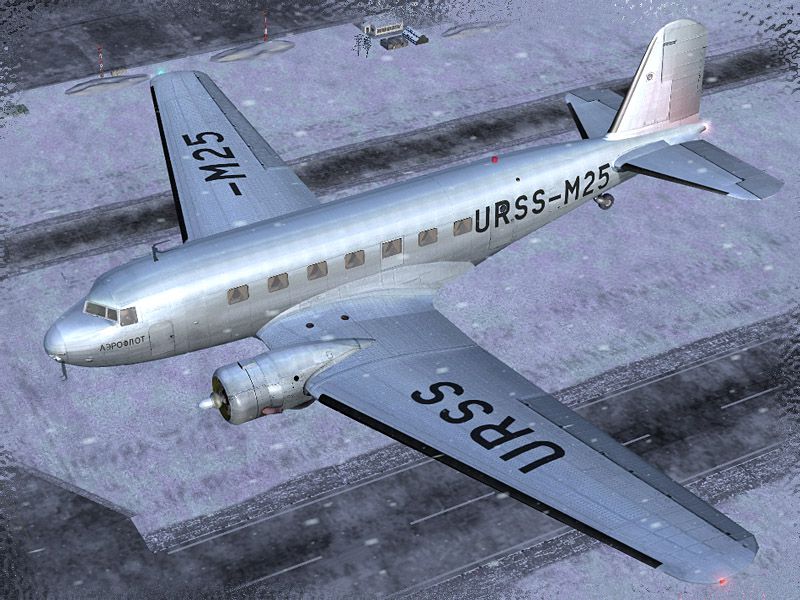
Crash of a Douglas DC-2-152 in Bistriţa: 6 killed

Date & Time: Aug 6, 1937
Type of aircraft:
Operator:
Registration:
URSS-M25
Flight Phase:
Survivors:
No
Schedule:
Bucharest – Moscow
MSN:
1413
YOM:
1935
Country:
Region:
Crew on board:
3
Crew fatalities:
Pax on board:
3
Pax fatalities:
Other fatalities:
Total fatalities:
6
Circumstances:
En route from Bucharest to Moscow, the aircraft suffered an in-flight fire that quickly spread in the cabin. Control was lost and the airplane crashed in an open field located near Bistriţa, Transylvania. All six occupants were killed.
Probable cause:
It is believed that a passenger lit a cigarette in the rear toilets where fuel vapors accumulated, causing a sudden and violent fire.

Crash of a Tupolev ANT-9 in Zaporozhie: 9 killed

Date & Time: Jun 27, 1937 at 0850 LT
Type of aircraft:
Operator:
Registration:
CCCP-L176
Flight Phase:
Survivors:
Yes
Schedule:
Simferopol – Zaporozhie – Moscow
MSN:
177
YOM:
1934
Country:
Region:
Crew on board:
2
Crew fatalities:
Pax on board:
9
Pax fatalities:
Other fatalities:
Total fatalities:
9
Aircraft flight hours:
2268
Circumstances:
A NKPO PL-5 registered CCCP-I93 departed Zaporozhie Airport on a flight to Moscow with two passengers and two crew members. Few minutes after takeoff, for unknown reasons, the crew decided to return tp Zaporozhie. In the mean time, an Aeroflot Tupolev ANT-9 was ready for a flight to Moscow, the second leg of a schedule service from Simferopol to Moscow, carrying nine passengers and two crew members. For unknown reasons, the crew of the PL-5 decided to land without permission as well as the crew of the ANT-9 started the takeoff procedure on the same runway without permission. Both airplanes collided on the runway and burst into flames. Three passengers on board the ANT-9 were injured while 8 others occupants were killed. Few hours later, one of the survivor died from his injuries. On board the PL-5, two people were killed and two others were injured.
Probable cause:
The collision was the consequence of a series of omissions, errors and violations on part of both crews who failed to follow the published procedures, starting a landing manoeuvre and a take off manoeuvre without any clearance. Poor flight supervision and organisation by the airport authority was considered as a contributing factor.

Crash of a Laville PS-89 (ZIG-1) in Moscow: 6 killed

Date & Time: Nov 29, 1935
Type of aircraft:
Registration:
CCCP-L2140
Flight Type:
Survivors:
No
Schedule:
Moscow - Moscow
MSN:
01
YOM:
1935
Country:
Region:
Crew on board:
6
Crew fatalities:
Pax on board:
0
Pax fatalities:
Other fatalities:
Total fatalities:
6
Circumstances:
A crew of six (pilots and engineers) was conducting a test flight on this first prototype of the Russian Manufacturer Laville. The aircraft was designed by the French engineer André Laville but all construction was performed on behalf of Zavod Imeni Goltsman (ZIG). On approach to Moscow, the aircraft went out of control and crashed in a field, killing all six occupants, among them the Russian test pilot A. V. Kulev.
Probable cause:
Loss of control following a structural failure of the tail. The crash was attributed to a flaw in the workmanship, not in the design, and work continued on the project under the leadership of P. I. Eberzin.

Crash of a Polikarpov P-5 in Arsen'evo: 1 killed

Date & Time: Sep 27, 1935 at 0340 LT
Type of aircraft:
Operator:
Registration:
CCCP-L1902
Flight Phase:
Flight Type:
Survivors:
No
Schedule:
Moscow - Kharkiv
MSN:
9563
YOM:
1935
Country:
Region:
Crew on board:
1
Crew fatalities:
Pax on board:
0
Pax fatalities:
Other fatalities:
Total fatalities:
1
Aircraft flight hours:
478
Circumstances:
The pilot, sole on board, departed Moscow Airport at 2305LT on September 26, one hour beyond the schedule ETD, on a night mail flight to Kharkiv. While cruising at night between the cities of Tula and Orel, the pilot lost his bearings because the light beacon was not functioning. It was later determined that the light beacons between Tula and Orel were out of service after midnight. After more than four hours of flight, the pilot attempted an emergency landing when he lost control of the airplane that crashed in a field located in Arsen'evo. The aircraft was destroyed and the pilot was killed.
Probable cause:
It was determined that the accident was the consequence of a loss of control while flying at night without sufficient visual cues. The operations cleared the pilot to complete the flight while the light beacons were unserviceable on the leg from Tula to Orel. Also, the pilot was totally inexperienced in night flight which was considered as contributing factors.

Crash of a Tupolev ANT-9 in Moscow

Date & Time: Oct 22, 1934
Type of aircraft:
Operator:
Registration:
D-2831
Survivors:
Yes
Schedule:
Berlin - Moscow
MSN:
145
YOM:
1933
Country:
Region:
Crew on board:
2
Crew fatalities:
Pax on board:
1
Pax fatalities:
Other fatalities:
Total fatalities:
0
Circumstances:
On final approach to Moscow Airport, the crew encountered poor weather conditions. Apparently to establish a visual contact with the ground, the crew reduced his altitude when the aircraft impacted trees and crashed in a wooded area located 5 km from Shakhovskaya, in the suburb of Moscow. All three occupants were injured and the aircraft was destroyed.