Zone

Crash of a Grumman TS-2A Tracker near Banning: 1 killed

Date & Time: Oct 5, 1998 at 1236 LT
Type of aircraft:
Operator:
Registration:
N416DF
Flight Phase:
Flight Type:
Survivors:
No
Site:
Schedule:
Hemet - Hemet
MSN:
613
YOM:
1958
Flight number:
Tanker 96
Crew on board:
1
Crew fatalities:
Pax on board:
0
Pax fatalities:
Other fatalities:
Total fatalities:
1
Captain / Total flying hours:
16680
Captain / Total hours on type:
865.00
Aircraft flight hours:
10849
Circumstances:
The air tanker pilot was on a fire suppression mission with fire retardant chemicals aboard, and had made two previous drops on the fire line. Another tanker and spotter pilot witnessed the last drop approach, and reported that the pilot was turning from base leg to the westerly drop heading downwind while in a 60-degree left bank. The aircraft suddenly rolled left to 90 degrees, and at that point the left wing tip struck the terrain. The winds were estimated by the tanker pilots to be 25 to 30 mph with gusts to 40 plus from the east. The pilots also reported turbulence and bad air. Airmet Tango was issued for turbulence and isolated severe conditions mainly below 10,000 in the vicinity of canyons and passes.
Probable cause:
The pilot misjudged his maneuvering altitude. Factors to this accident were the mountainous terrain, tailwind conditions, and turbulence in the area.
Final Report:

Crash of a Douglas C-54G-15-DO Skymaster in Ramona: 2 killed

Date & Time: Jun 21, 1995 at 1108 LT
Type of aircraft:
Operator:
Registration:
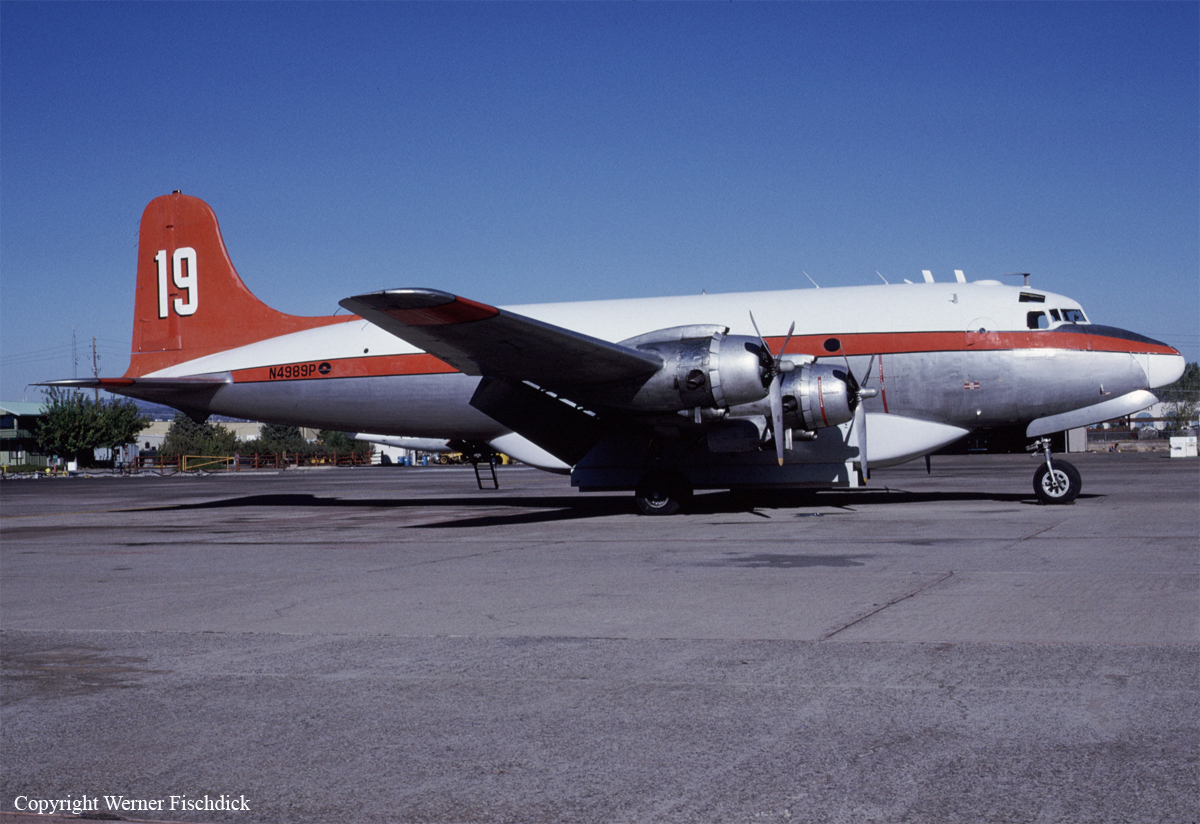
N4989P
Flight Type:
Survivors:
No
Schedule:
Hemet - Ramona
MSN:
36082
YOM:
1945
Flight number:
Tanker 19
Crew on board:
2
Crew fatalities:
Pax on board:
0
Pax fatalities:
Other fatalities:
Total fatalities:
2
Captain / Total flying hours:
6100
Aircraft flight hours:
23507
Circumstances:
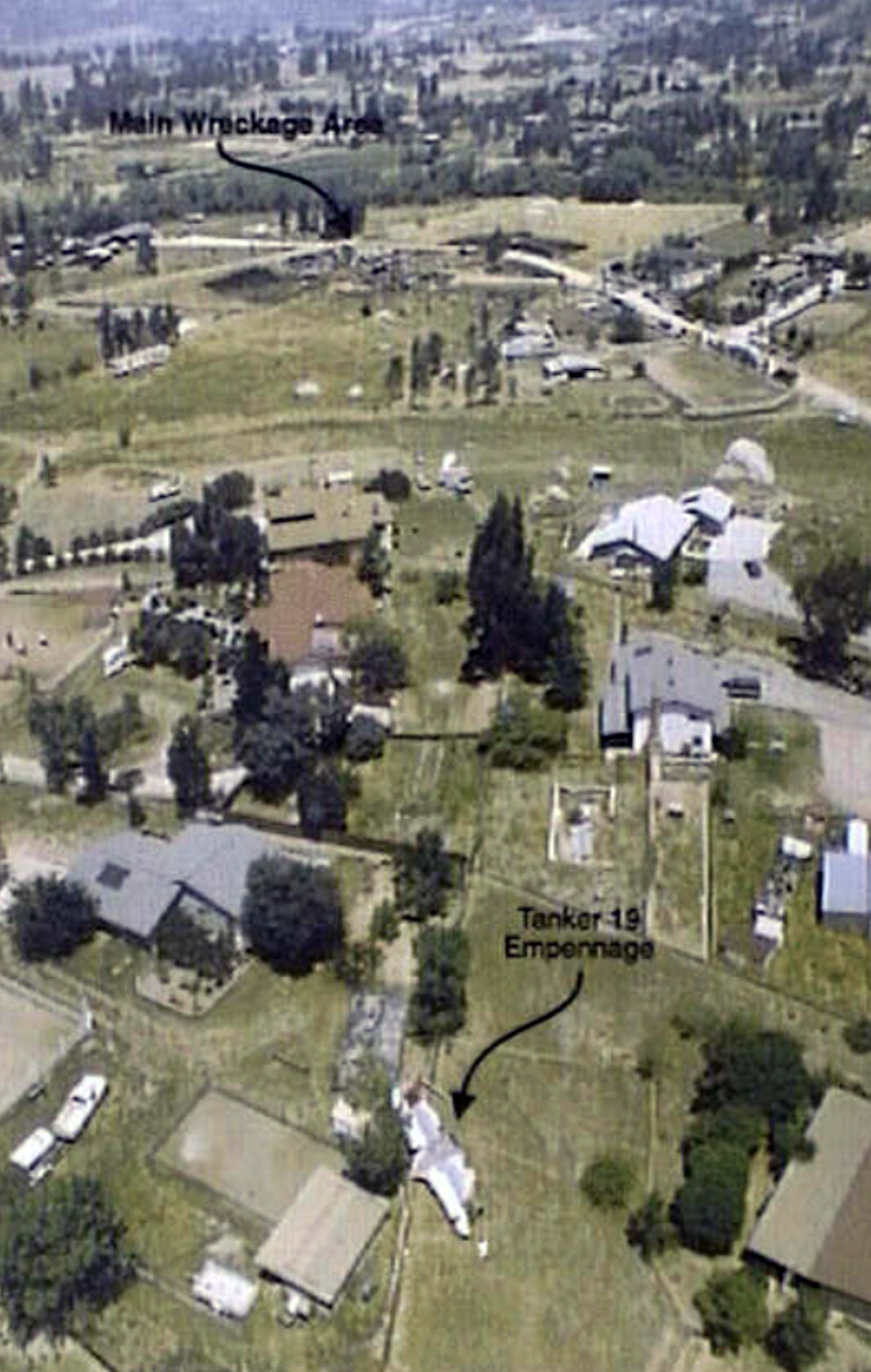
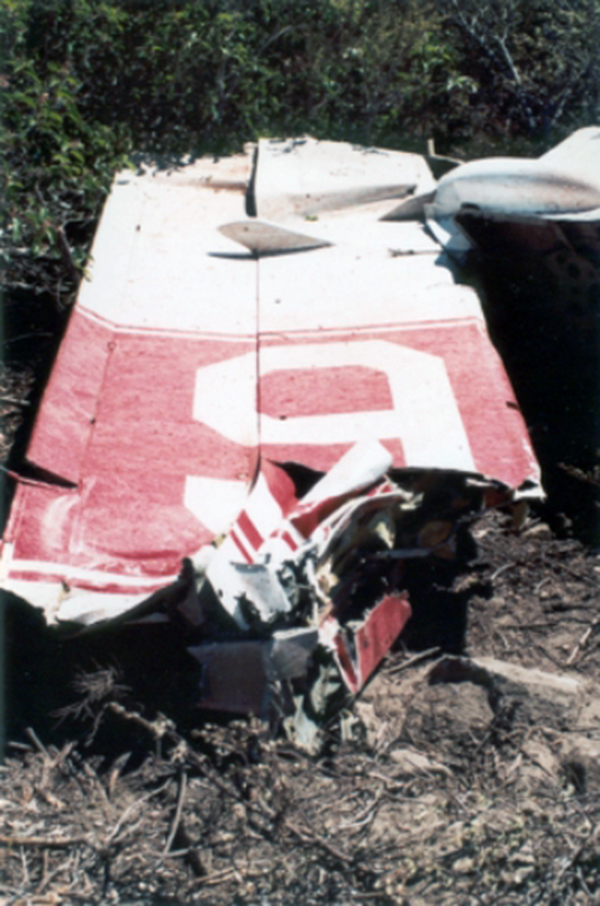
A Douglas C-54G & Beech 58P were on a fire suppression mission with the USDA Forest Service. The C-54 (Tanker 19) was being used as an aerial tanker, while the Beech 58 (Lead 56) was on a lead operation. Lead 56 departed the fire area about 5 minutes before Tanker 19. Both airplanes proceeded to an uncontrolled airport at Ramona, CA, for landing on runway 27 with a 360° overhead approach. Tanker 19 was on the initial approach about 1 mile east of the airport, when the two planes collided. Investigation revealed that Lead 56 struck the vertical stabilizer of Tanker 19, while descending. The empennages of both airplanes separated, and both crashed in uncontrolled descents. Before the accident, a Grumman S2 pilot was following Tanker 19. While in a shallow descent to the airport, he saw Tanker 19 slightly below the horizon and heard Tanker 19 make two calls (at 8 and 2 miles on initial approach). He also heard a transmission from Lead 56 moments before the collision, but did not see Lead 56, nor was he watching Tanker 19 when the collision occurred. Investigators were unable to determine Lead 56's activities after departing the fire area. Transmissions were heard from Lead 56 on the forest service tactical (operations) frequency when the plane was within 10 miles of the airport. Moments before the collision, Lead 56 was heard on the airport's common traffic advisory frequency (ctaf). Forest service procedures required that all pilots transmit their position on the ctaf within 10 miles of the airport. The forest service had not made arrangements with the airport manager to perform overhead approaches, nor were parameters published for initial approach altitude or airspeed.
Probable cause:
Inadequate visual lookout by the Beech 58P pilot, and the operator's inadequate procedures concerning 360° overhead approaches.
Final Report:

Crash of a Lockheed C-130A Hercules near Pearblossom: 3 killed

Date & Time: Aug 13, 1994 at 1331 LT
Type of aircraft:
Operator:
Registration:
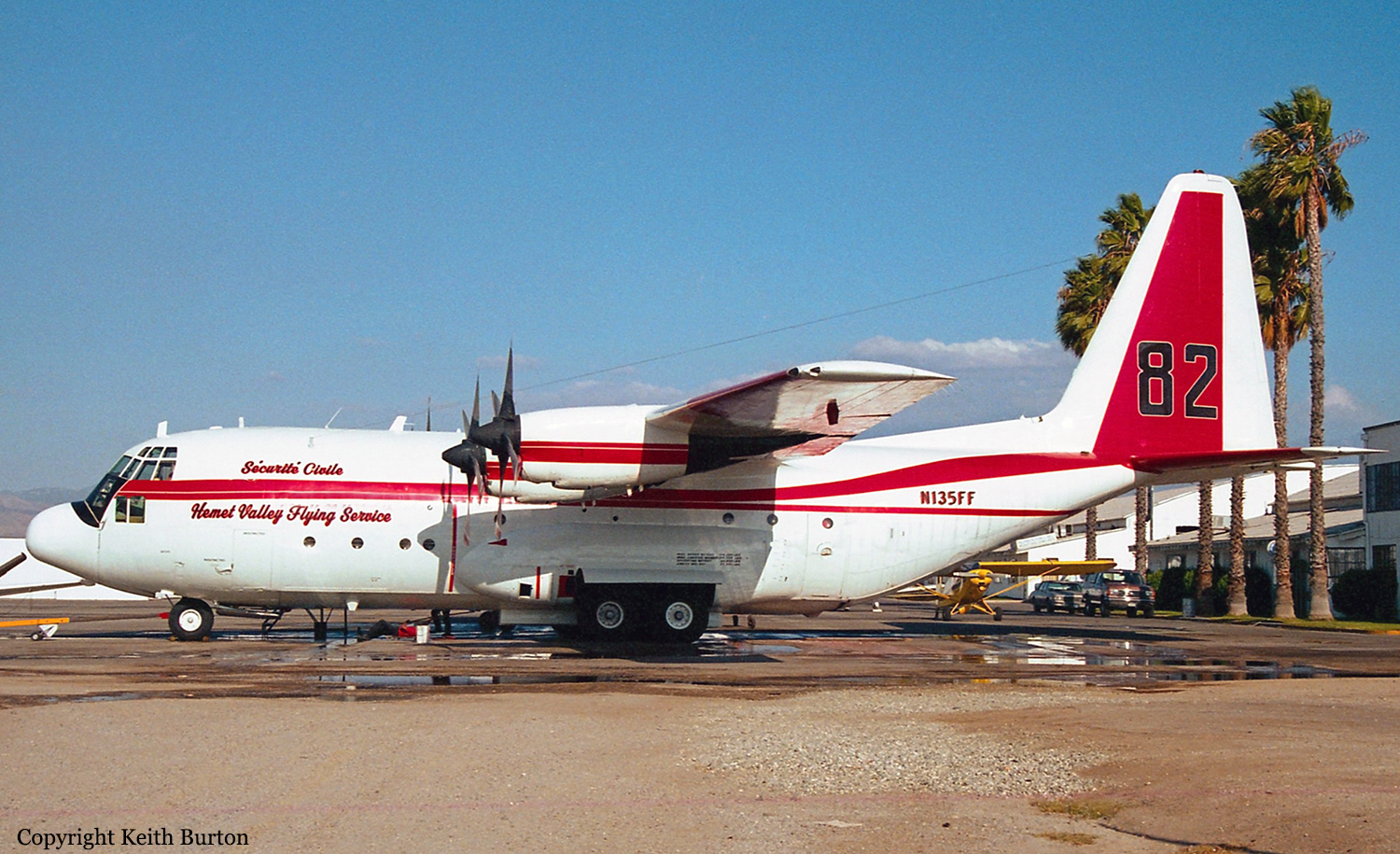
N135FF
Flight Phase:
Flight Type:
Survivors:
No
Site:
Schedule:
Hemet - Hemet
MSN:
3148
YOM:
1957
Flight number:
Tanker 82
Crew on board:
3
Crew fatalities:
Pax on board:
0
Pax fatalities:
Other fatalities:
Total fatalities:
3
Captain / Total flying hours:
11000
Captain / Total hours on type:
2000.00
Aircraft flight hours:
20300
Circumstances:
While in level flight, the airplane's right wing separated and, during the separation sequence, wing fuel ignited. Subsequent laboratory examination of right-side, center-wing fragments revealed two fatigue cracks that propagated to overstress fractures. One of the cracks was within the underside wing skin below a doubler, and the other was within the doubler itself. The total size and origin of the fatigue regions could not be determined due to damage to fracture surfaces and a lack of available material. The airplane was delivered new to the U.S. Air Force in December 1957 and was retired from military service in 1986. In May 1990, the FAA issued a restricted-category special airworthiness certificate authorizing the airplane to dispense aerial fire retardant. At the time of the accident, the airplane had a total of 20,289 flight hours, 19,547 of which were acquired during its military service. The inspection and maintenance programs used by the operator, which were based on military standards, included general visual inspections for cracks but did not include enhanced or focused inspections of highly stressed areas, such as the wing sections, where the fatigue cracks that led to those accidents were located. The operator did not possess the engineering expertise necessary to conduct studies and engineering analysis to define the stresses associated with the firefighting operating environment and to predict the effects of those stresses on the operational life of the airplanes.
Probable cause:
The inflight failure of the right wing due to fatigue cracking in the underside right wing skin and overlying doubler. A factor contributing to the accident was inadequate maintenance procedures to detect fatigue cracking.
Final Report: