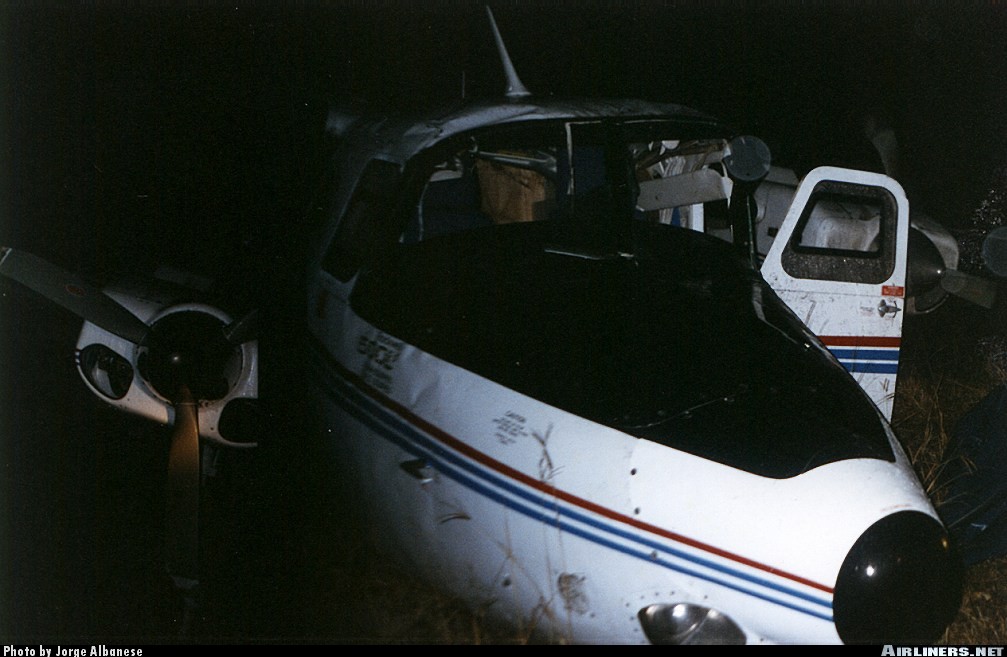
Crash of a Rockwell Shrike Commander 500S off Vestmannaeyjar: 2 killed

Date & Time: Mar 6, 2001 at 0856 LT
Registration:
N272BB
Flight Phase:
Flight Type:
Survivors:
No
Schedule:
Keflavik – Stornoway
MSN:
500-3173
YOM:
1973
Country:
Region:
Crew on board:
2
Crew fatalities:
Pax on board:
0
Pax fatalities:
Other fatalities:
Total fatalities:
2
Captain / Total flying hours:
2456
Captain / Total hours on type:
120.00
Copilot / Total flying hours:
704
Copilot / Total hours on type:
13
Circumstances:
Two private pilots, citizens of the United States, who intended to participate in the “London - Sydney Air Race” set to take place 11 March to 7 April 2001, were operating the private aircraft, N272BB. The flight originated at Cape Cod in the United States and the aircraft was to be flown via Greenland, Iceland and Scotland to London, England, where the air-race was to commence. The aircraft arrived at Narsarsuaq, Greenland, on 4 March 2001 at 01:35 hrs. The next morning the pilots requested fuel and according to a statement by the Narsarsuaq airport personnel, 338 litres of LL100 avgas were put on the main fuel tanks that were filled. No fuel was put on the aircraft internal ferry-tank. The pilots received weather briefing and en-route information before departure and there was no anomalies noted by the airport personnel. The flight was planned at Fl-130 from Narsarsuaq, over the Greenland ice cap, to 62°N 040°W and then at FL110 to the border between the Greenland Soendrestrom Flight Information Region and the Reykjavik Flight Information Region. The takeoff from Narsarsuaq airport was at 14:29 hrs. The flight from Narsarsuaq Airport to Iceland was uneventful and the aircraft landed at Keflavik Airport Iceland at 18:59 hrs. Initially the pilots planned to continue the flight from Iceland that night but after studying the weather forecast they decided to stay overnight. At 19:50 hrs 447 litres of LL100 was put in the aircraft main tanks and the aircraft was then placed in a hangar. In the morning of 6 March 2001 the pilots arrived at Flight Operations Office at Keflavik Airport. The pilots were provided with current weather information and weather maps for the planned route and flight planning preparations for the flight to Stornoway, Scotland and onwards to London, England was completed. The plan was from Keflavik Airport (KEF) VOR, direct to ALDAN reporting point (62° 58' 49'' N 018° 45' 50'' W), direct to 61° N 012° 34' W, direct to 60° N 010° W, and direct to Stornoway. The flight level was 150 and the True Air Speed (TAS) was 145 kts. Prestwick in Scotland was filed as the alternate airport. The instrument flight plan was filed with the Air Traffic Control Centre in Reykjavik. The estimated flying time from KEF-VOR to ALDAN was 0:30 hrs, to 61° N 012° 34' W total 2:00 hrs and 02:30 hrs to 60° N 010° W. The planned time from Keflavik Airport to Stornoway was 4:00 hrs or the estimated time of arrival was at 12:19 hrs. The fuel endurance was given 10 hrs. The aircraft was cleared by ATC in accordance with the submitted instrument flight plan and assigned transponder code was 3575. The aircraft taxied out from the ramp at 08:08 hrs towards runway 11 and the take-off was at 08:19 hrs. After take-off the communication with Keflavik Approach Control was normal. The flight was then changed over to Reykjavik Area Control Centre (OACC) at 08:46 hrs and normal communication was established. The track to Aldan will take the aircraft overhead VM-NDB, 53 NM from KEF VOR, and then to Aldan, 120 NM from KEF VOR. Error was on the ATC slip indicating 30 minutes to Aldan. The controller changed that to 1:01, or estimate for Aldan at 09:20. The last communication with the crew took place at 08:49:50 when the aircraft was climbing slowly through about 14400 feet towards the planned cruising level, FL150. At 09:24:55 hrs Reykjavik OACC called N272BB in order to confirm the position, but there was no answer and repeated calls were in vain. The Shanwick Air Traffic Control Centre was notified at 09:29:15 hrs of the N272BB estimates and again at 09:38:01 hrs that ATC had lost contact with the aircraft. A subsequent replay of the ATC radar data showed that at 08:56 hrs the aircrafts target was lost from radar. The last plotted position was at 63° 32' 04'' N 020° 39' 36'' W, or about 8 NM from the south coast of Iceland. At 12:12 hrs a decision was taken to initiate a search in the area by available ships and fishing vessels in the area. An Icelandic Coast Guard helicopter was launched from Reykjavik into the search area at 12:32 hrs. At 13:49 hrs a debris from the missing aircraft and human remains were subsequently found floating on the ocean in a line spread north-westwards over a distance of about 5 NM from the point the target disappeared from radar. Both female pilots were killed.
Probable cause:
The following findings were identified:
- The aircraft was operated in overweight conditions,
- The flight departed Iceland into unfavourable weather conditions,
- The aircraft was climbing in icing conditions prior to it went out of control,
- The reason for the departure from a normal flight could not be positively determined,
- The aircraft went into an uncontrolled descent, followed by an overstress and possible in-flight break-up during an attempted recovery.
Final Report:

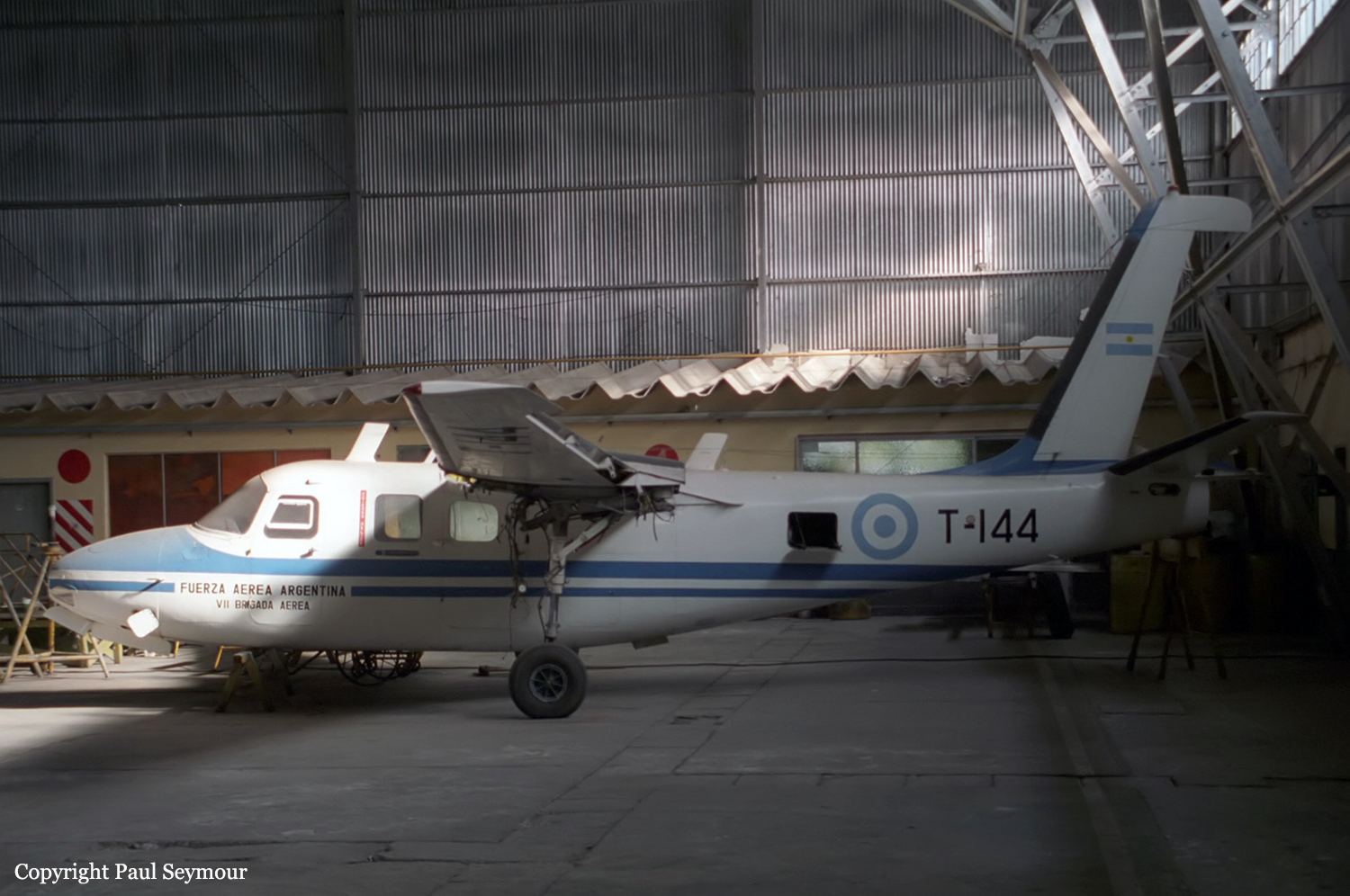
Crash of a Rockwell Shrike Commander 500S near Morón AFB: 2 killed

Date & Time: Feb 7, 2001
Operator:
Registration:
T-144
Flight Phase:
Flight Type:
Survivors:
No
Site:
Schedule:
Morón - Morón
MSN:
500-1771-54
YOM:
1968
Country:
Crew on board:
2
Crew fatalities:
Pax on board:
0
Pax fatalities:
Other fatalities:
Total fatalities:
2
Circumstances:
The crew was completing a local training flight at Morón AFB. In unknown circumstances, the aircraft crashed in the swimming pool of a private residence located in the district of Moreno, west of the airbase. Both pilots (Cpt Reyna and Lt Pesci) were killed while there were no injuries on the ground.

Crash of a Rockwell Shrike Commander 500S in Jilotzingo: 2 killed

Date & Time: Oct 6, 2000
Operator:
Registration:
5158
Flight Phase:
Flight Type:
Survivors:
Yes
MSN:
500-3218
YOM:
1974
Country:
Crew on board:
2
Crew fatalities:
Pax on board:
1
Pax fatalities:
Other fatalities:
Total fatalities:
2
Circumstances:
Crashed in unknown circumstances.

Crash of a Rockwell Shrike Commander 500S in Recife

Date & Time: Oct 21, 1999 at 0745 LT
Registration:
PP-SEA
Flight Type:
Survivors:
Yes
Schedule:
Recife – Patos – Sousa – Mossoró – Caicó – Currais Novos – Recife
MSN:
500-1801-16
YOM:
1968
Country:
Crew on board:
2
Crew fatalities:
Pax on board:
0
Pax fatalities:
Other fatalities:
Total fatalities:
0
Captain / Total flying hours:
4000
Captain / Total hours on type:
600.00
Copilot / Total flying hours:
500
Copilot / Total hours on type:
100
Circumstances:
The twin engine aircraft departed Recife-Guararapes Airport in the early morning on a round cargo trip with a load of medicines. Complete stops were made in Patos, Sousa, Mossoró, Caicó and Currais Novos. On the last leg from Currais Novos to Recife, while approaching Recife-Guararapes Airport, both engines failed simultaneously after a total flight of 3 hours and 50 minutes. The crew declared an emergency and attempted to land immediately when the aircraft collided with trees and power cables before crashing in a wooded area located 17 km short of runway 18. Both pilots were injured and the aircraft was damaged beyond repair.
Probable cause:
Double engine failure on final approach due to fuel exhaustion. The following contributing factors were identified:
- Poor flight preparation and planning,
- The crew was overconfident,
- The crew miscalculated the total fuel quantity needed for the entire mission,
- Wrong fuel consumption calculation,
- Taxing time and wind component were not taken into consideration in the fuel consumption calculation,
- Incorrect values relative to the aircraft performances,
- Poor crew resources management.
Final Report:

Crash of a Rockwell Shrike Commander 500S in Santa Catalina La Tinta: 6 killed

Date & Time: Sep 16, 1999 at 1130 LT
Operator:
Registration:
TG-RBK
Survivors:
No
Schedule:
Guatemala City – Santa Catalina La Tinta
MSN:
500-1809-19
YOM:
1968
Country:
Crew on board:
1
Crew fatalities:
Pax on board:
5
Pax fatalities:
Other fatalities:
Total fatalities:
6
Circumstances:
On approach to a private airstrip located near Santa Catalina La Tinta, the twin engine aircraft crashed in unknown circumstances 300 metres short of runway. The aircraft was destroyed and all six occupants were killed. Weather conditions at the time of the accident were poor with low clouds and rain falls. Thunderstorm activity was reported all along the route.

Crash of a Rockwell 500S Shrike Commander near San Cristóbal de Las Casas: 5 killed

Date & Time: Mar 18, 1999 at 0930 LT
Operator:
Registration:
ETL-1251
Flight Phase:
Flight Type:
Survivors:
No
Site:
MSN:
500-3211
YOM:
1974
Country:
Crew on board:
2
Crew fatalities:
Pax on board:
3
Pax fatalities:
Other fatalities:
Total fatalities:
5
Circumstances:
The twin engine aircraft departed Terán AFB in Tuxtla Gutiérrez at 0915LT on a liaison flight, carrying three passengers and two pilots. About 15 minutes later, the aircraft struck the slope of Mt Tzontehuitz located about 12 km northeast of San Cristóbal de Las Casas. All five occupants were killed.

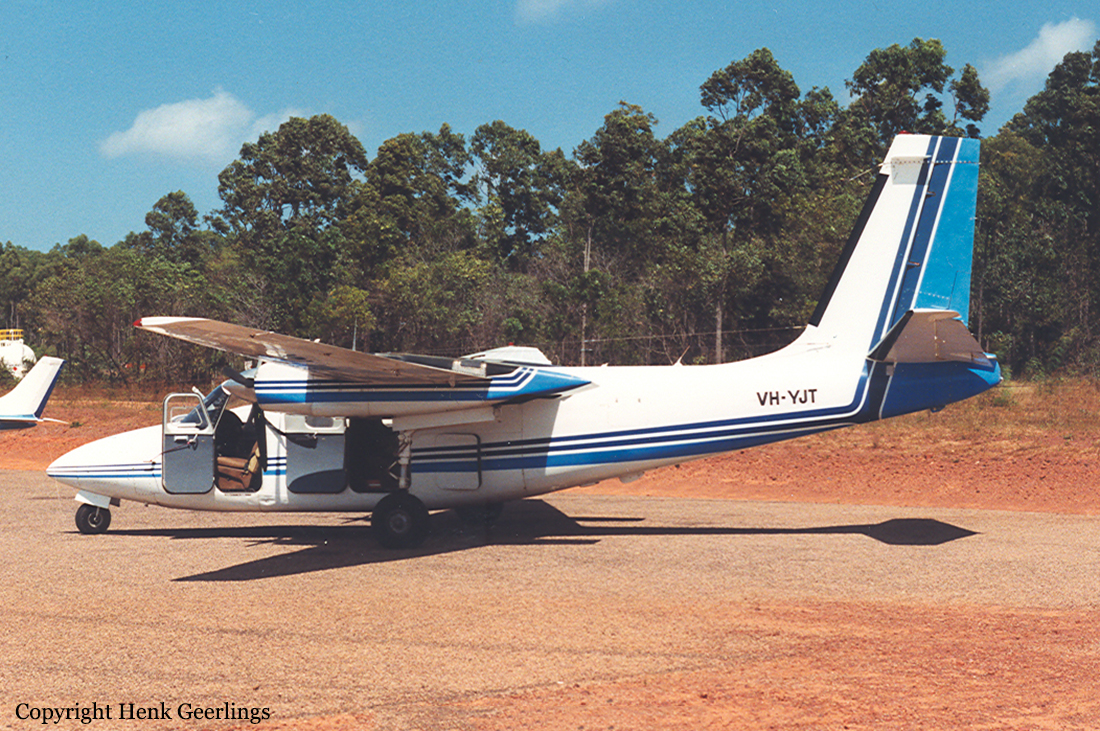
Crash of a Rockwell Shrike Commander 500S off Horn Island

Date & Time: Oct 21, 1998 at 0940 LT
Registration:
VH-YJT
Survivors:
Yes
Schedule:
Boigu Island - Horn Island
MSN:
500-3089
YOM:
1970
Country:
Region:
Crew on board:
1
Crew fatalities:
Pax on board:
4
Pax fatalities:
Other fatalities:
Total fatalities:
0
Captain / Total flying hours:
2045
Captain / Total hours on type:
79.00
Circumstances:
A Shrike Commander departed Horn Island on a charter flight to Saibai and Boigu Islands in accordance with the visual flight rules (VFR). The flight to Saibai took 32 minutes, and a further 13 minutes to Boigu Island. The aircraft then departed Boigu to return to Horn Island with an expected flight time of 35 minutes. The pilot reported that he had maintained 5,500 ft until commencing descent at 35 NM from Horn Island. He tracked to join final approach to runway 14 by 5 NM, reducing power at 1,500 ft. At 5 NM from the runway, the pilot extended the landing gear and approach flap and commenced a long final approach. When the aircraft was approximately 3 NM from the runway both engines commenced to surge, with the aircraft initially yawing to the right. The pilot commenced engine failure procedures and retracted the flaps. He tried a number of times to determine which engine was losing power by retarding the throttle for each engine, before deciding that the right engine was failing. The pilot shut down that engine and feathered the propeller. A short time later, when the aircraft was approximately 200 ft above the water, the left engine also lost power. The pilot established the aircraft in a glide, advised the passengers to prepare for a ditching, and transmitted a MAYDAY report on the flight service frequency before the aircraft contacted the sea. The aircraft quickly filled with water and settled on the seabed. All five occupants were able to escape and make their way ashore.
Probable cause:
The following findings were identified:
- The pilot was correctly licensed and qualified to operate the flight as a VFR charter operation.
- The aircraft was dispatched with an unusable fuel quantity indicator.
- The right engine fuel control unit was worn and allowed additional fuel through the system, increasing fuel consumption by approximately 6 L/hr.
- Inappropriate fuel consumption rates were used for flight planning.
- The aircraft fuel log contained inaccuracies that resulted in a substantial underestimation of the total fuel used.
- At the time of the occurrence, there was no useable fuel in the aircraft fuel system.
- Although the pilot met the Civil Aviation Safety Authority criteria to fulfil his role as chief pilot, he did not have the expertise to effectively ensure the safety of company flight operations.
Final Report:

Crash of a Rockwell Shrike Commander 500U in Córdoba

Date & Time: Jul 8, 1997
Operator:
Registration:
LV-IYO
Flight Type:
Survivors:
Yes
Schedule:
La Rioja - Buenos Aires
MSN:
500-1673-19
YOM:
1967
Country:
Crew on board:
1
Crew fatalities:
Pax on board:
3
Pax fatalities:
Other fatalities:
Total fatalities:
0
Circumstances:
While on a cargo flight from La Rioja to Buenos Aires, the pilot encountered engine problems and decided to divert to Córdoba-Ambrosio Taravella Airport. On final approach, both engines failed and the pilot attempted an emergency landing when the aircraft crash landed in a field located 1,200 metres short of runway. It slid for few dozen metres before coming to rest in a grassy area. All four occupants escaped with minor injuries and the aircraft was damaged beyond repair.
Probable cause:
It was determined that both engines failed due to the malfunction of the fuel supply system due to poor maintenance.

Crash of a Rockwell Shrike Commander 500S in Manatí: 3 killed

Date & Time: Feb 11, 1996 at 1638 LT
Registration:
N79NU
Flight Phase:
Flight Type:
Survivors:
No
Schedule:
San Juan - San Juan
MSN:
500-3206
YOM:
1974
Country:
Crew on board:
3
Crew fatalities:
Pax on board:
0
Pax fatalities:
Other fatalities:
Total fatalities:
3
Captain / Total flying hours:
6560
Captain / Total hours on type:
50.00
Aircraft flight hours:
3323
Circumstances:
The flight was a dual instruction flight for the purpose of giving the dual student an orientation to the aircraft. Witnesses observed the aircraft flying from east to west at a slow speed. The right wing dropped and then returned to level. The right wing and nose dropped and the aircraft descended in a 45-60 degree nose down attitude. As the aircraft descended the wings rolled back and forth and something was observed moving on the outboard right wing area. The aircraft did not recover from the descent and crashed nose first at a slow speed into a swamp area. Post crash examination of the aircraft showed no evidence to indicate pre-crash mechanical malfunction or failure of the aircraft structure, flight controls, engines, propellers, or systems. The rudder trim was found in the neutral position and the elevator trim was found set for 70% of the aircraft nose up trim. Toxicology tests showed the dual student had .319 ug/ml of marihuana in urine, .010 ug/ml marijuana in blood, and 10.90 ug/ml of acetaminophen in blood. The pilot-in-command/flight instructor had 47.90 ug/ml acetaminophen and 89.20 ug/ml salicylate in urine. The pilot-in-command had hand injuries consistent with operating the aircraft's controls at the time of the accident. The dual student did not have hand injuries consistent with operation of the aircraft's controls.
Probable cause:
Failure of the flight crew, for undetermined reasons, to recover from a stall and resulting uncontrolled descent. This resulted in the aircraft colliding with the terrain while in a 45-60 degree nose down attitude at a slow speed.
Final Report:

Crash of a Rockwell Shrike Commander 500S in Horn Island: 1 killed

Date & Time: Dec 12, 1995 at 0918 LT
Operator:
Registration:
VH-UJP
Flight Phase:
Flight Type:
Survivors:
No
Schedule:
Horn Island - Horn Island
MSN:
500-3074
YOM:
1970
Country:
Region:
Crew on board:
1
Crew fatalities:
Pax on board:
0
Pax fatalities:
Other fatalities:
Total fatalities:
1
Captain / Total flying hours:
11740
Captain / Total hours on type:
119.00
Circumstances:
At approximately 0910 EST, the aircraft took off from runway 32 at Horn Island and commenced a normal climb. Shortly after, it adopted a nose-high attitude and commenced a wingover type manoeuvre to the right. Witnesses described the aircraft as being in a nose-low attitude, and at a height of approximately 600 ft to 700 ft above ground level after the completion of this manoeuvre. It then abruptly adopted a level attitude and rapidly entered a spin to the left. Witnesses on the ground reported that at approximately the same time as the aircraft entered the spin, engine power became asymmetric, with the right engine continuing to deliver considerable power. The aircraft continued to descend in a fully developed flat spin, with no observed signs of an attempt to recover. The impact was heard shortly after the aircraft descended behind vegetation to the north-west of the aerodrome. The accident was reported to Flight Service by radio at 0918. The wreckage was located on a beach approximately 2 km to the north-west of the aerodrome. The aircraft was destroyed by impact forces and the pilot sustained fatal injuries.
Probable cause:
The following findings were reported:
1. The pilot held a valid pilot licence and medical certificate.
2. The pilot was endorsed on the aircraft type.
3. The aircraft entered a flat spin to the left with no reported signs of an attempt to recover.
4. The aircraft struck the ground whilst established in a flat left spin.
5. The right engine was producing considerable power prior to impact.
6. Indications were that the left engine was producing little or no power. Its propeller was in the feathered position prior to impact.
7. No evidence was found to indicate a malfunction or pre-existing defect with the aircraft or its systems which may have affected normal operation during this flight.
8. No evidence was found to indicate pilot incapacitation as the result of a medical condition or the presence of alcohol or drugs.
9. The pilot's behaviour on the morning of the accident was not consistent with what was generally accepted to be a thorough and professional attitude to aviation.
Final Report: