Circumstances:
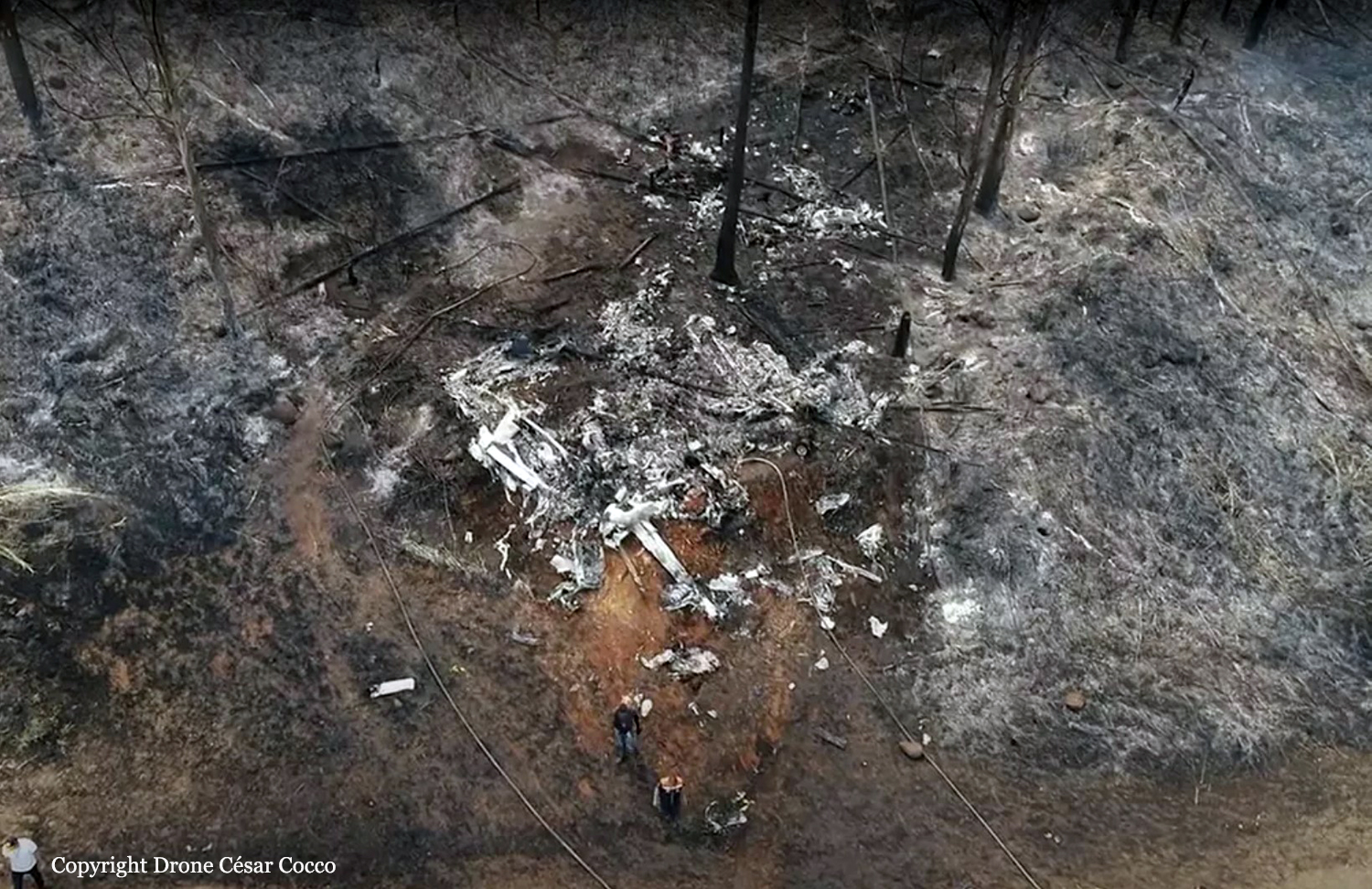
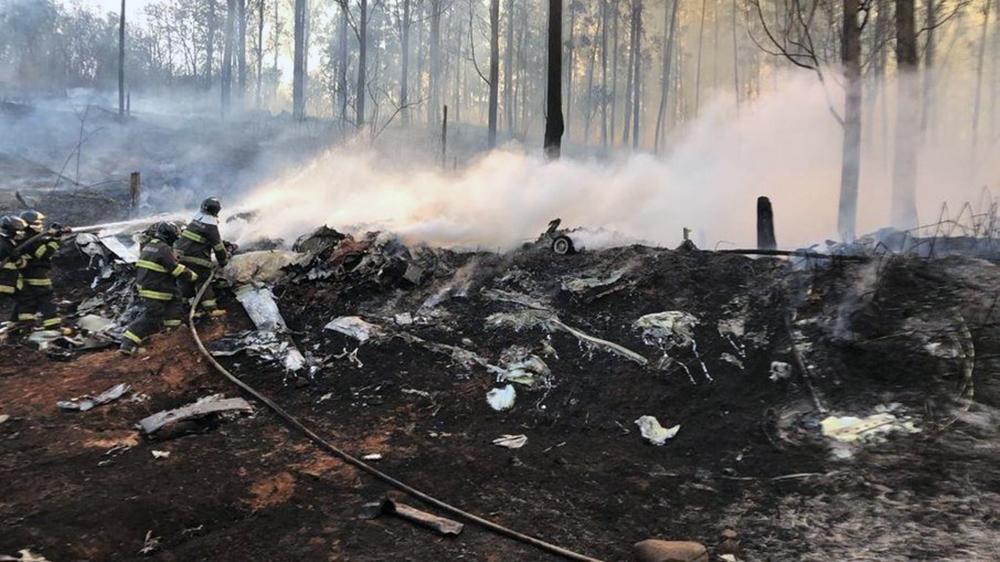
Shortly after takeoff from Piracicaba Airport Runway 35, while in initial climb, the stall warning alarm sounded in the cockpit and the twin engine airplane encountered difficulties to gain height. It entered a right turn then descended to the ground and crashed in a eucalyptus forest located about 1,5 km north of the airport. The airplane disintegrated on impact and all seven occupants were killed, among them the Brazilian businessman Celso Silveira Mello Filho aged 73 who was travelling with his wife and three kids.
Crew:
Celso Elias Carloni, pilot,
Giovani Dedini Gulo, copilot.
Passengers:
Celso Silveira Mello Filho,
Maria Luiza Meneghel,
Celso Meneghel Silveira Mello,
Camila Meneghel Silveira Mello Zanforlin,
Fernando Meneghel Silveira Mello.
Probable cause:
Contributing factors:
- Attention - a contributor.
The analysis of the pilots' performance during the flight of the previous day revealed episodes of inattention, such as those related to the lowering of the landing gear. In the accident flight, the crew fixated on the excessive RPM, failing to notice in a timely manner that the speed was decreasing, something that limited their ability to promptly respond to the stall condition.
- Attitude - a contributor.
During the accident flight, it was noted that the aircraft rotated at a speed of 102 knots, being such speed consistent with the prescribed aircraft’s maximum takeoff weight. However, because the aircraft’s weight was 1,374 pounds above the MTOW, when it rotated at the referred speed, a continuous 1 kHz alarm sounded, indicating that it had entered a pre-stall condition. Such improvisational approach regarding the MTOW exacerbated the situation, contributing to the outcome of the accident.
Training - undetermined.
The classification of the aircraft by the Brazilian Regulatory Agency as a “class aircraft” may have contributed to the training required from pilots being insufficient to ensure their proficiency in handling emergencies on the B200GT aircraft.
- Work-group culture - undetermined.
According to reports, the belief that the King Air aircraft was capable of taking off with a weight greater than the one specified by the manufacturer was common among operators to whom the investigators had access. This belief may have contributed to the decision made to conduct the flight under those conditions, influencing the takeoff performance.
- Handling of aircraft flight controls - undetermined.
After the retraction of the landing gear, a command to reduce aircraft power was applied by the PIC, which preceded the stall warning. Following this warning, a possible command for feathering one of the propellers may have triggered loss of control of the aircraft.
- Piloting judgment - a contributor.
The takeoff in which the accident occurred was performed 1,374 pounds above the weight limit prescribed in the AFM. Speeds and parameters of a typical takeoff were used, with power being reduced shortly after the landing gear retraction. In this context, there was no adequate assessment of the flight parameters, culminating in the aircraft’s stall condition.
- Aircraft maintenance - undetermined.
Although one engine N2 maximum of 25 RPM greater than the Takeoff and Max Continuous value of 2,000 RPM verified at takeoff cannot be directly linked to the adjustments made to the propellers during the last inspection, the early release of the aircraft may have prevented a sufficiently thorough check of the maintenance tasks performed. This was found to have occurred the day before the accident after the first attempt to start up the engines. There were erasures on the record sheet that documented the engine parameters at entry and exit, leading to discrepancies in relation to the records made in the corresponding Service Order.
- Memory - undetermined.
The analysis of the Cockpit Voice Recorder’s audio spectrum revealed that the propellers were adjusted after the “propeller overspeed” callout was made by the PIC. Although this procedure was not prescribed for the B200GT, it was found to be practiced in the E110 aircraft, in which the PIC had developed much of his professional experience. It is possible that this action originated from the retrieval of previous conditioning, characterizing what is known as “negative transfer”.
- Perception - a contributor.
The stall condition, likely related to the gradual reduction in speed that followed the reduction of the power levers, was not perceived in a timely manner for a reaction to be planned. In that context, there was exclusively a perception of the slightly excessive propeller RPM, a maximum amount of 25 RPM, which impaired the situational awareness regarding the other aspects of the flight.