Crash of a Vickers 290 Wellington I in Digbeth: 3 killed

Date & Time: Mar 22, 1944 at 2355 LT
Type of aircraft:
Operator:
Registration:
HD987
Flight Phase:
Flight Type:
Survivors:
No
Site:
Region:
Crew on board:
3
Crew fatalities:
Pax on board:
0
Pax fatalities:
Other fatalities:
Total fatalities:
3
Circumstances:
Shortly after take off from RAF Lindley/Nuneaton, while climbing, crew encountered an engine failure and attempted to return when the aircraft stalled and crashed in flames in Digbeth, in the suburb of Birmingham. All three crew members were killed while there was no casualties on ground. The crew was completing an exercise on behalf of the 105th OTU.
Crew:
Lt B. J. Balchin,
D. Huddleston,
Sgt B. Morgan.
Probable cause:
Engine failure.

Crash of a Handley Page H.P.57 Halifax III in Palterton: 3 killed

Date & Time: Mar 22, 1944 at 0055 LT
Operator:
Registration:
LK930
Flight Phase:
Flight Type:
Survivors:
Yes
Region:
Crew on board:
7
Crew fatalities:
Pax on board:
0
Pax fatalities:
Other fatalities:
Total fatalities:
3
Captain / Total flying hours:
900
Captain / Total hours on type:
11.00
Circumstances:
While cruising by night over Derbyshire, one of both left engines failed. The pilot was unable to maintain a safe altitude and instructed the crew to bail out. For unknown reason, only three crew were able to abandon the aircraft that crashed in flames in Palterton, nine km west of Chesterfield. Three crew members were killed:
Sergeant William Arthur Roland Andrew,
Sergeant Arley Carlisle Carl Starnes, air gunner,
Sergeant Russell Irvine Pym, flight engineer.
Probable cause:
Engine failure.

Crash of a Handley Page H.P.57 Halifax III in Moordown: 9 killed

Date & Time: Mar 21, 1944 at 0100 LT
Operator:
Registration:
JP137
Flight Phase:
Flight Type:
Survivors:
No
Site:
Region:
Crew on board:
7
Crew fatalities:
Pax on board:
0
Pax fatalities:
Other fatalities:
Total fatalities:
9
Circumstances:
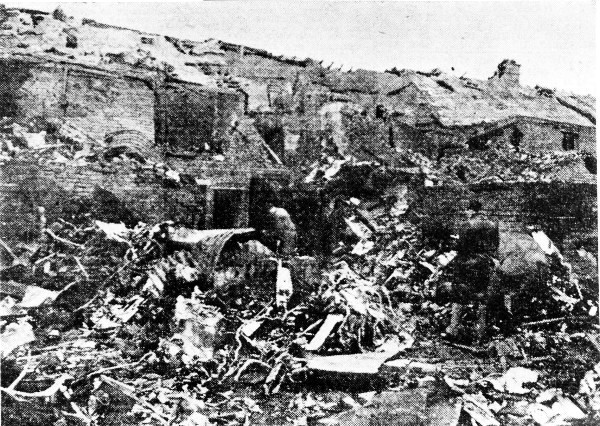
Shortly after take off from Bournemouth-Hurn Airport, while climbing by night, the crew encountered an engine failure and elected to return. While completing a turn at low height, the aircraft went out of control and crashed in a huge explosion in the district of Moordown, Bournemouth. All seven crew members were killed as well as two people on the ground. Several houses were destroyed in the accident.
Crew:
Sergeant Denis R. Evans, pilot,
Sergeant Henry W. Roberts, navigator,
Stanley A. Appleton, bomb aimer,
Sergeant George A. Alexander, wireless operator,
Sergeant Stanley F. Gent, flight engineer,
Sergeant Kenneth Green, air gunner,
Sergeant Reginald R. McGregor, air gunner.
Local resident:
Dorothea Bennett,
Percy F. Chislett.
Probable cause:
Engine failure.

Crash of an Avro 652 Anson I near Coniston: 3 killed

Date & Time: Mar 20, 1944 at 0430 LT
Type of aircraft:
Operator:
Registration:
EG686
Flight Phase:
Flight Type:
Survivors:
No
Site:
Schedule:
Cark AFB - Cark AFB
Region:
Crew on board:
3
Crew fatalities:
Pax on board:
0
Pax fatalities:
Other fatalities:
Total fatalities:
3
Circumstances:
The crew was performing a night training exercise from the RAF Cark, Cumbria. The exercise consisted of a round trip over Dumfries, Isle of Man and Blackpool. Due to low visibility caused by night and marginal weather conditions, the crew overflew the RAF Cark. Eventually, the pilot realize his mistake and
made a turn to join his airfield but was unaware he was flying too low. The aircraft crashed on Mt Swirl How and was destroyed by impact forces, killing all three crew members.
Crew:
Sergeant Kenneth Montague, pilot,
Sergeant Kenneth John Brettell, pilot,
Sergeant Walter William "Wally" Younger, wireless operator.
Probable cause:
Navigation error on part of the crew.

Crash of a Handley Page H.P.57 Halifax III in Brierley Hill: 1 killed

Date & Time: Mar 16, 1944 at 0330 LT
Operator:
Registration:
LW413
Flight Phase:
Flight Type:
Survivors:
Yes
Site:
Region:
Crew on board:
7
Crew fatalities:
Pax on board:
0
Pax fatalities:
Other fatalities:
Total fatalities:
1
Circumstances:
The aircraft left RAF Tholthorpe on a bombing mission over Stuttgart. While returning to the UK, the aircraft was hit several times by Flak but was able to fly till England. Eventually, crew was forced to abandon the aircraft which became uncontrollable. All seven crew bailed out when the aircraft dove into the ground and crashed in Adelaide Street, Brierley Hill, west of Birmingham. While all seven crew members were uninjured, a person was killed on ground as several houses were destroyed.
Crew:
Earl Kirk, pilot,
Harold G. Facey, navigator,
H. D. Hagen, radio operator
E. F. Bush, air bomber,
Sergeant Clifford Adams, flight engineer,
Sergeant C. E. Robertson, rear gunner,
Sergeant D. R. McEvoy, mid-upper gunner.
Probable cause:
Shot down by Flak.

Crash of a Short S.22 Scion Senior off Helensburgh: 1 killed

Date & Time: Mar 14, 1944
Type of aircraft:
Registration:
L9786
Flight Phase:
Flight Type:
Survivors:
Yes
Schedule:
Helensburgh - Helensburgh
MSN:
S.836
Region:
Crew on board:
3
Crew fatalities:
Pax on board:
0
Pax fatalities:
Other fatalities:
Total fatalities:
1
Circumstances:
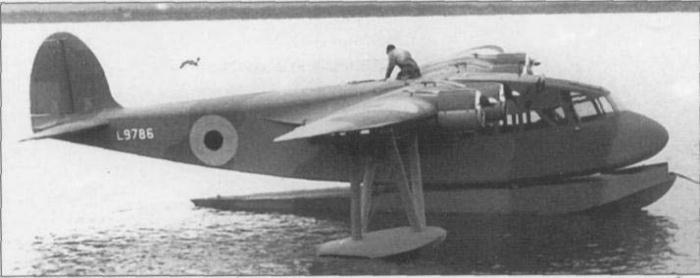
The crew was engaged in a test flight. Take off procedure was attempted in frosty conditions from the Clyde River, off Helensburgh. During initial climb, the four engine aircraft stalled, crashed and sunk. Two crew members were rescued while the test pilot H. G. White was killed.

Crash of an Airspeed AS.10 Oxford in Shining Tor: 3 killed

Date & Time: Mar 12, 1944
Type of aircraft:
Operator:
Registration:
LX745
Flight Phase:
Flight Type:
Survivors:
No
Region:
Crew on board:
3
Crew fatalities:
Pax on board:
0
Pax fatalities:
Other fatalities:
Total fatalities:
3
Circumstances:
Crew was performing a training flight when the aircraft crashed in unknown circumstances in Shining Tor, East Cheshire. All three crew were killed.

Crash of a Douglas C-47A-75-DL in Axford: 2 killed

Date & Time: Mar 11, 1944
Operator:
Registration:
42-100877
Flight Phase:
Flight Type:
Survivors:
Yes
MSN:
19340
Region:
Crew on board:
2
Crew fatalities:
Pax on board:
1
Pax fatalities:
Other fatalities:
Total fatalities:
2
Circumstances:
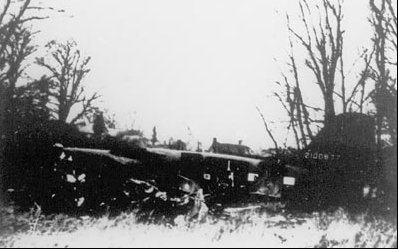
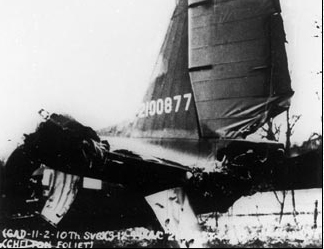
On the morning of Saturday 11th March 1944, during a routine glider tow training mission, a Horsa glider (LG891) became detached from its tow plane and landed in a large ploughed field just north of the small village of Axford. The pilot of the C-47 tow plane, Major Donald Bradley (who was also commanding officer of the 83rd Troop Carrier Squadron), inspected the field and decided that it would be possible to pull the glider out. He flew the short distance back to Ramsbury airfield, the squadron's home station, and picked up a new towrope. During the afternoon of the same day he returned to the field. Flying with him was 1st. Lt. Gaylord Strong, co-pilot; Captain Lee Gillette, 83rd Squadron Flight Surgeon; S/Sgt. Charles Dudenhoef, Crew Chief, and Lieutenant's Kenneth Weber and Robert Frank who were to act as the glider's pilot and co-pilot respectively. After flying low over the field several times Major Bradley landed the plane without difficulty and attached the new towrope. Meanwhile ‘Doc’ Gillette stationed an ambulance at the southern end of the field. The field was only 2,600 feet in length, it had been recently ploughed and chain harrowed and sloped in a southerly direction towards the valley floor. A road and an electric power line ran along its southern boundary and, at the time of take off, there was a 20 mph tail wind! There followed a lengthy discussion between the men present as to the feasibility of pulling the glider out of the field. Despite doubts expressed by others Major Bradley was confident that the task could be easily accomplished. The crew chief was given the option of remaining on the ground, which he chose, and his place in the aircraft was taken by Captain Gillette. All three men then clambered aboard the C-47 aircraft, Major Bradley sat in the left-hand cockpit seat, Lt. Strong on his right and ‘Doc’ Gillette below the Astral Dome. Both the glider pilots had installed themselves in the Horsa and were awaiting the signal to go. The brakes on the C-47 were released and the plane slowly picked up speed. As it became airborne Major Bradley realized that he was not going to clear the power cables and pulled back on the stick, causing the tail wheel to dig into the field. The plane then stalled before pitching into the ground, eventually coming to a rest in the River Kennet. The fuselage had broken in two and was facing in the direction from which it had come. Fortunately there was no fire. The glider pilot, although unable to see the tow aircraft through a cloud of dust, saw the flash of sparks as the C-47 hit the power cables and cut loose, before gliding across the valley to another field for a safe landing. Major Bradley suffered serious head injuries and died one hour later. Lt. Strong was also badly injured and died two days later in Burdrop hospital near Swindon. ‘Doc’ Gillette suffered severe damage to his back and was hospitalized for over a month, but eventually returned to his duties and remained with the group until the end of the war.
Source: http://www.ramsburyatwar.com/crashes/c47axford.htm
Probable cause:
The crash committee, consisting of Major Lucion Powell, Major Albert Bivings and Captain Richard Cathcart, concluded that Major Bradley was fully responsible for the accident. They said that despite his length of flying experience and his familiarity with glider operations, he exercised very poor judgement in trying to take off downwind with a glider in tow from a field of inadequate length with obstructions at the end.


Crash of a Martin B-26B-50-MA Marauder in Theydon Mount: 6 killed

Date & Time: Mar 8, 1944
Type of aircraft:
Operator:
Registration:
42-95925
Flight Phase:
Flight Type:
Region:
Crew on board:
6
Crew fatalities:
Pax on board:
0
Pax fatalities:
Other fatalities:
Total fatalities:
6
Circumstances:
The twin engine bomber registered 42-95925 was carrying a crew of six on behalf of the 344th Bomb Group, 494th Bomb Squadron. While flying over Essex, it collided with another Martin B-26B-50-MA Marauder registered 42-95981 from the same BG and carrying a crew of six as well. The exact circumstances of the collision remains unknown and both aircraft dove into the ground and crashed in an open field located in Theydon Mount. All 12 occupants on both aircraft were killed.
Crew:
Captain Jack W. Miller, pilot,
2nd Lieutenant Linwood G. Brooks, copilot,
1st Lieutenant James A. Hudson, bombardier,
Staff Sergeant Abraham B. Butler Jr, engineer & gunner,
Staff Sergeant George D. McMannamy, radio & gunner,
Staff Sergeant W. J. Summers, armourer & gunner.

Crash of a Douglas C-47A-75-DL near Portadown

Date & Time: Mar 8, 1944
Operator:
Registration:
42-100924
Flight Phase:
Flight Type:
Survivors:
Yes
MSN:
19387
Region:
Crew on board:
0
Crew fatalities:
Pax on board:
0
Pax fatalities:
Other fatalities:
Total fatalities:
0
Circumstances:
En route, the crew was forced to attempt an emergency landing following a dual engine failure. Aircraft crash landed in a prairie located 8 km south of Portadown and was damaged beyond repair. No casualties.
Probable cause:
Double engine failure caused by a fuel exhaustion.