Crash of a De Havilland DH.86 off Whitemark: 5 killed

Date & Time: Oct 2, 1935 at 0955 LT
Type of aircraft:
Operator:
Registration:
VH-URT
Survivors:
No
Schedule:
Sydney – Melbourne – Whitemark – Launceston – Hobart
MSN:
2312
YOM:
1935
Country:
Region:
Crew on board:
3
Crew fatalities:
Pax on board:
2
Pax fatalities:
Other fatalities:
Total fatalities:
5
Circumstances:
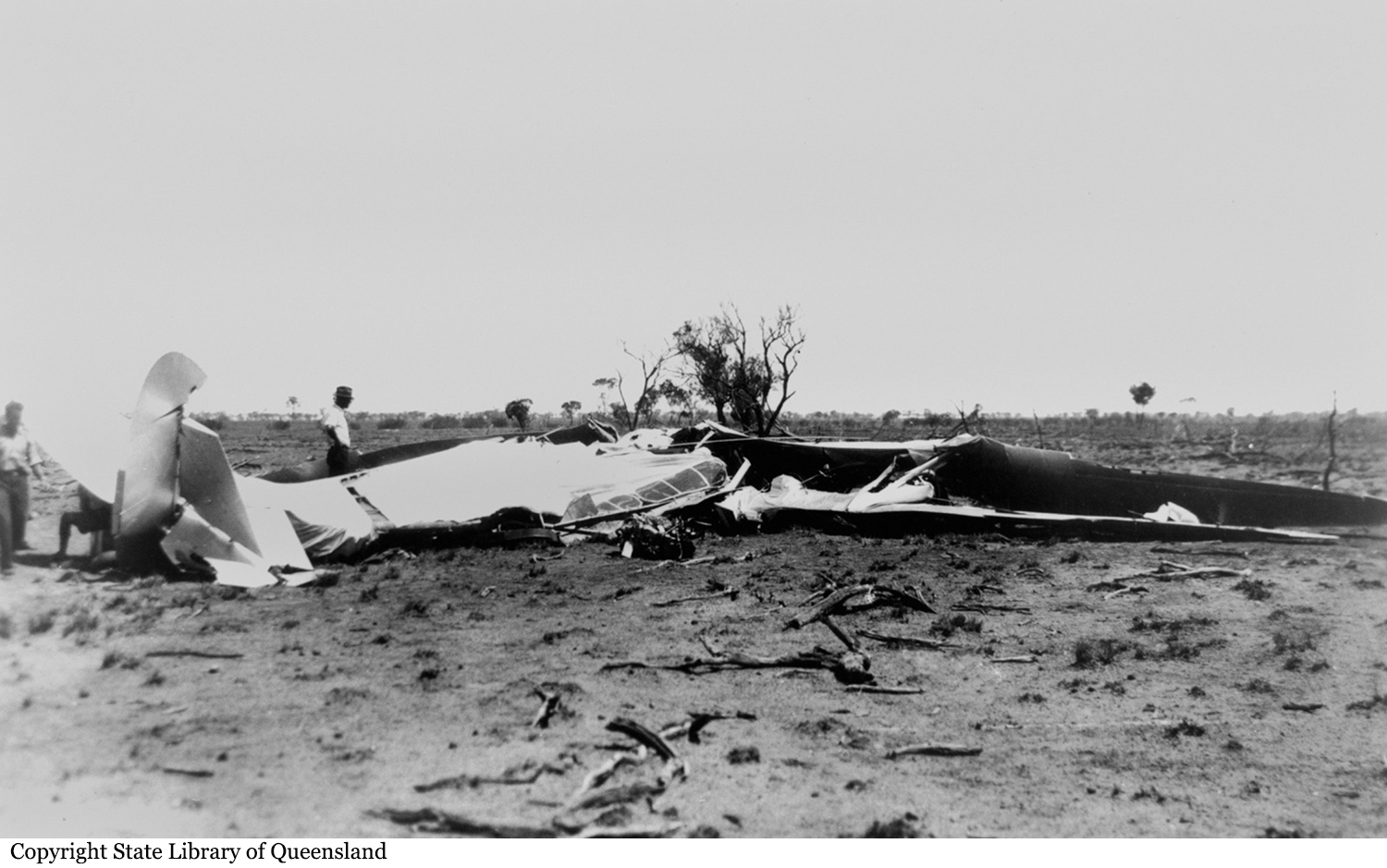
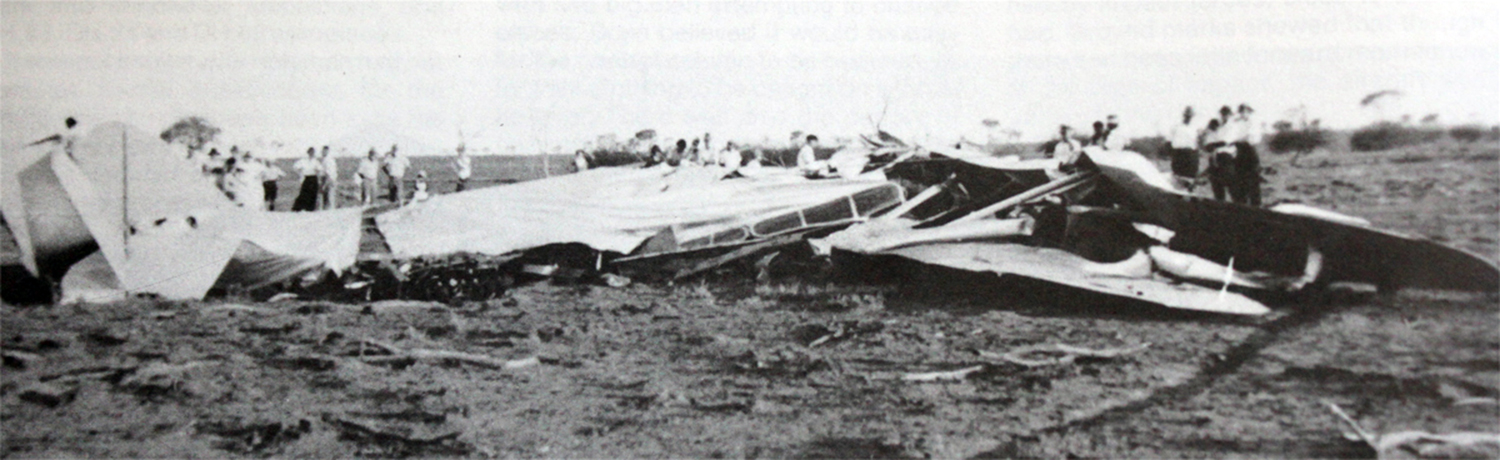
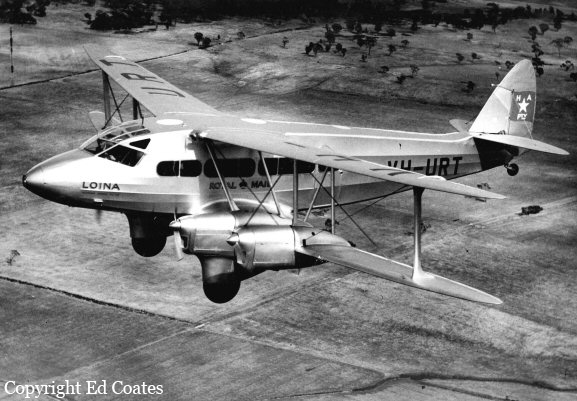
The airplane was approaching Whitemark Airport (Flinders Island) when it crashed in unknown circumstances into the sea, some 3 km offshore. The aircraft named Loina was destroyed and all five occupants were killed.
Crew:
Norman Evans, pilot,
Maxwell Brown, copilot,
Edward Best, flight engineer.
Passengers:
G. S. Anderson,
G. Garlick.
Probable cause:
It was determined that VH-URT had gone into an uncontrollable spin, and three possible precipitating factors were: a loss of control after a power plant failure, the fouling of the tail surfaces while the trailing aerial was being reeled in or a structural failure. There was also evidence of a small fire in the rear of its cabin, which may have occurred before the crash, but this probably did not factor in the accident. And in view of two fatal accidents and other difficulties with the type, Australia would subsequently suspend the certificate of airworthiness of the De Havilland 86.

Crash of a De Havilland DH.86 Express in Ilfracombe: 4 killed

Date & Time: Nov 15, 1934 at 0547 LT
Type of aircraft:
Operator:
Registration:
VH-USG
Flight Phase:
Flight Type:
Survivors:
No
Schedule:
London – Singapore – Darwin – Longreach – Brisbane – Sydney
MSN:
2311
YOM:
1934
Country:
Region:
Crew on board:
2
Crew fatalities:
Pax on board:
2
Pax fatalities:
Other fatalities:
Total fatalities:
4
Circumstances:
The aircraft departed Longreach Airport at 0530LT bound for Brisbane with a crew of two and two passengers on board. Less than 20 minutes later, while flying at a height of some 1,000 feet, the aircraft went out of control and crashed in a prairie. Quickly on the scene, local residents were able to evacuate the captain who was seriously injured while all three others occupants were killed. Unfortunately, the captain died from his injuries few hours later. Weather conditions were excellent at the time of the accident and the crew was performing a delivery flight from London when the accident occurred. The aircraft was named 'Adelaide'.
Crew:
R. A. Prendergast, pilot,
W. C. Creastes, copilot.
Passengers:
F. R. Charlton, engineer by Imperial Airways,
E. H. Broadfoot, serviceman by Shell Company at Sydney-Mascot Airport.
Probable cause:
Investigators expressed concern at apparent defects in the forward pin post, posing the question that a failure in that component apparently caused the loss of control. Further investigation revealed that VH-USG had been loaded with a spare engine in the rear of the cabin, and that one of the crew members was in the lavatory in the extreme aft of the cabin when control was lost. It was theorized that the aft center of gravity condition that thus existed resulted in a loss-of-control at an altitude insufficient for recovery (the aircraft was at an estimated height of 1,000 ft (300 m) prior to the crash.

Crash of a De Havilland DH.86 in Bass Strait: 11 killed

Date & Time: Oct 19, 1934
Type of aircraft:
Operator:
Registration:
VH-URN
Flight Phase:
Survivors:
No
Schedule:
Launceston – Melbourne
MSN:
2301
YOM:
1934
Country:
Region:
Crew on board:
2
Crew fatalities:
Pax on board:
9
Pax fatalities:
Other fatalities:
Total fatalities:
11
Circumstances:
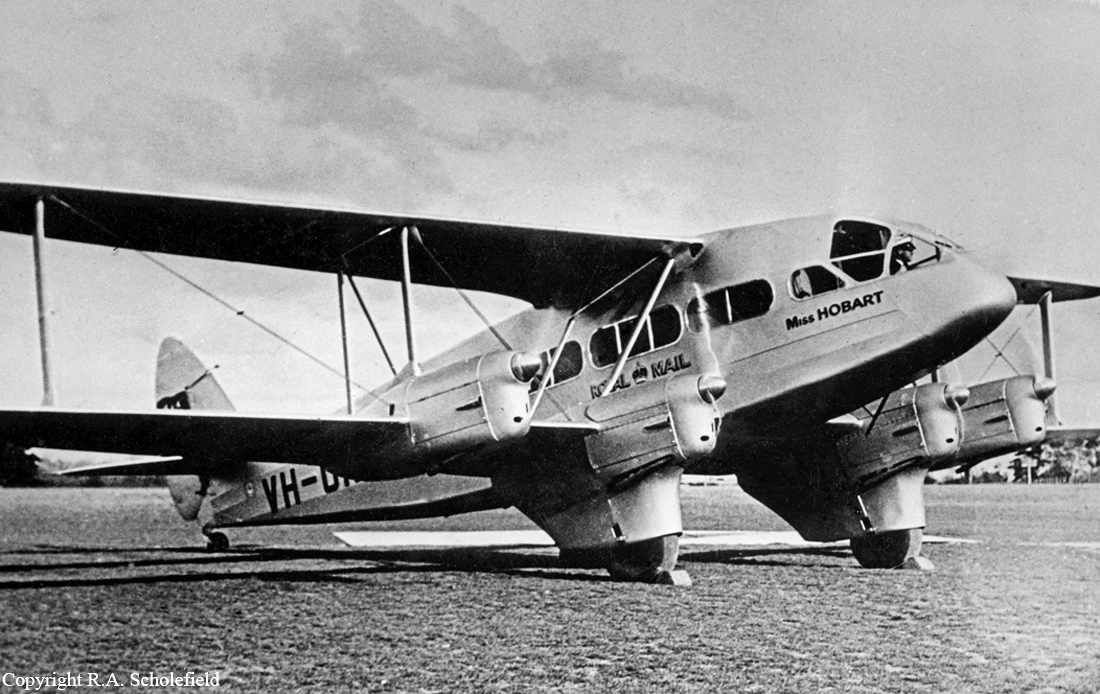
While overflying Bass Strait, the four engine aircraft named 'Miss Hobart' crashed in unknown circumstances some 16 km off the coast of the Wilsons Promontory National Park. SAR teams found some debris and oil leak at the surface of the water a day later but no trace of the 11 occupants was ever found.
Crew:
Cpt Victor C. Holyman, pilot and cofounder of the airliner,
Cpt Gilbert Jenkins.
Probable cause:
The cause of the crash could not be determined. However, one of the recommendations made by the accident investigative commission was to prohibit the changing of pilots in an aircraft while in flight, since one theory into the disappearance of VH-URN pointed to a loss of control resulting from such action by the crew.