Country
Operator Image

Crash of a Britten-Norman BN-2B-26 Islander off Campbeltown: 2 killed
Date & Time:
Mar 15, 2005 at 0018 LT
Operator:
Registration:
G-BOMG
Survivors:
No
Schedule:
Glasgow – Campbeltown
MSN:
2205
YOM:
1989
Crew on board:
1
Crew fatalities:
Pax on board:
1
Pax fatalities:
Other fatalities:
Total fatalities:
2
Captain / Total hours on type:
205.00
Aircraft flight hours:
6221
Aircraft flight cycles:
40018
Circumstances:
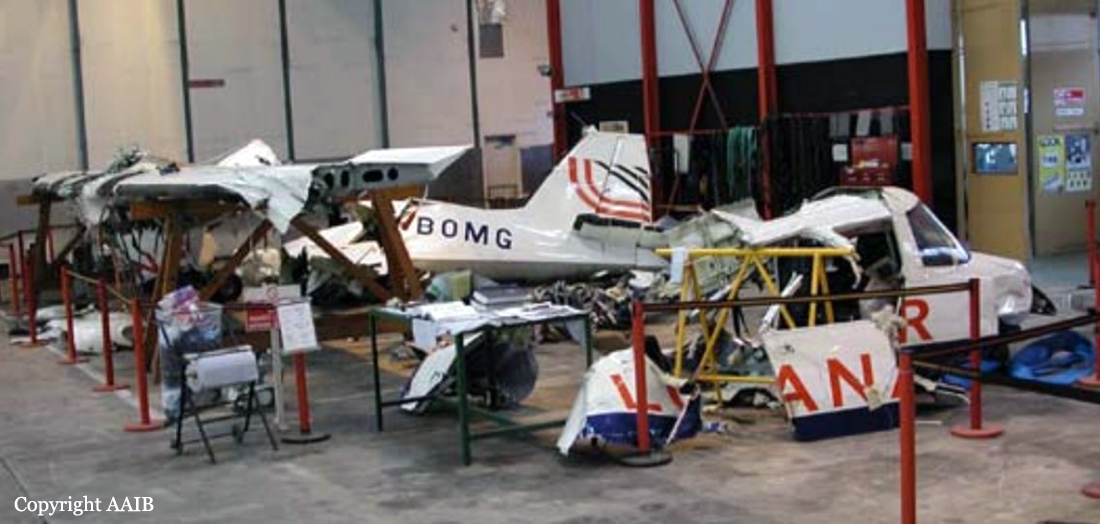
The Glasgow based Islander aircraft was engaged on an air ambulance task for the Scottish Ambulance Service when the accident occurred. The pilot allocated to the flight had not flown for 32 days; he was therefore required to complete a short flight at Glasgow to regain currency before landing to collect a paramedic for the flight to Campbeltown Airport on the Kintyre Peninsula. Poor weather at Campbeltown Airport necessitated an instrument approach. There was neither radar nor Air Traffic Control Service at the airport, so the pilot was receiving a Flight Information Service from a Flight Information Service Officer in accordance with authorised procedures. After arriving overhead Campbeltown Airport, the aircraft flew outbound on the approach procedure for Runway 11 and began a descent. The pilot next transmitted that he had completed the ‘base turn’, indicating that he was inbound to the airport and commencing an approach. Nothing more was seen or heard of the aircraft and further attempts at radio contact were unsuccessful. The emergency services were alerted and an extensive search operation was mounted in an area based on the pilot’s last transmission. The aircraft wreckage was subsequently located on the sea bed 7.7 nm west-north-west of the airport; there were no survivors.
Probable cause:
The investigation identified the following causal factors:
1. The pilot allowed the aircraft to descend below the minimum altitude for the aircraft’s position on the approach procedure, and this descent probably continued unchecked until the aircraft flew into the sea.
2. A combination of fatigue, workload and lack of recent flying practise probably contributed to the pilot’s reduced performance.
3. The pilot may have been subject to an undetermined influence such as disorientation, distraction or a subtle incapacitation, which affected his ability to safely control the aircraft’s flightpath.
1. The pilot allowed the aircraft to descend below the minimum altitude for the aircraft’s position on the approach procedure, and this descent probably continued unchecked until the aircraft flew into the sea.
2. A combination of fatigue, workload and lack of recent flying practise probably contributed to the pilot’s reduced performance.
3. The pilot may have been subject to an undetermined influence such as disorientation, distraction or a subtle incapacitation, which affected his ability to safely control the aircraft’s flightpath.
Final Report:

Crash of a Short 360-300 off Edinburgh: 2 killed
Date & Time:
Feb 27, 2001 at 1731 LT
Operator:
Registration:
G-BNMT
Survivors:
No
Schedule:
Edinburgh – Belfast
MSN:
3723
YOM:
1987
Flight number:
LOG670A
Crew on board:
2
Crew fatalities:
Pax on board:
0
Pax fatalities:
Other fatalities:
Total fatalities:
2
Captain / Total hours on type:
972.00
Copilot / Total hours on type:
72
Circumstances:
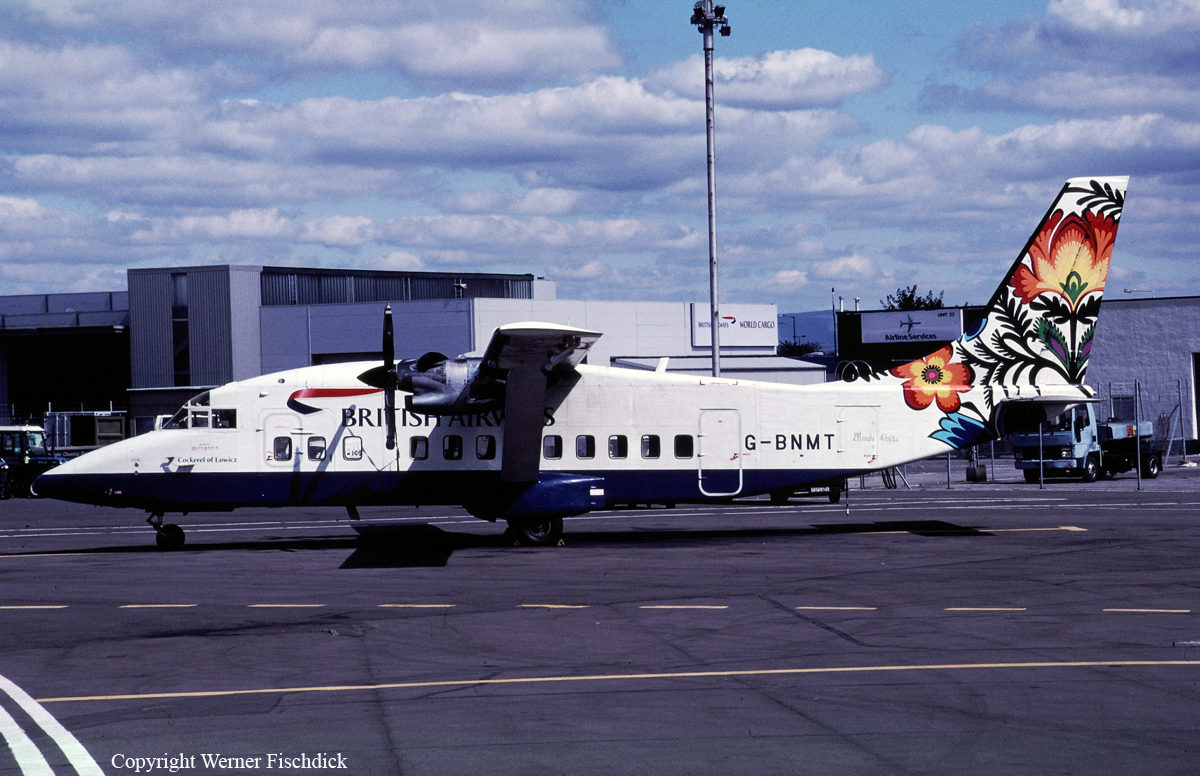
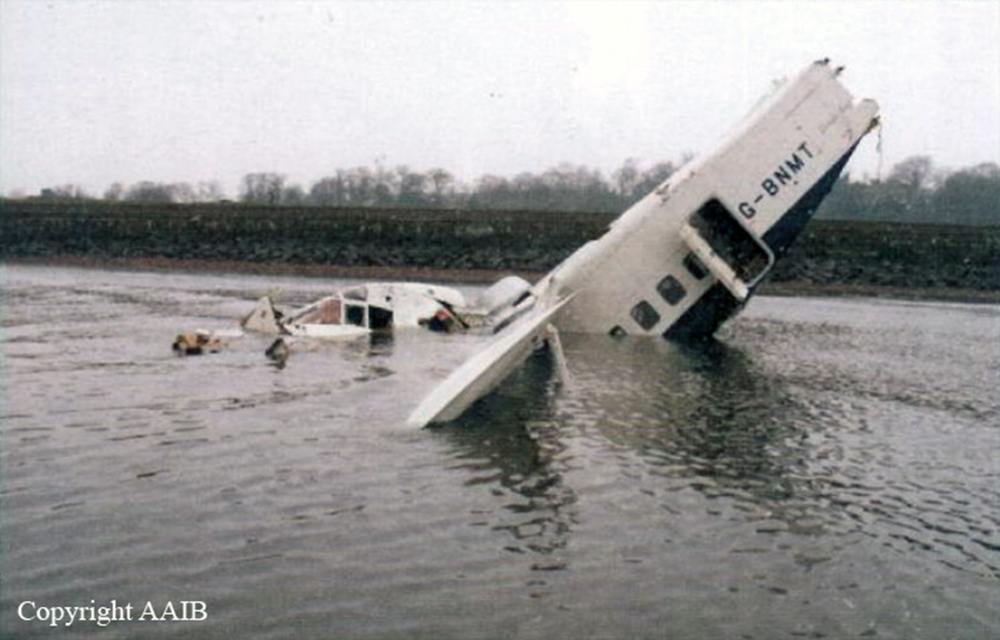
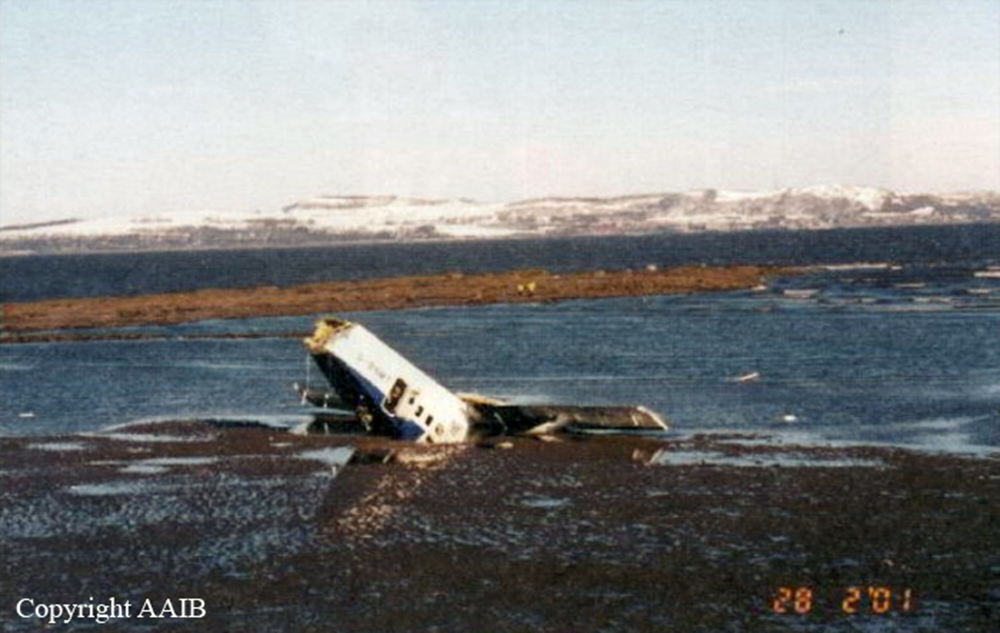
The aircraft landed at Edinburgh Airport, Scotland, at 00:03 and was parked there on Stand 31 in conditions including light and moderate snowfall. After preparation for a Royal Mail charter flight 670A to Belfast, start clearance was given at 15:03. At 15:12 hrs the crew advised ATC they were shutting down due to a technical problem. The crew then advised their company that a generator would not come on line. An avionics technician carried out diagnosis during which both engines were ground-run twice. No fault was found and the flight crew requested taxi clearance at 17:10. A normal take off from runway 06 was carried out followed by a reduction to climb power at 1,200 feet amsl. At 2,200 feet amsl the aircraft anti-icing systems were selected on. Three seconds later the torque on each engine reduced rapidly to zero. A MAYDAY call was made by the crew advising that they had experienced a double engine failure. The aircraft was ditched in the Firth of Forth estuary some 100 meters from the shoreline near Granton Harbour. Both pilots were killed. Weather reported just before the accident with a temperature of +2°C, dewpoint of -3°C, visibility of more then 10 km, broken clouds at 4500 feet and cover at 8000 feet.
Probable cause:
The following causal factors were identified:
1) The operator did not have an established practical procedure for flight crews to fit engine intake blanks (‘bungs’) in adverse weather conditions. This meant that the advice contained in the aircraft manufacturer’s Maintenance Manual ‘Freezing weather-precautions’ was not complied with. Furthermore intake blanks were not provided on the aircraft nor were any readily available at Edinburgh Airport.
2) A significant amount of snow almost certainly entered into the engine air intakes as a result of the aircraft being parked heading directly into strong surface winds during conditions of light to moderate snowfall overnight.
3) The flow characteristics of the engine intake system most probably allowed large volumes of snow, ice or slush to accumulate in areas where it would not have been readily visible to the crew during a normal pre-flight inspection.
4) At some stage, probably after engine ground running began, the deposits of snow, ice or slush almost certainly migrated from the plenum chambers down to the region of the intake anti-ice vanes. Conditions in the intakes prior to takeoff are considered to have caused re-freezing of the contaminant, allowing a significant proportion to remain in a state which precluded its ingestion into the engines during taxi, takeoff and initial climb.
5) Movement of the intake anti-icing vanes, acting in conjunction with the presence of snow, ice or slush in the intake systems, altered the engine intake air flow conditions and resulted in the near simultaneous flameout of both engines.
6) The standard operating procedure of selecting both intake anti-ice vane switches simultaneously, rather than sequentially with a time interval, eliminated a valuable means of protection against a simultaneous double engine flameout.
1) The operator did not have an established practical procedure for flight crews to fit engine intake blanks (‘bungs’) in adverse weather conditions. This meant that the advice contained in the aircraft manufacturer’s Maintenance Manual ‘Freezing weather-precautions’ was not complied with. Furthermore intake blanks were not provided on the aircraft nor were any readily available at Edinburgh Airport.
2) A significant amount of snow almost certainly entered into the engine air intakes as a result of the aircraft being parked heading directly into strong surface winds during conditions of light to moderate snowfall overnight.
3) The flow characteristics of the engine intake system most probably allowed large volumes of snow, ice or slush to accumulate in areas where it would not have been readily visible to the crew during a normal pre-flight inspection.
4) At some stage, probably after engine ground running began, the deposits of snow, ice or slush almost certainly migrated from the plenum chambers down to the region of the intake anti-ice vanes. Conditions in the intakes prior to takeoff are considered to have caused re-freezing of the contaminant, allowing a significant proportion to remain in a state which precluded its ingestion into the engines during taxi, takeoff and initial climb.
5) Movement of the intake anti-icing vanes, acting in conjunction with the presence of snow, ice or slush in the intake systems, altered the engine intake air flow conditions and resulted in the near simultaneous flameout of both engines.
6) The standard operating procedure of selecting both intake anti-ice vane switches simultaneously, rather than sequentially with a time interval, eliminated a valuable means of protection against a simultaneous double engine flameout.
Final Report:
Crash of a Britten-Norman BN-2A-26 Islander in Tingwall: 1 killed
Date & Time:
May 19, 1996 at 2336 LT
Operator:
Registration:
G-BEDZ
Survivors:
Yes
Schedule:
Inverness - Tingwall
MSN:
544
YOM:
1977
Crew on board:
1
Crew fatalities:
Pax on board:
2
Pax fatalities:
Other fatalities:
Total fatalities:
1
Captain / Total hours on type:
305.00
Aircraft flight hours:
14700
Aircraft flight cycles:
39900
Circumstances:
At 2300 hrs the two Tingwall fire attendants opened the airstripfor the returning flight. The airstrip lights were turned on and the fire appliance made ready. The firemen reported that,sometime later, the pilot radioed Tingwall asking for the wind speed and direction. This was passed as 090° to 120°/20 kt. One of the firemen also reported that at the time there was veryfine drizzle but the visibility was good. Analysis of recorded radar data from the radar head at Sumburgh confirmed that the aircraft routed over Lerwick and then flew north turning west inland over Kebister Ness. The doctor reported that, on approaching Lerwick he could see the lights of the town and the visibility was good enough for him to identify his house. The aircraft then turned southwards to join downwind right hand for Runway 02. The doctor stated that there were not many lights on the ground to the north of the airstrip but some to the south in the vicinity of Veensgarth. He also stated that the ride at this stage was moderately turbulent. At the end of the downwind leg the aircraft banked 'sharply' to the right to position on finals. It had, however, been blown through the centreline by the gusty easterly wind and was to the left of the required approach. The doctor confirmed that although the aircraft appeared to be at the correct height for its position he could see that when they were lined up the airfield lights were to the right of the windscreen. The pilot, unable to complete the approach, carried out a go-around to the left of the runway,climbed to 550 feet and turned right to enter the downwind leg again. The doctor reported that the engines sounded normal throughout this manoeuvre and the runway lights were clearly visible again as the aircraft became established on the downwind track. Several witnesses saw the aircraft fly downwind and turn onto the final approach. One witness, positioned on higher ground to the east of the runway threshold, stated that the aircraft flew downwind along the line of the houses at Veensgarth and 'asit turned it descended all the while'. Radar information shows that for this second attempt the pilot extended the downwind legby approximately 800 metres before turning towards the airfield. The rapid turn onto finals was described by the doctor as being very steep but without the increase in 'g' that he would have expected for such an steep angle of bank. The nurse described the sensation as 'the aircraft dropped, with my cheeks and whole body being forced upwards'. Throughout the turn the pilot was seen by the passengers to be generally looking to the right, presumably for the airfield. Seconds later the aircraft hit the ground. After the impact the nurse found herself still in her seat with the aircraft in an upright position. She was relatively uninjured and soon released her seatbelt, released her trapped right foot and struggled clear of the wreckage through the open right rear aircraft window. She ran around the tail section to the doctor and released debris from around his head. Unable to move him because of his injuries, she ran to a nearby house to summon the emergency services. The doctor, although seriously injured, remained conscious throughout and managed to clamber clear of the aircraft to lie on the round some ten feet from the wreckage. The pilot had received fatal injuries at impact.
Final Report: