Country
Operator Image

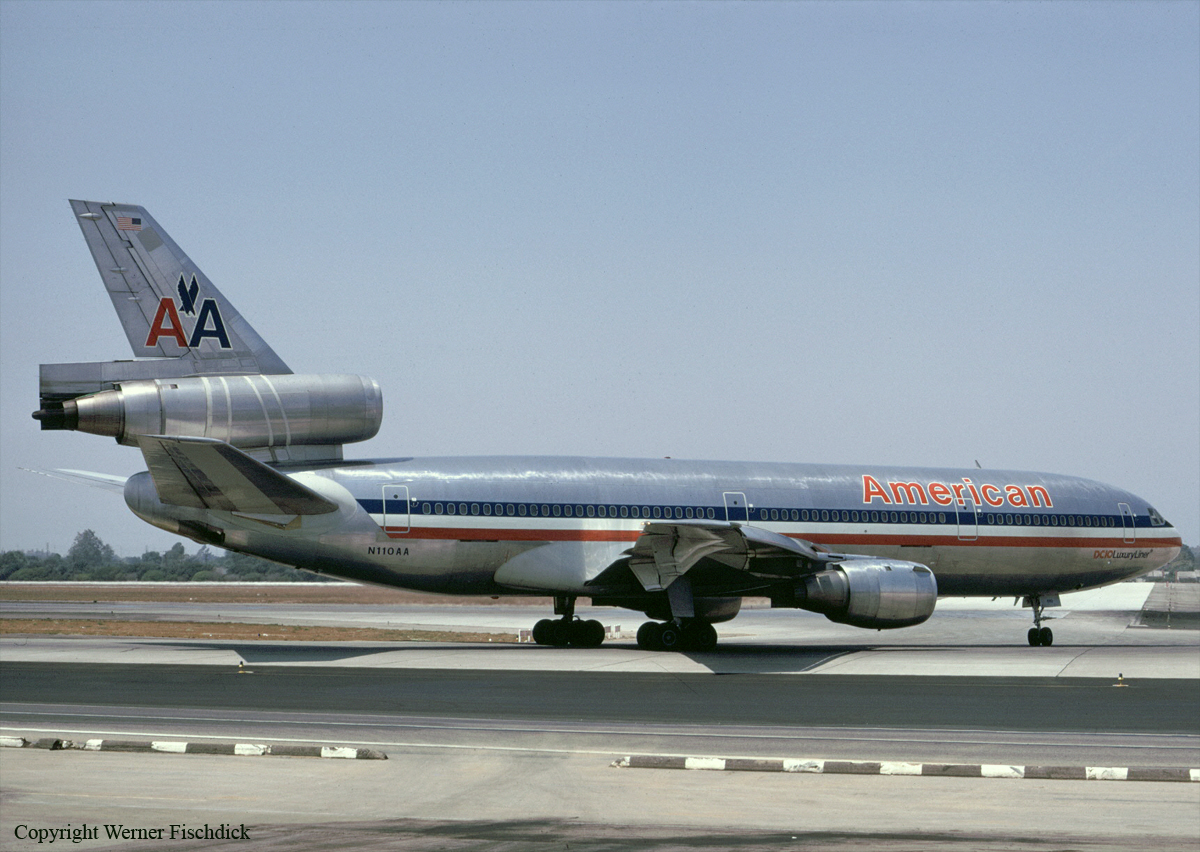
Crash of a Douglas DC-10-10 in Chicago: 273 killed
Date & Time:
May 25, 1979 at 1504 LT
Operator:
Registration:
N110AA
Survivors:
No
Schedule:
Chicago - Los Angeles
MSN:
46510/22
YOM:
1971
Flight number:
AA191
Crew on board:
13
Crew fatalities:
Pax on board:
258
Pax fatalities:
Other fatalities:
Total fatalities:
273
Captain / Total hours on type:
3000.00
Copilot / Total hours on type:
1200
Aircraft flight hours:
19871
Circumstances:
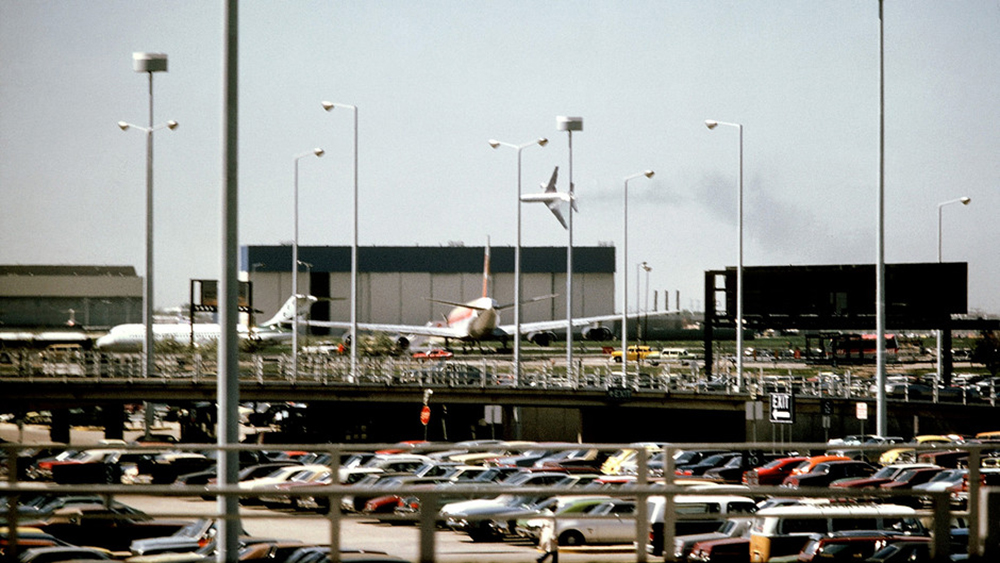
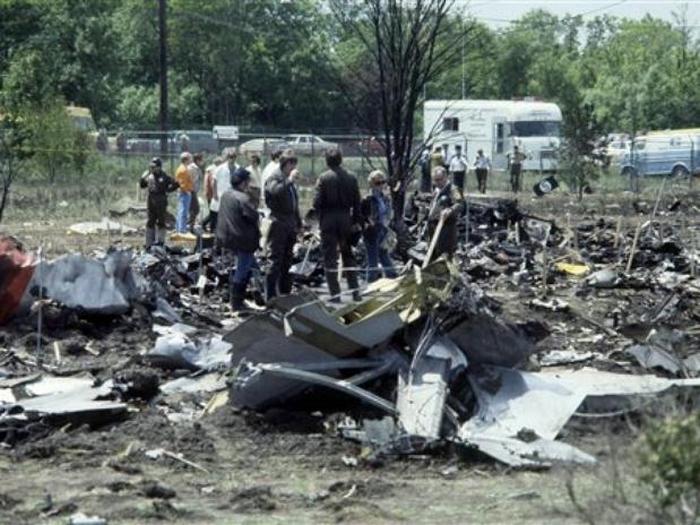
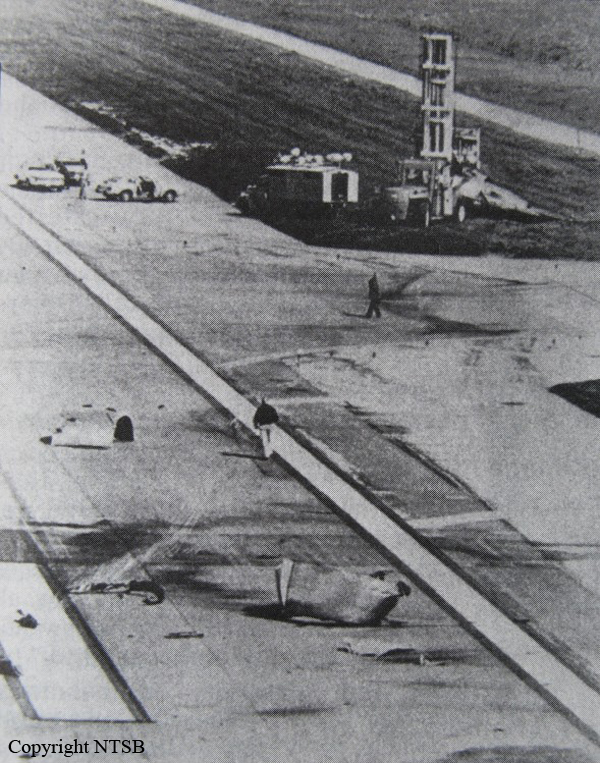
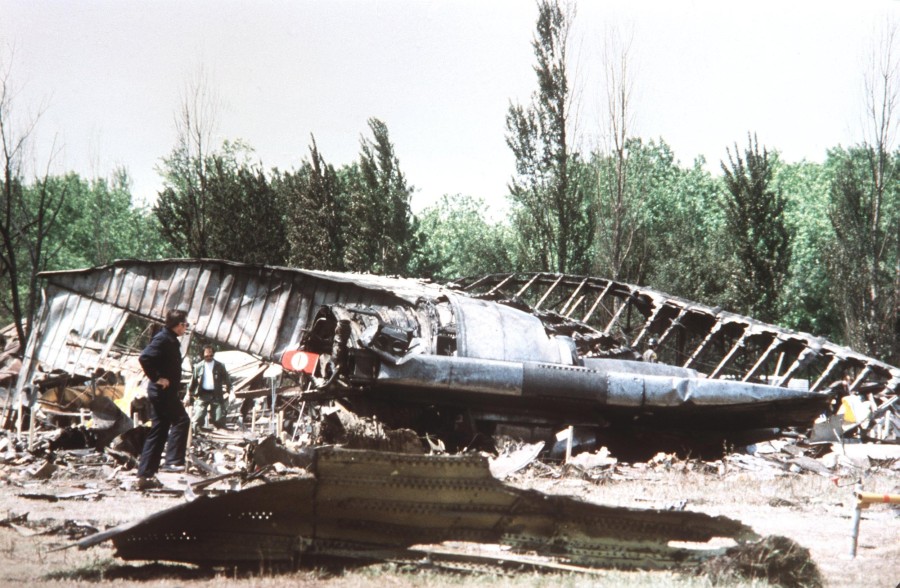
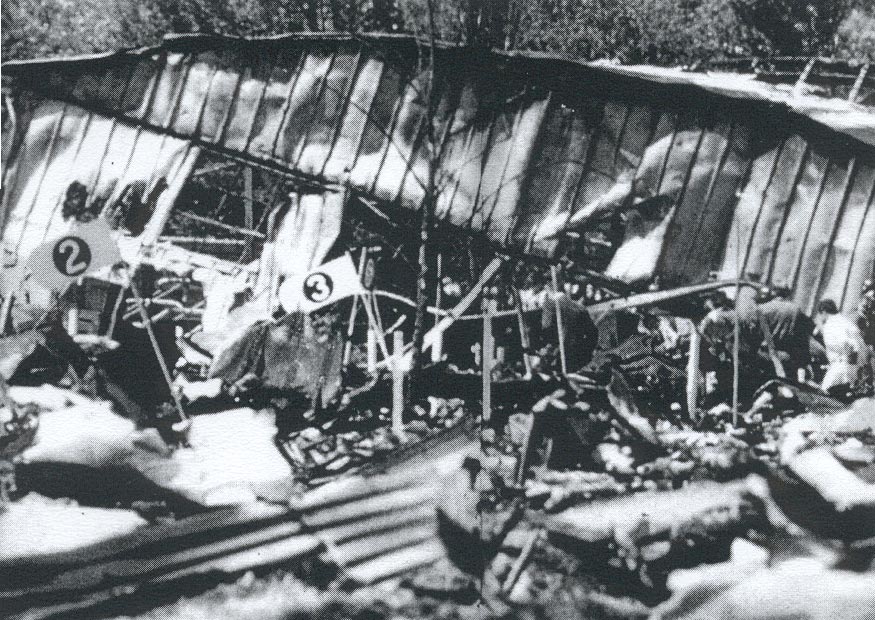
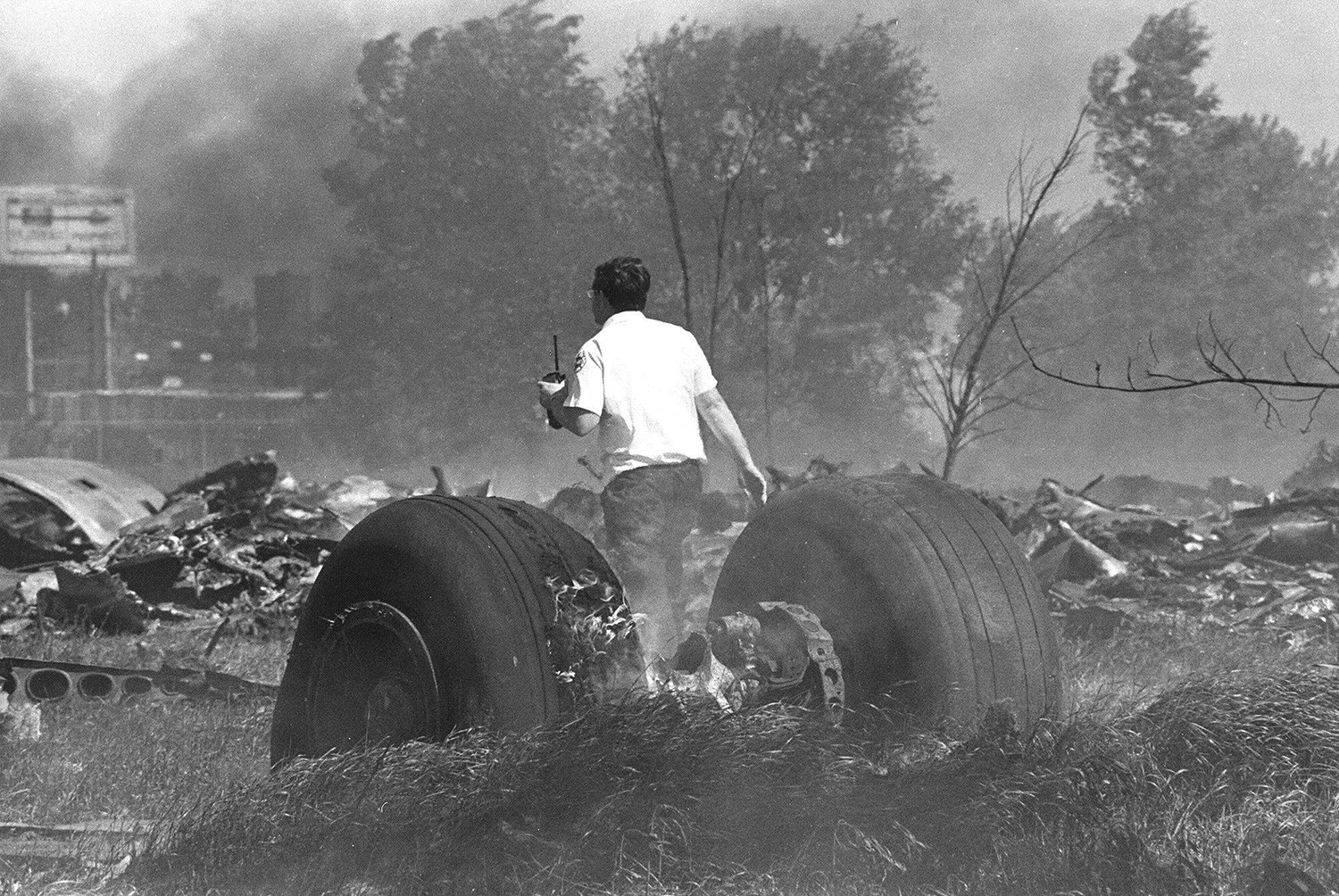
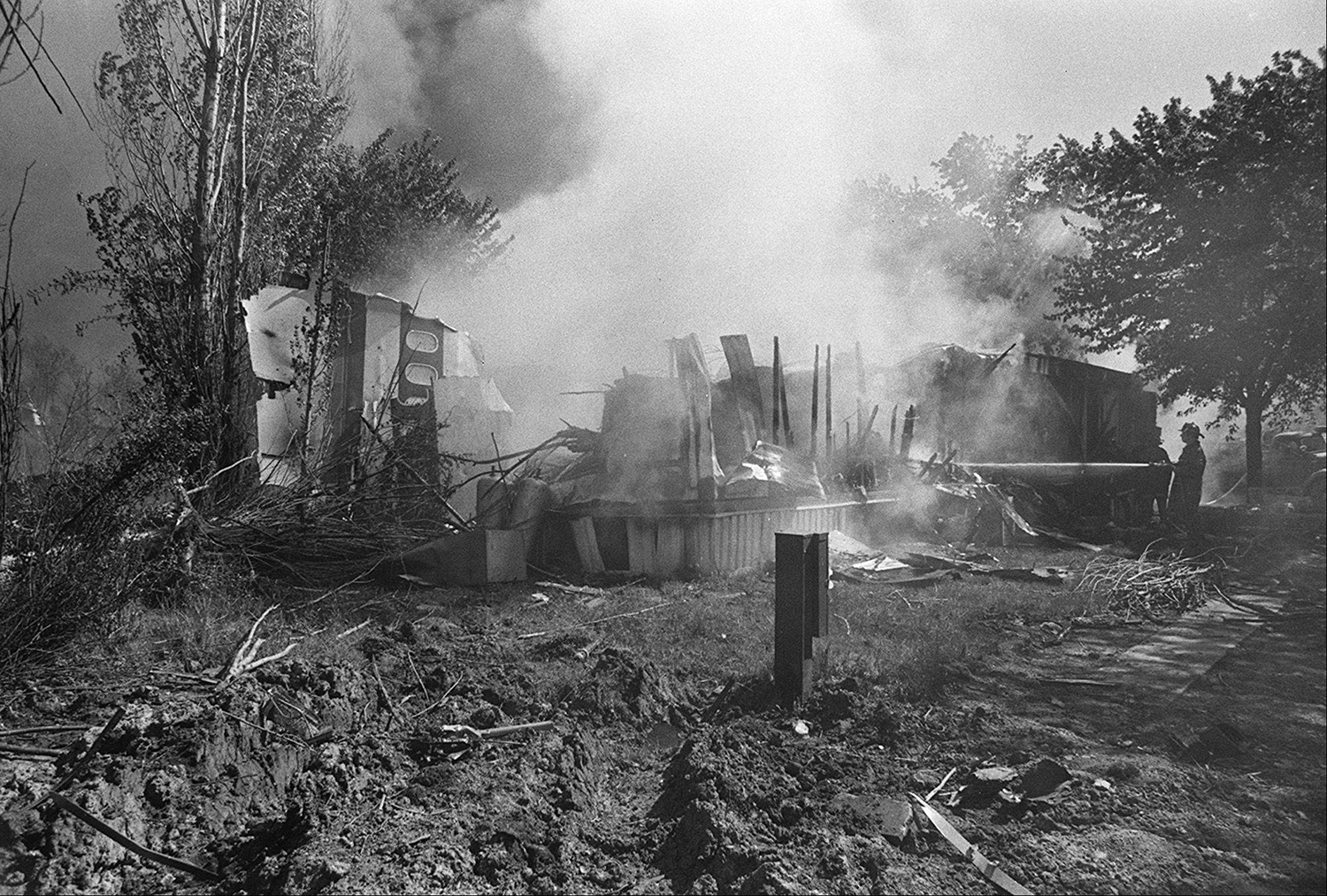
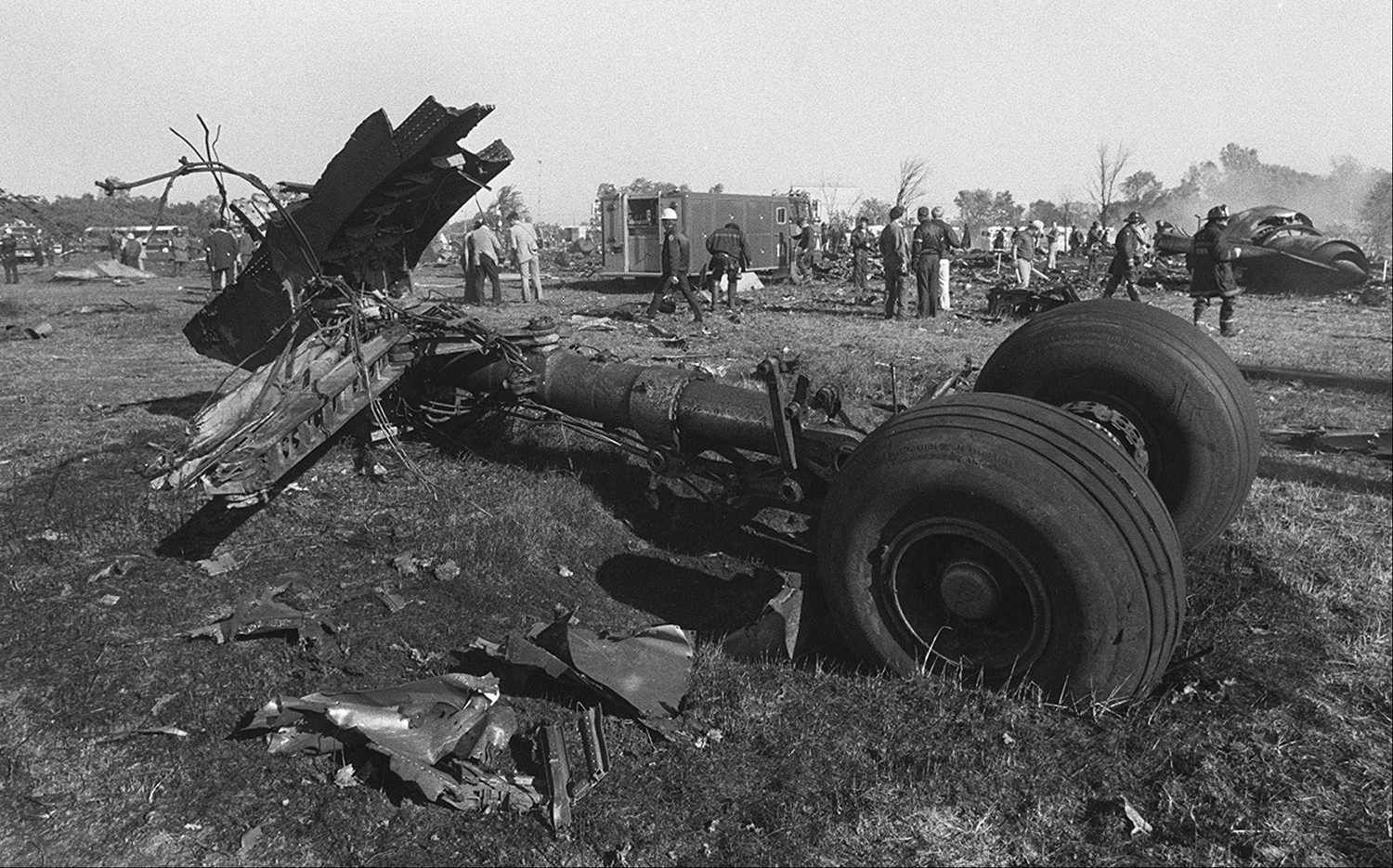
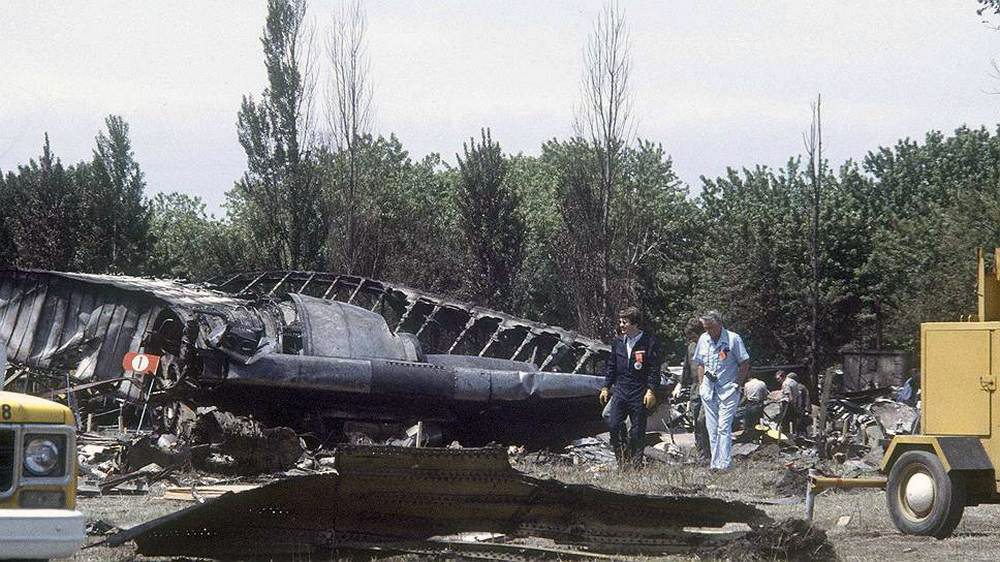
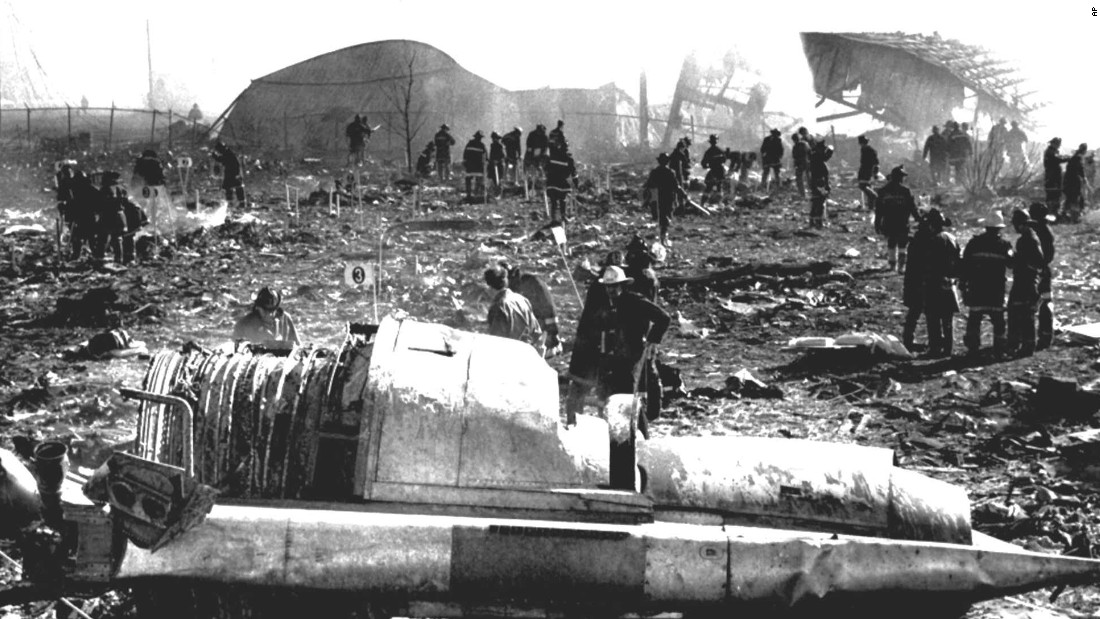
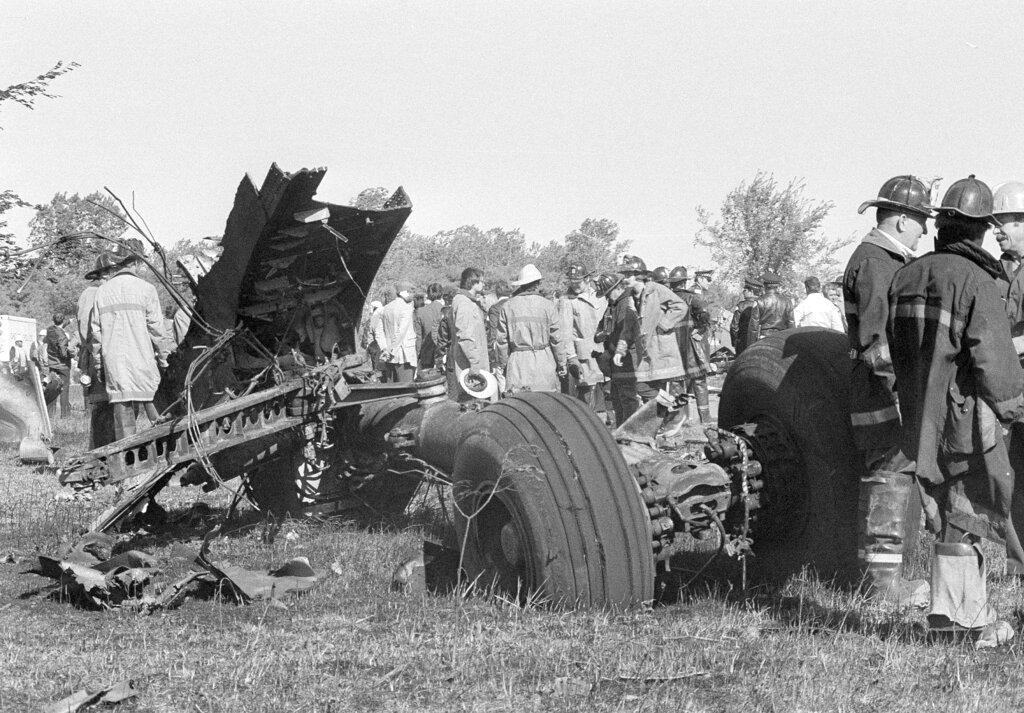
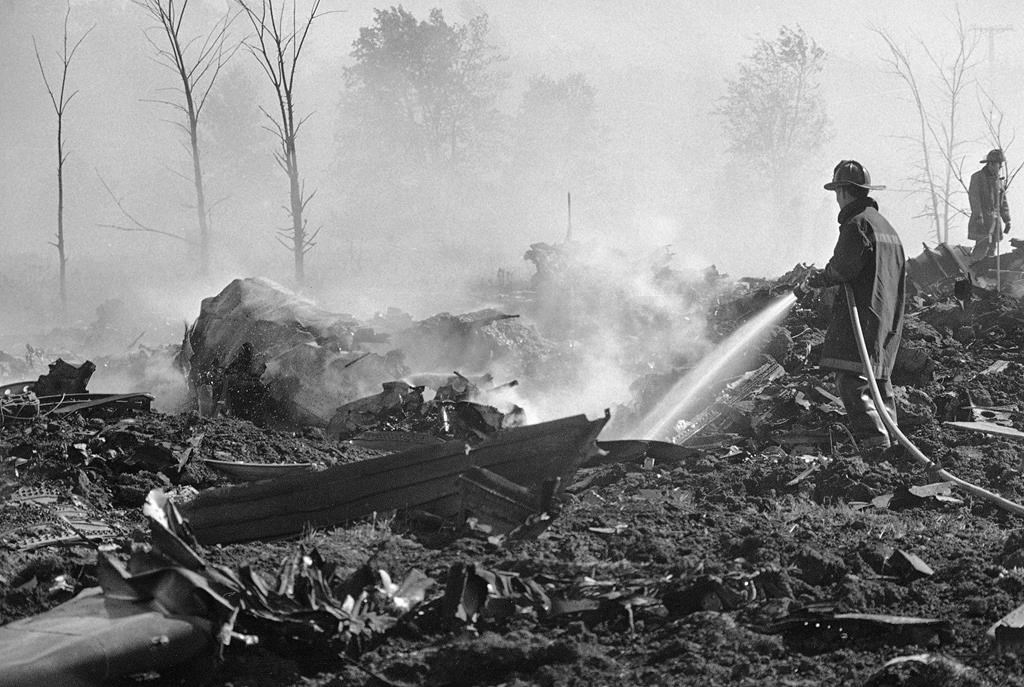
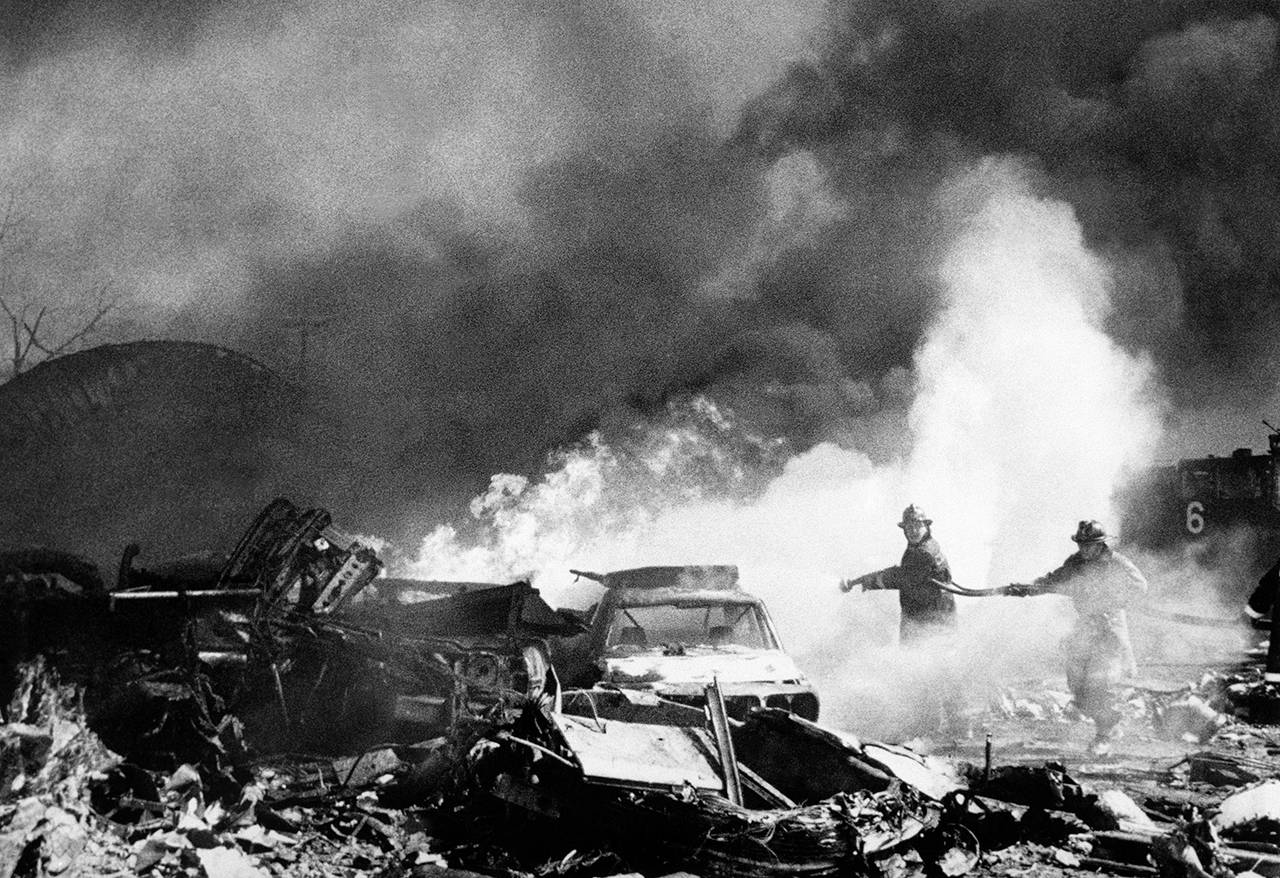
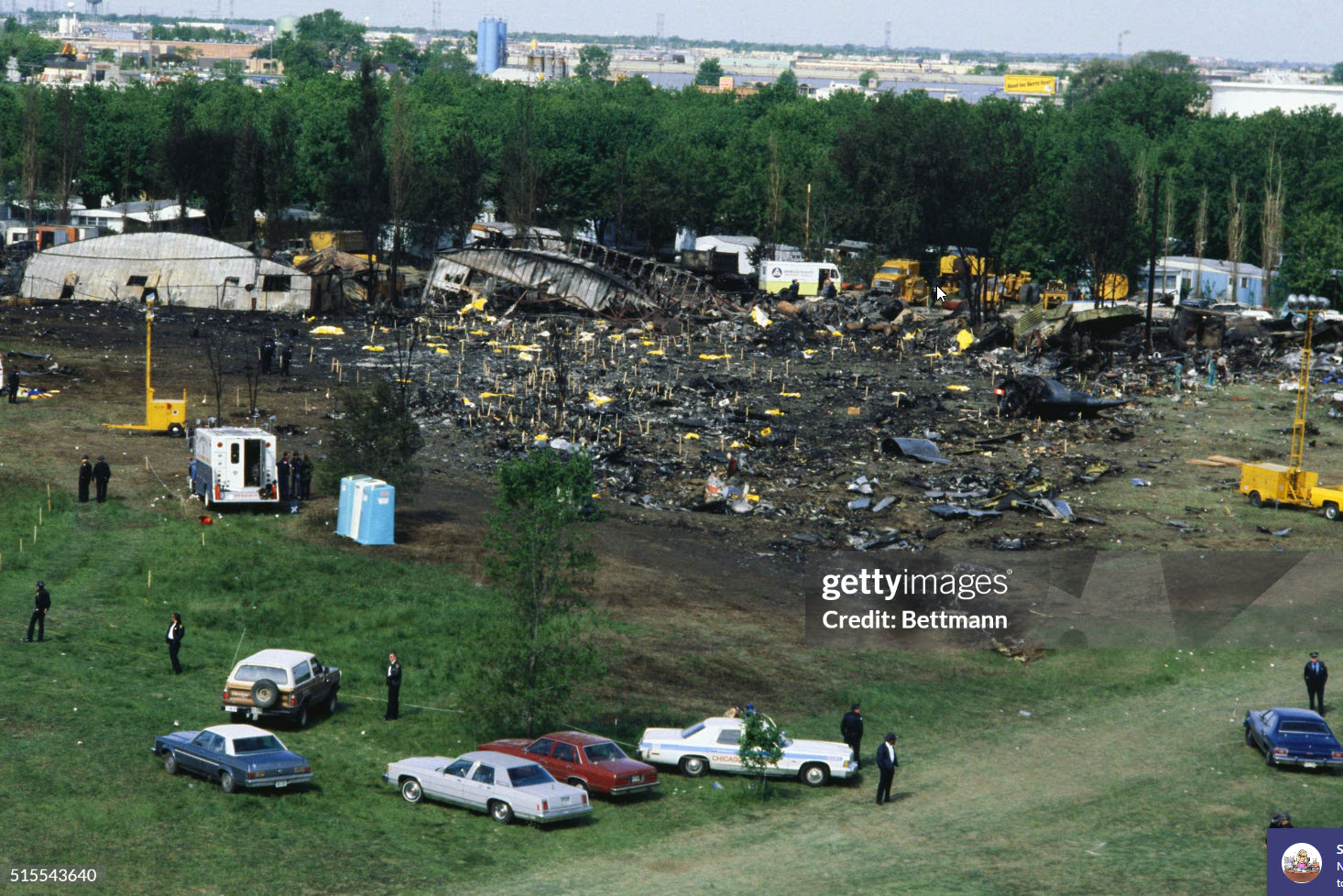
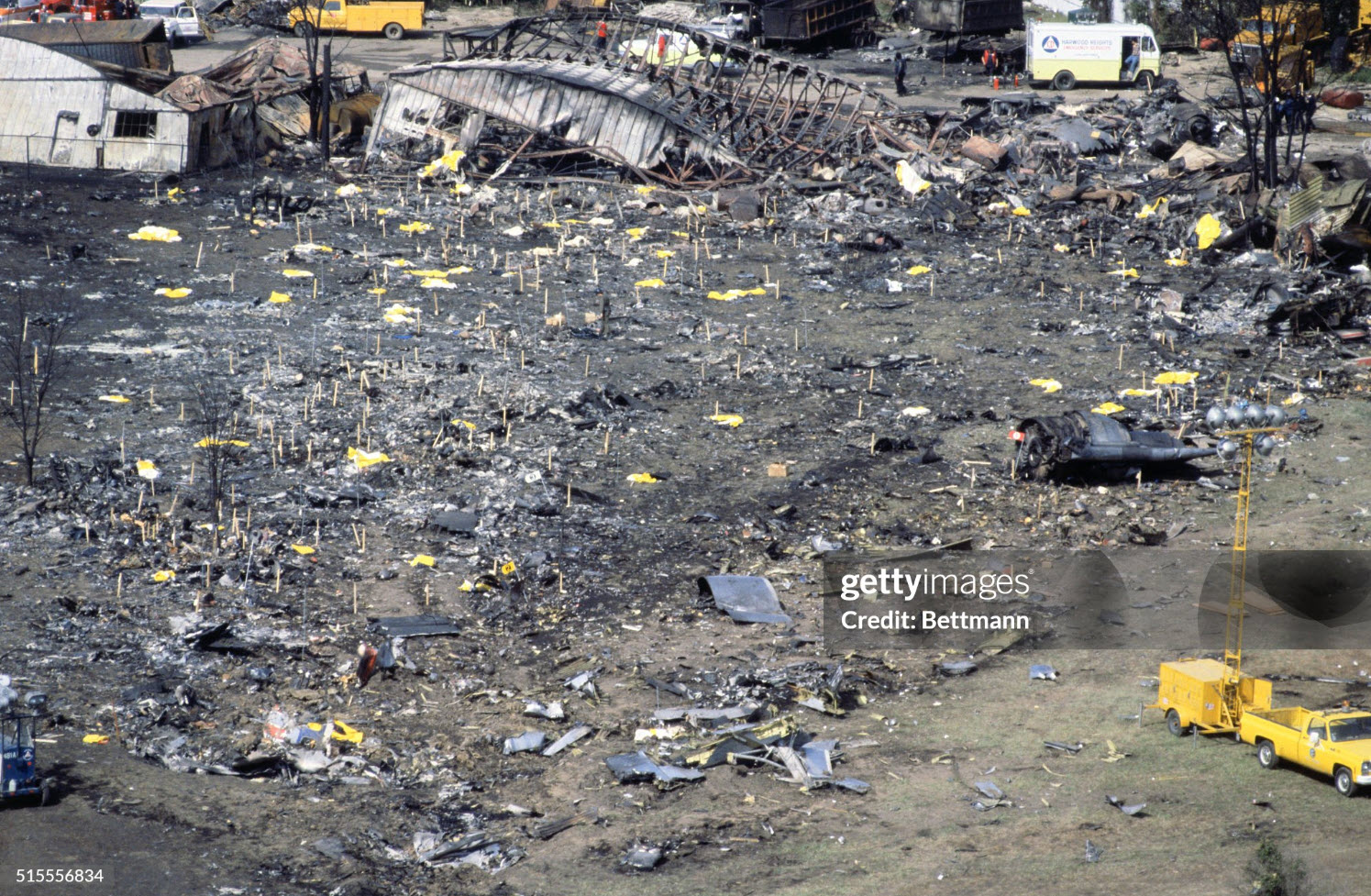
American Airlines Flight 191, a McDonnell-Douglas DC-10-10, crashed on takeoff from Chicago-O'Hare International Airport, Illinois, USA. The aircraft was destroyed and all 271 occupants were killed. Additionally, two persons on the ground sustained fatal injuries. At 14:59 hours local time Flight 191 taxied from the gate at O'Hare Airport. The flight was bound for Los Angeles, California, with 258 passengers and 13 crew members on board. Maintenance personnel who monitored the flight's engine start, push-back, and start of taxi did not observe anything out of the ordinary. The weather at the time of departure was clear, and the reported surface wind was 020° at 22 kts. Flight 191 was cleared to taxi to runway 32R for takeoff. The company's Takeoff Data Card showed that the stabilizer trim setting was 5° aircraft nose up, the takeoff flap setting was 10°, and the takeoff gross weight was 379,000 lbs. The target low pressure compressor (N1) rpm setting was 99.4 percent, critical engine failure speed (V1) was 139 kts indicated airspeed (KIAS), rotation speed (VR) was 145 KIAS, and takeoff safety speed (V2) was 153 KIAS. Flight 191 was cleared to taxi into position on runway 32R and hold. At 15:02:38, the flight was cleared for takeoff, and at 15:02:46 the captain acknowledged, "American one ninety-one under way." The takeoff roll was normal until just before rotation at which time sections of the No.1 (left) engine pylon structure came off the aircraft. Witnesses saw white smoke or vapor coming from the vicinity of the No. 1 engine pylon. During rotation the entire No. 1 engine and pylon separated from the aircraft, went over the top of the wing, and fell to the runway. Flight 191 lifted off about 6,000 ft down runway 32R, climbed out in a wings-level attitude. About nine seconds after liftoff, the airplane had accelerated to 172 knots and reached 140 feet of altitude. As the climb continued, the airplane began to decelerate at a rate of about one knot per second, and at 20 seconds after liftoff, and an altitude of 325 feet, airspeed had been reduced to 159 knots. At this point, the airplane began to roll to the left, countered by rudder and aileron inputs. The airplane continued to roll until impact, 31 seconds after liftoff, and in a 112-degree left roll, and 21-degree nose down pitch attitude. At 15:04 Flight 191 crashed in an open field and trailer park about 4,600 ft northwest of the departure end of runway 32R. The aircraft was demolished during the impact, explosion, and ground fire. The No.1 engine pylon failure during takeoff was determined to have been caused by unintended structural damage which occurred during engine/pylon reinstallation using a forklift. The engine/pylon removal and reinstallation were being conducted to implement two DC-10 Service Bulletins. Both required that the pylons be removed, and recommended that this be accomplished with the engines removed. The Service Bulletin instructions assumed that engines and pylons would be removed separately, and did not provide instructions to remove the engine and pylon as a unit. Additionally, removal of the engines and pylons as a unit was not an approved Maintenance Manual procedure. The lack of precision associated with the use of the forklift, essentially an inability to perform the fine manipulations necessary to accomplish reinstallation of the engine/strut assembly, in combination with the tight clearances between the pylon flange and the wing clevis resulted in damage to the same part that had just been inspected. Inspections of other DC-10 pylon mounts following the accident resulted in nine additional cracked mounts being identified.
Probable cause:
The asymmetrical stall and the ensuing roll of the aircraft because of the uncommanded retraction of the left wing outboard leading edge slats and the loss of stall warning and slat disagreement indication systems resulting from maintenance-induced damage leading to the separation of the no.1 engine and pylon assembly procedures which led to failure of the pylon structure. Contributing to the cause of the accident were the vulnerability of the design of the pylon attach points to maintenance damage; the vulnerability of the design of the leading edge slat system to the damage which produced asymmetry; deficiencies in FAA surveillance and reporting systems which failed to detect and prevent the use of improper maintenance procedures; deficiencies in the practices and communications among the operators, the manufacturer, and the FAA which failed to determine and disseminate the particulars regarding previous maintenance damage incidents; and the intolerance of prescribed operational procedures to this unique emergency.
Final Report:

Crash of a Boeing 727-95 in Charlotte Amalie: 37 killed
Date & Time:
Apr 27, 1976 at 1510 LT
Operator:
Registration:
N1963
Survivors:
Yes
Schedule:
Providence - New York - Charlotte Amalie
MSN:
19837/499
YOM:
1967
Flight number:
AA625
Crew on board:
7
Crew fatalities:
Pax on board:
81
Pax fatalities:
Other fatalities:
Total fatalities:
37
Captain / Total hours on type:
10000.00
Copilot / Total hours on type:
2500
Aircraft flight hours:
21926
Circumstances:
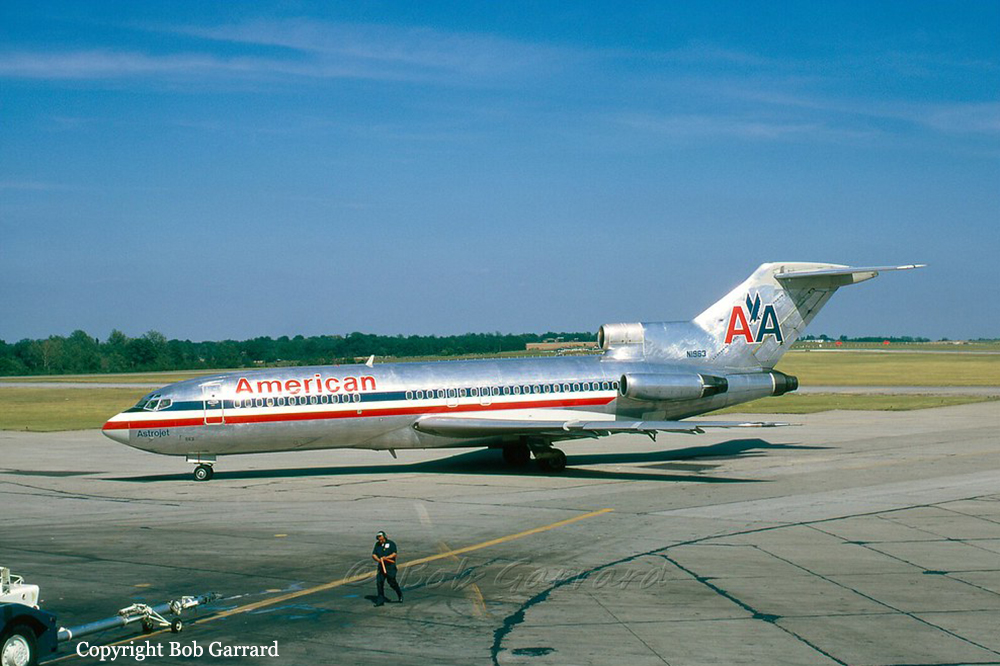
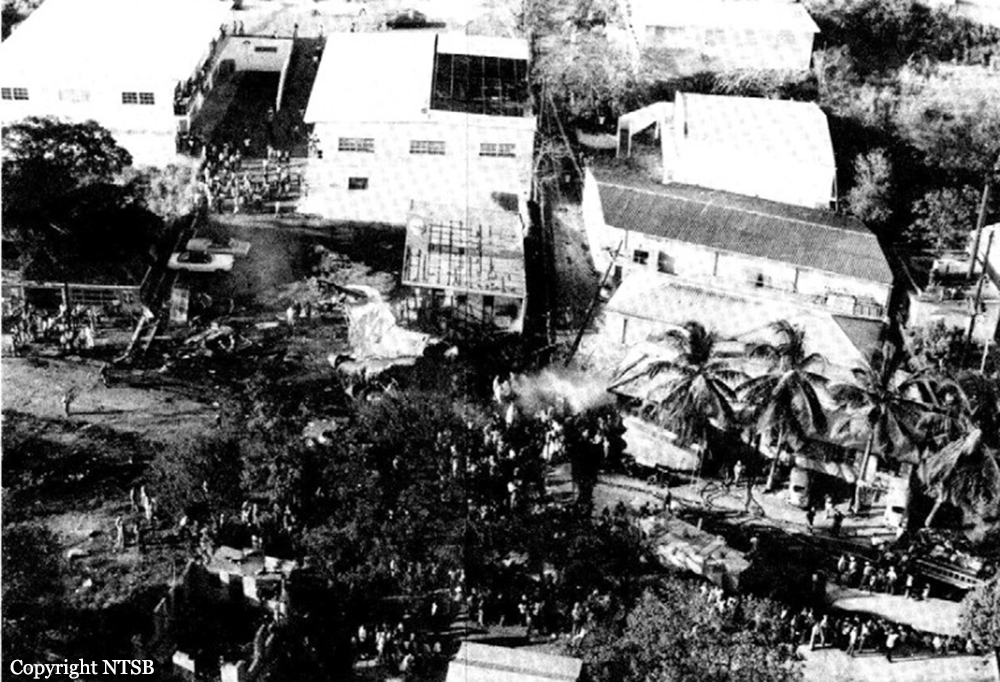
American Airlines Flight 625 was a scheduled flight from Providence Airport (PVD) to St.Thomas (STT) on the U.S Virgin Islands with an intermediate stop in New York (JFK). The Boeing 727 departed New York at 12:00 AST. On approach to St. Thomas, at 15:04, the flight crew cancelled their IFR flight plan and proceeded VFR. The captain elected to use the runway 09 ILS for vertical guidance. The glide slope was intercepted at 1500 feet msl (flaps 15° and at a 160 KIAS airspeed). The flaps were lowered to 25 and later to 30 degrees. The company prescribed 40 degrees was never selected. The speed was still 10 KIAS above Vref when the aircraft passed the threshold at an estimated altitude of 30-40 feet. At 1000 feet down the runway, while initiating the flare, turbulence caused the right wing to drop. The wings were leveled and the aircraft floated a while until touchdown 2200-2300 feet down the runway. The captain decided that the aircraft couldn't be stopped on the remaining runway. He immediately initiated a go-around. Because of the absence of any sensation either of power being applied or of aircraft acceleration, the throttles were closed again. The aircraft, in a 11 degree nose up attitude, ran off the runway and struck a localizer antenna. The right wingtip clipped a hillside just south of the antenna and the aircraft continued, hit an embankment, became airborne and contacted the ground on the opposite side of the perimeter road. The aircraft continued and came to rest 83 feet past the perimeter road, bursting into flames.
Probable cause:
The captain's actions and his judgment in initiating a go-around maneuver with insufficient runway remaining after a long touchdown. The long touchdown is attributed to a deviation from prescribed landing techniques and an encounter with an adverse wind condition, common at the airport. The non-availability of information about the aircraft's go-around performance capabilities may have been a factor in the captain's abortive attempt to go-around a long landing.
Final Report:
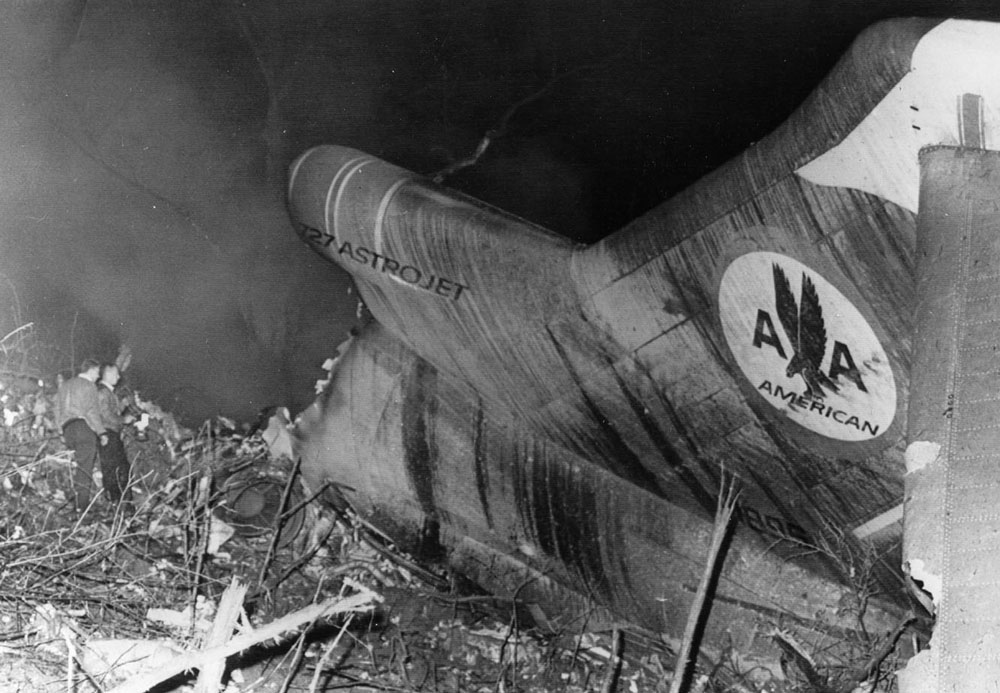
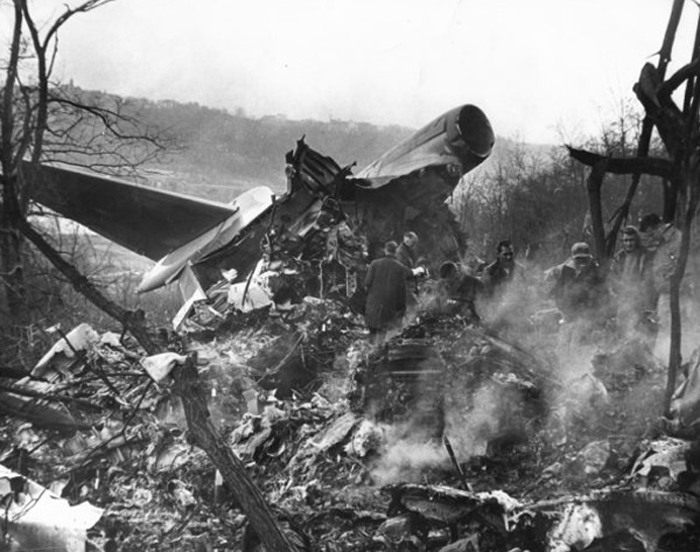
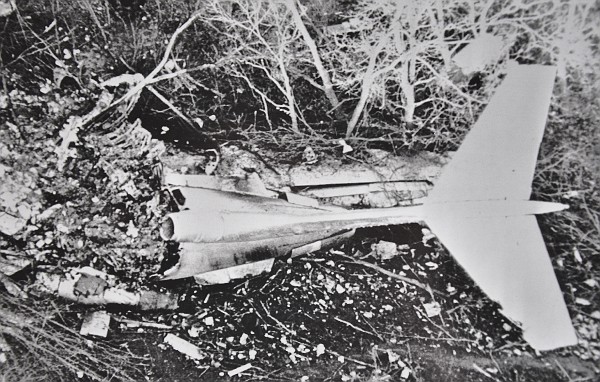
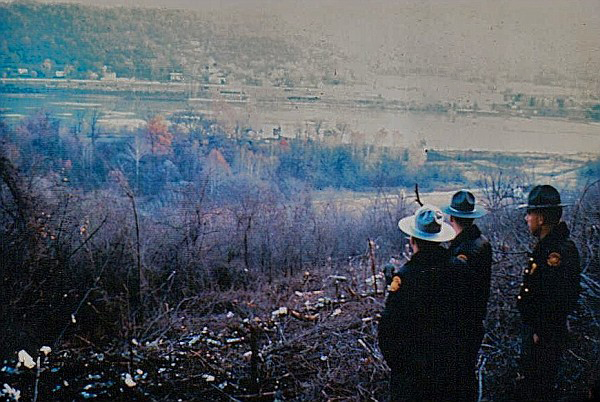
Crash of a Boeing 727-23 in Cincinnati: 58 killed
Date & Time:
Nov 8, 1965 at 1902 LT
Operator:
Registration:
N1996
Survivors:
Yes
Schedule:
New York - Cincinnati
MSN:
18901
YOM:
1965
Flight number:
AA383
Crew on board:
6
Crew fatalities:
Pax on board:
56
Pax fatalities:
Other fatalities:
Total fatalities:
58
Captain / Total hours on type:
225.00
Copilot / Total hours on type:
35
Aircraft flight hours:
938
Circumstances:
American Airlines Flight 383, a Boeing 727, N1996, departed New York-LaGuardia Airport (LGA) at 17:38 for a scheduled flight to the Greater Cincinnati Airport (CVG). It was to be an IFR flight with a requested cruising altitude of 35,000 ft and an estimated time en route of 1 hour 23 minutes. The en route part of the flight was uneventful. About 18:55, when the flight was about 27 miles southeast of the Greater Cincinnati Airport, radar traffic control was effected by Cincinnati Approach Control. Subsequent descent clearances were issued to the flight and at 18:57 flight 383 reported: "...out of five for four and how about a control VFR, we have the airport." The Approach Controller replied: "... continue to the airport and cleared for a visual approach to runway one eight, precip lying just to the west boundary of the airport and its ... southbound." The crew acknowledged the clearance and the controller cleared the flight to descend to 2,000 feet at their discretion. At 18:58 Approach Control advised the flight that its radar position was six miles southeast of the airport and instructed them to change to the Cincinnati tower frequency. One minute later the tower controller cleared the flight to land. During the approach the visibility at the airport deteriorated as it began to rain. The tower controller reported: "American three eighty three we are beginning to pickup a little rain right now." At 19:01:14 the tower asked: "American three eighty three you still got the runway Okay?" To which the crew replied "Ah just barely we'll ah pickup the ILS here". At this point, thirteen seconds before impact, the 727 was descending at a rate of 2100 feet/min to an altitude of approximately 725 feet (165 ft below published field elevation) with the airspeed holding at 160 knots. The descent rate then decreased to about 625 ft/min for approximately the last 10 seconds of flight with the airspeed decreasing to 147 knots at impact. The right wing struck a tree at an altitude of 665 feet msl which is approximately 225 feet below the published field elevation. The aircraft slid a distance of 340 feet relatively intact through scrub trees and ground foilage before impacting and coming to rest amidst a group of larger trees. Following impact an intense ground fire erupted which completely destroyed the aircraft cabin forward of the tail section. A stewardess and three passengers survived while 58 other occupants were killed.
Probable cause:
The Board determines that the probable cause of this accident was the failure of the crew to properly monitor the altimeters during a visual approach into deteriorating visibility conditions.
Final Report:
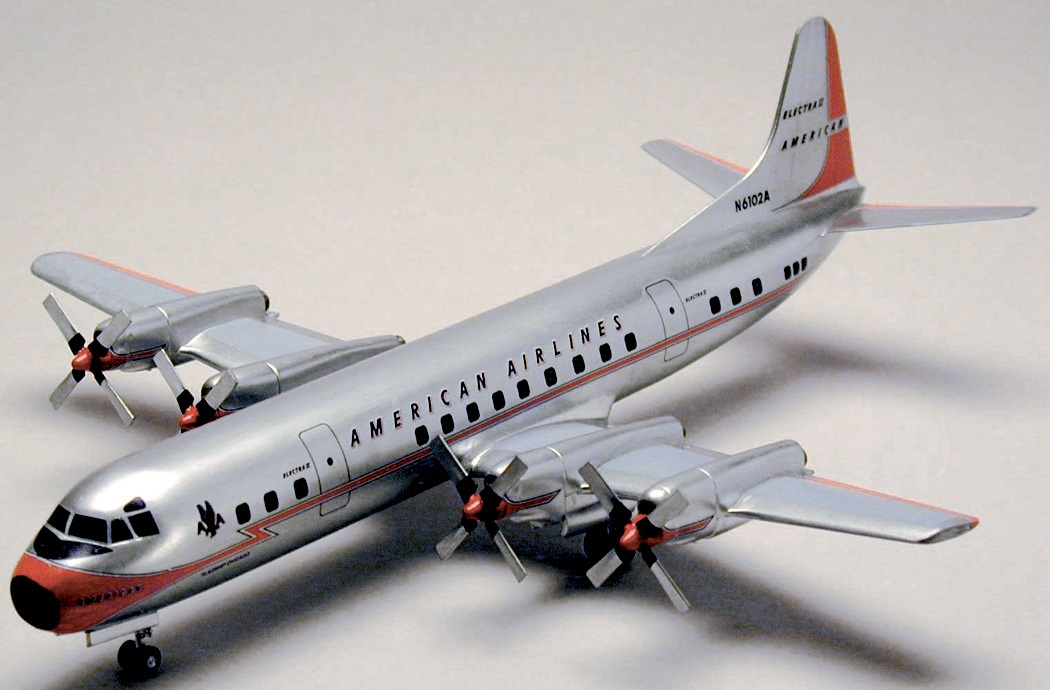
Crash of a Lockheed L-188A Electra in Knoxville
Date & Time:
Aug 6, 1962 at 1731 LT
Operator:
Registration:
N6102A
Survivors:
Yes
Schedule:
Dallas – Little Rock – Memphis – Knoxville – Washington DC – New York
MSN:
1019
YOM:
1958
Flight number:
AA414
Crew on board:
5
Crew fatalities:
Pax on board:
67
Pax fatalities:
Other fatalities:
Total fatalities:
0
Captain / Total hours on type:
878.00
Copilot / Total hours on type:
423
Aircraft flight hours:
6947
Circumstances:
On August 6, 1962, at 1731 e.s.t., Flight 414, an American Airlines, Inc., Lockhead Electra, N 6102A, crashed during a landing on runway 4L at McGhee-Tyson Airport, Knoxville, Tennessee. Sixty-seven passengers and five crew members were on board the aircraft. All escaped injury except one passenger who suffered a minor injury. The aircraft was substantially damaged. During the landing made by the captain in an area of thunderstorm activity and heavy rain showers, the aircraft skidded to the right off the runway. It struck a newly constructed taxiway the surface of which was approximately 17 inches above ground level, causing failure of the right main landing gear. The right wing became separated front the aircraft. The remainder of the aircraft continued to deviate to the right off the side of the runway for a short distance and came to rest 3,010 feet from the approach end of the runway on a heading of 200 degrees magnetic.
Probable cause:
The Board determines that the probable cause of this accident was the loss of directional control as a result of the improper technique employed in a crosswind landing in adverse weather conditions.
Final Report:
Crash of a Boeing 707-123B in New York: 95 killed
Date & Time:
Mar 1, 1962 at 1008 LT
Operator:
Registration:
N7506A
Survivors:
No
Schedule:
New York – Los Angeles
MSN:
17633
YOM:
1959
Flight number:
AA001
Crew on board:
8
Crew fatalities:
Pax on board:
87
Pax fatalities:
Other fatalities:
Total fatalities:
95
Captain / Total hours on type:
1600.00
Copilot / Total hours on type:
900
Aircraft flight hours:
8147
Circumstances:
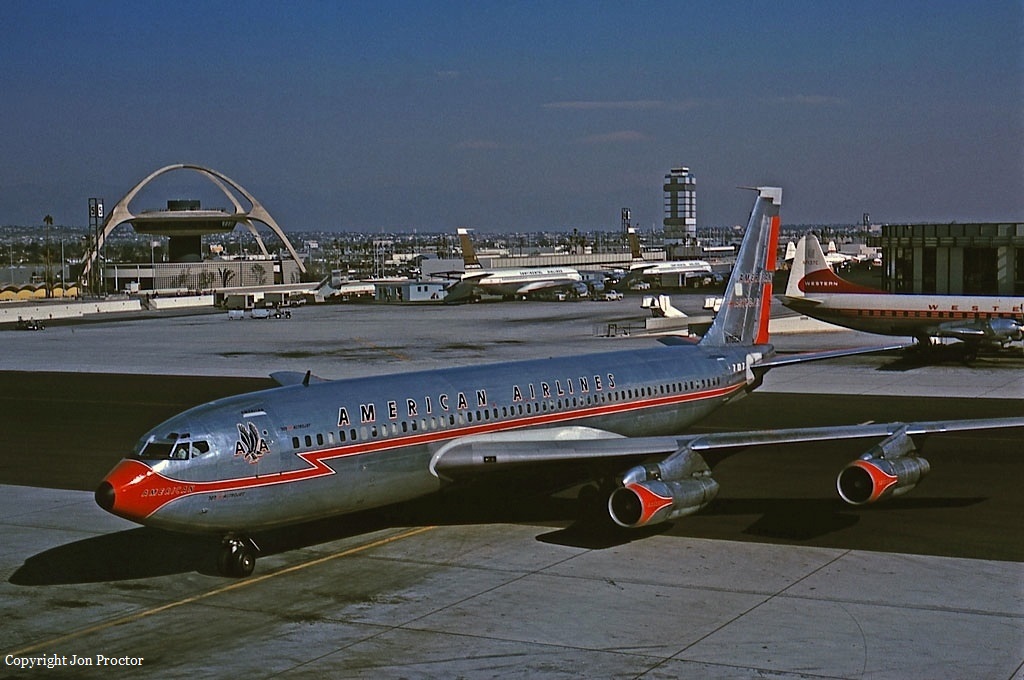
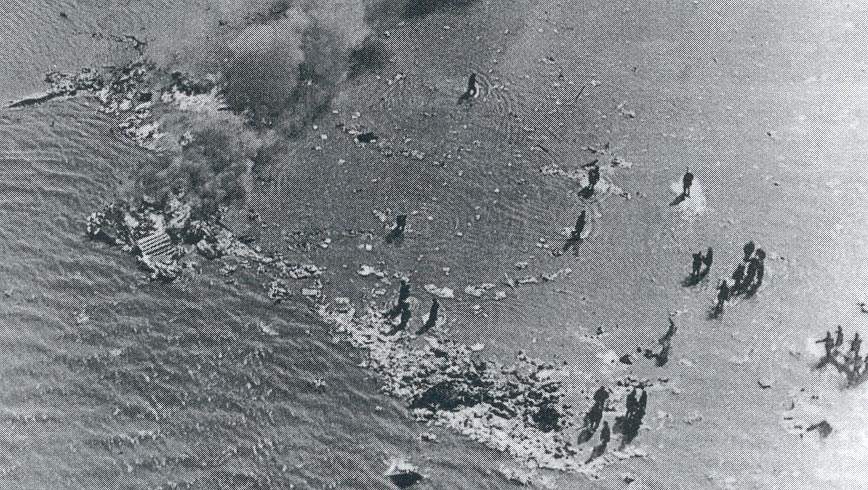
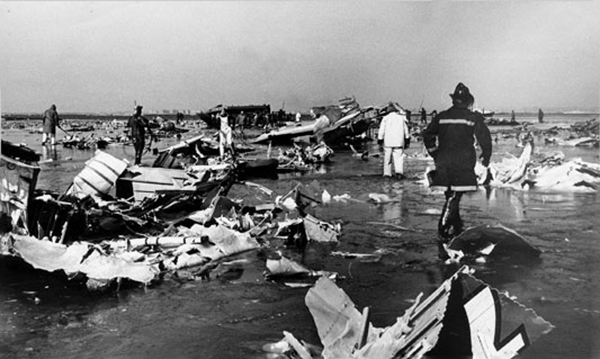
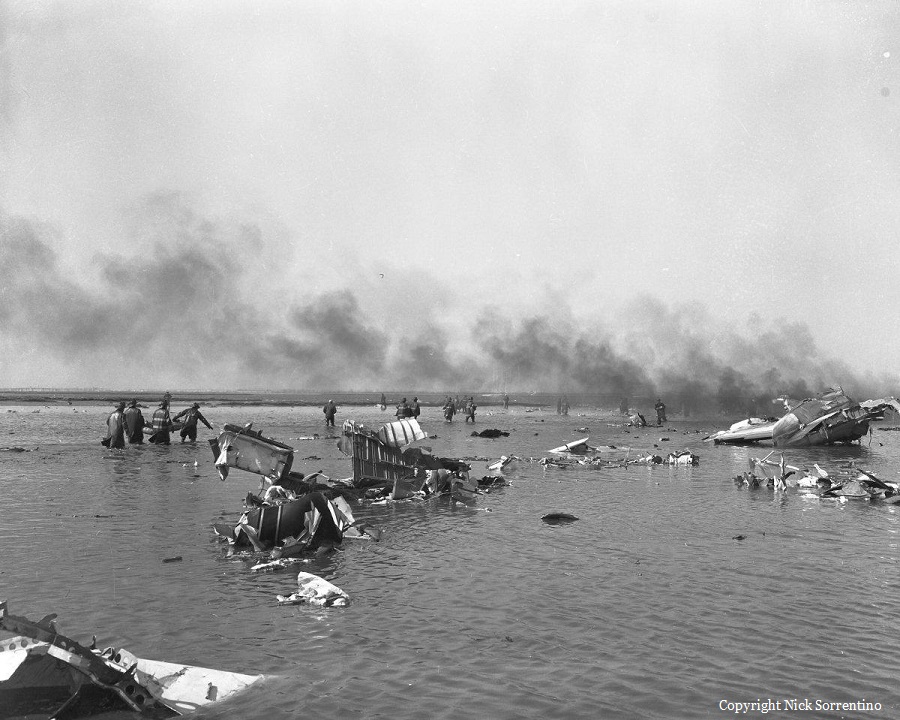
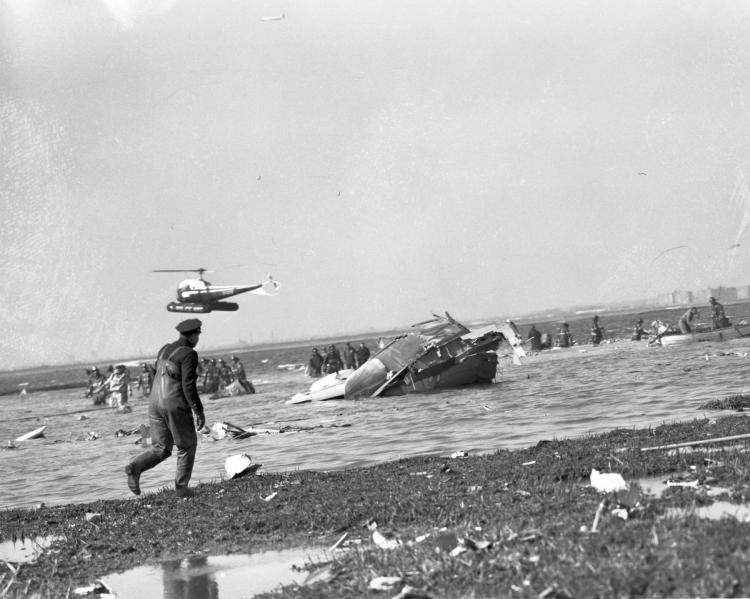
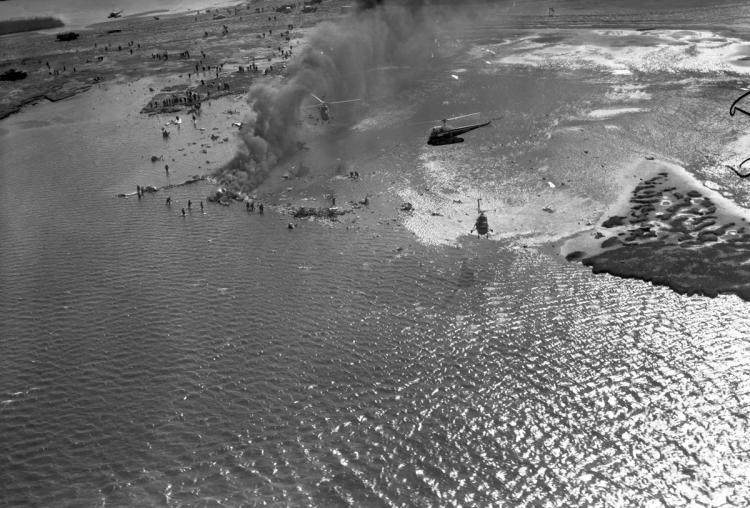
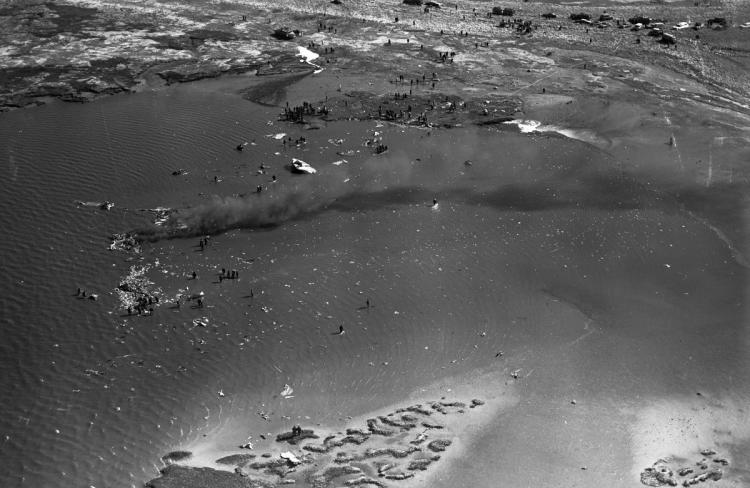
Flight One was cleared for takeoff from Runway 31L on a regularly scheduled nonstop flight to Los Angeles, California, and became airborne at 1007 e.s.t. The takeoff and initial climb appeared to be normal and a gentle turn to the left was started about 8,000 feet down the runway near taxiway AA, at an altitude of about 100 feet. Straightening out from this turn the aircraft continued to climb for several seconds on a magnetic heading of 290 degrees, and started a second turn to the left, apparently in compliance with radar vector directions given by Departure Control. In the second turn the airplane continued to climb. After initiation of the second turn the angle of bank increased until the airplane rolled through 90 degrees of bank at a peak altitude of about 1,600 feet m.s.1. It then entered an inverted, nose-low attitude and plunged earthward in a nearly vertical dive. The airplane struck the shallow waters of Pumpkin Patch Channel of Jamaica Bay approximately three miles southwest of the Idlewild Control Tower at 1008:49 Floating debris and fuel ignited a few minutes later and burned fiercely. The aircraft disintegrated on impact and there were no survivors among the 95 occupants.
Probable cause:
The Board determines that the probable cause of this accident was a rudder control system malfunction producing yaw, sideslip and roll leading to a loss of control from which recovery action was not effective.
Final Report:
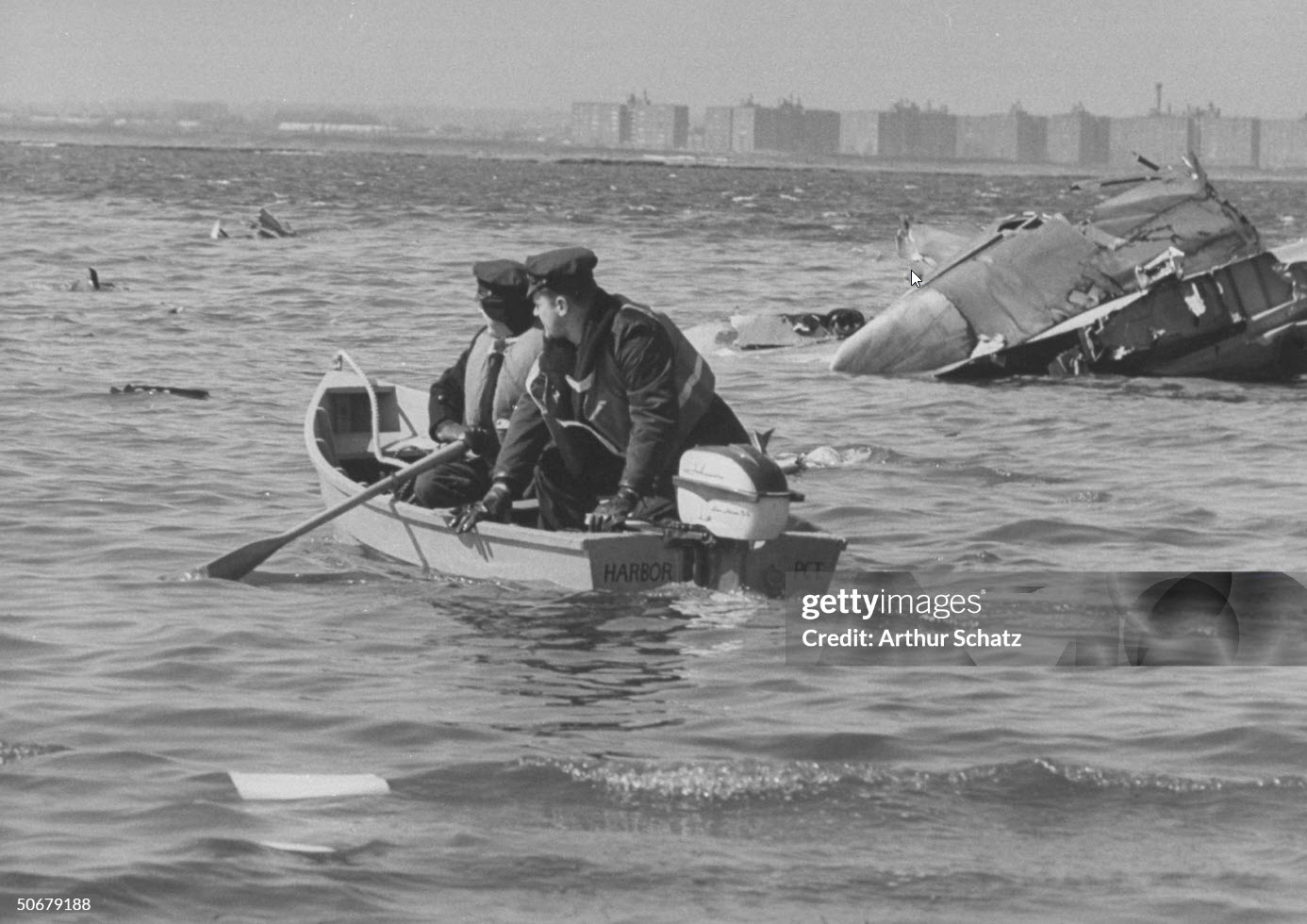
Crash of a Boeing 707-123 off Montauk Point: 6 killed
Date & Time:
Jan 28, 1961 at 1220 LT
Operator:
Registration:
N7502A
Survivors:
No
Schedule:
New York - New York
MSN:
17629
YOM:
1958
Flight number:
AA1502
Crew on board:
6
Crew fatalities:
Pax on board:
0
Pax fatalities:
Other fatalities:
Total fatalities:
6
Circumstances:
The four engine aircraft departed Idlewild Airport at 1157LT with a crew of six and climbed along the shore of Long Island on a training mission. 23 minutes later, the airplane christened 'Flagship Oklahoma' banked left, entered a dive and eventually crashed into the ocean five miles off shore. Few debris were found off Montauk Point and all six crew members have been killed.
Probable cause:
The exact cause of the accident could not be determined with certainty. However, it is believed that the loss of control occurred while the crew was preparing to shut down an engine to simulate a failure or was initiating a particular flying configuration requiring the deployment of the flaps at an angle of 30 ° which was the case when the aircraft struck the water surface. The assumption that two of the four engines were inoperative at the time of impact is not ruled out.
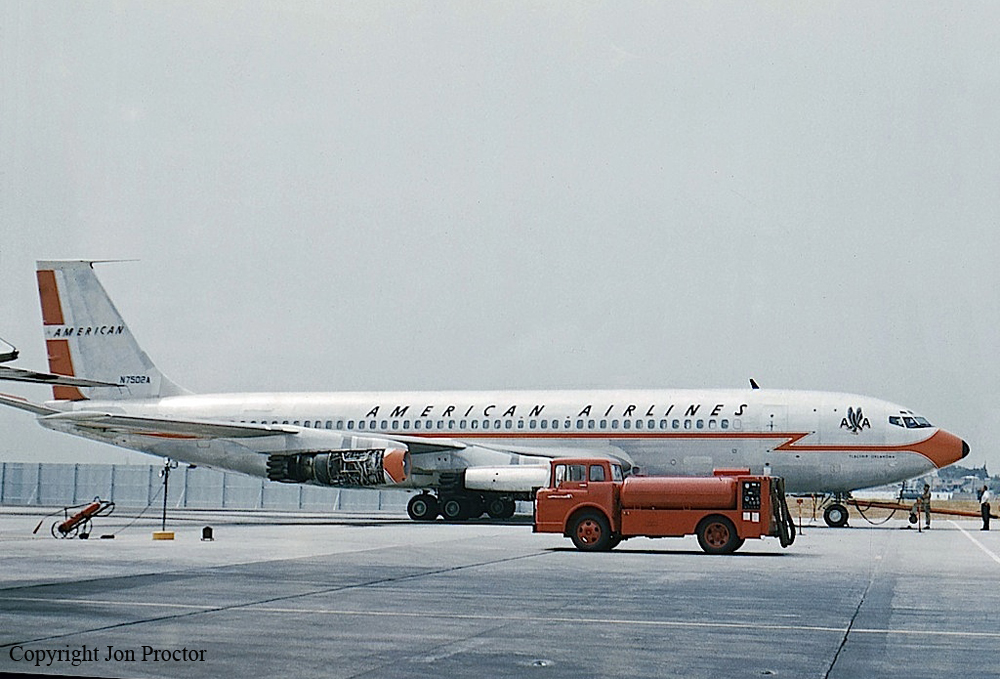
Crash of a Lockheed L-188A Electra in LaGuardia
Date & Time:
Sep 14, 1960 at 0800 LT
Operator:
Registration:
N6127A
Survivors:
Yes
Schedule:
Boston – New York – Saint Louis
MSN:
1117
YOM:
1960
Flight number:
AA361
Crew on board:
6
Crew fatalities:
Pax on board:
70
Pax fatalities:
Other fatalities:
Total fatalities:
0
Captain / Total hours on type:
279.00
Copilot / Total hours on type:
460
Aircraft flight hours:
1573
Circumstances:
The Electra scheduled as Flight 361 departed Boston at 0716LT with its destination St Louis, Missouri, and with a planned intermediate stop at LaGuardia Airport. About ten minutes prior to departure a crew change was made when a check pilot boarded the aircraft to flight-check the flight engineer. This check pilot, by mutual agreement with the crew and in accordance with existing company policy, took over the left or pilot-in-command seat with the previously assigned captain moving to the jump seat. The trip was routine until final approach at LaGuardia. On final approach, the airplane aircraft was too low and struck a dyke with its main landing gear and crash landed. Approximately half of the 76 persons on board suffered minor injuries or shock; no one was killed. The aircraft was severely damaged by impact forces and fire.
Probable cause:
The Board determines that the probable cause of this accident was the failure of the pilot to properly plan and execute the approach to a landing. Factors which may have contributed were the shortened runway and the unmarked upper portion of the dike.
Final Report:
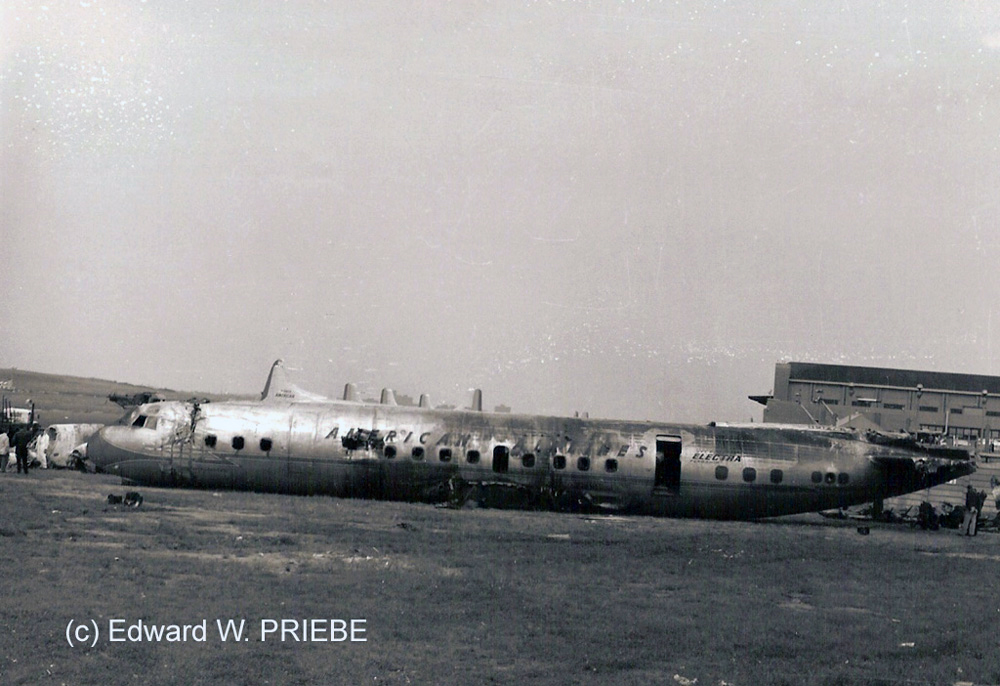
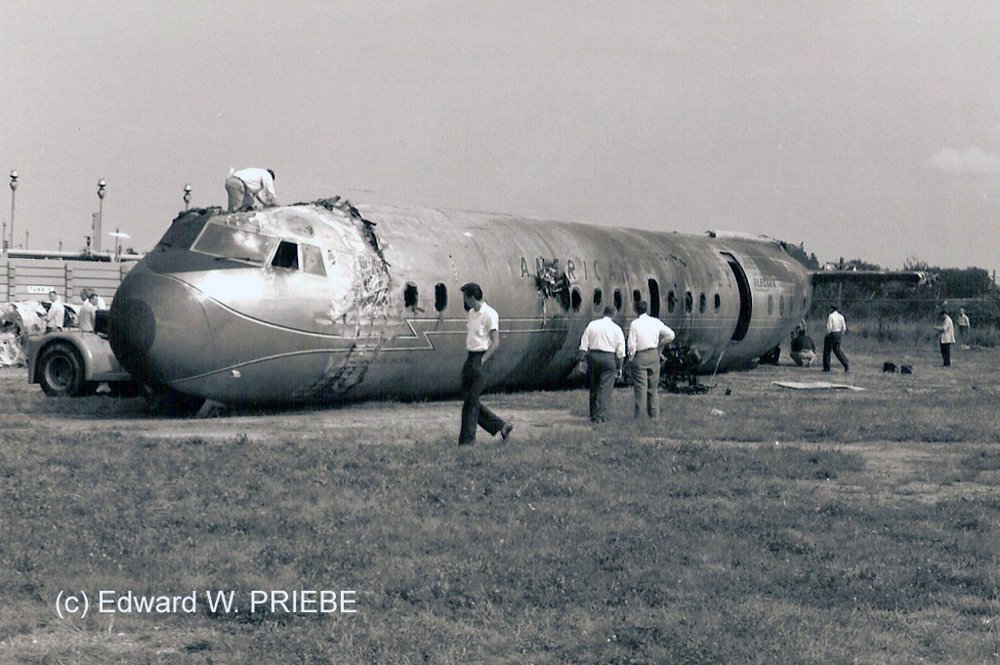
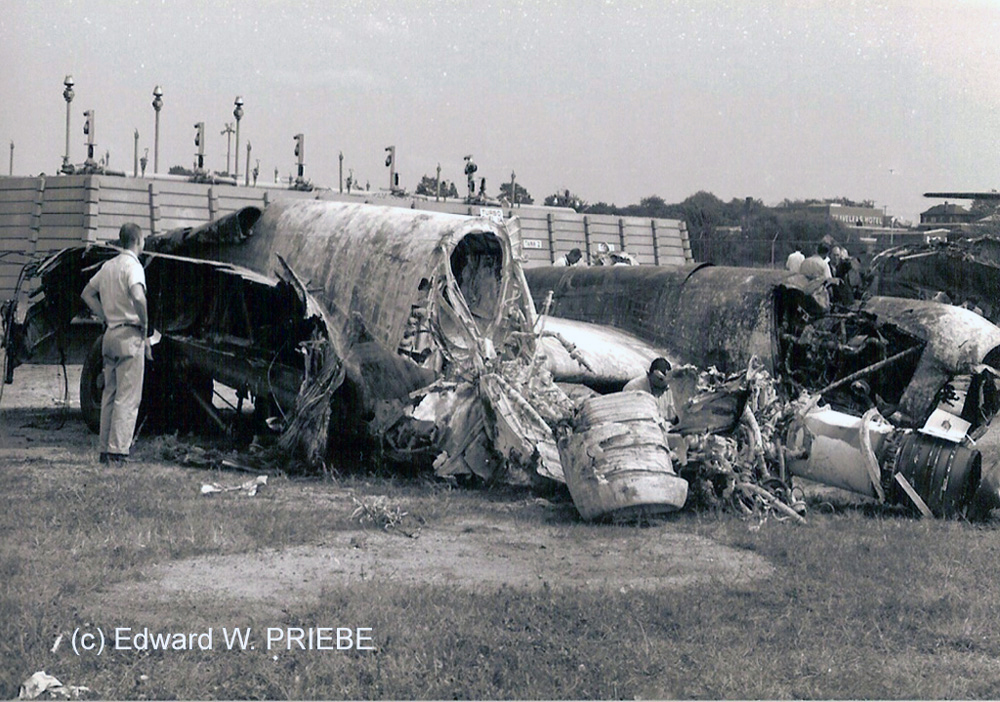
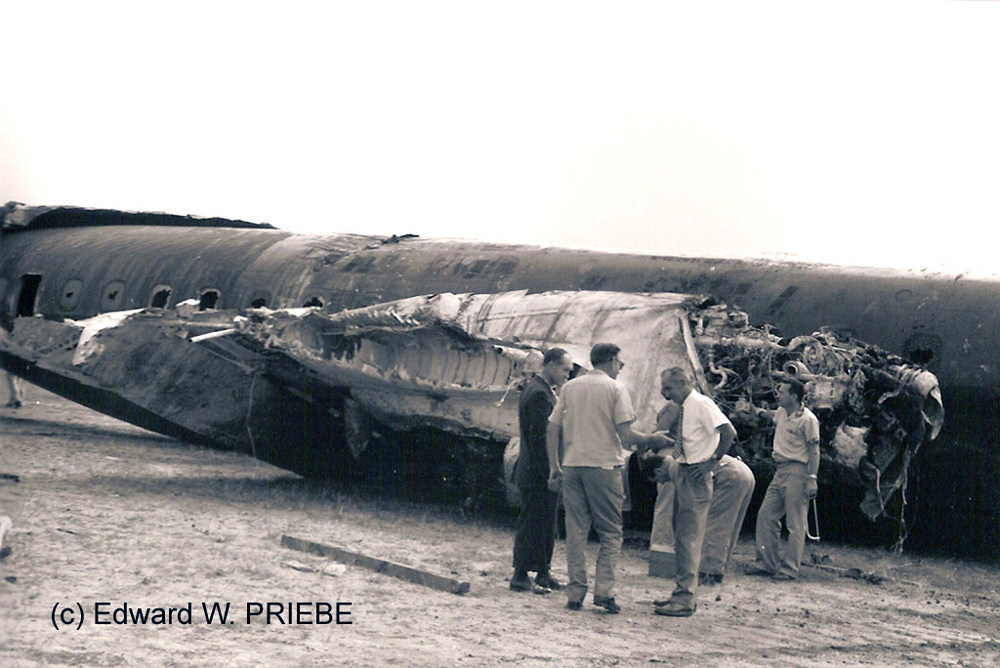
Crash of a Boeing 707-123 in Calverton: 5 killed
Date & Time:
Aug 15, 1959 at 1642 LT
Operator:
Registration:
N7514A
Survivors:
No
Schedule:
Calverton - Calverton
MSN:
17641
YOM:
1959
Flight number:
AA514
Crew on board:
5
Crew fatalities:
Pax on board:
0
Pax fatalities:
Other fatalities:
Total fatalities:
5
Captain / Total hours on type:
210.00
Copilot / Total hours on type:
9
Aircraft flight hours:
736
Circumstances:
The crew was completing a local training flight at Calverton-Peconic River Airport, Long Island, New York. While approaching runway 23 at an altitude of 1,000 feet, the airplane yawed to the right, stalled and crashed in a field located three miles from the airport. The airplane disintegrated on impact and all five crew members were killed.
Probable cause:
The Board determines the probable cause of this accident was the crew's failure to recognize and correct the development of excessive yaw which caused an unintentional rolling maneuver at an altitude too low to permit complete recovery.
Final Report:
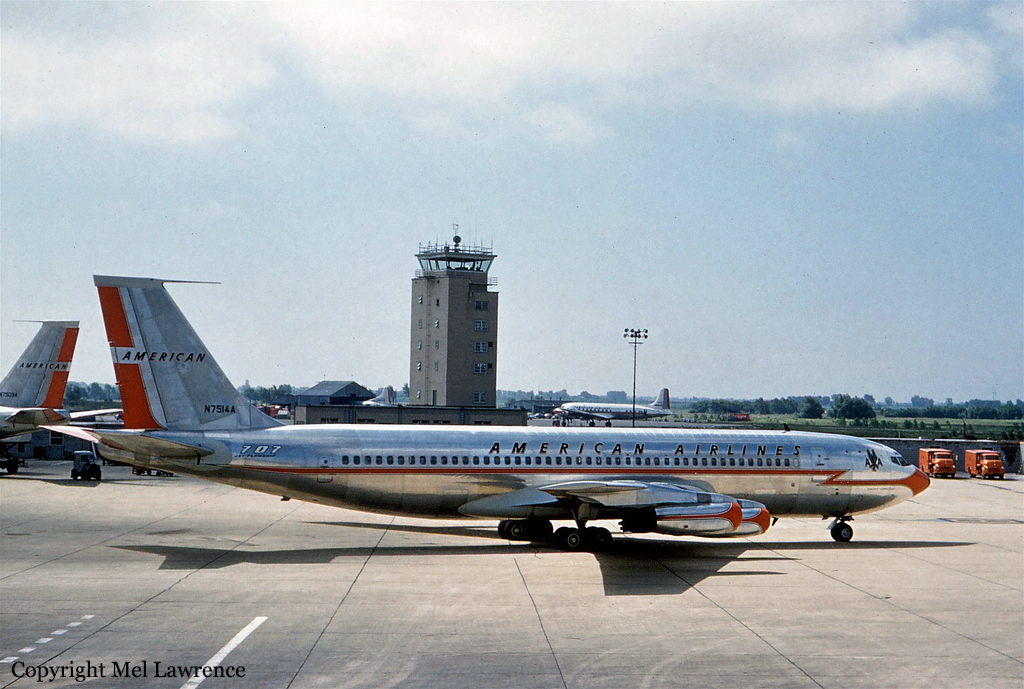
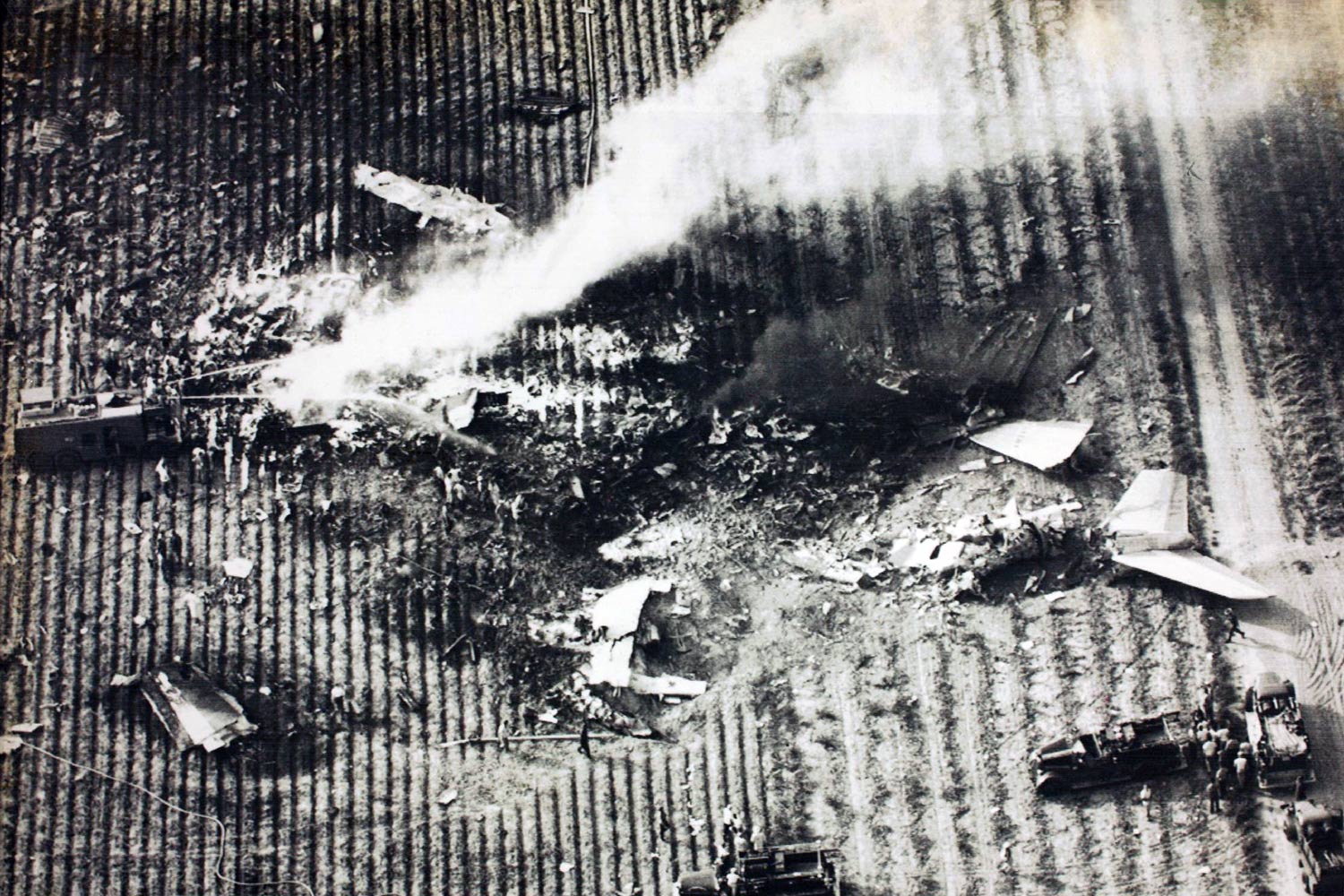
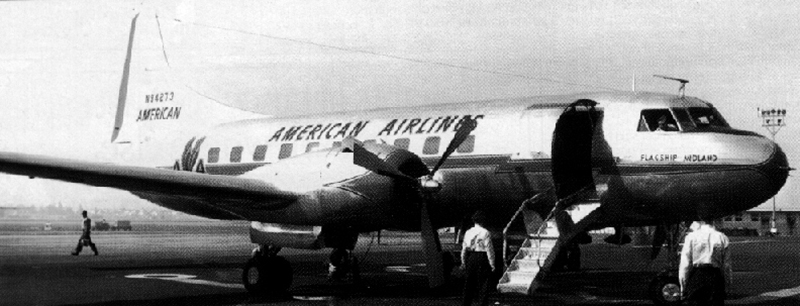
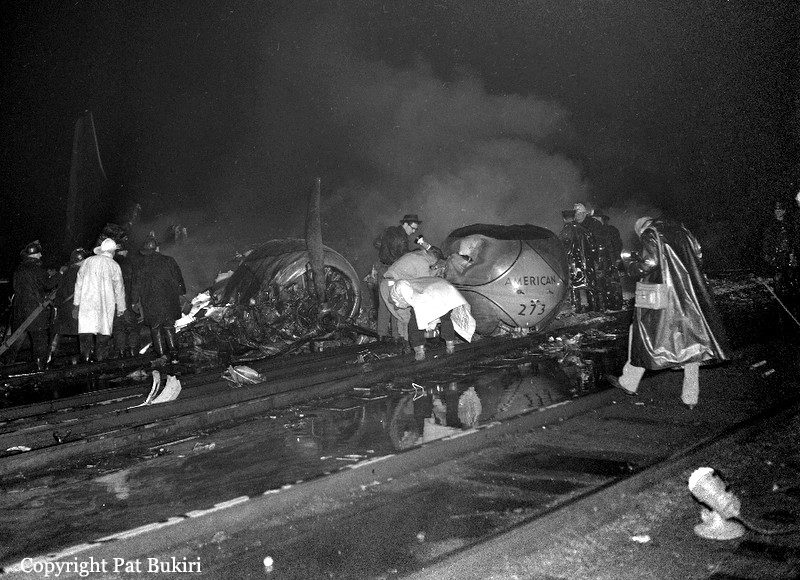
Crash of a Convair CV-240-0 in Chicago
Date & Time:
Mar 15, 1959 at 0053 LT
Operator:
Registration:
N94273
Survivors:
Yes
Schedule:
New York – Chicago
MSN:
150
YOM:
1949
Flight number:
AA2815
Crew on board:
2
Crew fatalities:
Pax on board:
0
Pax fatalities:
Other fatalities:
Total fatalities:
0
Captain / Total hours on type:
2500.00
Copilot / Total hours on type:
800
Aircraft flight hours:
22720
Circumstances:
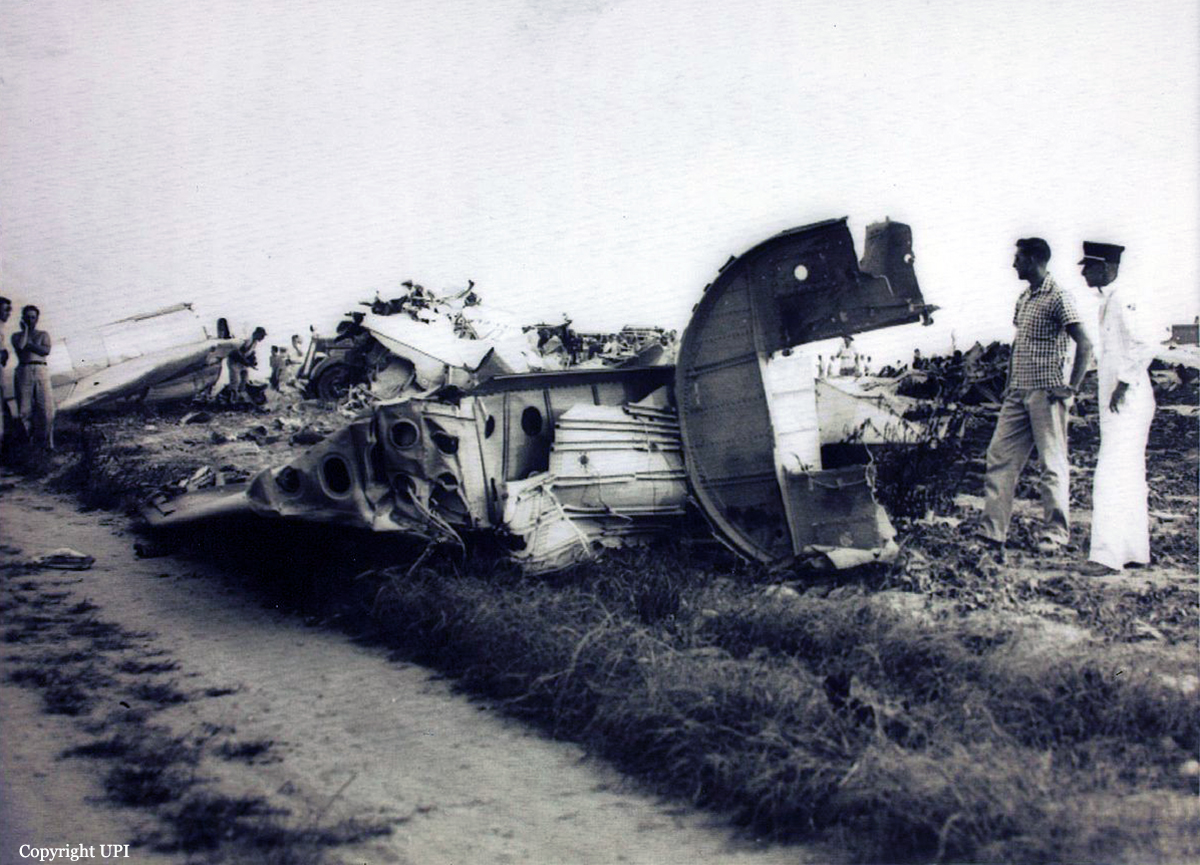
The crew was completing a cargo flight from LaGuardia Airport to Midway Airport in Chicago. On final approach to runway 31, the captain considered his position was incorrect and decided to make a go around. Few minutes later, during a second attempt to land, he failed to realized his altitude was insufficient when the airplane struck a 96-foot steel tower, stalled and crashed in flames on a railroad located about 0,9 mile short of runway 31 threshold. The aircraft and the cargo were destroyed by a post crash fire while both pilots were uninjured.
Probable cause:
The Board determines that the probable cause of this accident was the pilot’s descent below his allowable minimum altitude and his inattention to flight instruments while attempting to locate the runway visually. The Board concludes that this accident was brought about by the captain’s disregard of the minimum altitude during instrument flight. It is evident that he was attempting visually to locate the runway tile flying at a low altitude under conditions of restricted visibility.
Final Report: