Operator Image

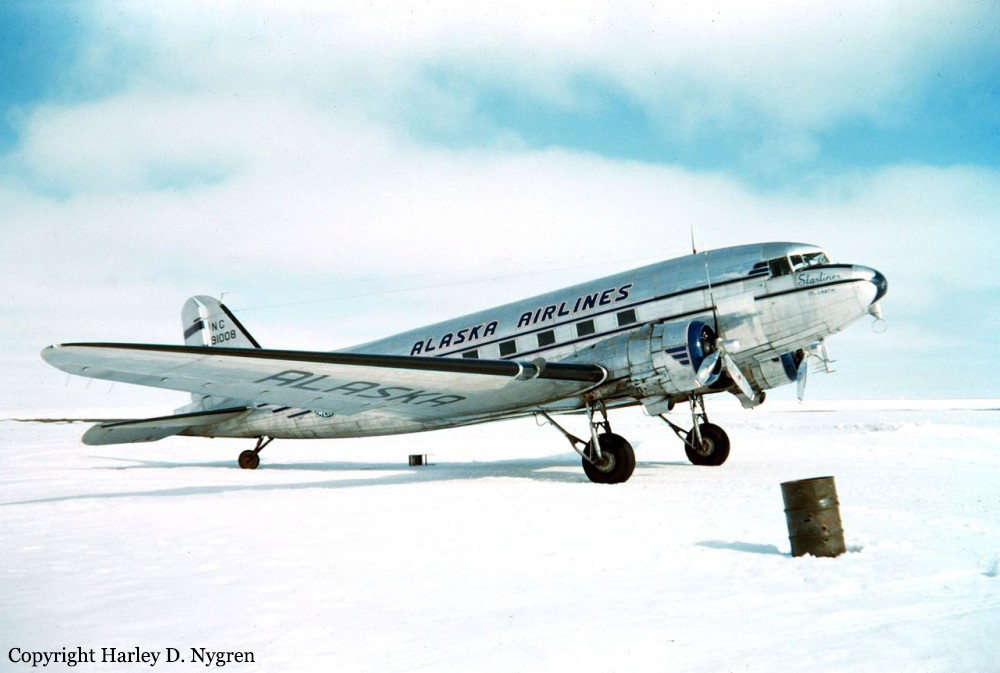
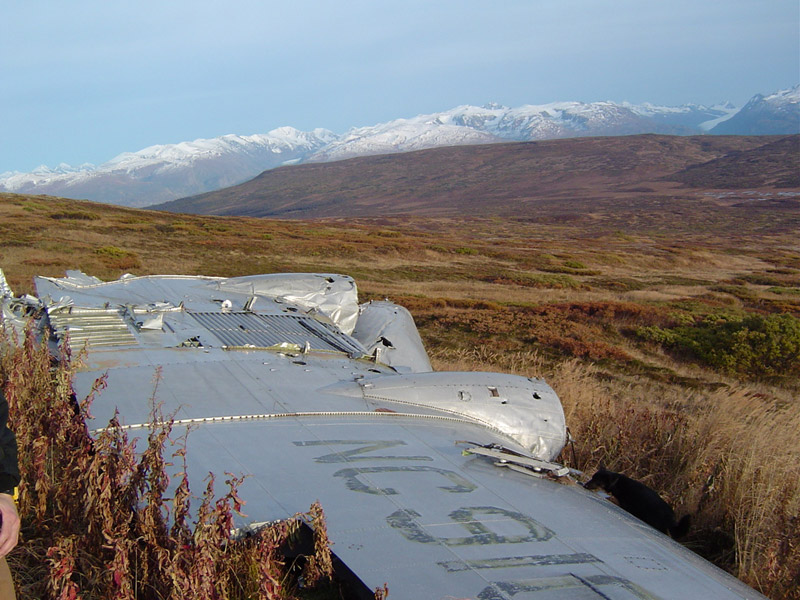
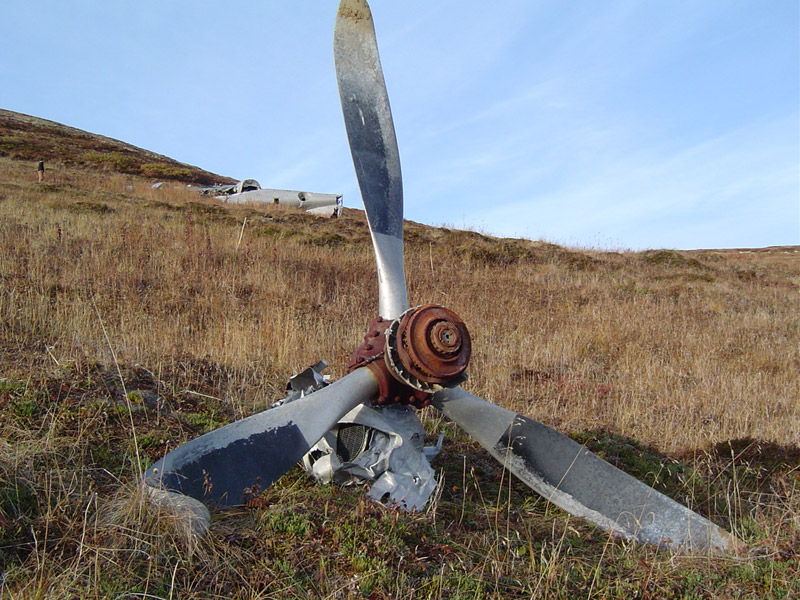
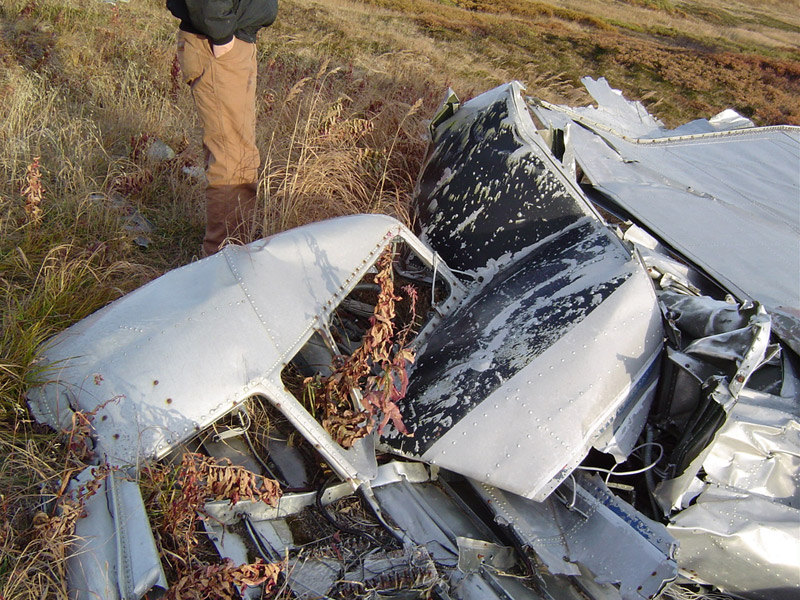
Crash of a Douglas DC-3C near McGrath: 2 killed

Date & Time: Aug 8, 1954 at 1540 LT
Type of aircraft:
Operator:
Registration:
N91008
Flight Phase:
Flight Type:
Survivors:
No
Site:
Schedule:
McGrath – Colorado Creek
MSN:
13977/25422
YOM:
1944
Location:
Crew on board:
2
Crew fatalities:
Pax on board:
0
Pax fatalities:
Other fatalities:
Total fatalities:
2
Circumstances:
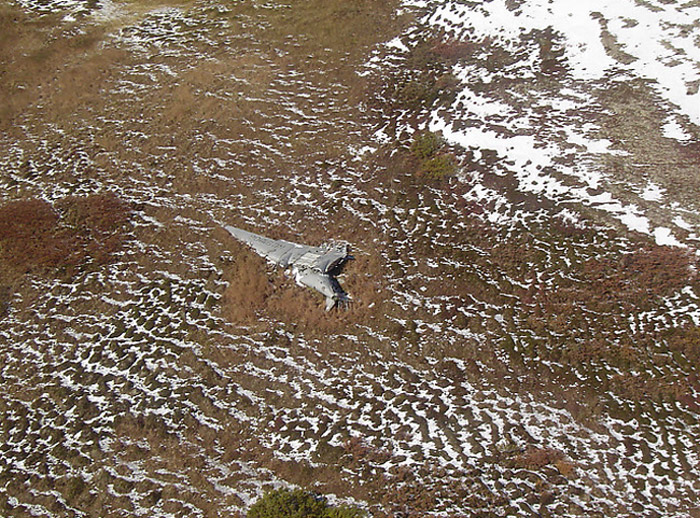
While flying about 25 miles northwest of McGrath in marginal weather conditions, the aircraft hit the slope of a mountain. As it failed to arrive, SAR operations were conducted and the wreckage was found few hours later. Both crew members were killed in the crash.

Crash of a Douglas C-47A-90-DL near Homer: 5 killed

Date & Time: Jan 20, 1949 at 2005 LT
Operator:
Registration:
NC91006
Flight Phase:
Survivors:
Yes
Site:
Schedule:
Naknek – Homer – Kenai – Anchorage
MSN:
20208
YOM:
1944
Flight number:
AS008
Location:
Crew on board:
3
Crew fatalities:
Pax on board:
3
Pax fatalities:
Other fatalities:
Total fatalities:
5
Captain / Total flying hours:
7129
Copilot / Total flying hours:
2570
Aircraft flight hours:
8051
Circumstances:
Flight 8 took off from Naknek, Alaska, 200 miles southwest of Homer at 1805 on January 20 with a crew consisting of Captain R. D. Land, Copilot Robert Nelson Stevens, and Stewardess Lucina Nims. An instrument flight plan had been filed with Air Traffic Control to proceed to Anchorage, Alaska, via Homer and Kenai. Though the weather was forecast over this route to be clear and unlimited, an instrument plan was filed since an instrument flight plan was required for all night flights by the carrier’s operating certificate. At 1921 the flight reported over the Anchor Point Intersection, 28 miles west of Homer, and also advised the Homer radio, “We will be VFR from Homer to Kenai to Elmendorf” (Anchorage). This information was immediately transmitted to Anchorage where it was delivered at 1925 to the Alaska Airlines’ dispatcher. Flight 8 landed at Homer at 1935 without incident. Takeoff was accomplished from Homer at 1950 with the same crew, three passengers, 2,270 pounds of cargo and 2,400 pounds of fuel. Total airplane weight was 21,430 pounds which was within the certificated limit, and the load was properly distributed. Just before takeoff the flight advised Homer Tower that it would proceed to Kenai in accordance with visual flight rules. This information was received by the Alaska Airlines’ dispatcher in Anchorage at 1954. At 1957 the flight was advised by Kenai radio that there were no passengers or cargo at Kenai, and for this reason Flight 8 replied: “Will not land at Kenai.” Approximately eight minutes after this communication at 2005, the flight struck the south side of Ptarmigan Head at an elevation of 2,800 feet, nine miles east of the center line of the airway to Kenai. Five of the six occupants were killed, and the aircraft was destroyed.
Probable cause:
The Board determines that the probable cause of this accident was the action of the pilot in proceeding off the designated airway at an altitude insufficient to clear the terrain.
Final Report:

Crash of a Douglas C-54A-1-DO Skymaster in Tacoma: 9 killed

Date & Time: Nov 30, 1947 at 1425 LT
Type of aircraft:
Operator:
Registration:
NC91009
Survivors:
Yes
Schedule:
Anchorage – Yakutat – Seattle
MSN:
7453
YOM:
1943
Flight number:
AS009
Crew on board:
3
Crew fatalities:
Pax on board:
25
Pax fatalities:
Other fatalities:
Total fatalities:
9
Captain / Total flying hours:
8352
Captain / Total hours on type:
738.00
Copilot / Total flying hours:
3220
Copilot / Total hours on type:
1483
Aircraft flight hours:
5548
Circumstances:
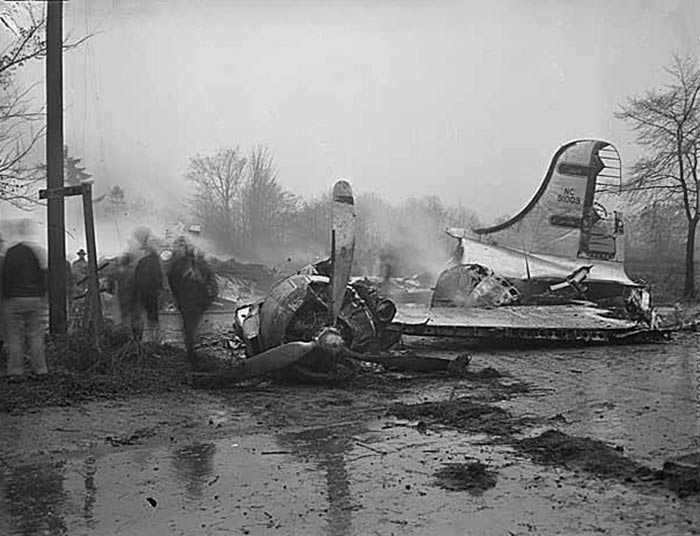
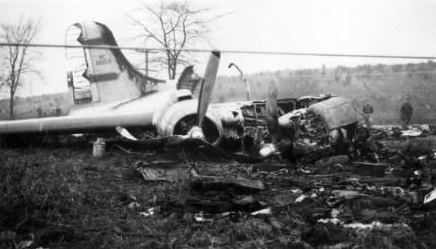
The flight arrived over the Seattle radio range station at 3,000 feet on its initial approach to the Boeing Airport at 1357. Shortly before Captain Farris had reported to Seattle Radio that he had 2 rough engines, but he did not declare an emergency. The condition of engine roughness is discussed below. Weather at Boeing Field, Seattle, Washington, was reported to be ceiling indefinite 500 feet visibility one mile. An instrument approach for landing at Boeing Field was made, but not completed because of the low ceiling and visibility, so the flight returned to an altitude of 1,500 feet on the northwest course of the Seattle radio range. During this time Copilot Whitting remained in the left seat and flew the airplane. The second instrument approach was made for a landing at the Seattle-Tacoma Airport, sometimes referred to as the Bow Lake Airport, which is located 4 miles south of the Seattle radio range station. The airplane was flown inbound on the northwest course of the range. Then, after passing over the range station at 1,500 feet, a heading of 193 degrees toward the airport was flown, and a descent made for landing. The aircraft was first observed at the Seattle-Tacoma Airport when approximately 500 feet above the approach and of Runway 20, 5,611 feet long, at which time it was flying at an angel to the left of the runway. An "S" maneuver and rapid decent were made. A right turn was entered and held until the airplane was again over Runway 20, then it turned left. When the airplane first made contact with the runway it was in the left turn, and the left wing was so low that those who observed the landing thought that it would strike the ground. The first point of touchdown was made 2,748 feet beyond the approach end of the runway. The airplane progressed over the remaining distance of the runway without apparent deceleration. Captain Farris, who had taken over the controls of the airplane when it was in the left turn, stated that he allowed the airplane to slow down of its run accord to 50 or 60 miles per hour before applying brakes, and that he released the emergency air bottle 1,000 feet from the end of the runway. Before passing over the end of the runway an attempt was made to groundloop the airplane to the left by applying power to engine 4. Nevertheless, the airplane traveled almost straight ahead. It went off the end of the runway, crossed 229 feet of wet ground, and then rolled down a 24-foot embankment. At the bottom of the embankment it struck a ditch which sheared off the left lending gear and the left wing. The aircraft continued on to the intersection of the Des Moines Highway and South 188th Street where it collided with a moving automobile. Spilled gasoline was ignited, and the wreckage was enveloped in flames. The Weather Bureau at tie Seattle-Tacoma Airport made an observation immediately following the crash and reported an indefinite ceilings, 400-foot overcast, visibility variable one-half to one mile, and light rain and fog.
Probable cause:
The Board determines that the probable cause of this accident was the landing of the airplane too far from the approach end of a wet runway and at a speed too great to accomplish a full stop on the runway.
The following factors were considered as contributory:
- The flight arrived over the approach end of the intended runway too high and non properly lined up for a normal landing,
- First touchdown was made at a point 2,748 feet from the approach end of Runway 20, 5,611 feet long, at which time the airplane was in a left bark steep enough to place the left wing tip almost on the ground,
- The left outboard main landing gear tire marked the runway for a distance of 105 feet after which the airplane flow 60 feet. Seven hundred and eleven feet of runway were traversed from the first point of touchdown before all 4 main landing gear wheels were solidly on the runway.
Final Report:

Crash of a Lockheed 5B Vega in Alaska

Date & Time: Aug 2, 1944 at 1200 LT
Type of aircraft:
Operator:
Registration:
NC162W
Flight Phase:
Survivors:
Yes
MSN:
128
YOM:
1930
Location:
Crew on board:
1
Crew fatalities:
Pax on board:
4
Pax fatalities:
Other fatalities:
Total fatalities:
0
Circumstances:
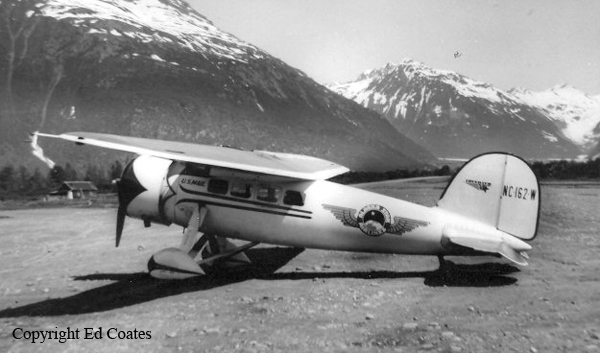
In unknown circumstances, the single engine aircraft crashed in the region of the Kuskokwim River. While the aircraft was destroyed by a post crash fire, all five occupants, a pilot and four passengers, were injured.