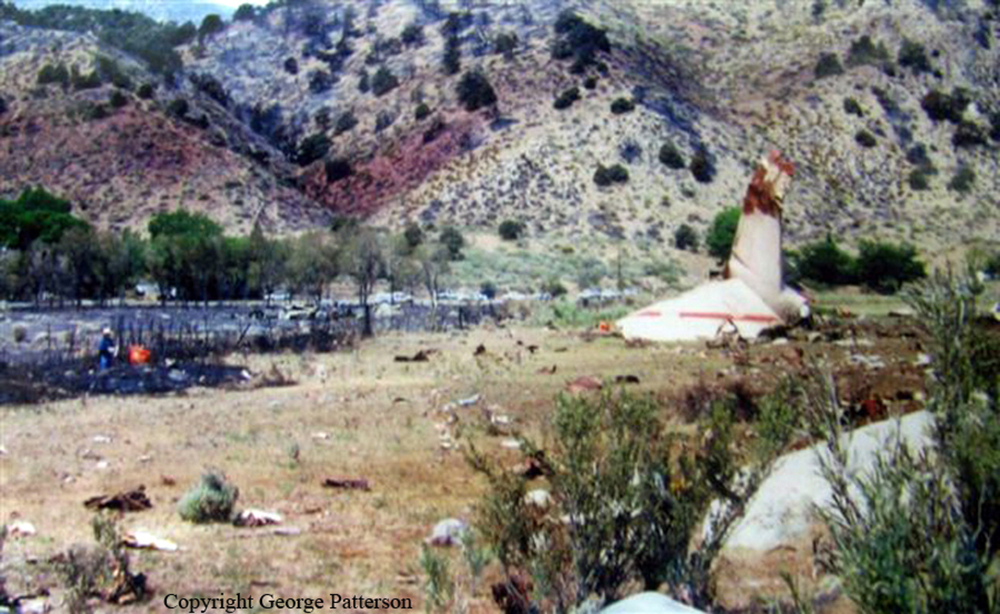
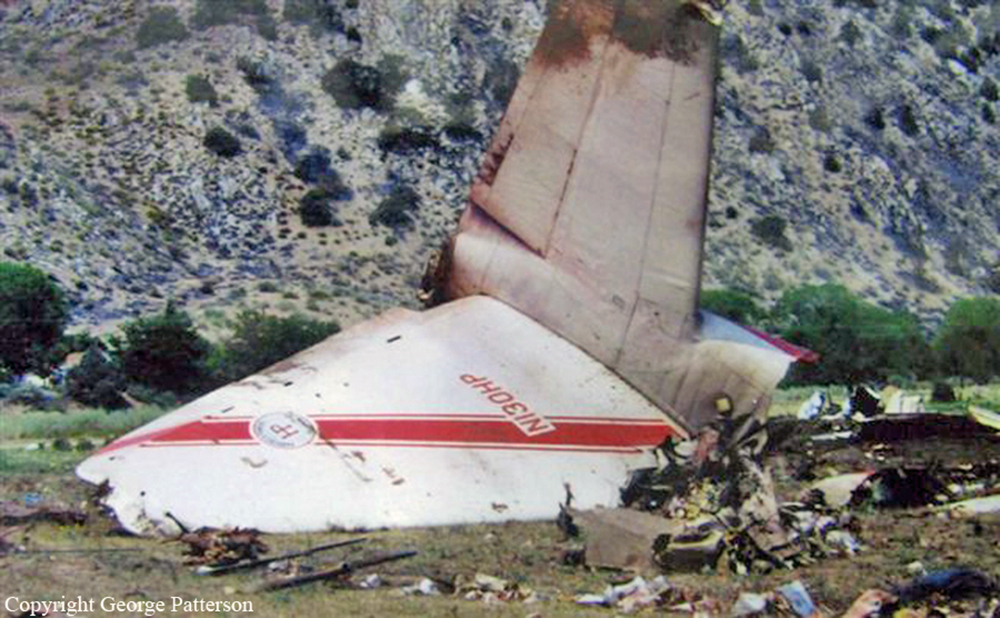
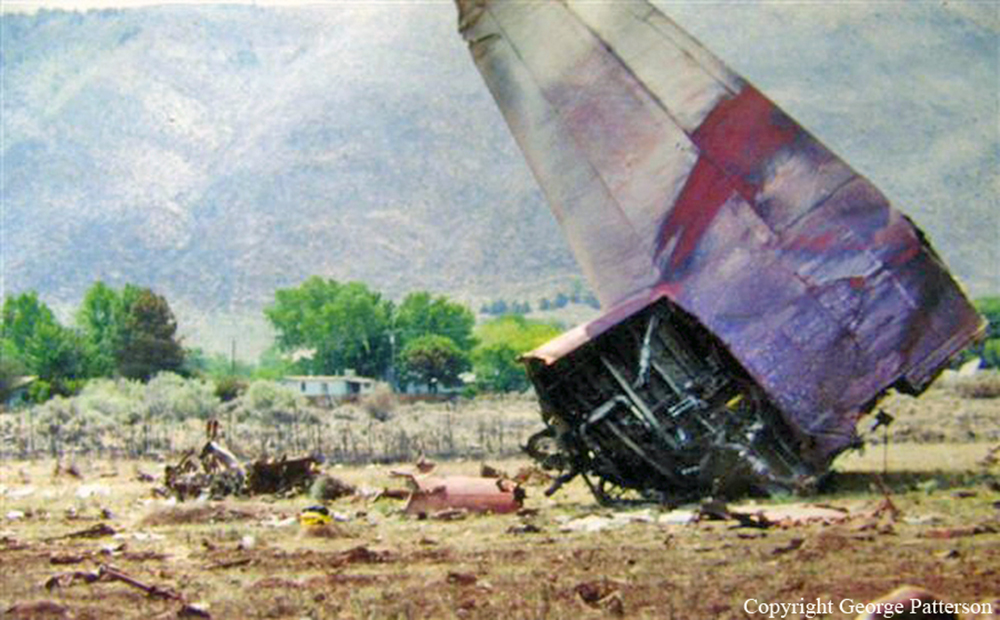
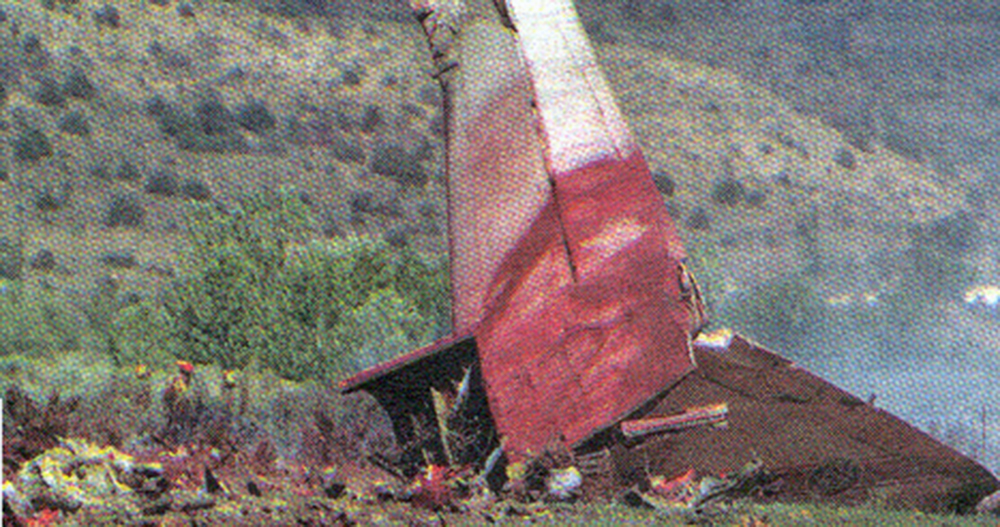
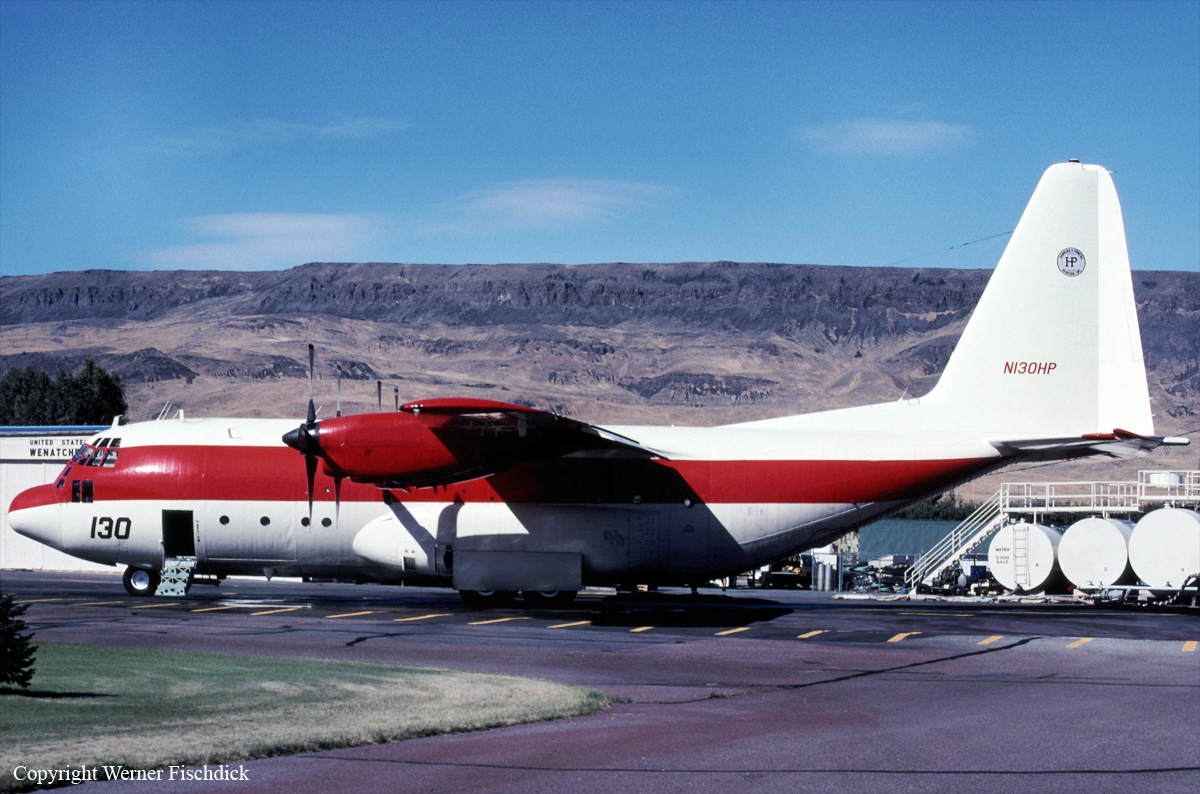
Crash of a Lockheed C-130 Hercules in California: 3 killed

Date & Time: Jun 17, 2002 at 1445 LT
Type of aircraft:
Operator:
Registration:
N130HP
Flight Phase:
Flight Type:
Survivors:
No
Schedule:
Minden - Minden
MSN:
3146
YOM:
1956
Flight number:
Tanker 130
Crew on board:
3
Crew fatalities:
Pax on board:
0
Pax fatalities:
Other fatalities:
Total fatalities:
3
Captain / Total flying hours:
10833
Copilot / Total flying hours:
2407
Aircraft flight hours:
21863
Circumstances:
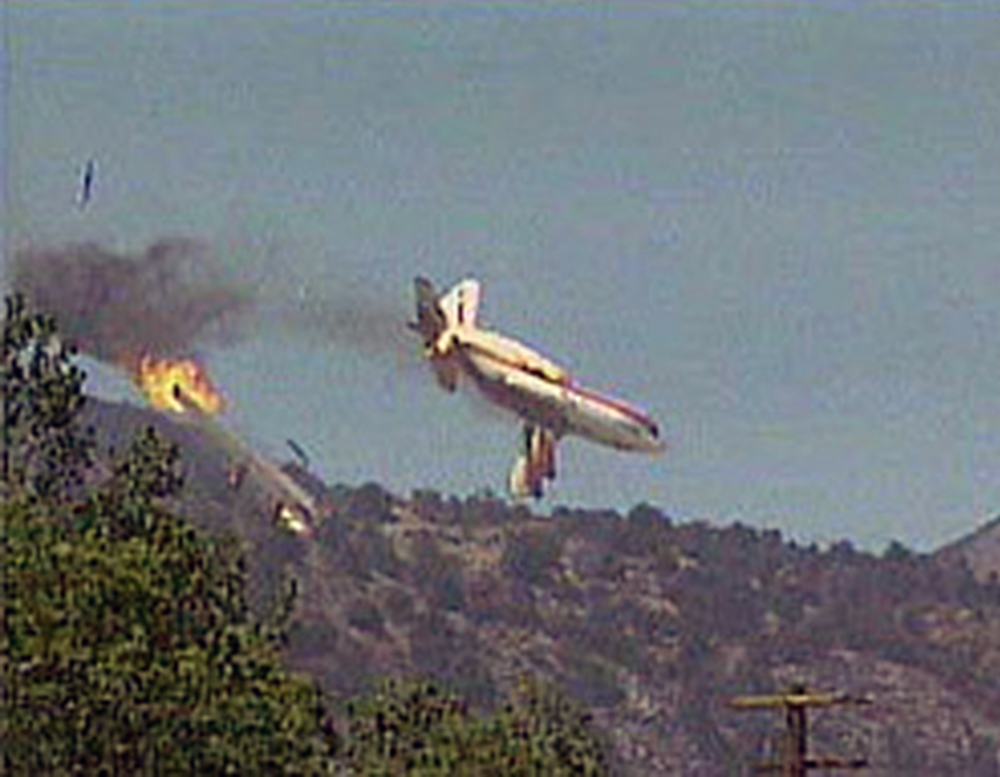
The airplane was making a fire retardant drop over a mountain drainage valley when the wings separated from the fuselage. A videotape of the accident sequence showed the airplane as it flew down the valley and proceeded to make a fire retardant drop. When the drop was almost completed, the airplane's nose began moving up, and the airplane started to arrest its descent and level out. The nose of the airplane continued to rise, and the airplane's wings folded upward until they detached from the fuselage at the center wing box beam-to-fuselage attachment location. Close examination of the video revealed that the right wing folded upward first, followed by the left wing about 1 second later. Metallurgical examination of the center wing box lower skin revealed a 12-inch long fatigue crack on the lower surface of the right wing beneath the forward doubler, with two separate fatigue crack initiation sites at stringer attachment rivet holes (which join the external doubler and the internal stringers to the lower skin panel). The cracks from both initiation sites eventually linked up to create a single crack. The portion of the wing skin containing the fatigue crack was covered by a manufacturer-installed doubler, which would have hidden the crack from view and, therefore, prevented detection of the crack from a visual inspection of the exterior of the airplane. The investigation found that the airplane was probably operated within the maximum takeoff gross weight limits specified in the airplane flight manual. The airplane was delivered new to the U.S. Air Force (USAF) in 1957 and was retired from military service in 1978. The U.S. Forest Service (USFS) acquired it from the USAF in 1988 for use as a fire suppression tanker. Between 1978 and 1988, it was kept in a desert storage facility. It was transferred to a civilian contractor for firefighting operations and modified for that role, then sold to a Part 135 operator. The airplane was certificated by the FAA in the restricted category under a type certificate held by the USFS. A Lockheed study concluded that firefighting missions were substantially more severe than typical military logistics operations and aircraft operated in this role would require inspection intervals as much as 12 times more frequently than typical military transport usage for meeting damage tolerance requirements. Concerning the detectability of the cracks, Lockheed reported that nondestructive x-ray inspection methods in current industry and military depot level maintenance processes could have detected, with high confidence, the fatigue cracks when they were 0.50 to 0.75 inch long. Inspection intervals appropriate for this detectable crack size can be determined from a damage tolerance crack growth analysis; however, this requires an extensive knowledge of the operational loads environment and internal stresses of the C-130A wing such as would be found in a military depot level maintenance program. The operating limitations accompanying the restricted certificate specified that it be flown and maintained in accordance with the then-current (1988) USAF technical orders for the C-130A. The USAF depot level maintenance program was not included in the maintenance technical orders and was not individually specified on the certificate's operating limitations. The limitations letter did not specify compliance with USAF maintenance program modifications/amendments in technical orders issued after 1988. The operator devised a maintenance and inspection program based on the specified USAF maintenance technical order but did not develop a depot level inspection requirement to ensure continued long-term airworthiness and damage tolerance that would account for the stresses on the airplane resulting from its new firefighting role and the increasing age of the airplanes. Investigation found that there are five separate FAA-issued type certificates owned by five separate firms for the C-130As used as tankers. Although the five certificates have similar maintenance requirements, none are standardized, there is no depot level maintenance program specified for any of them, and none require full compliance with all military airworthiness technical orders. In 1991, the Department of Interior (DOI) began to doubt the continued airworthiness of the C-130A firefighting tanker fleet and was specifically concerned that the lack of a depot level maintenance program or any requirement for compliance with all military airworthiness technical orders could compromise the safety of the airplane. The DOI asked the FAA to standardize the type certificate for the C-130A and mandate improvements in the maintenance and inspection requirements. In a written opinion, the USAF agreed and urged the FAA to mandate that operators establish a depot level type continuing airworthiness program for the airplane and mandate compliance with all technical orders. In a series of meetings held in 1993, FAA management internally agreed that the DOI and USAF positions held merit and began to develop requirements. In late 1993, in a meeting between the FAA, DOI, USFS, and the airplane operators, the USFS and the operators objected to the idea of depot level maintenance programs and full compliance with all technical orders on the basis of the potential economic impact of these requirements. As of the time of the accident, the FAA had not standardized the existing five type certificates nor had they imposed any additional maintenance or inspection program requirements.
Probable cause:
The inflight failure of the right wing due to fatigue cracking in the center wing lower skin and underlying structural members. A factor contributing to the accident was inadequate maintenance procedures to detect fatigue cracking.
Final Report:
Crash of a Grumman S-2E Tracker in Hopland: 1 killed

Date & Time: Aug 27, 2001 at 1840 LT
Type of aircraft:
Operator:
Registration:
N450DF
Flight Phase:
Flight Type:
Survivors:
No
Site:
Schedule:
Ukiah - Ukiah
MSN:
421
YOM:
1954
Flight number:
Tanker 87
Crew on board:
1
Crew fatalities:
Pax on board:
0
Pax fatalities:
Other fatalities:
Total fatalities:
1
Captain / Total flying hours:
4639
Captain / Total hours on type:
1294.00
Aircraft flight hours:
10354
Circumstances:
During an aerial fire suppression mission for the California Department of Forestry (CDF), two Grumman TS-2A airplanes, operating as Tanker 92 (N442DF) and Tanker 87 (N450DF), collided in flight while in a holding pattern awaiting a retardant drop assignment on the fire. All of the airplanes fighting the fire were TS-2A's, painted in identical paint schemes. The Air Tactical Group Supervisor (AirTac) was orbiting clockwise 1,000 feet above the tankers, who were in a counterclockwise orbit at 3,000 feet mean sea level (msl). The pilots of both aircraft involved in the collision had previously made several drops on the fire. Records from the Air Tac show that Tankers 86, 91, and 92 were in orbit, and investigation found that Tanker 87 was inbound to enter the orbit after reloading at a nearby airport base. AirTac would write down the tanker numbers as they made their 3-minutes-out call, and usually ordered their drops in the same order as their check-in. The AirTac's log recorded the sequence 86, 91, 21, and 92. The log did not contain an entry for Tanker 87. Other pilots on frequency did not recall hearing Tanker 87 check in. Based on clock codes with 12-o'clock being north, the tankers were in the following approximate positions of the orbit when the collision occurred. Tanker 92 was at the 2-o'clock position; Tanker 86 was turning in at the 5-o'clock position; and Tanker 91 was in the 7-o'clock position. The AirTac's log indicated that Tanker 92 was going to move up in sequence and follow Tanker 86 in order to drop immediately after him. Post accident examination determined that Tanker 92's flaps were down, indicating that the pilot had configured the airplane for a drop. Tanker 92 swung out of the orbit wide (in an area where ground witnesses had not seen tankers all day) to move behind Tanker 86, and the pilot would likely have been focusing on Tanker 86 out of his left side window. Tanker 87 was on line direct to the center of the fire on a path that witnesses had not observed tankers use that day. Reconstruction of the positions of the airplanes disclosed that Tankers 86 and 91 would have been directly in front of Tanker 87, and Tanker 92 would have been wide to his left. Ground witnesses said that Tanker 87 had cleared a ridgeline just prior to the collision, and this ridgeline could have masked both collision aircraft from the visual perspective of the respective pilots. The right propeller, engine, and cockpit of Tanker 92 contacted and separated the empennage of Tanker 87. The propeller chop was about 47 degrees counterclockwise to the longitudinal axis of Tanker 87 as viewed from the top. The collision appeared to have occurred about 2,500 feet, which was below orbit altitude. CDF had no standard operating manual, no established reporting or entry point for the holding orbits, and a tanker could enter any point of the orbit from any direction. While no standardized procedures were encoded in an operating manual, a CDF training syllabus noted that a tanker was not to enter an orbit until establishing positive radio contact with the AirTac. The entering tanker would approach 1,000 feet below AirTac's altitude and stay in a left orbit that was similar to a salad bowl, high and wide enough to see and clear all other tankers until locating the tanker that it was to follow, then adjust speed and altitude to fall in behind the preceding airplane.
Probable cause:
The failure of both pilots to maintain an adequate visual lookout. The failure of the pilot in Tanker 87 to comply with suggested procedures regarding positive radio contact and orbit entry was a factor.
Final Report:

Crash of a Grumman S-2E Tracker in Hopland: 1 killed

Date & Time: Aug 27, 2001 at 1840 LT
Type of aircraft:
Operator:
Registration:
N442DF
Flight Phase:
Flight Type:
Survivors:
No
Site:
Schedule:
Ukiah - Ukiah
MSN:
255
YOM:
1952
Flight number:
Tanker 92
Crew on board:
1
Crew fatalities:
Pax on board:
0
Pax fatalities:
Other fatalities:
Total fatalities:
1
Captain / Total flying hours:
12725
Captain / Total hours on type:
340.00
Aircraft flight hours:
9868
Circumstances:
During an aerial fire suppression mission for the California Department of Forestry (CDF), two Grumman TS-2A airplanes, operating as Tanker 92 (N442DF) and Tanker 87 (N450DF), collided in flight while in a holding pattern awaiting a retardant drop assignment on the fire. All of the airplanes fighting the fire were TS-2A's, painted in identical paint schemes. The Air Tactical Group Supervisor (AirTac) was orbiting clockwise 1,000 feet above the tankers, who were in a counterclockwise orbit at 3,000 feet mean sea level (msl). The pilots of both aircraft involved in the collision had previously made several drops on the fire. Records from the Air Tac show that Tankers 86, 91, and 92 were in orbit, and investigation found that Tanker 87 was inbound to enter the orbit after reloading at a nearby airport base. AirTac would write down the tanker numbers as they made their 3-minutes-out call, and usually ordered their drops in the same order as their check-in. The AirTac's log recorded the sequence 86, 91, 21, and 92. The log did not contain an entry for Tanker 87. Other pilots on frequency did not recall hearing Tanker 87 check in. Based on clock codes with 12-o'clock being north, the tankers were in the following approximate positions of the orbit when the collision occurred. Tanker 92 was at the 2-o'clock position; Tanker 86 was turning in at the 5-o'clock position; and Tanker 91 was in the 7-o'clock position. The AirTac's log indicated that Tanker 92 was going to move up in sequence and follow Tanker 86 in order to drop immediately after him. Post accident examination determined that Tanker 92's flaps were down, indicating that the pilot had configured the airplane for a drop. Tanker 92 swung out of the orbit wide (in an area where ground witnesses had not seen tankers all day) to move behind Tanker 86, and the pilot would likely have been focusing on Tanker 86 out of his left side window. Tanker 87 was on line direct to the center of the fire on a path that witnesses had not observed tankers use that day. Reconstruction of the positions of the airplanes disclosed that Tankers 86 and 91 would have been directly in front of Tanker 87, and Tanker 92 would have been wide to his left. Ground witnesses said that Tanker 87 had cleared a ridgeline just prior to the collision, and this ridgeline could have masked both collision aircraft from the visual perspective of the respective pilots. The right propeller, engine, and cockpit of Tanker 92 contacted and separated the empennage of Tanker 87. The propeller chop was about 47 degrees counterclockwise to the longitudinal axis of Tanker 87 as viewed from the top. The collision appeared to have occurred about 2,500 feet, which was below orbit altitude. CDF had no standard operating manual, no established reporting or entry point for the holding orbits, and a tanker could enter any point of the orbit from any direction. While no standardized procedures were encoded in an operating manual, a CDF training syllabus noted that a tanker was not to enter an orbit until establishing positive radio contact with the AirTac. The entering tanker would approach 1,000 feet below AirTac's altitude and stay in a left orbit that was similar to a salad bowl, high and wide enough to see and clear all other tankers until locating the tanker that it was to follow, then adjust speed and altitude to fall in behind the preceding airplane.
Probable cause:
The failure of both pilots to maintain an adequate visual lookout. The failure of the pilot in Tanker 87 to comply with suggested procedures regarding positive radio contact and orbit entry was a factor.
Final Report:

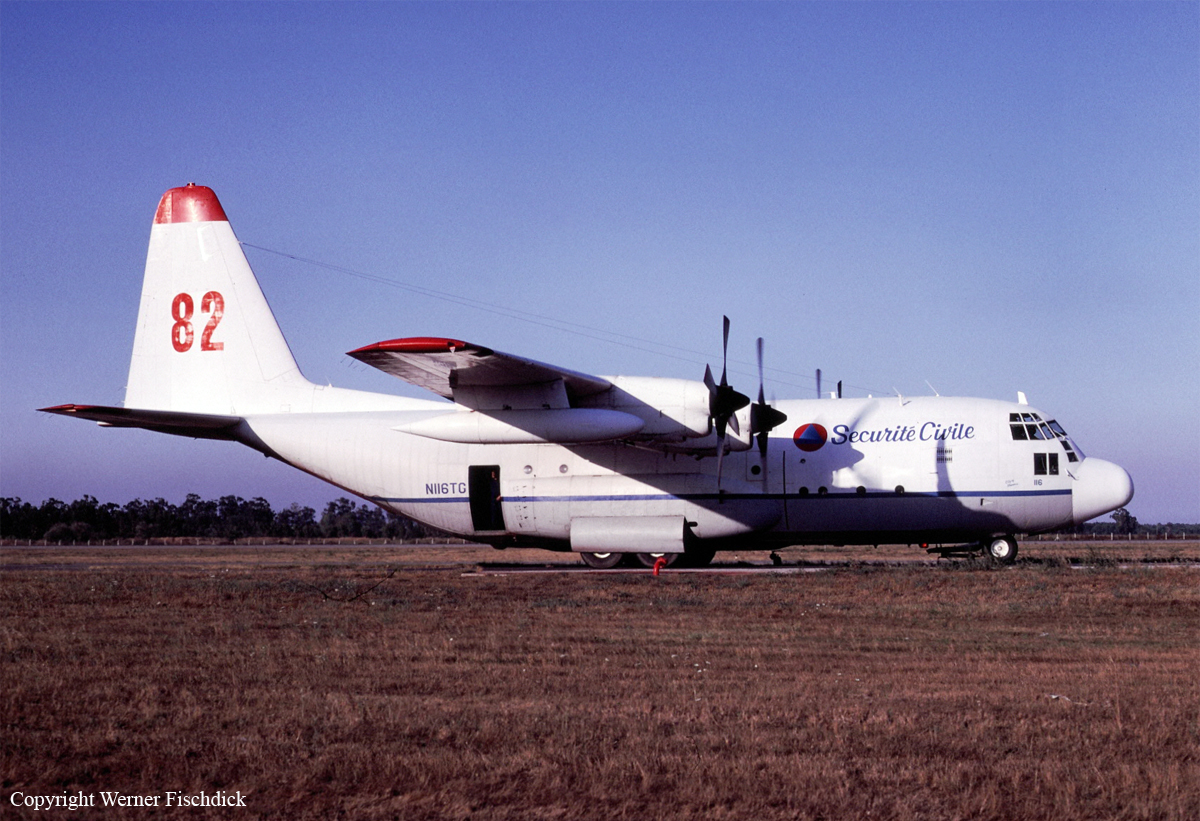
Crash of a Lockheed C-130A-6-LM Hercules in Burzet: 2 killed

Date & Time: Sep 6, 2000 at 0903 LT
Type of aircraft:
Operator:
Registration:
N116TG
Flight Phase:
Flight Type:
Survivors:
Yes
Site:
Schedule:
Marseille - Aubenas - Marseille
MSN:
3086
YOM:
1957
Flight number:
Tanker 82
Location:
Country:
Region:
Crew on board:
4
Crew fatalities:
Pax on board:
0
Pax fatalities:
Other fatalities:
Total fatalities:
2
Circumstances:
In the early morning, the four engine aircraft departed Marseille-Marignane on a positioning flight to Aubenas-Vals-Lanas Airport, Ardeche, where the crew was briefed about a forest fire in the region of Burzet, some 15 km northwest of Aubenas. The aircraft departed Aubenas with two Canadair CL-415 and was dispatched to the area on fire under callsign 'Tanker 82'. A first drop was completed successfully and while completing a second low pass, the aircraft struck trees and crashed on hilly terrain. Two crew members were seriously injured while two others were killed.
Crew:
Ted Hobard, pilot,
Paul Trinque, copilot, †
Jo WILLIAMS, navigator, †
Ted MEYER, mechanic.

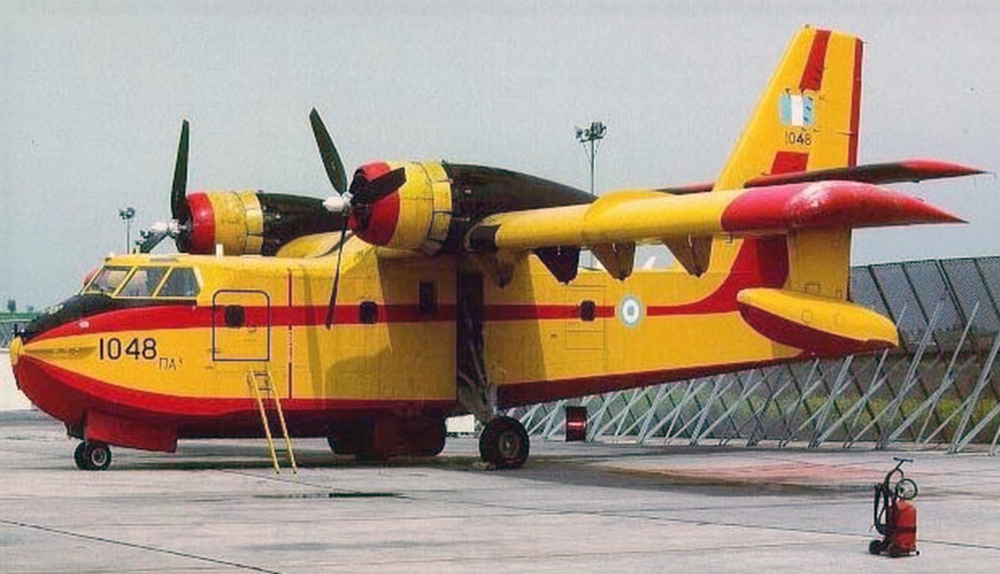
Crash of a Canadair CL-215-1A10 near Volos: 2 killed

Date & Time: Jul 15, 2000
Type of aircraft:
Operator:
Registration:
1048
Flight Phase:
Flight Type:
Survivors:
No
Site:
Schedule:
Volos - Volos
MSN:
1048
YOM:
1974
Country:
Region:
Crew on board:
2
Crew fatalities:
Pax on board:
0
Pax fatalities:
Other fatalities:
Total fatalities:
2
Circumstances:
The crew departed Volos-Nea Anchialos Airport on a fire fighting mission over Mt Pelion, about 10 km northeast of Volos. While flying at low height, the crew was preparing to drop water when the right wing struck the ground. The aircraft crashed and exploded, killing both pilots.

Crash of a Douglas B-26C-25-DT Invader in Grande Prairie

Date & Time: Jun 29, 2000 at 2219 LT
Type of aircraft:
Operator:
Registration:
CF-EZX
Flight Type:
Survivors:
Yes
Schedule:
Loon River - La Biche Lake - Grand Prairie
MSN:
18807
YOM:
1943
Country:
Crew on board:
1
Crew fatalities:
Pax on board:
0
Pax fatalities:
Other fatalities:
Total fatalities:
0
Circumstances:
The pilot, sole on board, departed Loon River Airport on a fire fighting mission to La Biche Lake under callsign Tanker 3. While returning to Grand Prairie Airport, on final approach to runway 25, both engines failed almost simultaneously. The pilot attempted an emergency landing when the aircraft crashed 3 km short of runway. The pilot was injured and the aircraft was damaged beyond repair.
Probable cause:
Double engine failure on final approach due to a fuel exhaustion.

Crash of an IAI Arava 201 in Mexico

Date & Time: Dec 31, 1998
Type of aircraft:
Operator:
Flight Phase:
Flight Type:
Country:
Crew on board:
0
Crew fatalities:
Pax on board:
0
Pax fatalities:
Other fatalities:
Total fatalities:
0
Circumstances:
The aircraft crashed in unknown circumstances somewhere in Mexico while engaged in a fire fighting mission. Occupant's fate unknown. The accident occurred somewhere in 1998, exact date unknown.

Crash of a Grumman TS-2A Tracker near Banning: 1 killed

Date & Time: Oct 5, 1998 at 1236 LT
Type of aircraft:
Operator:
Registration:
N416DF
Flight Phase:
Flight Type:
Survivors:
No
Site:
Schedule:
Hemet - Hemet
MSN:
613
YOM:
1958
Flight number:
Tanker 96
Crew on board:
1
Crew fatalities:
Pax on board:
0
Pax fatalities:
Other fatalities:
Total fatalities:
1
Captain / Total flying hours:
16680
Captain / Total hours on type:
865.00
Aircraft flight hours:
10849
Circumstances:
The air tanker pilot was on a fire suppression mission with fire retardant chemicals aboard, and had made two previous drops on the fire line. Another tanker and spotter pilot witnessed the last drop approach, and reported that the pilot was turning from base leg to the westerly drop heading downwind while in a 60-degree left bank. The aircraft suddenly rolled left to 90 degrees, and at that point the left wing tip struck the terrain. The winds were estimated by the tanker pilots to be 25 to 30 mph with gusts to 40 plus from the east. The pilots also reported turbulence and bad air. Airmet Tango was issued for turbulence and isolated severe conditions mainly below 10,000 in the vicinity of canyons and passes.
Probable cause:
The pilot misjudged his maneuvering altitude. Factors to this accident were the mountainous terrain, tailwind conditions, and turbulence in the area.
Final Report:

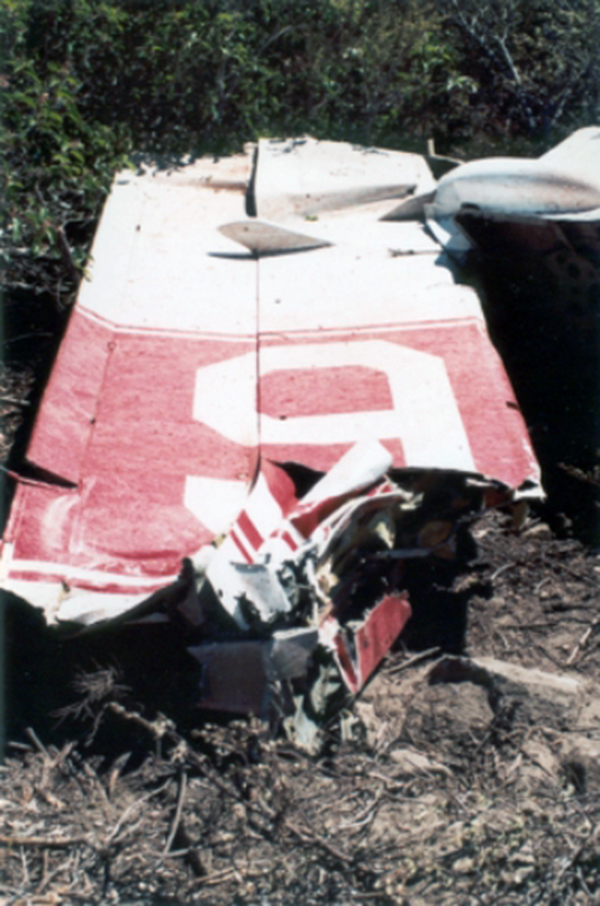
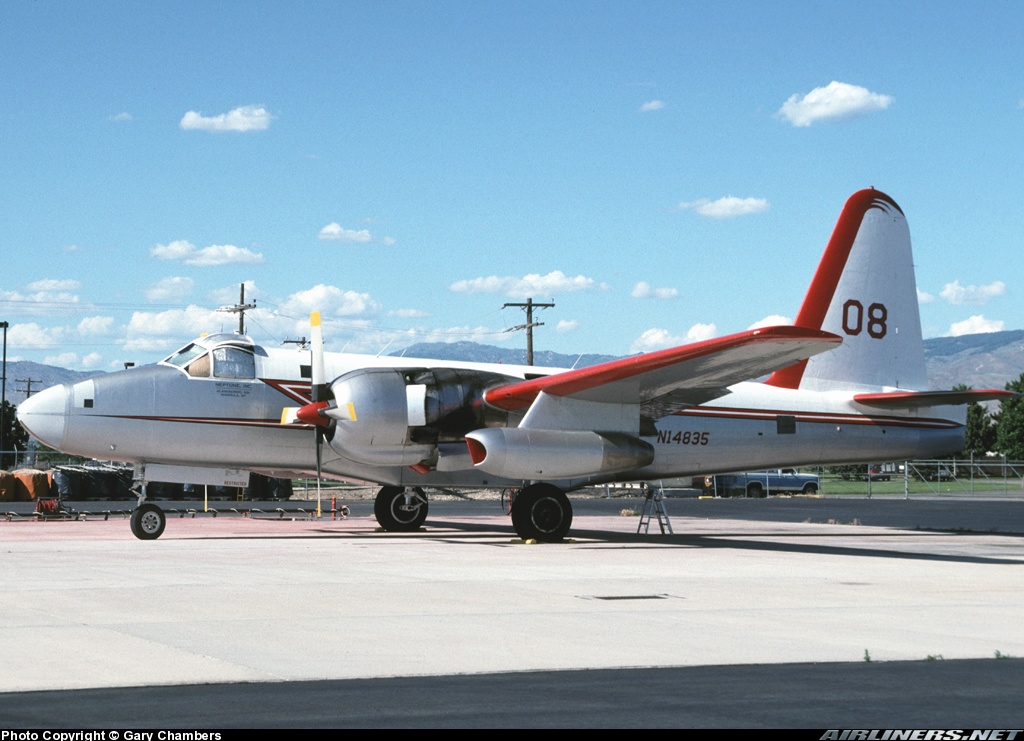
Crash of a Lockheed P2V-7-SP-2H Neptune in Reserve: 2 killed

Date & Time: Jun 27, 1998 at 2024 LT
Type of aircraft:
Operator:
Registration:
N14835
Flight Phase:
Flight Type:
Survivors:
No
Site:
Schedule:
Silver City - Silver City
MSN:
148358
YOM:
1961
Flight number:
Tanker 08
Crew on board:
2
Crew fatalities:
Pax on board:
0
Pax fatalities:
Other fatalities:
Total fatalities:
2
Captain / Total flying hours:
8337
Captain / Total hours on type:
291.00
Aircraft flight hours:
7815
Circumstances:
The airplane had made a dry pass on the fire zone, then circled around to make a second pass and release its load of 2,450 gallons of retardant. According to witnesses, the airplane struck trees while in a nose low, right wing low attitude. Upon ground impact, the airplane exploded and burned. Investigation revealed no evidence of preimpact airframe, engine, propeller, or flight control failure/malfunction. The first officer, an initial attack trainee pilot, was in the left seat and the captain was in the right seat. Toxicology tests of the first officer indicated 0.031 ug/ml brompheniramine, 0.011 ug/ml chlorpheniramine in kidney fluid, and 0.142 brompheniramine, 0.072 chlorpheniramine in liver fluid. Both medications are over-the-counter antihistamines with sedative effects.
Probable cause:
Failure of the copilot to maintain both lateral and vertical clearance from the trees, and failure of the captain to provide adequate supervision of the flight.
Final Report:

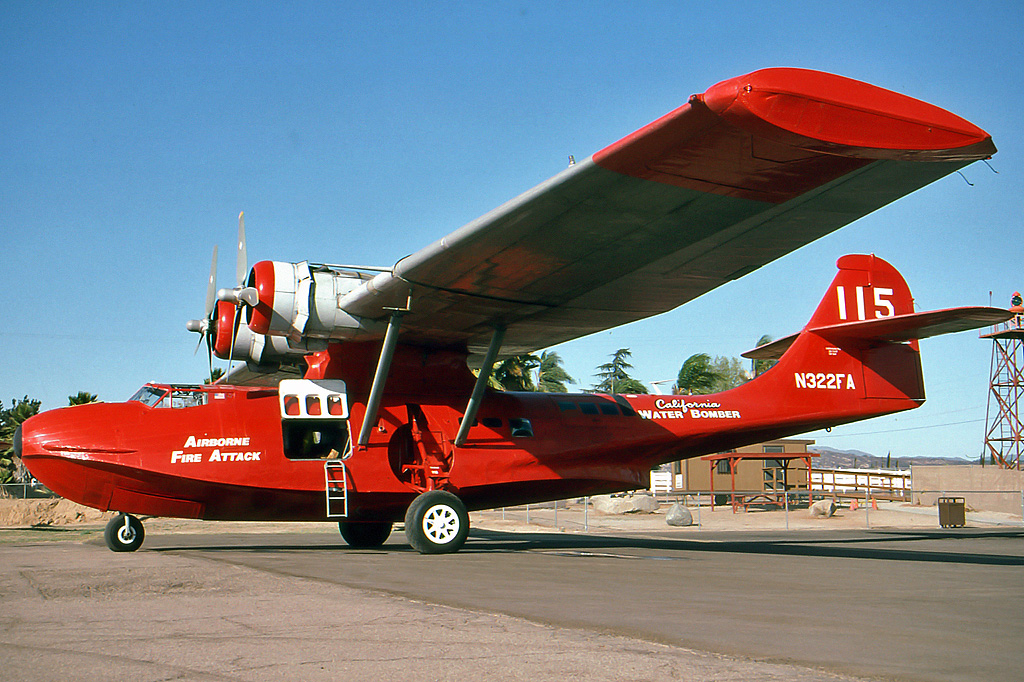
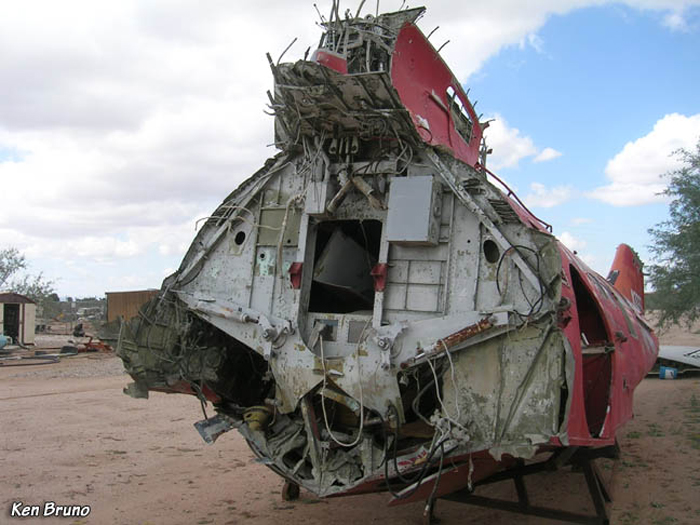
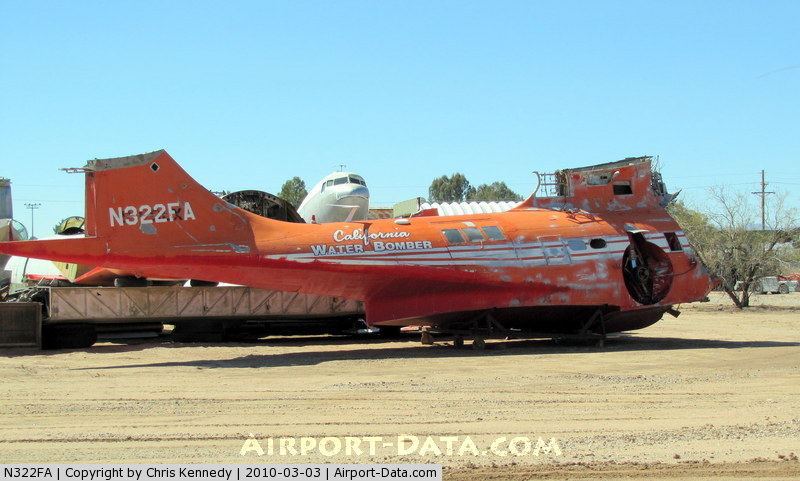
Crash of a Canadian Vickers PBV-1A Canso A in the San Vicente Reservoir

Date & Time: Aug 1, 1997 at 1500 LT
Registration:
N322FA
Flight Phase:
Flight Type:
Survivors:
Yes
Schedule:
Santa Ana - Santa Ana
MSN:
CV-560
YOM:
1944
Crew on board:
2
Crew fatalities:
Pax on board:
0
Pax fatalities:
Other fatalities:
Total fatalities:
0
Captain / Total flying hours:
10200
Captain / Total hours on type:
160.00
Aircraft flight hours:
17427
Circumstances:
After touching down to scoop another load of water, the pilot added power and the aircraft pitched forward. The pilot heard a pop and felt a sudden decelerative force. When the nose began to bowsuck, he applied more back pressure but the aircraft did not respond. The floor split open and water began rushing into the cockpit. The left nose gear door locking pin was found separated from its hydraulic actuator. It displayed a bend that corresponded to its retracted position in the pin guide. The deformation prevented investigators from reinserting the damaged pin back through the guide. The left mycarta block remained attached to the door and did not exhibit any damage.
Probable cause:
The implosion of the unlocked left nose gear door which resulted in the hydraulic disintegration of the forward fuselage. The cause of the locking pin actuator malfunction was not determined.
Final Report: