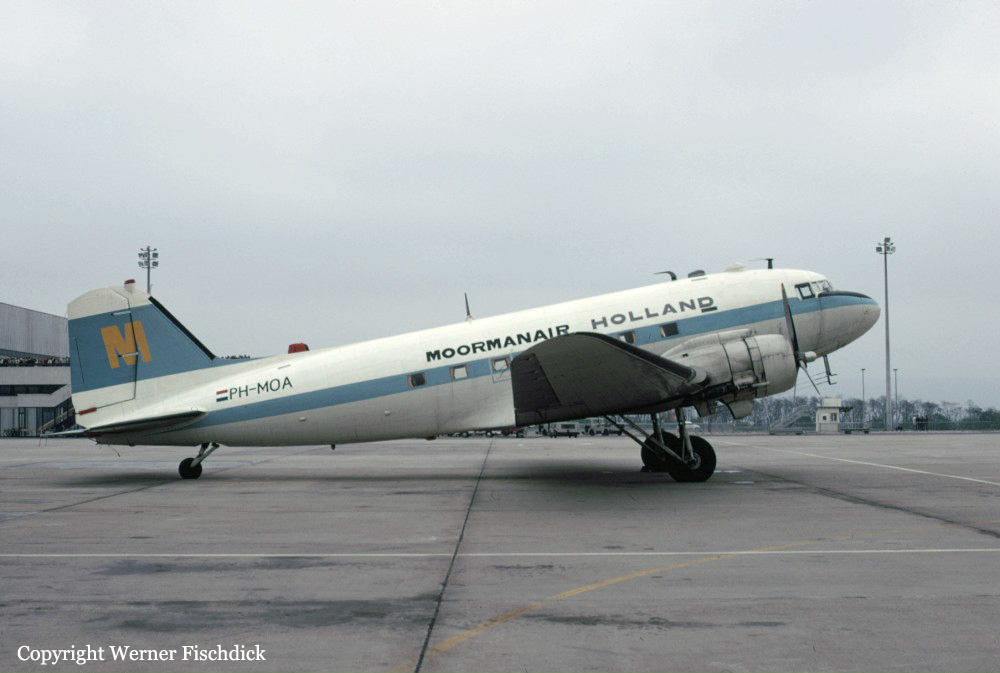
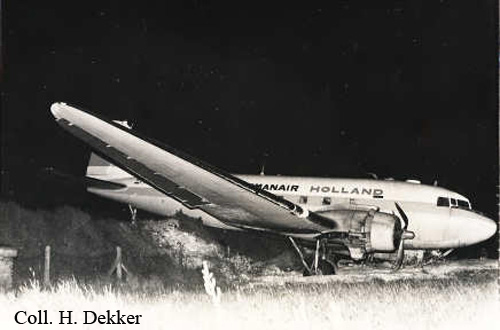
Crash of a Douglas C-47B-35-DK in Southend

Date & Time: Jun 3, 1971 at 1325 LT
Operator:

Registration:
PH-MOA
Survivors:
Yes
Schedule:
Southend – Amsterdam
MSN:
16605/33353
YOM:
1945
Region:
Crew on board:
4
Crew fatalities:
Pax on board:
32
Pax fatalities:
Other fatalities:
Total fatalities:
0
Captain / Total flying hours:
4663
Captain / Total hours on type:
1750.00
Copilot / Total flying hours:
3247
Copilot / Total hours on type:
230
Aircraft flight hours:
6372
Circumstances:
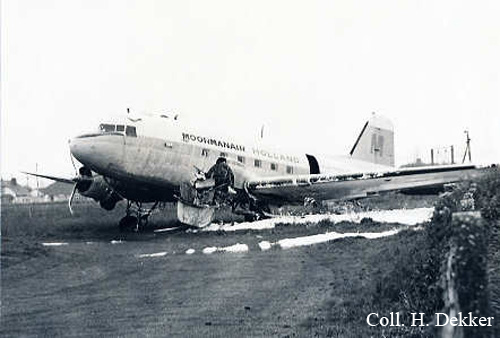
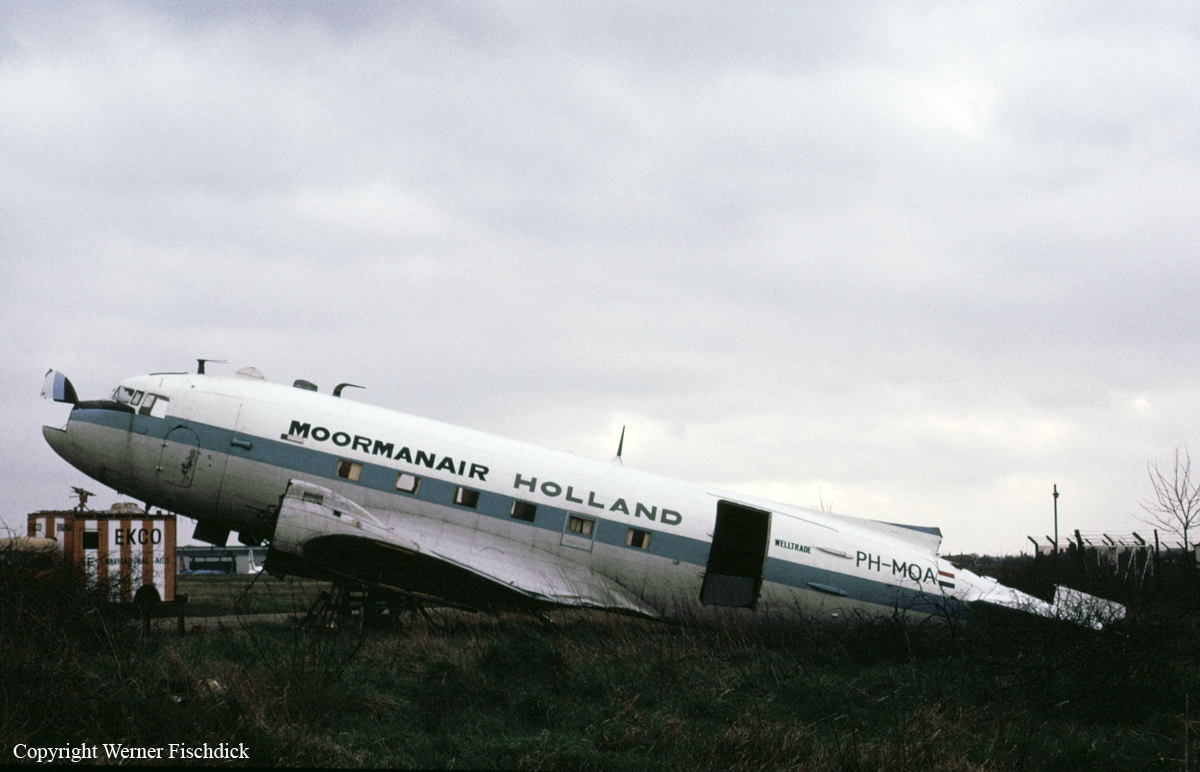
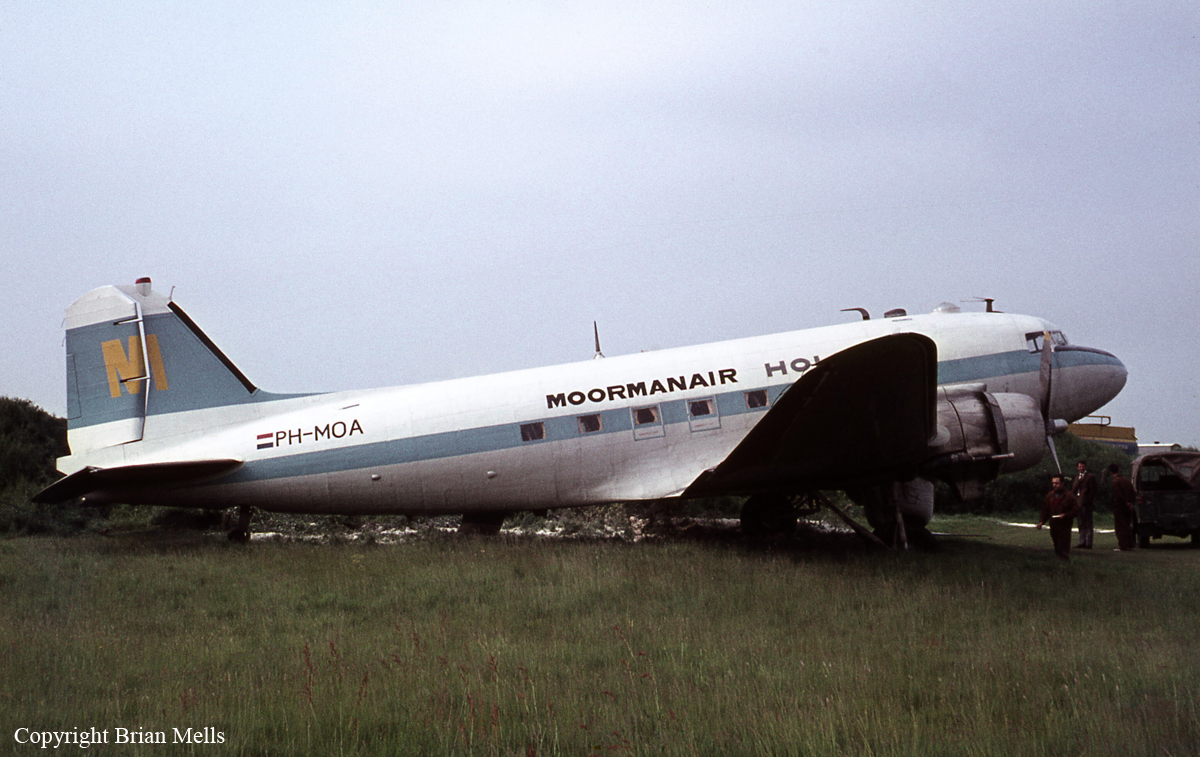
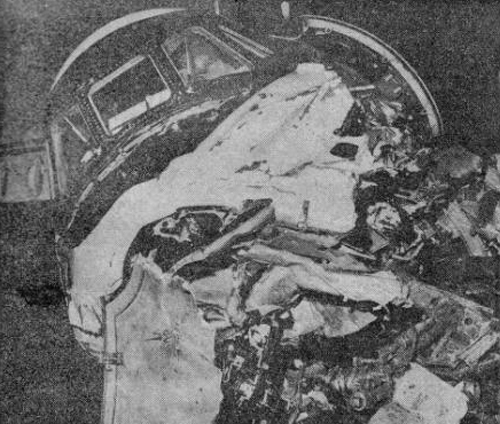
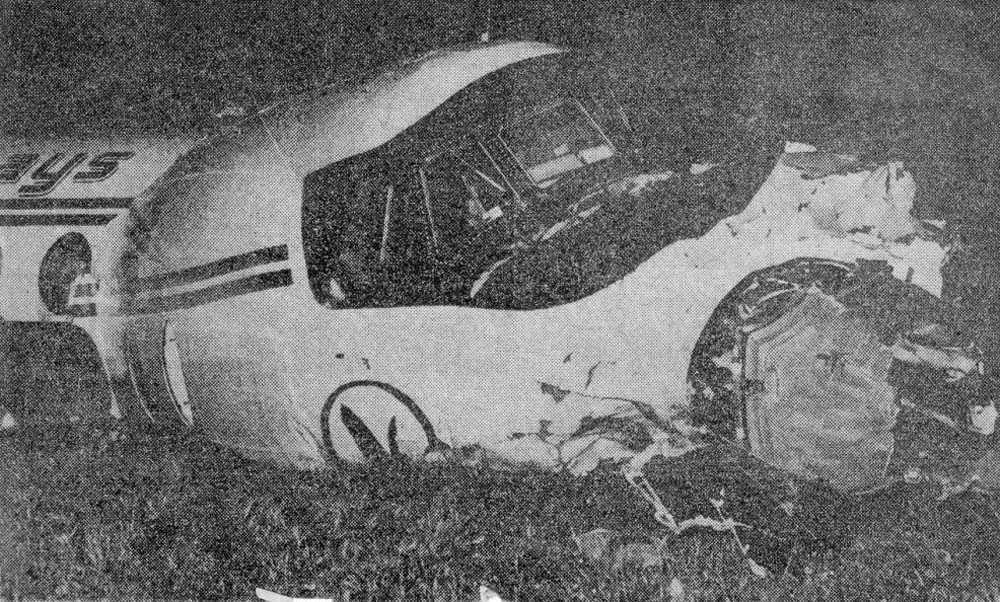
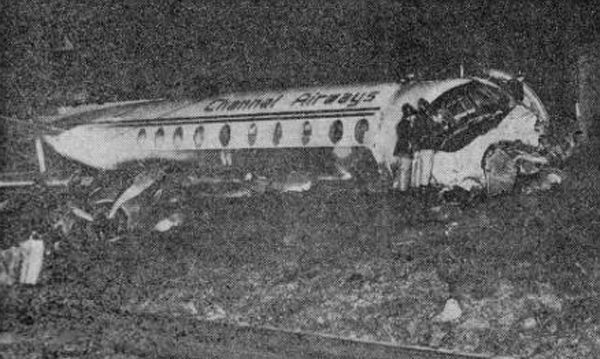
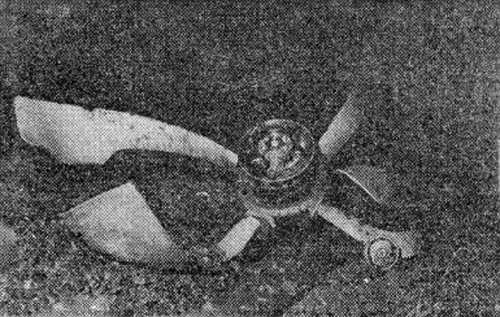
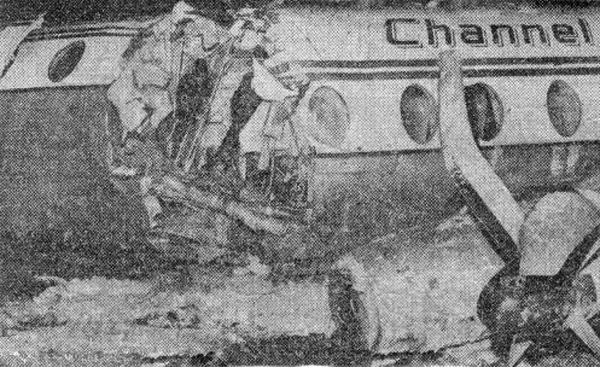
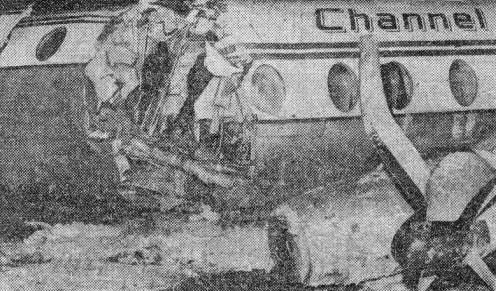
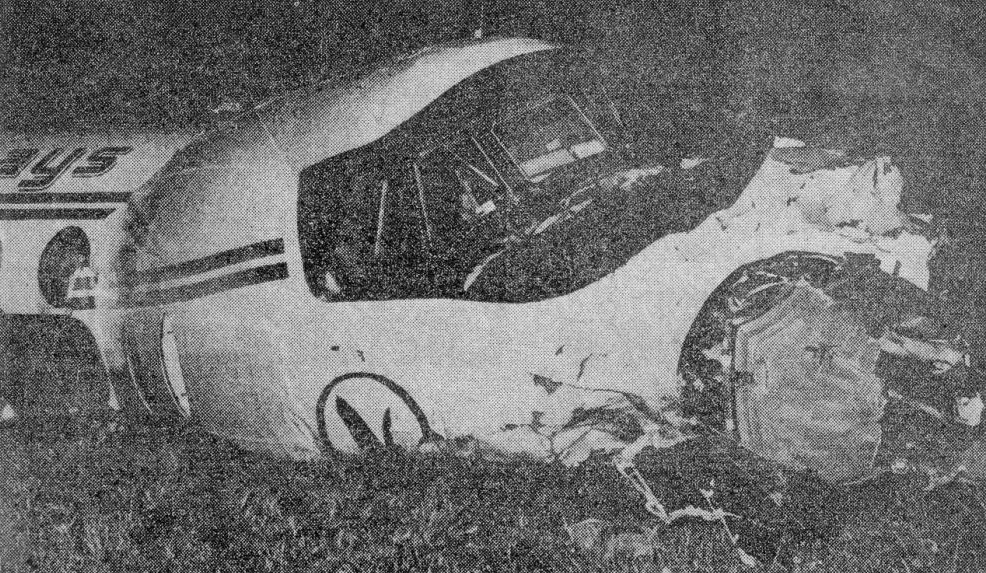
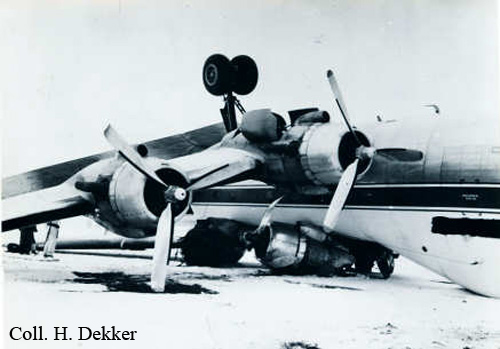
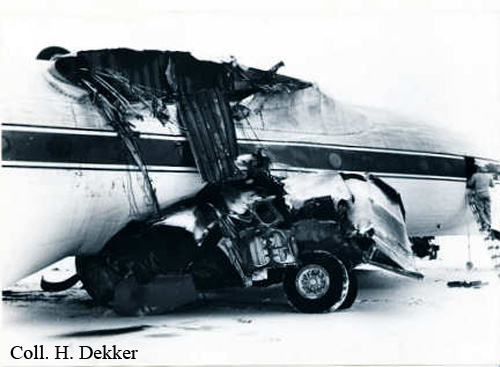
The aircraft was engaged in a charter flight from Southend to Amsterdam, carrying 32 supporters of the Ajax football team back to The Netherlands. Following a fall in manifold pressure and the discovery of an oil leak in the starboard engine soon after a night takeoff, the pilot decided to return to Southend Airport for an emergency landing. In order to avoid an overshoot, he positioned the flaps to a 15° angle for the landing which resulted in a higher than normal airspeed at touchdown. The aircraft touched down about half-way down the runway in use, overran the paved area and collided with an earth bank. Of the 32 passengers and four crew on board, two passengers were injured. The aircraft was damaged beyond repair.
Probable cause:
The accident was due to a late touchdown and inappropriate use of the flaps. Insufficient braking efficiency resulted in a higher speed of overrun than would have otherwise occurred. The following factors were reported:
- The documentation of the aircraft was not in order,
- The number of persons on board was in excess of the number for which seating capacity and safety belts were provided, and the aircraft weight at take-off was 335 kg in excess of the authorised maximum,
- Following an engine failure in the air, the aircraft made an emergency landing at Southend Airport at a weight 560 kg in excess of its regulated landing weight,
- The approach and landing was made with 15° of flap extended, full flap was not used,
- Touchdown occurred approximately half way down the runway,
- The aircraft wheels brakes were worn to the extent that their efficiency would have been impaired and oil may have reduced the grip of the starboard tyre,
- The aircraft overran the paved area and collided with an earth bank on the aerodrome boundary.
Final Report:
Crash of a Aviation Traders ATL-98 Carvair in Le Touquet

Date & Time: Mar 18, 1971
Operator:
Registration:
G-APNH
Survivors:
Yes
Schedule:
Southend – Le Touquet
MSN:
11/18333
YOM:
1965
Country:
Region:
Crew on board:
7
Crew fatalities:
Pax on board:
11
Pax fatalities:
Other fatalities:
Total fatalities:
0
Circumstances:
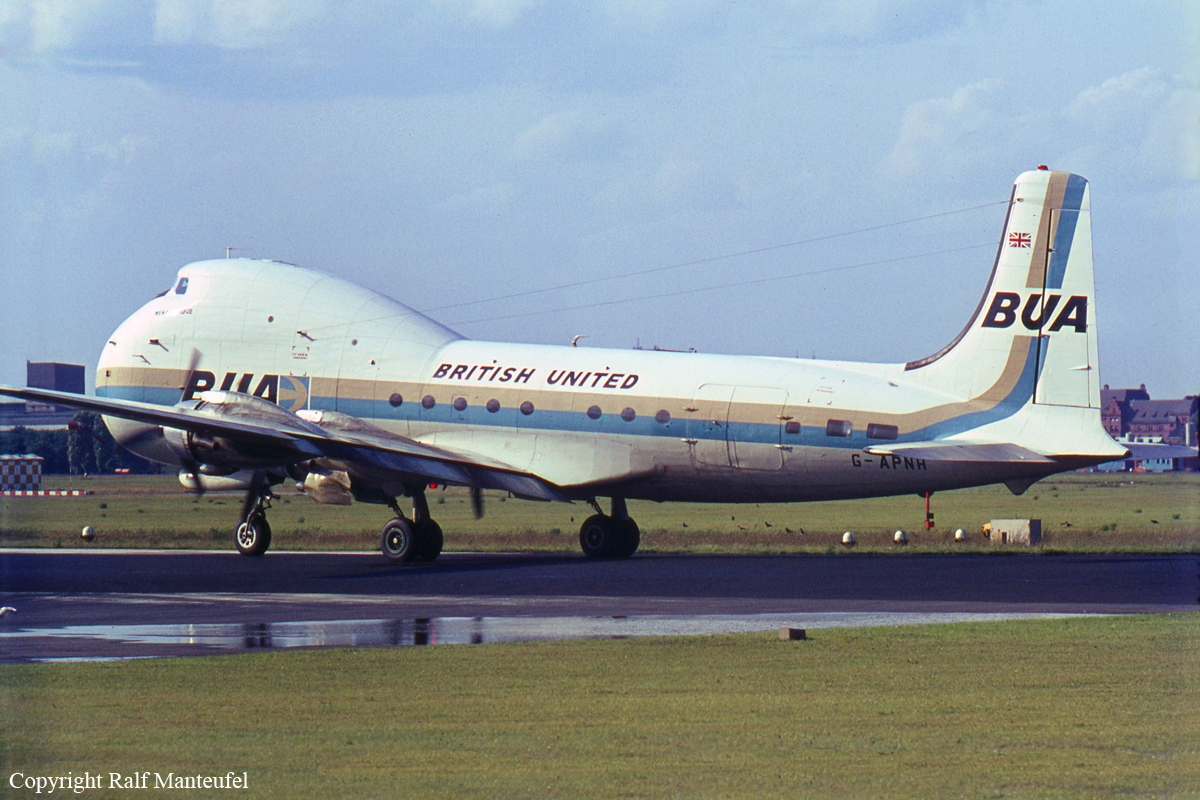
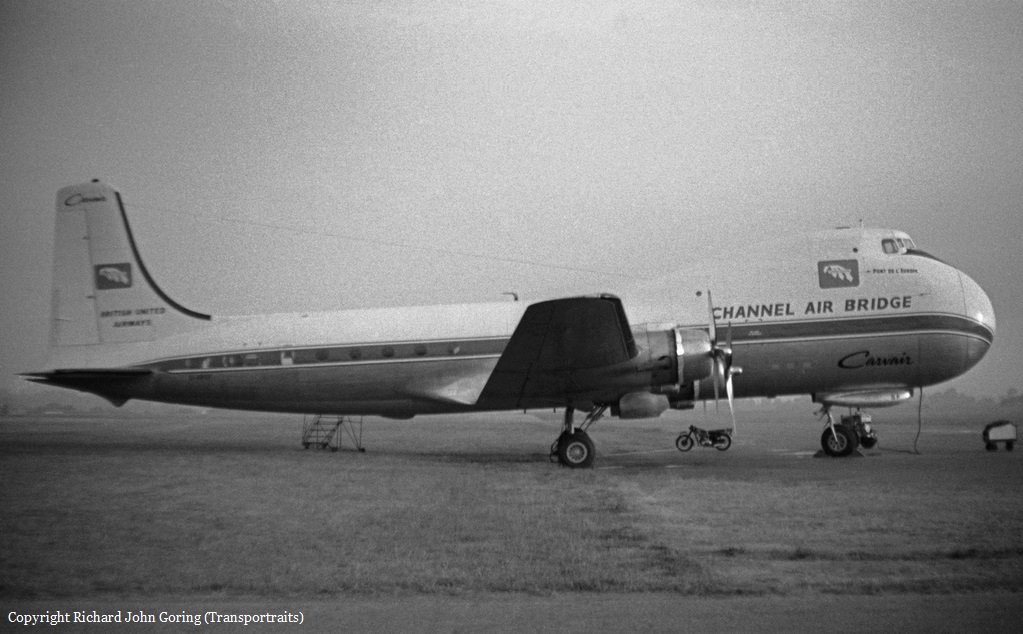
The approach to Le Touquet Airport was completed in strong crosswinds. Upon touchdown, the nose gear collapsed and the airplane came to rest 1,550 meters from threshold. All 18 occupants were evacuated safely while the aircraft was considered as damaged beyond repair.

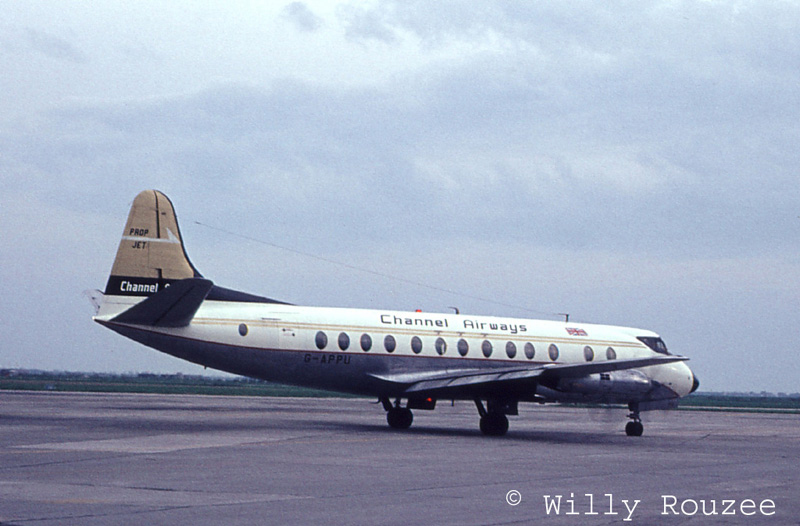
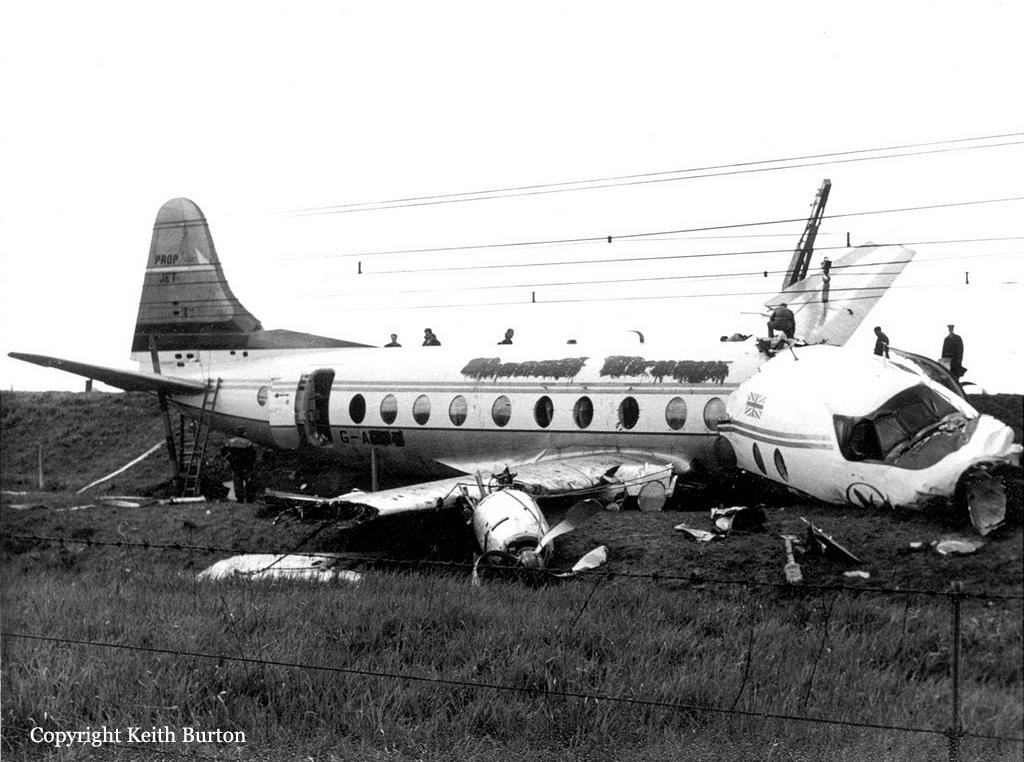
Crash of a Vickers 812 Viscount in Southend

Date & Time: May 4, 1968
Type of aircraft:
Operator:
Registration:
G-APPU
Survivors:
Yes
Schedule:
Rotterdam - Southend
MSN:
364
YOM:
1958
Region:
Crew on board:
4
Crew fatalities:
Pax on board:
79
Pax fatalities:
Other fatalities:
Total fatalities:
0
Circumstances:
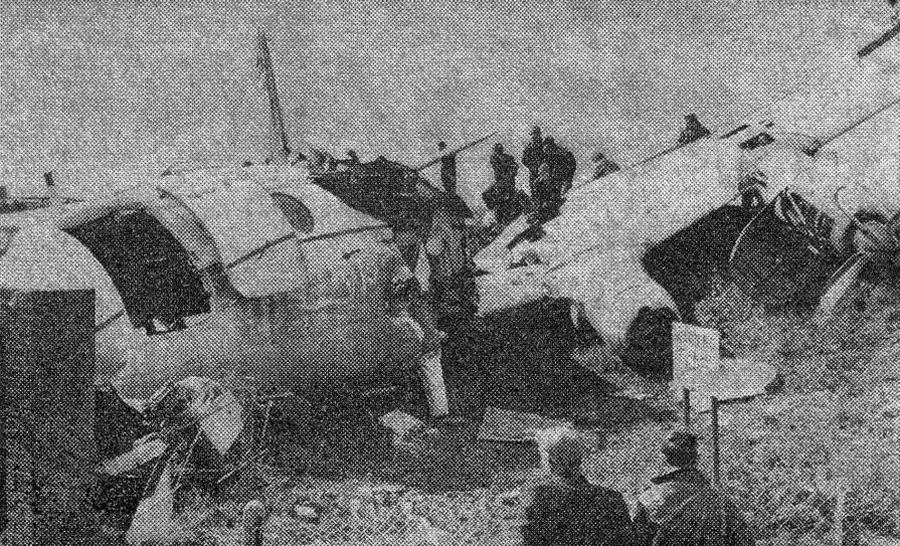
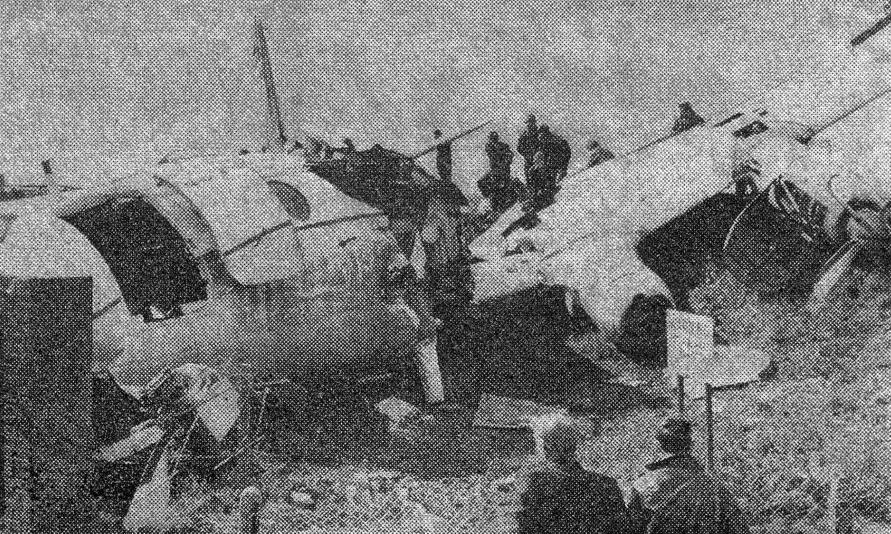
The crew completed the landing procedure on a wet runway 06 at a too high speed. After touchdown, the captain started the braking procedure but thought he was encountering aquaplaning situation when control was lost. The airplane veered to the right and went down an embankment before coming to rest, broken in several pieces. All 83 occupants were evacuated safely while the aircraft was destroyed.
Probable cause:
The accident was caused through landing at a too high speed for the landing distance available. A contributory factor was reduced braking effectiveness due to the main wheel being mechanically locked by the application of the hand-brake.

Crash of a Vickers 812 Viscount in Southend: 2 killed

Date & Time: May 3, 1967
Type of aircraft:
Operator:
Registration:
G-AVJZ
Flight Phase:
Flight Type:
Survivors:
Yes
Schedule:
Southend - Southend
MSN:
360
YOM:
1958
Region:
Crew on board:
3
Crew fatalities:
Pax on board:
0
Pax fatalities:
Other fatalities:
Total fatalities:
2
Circumstances:
The crew was involved in a local test flight out from Southend Airport in the goal to renew the Airworthiness certificate. Shortly after takeoff, while in initial climb, a technical failure occurred on the engine number four. The crew was forced to shut down the engine and to feather its propeller when control was lost. The airplane lost height and crashed in an open field located near the airport, broke in two and came to rest. While all three crew members were injured, two people on the ground were killed.
Probable cause:
Loss of control during takeoff after feathering of No.4 propeller had been initiated.

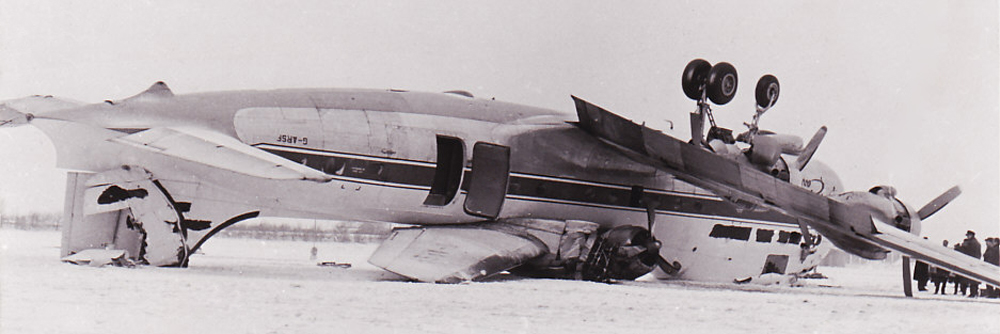
Crash of a Aviation Traders ATL-98 Carvair in Rotterdam: 1 killed

Date & Time: Dec 28, 1962 at 1055 LT
Operator:
Registration:
G-ARSF
Survivors:
Yes
Schedule:
Southend – Rotterdam
MSN:
3/18339
YOM:
1962
Country:
Region:
Crew on board:
4
Crew fatalities:
Pax on board:
14
Pax fatalities:
Other fatalities:
Total fatalities:
1
Captain / Total flying hours:
6534
Captain / Total hours on type:
450.00
Copilot / Total flying hours:
6014
Copilot / Total hours on type:
201
Circumstances:
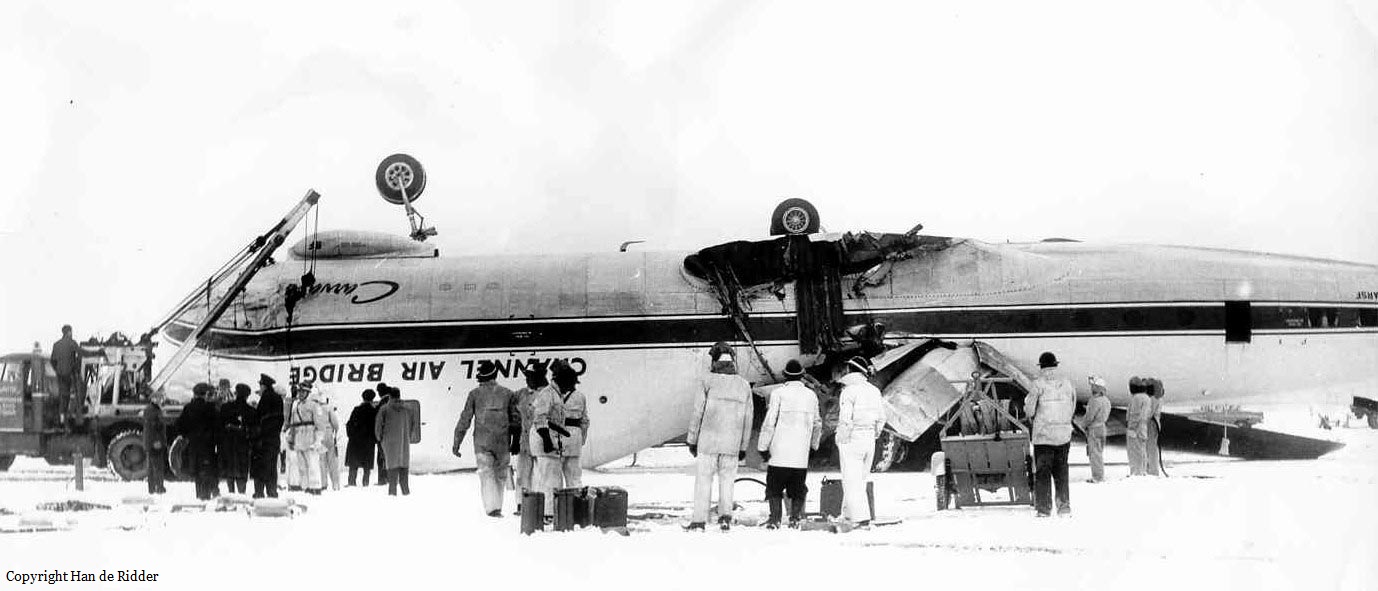
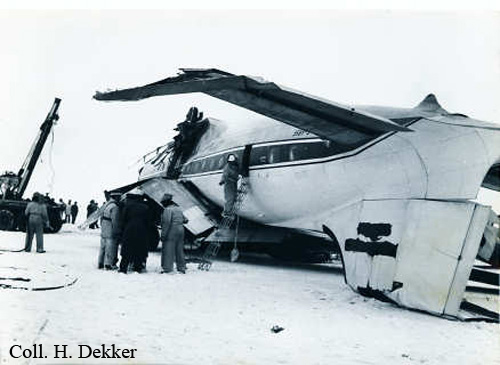
The crew was completing a visual approach to Rotterdam-Zestienhoven Airport in conditions of snow (visibility 1460 m). During the final approach the landing gear struck a 6 feet high dyke located 800 feet short of the runway threshold. The plane bounced and struck the ground heavily 200 feet further on. The right was sheared off and the aircraft crashed upside down in a snow covered field. The captain was killed and the copilot was seriously injured. Two other crew members were injured while all 14 passengers were unhurt.
Probable cause:
The accident was due to the fact that the commander carried out the final stage of approach below the normal glide path with insufficient engine power, as a result of which the speed of descent was too high in relation to the horizontal distance still to be covered to the beginning of the runway. Consequently, the aircraft, at a high vertical speed, hit a dyke, after facing the direction of approach. The Board was of the opinion that even if there had been no dyke, and it was not an obstruction of any significant height, the aircraft would still have hit the ground a considerable distance short of the runway threshold, although possibly with less fatal consequences than in the present instance.
Final Report:
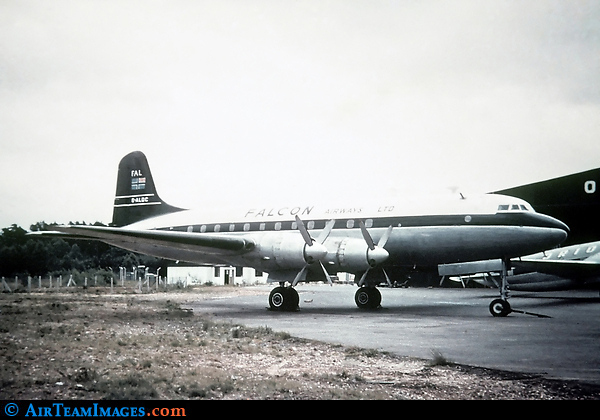
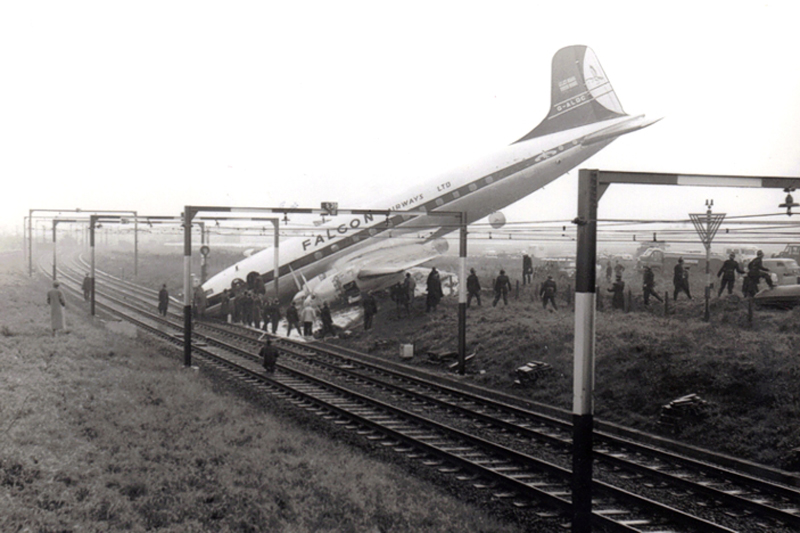
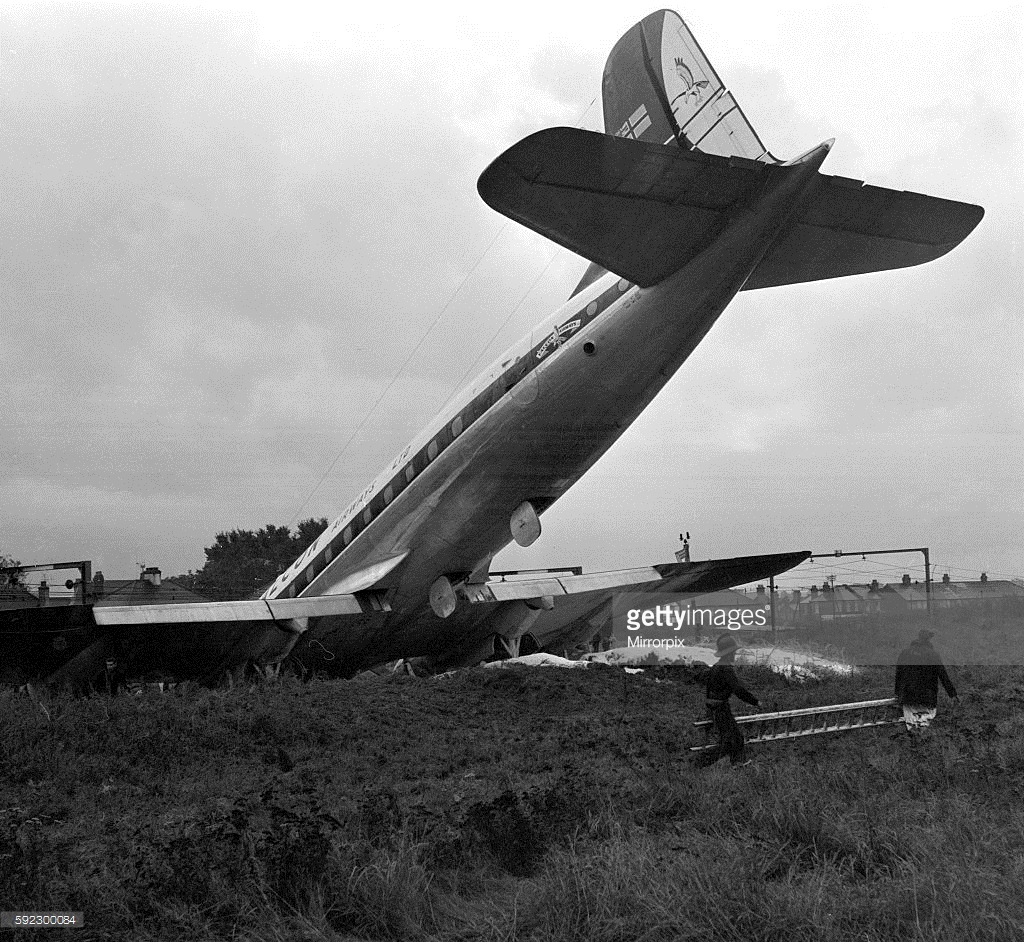
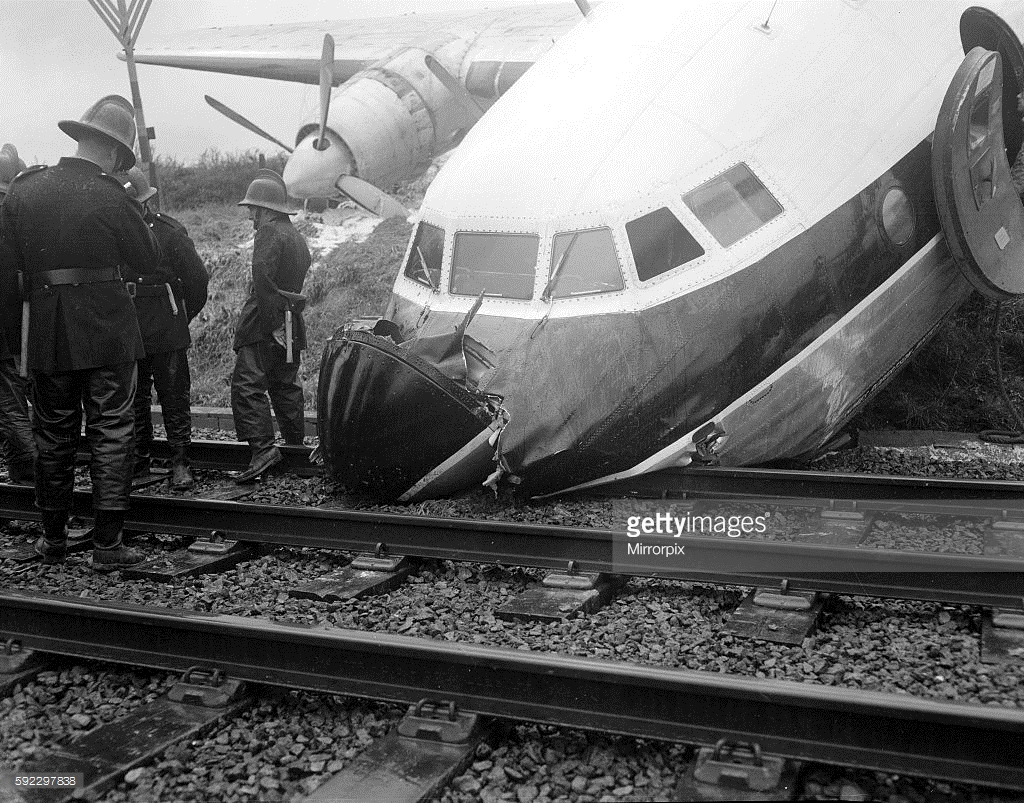
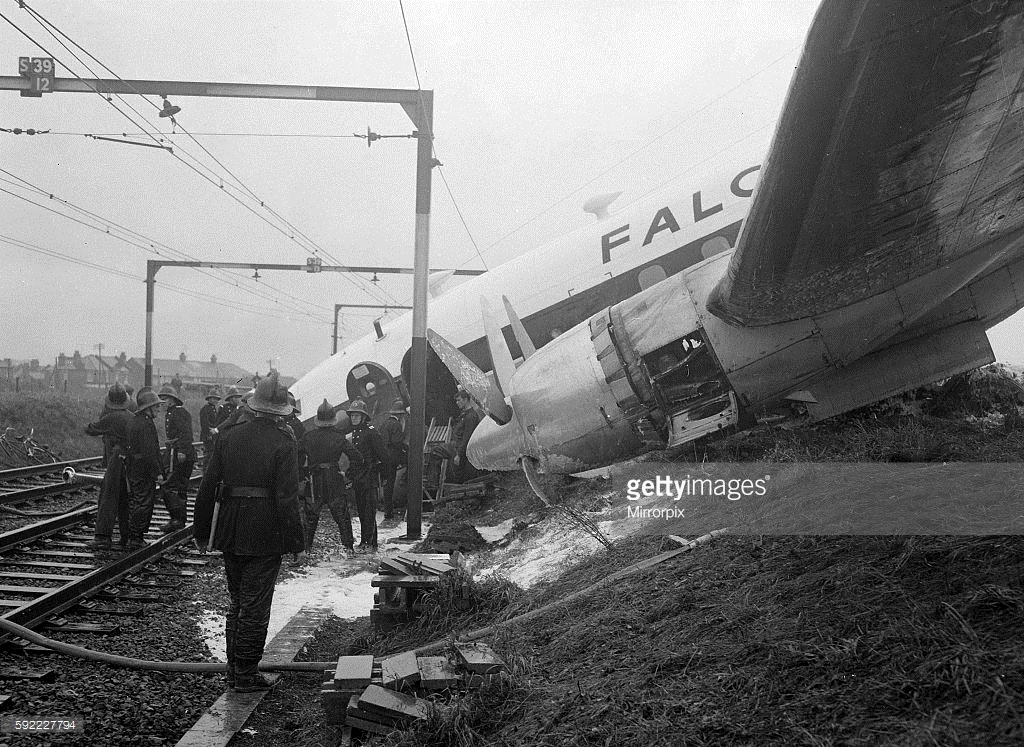
Crash of a Handley Page H.P.81 Hermes IV in Southend

Date & Time: Oct 9, 1960 at 1247 LT
Type of aircraft:
Registration:

G-ALDC
Survivors:
Yes
Schedule:
Barcelona – Southend
MSN:
81/4
YOM:
1949
Region:
Crew on board:
5
Crew fatalities:
Pax on board:
71
Pax fatalities:
Other fatalities:
Total fatalities:
0
Aircraft flight hours:
17183
Circumstances:
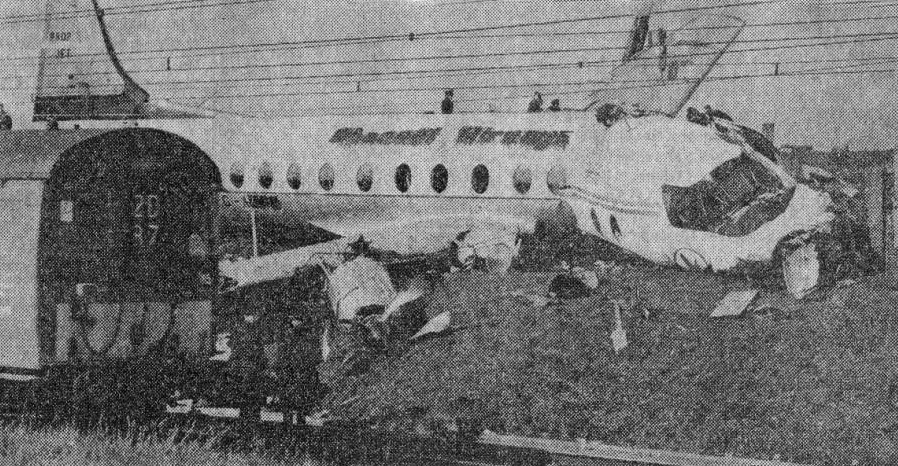
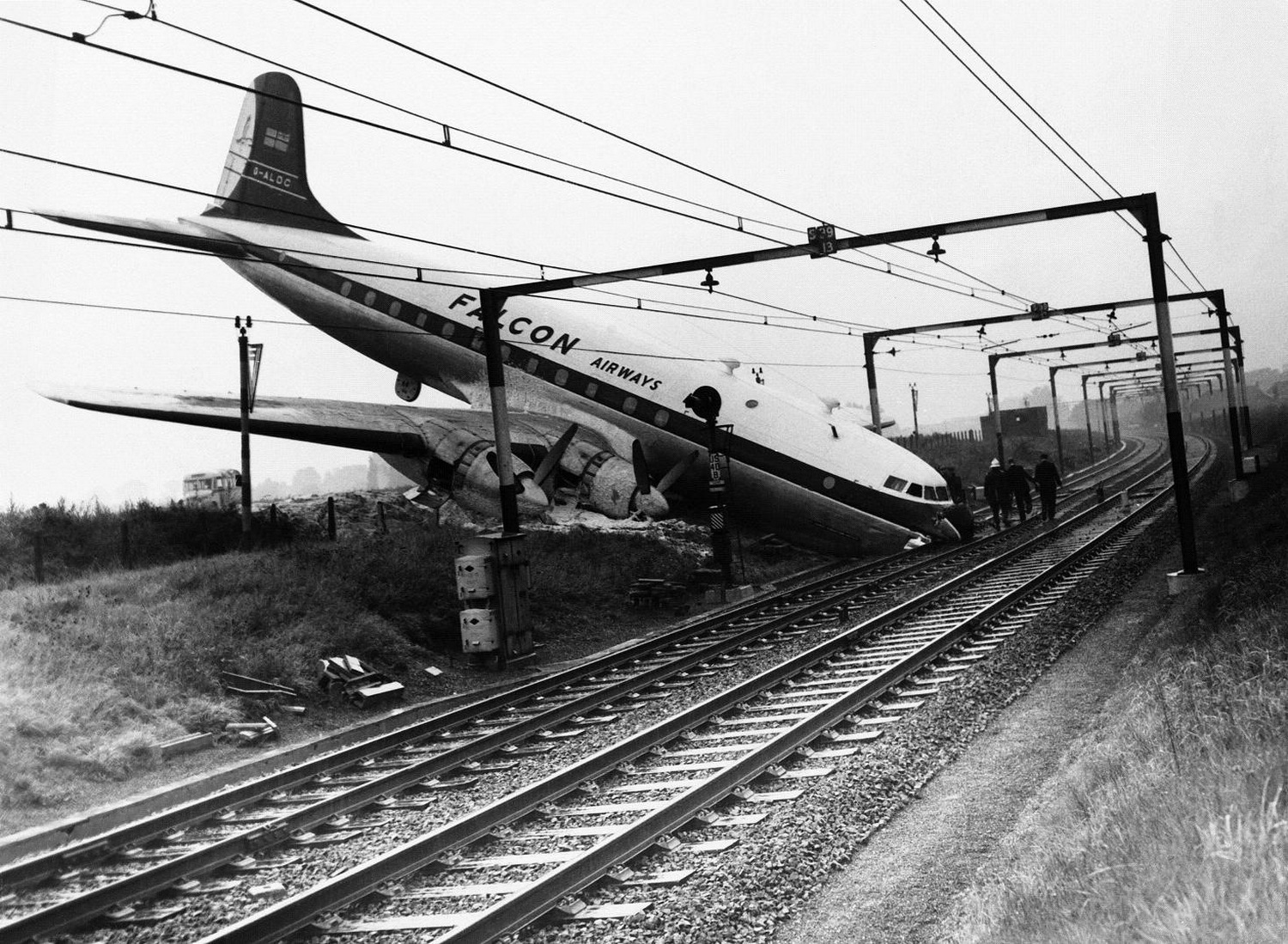
Following an uneventful flight from Barcelona, the crew completed the approach and the landing on a wet runway. After touchdown, the pilot applied brakes according to the procedures but the aircraft was unable to stop within the remaining distance, overran, struck an embankment and came to rest with its nose on a railway track. All 76 occupants were evacuated safely while the aircraft was considered as damaged beyond repair.
Probable cause:
The accident was due to the aircraft aquaplaning during part of the landing run. The low frictional values during this condition prevented the captain from obtaining effective braking.

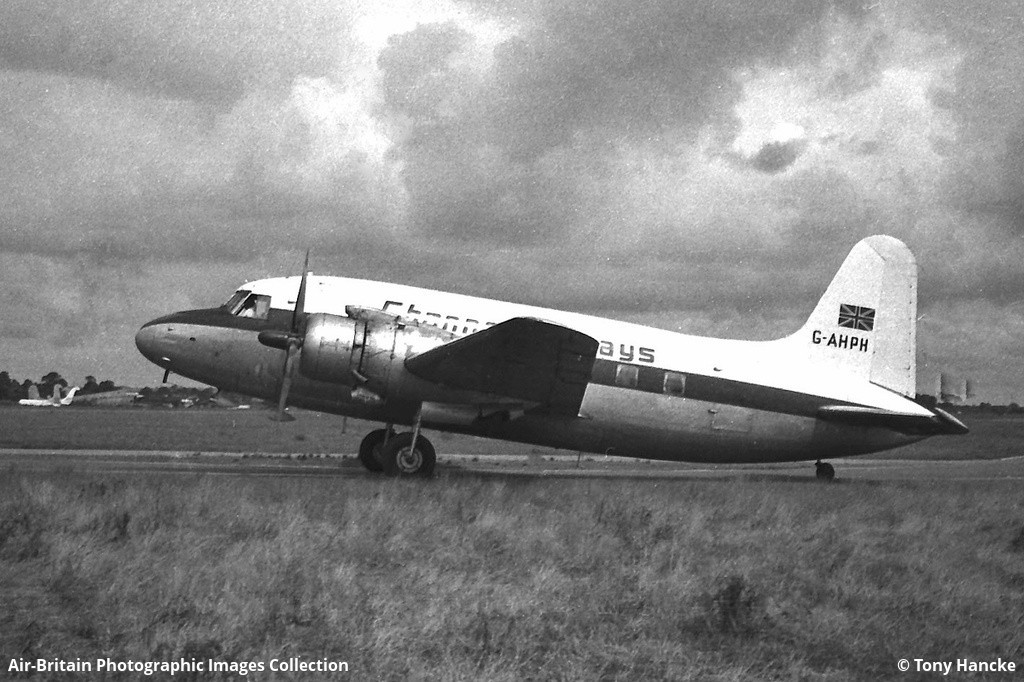
Crash of a Vickers 614 Viking 1 in Southend

Date & Time: Jul 28, 1959
Type of aircraft:
Operator:
Registration:
G-AHPH
Survivors:
Yes
MSN:
141
YOM:
1946
Region:
Crew on board:
3
Crew fatalities:
Pax on board:
36
Pax fatalities:
Other fatalities:
Total fatalities:
0
Circumstances:
On approach to Southend Airport while on a charter flight, the crew completed the approach check-list and noted that the green light connected to the right main gear was not ON. The crew elected to use the emergency gear extension system that failed so a landing was attempted on the grassy area parallel to the runway. On touchdown, the undercarriage collapsed and the airplane slid for several yards before coming to rest. All 39 occupants were evacuated safely while the aircraft was considered as damaged beyond repair.

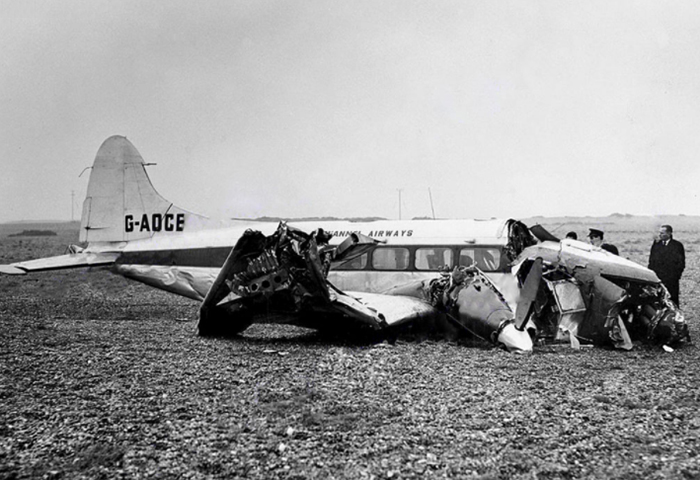
Crash of a De Havilland DH.104 Dove 2 in Dungeness

Date & Time: Jan 15, 1958
Type of aircraft:
Operator:
Registration:
G-AOCE
Flight Phase:
Survivors:
Yes
Schedule:
Rotterdam – Southend
MSN:
04044
YOM:
1955
Location:
Region:
Crew on board:
2
Crew fatalities:
Pax on board:
5
Pax fatalities:
Other fatalities:
Total fatalities:
0
Circumstances:
While approaching the British coast on a flight from Rotterdam to Southend, the crew was informed by ATC that a landing at Southend was impossible due to foggy conditions and was rerouted to Lydd Airport. On final, the crew was forced to make a go around because he was unable to locate the runway. Few minutes later, a second attempt to land at Lydd was also abandoned. While flying vertical to the Dungeness beaches, both engines failed. The crew reduced his altitude and completed an emergency landing. The airplane slid for dozen yards before coming to rest. All seven occupants were injured and the aircraft was destroyed.
Probable cause:
Double engine failure caused by a fuel exhaustion.

Crash of a Short S.25 Sunderland III off Southend: 4 killed

Date & Time: Oct 21, 1947
Type of aircraft:
Operator:
Registration:
DV976
Flight Phase:
Flight Type:
Survivors:
Yes
Region:
Crew on board:
7
Crew fatalities:
Pax on board:
3
Pax fatalities:
Other fatalities:
Total fatalities:
4
Circumstances:
During a training sortie, the engine number three failed. The captain decided to reduce his altitude in an attempt to ditch the aircraft when the same engine caught fire. Shortly later, the engine detached and the seaplane hit the water surface at high speed, overturned and came to rest off Southend. Six crew members were injured while the captain and all three passengers were killed.
Probable cause:
The exact cause of the engine failure was not determined with certainty. However, the absence of an experienced copilot was considered as a contributory factor as the workload caused by an emergency situation was too heavy for the sole captain.

Crash of a Vickers 417 Wellington III near Southend-on-Sea: 6 killed

Date & Time: Nov 16, 1942 at 1930 LT
Type of aircraft:
Operator:
Registration:
BJ894
Flight Phase:
Flight Type:
Survivors:
No
Schedule:
Dishforth – Dishforth
Region:
Crew on board:
6
Crew fatalities:
Pax on board:
0
Pax fatalities:
Other fatalities:
Total fatalities:
6
Circumstances:
Engaged in a Bulls Eye exercise, the airplane went out of control and crashed on Pitsea Marshes, west of Southend-on-Sea. All six crew members were killed.
Crew:
F/Sgt Norman Andrews Ash, pilot,
F/Sgt Jack Tritt, navigator,
F/O William George Laut, observer,
F/Sgt Joseph Yves Camille Charles A. La Flamme, air bomber,
F/Sgt Joseph Fernand Raymond Croteau, wireless operator,
F/Sgt Joseph Adelard Frederic Patry, air gunner.