Crash of a Consolidated PB4Y-2 Privateer off Port Hardy

Date & Time: Aug 9, 1975 at 0015 LT
Operator:

Registration:
N6813D
Flight Type:
Survivors:
Yes
Schedule:
Anchorage - Ketchikan - Greybull
MSN:
59876
YOM:
1943
Flight number:
Tanker 125
Country:
Crew on board:
2
Crew fatalities:
Pax on board:
0
Pax fatalities:
Other fatalities:
Total fatalities:
0
Aircraft flight hours:
1482
Circumstances:
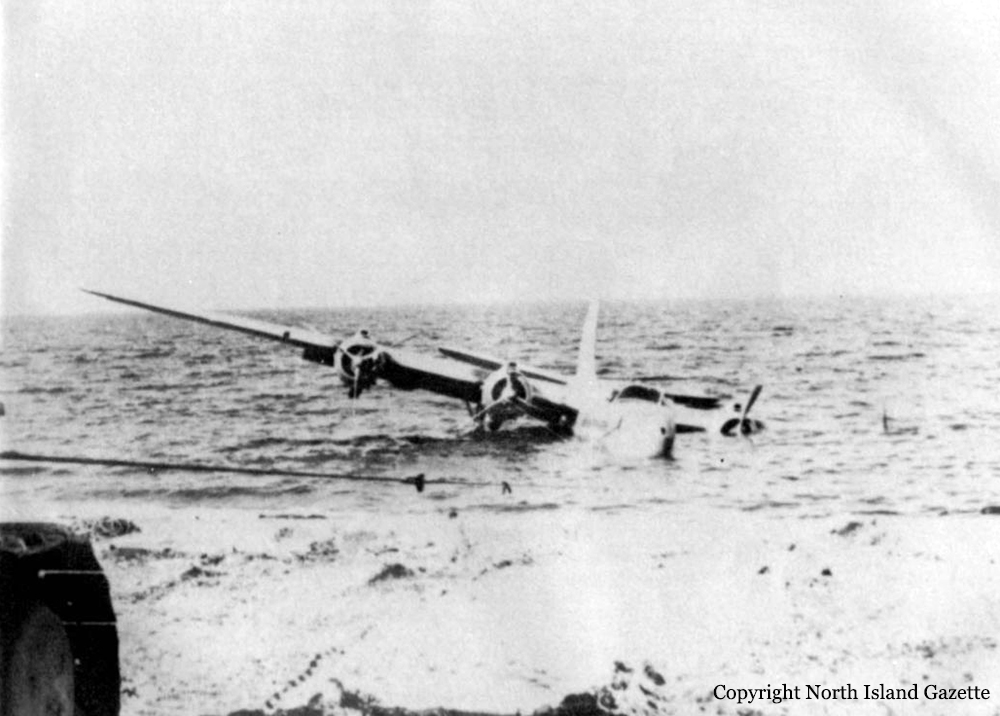
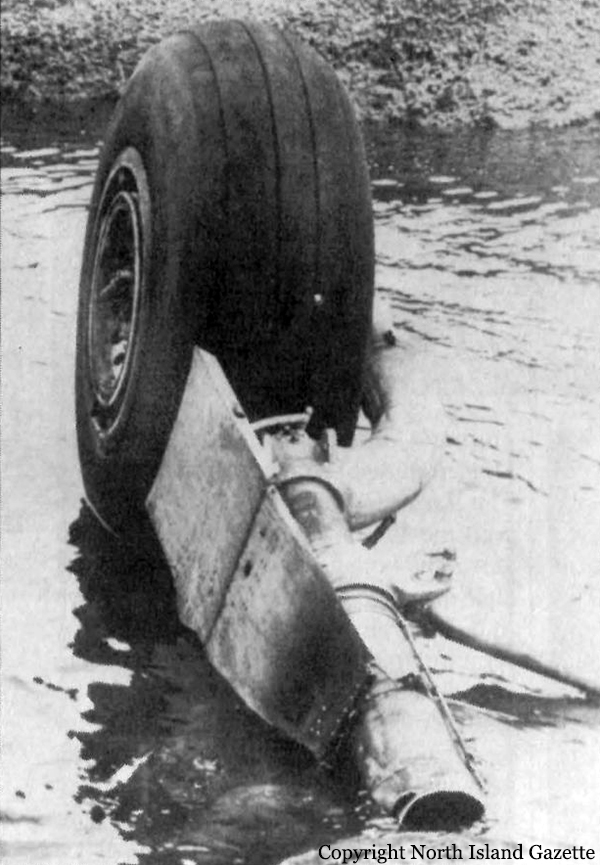
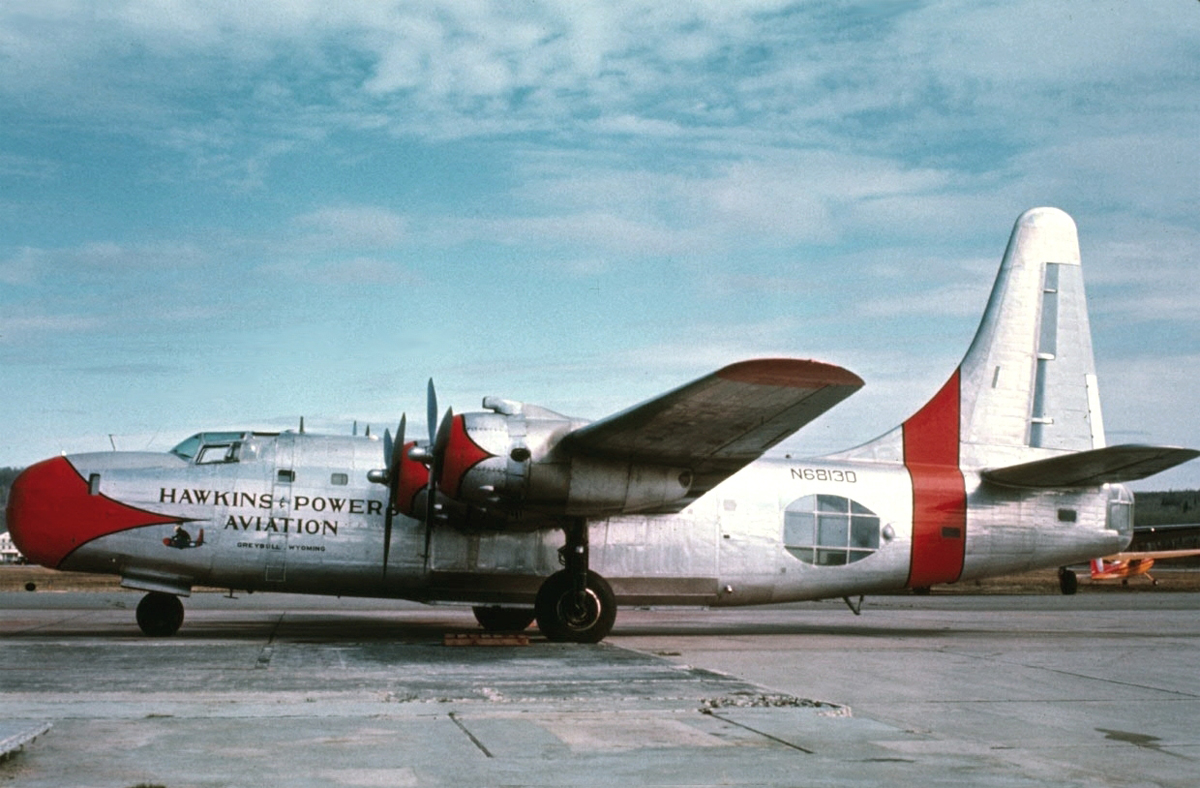
During 1975, '13D was under contract to the US Department of the Interior and based at Anchorage, Alaska. Total flight time was approximately 1475 hours. On Friday, 8 August 197 5, the aircraft was being flown back to the lower 48 States from Anchorage with an eventual destination of Greybull, Wyoming. One engine had been shut down due to its running rough, and we understand that a planned fuel stop at Ketchikan, Alaska, was missed because of bad weather. Shortly after midnight on Saturday, 9 August, after seven hours of flight, BuNo 59876 ran out of fuel, and the engines that were still in operation began to quit! Luckily, they were over the northern tip of Vancouver Island, British Columbia, Canada, and below was the 5000 foot paved runway at Port Hardy. Unbelievably , during final approach with only one engine still running, the pilot considered he was too high to land and attempted to go-around! The aircraft struck the ground during the turn, crashed through the airport perimeter fence, crossed the rock and driftwood strewn beach, and came to rest in the ocean, approximately 100 yards offshore! When the radio operator in the control tower lost contact with the plane, he immediately sounded the alarm in the airport fire station. Since no aircraft, nor fire, could be seen, it was felt the plane must have gone down short of the airport, and a search was started in that area. When the aircraft finally came to a stop, the two-man crew was unsure of where they were and what had happened. Almost immediately, the cockpit started to fill with water, and the men struggled to climb out a roof escape hatch. After standing on top of the aircraft for a short while, they spotted a seat cushion floating by, grabbed it, and swam the hundred or so yards to shore. When they arrived on land, their legs were so cold they could not stand. After a short rest, the crew scrambled in the dark over logs and through bushes, and made it to the airport boundary fence. During this same time period, the fire and rescue crews decided the plane must have gone off the runway and into the ocean, so they returned to the airport to resume their search. As the pilot and copilot approached the fence, they saw an emergency vehicle speed toward them down the runway and then continue on by until it stopped at the hole in the fence where the plane had crashed through on its way to the ocean. A short time later, another truck arrived. They were able to get the attention of the driver by shouting and waving. The flight crew was taken to the fire hall where they were given blankets and hot drinks until an ambulance took them to the hospital for examination. Both the pilot and copilot received only minor injuries during their ordeal. The pilot was fired by H&P, but the copilot remained with the company, only to be killed in the crash of a C119 during 1980. N6813D received substantial damage to its nose gear and underbelly, and the left wing tip and flap were destroyed.
Source: http://pb4y-2.org/pdf/all.pdf
Probable cause:
Fuel exhaustion.
Crash of a Grumman HU-16E Albatross near Ketchikan: 5 killed

Date & Time: Jul 3, 1964
Operator:
Registration:
7233
Survivors:
No
Site:
MSN:
G-318
YOM:
1953
Crew on board:
5
Crew fatalities:
Pax on board:
0
Pax fatalities:
Other fatalities:
Total fatalities:
5
Circumstances:
Five Coast Guardsmen were killed when their HU-16E crashed on a mountainside near Ketchikan while returning from a search for a missing fishing vessel. The aircraft had failed to land during its first approach to the air station and was making a second attempt when it disappeared. Two days later wreckage was spotted near the summit of a mountain peak on Gravina Island, only three miles from the Air Station.
Crew:
Lcdr Joseph N. Andrassy,
Lt Robert A. Perchard,
Ao1 Harry W. Olson,
Am2 Donald C. Malena,
At3 Edward A. Krajniak.
Source: http://www.check-six.com/lib/Coast_Guard_Aviation_Casualties.htm

Crash of a Consolidated PBY-5A Catalina near Ketchikan: 3 killed

Date & Time: Dec 16, 1959 at 1620 LT
Type of aircraft:
Registration:
N64T
Flight Phase:
Flight Type:
Survivors:
No
Schedule:
Juneau - Annette Island
MSN:
2102
YOM:
1944
Crew on board:
3
Crew fatalities:
Pax on board:
0
Pax fatalities:
Other fatalities:
Total fatalities:
3
Circumstances:
En route from Juneau to Annette Island, the crew reported engine problems. The seaplane later crashed in an isolated area located in the region of Ketchikan. All three occupants were killed.

Crash of a De Havilland DH.104 Dove 2A in Ketchikan

Date & Time: Aug 4, 1953
Type of aircraft:
Operator:
Registration:
N4272C
Survivors:
Yes
MSN:
04351
YOM:
1952
Crew on board:
0
Crew fatalities:
Pax on board:
0
Pax fatalities:
Other fatalities:
Total fatalities:
0
Circumstances:
Crashed in unknown circumstances at Ketchikan Airport. There were no casualties.

Crash of a Grumman G-21A Goose in Ketchikan

Date & Time: May 31, 1947
Type of aircraft:
Operator:
Registration:
NC86590
MSN:
1028
YOM:
0
Crew on board:
0
Crew fatalities:
Pax on board:
0
Pax fatalities:
Other fatalities:
Total fatalities:
0
Circumstances:
Crashed while landing on a lake near Ketchikan. Occupant fate remains unknown. It is reported that the crew forgot to raise the landing gear.

Crash of a Lockheed 10B Electra near Ketchikan: 2 killed

Date & Time: Jan 5, 1943 at 1830 LT
Type of aircraft:
Operator:
Registration:
NC14915
Flight Phase:
Survivors:
Yes
Site:
Schedule:
Seattle – Annette Island
MSN:
1021
YOM:
1935
Crew on board:
1
Crew fatalities:
Pax on board:
5
Pax fatalities:
Other fatalities:
Total fatalities:
2
Captain / Total flying hours:
7412
Captain / Total hours on type:
757.00
Circumstances:
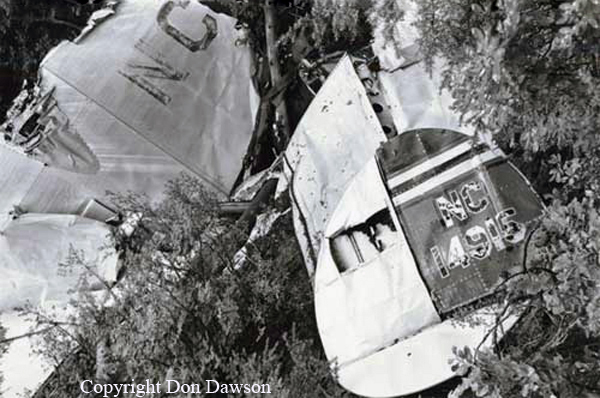
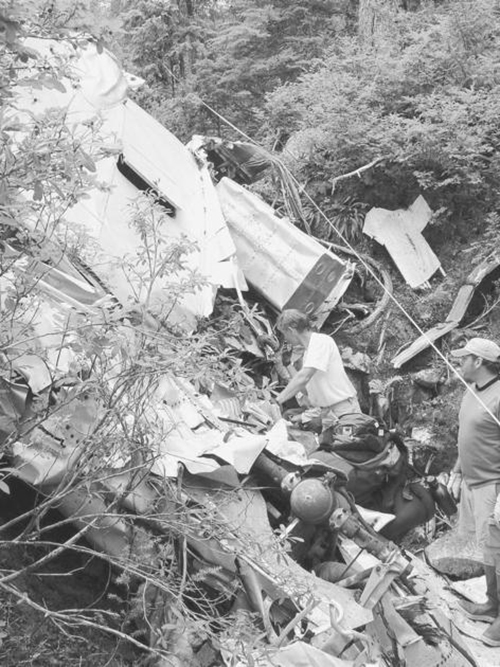
The twin engine airplane departed Seattle-Boeing Field Airport at 1327LT on an on-demand taxi flight to Annette Island, carrying five passengers and one pilot. While approaching Ketchikan at an altitude of 7,000 feet, the pilot informed ground that the left engine failed. Due to strong winds and marginal weather conditions, it was difficult to control the airplane and maintain a radio contact with ATC. After crossing clouds at an altitude of 2,500 feet, the pilot cut the right engine and attempted an emergency landing when the airplane collided with two tall trees and crashed in hilly terrain some 48 km east of Ketchikan. All six occupants were injured. Two days after the accident, a female passenger died from injuries sustained. The four survivors remained lost for a period of 29 days following the accident, during which time and extensive air, land, and water search was carried on over large areas east and south of Ketchikan and up into British Columbia. After continuing the hazardous search during winter weather for a period of approximately three weeks, the party was given up for lost and the search was abandoned. On February 3, 1943, two of the survivors searching for aid came upon a United States Coast Guard patrol boat in Weasel Cove on Boca de Quadra Inlet and the remaining two were rescued from their camp on February 7, by civilian guides and Coast Guard personnel. The pilot was apparently uninjured in the accident but in an effort to summon aid to his injures passengers he perished by exposure and freezing. His remains were found on February 6, 1943, on the shores of the Boca de Quadra Inlet, some 11 km from the scene of the accident.
Crew:
Harold Gillam, pilot. †
Passengers:
Robert Gebo,
Percy Cutting,
Joseph H. Tippets,
Dewey Metzdorf,
Susan Winch Batzer. †
Probable cause:
While the stoppage of the left engine from an undetermined cause in extremely rough weather and over hazardous terrain undoubtedly was the primary cause of the accident, it is apparent that strong contributing factors were the pilot's failure:
- To equip himself with an up-to-date aeronautical chart and,
- To utilize the radio aids available to him to accurately establish the position of the flight while on instruments.
Final Report:

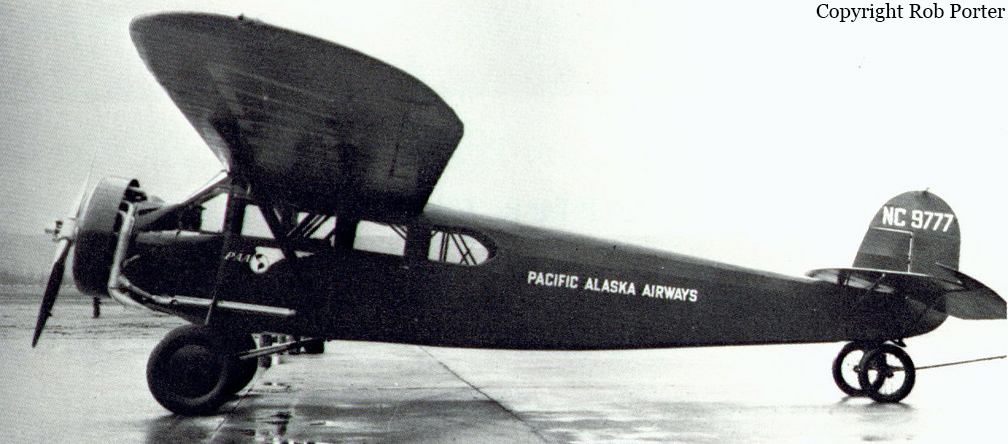
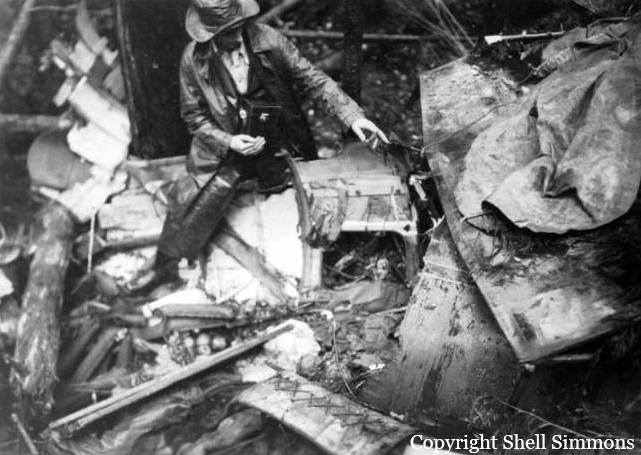
Crash of a Fairchild 71 in Grand Island: 6 killed

Date & Time: Feb 12, 1939
Type of aircraft:
Operator:
Registration:
NC9777
Flight Phase:
Survivors:
No
Schedule:
Ketchikan – Juneau
MSN:
618
YOM:
1929
Location:
Crew on board:
1
Crew fatalities:
Pax on board:
5
Pax fatalities:
Other fatalities:
Total fatalities:
6
Circumstances:
While approaching Juneau from the south, the pilot encountered poor weather conditions and low visibility due to snow falls. The single engine aircraft impacted tree tops and eventually crashed in a dense wooded area located some 32 km south of Juneau. SAR operations were initiated but no trace of the aircraft nor the six occupants was found. A month later, trappers found the wreckage in an isolated area.