Country

Crash of a Fiat G.212 in Kuwait City

Date & Time: Jul 29, 1954 at 0448 LT
Type of aircraft:
Registration:
G-ANOE
Flight Type:
Survivors:
Yes
Schedule:
Beirut - Kuwait City
MSN:
10
YOM:
1948
Country:
Region:
Crew on board:
3
Crew fatalities:
Pax on board:
0
Pax fatalities:
Other fatalities:
Total fatalities:
0
Circumstances:
During the final approach completed by night, the pilot did not realize his altitude was insufficient when the three engine airplane hit a sand dune located few dozen yards short of runway. On impact, the undercarriage were torn off and the aircraft crash landed on its belly and came to rest. While all three crew members were unhurt, the aircraft was damaged beyond repair.
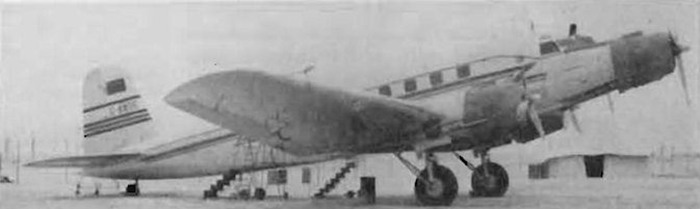

Crash of a Fiat G.212 in Rome

Date & Time: Dec 11, 1953 at 1235 LT
Type of aircraft:
Operator:
Registration:
MM61637
Flight Type:
Survivors:
Yes
Schedule:
Rome - Rome
MSN:
11
YOM:
1948
Country:
Region:
Crew on board:
2
Crew fatalities:
Pax on board:
0
Pax fatalities:
Other fatalities:
Total fatalities:
0
Circumstances:
The crew was performing a local training flight at Rome-Centocelle Airport. On final, he decided to make a go around because another small plane was approaching the same airport. Doing so, the three engine aircraft stalled and crashed in a sandy area short of runway and eventually collided with a dyke. Both pilots were injured and the aircraft was damaged beyond repair.

Crash of a Fiat G.212 in Rome

Date & Time: Feb 7, 1953
Type of aircraft:
Operator:
Registration:
MM61772
Flight Type:
Survivors:
Yes
MSN:
15
YOM:
1948
Location:
Country:
Region:
Crew on board:
0
Crew fatalities:
Pax on board:
0
Pax fatalities:
Other fatalities:
Total fatalities:
0
Circumstances:
While approaching Rome-Urbe Airport, the aircraft suffered engine problems. The crew attempted to make an emergency landing in a wasteland. There were no casualties but the aircraft was damaged beyond repair.
Probable cause:
Engine problems on approach.

Crash of a Fiat G.212 in Alexandria

Date & Time: Oct 17, 1949
Type of aircraft:
Registration:
SU-AFX
Flight Phase:
Survivors:
Yes
Schedule:
Alexandria – Benghazi – Tripoli
MSN:
07
YOM:
1947
Country:
Region:
Crew on board:
0
Crew fatalities:
Pax on board:
0
Pax fatalities:
Other fatalities:
Total fatalities:
0
Circumstances:
Crashed on takeoff in unknown circumstances. There were no injuries but the aircraft was written off.

Crash of a Fiat G.212CP in Torino: 31 killed

Date & Time: May 4, 1949 at 1704 LT
Type of aircraft:
Operator:
Registration:
I-ELCE
Survivors:
No
Site:
Schedule:
Lisbon – Barcelona – Turin
MSN:
05
YOM:
1947
Location:
Country:
Region:
Crew on board:
4
Crew fatalities:
Pax on board:
27
Pax fatalities:
Other fatalities:
Total fatalities:
31
Circumstances:
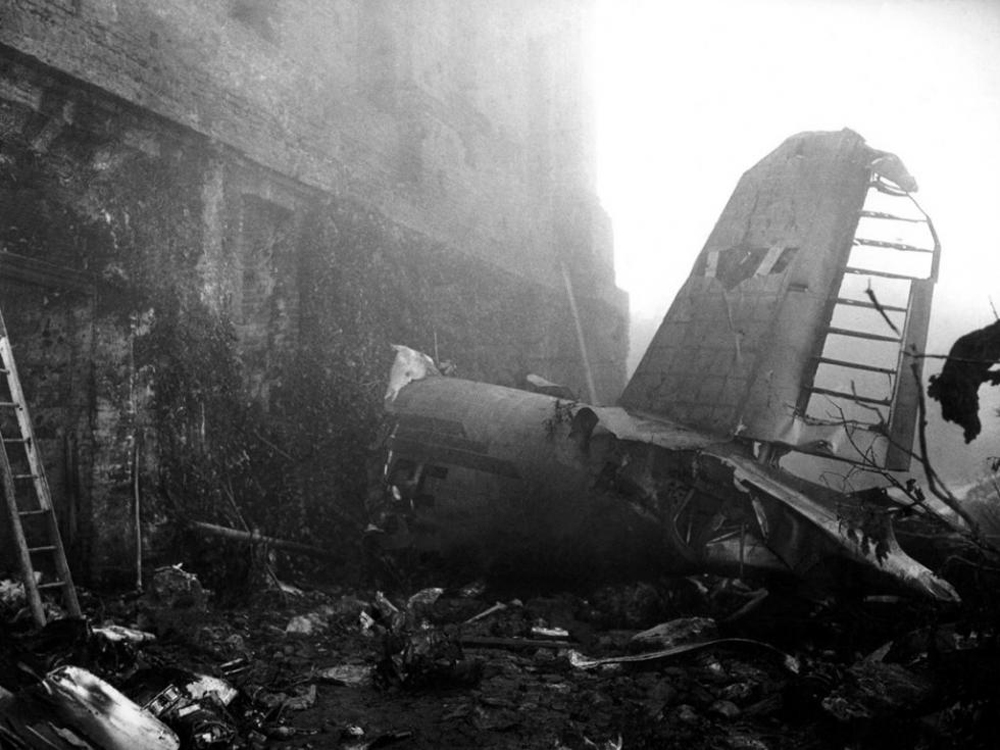
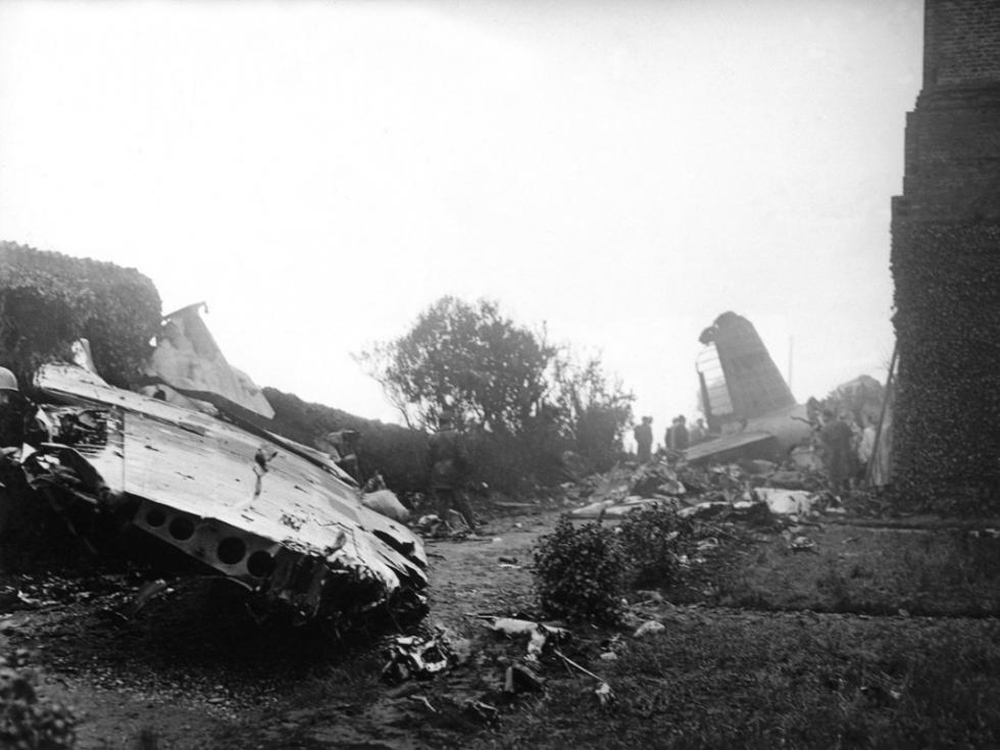
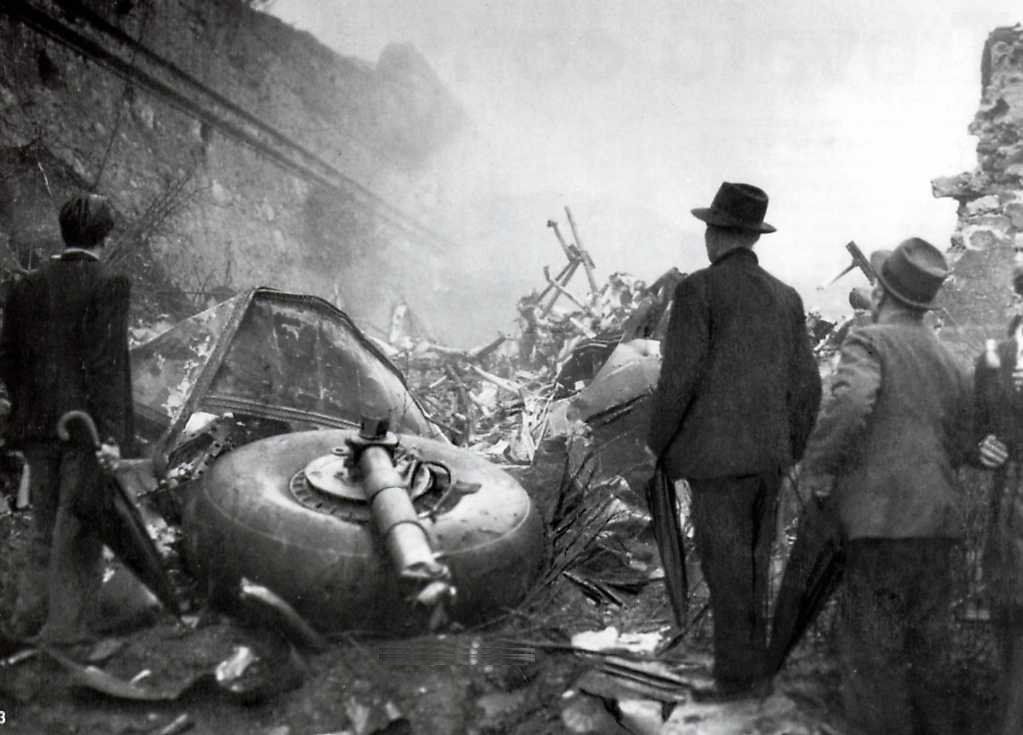
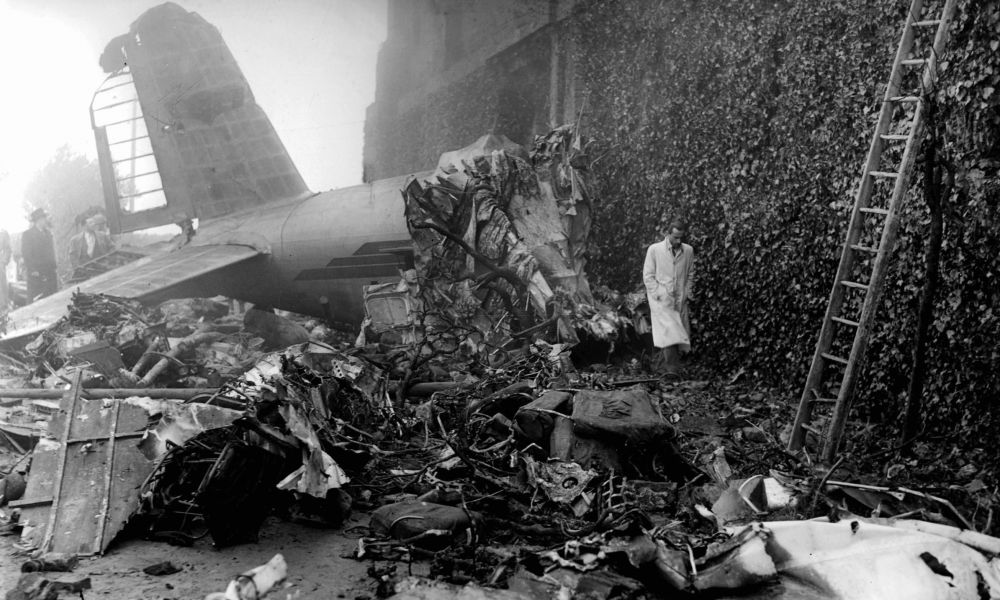
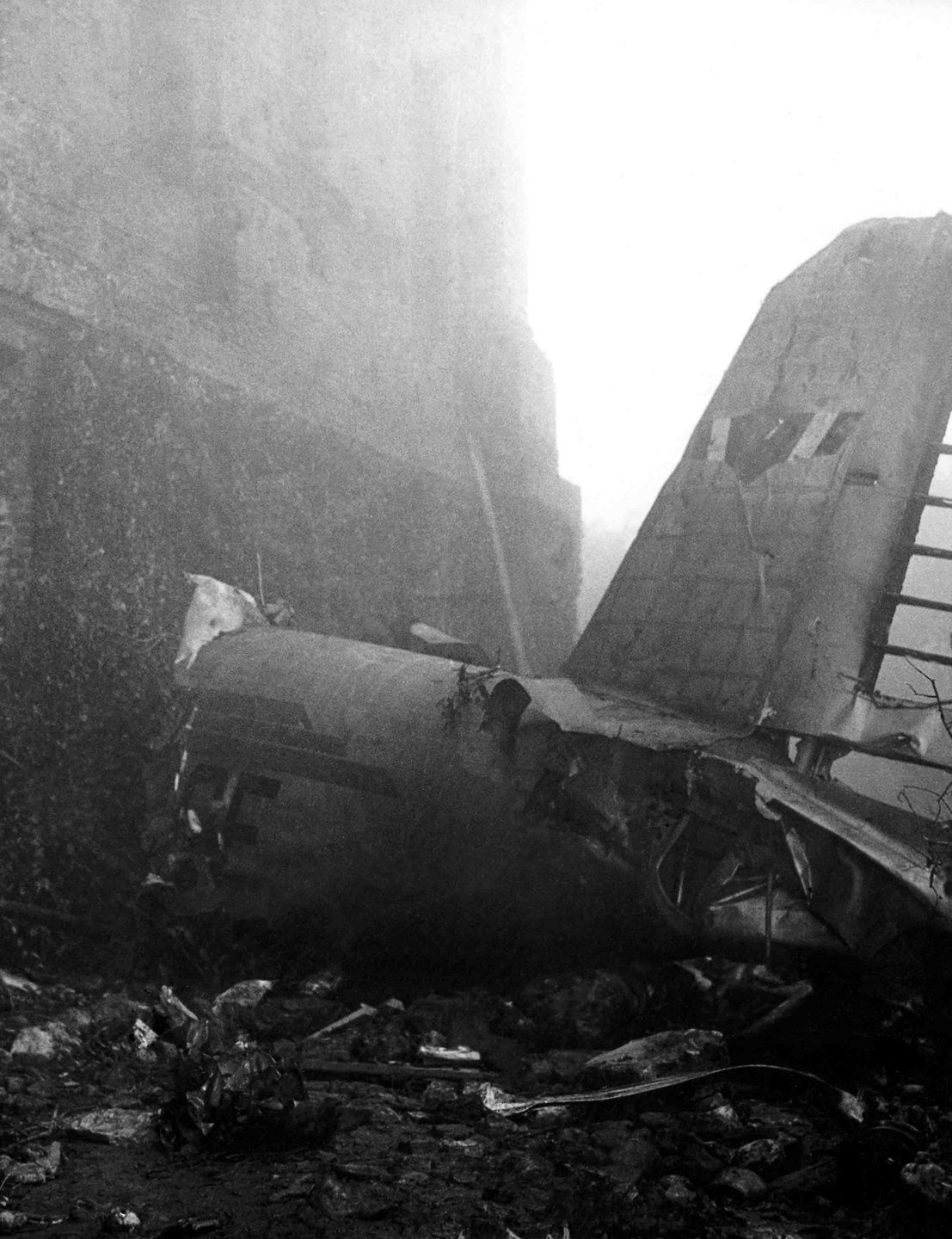
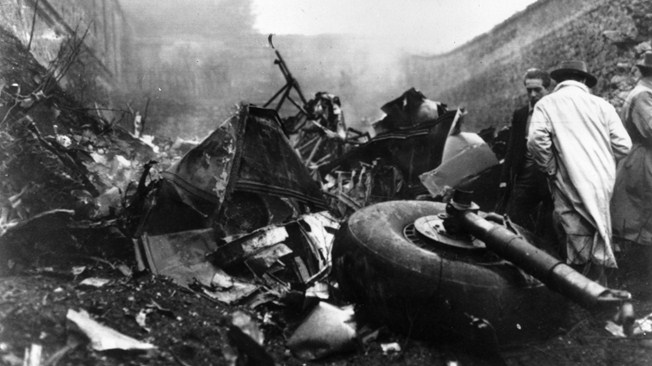
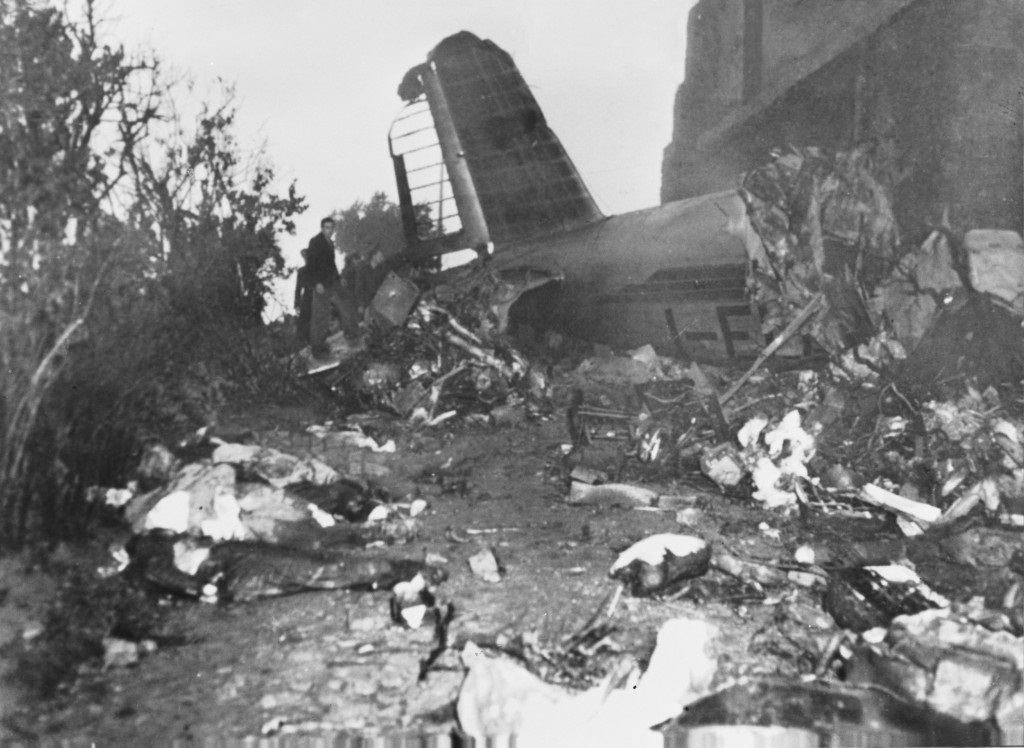
The three engine aircraft was completing a charter flight from Lisbon to Torino with an intermediate stop in Barcelona, carrying the Torino AC soccer team and its staff back to Torino after a friendly match in Portugal. The airplane left Lisbon at 0952LT and Barcelona Airport at 1315LT. After an uneventful flight, the crew started the descent to Torino-Aeritalia Airport in poor weather conditions with clouds down to 400 meters and an horizontal visibility estimated at 1,200 meters. Due to the poor visibility, the pilot did not realize he was flying to low when the aircraft hit the Mt Superga (675 meters high) and crashed on the east wall of the basilica, about 12 km from the runway 28 threshold. The aircraft was destroyed by impact forces and all 31 occupants were killed.
Crew:
Pierluigi Meroni, pilot,
Antonio Pangrazi,
Celestino D'Inca,
Cesare Biancardi.
Passengers:
Valerio Bacigalupo, player,
Aldo Ballarin, player,
Dino Ballarin, player,
Émile Bongiorni, player,
Eusebio Castigliano, player,
Rubens Fadini, player,
Guglielmo Gabetto, player,
Roger Grava, player,
Giuseppe Grezar, player,
Ezio Loik, player,
Virgilio Maroso, player,
Danilo Martelli, player,
Valentino Mazzola, player,
Romeo Menti, player,
Piero Operto, player,
Franco Ossola, player,
Mario Rigamonti, player,
Giulio Schubert, player,
Arnaldo Agnisetta, director,
Ippolito Civalleri, director,
Egri Erbstein, coach,
Leslie Lievesley, coach,
Ottavio Corina, masseur,
Renato Casalbore, journalist at Tuttosport,
Luigi Cavallero, journalist at La Stampa,
Renato Tosatti, journalist at Gazzetta del Popolo,
Andrea Bonaiuti, organizer.
Probable cause:
Navigational error on part of the crew who did not realize he lost more than 1,000 meters during the last minutes. This navigational error was attributable to the poor weather conditions that influenced the direction finder system. Poor visibility and lack of suitable assistance on part of the ATC were considered as a contributory factor.

Crash of a Fiat G.212 in Tor Sapienza: 1 killed

Date & Time: Apr 9, 1949 at 1315 LT
Type of aircraft:
Operator:
Flight Phase:
Flight Type:
Survivors:
Yes
Schedule:
Guidonia - Guidonia
Location:
Country:
Region:
Crew on board:
5
Crew fatalities:
Pax on board:
0
Pax fatalities:
Other fatalities:
Total fatalities:
1
Circumstances:
The crew was engaged in a test flight. Shortly after takeoff from Guidonia AFB, the pilot encountered control problems and decided to attempt an emergency landing. The aircraft belly landed in a field located in Tor Sapienza, about 15 km southwest of Guidonia. On ground, the aircraft slid for several yards and hit a boy aged 11. While all five crew members were uninjured, the boy was killed and the aircraft was damaged beyond repair.
Crash of a Fiat G.212CP in Keerbergen: 8 killed

Date & Time: Jul 1, 1948 at 1220 LT
Type of aircraft:
Operator:
Registration:
I-ELSA
Survivors:
Yes
Schedule:
Milan – Brussels
MSN:
04
YOM:
1948
Country:
Region:
Crew on board:
5
Crew fatalities:
Pax on board:
26
Pax fatalities:
Other fatalities:
Total fatalities:
8
Captain / Total flying hours:
6000
Copilot / Total flying hours:
1500
Aircraft flight hours:
19
Circumstances:
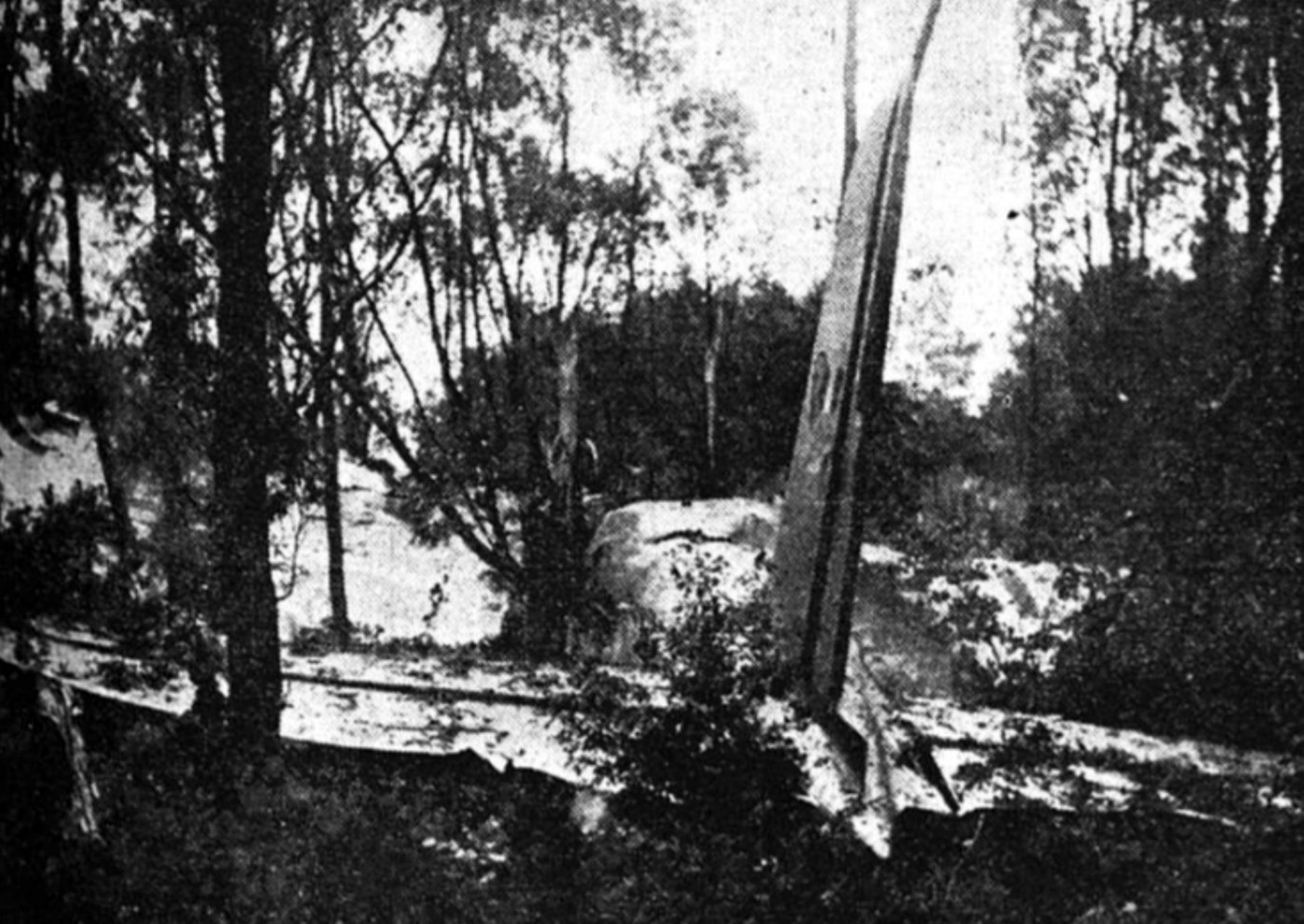
When descending to Brussels, the crew encountered poor weather conditions with heavy rain falls, low visibility and a ceiling at 100 metres. For unknown reasons, the crew failed to report his position to ATC when entering the Brussels Control Area. Apparently lost, the captain decided to land at Keerbergen Airfield which is located 17 km northeast of Brussels-Melsbroek Airport. Flying in a south-north heading, the plane passed over Keerbergen Airfield then the pilot made a right turn to land on the 650-meter-long runway. However, the plane touched down too far down the runway and bounced back up. After a left turn, the leading edge of the left wing hit an obstacle, but the aircraft appears to remain controllable. The pilot then initiated a sharp turn to the left to reach the 725-meter-long runway when the aircraft crashes into a wooded area located 200 meters from the runway. Four passengers and four crew members were killed.
Probable cause:
Adverse weather conditions and malfunctions in the radio communication and navigation equipment led the captain to decide to make an emergency landing at a makeshift airfield. To align with the runway at its beginning and keep it in sight, the pilot executed a tight left-wing turn at low altitude, banking the aircraft in such a way that the resulting roll angle caused the aircraft to reach stall speed. For reasons that could not be determined, the pilot attempted to land at Keerbergen Airfield, whose infrastructure is not designed to accommodate aircraft of that size.
Final Report: