Crash of a De Havilland DHC-3 Otter in Abitibi Canyon: 10 killed

Date & Time: Sep 4, 1976 at 1337 LT
Type of aircraft:
Operator:
Registration:
CF-MIT
Flight Phase:
Survivors:
No
Schedule:
Moosonee - Timmins
MSN:
372
YOM:
1960
Country:
Crew on board:
1
Crew fatalities:
Pax on board:
9
Pax fatalities:
Other fatalities:
Total fatalities:
10
Aircraft flight hours:
11573
Circumstances:
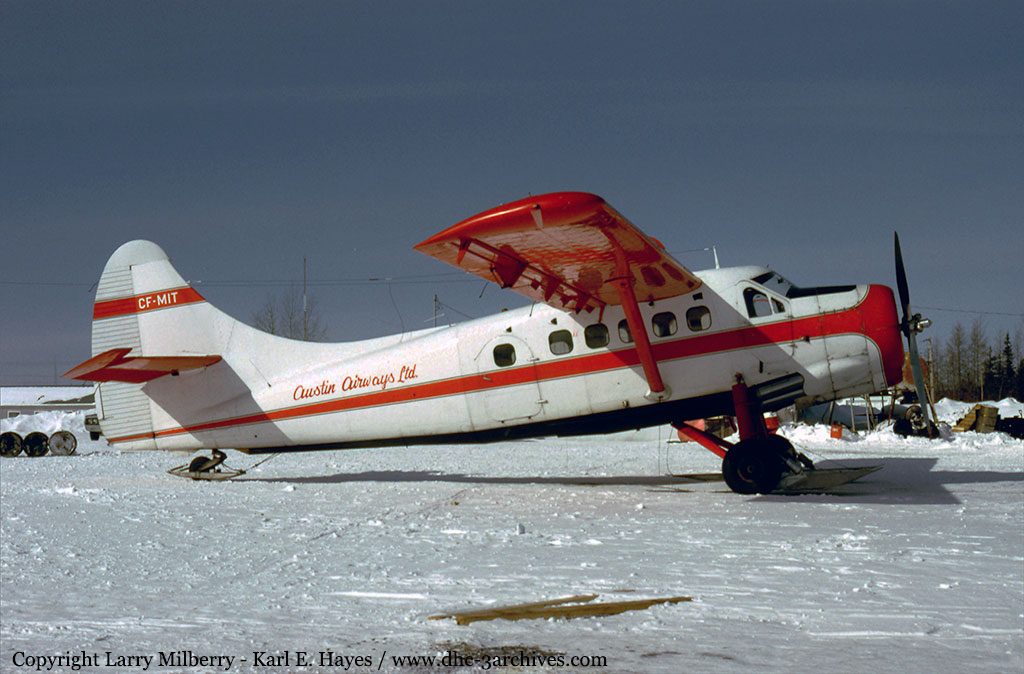
On Saturday 4th September '76 at approximately 12:00 hours, the pilot while preparing Otter MIT for flight, called the local company radio operator to request weather information for his VFR flight to Timmins. The operator transmitted the 11:23 terminal forecast for Timmins, the 10:00 observation for Moosonee and the 11:18 special observation for Timmins. The terminal reports for Moosonee and Timmins were much better than forecast and acceptable for VFR flight. At about 12:10 the radio operator at Moosonee received a special weather observation for Timmins which indicated deteriorating weather but did not pass this vital information to the pilot at that time. The Otter departed at 12:30 and shortly after take off the pilot advised the company operator at Moosonee that his estimated time of arrival at the South Porcupine seaplane base was 14:30. A few minutes later the radio operator attempted several times to contact the aircraft, to pass the new weather information,but without success. No other radio transmission was heard from the Otter. Because the flight was operating under VFR rules and because some of his passengers had limited time to make airline connections at Timmins, the pilot elected for the direct route, a distance of 165 nautical miles between the Moosonee and Timmins NDBs. To follow this route, the pilot would have used his ADF radio equipment and / or map reading techniques. Considering the cloud ceilings were at about one thousand feet and some terrain in the area rises to 950 feet, the deteriorating conditions would have induced the pilot to divert from the planned track. Since the accident site was 28 miles west of the direct track, it is probable that he diverted westward toward lower terrain to go around poor weather. Arriving at the Abitibi River, he followed the river southward to the accident site near the Abitibi Canyon Dam. The valley narrows and the terrain rises at this site of the power dam. It is believed that the pilot found the visibility decreasing rapidly in dense upslope fog in this vicinity. At 13:37 hours the aircraft struck the high tension electrical cables near the generating station and crashed to the ground. After impact a fire developed and consumed the aircraft, which had 11,573 hours on the airframe at the time. From the geometry of the wirestrike, it is probably that the pilot saw the wires and commenced a climbing turn to try and get over them, but had insufficient time to avoid the collision. The airplane has been chartered for the Royal Commission on Electric Power Planning for Ontario.
Source: http://www.dhc-3archive.com & Karl E. Hayes.
Probable cause:
The pilot continued VFR flight into adverse weather conditions.
Crash of a De Havilland DHC-3 Otter near Ile-à-la-Crosse

Date & Time: Aug 18, 1976
Type of aircraft:
Operator:
Registration:
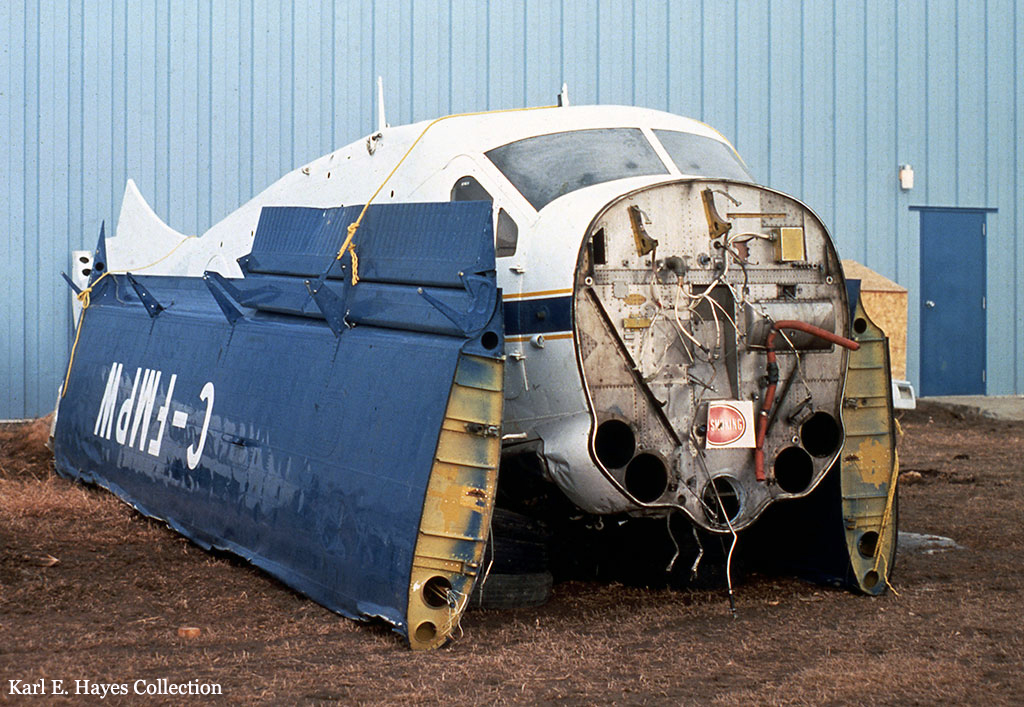
C-FMPW
Flight Phase:
Survivors:
Yes
Schedule:
Prince Albert – Buffalo Narrows
MSN:
271
YOM:
1958
Country:
Crew on board:
1
Crew fatalities:
Pax on board:
1
Pax fatalities:
Other fatalities:
Total fatalities:
0
Aircraft flight hours:
13435
Circumstances:
The Otter had taken off that day from Prince Albert on a flight to Buffalo Narrows. Six miles north of Ile-à-la-Crosse, following an engine failure, the pilot made a forced landed in the bush and the aircraft was damaged beyond economic repair. The flight had proceeded for one hour forty minutes without incident when there was a loud bang from the engine, followed by a complete power loss. Smoke was emitted into the cockpit and the pilot commenced a forced landing. Attempts to regain power were to no avail and the pilot transmitted a mayday, which was acknowledged by another aircraft. The Otter touched down in a semi-clear area in bush country in a nose high, full flap configuration. The pilot and passenger evacuated the Otter fearing a post crash fire, however none followed. They were located by a rescue party a short time after the crash.
Source: http://www.dhc-3archive.com & Karl E. Hayes.
Probable cause:
The power loss was the result of a failure of the master rod and link rods.

Crash of a De Havilland DHC-3 Otter in Nym Lake

Date & Time: Jul 23, 1976
Type of aircraft:
Operator:
Registration:
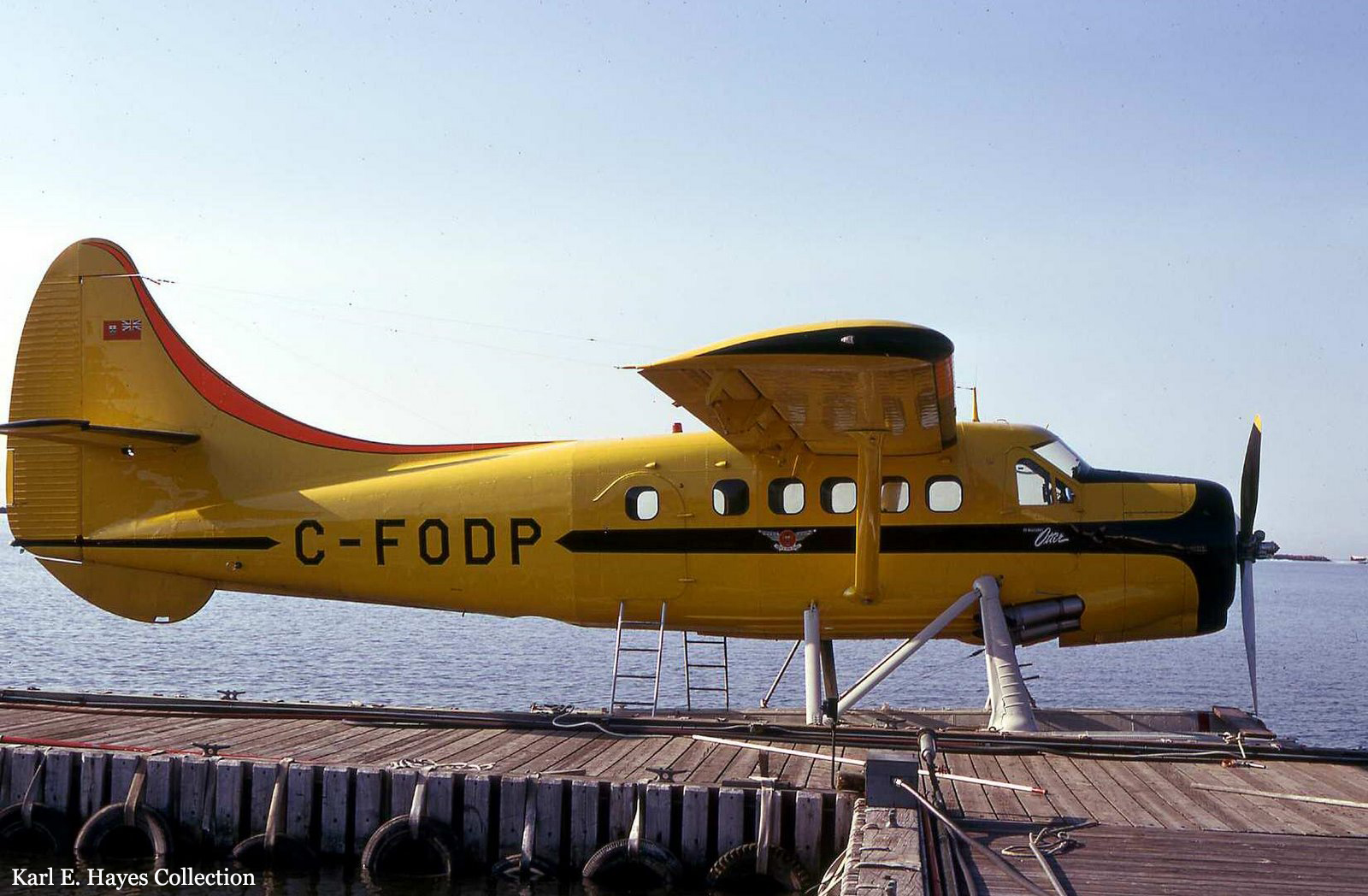
C-FODP
Flight Phase:
Flight Type:
Survivors:
Yes
MSN:
103
YOM:
1956
Country:
Crew on board:
1
Crew fatalities:
Pax on board:
4
Pax fatalities:
Other fatalities:
Total fatalities:
0
Aircraft flight hours:
5586
Circumstances:
Shortly after becoming airborne, the left wing dropped and struck the water. It was a warm, summer's day with a temperature of 23° C and a wind of 15 knots. The aircraft turned approximately 150° after the wing struck the water and crashed on the shore of an island. Fire started on impact and consumed most of the aircraft, although there were no injuries to the pilot and four passengers.
Source: Karl E. Hayes
Probable cause:
The subsequent report blamed the accident on “improper compensation for wind”.

Crash of a De Havilland DHC-3 Otter in Lynn Lake

Date & Time: May 14, 1976 at 1225 LT
Type of aircraft:
Operator:
Registration:
CF-PNV
Flight Phase:
Survivors:
Yes
MSN:
126
YOM:
1956
Country:
Crew on board:
1
Crew fatalities:
Pax on board:
8
Pax fatalities:
Other fatalities:
Total fatalities:
0
Circumstances:
Just after liftoff at Lynn Lake Airport, the single engine airplane stalled and crashed onto the runway. All nine occupants escaped with minor injuries and the aircraft was damaged beyond repair.
Probable cause:
Stall at takeoff due to improper loading.

Crash of a De Havilland DHC-3 Otter off Upolu

Date & Time: Apr 27, 1976 at 1458 LT
Type of aircraft:
Registration:
N35310
Flight Phase:
Flight Type:
Survivors:
Yes
Schedule:
Kamuela - Honolulu
MSN:
293
YOM:
1959
Location:
Crew on board:
1
Crew fatalities:
Pax on board:
1
Pax fatalities:
Other fatalities:
Total fatalities:
0
Captain / Total flying hours:
4321
Captain / Total hours on type:
401.00
Circumstances:
En route from Kamuela to Honolulu, the engine failed. The pilot reduced his altitude and ditch the aircraft off Upolu, on the north coast of Hawaii Island. While both occupants were rescued, the aircraft sank and was not recovered.
Probable cause:
Powerplant failure for undetermined reasons.
Final Report:

Crash of a De Havilland DHC-3 Otter in Auburn Academy

Date & Time: Sep 4, 1975 at 2040 LT
Type of aircraft:
Operator:
Registration:
N567AA
Flight Phase:
Flight Type:
Survivors:
Yes
Schedule:
Auburn - Auburn
MSN:
327
YOM:
1959
Crew on board:
1
Crew fatalities:
Pax on board:
5
Pax fatalities:
Other fatalities:
Total fatalities:
0
Captain / Total flying hours:
3468
Captain / Total hours on type:
31.00
Circumstances:
The single engine airplane was engaged in a local sortie from the Auburn Academy Airport. During the takeoff roll on a grassy runway, the pilot lost control of the airplane that veered off runway, collided with a dirt bank and came to rest in flames. All six occupants escaped uninjured while the aircraft was partially destroyed by a post crash fire.
Probable cause:
Loss of control on takeoff after the pilot failed to maintain directional control and failed to abort takeoff. The following contributing factors were reported:
- Collision with dirt bank,
- Airport facilities: runway lighting,
- Reflectors along runway edge,
- Grass 6-12 inches on the border of the runway.
Final Report:

Crash of a De Havilland DHC-3 Otter in the Hawk Inlet

Date & Time: Jul 31, 1975 at 0930 LT
Type of aircraft:
Registration:
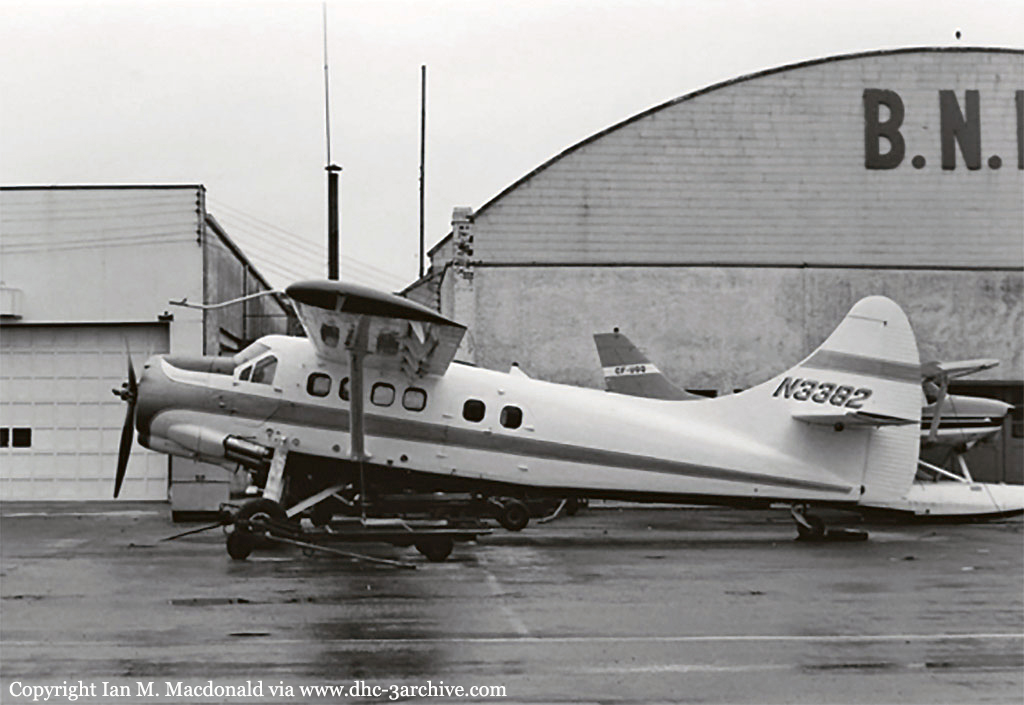
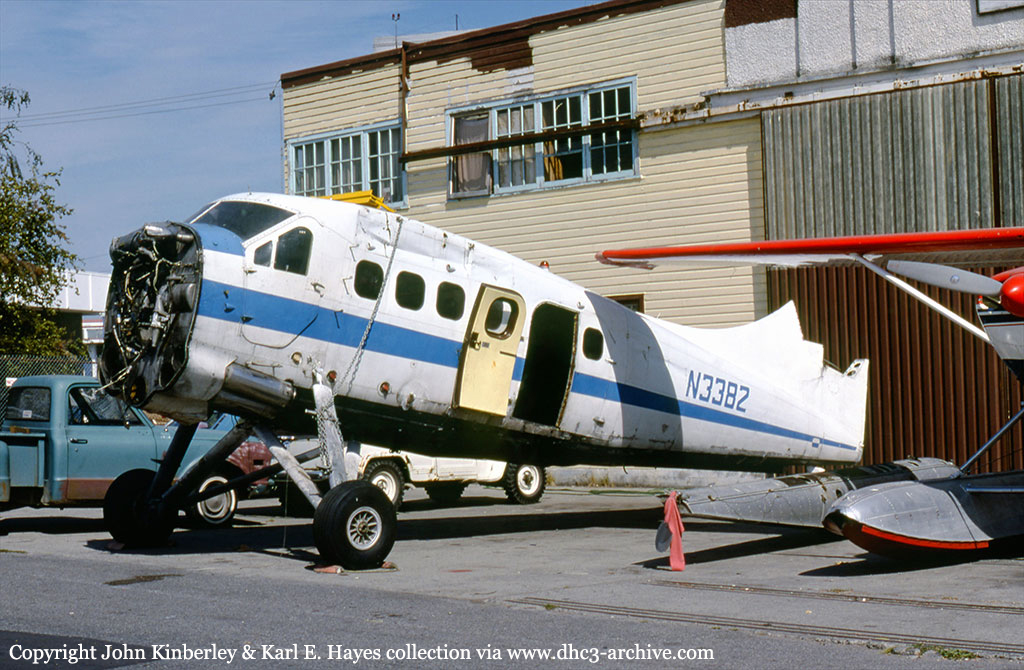
N3382
Flight Type:
Survivors:
Yes
Schedule:
Juneau - Hawk Inlet
MSN:
288
YOM:
1958
Crew on board:
1
Crew fatalities:
Pax on board:
0
Pax fatalities:
Other fatalities:
Total fatalities:
0
Captain / Total flying hours:
7000
Captain / Total hours on type:
101.00
Circumstances:
The pilot, sole on board, was completing a cargo flight from Juneau to Hawk Inlet. While landing in the Hawk Inlet, the single engine airplane overturned, came to rest upside down and sank. The pilot escaped uninjured while the aircraft was damaged beyond repair.
Probable cause:
Nosed over upon landing after the pilot failed to retract the landing gear. The following contributing factors were reported:
- Failed to use the checklist.
Final Report:

Crash of a De Havilland CSR-123 in the Duke of York Bay

Date & Time: Jul 17, 1975
Type of aircraft:
Operator:
Registration:
9413
Flight Phase:
Flight Type:
Survivors:
Yes
MSN:
389
YOM:
1960
Country:
Crew on board:
2
Crew fatalities:
Pax on board:
5
Pax fatalities:
Other fatalities:
Total fatalities:
0
Circumstances:
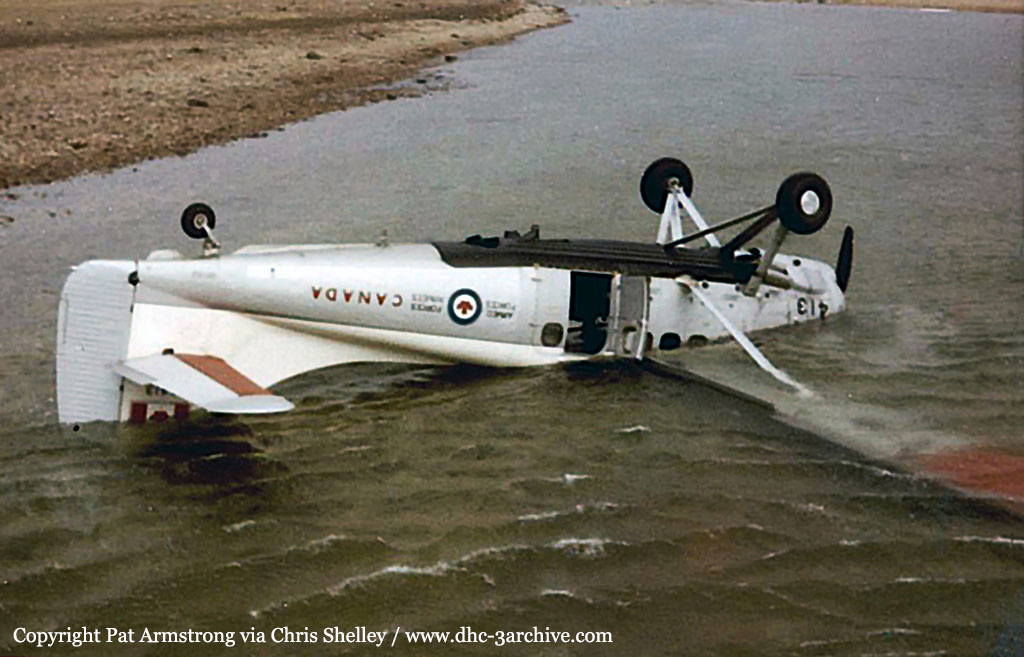
During take-off from a gravel bar along the edge of the Duke of York River, the Otter became airborne but did not gain altitude. Shortly thereafter, it contacted a steep gravel river bank, made a shallow turn to the right, settled into the river and slowly nosed over, coming to rest inverted in three or four feet of water. Water began to pour in on the two crew and five passengers, who were hanging upside down still strapped into their seats. They managed to free themselves and wade ashore.
Source: https://www.dhc-3archive.com/DHC-3_389.html
Probable cause:
The accident report found that the pilot elected to take off from an “uncleared, austere airstrip” of unknown exact useable length, in unfavourable wind conditions, at or near maximum allowable gross weight. The aircraft captain had failed to brief his co-pilot and assign him the task of monitoring the cockpit instruments during the critical phase of the take-off. The air detachment commander was required to fly as a line pilot on a regular basis. This, together with being subordinate in rank to the Otter detachment commander, made effective control of flying operations virtually impossible.

Crash of a De Havilland DHC-3 Otter in Anchorage: 1 killed

Date & Time: May 21, 1975 at 0905 LT
Type of aircraft:
Operator:
Registration:
N90574
Flight Phase:
Flight Type:
Survivors:
No
Schedule:
Anchorage - Aniak
MSN:
174
YOM:
1956
Crew on board:
1
Crew fatalities:
Pax on board:
0
Pax fatalities:
Other fatalities:
Total fatalities:
1
Captain / Total flying hours:
2768
Captain / Total hours on type:
20.00
Circumstances:
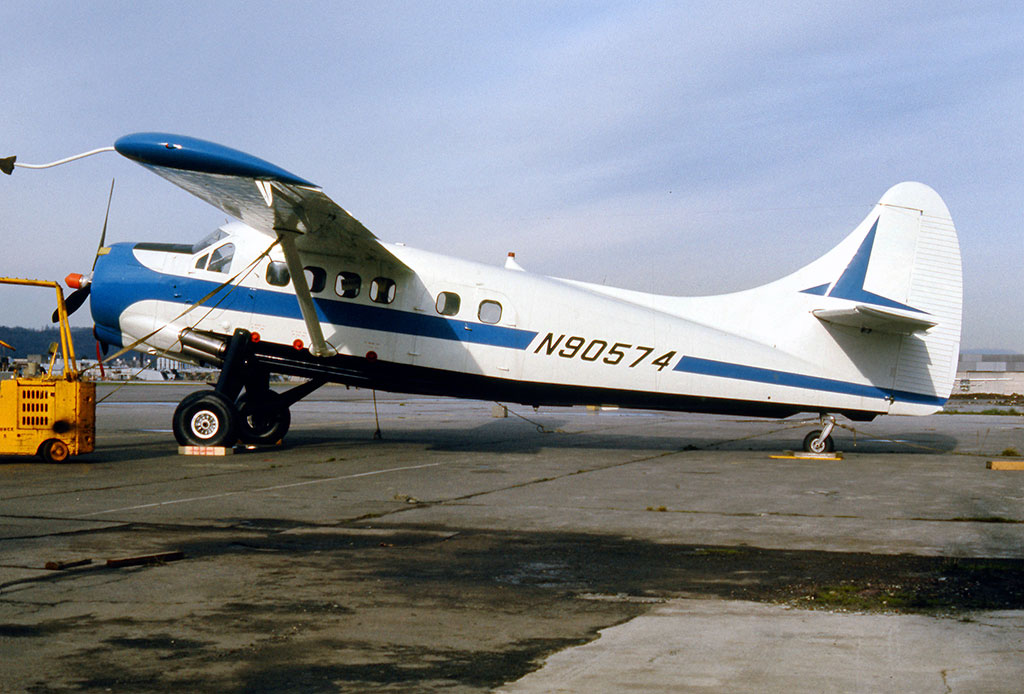
After takeoff from the gravel airstrip at Anchorage-Lake Hood, the single engine airplane encountered difficulties to gain height. It struck a lumber stack, a fence and crashed in flames onto a parking lot where five cars were damaged. The pilot, sole on board, was killed. He was en route to Aniak on a cargo flight.
Probable cause:
Inadequate preflight preparation on part of the pilot. The following contributing factors were reported:
- Failed to maintain flying speed,
- Lack of familiarity with aircraft,
- Improperly loaded aircraft,
- Incorrect trim setting,
- Aircraft at least 484 lbs over max gross weight.
Final Report:

Crash of a De Havilland CSR-123 Otter near Baudette

Date & Time: May 19, 1974
Type of aircraft:
Operator:
Registration:
9411
Flight Phase:
Flight Type:
MSN:
384
YOM:
1960
Crew on board:
0
Crew fatalities:
Pax on board:
0
Pax fatalities:
Other fatalities:
Total fatalities:
0
Circumstances:
Crashed in unknown circumstances southeast of Baudette. Occupant's fate unknown.