
Country

Crash of a De Havilland DH.95 Flamingo in Asmara: 2 killed

Date & Time: Feb 15, 1943
Operator:

Registration:
G-AFYE
Flight Type:
Survivors:
No
Schedule:
Asmara - Asmara
MSN:
95007
YOM:
1940
Location:
Country:
Region:
Crew on board:
2
Crew fatalities:
Pax on board:
0
Pax fatalities:
Other fatalities:
Total fatalities:
2
Circumstances:
The crew was performing a post maintenance test flight at Asmara Airport. Approaching the airfield at an altitude of 800 feet, while in a single engine configuration, the twin engine airplane entered an uncontrolled descent and crashed in a huge explosion. Both crew members were killed and the airplane named 'King Arthur' was destroyed.

Crash of a De Havilland DH.95 Flamingo in Addis Ababa

Date & Time: Nov 18, 1942
Operator:
Registration:
G-AFYG
Flight Phase:
Survivors:
Yes
Schedule:
Addis Ababa - Cairo
MSN:
95010
YOM:
1940
Country:
Region:
Crew on board:
0
Crew fatalities:
Pax on board:
0
Pax fatalities:
Other fatalities:
Total fatalities:
0
Circumstances:
During the takeoff roll at Addis Ababa-Lideta Airport, the airplane veered off runway and came to rest with serious damage to the undercarriage. There were no injuries among the occupants but the airplane named 'King Harold' was not repaired.
Probable cause:
Brake seizure during takeoff.

Crash of a De Havilland DH.95 Flamingo in Adana

Date & Time: Sep 13, 1942
Operator:
Registration:
G-AFYI
Survivors:
Yes
MSN:
95012
YOM:
1940
Country:
Region:
Crew on board:
0
Crew fatalities:
Pax on board:
0
Pax fatalities:
Other fatalities:
Total fatalities:
0
Circumstances:
Crashed while on final approach to Adana Airport. There were no casualties. The airplane named 'King Henry' was damaged beyond repair.
Probable cause:
An investigation blamed on insufficient training of the pilots, which suggests they may have been unfamiliar with having to 'reprime' the Exactor controls. Previously, BOAC reported that the accident was due to a failure of the Exactor throttle controls.

Crash of a De Havilland DH.95 Hertfordshire near Great Ouseburn: 11 killed

Date & Time: Apr 30, 1942
Operator:
Registration:
R2764
Flight Phase:
Flight Type:
Survivors:
No
Schedule:
East Fortune - Hendon
MSN:
95003
YOM:
1940
Region:
Crew on board:
4
Crew fatalities:
Pax on board:
6
Pax fatalities:
Other fatalities:
Total fatalities:
10
Captain / Total flying hours:
3755
Circumstances:
The object of the flight was to take four Russian Military Officers on a tour of inspection. The aircraft had earlier in the day flown from Hendon to Kirton-of-Tealing and thence to East Fortune. It was refueled at Tealing and was not serviced in any way at East Fortune. At 1625LT the captain took off from RAF East Fortune to fly back to Hendon. When approximately 3 ½ miles north of Great Ouseburn, York’s and flying at a height of about 2,000 feet, a defect developed in the starboard engine which caused n°7 cylinder to become detached from the crankcase. A fire broke out almost immediately in the neighborhood of the starboard engine nacelle and was of sufficient intensity to cause the starboard wing to break off at a point just outboard of the engine bearers and also to cause the starboard engine to break away. The fuselage, port wing, port engine and port undercarriage unit fell to the ground and burst into flames. All 10 occupants were killed.
Crew:
P/O I. Ramsey, pilot,
Sgt J. B. Smith, observer,
F/Sgt A. J. Stripp, radio operator,
Lac J. Lewis, fitter.
Passengers:
S/L K. W. Edwards,
F/Lt F. W. Wilton,
Col Pugatchev,
Maj Asyamov,
Maj P. Baranov,
Maj B. Shvetsov.
Probable cause:
The cause of the accident was failure of the starboard engine. The reason for this cannot be stated with certainty but the evidence suggests that n°6 piston failed first and that this was followed by a rapid internal break up resulting in the knocking off of n°7 cylinder. This was followed by fire in the engine nacelle which quickly became very intense – probably as a result of the explosion of a wing fuel tank. The starboard wing then broke off and the engine fell out. The fuselage and tailplane were struck by some part of the detached wing or by the engine.
- There was no evidence that the servicing of this aircraft had been inadequate.
- There was no evidence to suggest sabotage.
- The pilot was experienced and fully qualified to carry out this flight.
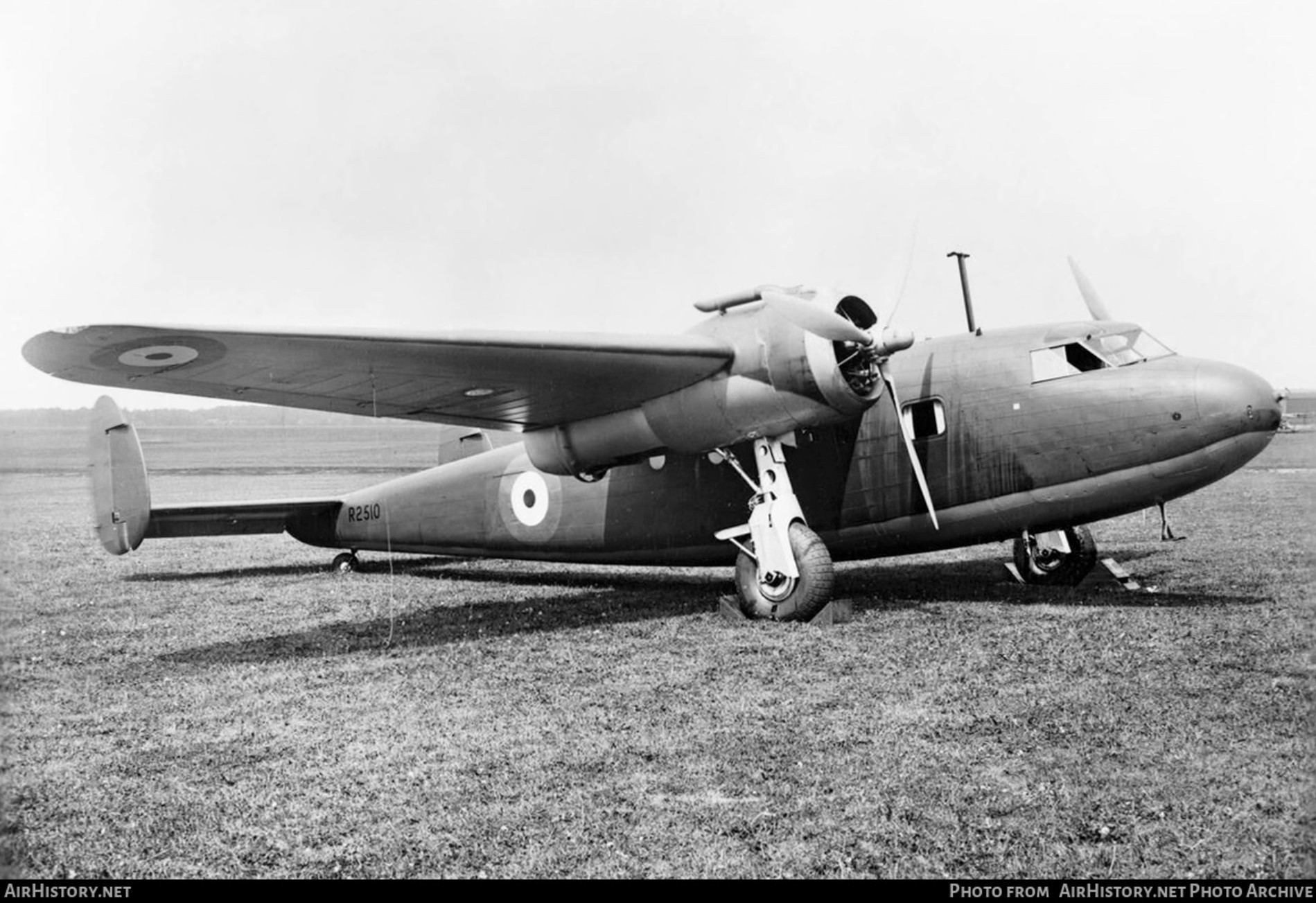
- Apart from this accident and one in October 1940 (Hertfordshire R.2510), the D.H.95 seems to have a good record.
Final Report:

Crash of a De Havilland DH.95 Hertfordshire in Mill Hill: 11 killed

Date & Time: Oct 23, 1940
Operator:
Registration:
R2510
Flight Phase:
Flight Type:
Survivors:
No
Schedule:
Hendon - Belfast
MSN:
95006
YOM:
1940
Region:
Crew on board:
3
Crew fatalities:
Pax on board:
8
Pax fatalities:
Other fatalities:
Total fatalities:
11
Circumstances:
Shortly after takeoff from Hendon Airfield, while climbing, the airplane suffered technical problems and crashed in Mill Hill. All 11 occupants were killed, among them Air Vice Marshal Charles Blount who was flying to Northern Ireland to observe exercises that would test new methods of coordinating action with the Army.
Probable cause:
The crash was blamed on part of the elevator shroud deforming and impairing the movement of the elevator.

Crash of a De Havilland DH.95 Hertfordshire in Great Britain

Date & Time: Oct 4, 1940
Operator:
Registration:
T5357
Flight Phase:
Flight Type:
Survivors:
Yes
MSN:
95001
YOM:
1938
Region:
Crew on board:
0
Crew fatalities:
Pax on board:
0
Pax fatalities:
Other fatalities:
Total fatalities:
0
Circumstances:
The airplane crashed in unknown circumstances, probably somewhere in England. There were no casualties.
