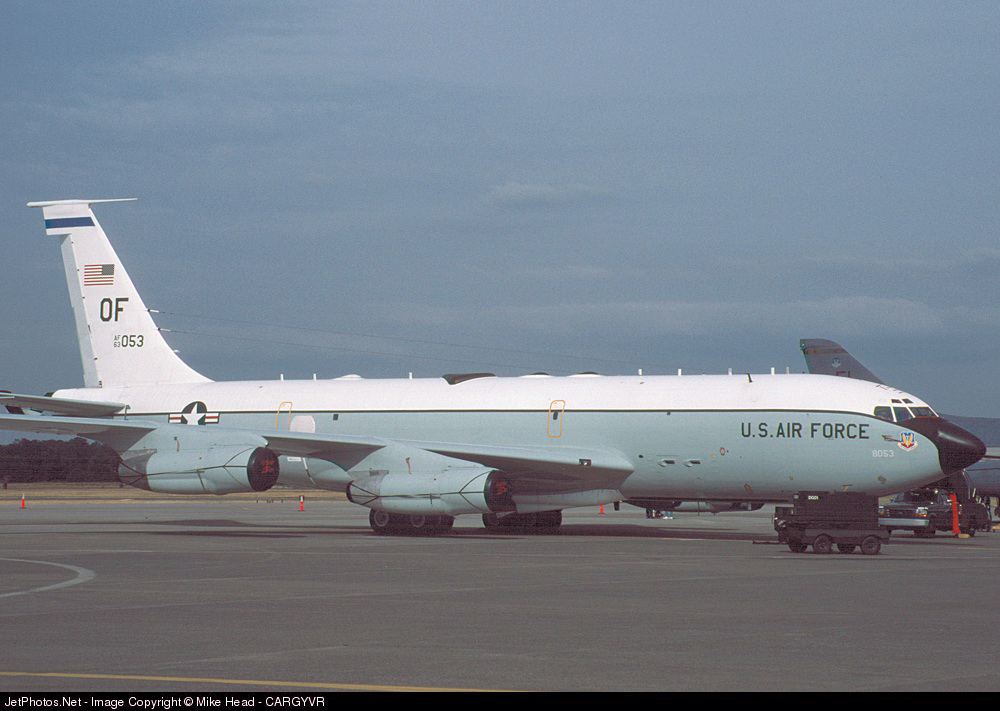
Crash of a Boeing EC-135C at Pope AFB

Date & Time: Sep 2, 1997
Type of aircraft:
Operator:
Registration:
63-8053
Flight Type:
Survivors:
Yes
Schedule:
Pope - Pope
MSN:
18701
YOM:
1964
Crew on board:
11
Crew fatalities:
Pax on board:
0
Pax fatalities:
Other fatalities:
Total fatalities:
0
Circumstances:
The crew was completing a local training flight at Pope AFB. For unknown reasons, the aircraft landed very hard, causing the nose gear to collapse. The aircraft was stopped on the runway and all 11 occupants escaped uninjured. The aircraft was damaged beyond repair.

Crash of a Swearingen SA226TC Metro II in Des Moines

Date & Time: Aug 19, 1997 at 2221 LT
Type of aircraft:
Operator:
Registration:
N224AM
Flight Type:
Survivors:
Yes
Schedule:
Wichita - Des Moines
MSN:
TC-227
YOM:
1977
Location:
Crew on board:
1
Crew fatalities:
Pax on board:
0
Pax fatalities:
Other fatalities:
Total fatalities:
0
Captain / Total flying hours:
2436
Captain / Total hours on type:
93.00
Aircraft flight hours:
51119
Circumstances:
During a landing approach, the pilot noted that the right engine remained at a high power setting, when he moved the power levers to reduce power. He executed a missed approach and had difficulty keeping the airplane straight and level. The pilot maneuvered for a second approach to land. After landing, he could not maintain directional control of the airplane and tried to go around, but the airplane went off the end of the runway and impacted the localizer antenna. The pilot did not advise ATC of the problem nor did he declare an emergency. The Pilot's Operating Handbook stated that for a power plant control malfunction, the affected engine should be shut down, and a single engine landing should be made. The power control cable was found disconnected from the anchoring point. A safety tab was broken off the housing, allowing it to unscrew. About one month before the accident, maintenance had been performed on the right engine to correct a discrepancy about the right engine power lever being stiff. The mechanic re-rigged the right engine power cable.
Probable cause:
The pilot's improper in-flight planning/decision and failure to perform the emergency procedure for shut-down of the right engine. Factors relating to the accident were: the power lever cable became disconnected from the fuel control unit, due to improper maintenance; and reduced directional control of the airplane, when one engine remained at a high power setting.
Final Report:

Crash of a Cessna 425 Conquest I in Perkasie

Date & Time: Aug 17, 1997 at 1820 LT
Type of aircraft:
Operator:
Registration:
N1224S
Flight Phase:
Survivors:
Yes
Schedule:
Niagara Falls – Rancocas
MSN:
425-0211
YOM:
1984
Crew on board:
1
Crew fatalities:
Pax on board:
7
Pax fatalities:
Other fatalities:
Total fatalities:
0
Captain / Total flying hours:
3013
Captain / Total hours on type:
373.00
Aircraft flight hours:
3836
Circumstances:
During preflight, the pilot noticed a discrepancy between his requested fuel load and what the fuel gauges indicated. He decided the right fuel quantity gauge was accurate and the left fuel quantity gauge was inaccurate, and started a multiple leg flight. Based on the right fuel gauge indication at an away airport, the pilot elected to not refuel prior to starting his return flight. About 50 miles from the destination, the left and right low fuel quantity lights illuminated, and the right fuel gauge indicated 390 pounds of fuel onboard. The pilot elected to continue to his destination. A few minutes later, both engines lost power. A forced landing was made in an open school field. Before coming to rest, the left wing struck a football training device, and the outboard 4 feet of the wing was separated from the airplane. Post accident investigation revealed, both fuel tanks, collector tanks, fuel lines, and filters were empty. When electric power was applied, the left fuel gauge indicated '0' and the right fuel gauge indicated 290 pounds of fuel remaining. The pilot reported that he should have monitored his fuel supply closer and landed at the first sign of any inconsistencies in fuel quantity readings.
Probable cause:
The pilot's inadequate preflight, by failing to verify the fuel supply, which led to subsequent fuel exhaustion and loss of engine power. A related factor was: the inaccurate fuel quantity gauge.
Final Report:

Crash of a Beechcraft 200 Super King Air in Dalton: 1 killed

Date & Time: Aug 14, 1997 at 0611 LT
Operator:
Registration:
N74EJ
Flight Type:
Survivors:
No
Schedule:
Athens - Dalton
MSN:
BB-340
YOM:
1978
Location:
Crew on board:
1
Crew fatalities:
Pax on board:
0
Pax fatalities:
Other fatalities:
Total fatalities:
1
Captain / Total flying hours:
2398
Captain / Total hours on type:
103.00
Aircraft flight hours:
6328
Circumstances:
The pilot was cleared for a localizer approach by Atlanta Center and told to maintain 5,000 feet until crossing the final approach fix (FAF). Normal altitude at the FAF was 2,700 feet. The pilot was unable to land from this approach and performed a missed approach. He was handed off to Chattanooga Approach, then was cleared to cross the FAF at 3,000 feet and perform another localizer approach. About one mile from the FAF, the pilot was told to change to the airport advisory frequency. The pilot acknowledged, then there was no further communication with the aircraft. A short time later, witnesses heard the aircraft crash near the approach end of the runway. Examination of the crash site showed the aircraft had touched down in a grass area about 1,100 feet from the end of the runway, while on the localizer. Propeller slash marks showed both engines were operating at approach power and the aircraft was at approach speed. No evidence of precrash mechanical failure or malfunction of the aircraft structure, flight controls, systems, engines, or propellers was found. The 0621 weather was in part: 300 feet overcast and 1/2 mile visibility with fog. Minimum descent altitude (MDA) for the localizer approach was 1,180 feet msl; airport elevation was 710 feet. The pilot had flown 8 flight hours, was on duty for 13.6 hours the day before the accident, was off duty for about 6 hrs, and had about 4 hours of sleep before the accident flight.
Probable cause:
The pilot's improper IFR procedure, by failing to maintain the minimum descent altitude (MDA) during the ILS localizer approach, until the runway environment was in sight, which resulted in a collision with terrain short of the runway. Factors relating to the accident were: darkness, low ceiling, fog, pilot fatigue, and improper scheduling by the aircraft operator.
Final Report: