Crash of an Antonov AN-12BK in Nouadhibou
Date & Time:
Apr 10, 2001
Registration:
3C-AWU
Survivors:
Yes
Schedule:
Nouakchott – Nouadhibou – Lisbon
MSN:
8 34 58 04
YOM:
1968
Crew on board:
6
Crew fatalities:
Pax on board:
0
Pax fatalities:
Other fatalities:
Total fatalities:
0
Circumstances:
Shortly after takeoff from Nouadhibou Airport, while in initiale climb, one of the engine caught fire. The crew reduced his altitude and attempted an emergency landing in a beach located 6 km from the airport. The aircraft crash landed and came to rest, bursting into flames. All six occupants escaped uninjured while the aircraft was destroyed by fire.
Probable cause:
Engine fire during initial climb for unknown reasons.
Crash of a Douglas DC-8-33 in Rio de Janeiro: 15 killed
Date & Time:
Aug 20, 1962 at 2208 LT
Operator:

Registration:
PP-PDT
Survivors:
Yes
Schedule:
Buenos Aires – Rio de Janeiro – Lisbonne – Paris – Londres
MSN:
45273
YOM:
1960
Flight number:
PB026
Crew on board:
11
Crew fatalities:
Pax on board:
94
Pax fatalities:
Other fatalities:
Total fatalities:
15
Captain / Total hours on type:
812.00
Copilot / Total hours on type:
223
Circumstances:
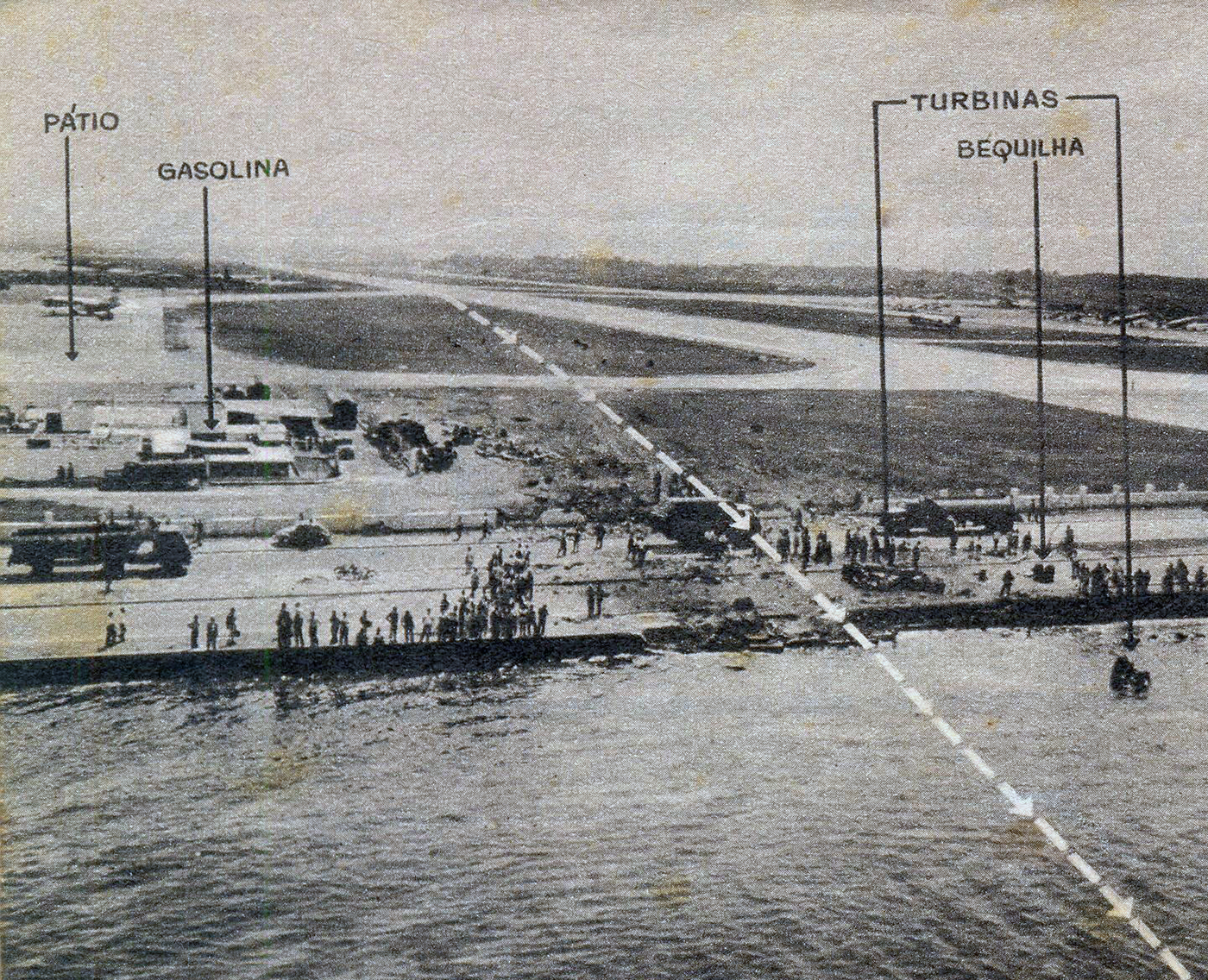
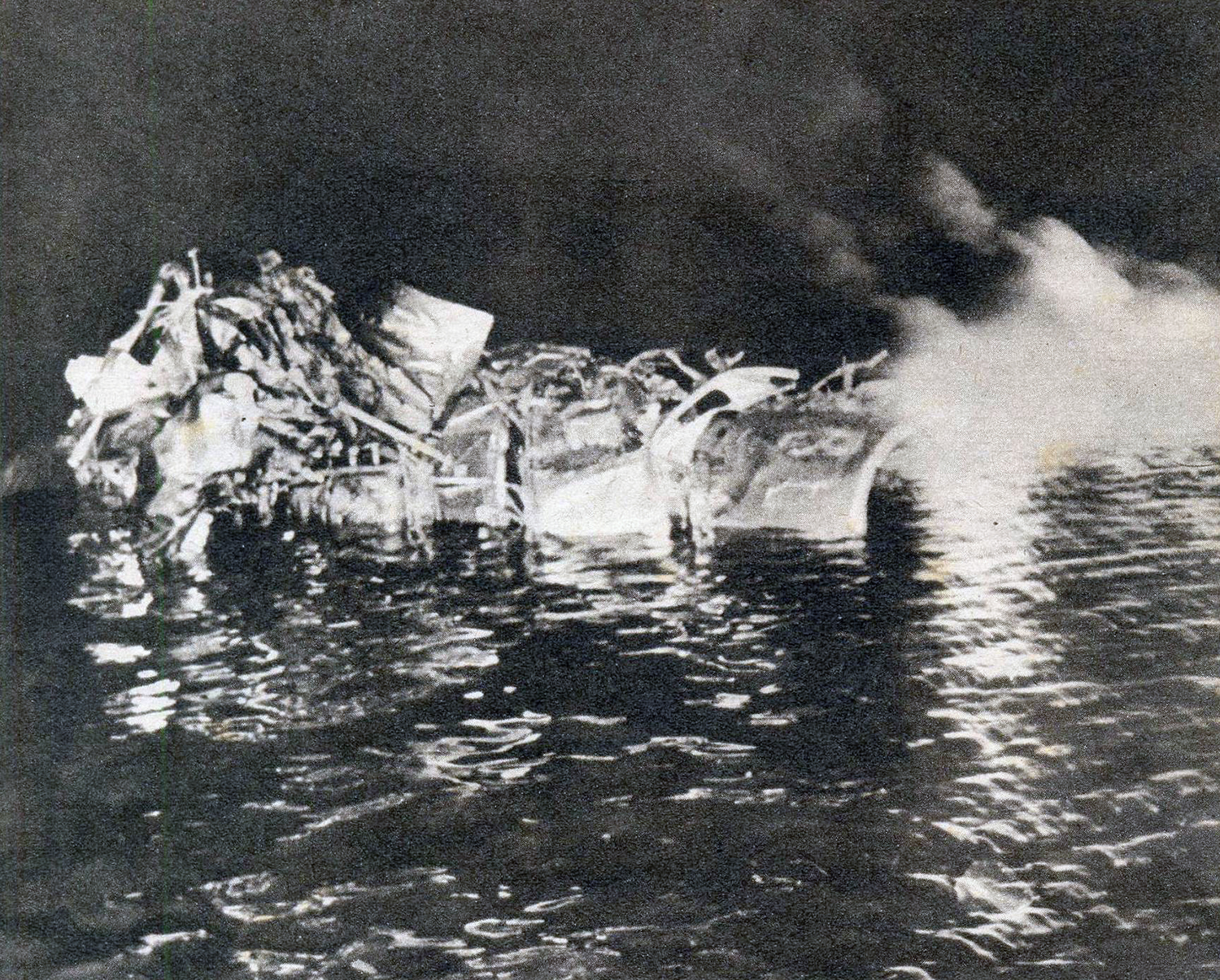
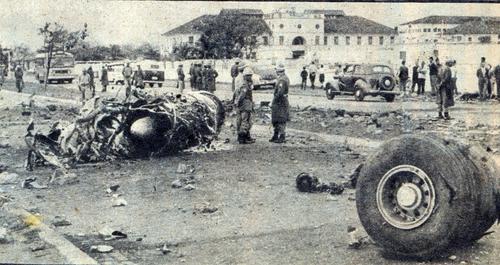
The aircraft was on a scheduled international flight from Buenos Aires to Rio de Janeiro (Galeao Airport) and Lisbon. It arrived at Galeao Airport following an uneventful flight. Another crew took over for the last segment of the flight. The takeoff run began at 2303 hours GMT from runway 14. The aircraft's acceleration appeared to be normal. The pilot-in-command declared that, at a speed between 100 and 135 kt (V1), he noted that the control column was too far back and pushed it forward. At this point the co-pilot released the controls, which is normally done when the aircraft reaches V1. It is believed that in fact an attempt to rotate the aircraft was made around 132 kt. The aircraft continued to accelerate normally. The co-pilot announced 148 kt, the rotation speed (VR), and the pilot pulled back on the control column. However, the aircraft did not respond, so he pushed it forward again. No indication of this rotation attempt was revealed by the flight recorder reading. He and the co-pilot then pulled back on the control column, however, the nose of the aircraft did not rotate since the pilot had already reduced power 14 seconds after reaching VR. Also, the tape reading indicated that the brakes were used for 5 seconds prior to any power reduction. The first marks of braking were found approximately 2300 m from the threshold. The pilot realized that the aircraft could not be stopped on the remaining portion of the runway so he turned the aircraft off the runway to the right and fully reduced power. The brakes were applied but not reverse thrust. Heavy and steady braking marks started 2600 m from the threshold. Of his own accord, the co-pilot applied full power for reversion and tried to operate the spoilers but could not do so because of the bumps The right wing lowered, dragging engines No. 3 and 4. The left wheels of the landing gear sank into the sand, and engines No. 1 and 2 also began to drag. All four engines lost their ejectors and reversion cones, causing the aircraft to accelerate. It continued moving at a high speed, hit the airport wall, crossed the adjoining highway, lost engines No. 1 and 2 and the left landing gear and finally came to rest in the sea. 50 m from shore. It drifted 100 m while floating and then sank to a depth of 8 m. There were no lights on board the aircraft when it came to a stop as the automatic emergency lighting system did not function. One cabin attendant used one of the two flashlights available. The darkness increased the panic and confusion. The passengers could not use the main door as an exit because it would open into the sea. They did not know where the emergency exits were. However, the exits were then opened and most of the passengers left the aircraft on the starboard side. The fact that the lour exits were all in the central part of the fuselage hampered the evacuation as the number of passengers (94) was considerable. The crew left the aircraft via the cockpit windows. No instructions had been given on emergency procedures and therefore the passengers and most of the crew did not take their life jackets with them when leaving the aircraft. Although the aircraft was equipped with six life rafts no crew member tried to use them. The aircraft drifted 330 feet downstream and submerged in 25 minutes. A crew member and 14 passengers were killed, 46 occupants were wounded and 44 were uninjured.
Probable cause:
The take-off was discontinued when the aircraft would not rotate at a speed of 175 kt because the stabilizer setting had switched from 3° nose-up to 1-3/4° nose-down. Contributing factors to the accident were the delayed decision of the pilot to abort the take-off and the incorrect compliance with the standard procedures used for emergency stopping.
Final Report:


Crash of a Douglas DC-7C in Douala: 111 killed
Date & Time:
Mar 4, 1962 at 1921 LT
Operator:

Registration:
G-ARUD
Survivors:
No
Schedule:
Lourenço Marques – Douala – Lisbon – Luxembourg
MSN:
45160
YOM:
1957
Flight number:
CA123
Crew on board:
10
Crew fatalities:
Pax on board:
101
Pax fatalities:
Other fatalities:
Total fatalities:
111
Captain / Total hours on type:
287.00
Copilot / Total hours on type:
227
Circumstances:
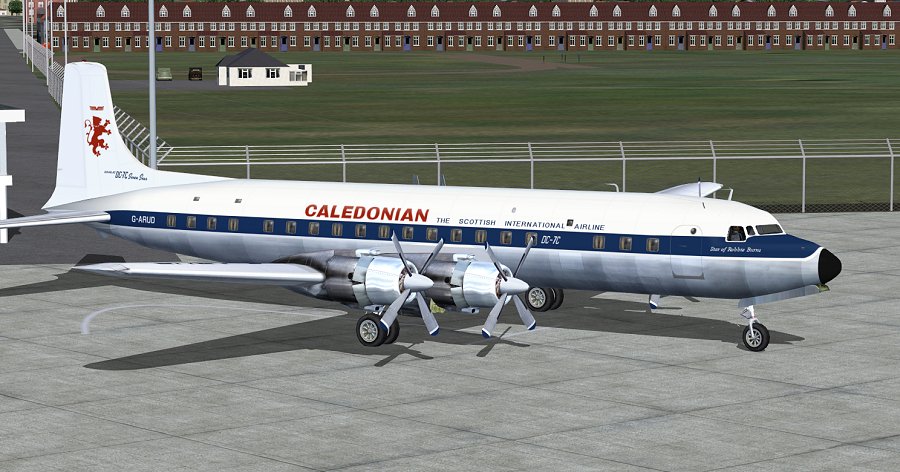
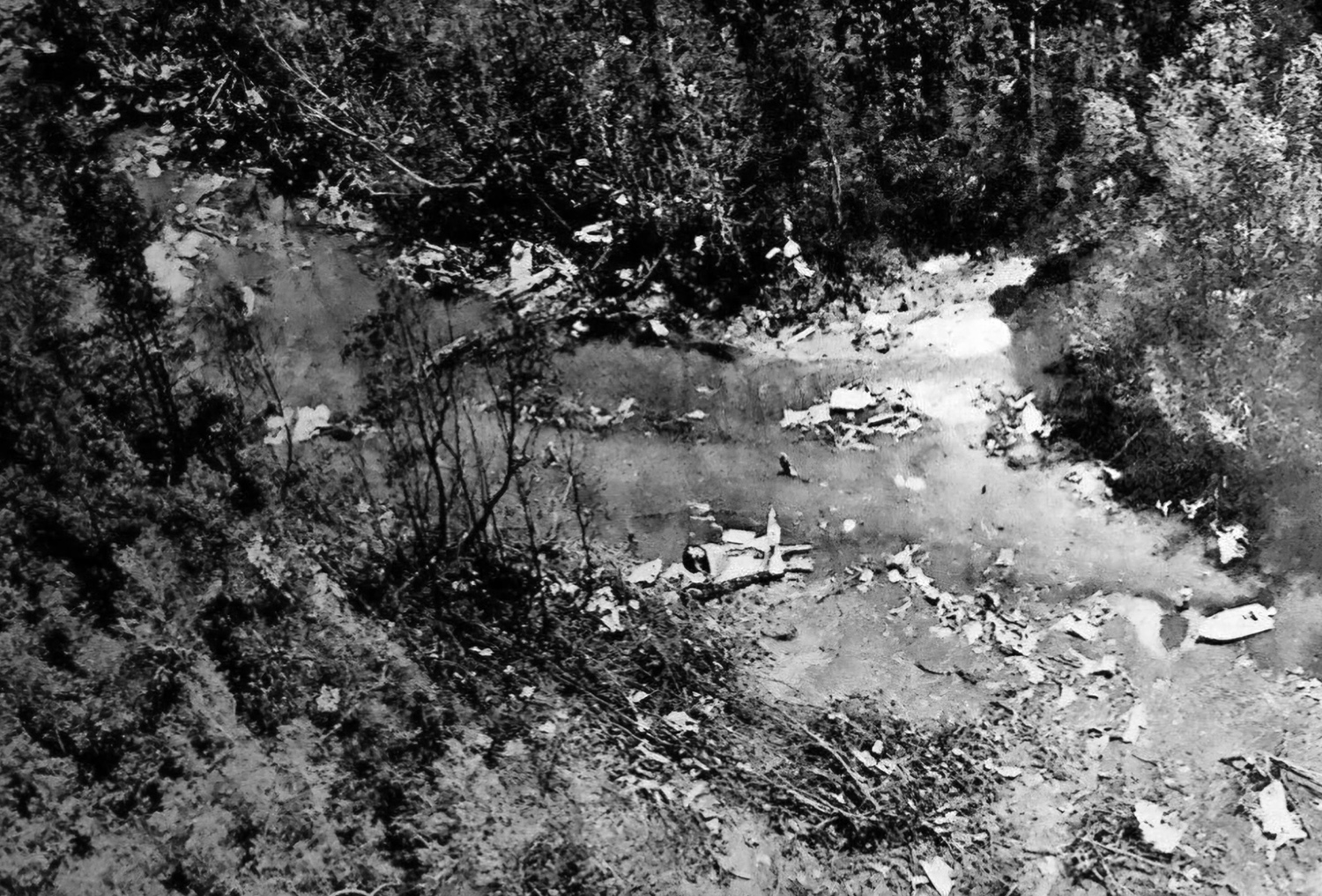
The aircraft lined up on runway 12 and took at 1820 GMT (night takeoff evening twilight ended at 1756 hours). According to the controller on duty at the control tower the aircraft's landing lights were not on during the take-off. The aircraft lifted off runway 12 after what appeared to be an unusually long run of approximately 2,300 meters (of 2,850 meters available) after release of the brakes and gained height with difficulty. The anti-collision light was seen at a low altitude and the disappeared behind the trees. Five seconds later the sky was lit up by a fire. The left wing and left side of the fuselage struck the first trees of the forest at a height of about 22 meters above the elevation and about 2,300 meters beyond the threshold of runway 30. After the initial impact in a near level flight attitude and with the aircraft slightly banked to port, it then went progressively into a dive with the left wing low and sheared the tops of the trees over a traversed distance of about 130 meters before final impact with the water of a creek. The attitude of the aircraft on final impact was approximately 25° nose down with the same angle of left bank. The aircraft exploded on impact. The fuel and oil spread over the surface of the water and ignited. The fire destroyed the submerged parts of the wreckage. All 111 occupants were killed.
Probable cause:
In spite of the very numerous expert examinations and all the tests on the ground and in flight which the Commission of Inquiry has carried out or caused to be carried out, the state of the wreckage and its position in an inundated forest area have prevented the Commission from determining with absolute certainty the cause of the accident to DC-7C G-ARUD. The commission considers, however, that there is evidence to show that an elevator spring-tab mechanism may have jammed before impact. This jamming would have resulted in abnormal elevator control forces during the takeoff. Flight tests have shown this to be consistent with a prolonged takeoff run and a risk of losing height during flap retraction. Furthermore, the following features, all adverse, may have aggravated the circumstances in which the accident occurred: - the implementation of a procedure for gaining speed which was conducive to the aircraft being flown at a low altitude - the fact that a positive rate of climb was not maintained at the time of flap retraction which, in the SABENA procedure applied by Caledonian Airways, is not subject to any altitude limitation other than that of obstacle clearance - the presence in the co-pilot's seat of a check pilot whose attention may have been attracted more by the actions of the first pilot than by the indications on his own instrument panel. The Commission had been unable to eliminate an instrument failure as a possible cause of the accident, as the instruments were not recovered or were too seriously damaged to allow of any valid expert examination.
Final Report: