Crash of a Piper PA-46-350P Malibu Mirage in North Las Vegas: 2 killed
Date & Time:
Jul 17, 2022 at 1203 LT
Registration:
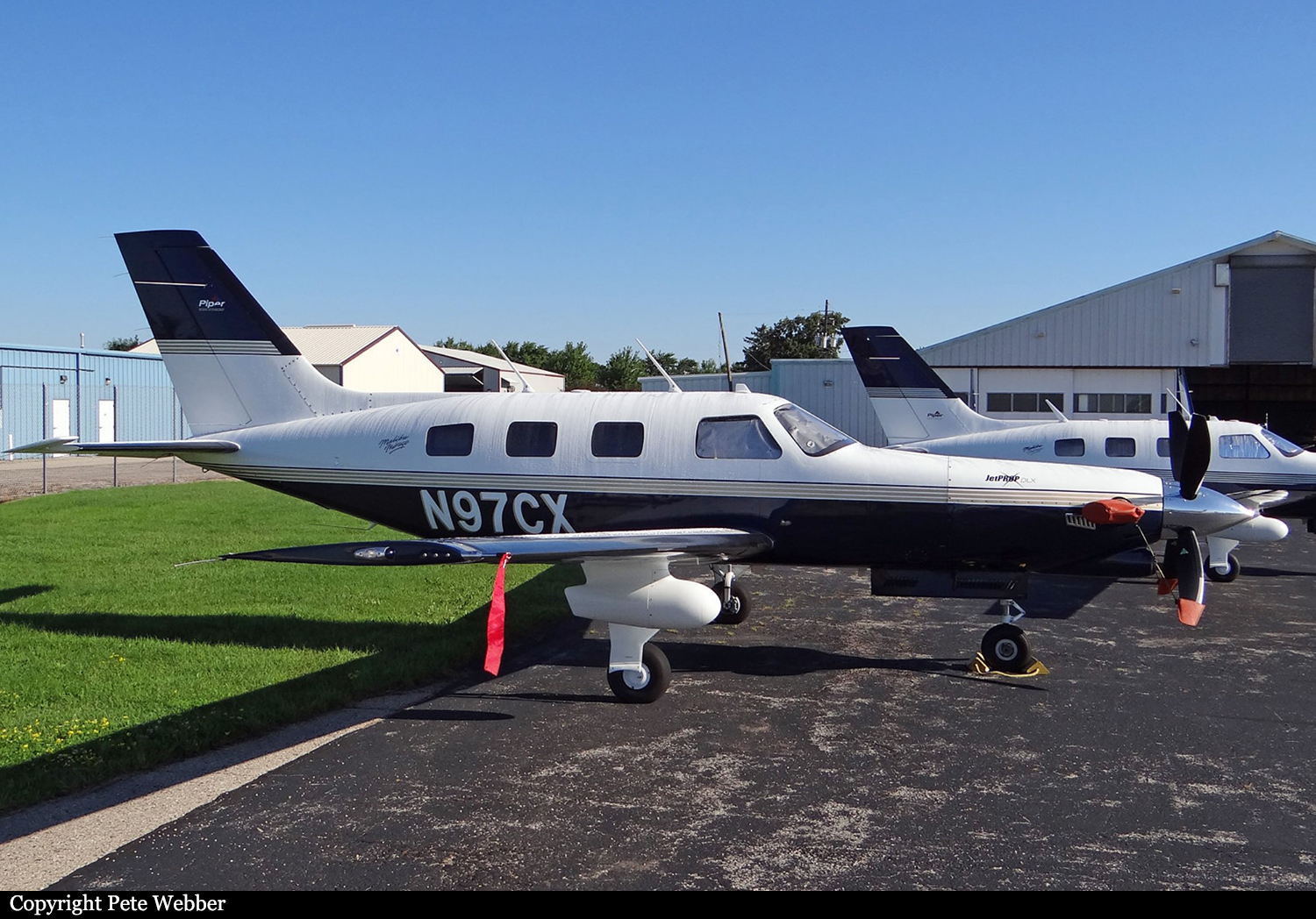
N97CX
Survivors:
No
Schedule:
Cœur d’Alene – North Las Vegas
MSN:
46-36128
YOM:
1997
Crew on board:
2
Crew fatalities:
Pax on board:
0
Pax fatalities:
Other fatalities:
Total fatalities:
2
Copilot / Total hours on type:
280
Aircraft flight hours:
3212
Circumstances:
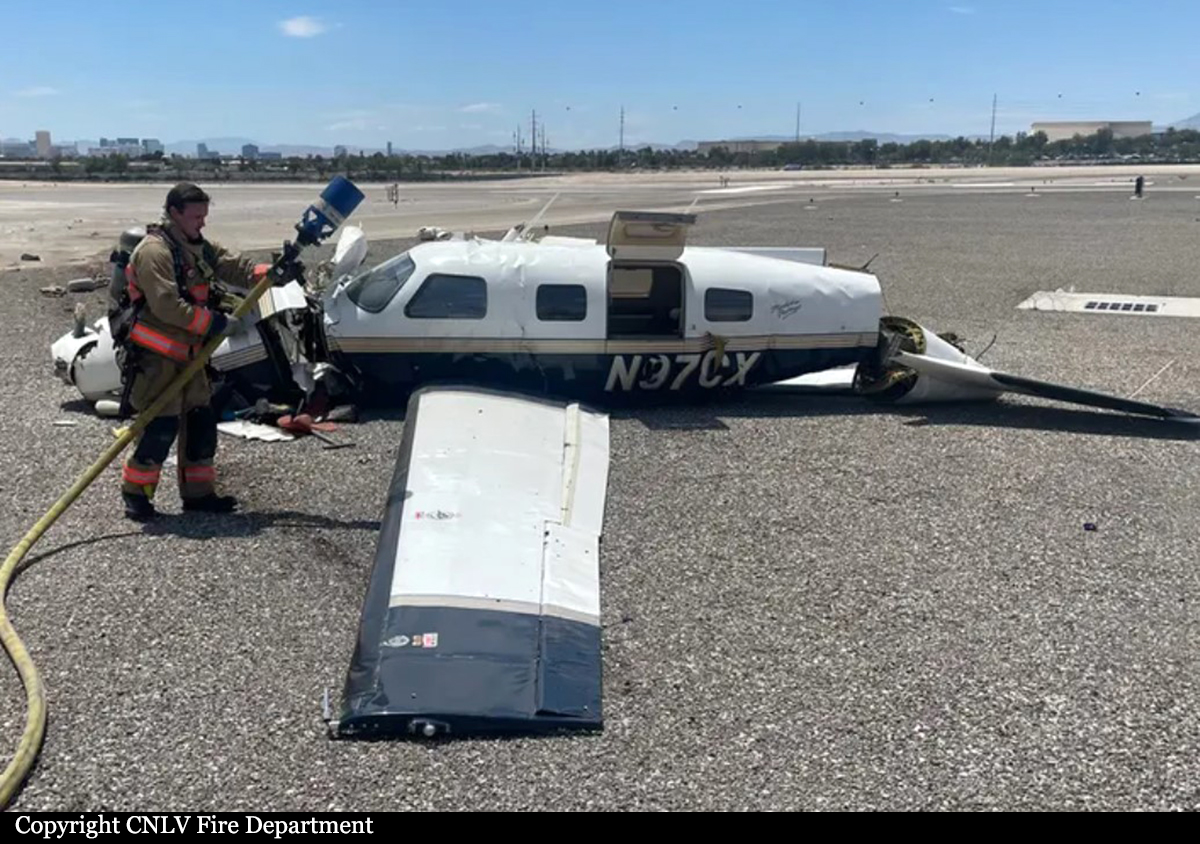
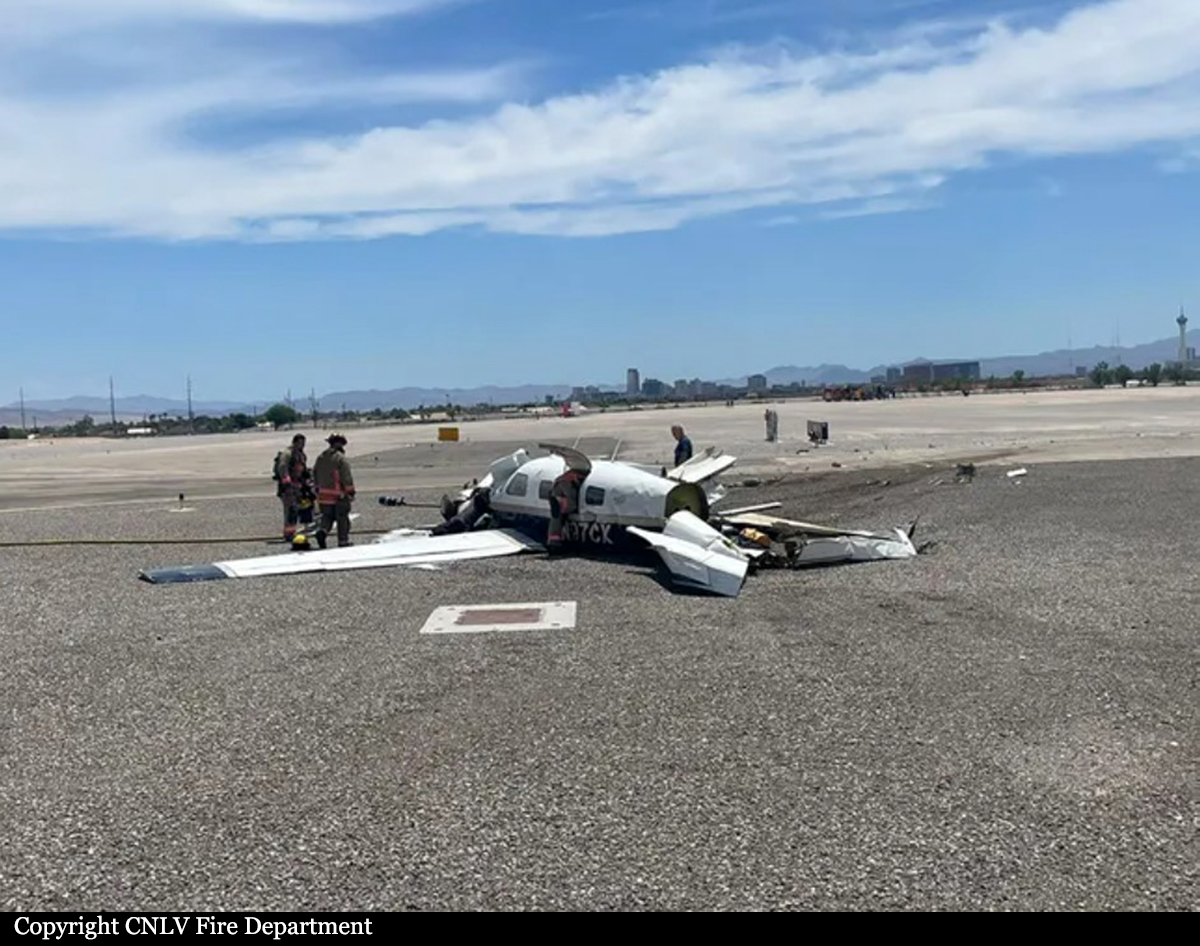
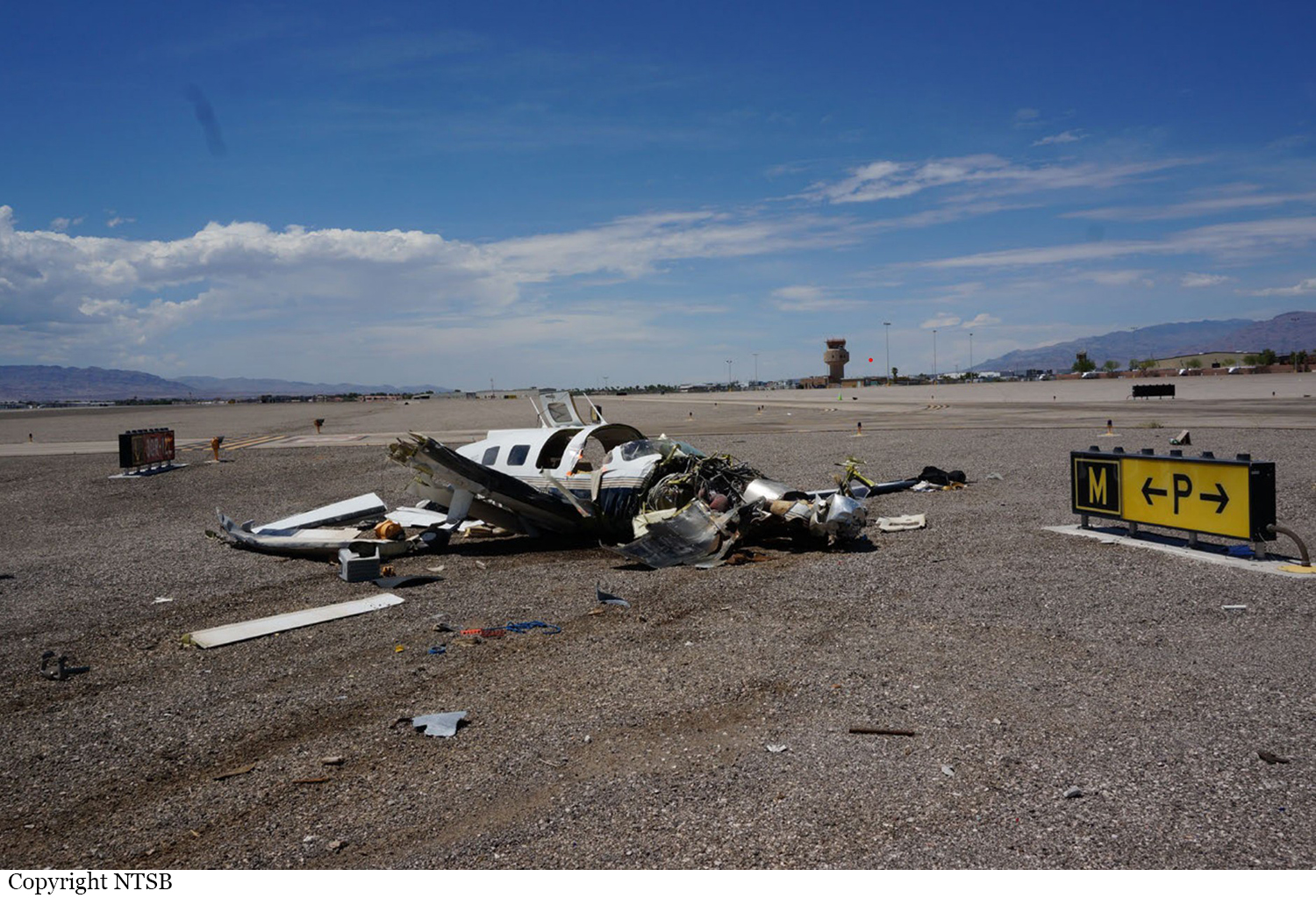
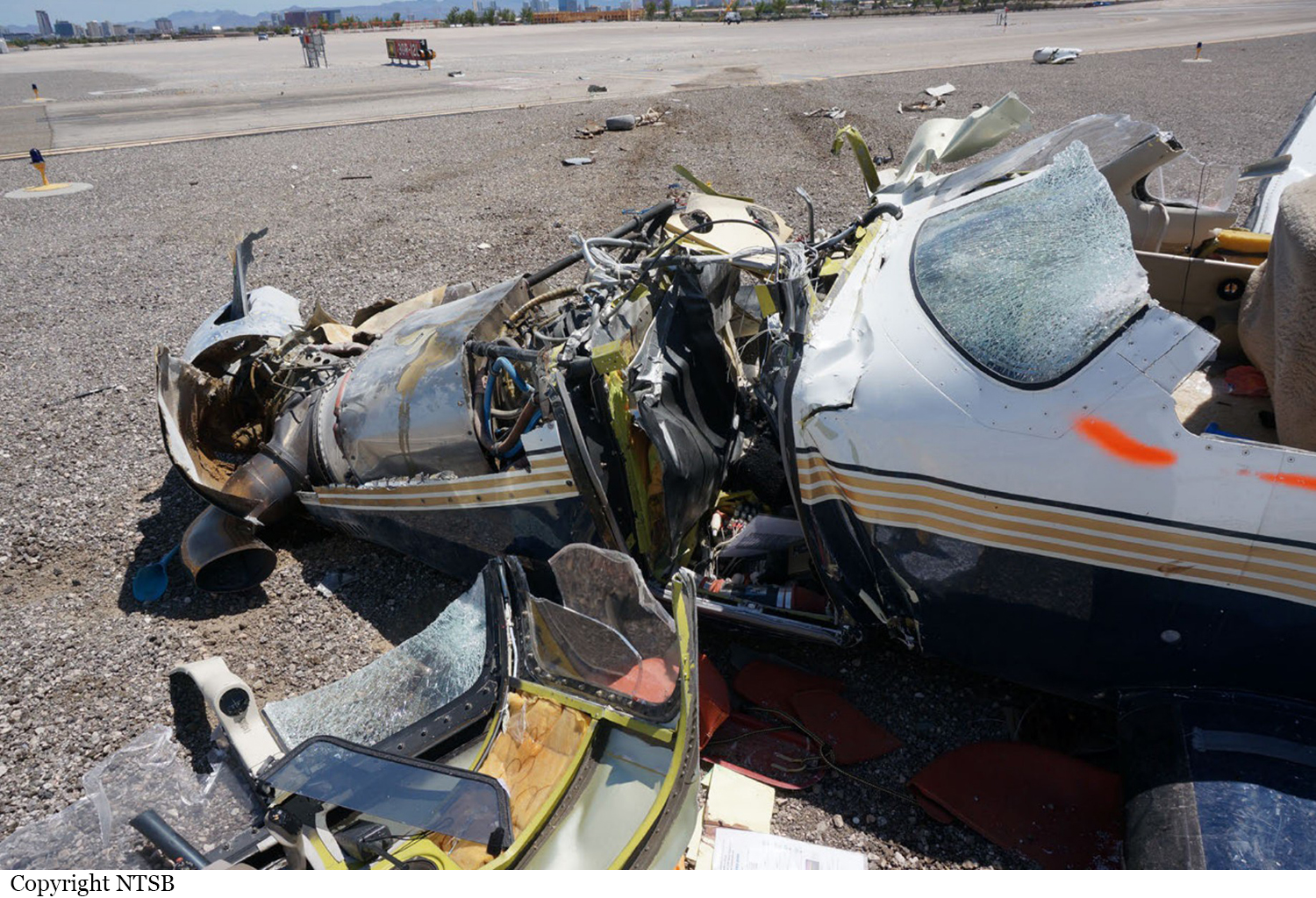
The commercial pilot and private-rated copilot on board the low-wing airplane were performing a visual approach to their home airport at the end of an instrument-flight-rules flight. They were instructed by the approach controller to cross the destination airport over midfield and enter the left downwind leg of the traffic pattern for landing on runway 30L. Meanwhile, the flight instructor and student pilot on board the high-wing airplane were conducting takeoffs and landings in the right traffic pattern for runway 30R and were cleared to conduct a short approach for landing on runway 30R. Upon contacting the airport tower controller, the crew of the low-wing airplane was instructed to proceed to runway 30L, and the copilot acknowledged. The controller subsequently confirmed the landing approach to runway 30L, and the copilot again acknowledged with a correct readback of the landing clearance. Automatic Dependent Surveillance-Broadcast (ADS-B) flight track data indicated that, after crossing over the runway, the low-wing airplane performed a continuous, descending turn through the final approach path for runway 30L and rolled out aligned with the final approach path for runway 30R. The airplanes collided about ¼ nautical mile from the approach end of the runway. Although day visual meteorological conditions prevailed at the airport at the time of the accident, a visibility study determined that it would have been difficult for the pilots of the two airplanes to see and avoid one another given the size of each airplane in the other’s windscreen and the complex backgrounds against which they would have appeared. The pilot of the low-wing airplane would likely have had to move his head position in the cockpit (e.g., by leaning forward) in order to see the approach ends of the runways during most of the turn. If looking in the direction of the runways, he would have been looking away from the direction of the oncoming high-wing airplane, which was also obscured from view by aircraft structure during a portion of the turn, likely including the final seconds before the collision. The visibility study indicated that sun glare was not likely a factor. The high-wing airplane was not equipped with a cockpit display of traffic information (CDTI). The low-wing airplane was equipped with a CDTI, which may have generated a visual and aural traffic alert concerning the high-wing airplane before the collision; however, this may not have provoked concern from the flight crew, since other aircraft are to be expected while operating in the airport traffic pattern environment. The circumstances of this accident underscored the difficulty in seeing airborne traffic (the foundation of the “see and avoid” concept in visual meteorological conditions), even when pilots might be alerted to traffic in the vicinity by equipment such as CDTI. Given the low-wing airplane pilots’ familiarity with the airport, it is unlikely that they misidentified the intended landing runway; however, it is possible that they were unfamiliar with their issued instructions to overfly the airport and join the traffic pattern, as this was a fairly new air traffic control procedure for routing inbound traffic to the airport that had been implemented on a test basis, for a period of about one week, about two months before the accident. Their lack of familiarity with the maneuver may have resulted in a miscalculation that resulted in the airplane rolling out of turn farther to the right of runway 30L than expected. A performance study indicated that, during the turn to final approach, the airplane was between 38 knots (kts) and 21 kts faster than its nominal landing approach speed of 85 kts. This excess speed may have contributed to the pilots’ alignment with runway 30R instead of runway 30L. Analysis of the turn radius required to align the airplane with runway 30L indicated a required roll angle of between 32° and 37° at the speeds flown; at 85 kts. While the wrong runway line up by the low-wing airplane may have been the crew’s misidentification of the runway to which they were cleared to land, it may also have been a miscalculation in performing a maneuver that was relatively new and that they may have never conducted before. Thus, resulting in a fast, short, and tight continuous descending turn to final that rolled them out farther right than expected. The high-wing configuration of the Cessna in a right turn to final, and the low-wing configuration of the Piper in a left turn to final, only exacerbated the conflict by reducing the ability of the pilots to see the other aircraft. The pilot of the low-wing airplane had cardiovascular disease that increased his risk of experiencing an impairing or incapacitating medical event, such as arrhythmia or stroke. Although such an event does not leave reliable autopsy evidence if it occurs just before death, given that the airplane was in controlled flight until the collision, and had two pilots on board, one of whom was communicating with air traffic control, it is unlikely that an incapacitating medical event occurred. The pilot also had advanced hearing impairment, which may have made it more difficult for him to discern speech; however, the circumstances of the accident are not consistent with a pilot comprehension problem; the crew correctly read back the instruction to land on runway 30L. Whether the pilot’s hearing loss impacted his ability to detect cues such as the high-wing airplane’s landing clearance to the parallel runway or a possible CDTI aural alert could not be determined based on the available information. Although both the pilot and copilot’s ages and medical conditions were risk factors for cognitive impairment, there was no specific evidence available to suggest that either of the pilots on board the low-wing airplane had cognitive impairment that contributed to the accident. Autopsy of the flight instructor on board the high-wing airplane identified some dilation of his heart ventricles; while this may have been associated with increased risk of an impairing or incapacitating cardiovascular event, given the circumstances of the accident, it is unlikely that such an event occurred. The instructor also had hydronephrosis of the left kidney, with stones in the left renal pelvis. This may have been asymptomatic (kidney stone pain typically is associated with passage of a stone through the ureter, not with stones in the renal pelvis). The instructor’s vitreous creatinine and potassium elevation cannot be clearly attributed to hydronephrosis of a single kidney. Additionally, the instructor was producing urine and had no elevation of vitreous urea nitrogen. The vitreous chemistry results should be interpreted cautiously given the extent of thermal injury. The instructor’s heart and kidney issues are unlikely to have affected his ability to see and avoid the other airplane. The student pilot on board the high-wing airplane also had heart disease identified at autopsy, including moderate coronary artery disease and an enlarged heart with dilated ventricles. While his heart disease was associated with increased risk of an impairing or incapacitating cardiovascular event, given the circumstances of the accident, it is unlikely that such an event occurred. The student pilot’s vitreous chemistry test indicated hyponatremic dehydration; however, it is unlikely that dehydration contributed to the accident. The controller did not issue traffic advisory information to either of the airplanes involved in the collision at any time during their respective approaches for landing, even though the lowing airplane crossed about 500 ft over the high-wing airplane as it descended over the airport toward the downwind leg of the traffic pattern. His reasoning for not providing advisories to the airplanes as they entered opposing base legs was that he expected the high-wing airplane to be over the runway numbers before the low-wing airplane would be able to visually acquire it; however, this was a flawed expectation that did not account for the differences in airplane performance characteristics. After clearing both airplanes for landing, he communicated with two uninvolved aircraft and did not monitor the progress of the accident airplanes to the two closely-spaced parallel runways. This showed poor judgement, particularly given that in the months before the accident, there had been a series of events at the airport in which pilots had mistakenly aligned with, landed on, or taken off from an incorrect runway. Interviews with personnel at the air traffic control tower indicated that staffing was deficient, and most staff were required to work mandatory overtime shifts, reaching an annual average of 400 to 500 hours of overtime per controller. According to the air traffic manager (ATM), the inadequate staffing had resulted in reduced training discissions, and the management team was unable to appropriately monitor employee performance. The ATM stated that everyone on the team was exhausted, and that work/life balance was non-existent. It is likely that the cumulative effects of continued deficient staffing, excessive overtime, reduced training, and inadequate recovery time between shifts took a considerable toll on the control tower workforce.
Probable cause:
The low-wing airplane pilot’s failure to ensure that the airplane was aligned with the correct runway, which resulted in a collision with the high-wing airplane on final approach. Contributing to the accident was the controller’s failure to provide timely and adequate traffic information to either airplane and his failure to recognize the developing conflict and to act in a timely manner. Also contributing was the Federal Aviation Administration’s insufficient staffing of the facility, which required excessive overtime that did not allow for proper controller training or adequate recovery time between shifts.
Final Report: