Country
Crash of a Piper PA-46-500TP Malibu Meridian in Saint Petersburg
Date & Time:
Nov 25, 2017 at 1315 LT
Registration:
N863RB
Survivors:
Yes
Schedule:
Saint Petersburg – Pensacola
MSN:
46-97213
YOM:
2005
Crew on board:
1
Crew fatalities:
Pax on board:
0
Pax fatalities:
Other fatalities:
Total fatalities:
0
Captain / Total hours on type:
25.00
Aircraft flight hours:
1341
Circumstances:
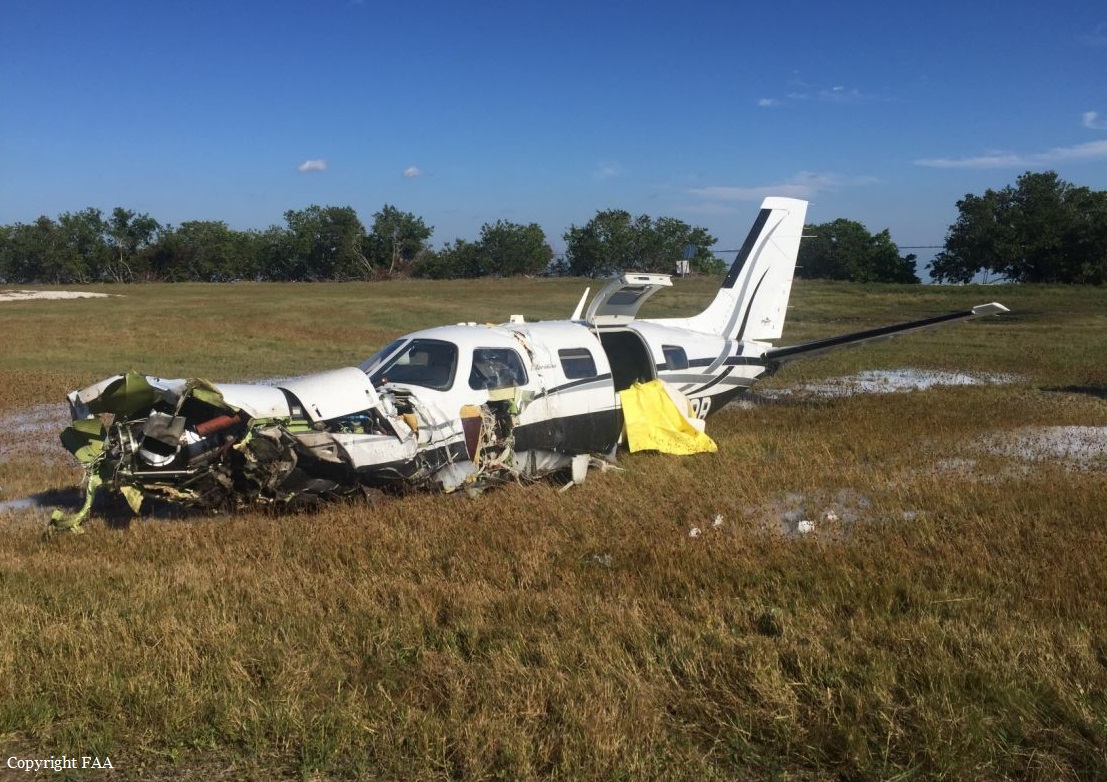
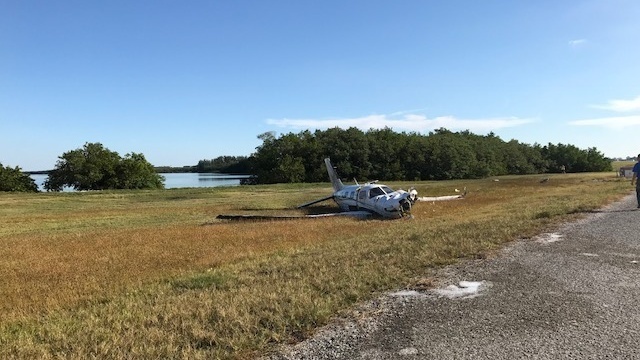
The pilot performed a preflight inspection of the turboprop airplane and an engine run-up with no anomalies noted. The takeoff roll and lift off from the runway were normal; however, when the pilot initiated a landing gear retraction, the engine torque decreased, but the rpm did not change. The torque then surged back to full power and continued to surge as the pilot attempted to return to the runway. The left wing of the airplane struck the ground, and the airplane came to rest in the grass on the side of the runway. Examination of the engine, engine accessories, and propeller revealed no evidence of mechanical malfunctions or failures that would have precluded normal operation before the accident. The reason for the partial loss of engine power could not be determined based on the available
information.
information.
Probable cause:
A partial loss of engine power for reasons that could not be determined based on the available information.
Final Report:


Crash of a Piper PA-46-350P Malibu Mirage off Mainau Island: 2 killed
Date & Time:
Aug 8, 2017 at 1152 LT
Registration:
HB-PPH
Survivors:
No
Schedule:
Zurich – Hamburg
MSN:
46-36045
YOM:
1996
Crew on board:
1
Crew fatalities:
Pax on board:
1
Pax fatalities:
Other fatalities:
Total fatalities:
2
Aircraft flight hours:
2408
Circumstances:
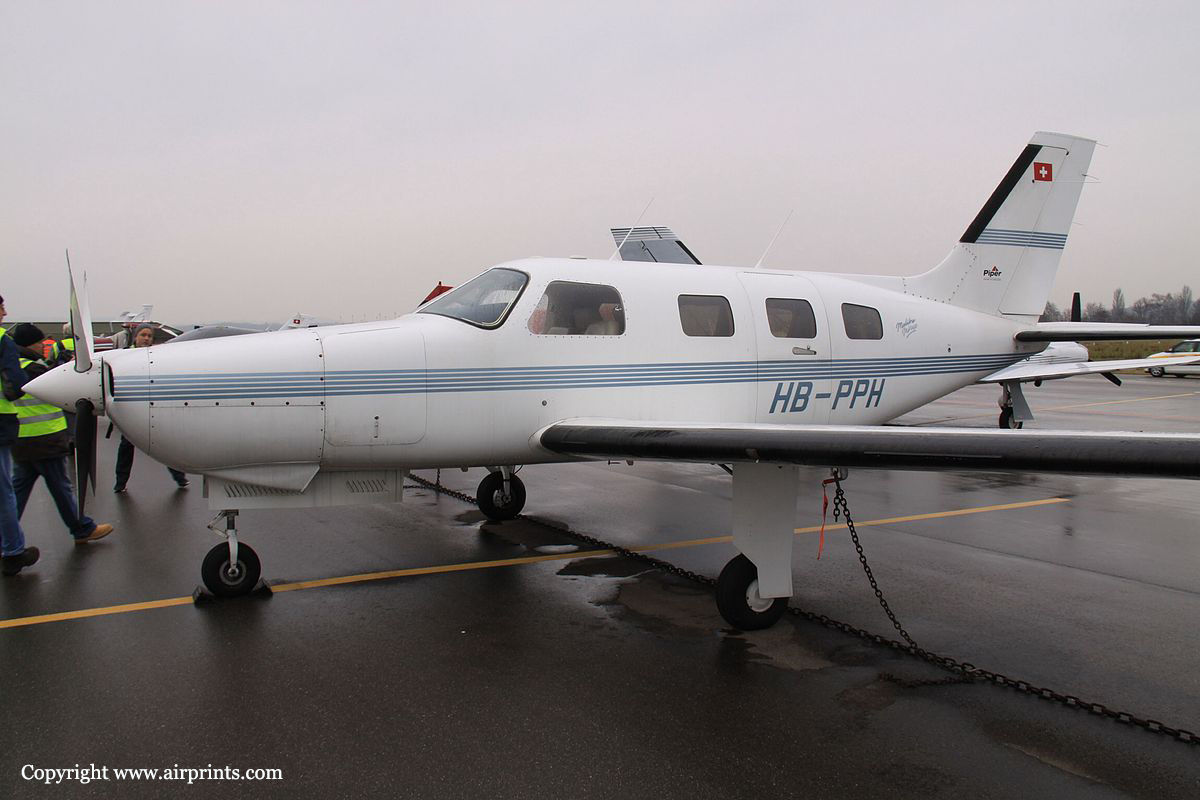
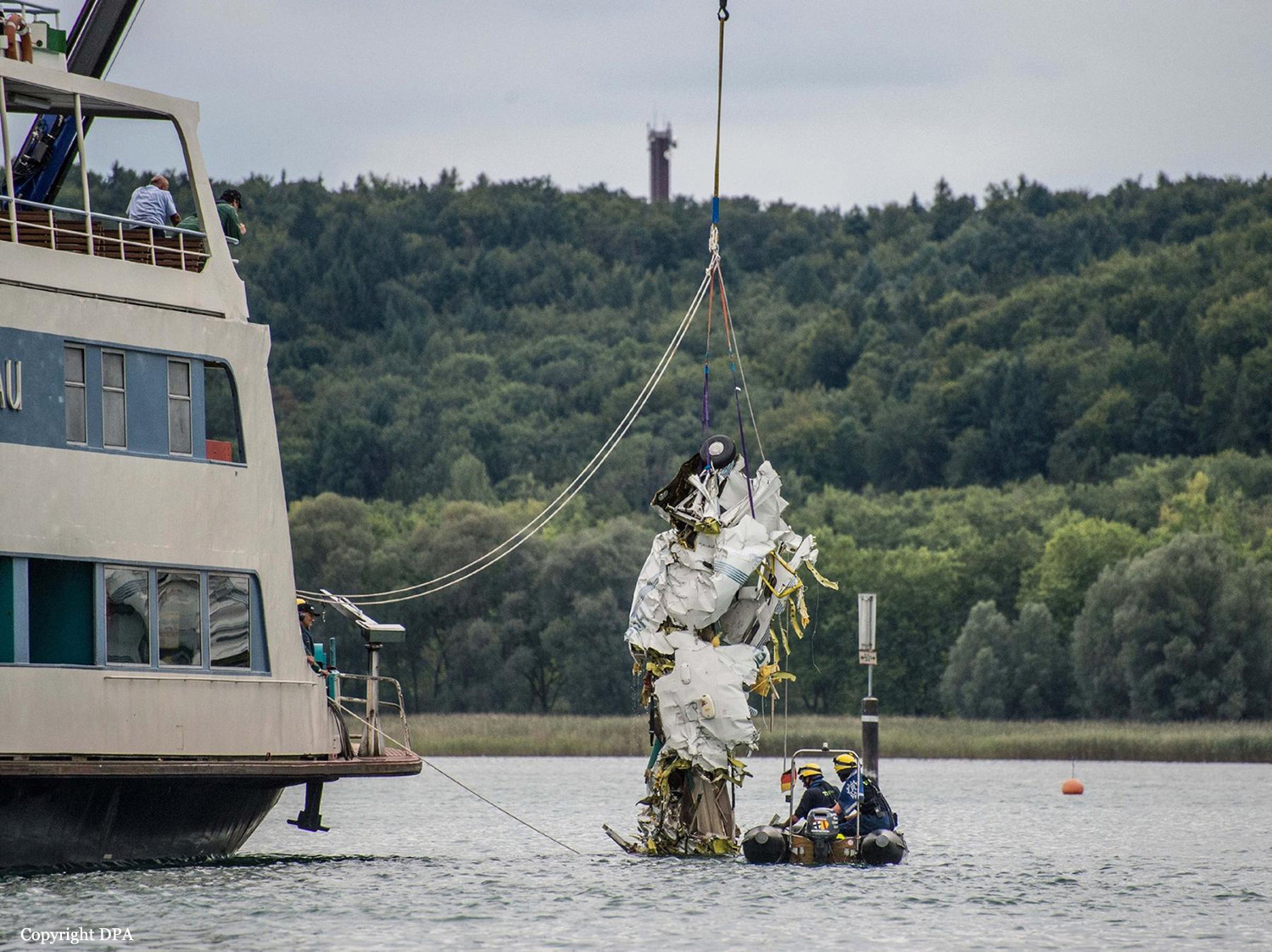
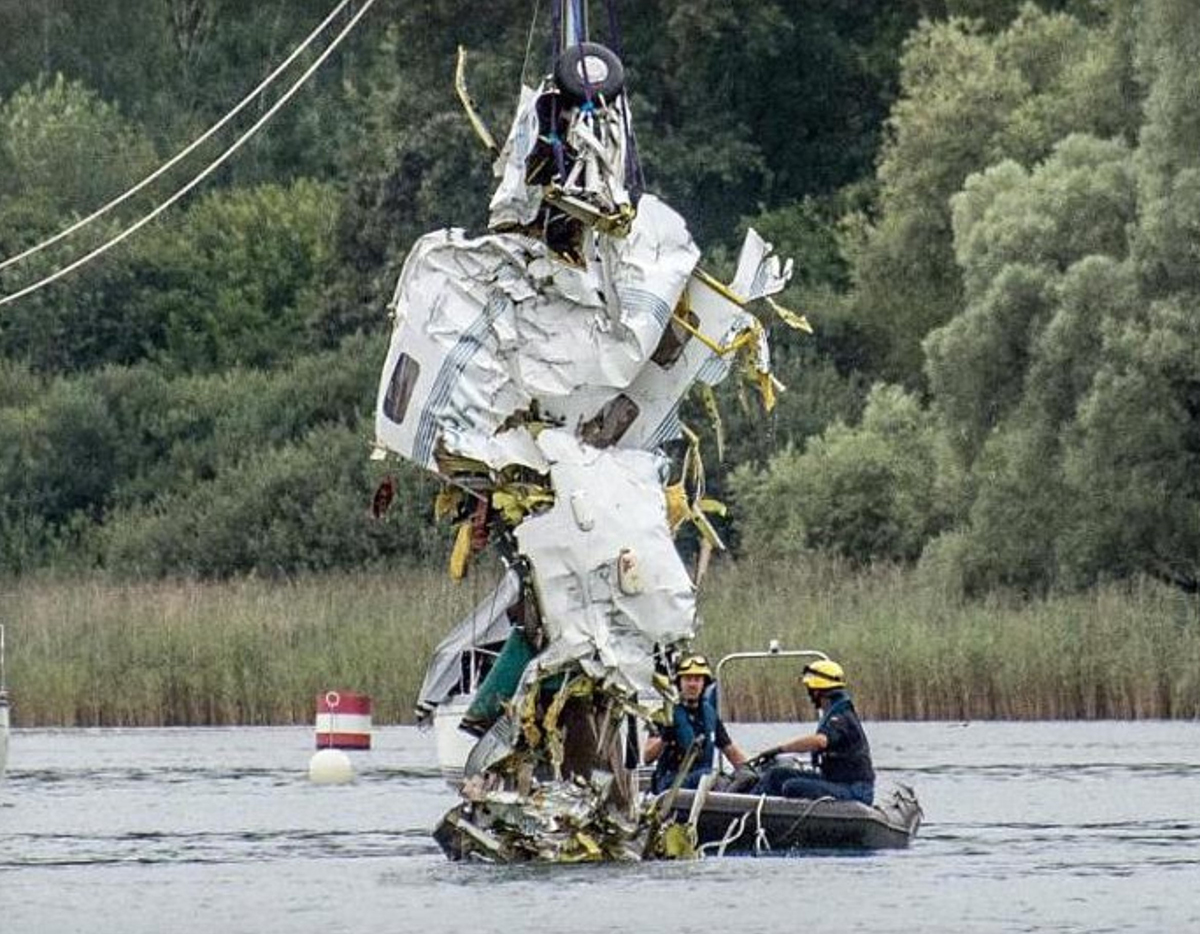
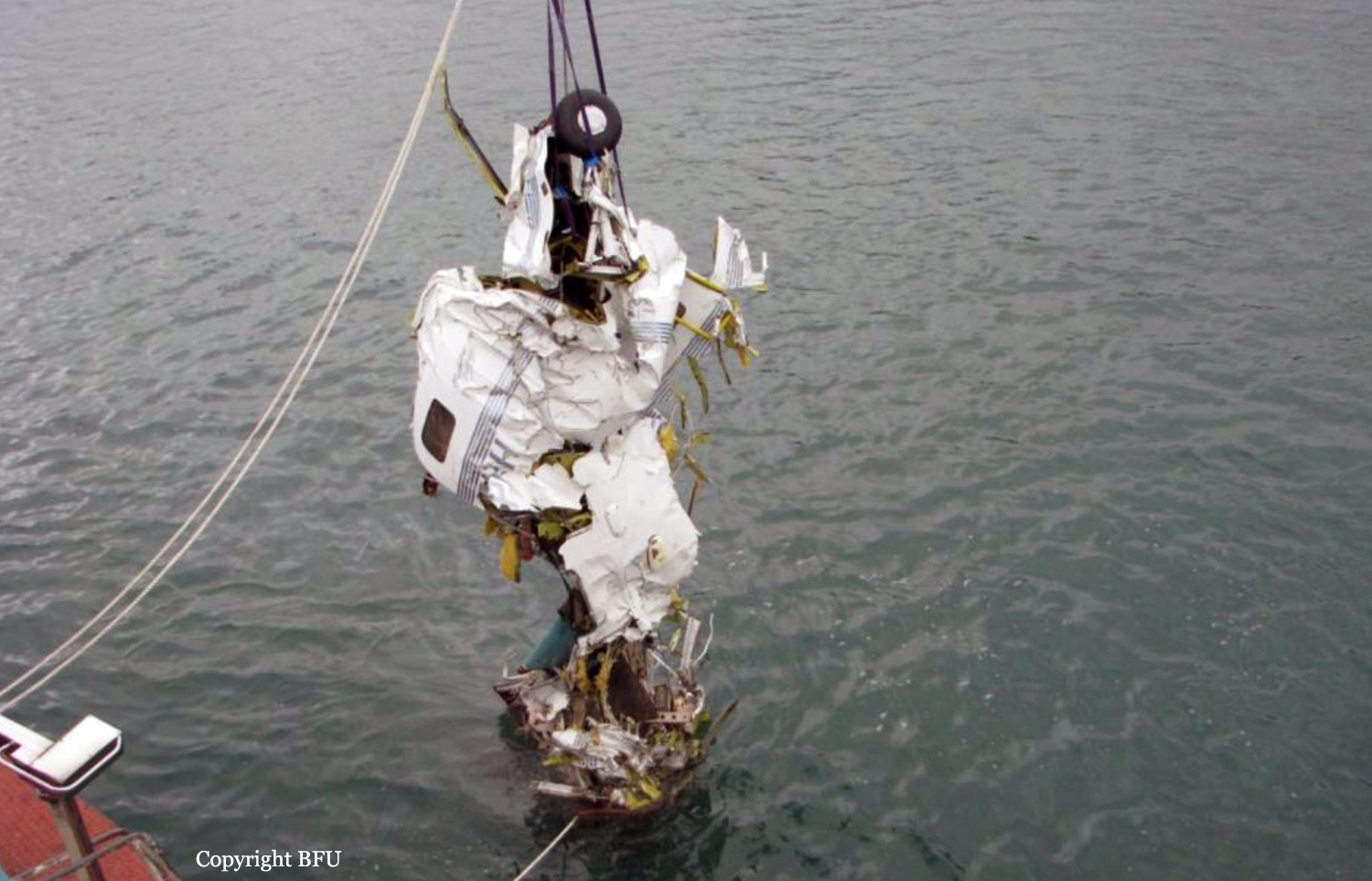
The single engine airplane departed Zurich Airport Runway 28 at 1134LT bound for Hamburg-Helmut Schmidt Airport, carrying one passenger and one pilot. After passing over the city of Konstanz at an altitude of 16,750 feet in IFR conditions, the airplane entered an uncontrolled descent and eventually crashed in the Konstanz Lake, about 200 metres off Mainau Island. The wreckage was found at a depth of 60 metres and both occupants were killed.
Probable cause:
Loss of control while cruising in IMC conditions with strong atmospheric turbulences associated with icing conditions.
Final Report:
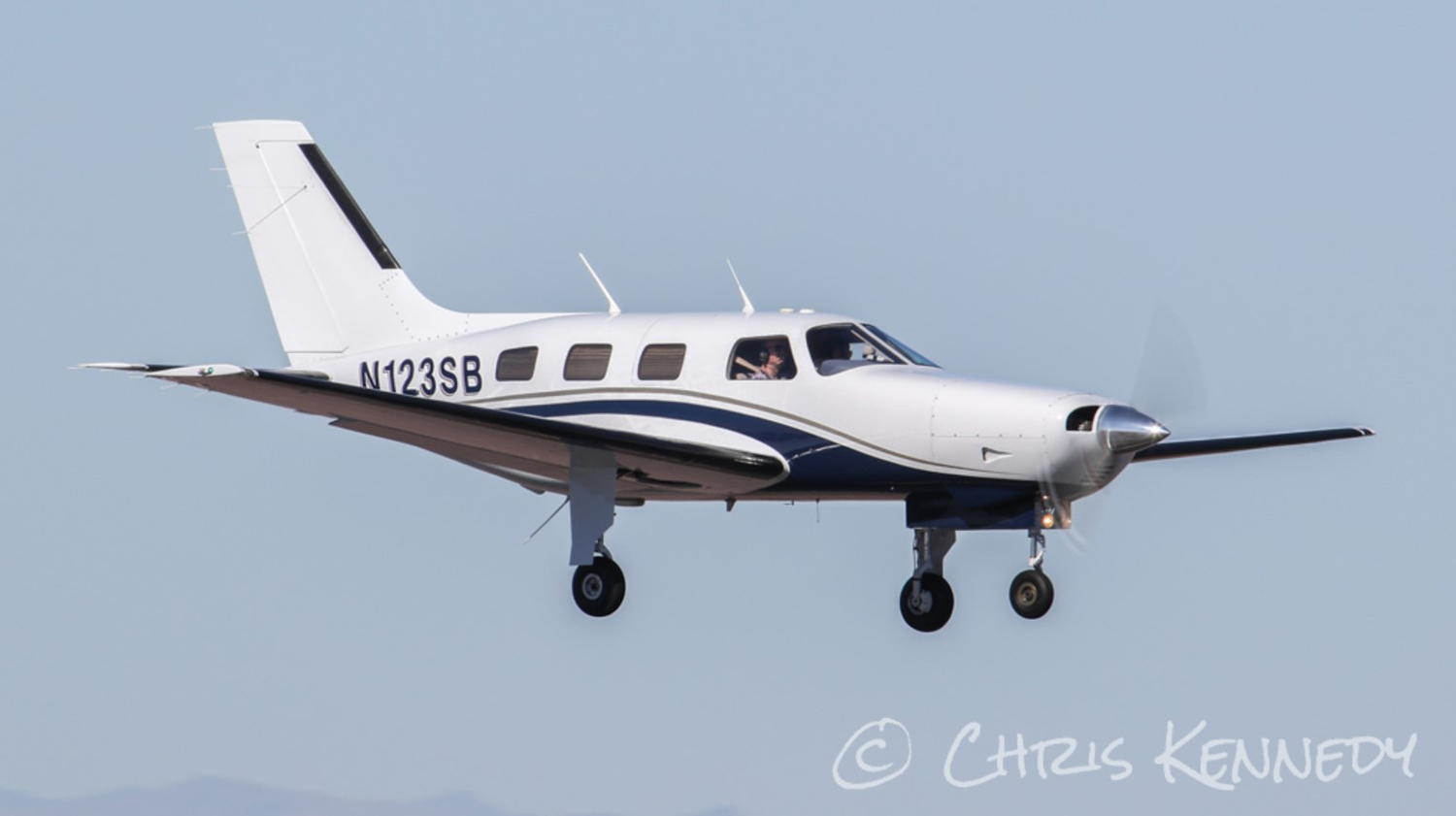
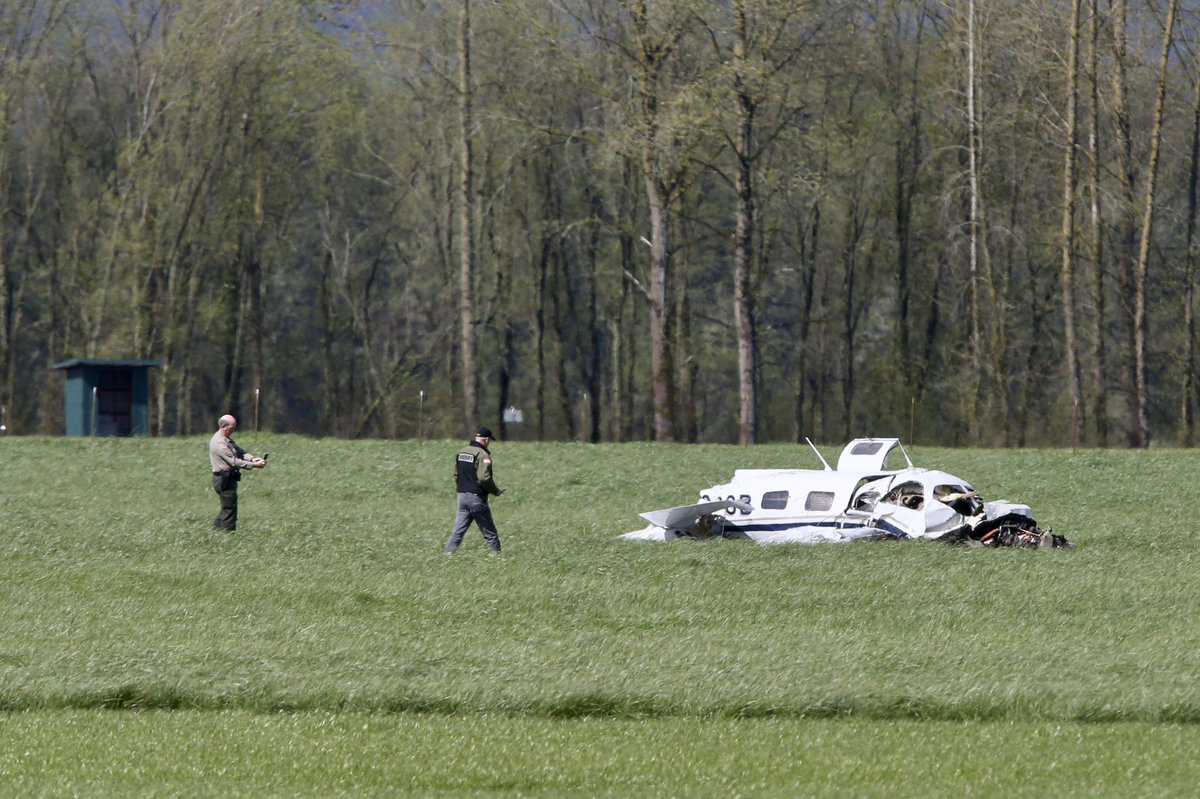
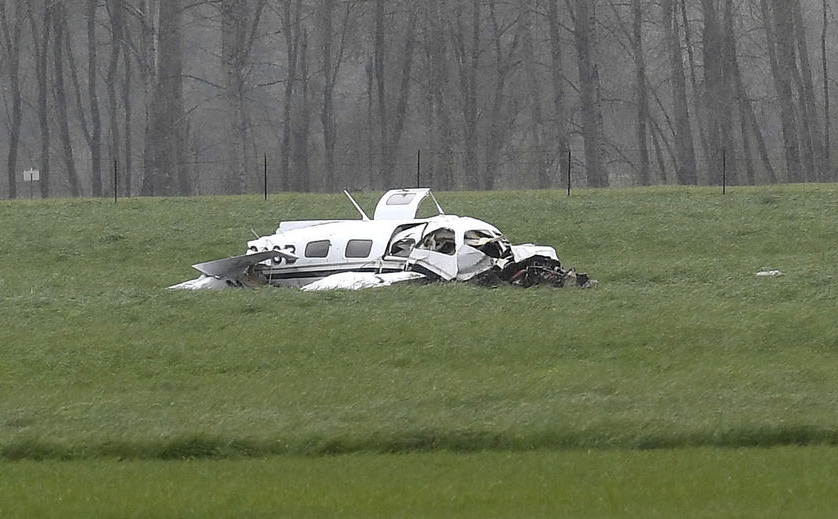
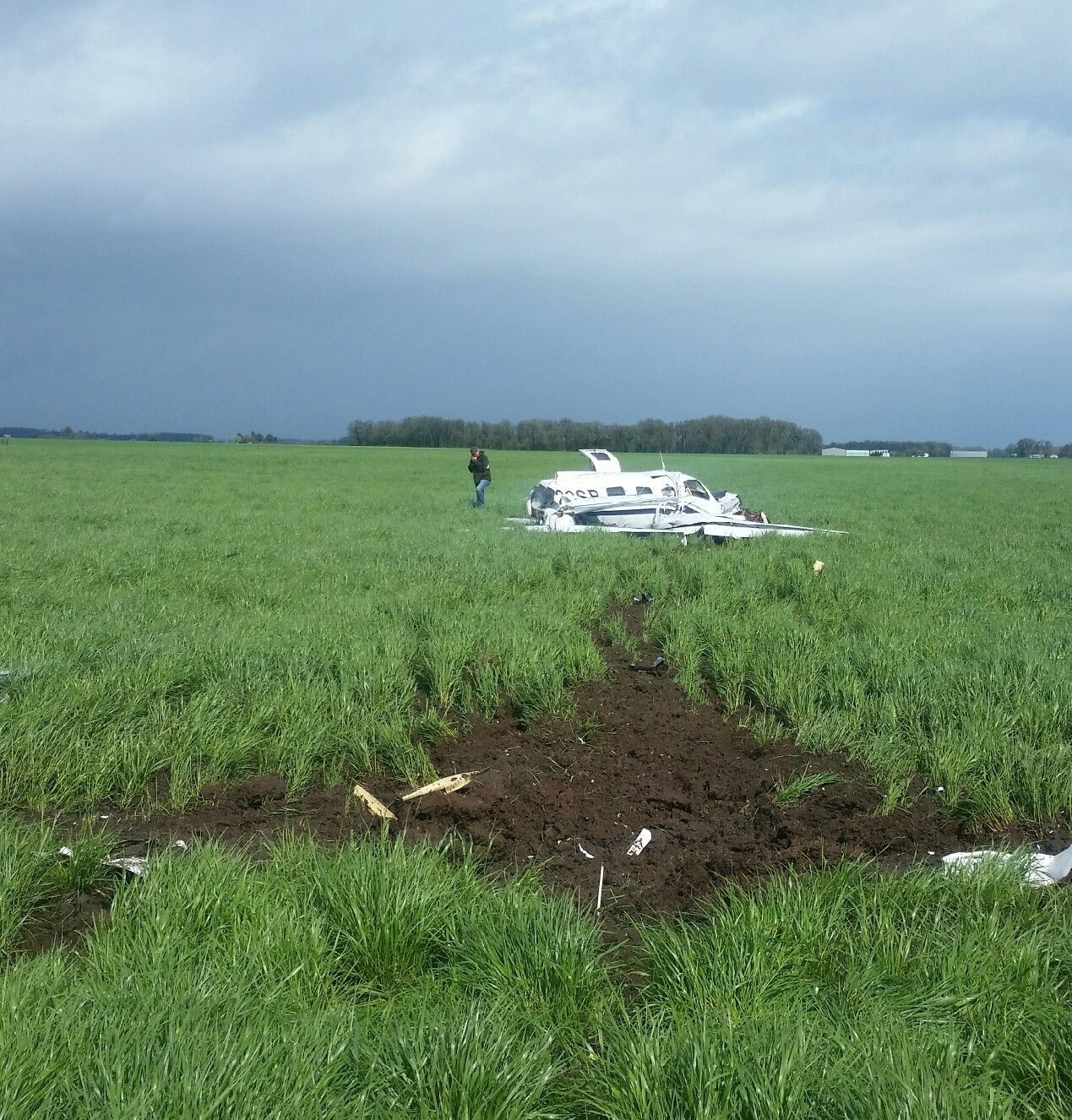
Crash of a Piper PA-46-310P Malibu in Harrisburg: 4 killed
Date & Time:
Apr 7, 2017 at 1048 LT
Registration:
N123SB
Survivors:
No
Schedule:
Van Nuys – Eugene
MSN:
46-8508023
YOM:
1985
Crew on board:
1
Crew fatalities:
Pax on board:
3
Pax fatalities:
Other fatalities:
Total fatalities:
4
Captain / Total hours on type:
163.00
Aircraft flight hours:
3681
Circumstances:
The commercial pilot and three passengers departed on an instrument flight rules crosscountry flight. While on approach to the destination airport, the pilot indicated to the air traffic controller that the airplane was passing through areas of moderate-to-extreme precipitation. After clearing the airplane for the approach, the controller noted that the airplane descended below its assigned altitude; the controller issued a low altitude alert, but no response was received from the pilot. The airplane subsequently impacted terrain in a level attitude about 12 miles from the airport. Examination of the airframe, engine, and system components revealed no evidence of preimpact mechanical malfunction that would have precluded normal operation. An area of disturbed, flattened, tall grass was located about 450 ft southwest of the accident site. Based on the images of the grass, the National Weather Service estimated that it would take greater than 35 knots of wind to lay over tall grass as the images indicated, and that a downburst/microburst event could not be ruled out. A downburst is an intense downdraft that creates strong, often damaging winds. About 6 hours before the flight, the pilot obtained weather information through a mobile application. Review of weather data indicated the presence of strong winds, heavy precipitation, turbulence, and low-level wind shear (LLWS) in the area at the time of arrival, which was reflected in the information the pilot received. Given the weather conditions, it is likely that the airplane encountered an intense downdraft, or downburst, which would have resulted in a sudden, major change in wind velocity. The airplane was on approach for landing at the time and was particularly susceptible to this hazardous condition given its lower altitude and slower airspeed. The downburst likely exceeded the climb performance capabilities of the airplane and resulted in a subsequent descent into terrain. It is unknown if the accident pilot checked or received additional weather information before or during the accident flight. While the flight was en route, several PIREPs were issued for the area of the accident site, which also indicated the potential of LLWS near the destination airport; however, the controller did not provide this information to the pilot, nor did he solicit PIREP information from the pilot. Based on published Federal Aviation Administration guidance for controllers and the widespread adverse weather conditions in the vicinity of the accident site, the controller should have both solicited PIREP information from the pilot and disseminated information from previous PIREPs to him; this would have provided the pilot with more complete information about the conditions to expect during the approach and landing at the destination.
Probable cause:
An encounter with a downburst during an instrument approach, which resulted in a loss of control at low altitude. Contributing to the accident was the air traffic controller's failure to
solicit and disseminate pilot reports from arriving and departing aircraft in order to provide pilots with current and useful weather information near the airport.
solicit and disseminate pilot reports from arriving and departing aircraft in order to provide pilots with current and useful weather information near the airport.
Final Report: