Country
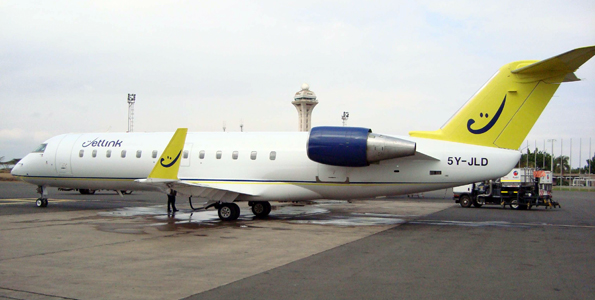
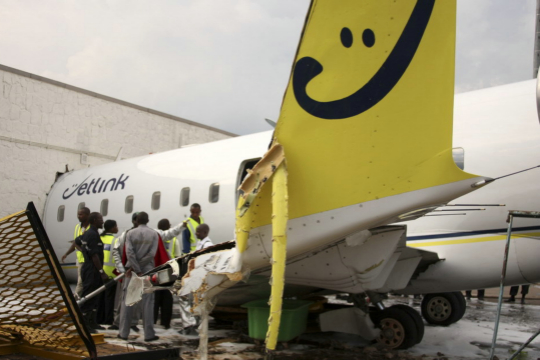
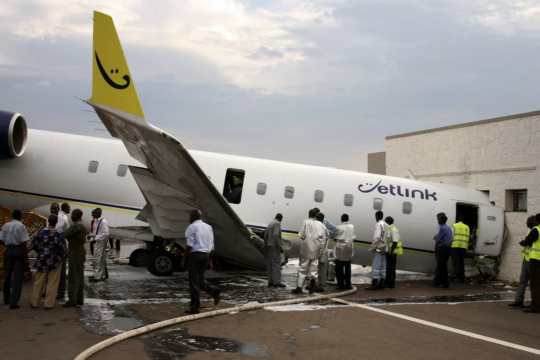
Crash of a Canadair RegionalJet CRJ-100ER in Kigali: 1 killed
Date & Time:
Nov 12, 2009 at 1315 LT
Operator:

Registration:
5Y-JLD
Survivors:
Yes
Schedule:
Kigali - Entebbe
MSN:
7197
YOM:
1997
Flight number:
WB205
Crew on board:
4
Crew fatalities:
Pax on board:
11
Pax fatalities:
Other fatalities:
Total fatalities:
1
Captain / Total hours on type:
1110.00
Copilot / Total hours on type:
533
Aircraft flight hours:
17140
Aircraft flight cycles:
17025
Circumstances:
Shortly after takeoff, when the Copilot pulled back the thrust levers of both engines to the desired positions, the thrust lever on left engine could not move and the engine remained in full power. The Pilot in Command (PIC) then informed Air Traffic Controller (ATC) that the aircraft had a technical problem and requested to return to the airport. The crew managed to land safely with the Copilot and accompanying company maintenance engineer struggling to control the left engine which was on high power setting and the PIC controlling the aircraft using only the right hand engine. The aircraft taxied to parking bay number 4 with the left engine still in full power. The captain applied the parking brake and the aircraft stopped for a while and before putting on the chocks, the aircraft started moving forward at a high speed through the jet blast fence and crashed into Control Tower building. A passenger was killed, six people were injured, three seriously.
Probable cause:
The flight crew’s failure to identify corrective action and their lack of knowledge of applicable airplane and engine systems in response to a jammed thrust lever, which resulted in the number 1 engine operating at high power and the airplane configured in an unsafe condition that led to the need to apply heavy braking during landing. Also causal was the flightcrew failure to recognize the safety hazard that existed from overheated brakes and the potential consequence on the braking action needed to park the airplane. Contributing factors included the possible failure by maintenance crew to correctly stow the upper core cowl support strut after maintenance, Flight crew’s failure to follow standard operating procedures, the company’s failure to be availed to manufacturer safety literature on the subject, and the susceptibility of the cowl core support shaft to interfere with the throttle control mechanism when the core strut is not in its stowed position.
Final Report:

Crash of a Canadair RegionalJet CRJ-100ER in Yerevan
Date & Time:
Feb 14, 2008 at 0415 LT
Operator:

Registration:
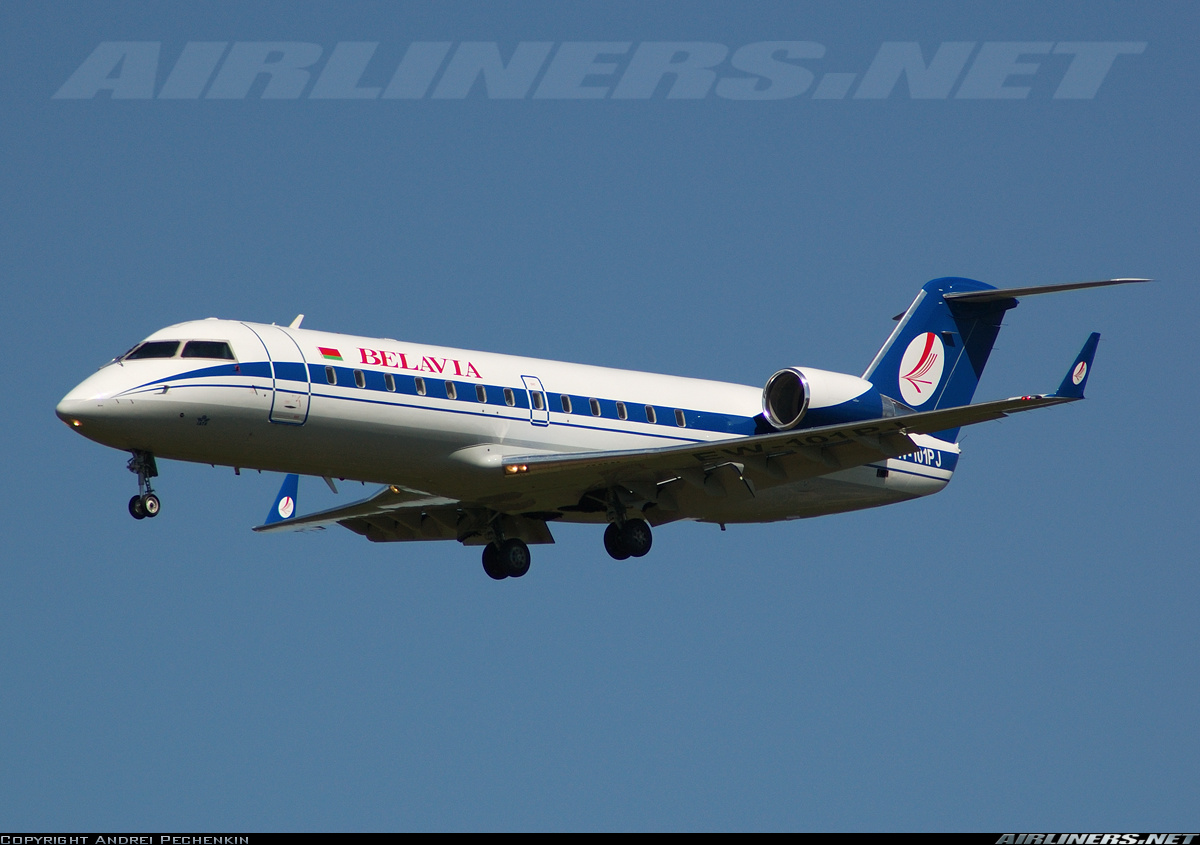
EW-101PJ
Survivors:
Yes
Schedule:
Yerevan - Minsk
MSN:
7316
YOM:
1999
Flight number:
BRU1834
Crew on board:
3
Crew fatalities:
Pax on board:
18
Pax fatalities:
Other fatalities:
Total fatalities:
0
Aircraft flight hours:
15563
Aircraft flight cycles:
14352
Circumstances:
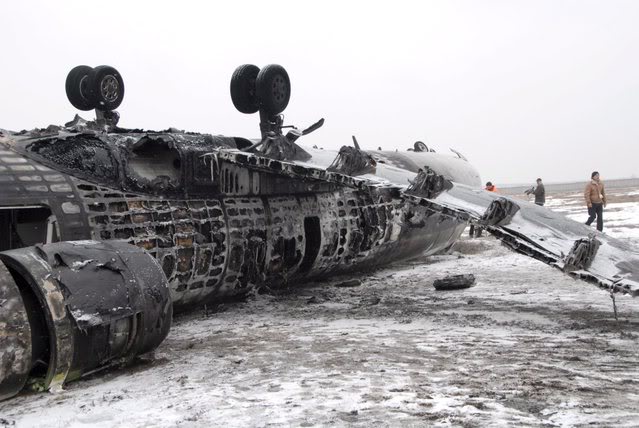
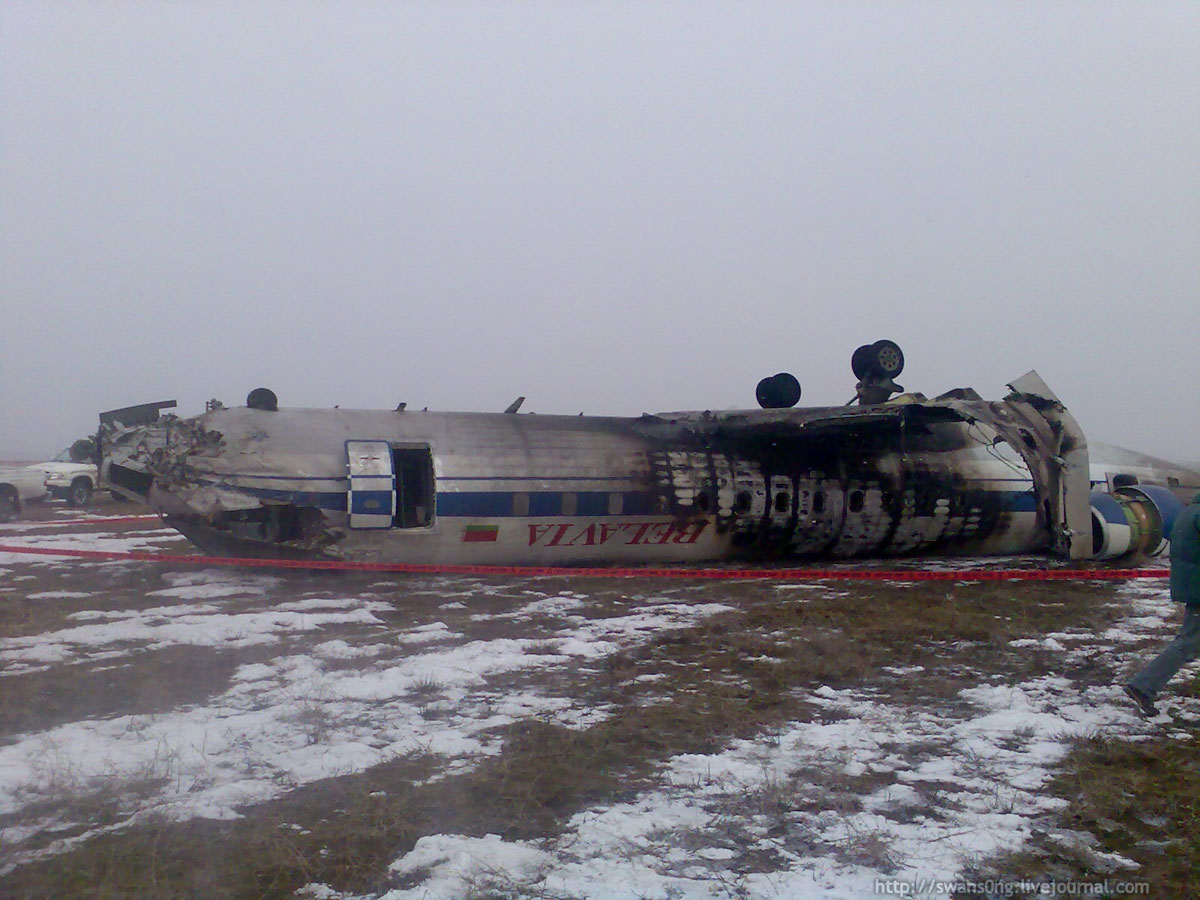
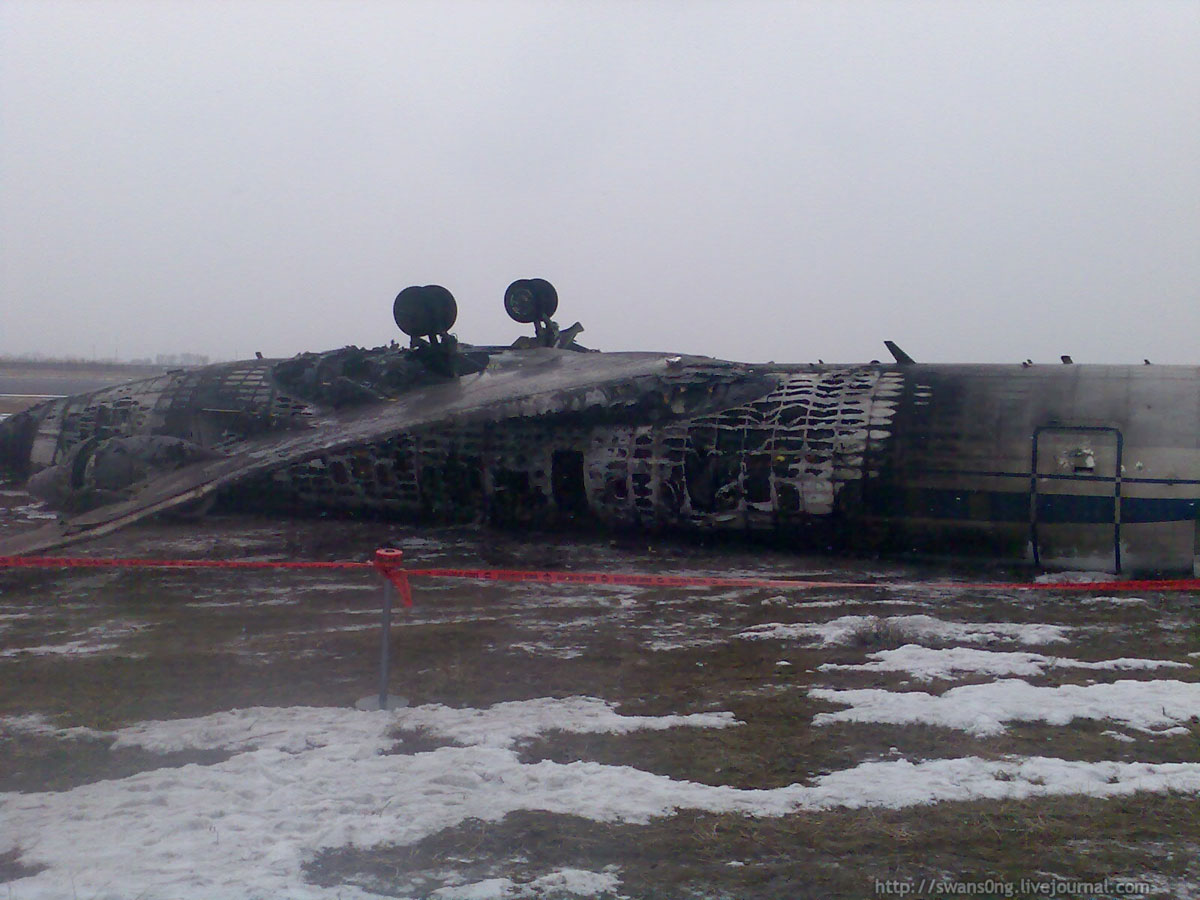
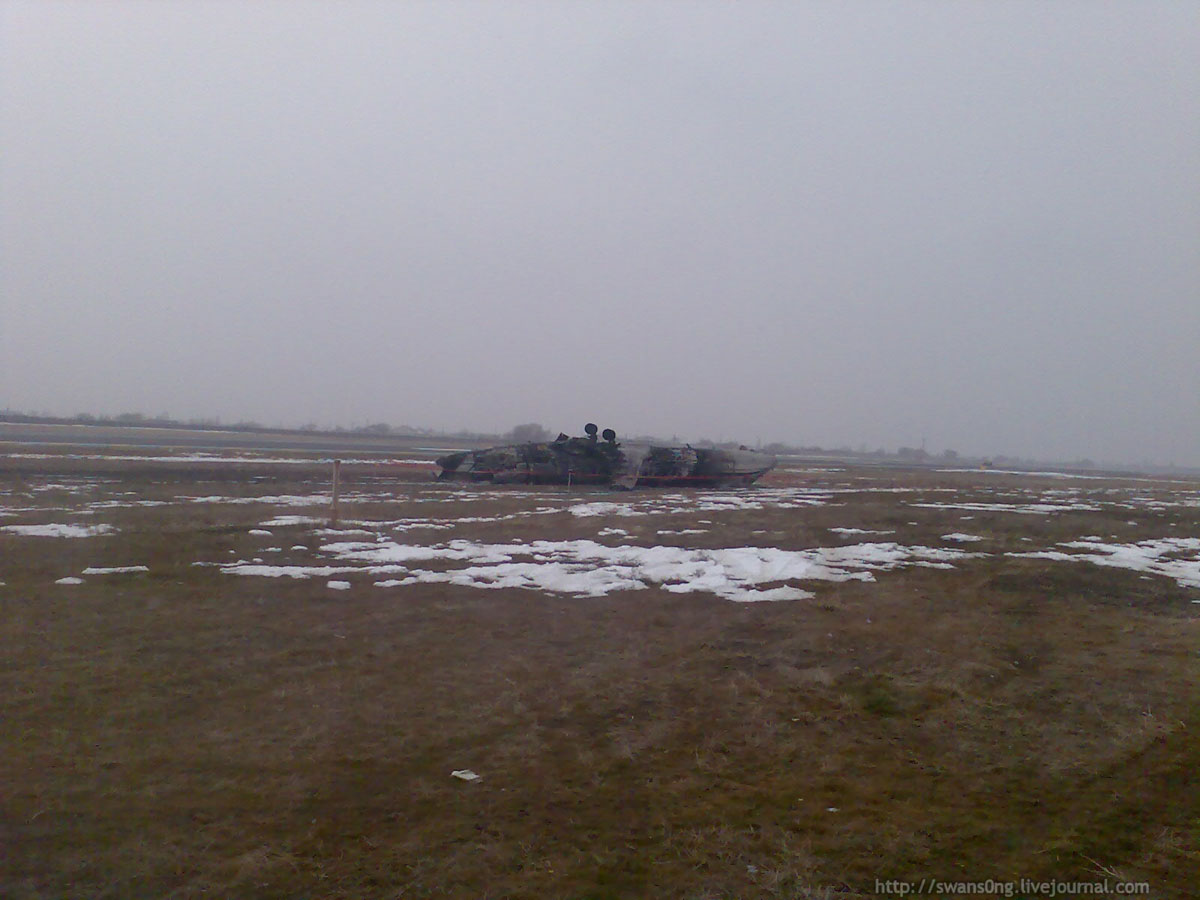
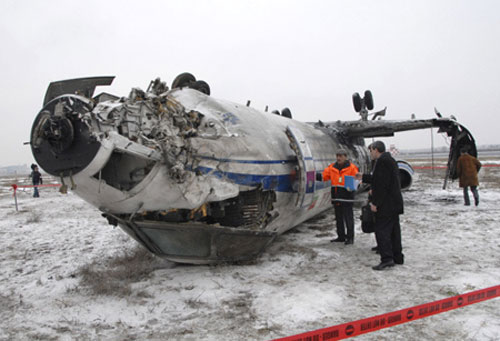
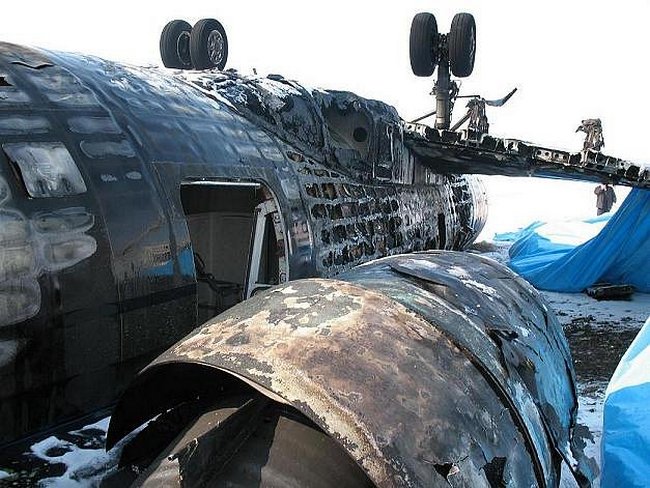
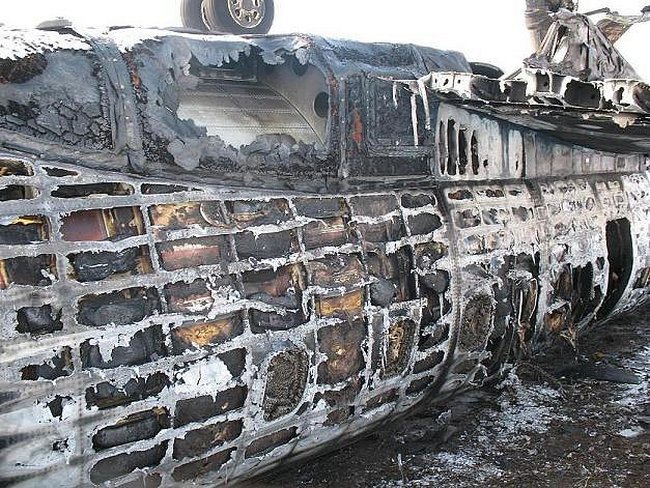
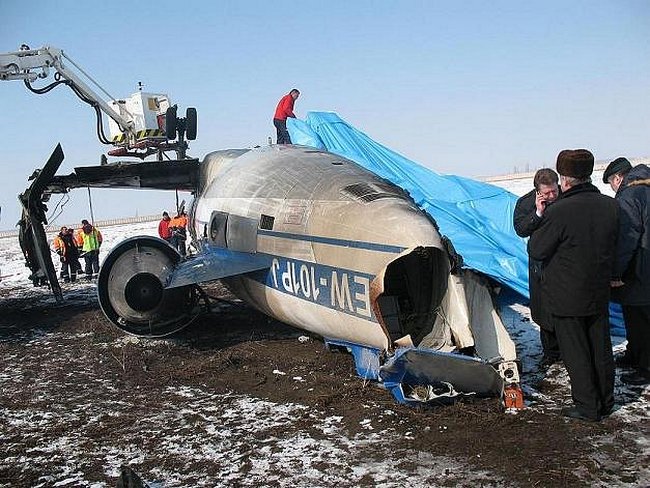
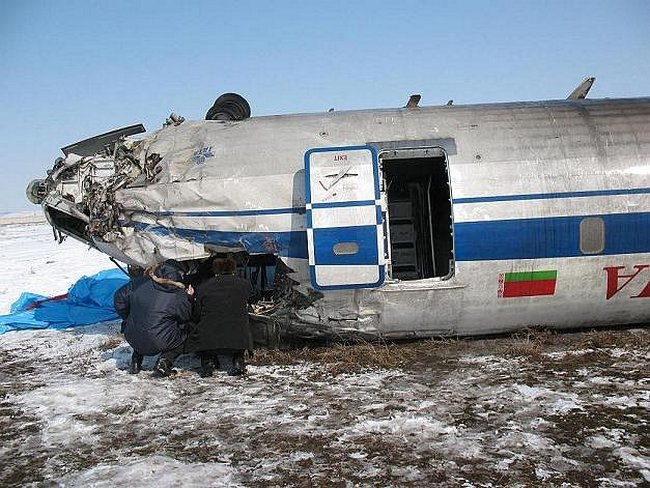
A Canadair CRJ100ER passenger jet, operated by Belavia, was destroyed when crashed and burned on takeoff from Yerevan-Zvartnots Airport (EVN), Armenia. All three crew members and eighteen passengers survived the accident. The airplane arrived as flight BRU1833 from Minsk-2 International Airport (MSQ), Belarus at 02:05. Refueling was carried out in preparation for the return flight and the crew conducted the flight planning. After refueling the pilot carried out a tactile and visual inspection of all critical surfaces of the wing and visual inspection of the tail assembly. All the planes were clean and dry. The weather reported for the 04:00 was: wind 110 degrees at the ground 1 m/sec, visibility 3500 meters, haze, small clouds, vertical visibility of 800 meters, scattered clouds at 3000 m, a temperature of minus 3° C, dew point minus 4° C, pressure 1019 hPa. At 04:08 both engines were started. The engine air intake heating (cowl anti-ice) was switched on but the wing anti-icing system was not switched on. The crew taxied to runway 27 and were cleared for departure. During takeoff the airplane progressively banked left until the left wing tip contacted runway. The airplane went off the side with the airplane rolling the right. The right hand wing broke off and spilled fuel caught fire. The airplane came to rest upside down.
Probable cause:
The accident involving aircraft CRJ-100LR registration number EW-101PJ was the result of an asymmetric loss of lift of the wing during take-off, which led to the toppling of the aircraft immediately after liftoff from the runway, the left wing tip contacting the ground, the subsequent destruction and fire. The reason for the loss of lift of the wing at the actual weather conditions, was the formation of frost, which "pollutes" the surface of the wing. The cause of formation of frost, most likely, was the fuel icing, while the aircraft was parked at the airport and during taxiing for the return flight, resulting in a difference in temperature of the surrounding air and cold fuel in the tanks after the flight. The situation could be aggravated when exceeding the values recommended by the operations manual of the angular velocity when lifting the nose wheel during takeoff with "contaminated" wings when it is impossible to monitor this parameter instrumentally. Existing procedural methods of control of the aerodynamic surfaces of the aircraft before departure, along with the inefficiency, during takeoff, the existing system of protection from stalling due to increased sensitivity of the wing, even to a slight contamination of the leading edge, can not fully guarantee the prevention of similar accidents in future. An Airworthiness Directive on the need to include anti-icing systems on the wing in the final stage of taxiing at the actual weather conditions was issued by Transport Canada after the accident. This probably could have prevented the accident.

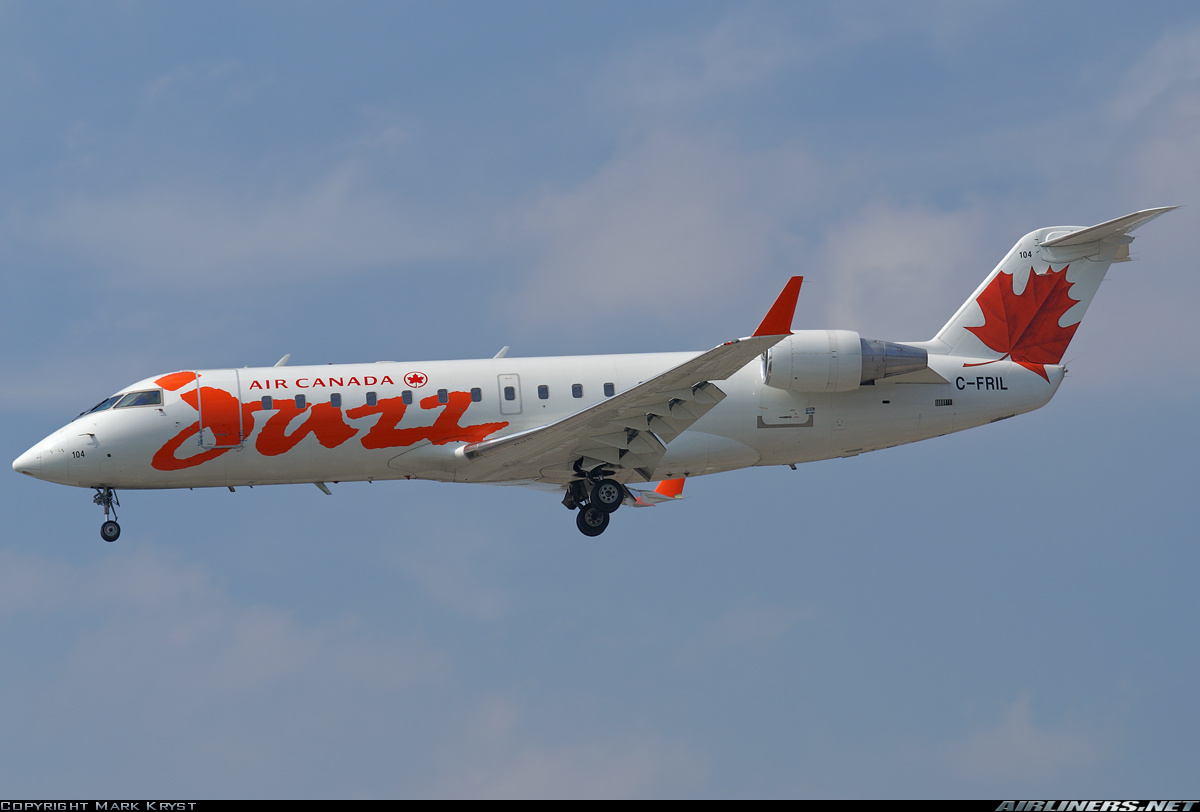
Crash of a Canadair RegionalJet CRJ-100ER in Toronto
Date & Time:
May 20, 2007 at 1235 LT
Operator:

Registration:
C-FRIL
Survivors:
Yes
Schedule:
Moncton – Toronto
MSN:
7051
YOM:
1994
Flight number:
AC8911
Crew on board:
37
Crew fatalities:
Pax on board:
3
Pax fatalities:
Other fatalities:
Total fatalities:
0
Circumstances:
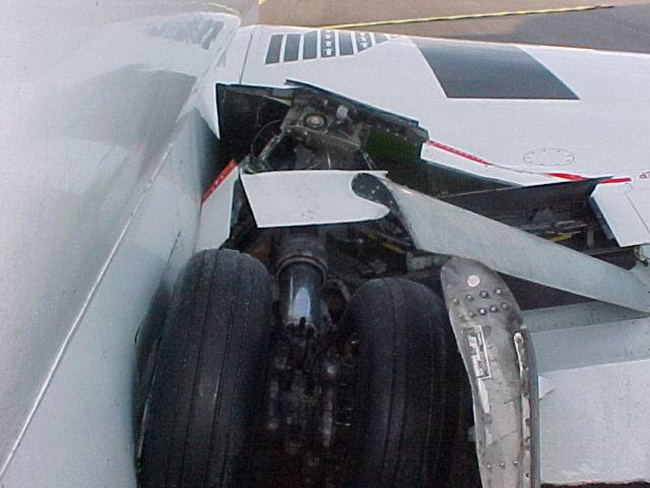
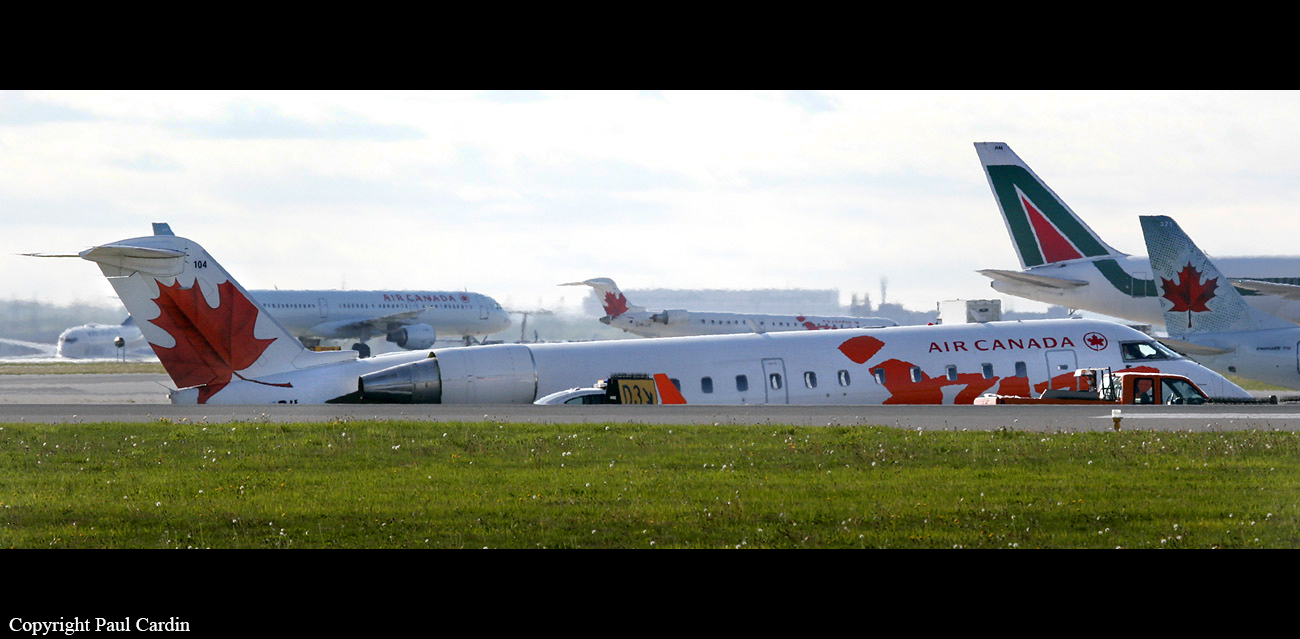
The aircraft, with 3 crew members and 37 passengers on board, was operating as Air Canada Jazz Flight 8911 from Moncton, New Brunswick, to Toronto/Lester B. Pearson International Airport, Ontario. At 1235 eastern daylight time, the aircraft landed on Runway 06R with a 90º crosswind from the left, gusting from 13 to 23 knots. The aircraft first contacted the runway in a left-wing-down sideslip. The left main landing gear struck the runway first and the aircraft sustained a sharp lateral side load before bouncing. Once airborne again, the flight and ground spoilers deployed and the aircraft landed hard. Both main landing gear trunnion fittings failed and the landing gear collapsed. The aircraft remained upright, supported by the landing gear struts and wheels. The aircraft slid down the runway and exited via a taxiway, where the passengers deplaned. There was no fire. There were no injuries to the crew; some passengers reported minor injuries as a result of the hard landing.
Probable cause:
Findings as to Causes and Contributing Factors:
1. On final approach, the captain diverted his attention from monitoring the flight, leaving most of the decision making and control of the aircraft to the first officer, who was significantly less experienced on the aircraft type. As a result, the first officer was not fully supervised during the late stages of the approach.
2. The first officer did not adhere to the Air Canada Jazz standard operating procedures (SOPs) in the handling of the autopilot and thrust levers on short final, which left the aircraft highly susceptible to a bounce, and without the bounce protection normally provided by the ground lift dump (GLD) system.
3. Neither the aircraft operating manual nor the training that both pilots had received mentioned the importance of conducting a balked or rejected landing when the aircraft bounces. Given the low-energy state of the aircraft at the time of the bounce, the first officer attempted to salvage the landing.
4. When the thrust levers were reduced to idle after the bounce, the GLD system activated. The resultant sink rate after the GLD system deployed was beyond the certification standard for the landing gear and resulted in the landing gear trunnion fitting failures.
5. There was insufficient quality control at the landing gear overhaul facility, which allowed non-airworthy equipment to enter into service. The condition of the shock struts would have contributed to the bounce.
Findings as to Risk:
1. Several passengers took carry-on items with them as they exited the aircraft, despite being instructed not to do so.
2. The location of the stored megaphone did not allow the flight attendant to have ready access after the passengers started moving to the exit door.
1. On final approach, the captain diverted his attention from monitoring the flight, leaving most of the decision making and control of the aircraft to the first officer, who was significantly less experienced on the aircraft type. As a result, the first officer was not fully supervised during the late stages of the approach.
2. The first officer did not adhere to the Air Canada Jazz standard operating procedures (SOPs) in the handling of the autopilot and thrust levers on short final, which left the aircraft highly susceptible to a bounce, and without the bounce protection normally provided by the ground lift dump (GLD) system.
3. Neither the aircraft operating manual nor the training that both pilots had received mentioned the importance of conducting a balked or rejected landing when the aircraft bounces. Given the low-energy state of the aircraft at the time of the bounce, the first officer attempted to salvage the landing.
4. When the thrust levers were reduced to idle after the bounce, the GLD system activated. The resultant sink rate after the GLD system deployed was beyond the certification standard for the landing gear and resulted in the landing gear trunnion fitting failures.
5. There was insufficient quality control at the landing gear overhaul facility, which allowed non-airworthy equipment to enter into service. The condition of the shock struts would have contributed to the bounce.
Findings as to Risk:
1. Several passengers took carry-on items with them as they exited the aircraft, despite being instructed not to do so.
2. The location of the stored megaphone did not allow the flight attendant to have ready access after the passengers started moving to the exit door.
Final Report: