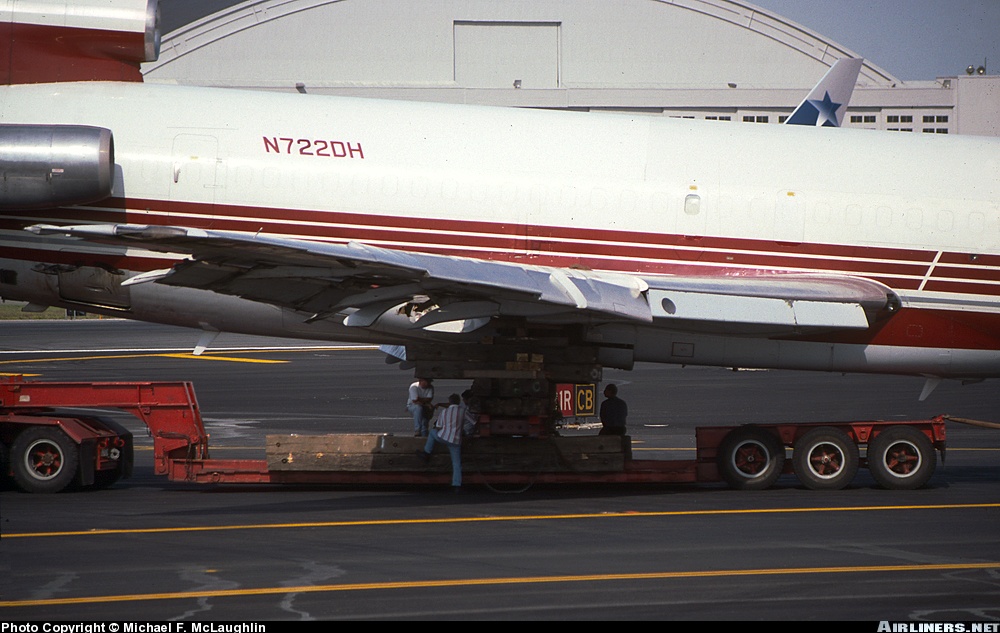
Crash of a Boeing 727-228F in New York

Date & Time: Aug 31, 1998 at 2235 LT
Type of aircraft:
Operator:
Registration:
N722DH
Flight Type:
Survivors:
Yes
Schedule:
New York - Covington
MSN:
19861
YOM:
1969
Flight number:
DHL1165
Crew on board:
5
Crew fatalities:
Pax on board:
0
Pax fatalities:
Other fatalities:
Total fatalities:
0
Captain / Total flying hours:
16000
Captain / Total hours on type:
5000.00
Copilot / Total flying hours:
6000
Copilot / Total hours on type:
1200
Aircraft flight hours:
50861
Circumstances:
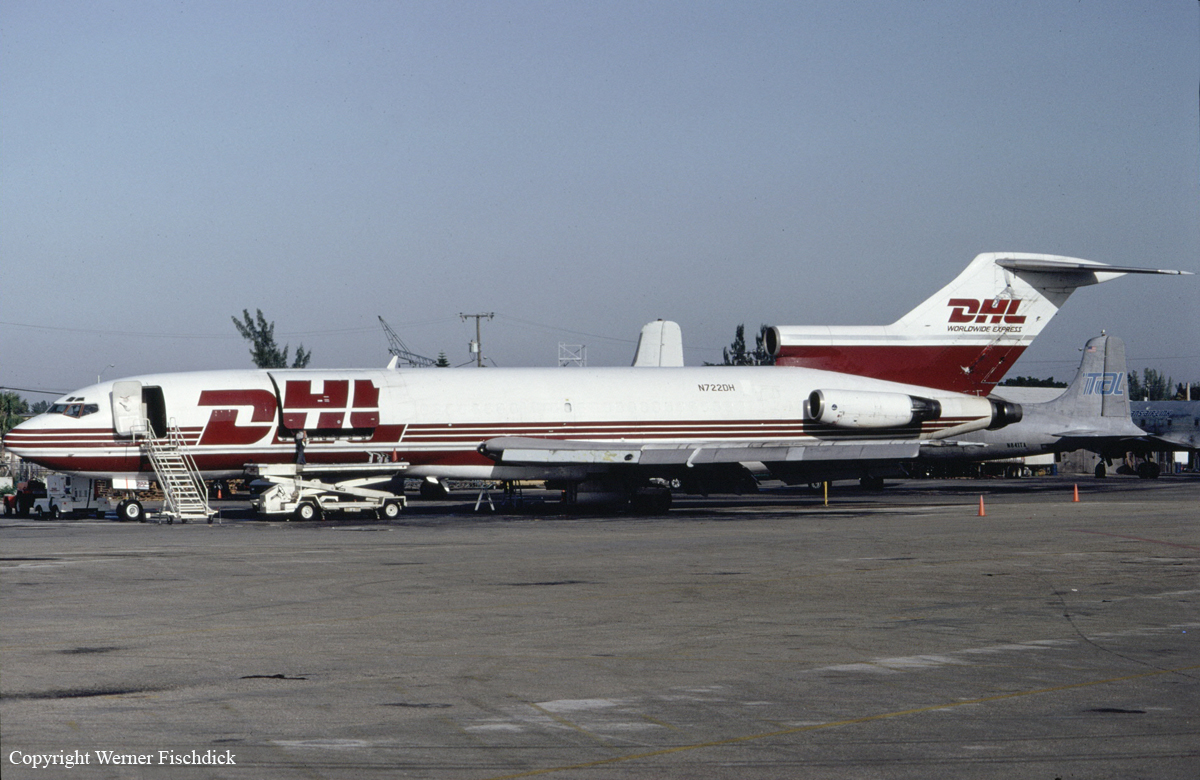
Shortly after takeoff, the No. 2 engine failed and shutdown procedures for the No. 2 engine were accomplished. The flight crew declared an emergency and requested to return to the airport. On approach, an engine out go-around was required as ATC had instructed the flight crew of a B-747 to "position and hold" on the end of the runway. The first officer was the pilot flying. Following an uneventful touchdown, as the airplane slowed to about 80 knots, the captain took control of the airplane. Shortly thereafter, the right main landing gear (MLG) collapsed and the airplane slid to a stop on the runway. Examination of the No. 2 engine revealed that 80 percent of the main fuel pump main drive shaft was worn to the spline root. The examination also revealed that the grease used to lubricate the main drive shaft output splines was not the authorized grease specified per OHM 73-11-1 or MIL-G-81322. Additionally, the magnetic seal compression O-ring that rides on the drive gear journal outer diameter was hardened and exhibited inner diameter axial cracks. The component manufacturer indicated that the failure of the magnetic seal was the first such reported incident in 30 years; however, it agreed to review operational data from airlines to reevaluate the mean time between overhaul intervals for the seal and to recommend an inspection interval, as necessary. Examination of the right MLG revealed a fracture failure of the trunnion bearing support fitting that was caused by fatigue cracking and stress corrosion cracking.
Probable cause:
The failure of the right main landing gear caused by fatigue cracking and stress corrosion cracking of the trunnion bearing support fitting.
Final Report:
Crash of a Dassault Falcon 10 in White Plains

Date & Time: Jun 30, 1997
Type of aircraft:
Registration:
N10YJ
Survivors:
Yes
MSN:
57
YOM:
1975
Crew on board:
2
Crew fatalities:
Pax on board:
2
Pax fatalities:
Other fatalities:
Total fatalities:
0
Aircraft flight hours:
6784
Circumstances:
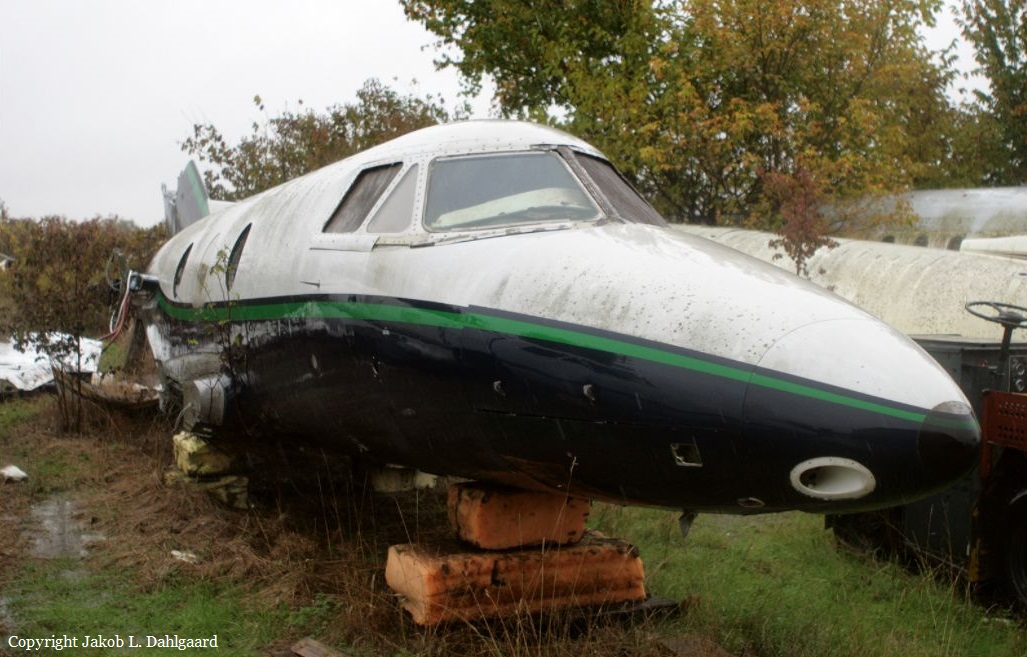
On approach to White Plains-Westchester County Airport, the crew noted a left main gear unsafe light. The gear was recycled and the crew agreed with ATC to perform a low pass to check the gear. Few minutes later, upon landing, the left main gear collapsed. All four occupants escaped uninjured while the aircraft was damaged beyond repair.
Probable cause:
No investigations were conducted on this event.

Crash of a Gulfstream GII in New York

Date & Time: Mar 25, 1997 at 0510 LT
Type of aircraft:
Operator:
Registration:
N117FJ
Survivors:
Yes
Schedule:
Allentown - New York
MSN:
229
YOM:
1978
Crew on board:
2
Crew fatalities:
Pax on board:
2
Pax fatalities:
Other fatalities:
Total fatalities:
0
Captain / Total flying hours:
9900
Captain / Total hours on type:
3860.00
Copilot / Total flying hours:
21000
Copilot / Total hours on type:
4000
Aircraft flight hours:
6743
Circumstances:
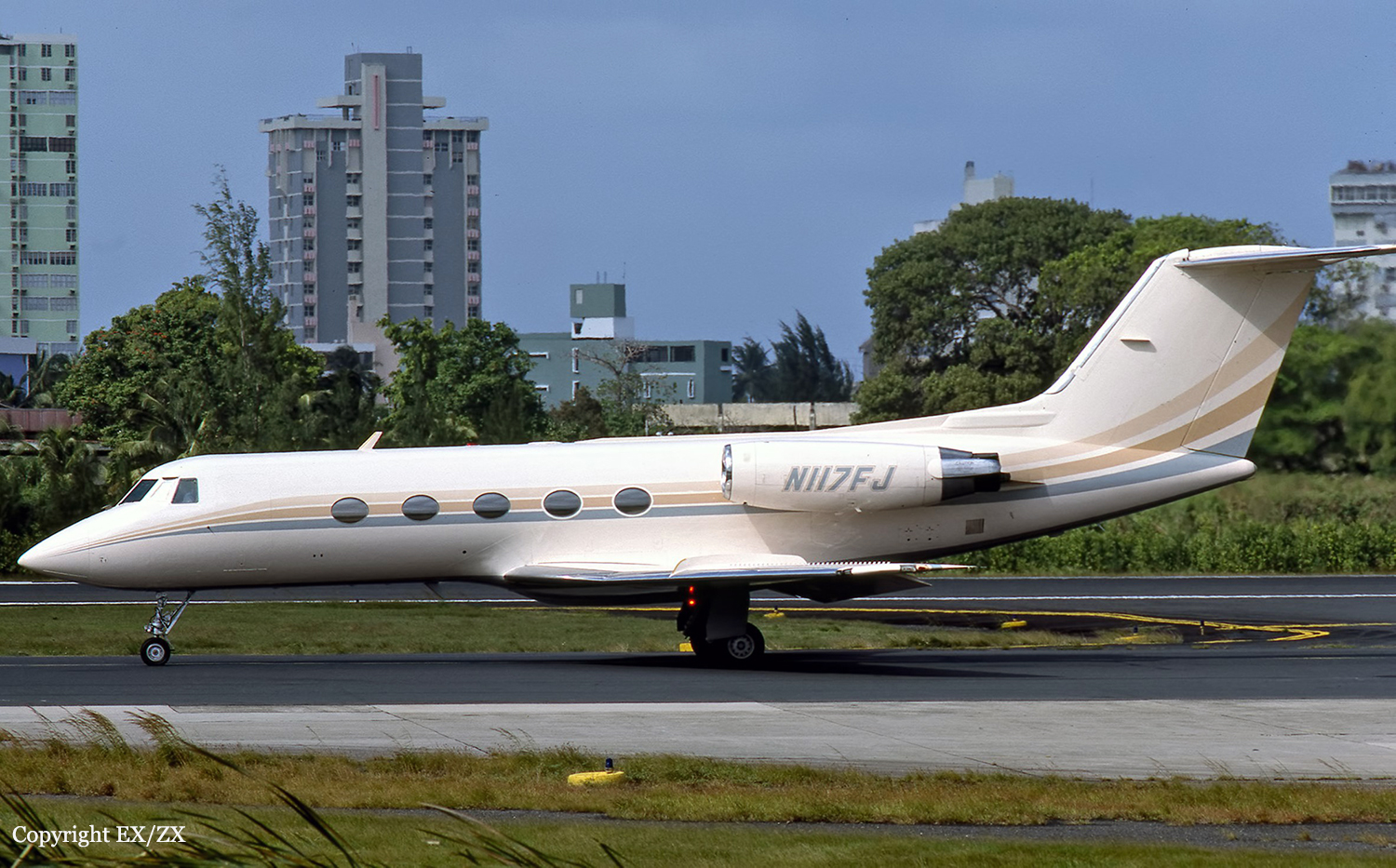
All positions at LaGuardia Tower were combined to the local control position from 0011 EST until after the accident. At about 0430 EST, ground personnel in 'Vehicle 1277' (communicating on ground control frequency), were cleared on runway 13/31 to perform 'lighting maintenance.' Later, during repair of centerline lights and while N117FJ was inbound to the airport, Vehicle 1277 stalled on runway 13/31. Personnel of Vehicle 1277 attempted to restart the vehicle, but were unable, so they shut off all vehicle lights to reduce electrical load, and again attempted to restart the vehicle, but to no avail. At 0507 (during darkness), N117FJ made initial call to the tower for landing. The controller acknowledged the call, scanned runway 13/31, did not see Vehicle 1277, and cleared N117FJ to land on runway 31. At 0510, personnel of Vehicle 1277 observed N117FJ in the approach/landing phase and radioed ground controller that they were stuck on the runway. The controller then radioed, 'go-around, aircraft on the runway go-around, aircraft on the runway go-around, seven fox juliet go-around.' Moments later, N117FJ impacted Vehicle 1277. The FAA ATC Handbook stated, 'Ensure that the runway to be used is clear of all known ground vehicles, equipment, and personnel before a departing aircraft starts takeoff or a landing aircraft crosses the runway threshold.'
Probable cause:
The tower controller's inadequate service by clearing the airplane to land on the same runway, where he had previously cleared a maintenance vehicle to perform maintenance to the runway centerline lights. Factors related to the accident were: darkness, partial failure of the runway centerline lights, the electric maintenance vehicle's loss of engine power, and a failure to have adequate emergency backup lighting.
Final Report:

Crash of a Cessna 425 Conquest in Ronkonkoma: 3 killed

Date & Time: Dec 16, 1996 at 1840 LT
Type of aircraft:
Registration:
N425EW
Survivors:
No
Schedule:
Macon – Ronkonkoma
MSN:
425-0150
YOM:
1983
Crew on board:
1
Crew fatalities:
Pax on board:
2
Pax fatalities:
Other fatalities:
Total fatalities:
3
Captain / Total flying hours:
10846
Captain / Total hours on type:
2089.00
Circumstances:
The pilot had received clearance for the ILS Runway 6 approach and was advised that the previous landing traffic reported '...breaking out at minimums.' Radar data revealed that the airplane descended in instrument meteorological conditions to the decision height altitude of 294 feet, approximately 3 miles from the missed approach point. The pilot did not perform the missed approach procedure. The airplane leveled off and continued at or below decision height altitude for approximately 28 seconds, traveling a distance of approximately 1 mile. Four low altitude alerts appeared on the tower controller's display. The controller stated he withheld the alert because '...it was a critical phase of flight and the aircraft appeared to be climbing...' The airplane collided with trees and terrain approximately 1.5 miles from the approach end of the landing runway.
Probable cause:
The pilot's early descent to decision height and his failure to perform the missed approach procedure. A factor was the failure of air traffic control to issue a safety advisory.
Final Report:

Ground fire of a Douglas DC-10-10CF in Newburgh

Date & Time: Sep 5, 1996 at 0554 LT
Type of aircraft:
Operator:
Registration:
N68055
Flight Type:
Survivors:
Yes
Schedule:
Memphis - Boston
MSN:
47809
YOM:
1975
Flight number:
FDX1406
Crew on board:
3
Crew fatalities:
Pax on board:
2
Pax fatalities:
Other fatalities:
Total fatalities:
0
Captain / Total flying hours:
12344
Captain / Total hours on type:
2504.00
Copilot / Total flying hours:
6535
Copilot / Total hours on type:
1101
Aircraft flight hours:
38271
Aircraft flight cycles:
17818
Circumstances:
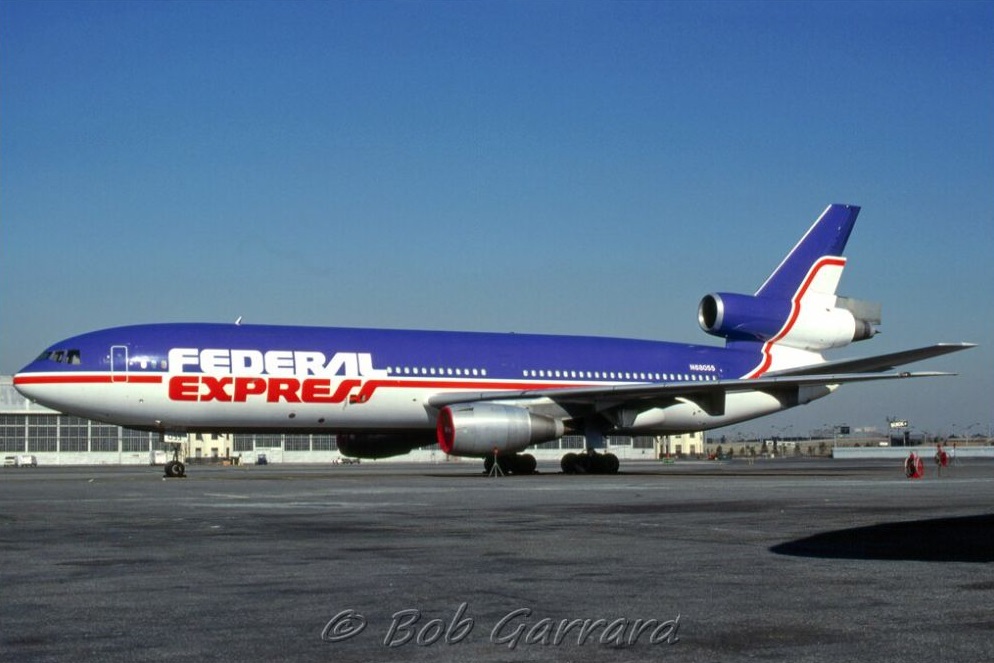
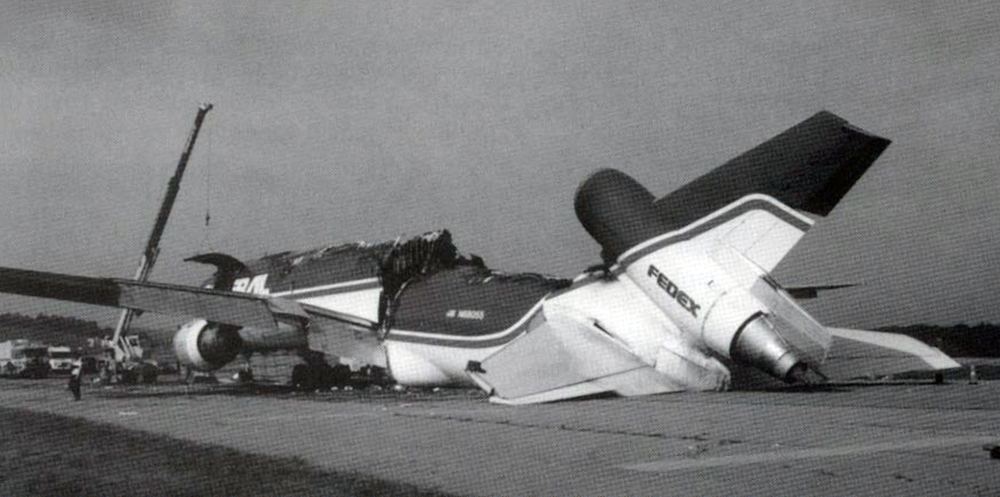
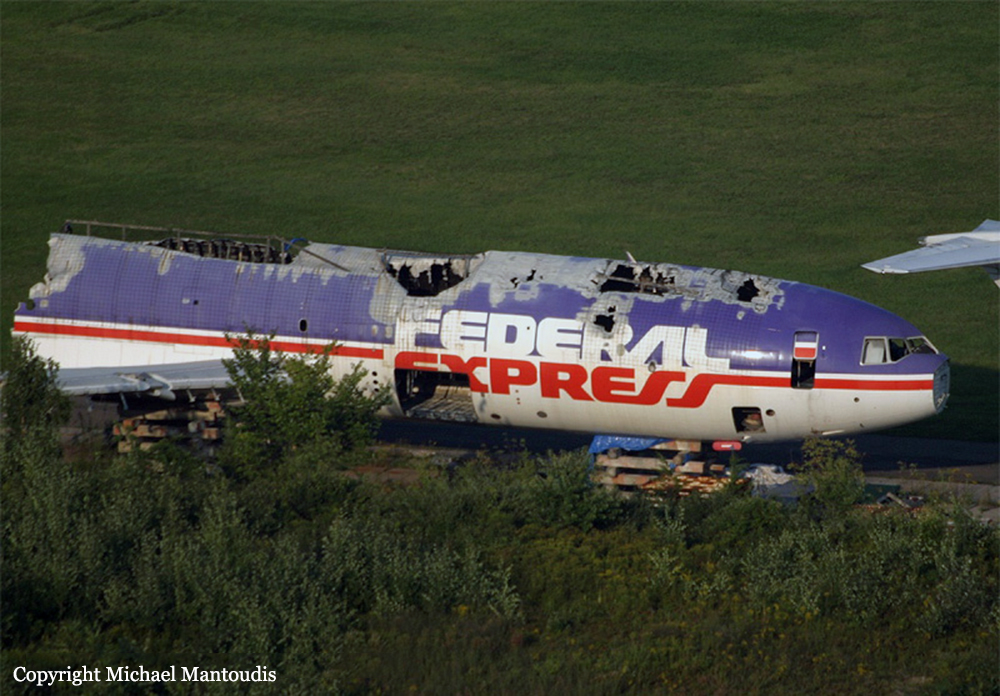
The airplane was at FL 330 when the flightcrew determined that there was smoke in the cabin cargo compartment. An emergency was declared and the flight diverted to Newburgh/Stewart International Airport and landed. The airplane was destroyed by fire after landing. The fire had burned for about 4 hours after after smoke was first detected. Investigation revealed that the deepest and most severe heat and fire damage occurred in and around container 06R, which contained a DNA synthesizer containing flammable liquids. More of 06R's structure was consumed than of any other container, and it was the only container that exhibited severe floor damage. Further, 06R was the only container to exhibit heat damage on its bottom surface, and the area below container 06R showed the most extensive evidence of scorching of the composite flooring material. However, there was insufficient reliable evidence to reach a conclusion as to where the fire originated. The presence of flammable chemicals in the DNA synthesizer was wholly unintended and unknown to the preparer of the package and shipper. The captain did not adequately manage his crew resources when he failed to call for checklists or to monitor and facilitate the accomplishment of required checklist items. The Department of Transportation hazardous materials regulations do not adequately address the need for hazardous materials information on file at a carrier to be quickly retrievable in a format useful to emergency responders.
Probable cause:
An in-flight cargo fire of undetermined origin.
Final Report:

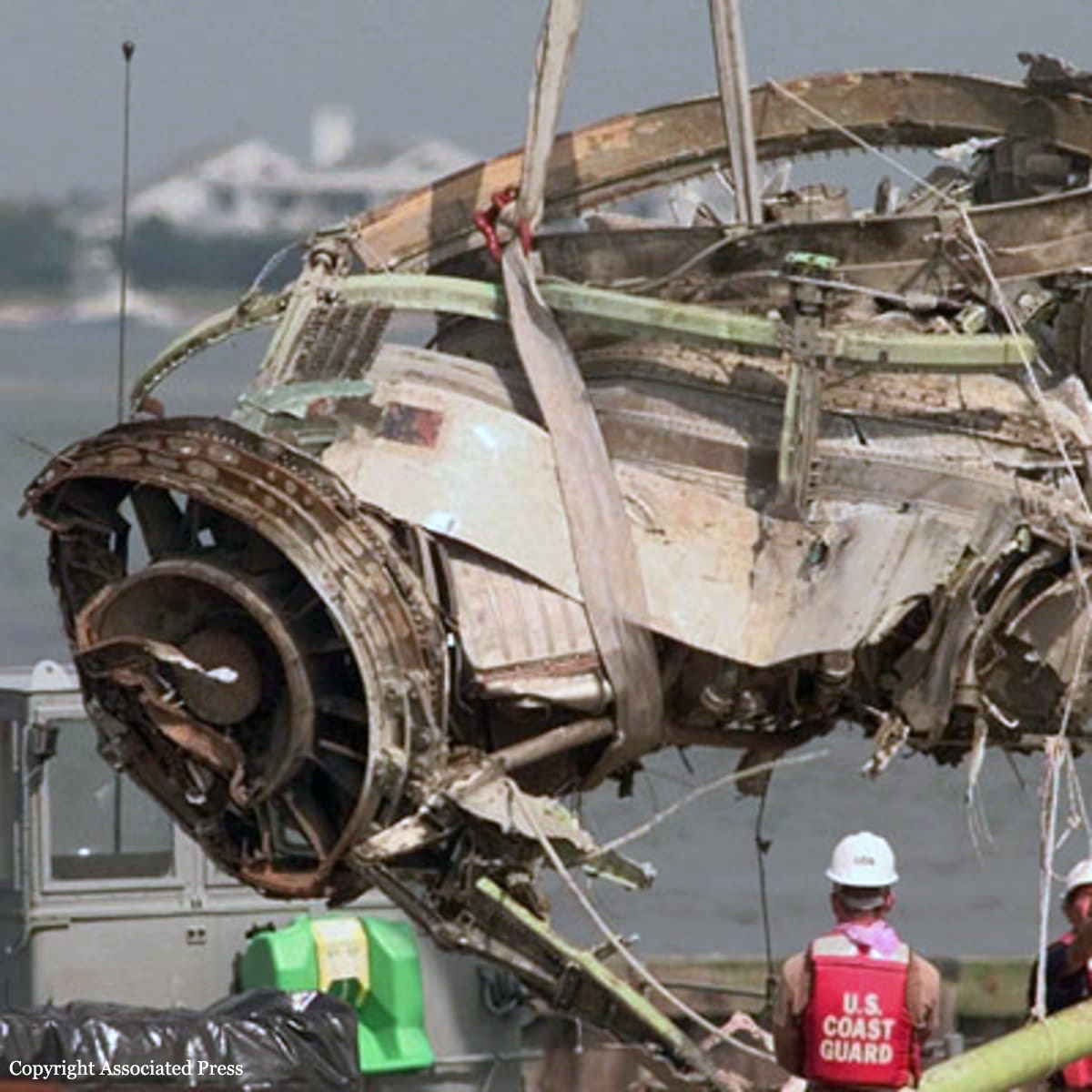
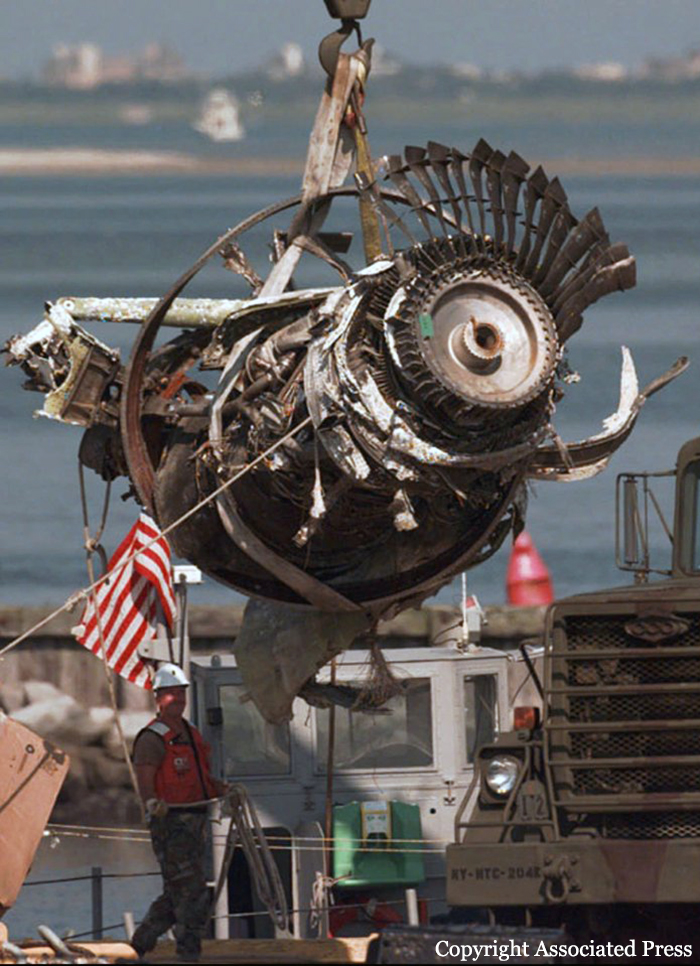
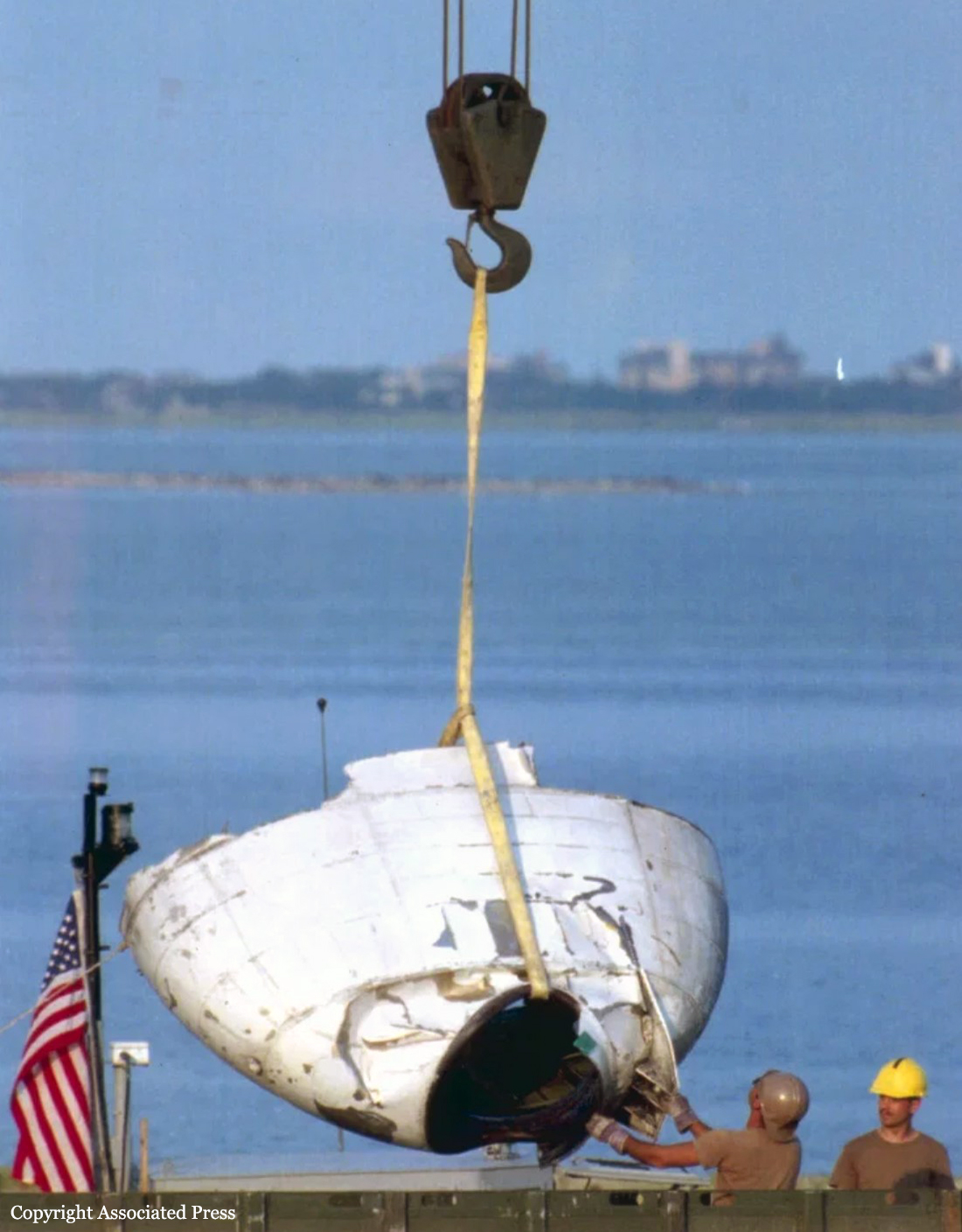
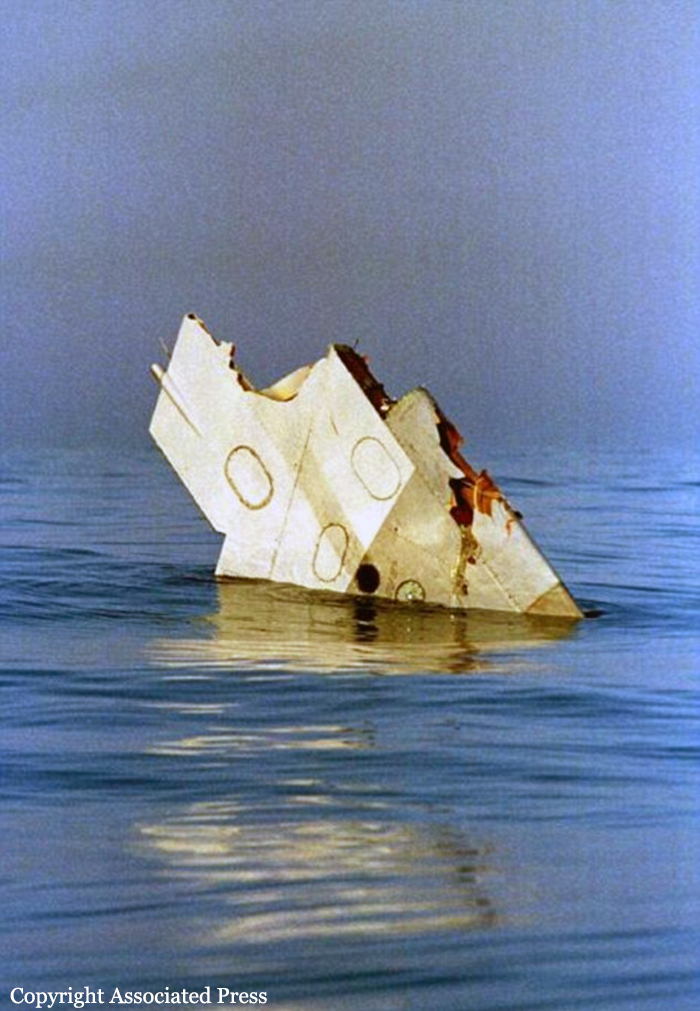
Crash of a Boeing 747-131 off East Moriches: 230 killed

Date & Time: Jul 17, 1996 at 2031 LT
Type of aircraft:
Operator:
Registration:
N93119
Flight Phase:
Survivors:
No
Schedule:
New York – Paris
MSN:
20083
YOM:
1971
Flight number:
TW800
Crew on board:
18
Crew fatalities:
Pax on board:
212
Pax fatalities:
Other fatalities:
Total fatalities:
230
Captain / Total flying hours:
18800
Captain / Total hours on type:
5490.00
Copilot / Total flying hours:
17000
Copilot / Total hours on type:
4700
Aircraft flight hours:
93303
Aircraft flight cycles:
16869
Circumstances:
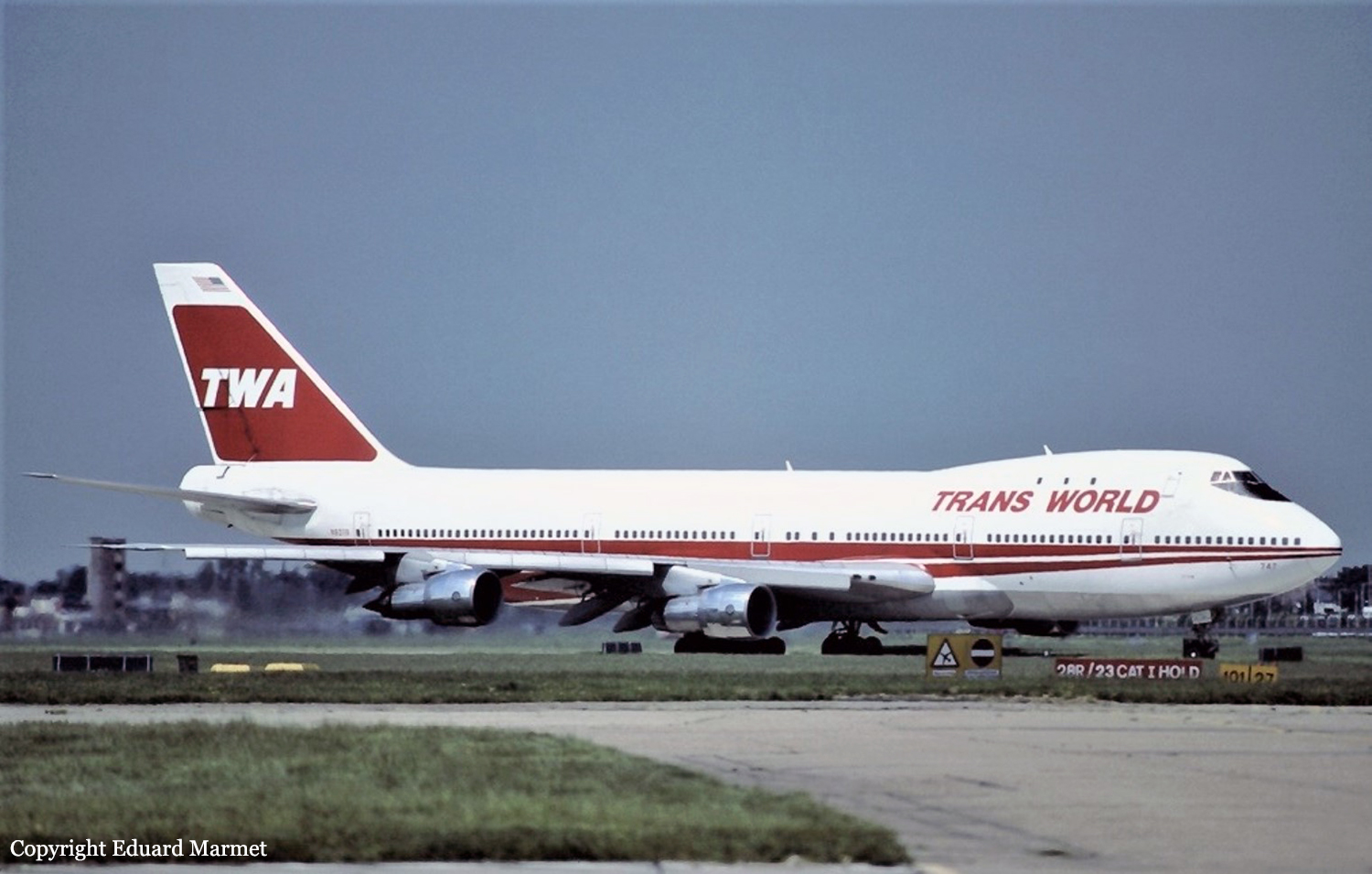
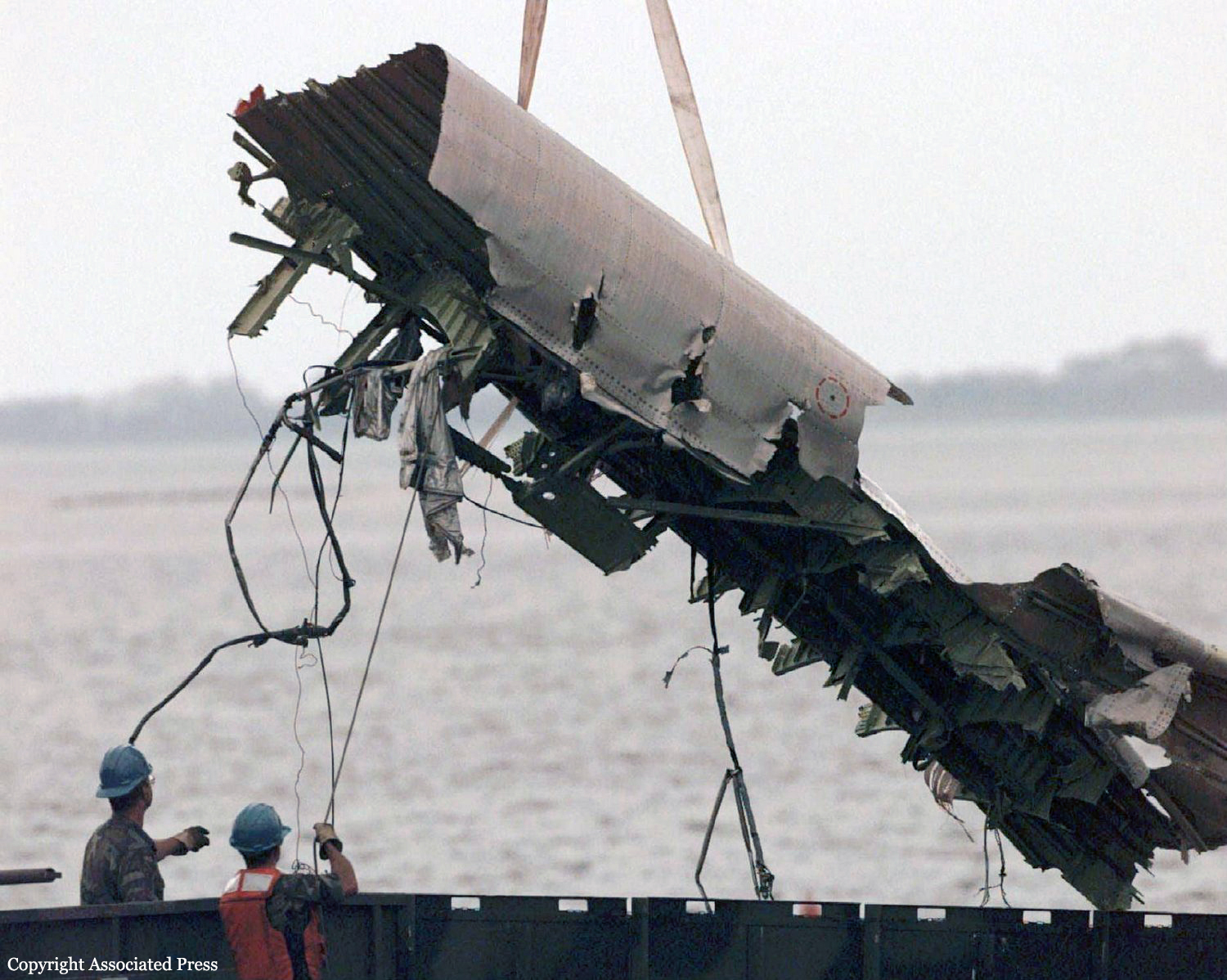
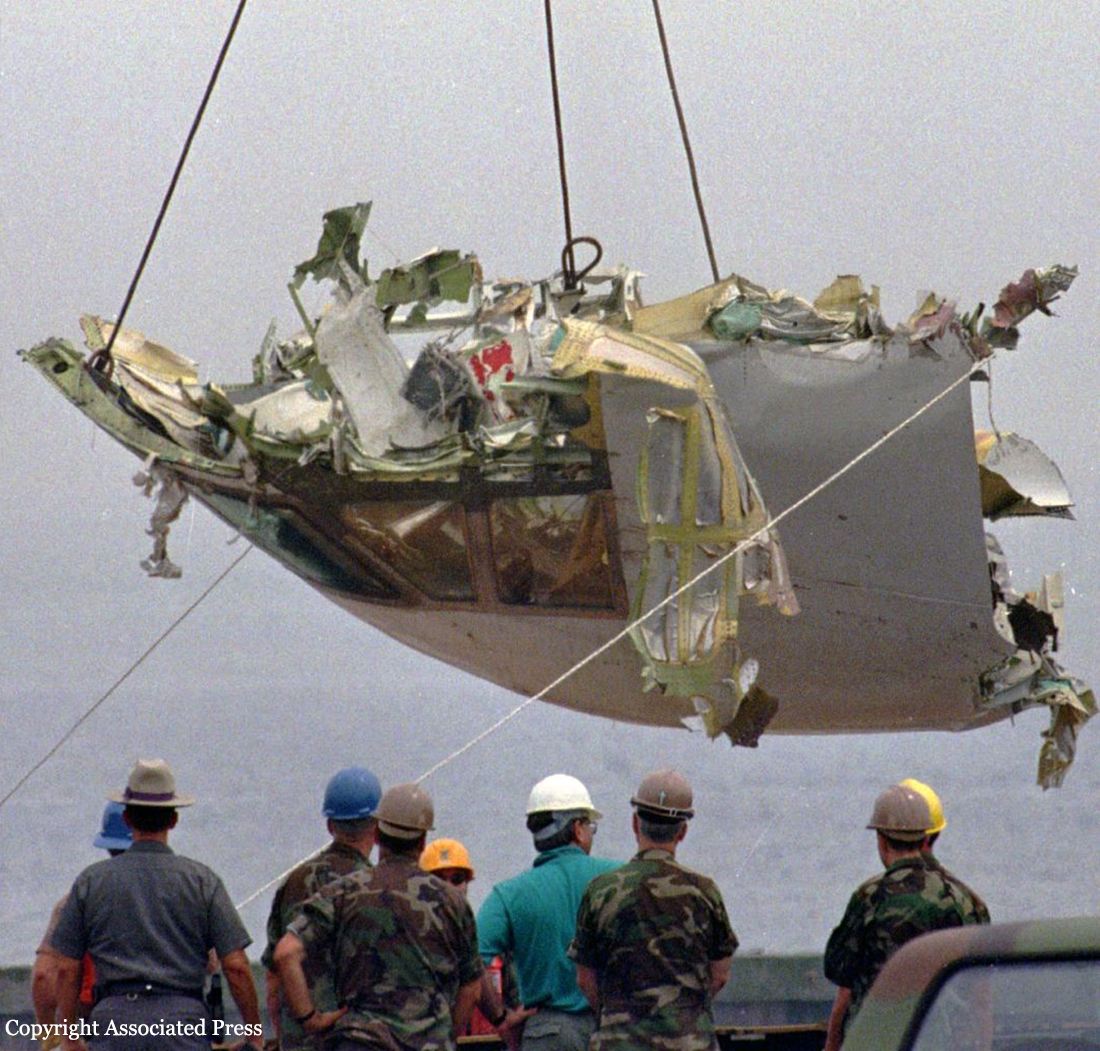
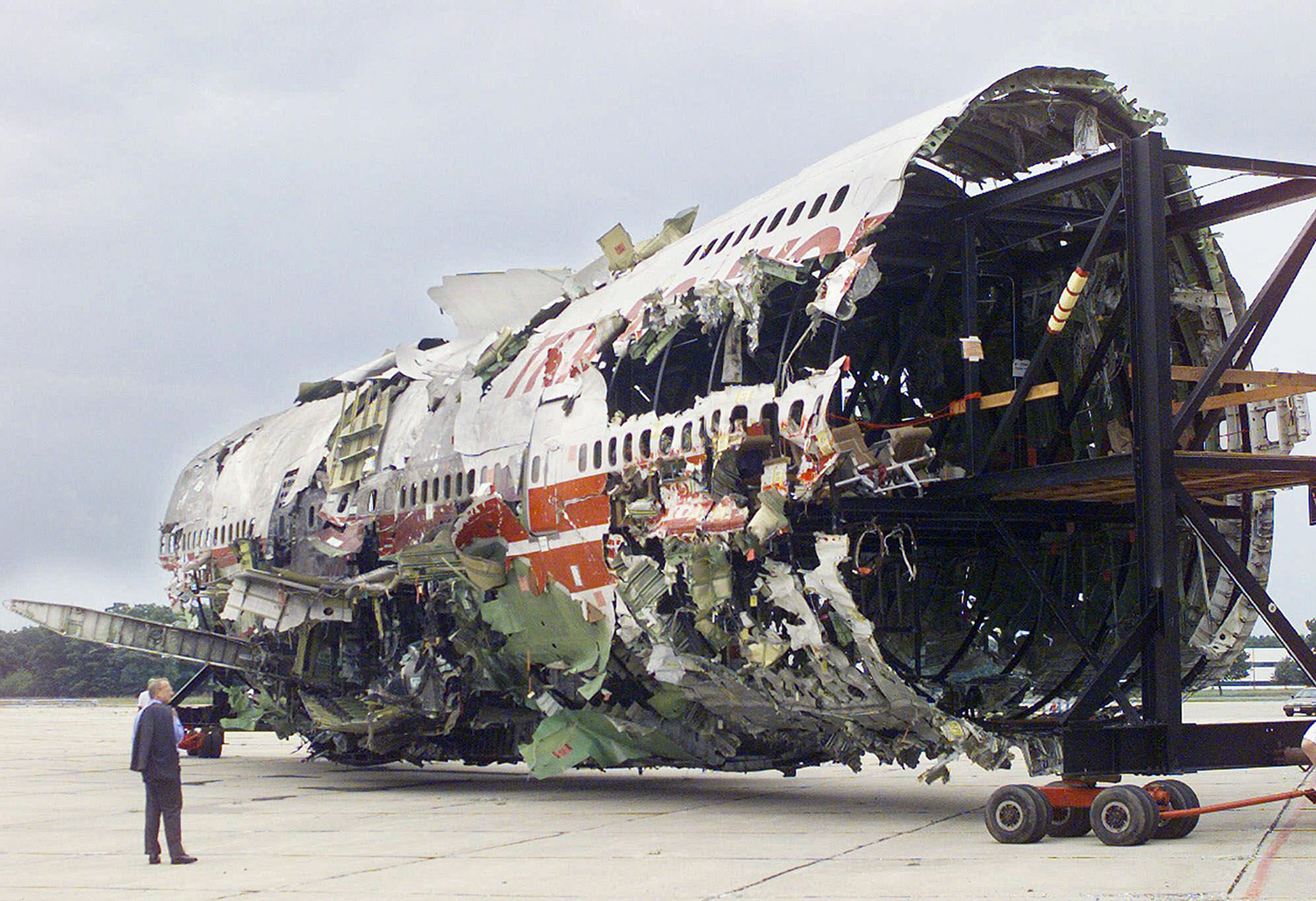
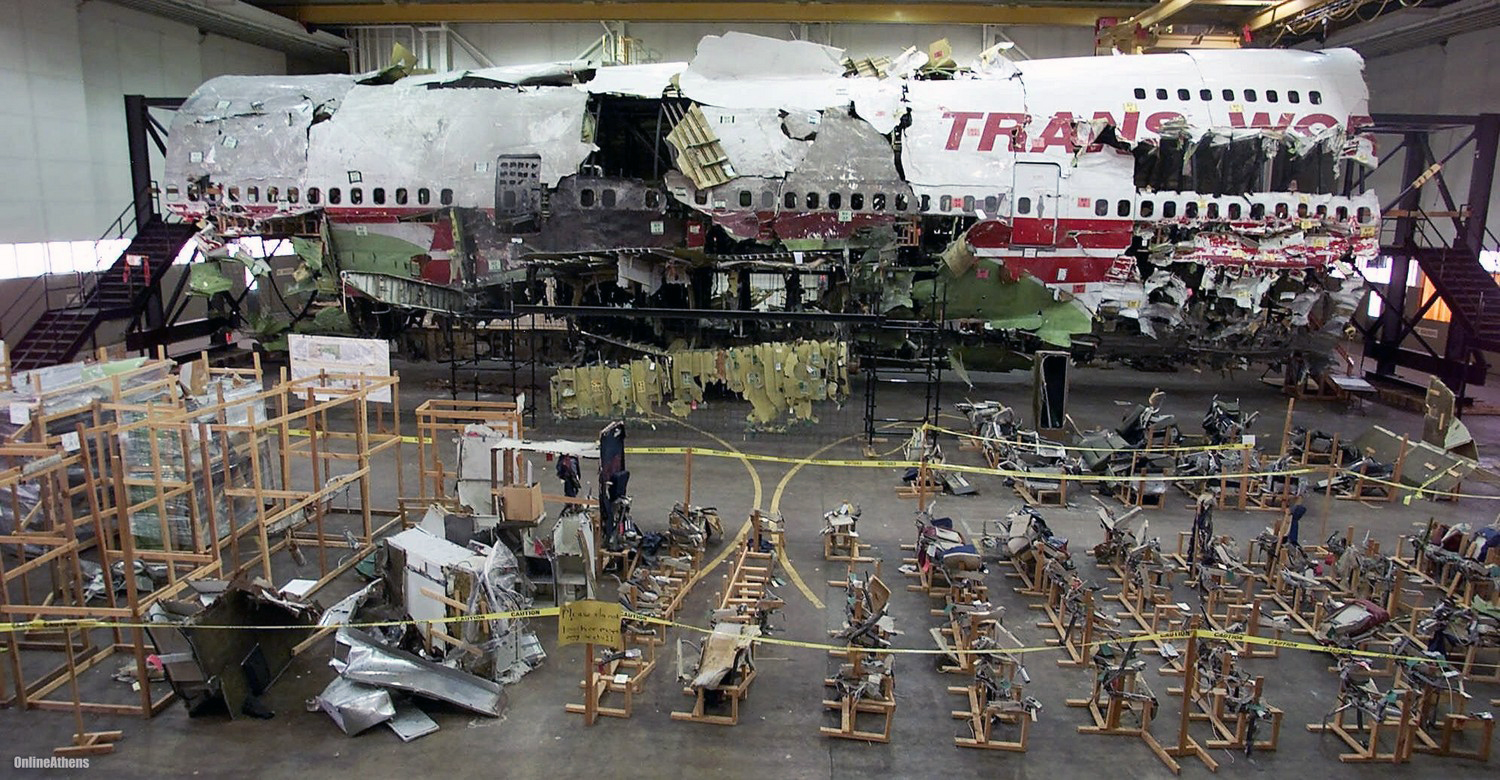
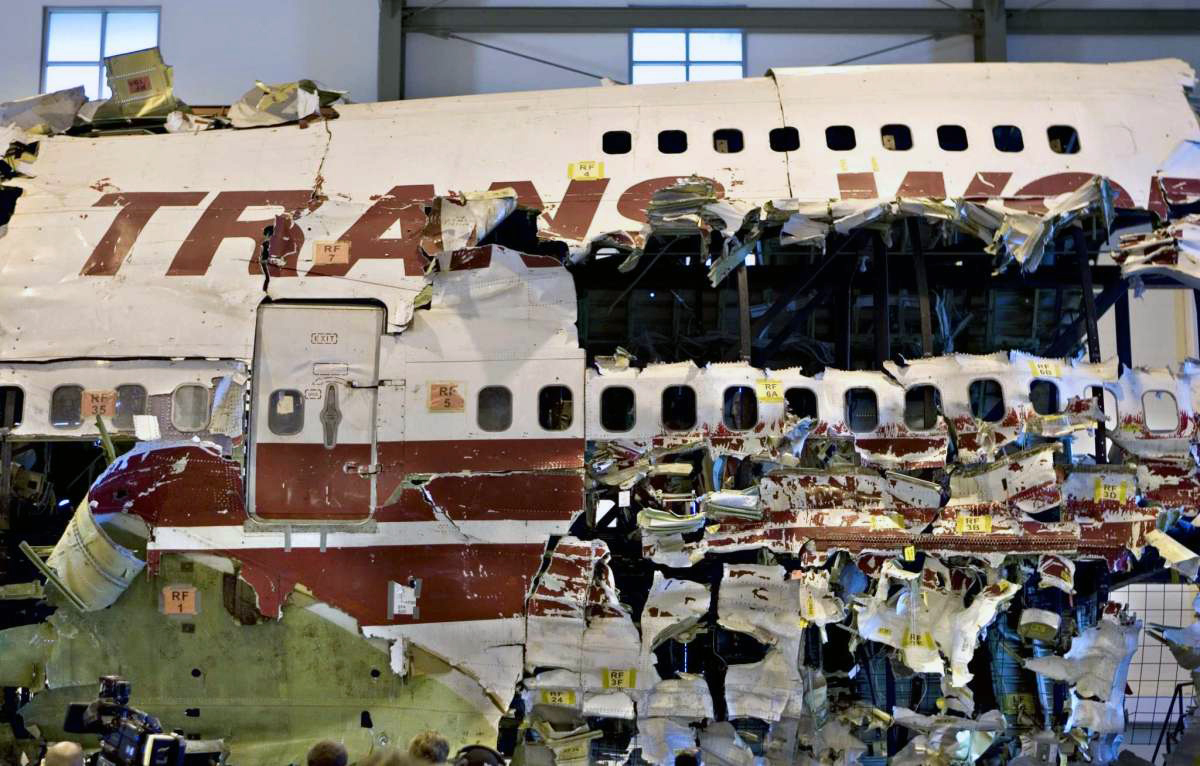
On July 17, 1996, about 2031 eastern daylight time, Trans World Airlines, Inc. (TWA) flight 800, a Boeing 747-131, N93119, crashed in the Atlantic Ocean near East Moriches, New York. TWA flight 800 was operating under the provisions of 14 Code of Federal Regulations Part 121 as a scheduled international passenger flight from John F. Kennedy International Airport (JFK), New York, New York, to Charles De Gaulle International Airport, Paris, France. The flight departed JFK about 2019, with 2 pilots, 2 flight engineers, 14 flight attendants, and 212 passengers on board. All 230 people on board were killed, and the airplane was destroyed. Visual meteorological conditions prevailed for the flight, which operated on an instrument flight rules flight plan. The investigation revealed that the crash occurred as the result of a fuel/air explosion in the airplane's center wing fuel tank (CWT) and the subsequent in-flight breakup of the airplane. The investigation further revealed that the ignition energy for the CWT explosion most likely entered the CWT through the fuel quantity indication system wiring; neither the ignition energy release mechanism nor the location of the ignition inside the CWT could be determined from the available evidence. There was no evidence of a missile or bomb detonation.
Probable cause:
An explosion of the center wing fuel tank (CWT), resulting from ignition of the flammable fuel/air mixture in the tank. The source of ignition energy for the explosion could not be determined with certainty, but, of the sources evaluated by the investigation, the most likely was a short circuit outside of the CWT that allowed excessive voltage to enter it through electrical wiring associated with the fuel quantity indication system. Contributing factors to the accident were the design and certification concept that fuel tank explosions could be prevented solely by precluding all ignition sources and the design and certification of the Boeing 747 with heat sources located beneath the CWT with no means to reduce the heat transferred into the CWT or to render the fuel vapor in the tank non flammable.
Final Report: