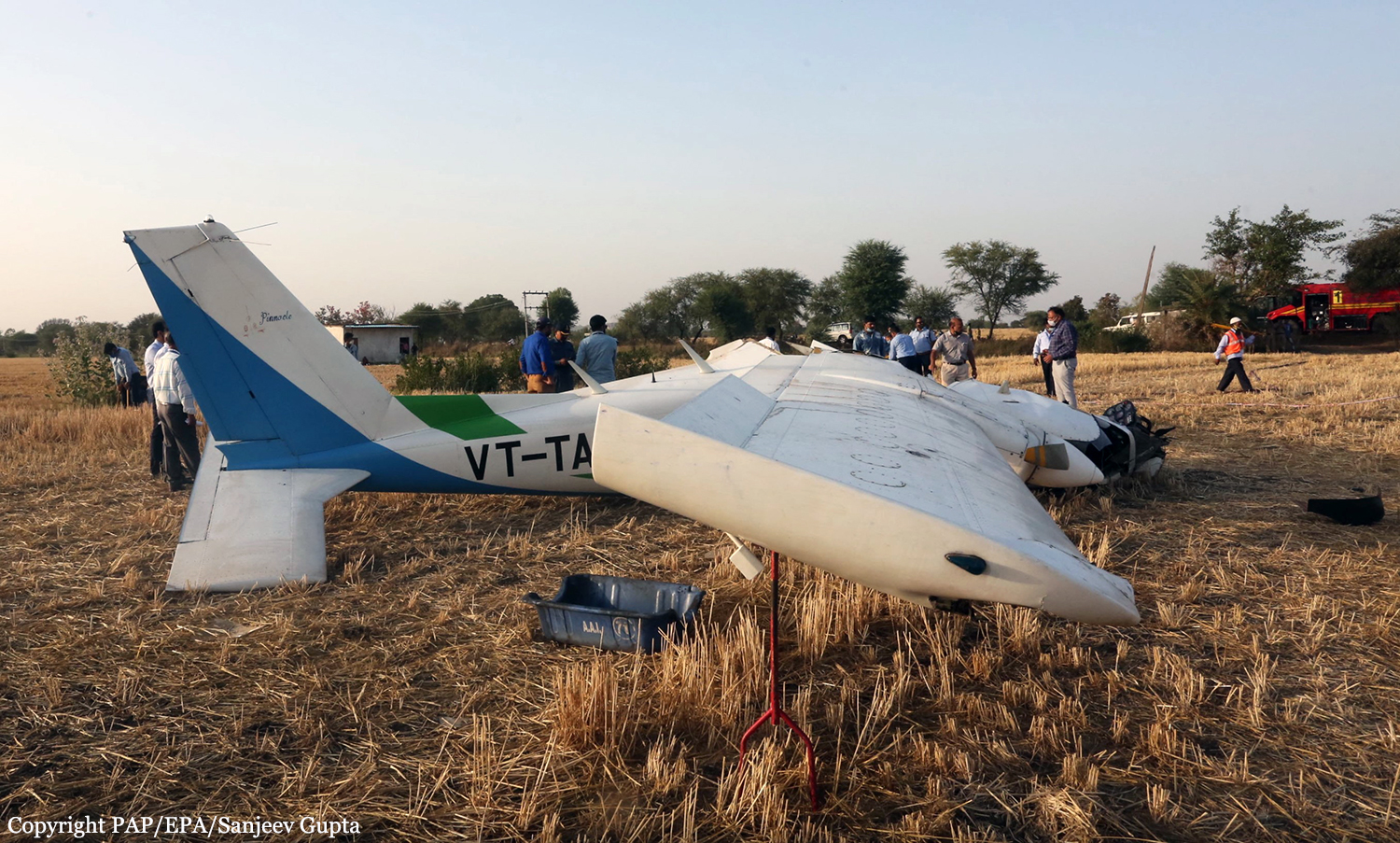
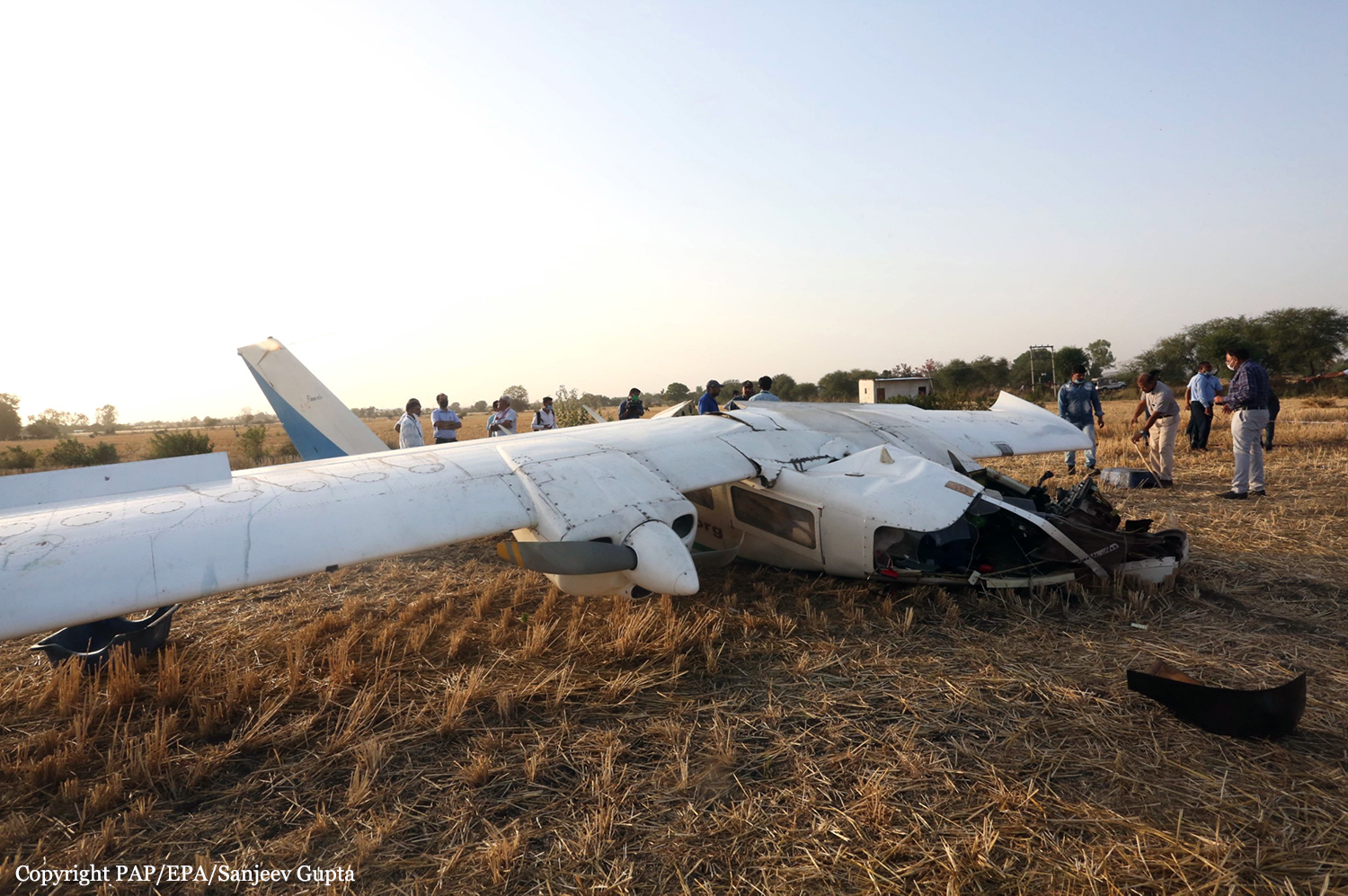
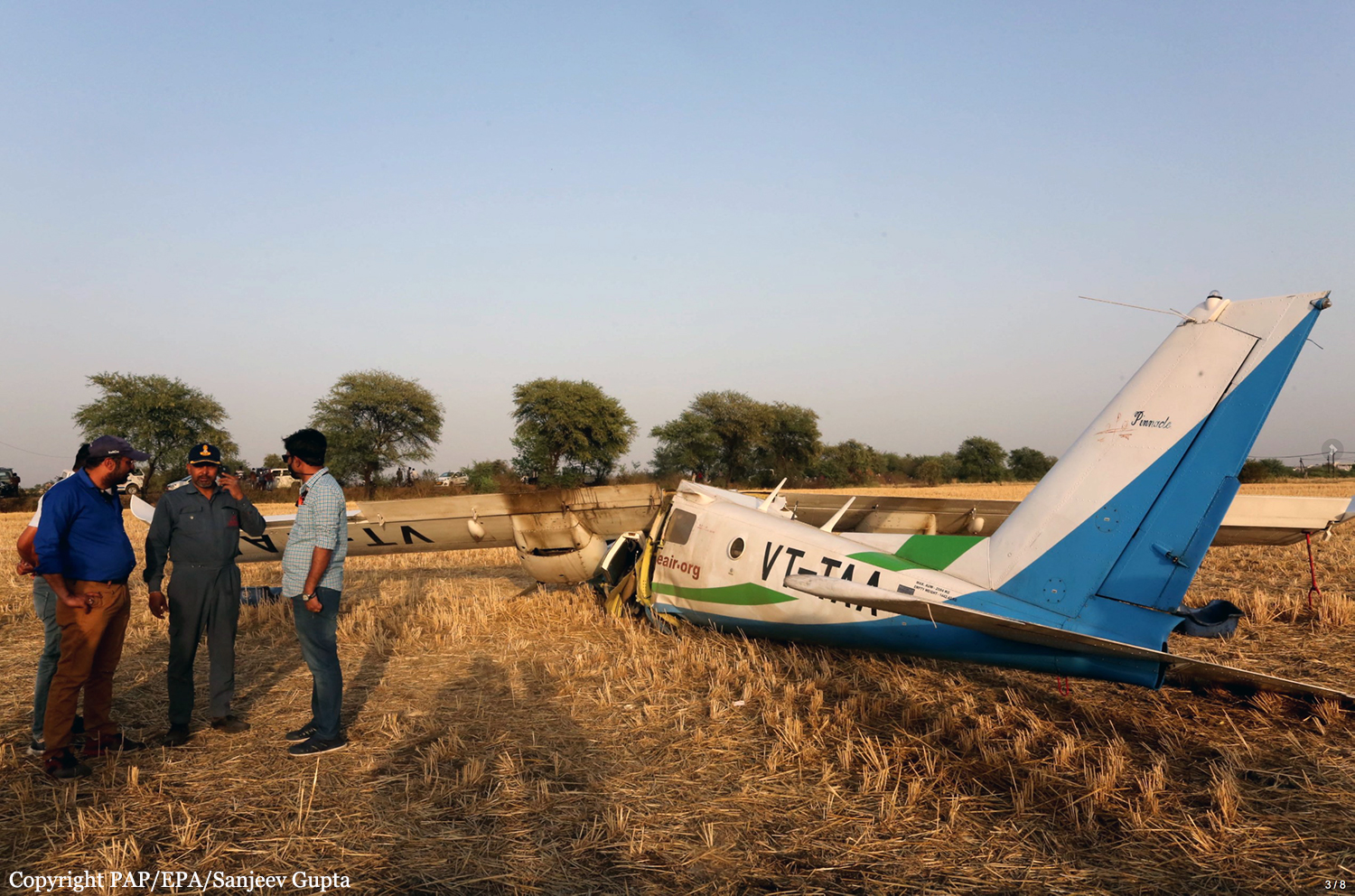
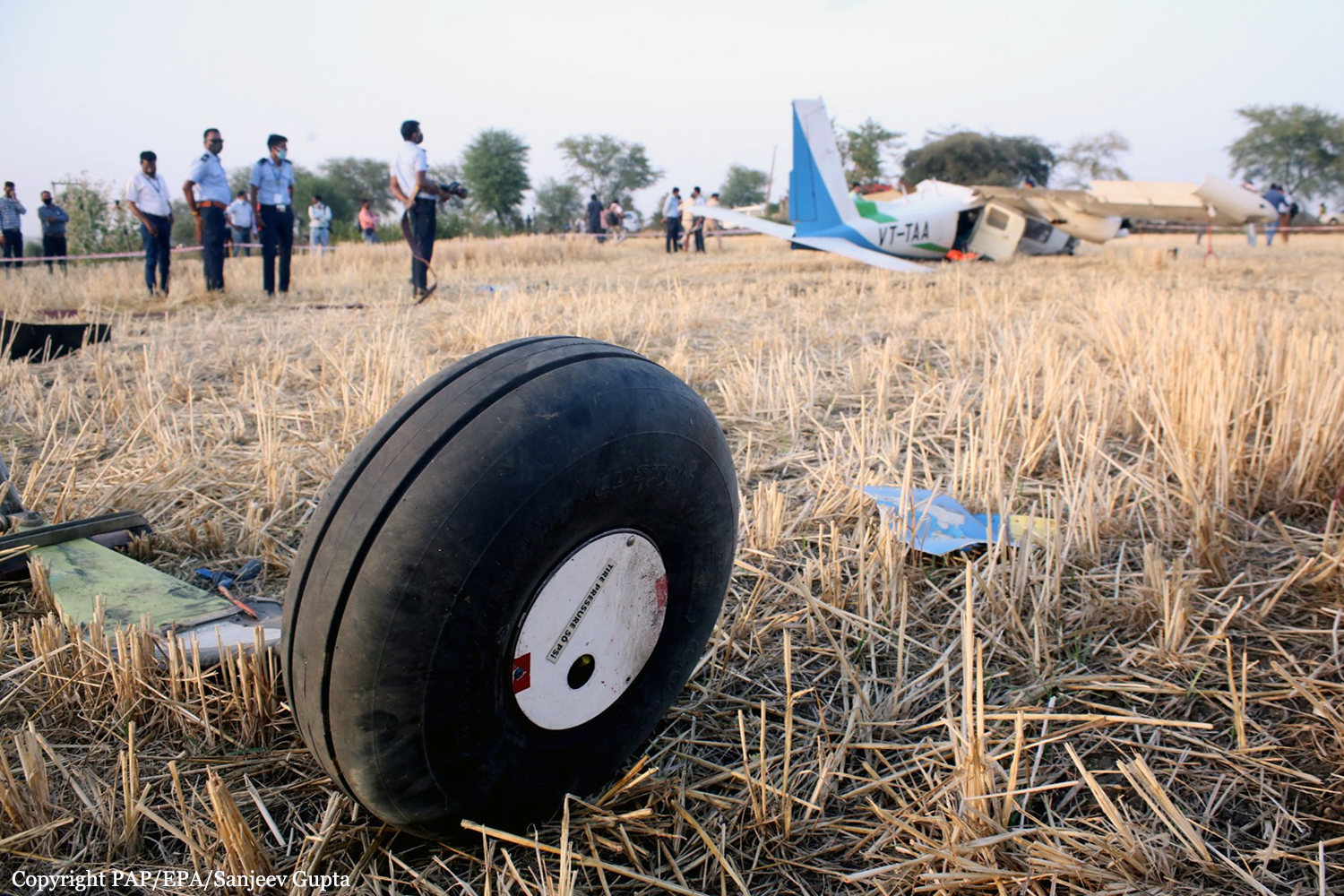
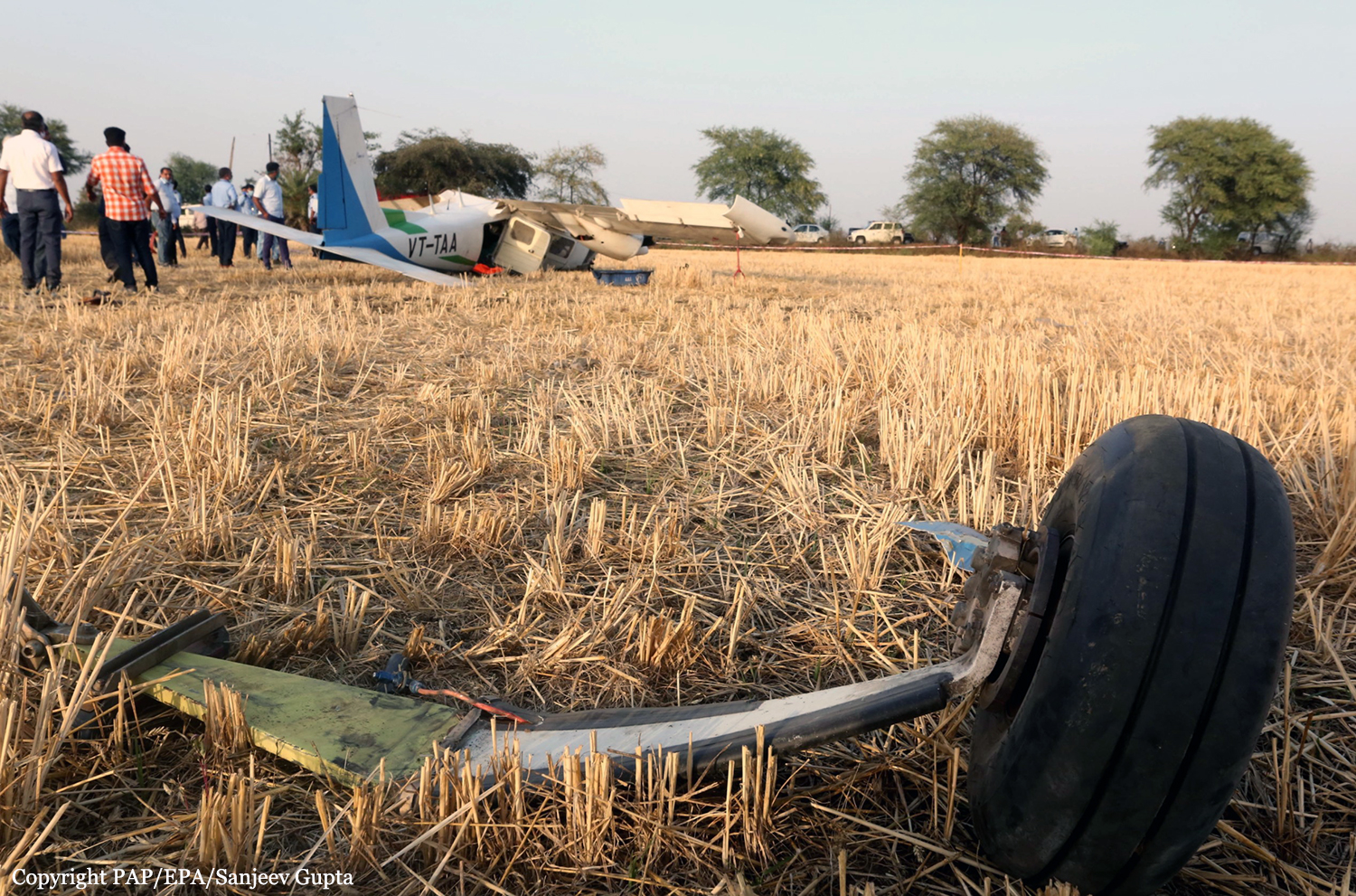
Crash of a Partenavia P.68C Observer 2 in Bhopal
Date & Time:
Mar 27, 2021 at 1605 LT
Operator:

Registration:
VT-TAA
Survivors:
Yes
Schedule:
Bhopal - Guna
MSN:
398-07-OB2
YOM:
1994
Crew on board:
2
Crew fatalities:
Pax on board:
1
Pax fatalities:
Other fatalities:
Total fatalities:
0
Captain / Total hours on type:
472.00
Copilot / Total hours on type:
220
Aircraft flight hours:
2835
Circumstances:
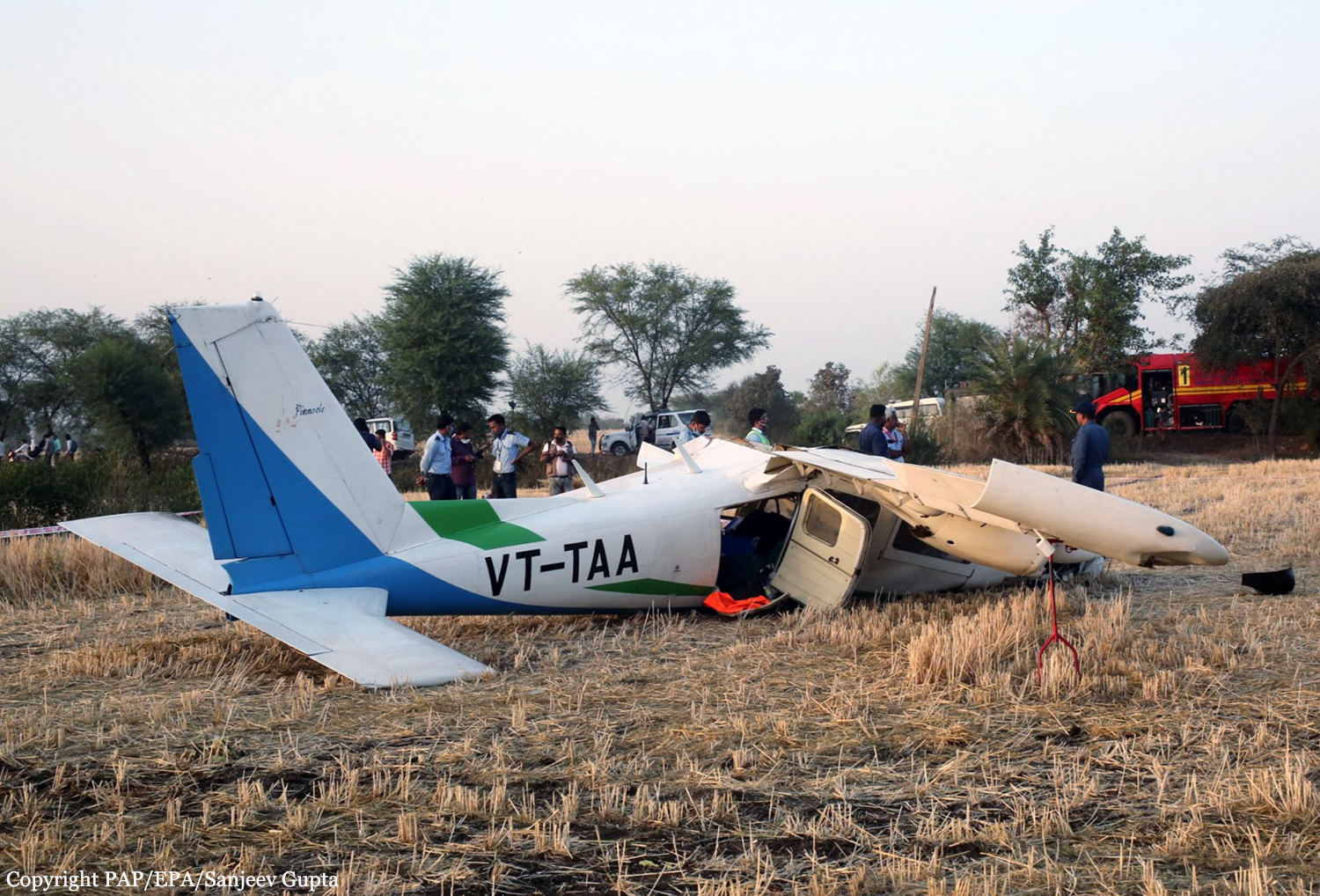
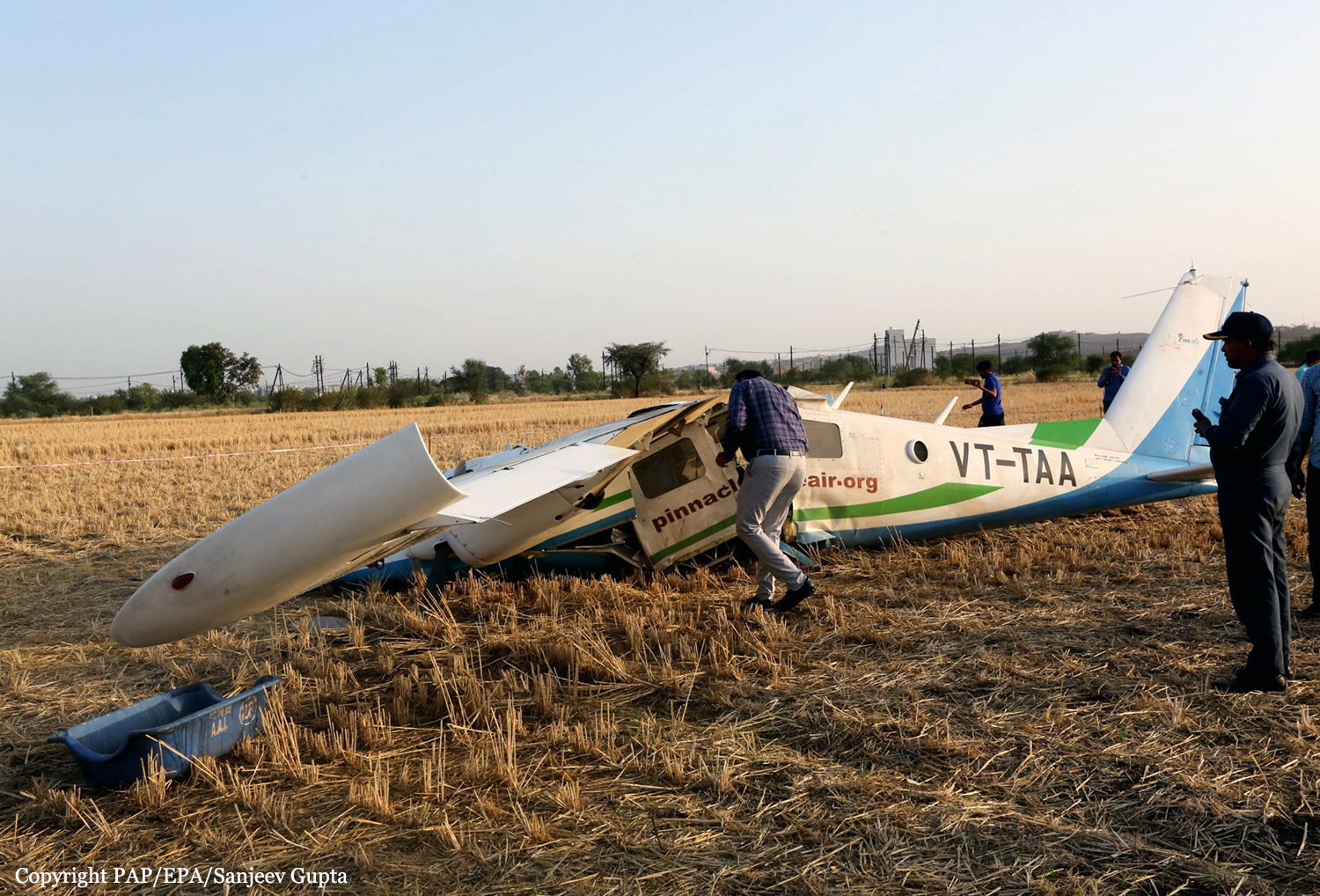
The aircraft was under the command of a CPL holder pilot-in-command (PIC), who was Pilot Flying (PF). PIC was assisted by a CPL holder copilot, who was pilot monitoring (PM). One passenger (Director of Operations M/s PAPL) was also onboard. The aircraft took off from Bhopal airport uneventfully. After takeoff, at about 20 NM, the crew observed abnormal noise followed by low oil pressure and high oil temperature indication on aircraft’s LH engine. Crew assessed the situation and decided to turn back to Bhopal. The crew however, reported to ATC Bhopal that they are returning back due to wind and turbulence. While returning, crew shutdown the LH engine. Post LH engine shut down, crew gave a call to ATC, Bhopal requested to land the aircraft on the taxiway (disuse runway). ATC did not agree to the request, as there was no cross runway at Bhopal. The ATC was also not made aware of the prevailing emergency situation by the crew. When ATC declined the request, the crew informed ATC, that they might be doing force landing. ATC Bhopal immediately responded and asked the crew to land on Runway 12. However, the crew carried out a force landing in an agriculture field approximately 3 NM from Bhopal Airport. During the force landing, the PIC received serious injury and the copilot and passenger received minor injuries.The aircraft sustained substantial damages.
Probable cause:
The probable cause of the accident was Oil leak from the LH engine during the flight. Consequently, oil starvation and lack of lubrication resulted in excessive heat generation amongst the frictional components. Due to excessive heat, the bearing of no. 4 piston connecting rod failed and broke into pieces. However, the root cause of the LH engine oil leak could not be conclusively established. Subsequent to LH engine seizure, the crew did not follow the emergency procedures for single engine operation and took a decision to come for landing with single engine (RH). The crew further aggravated the emergency situation by not communicating the actual reason with ATC, displaying gross lack of situational awareness in handling the emergency. Crew estimated that they cannot reach the airport runway due to the low altitude and force landed the aircraft before the airport.
Final Report:
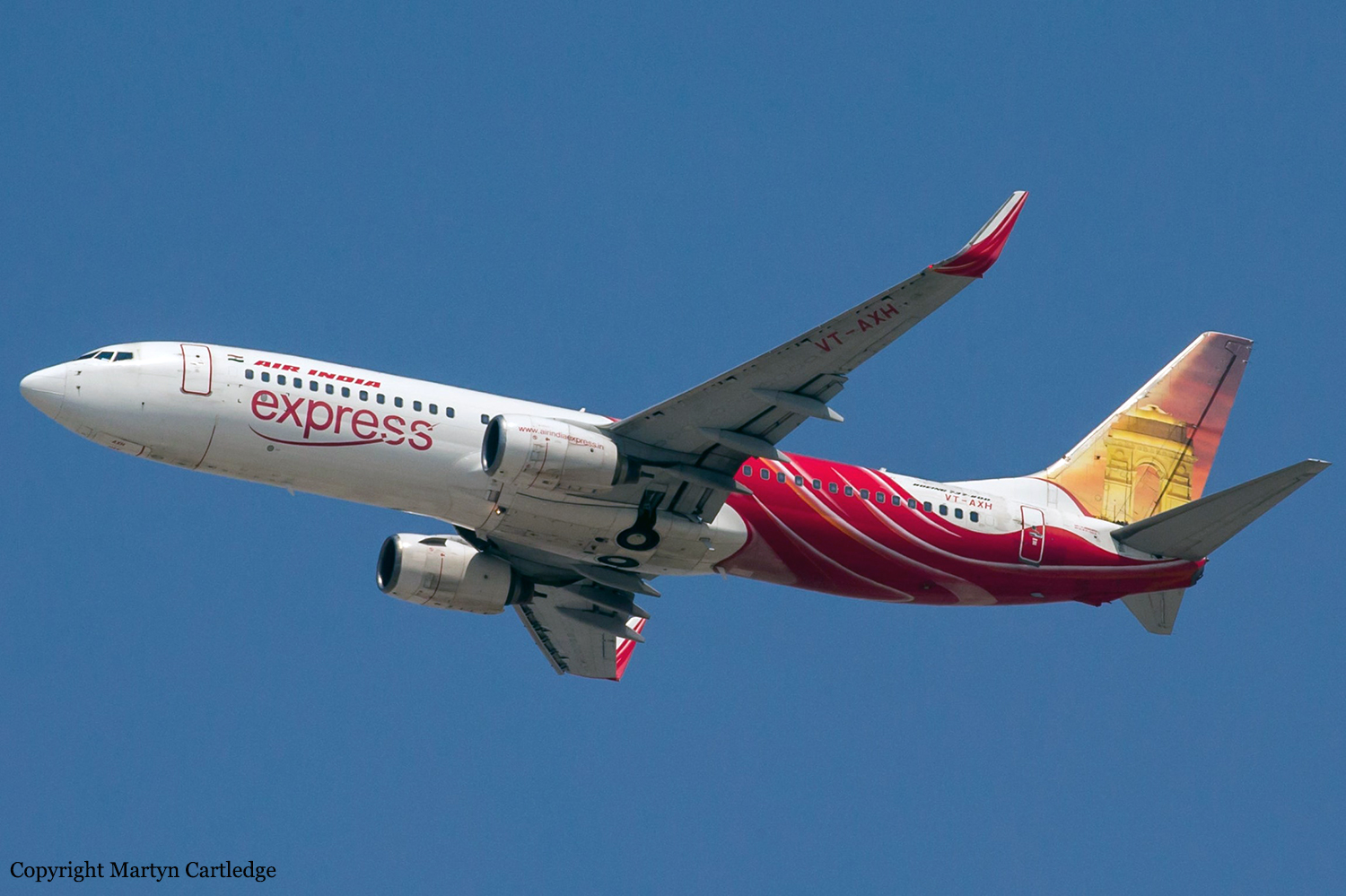
Crash of a Boeing 737-8HG in Kozhikode: 21 killed
Date & Time:
Aug 7, 2020 at 1941 LT
Operator:

Registration:
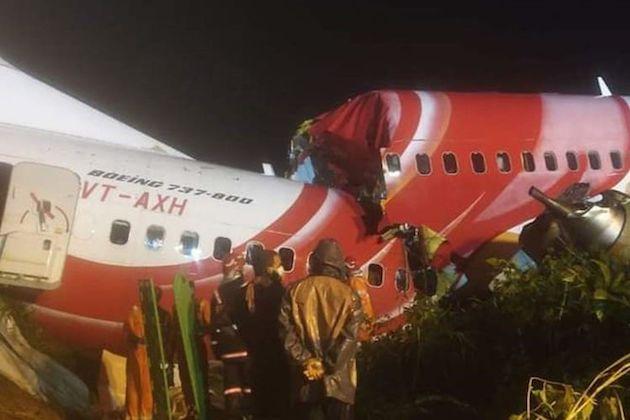
VT-AXH
Survivors:
Yes
Schedule:
Dubai - Kozhikode
MSN:
36323/2109
YOM:
2006
Flight number:
IX1344
Crew on board:
6
Crew fatalities:
Pax on board:
184
Pax fatalities:
Other fatalities:
Total fatalities:
21
Captain / Total hours on type:
4612.00
Copilot / Total hours on type:
1723
Aircraft flight hours:
43691
Aircraft flight cycles:
15309
Circumstances:
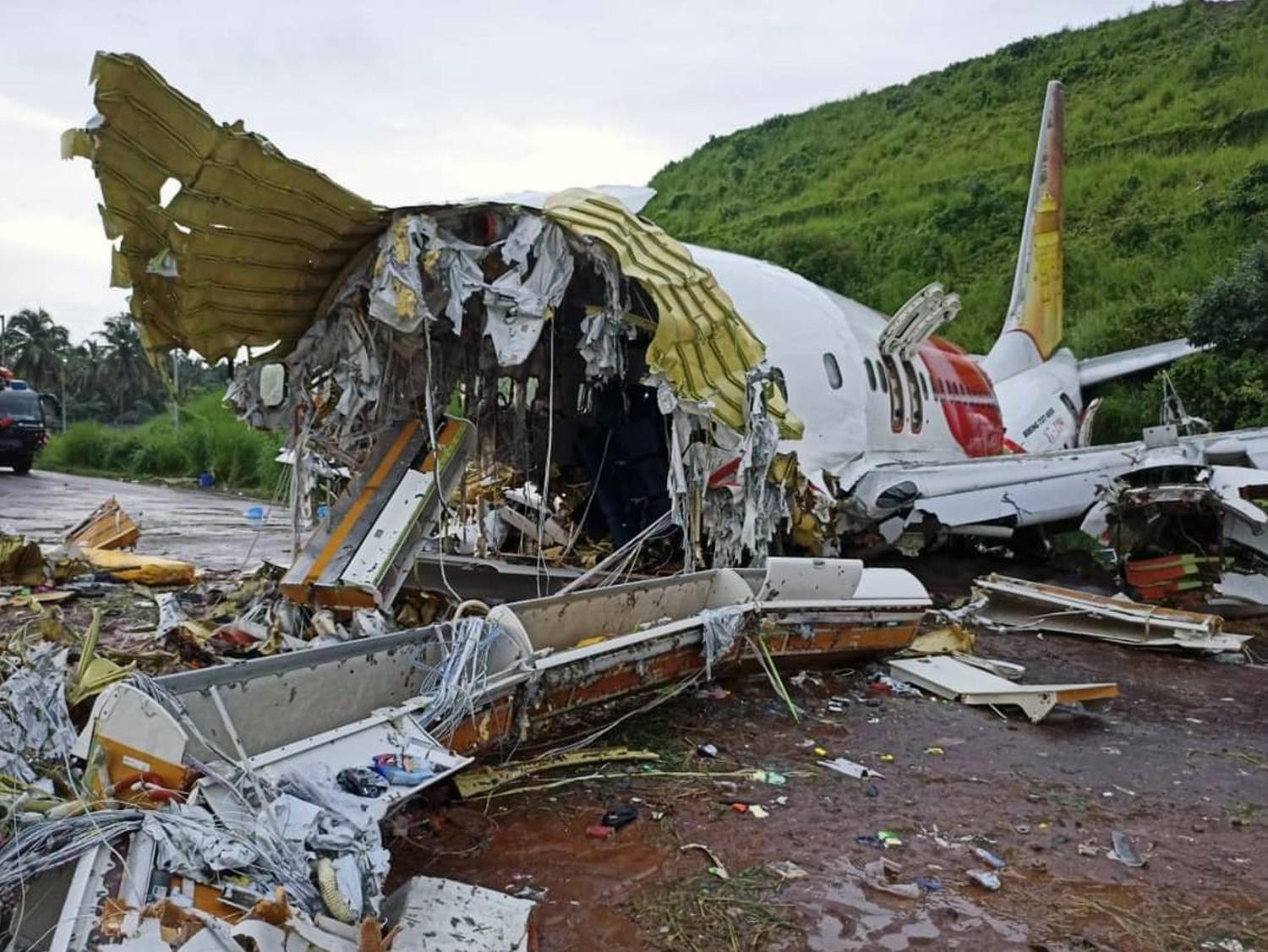
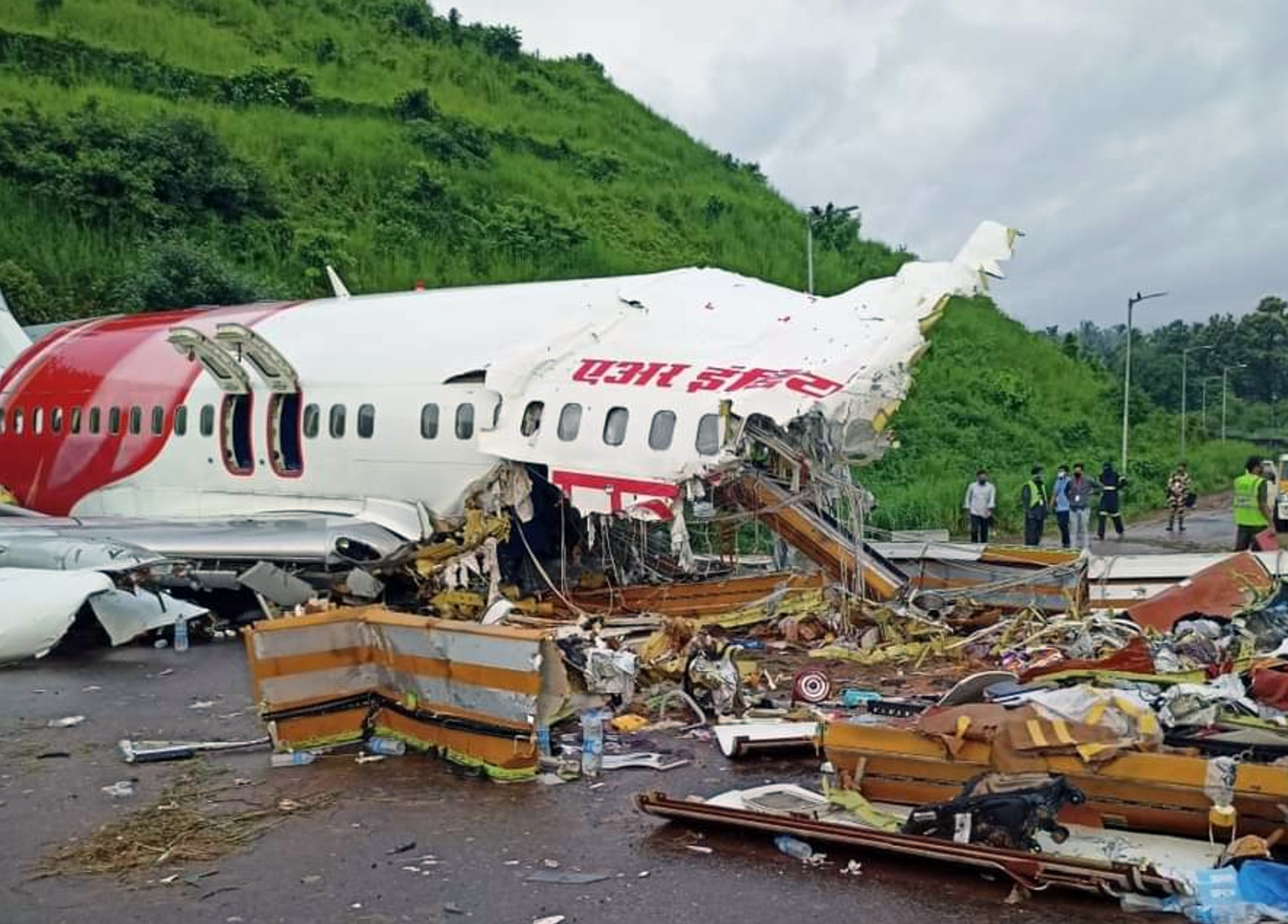
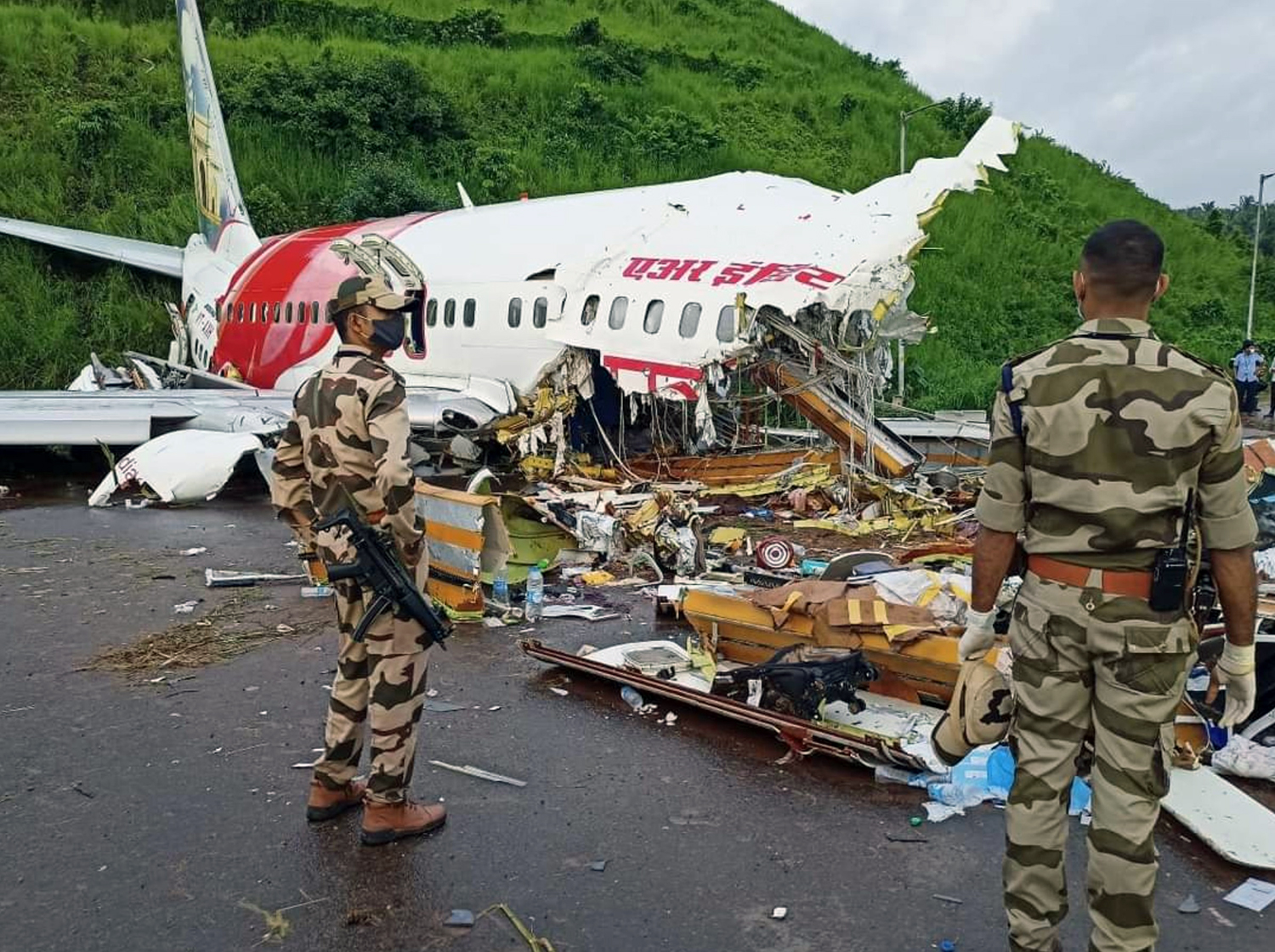
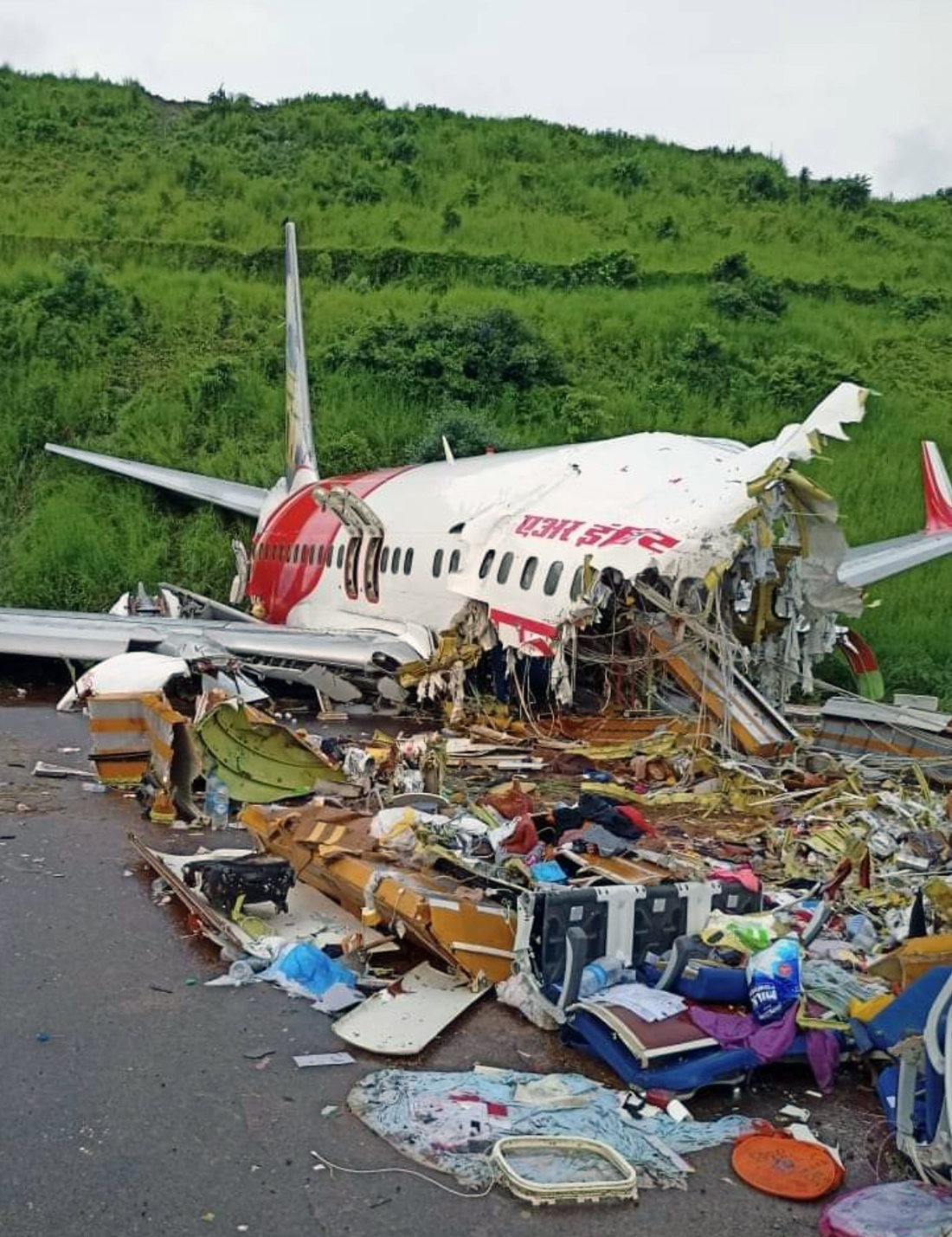
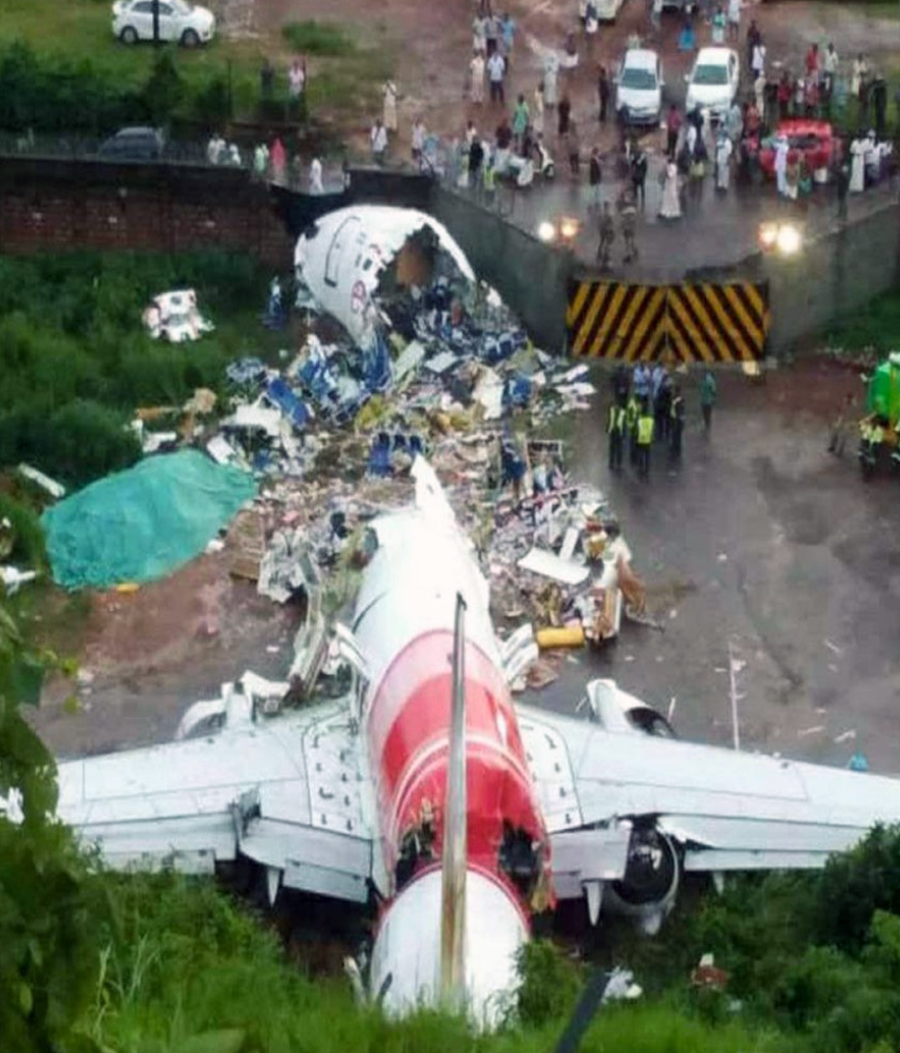
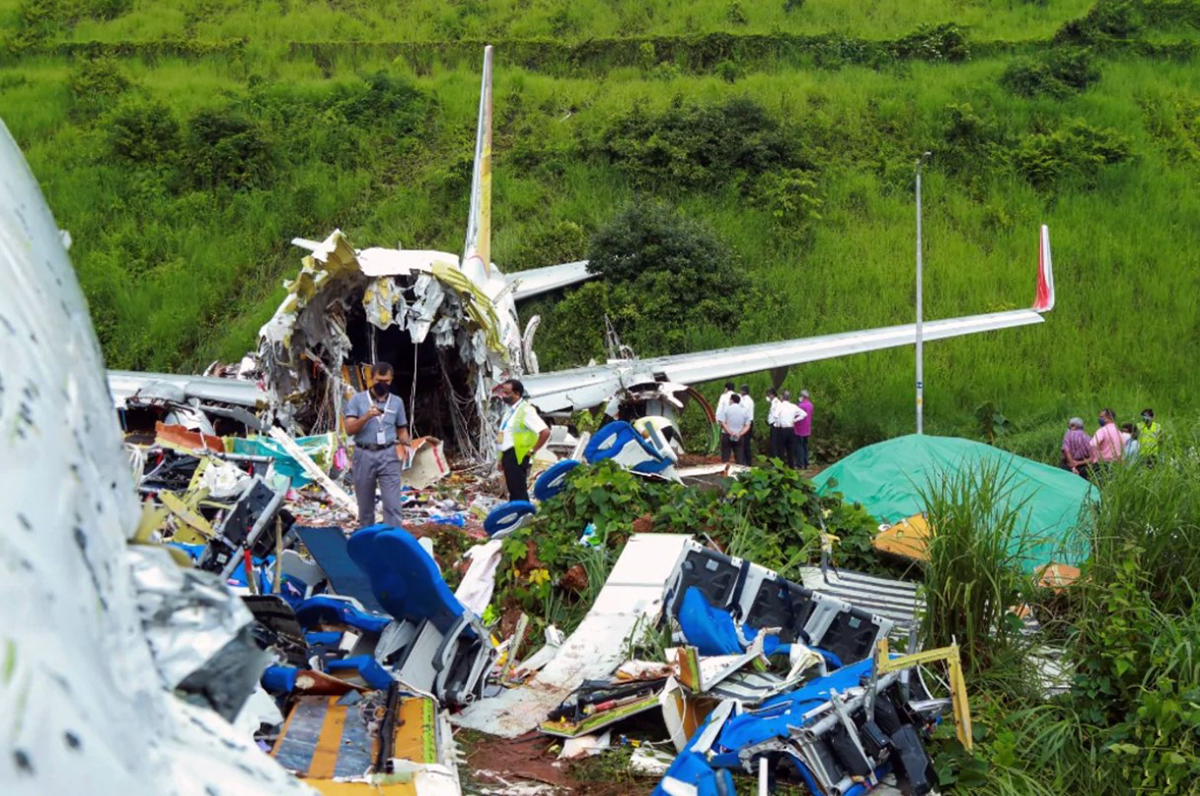
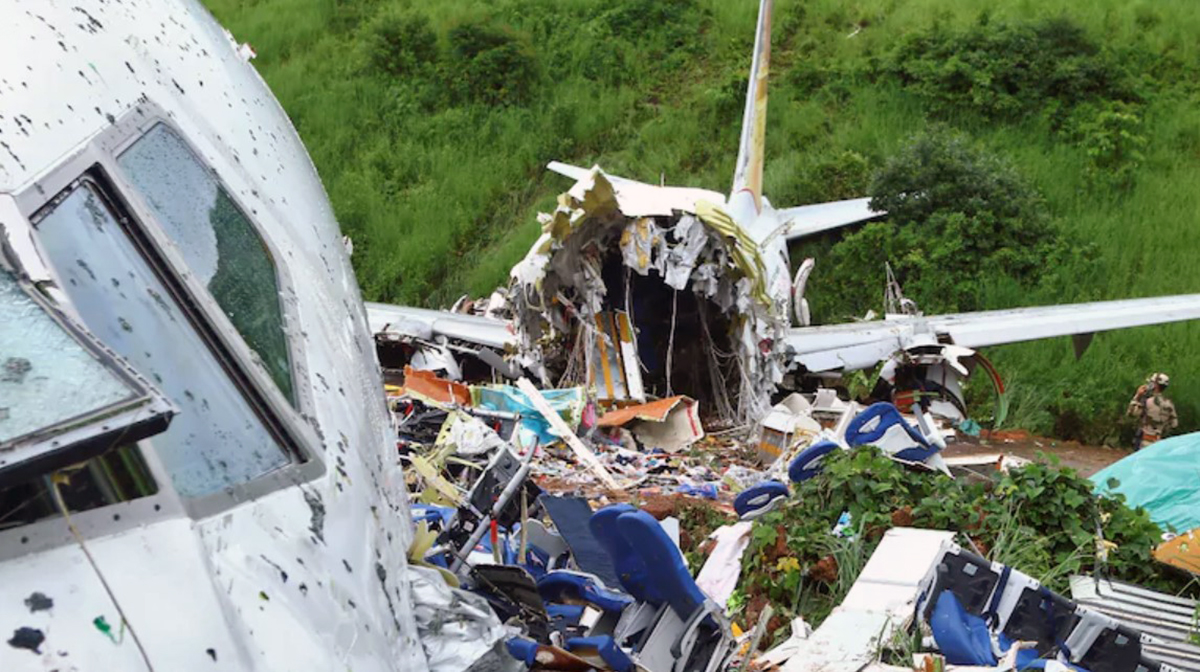
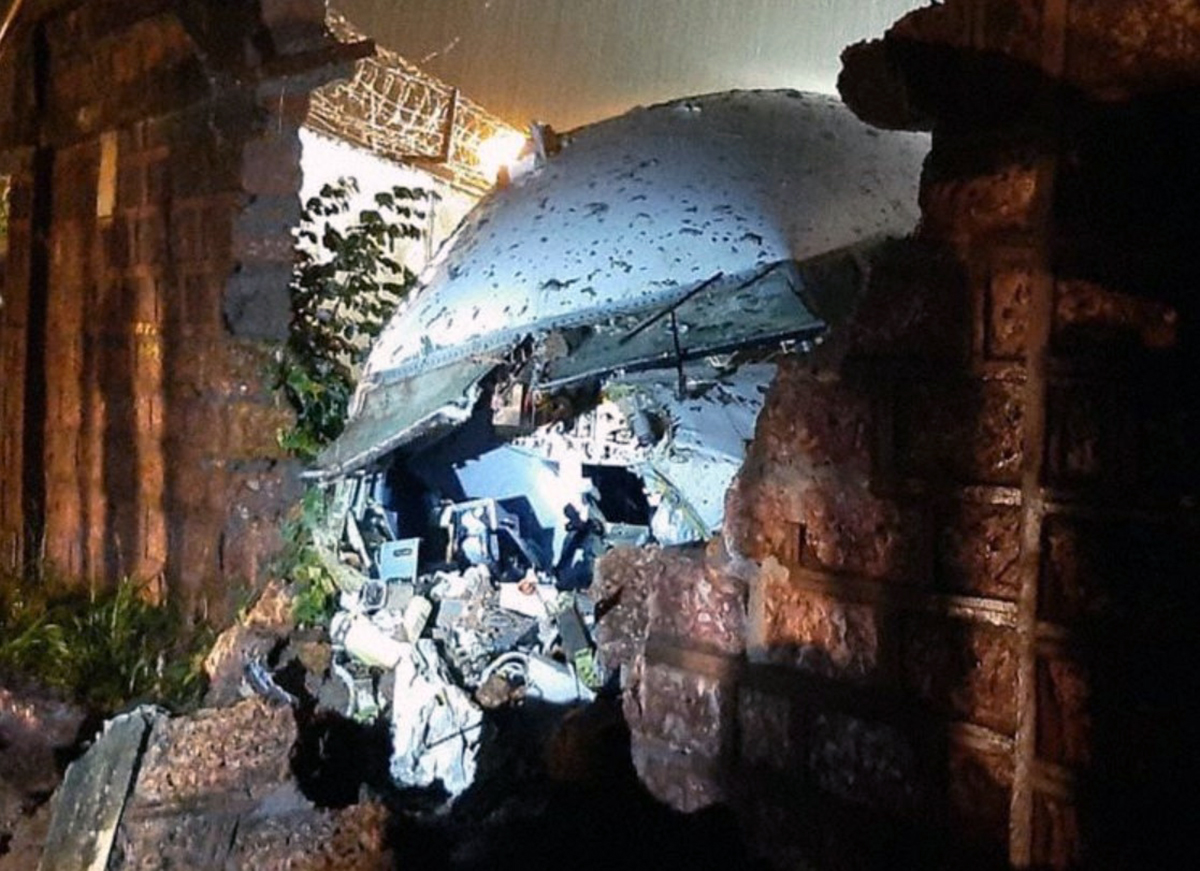
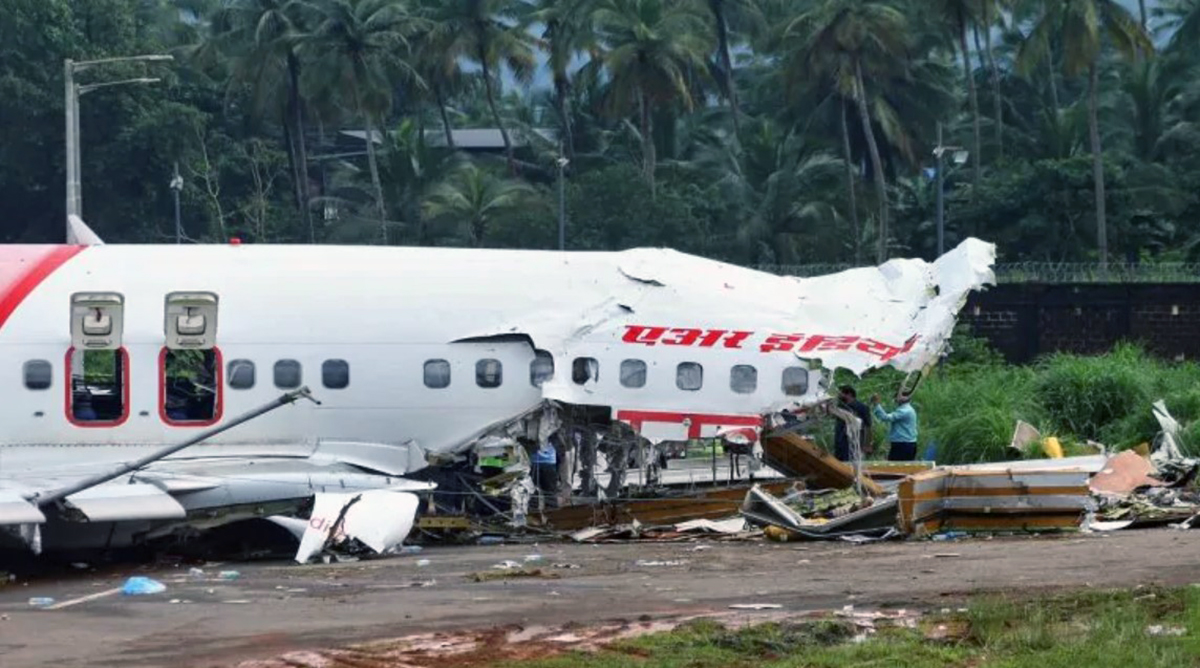
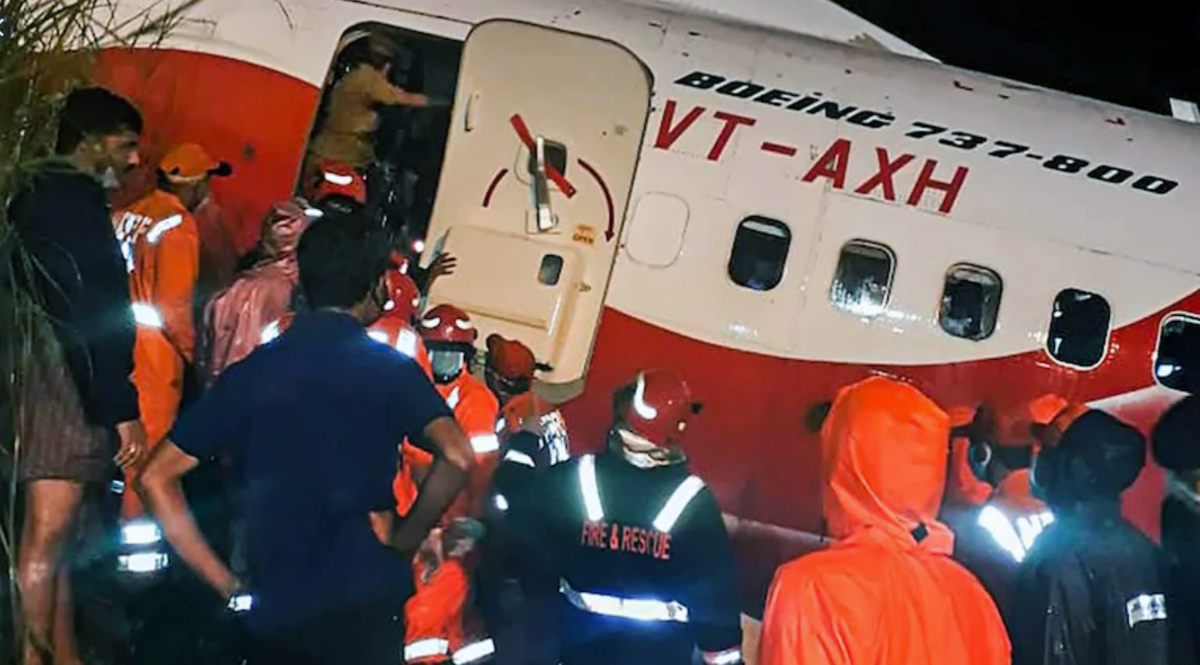
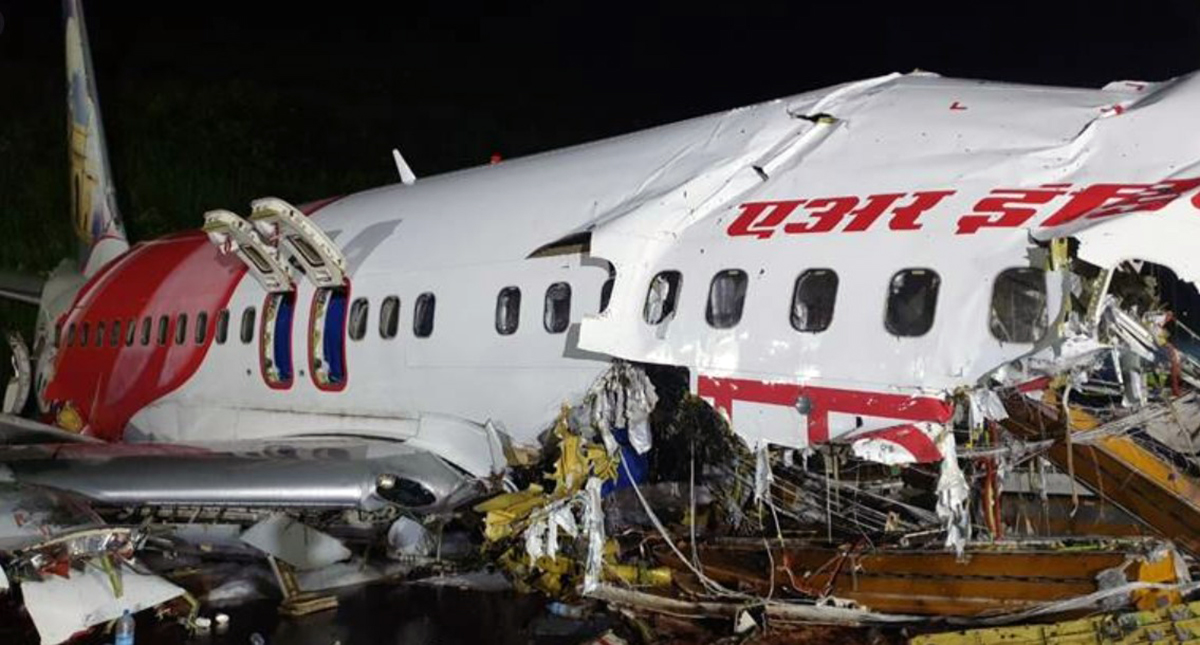
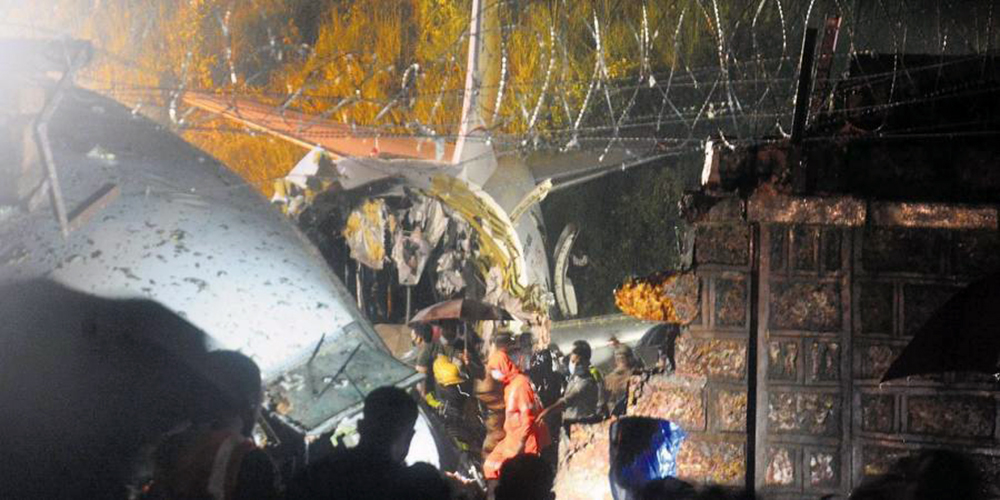
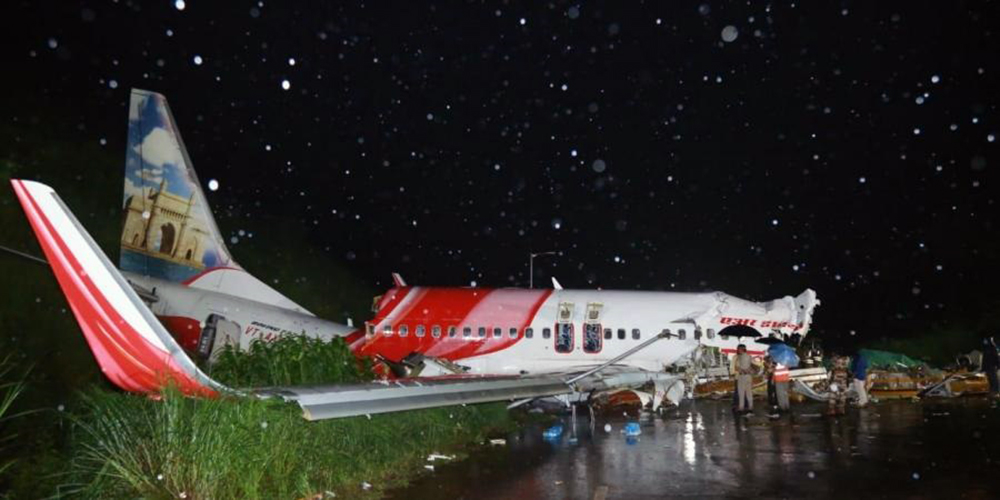
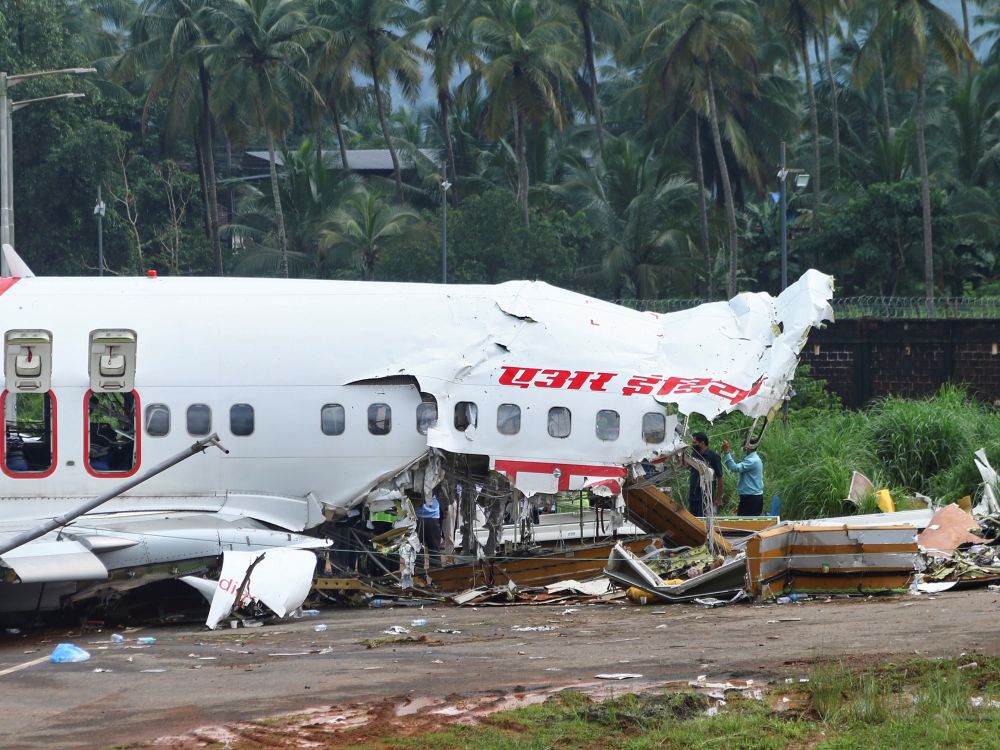
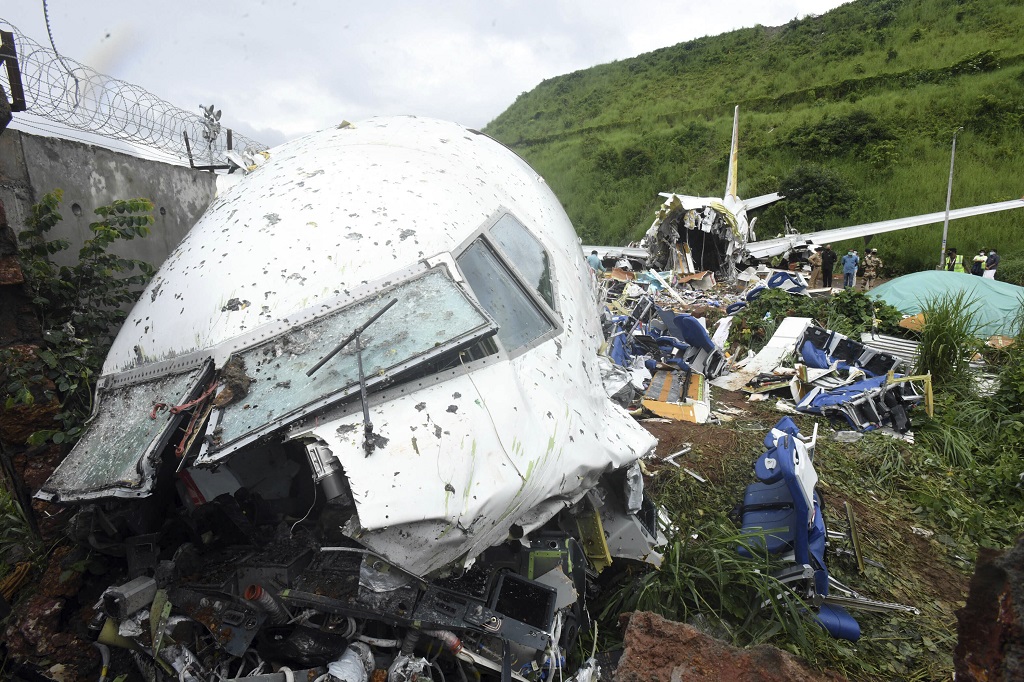
Air-India Express Limited B737-800 aircraft VT-AXH was operating a quick return flight on sector Kozhikode-Dubai-Kozhikode under ‘Vande Bharat Mission’ to repatriate passengers who were stranded overseas due to closure of airspace and flight operations owing to the Covid-19 pandemic. The aircraft departed from Kozhikode for Dubai at 10:19 IST (04:49 UTC) on 07 August 2020 and landed at Dubai at 08:11 UTC. The flight was uneventful. There was no change of crew and no defect was reported on the first sector. The aircraft departed from Dubai for Kozhikode at 10:00 UTC as flight AXB 1344 carrying 184 passengers and six crew members. AXB 1344 made two approaches for landing at Kozhikode. The aircraft carried out a missed approach on the first attempt while coming into land on runway 28. The second approach was on runway 10 and the aircraft landed at 14:10:25 UTC. The aircraft touched down approximately at 4,438 ft on 8,858 ft long runway, in light rain with tailwind component of 15 knots and a ground speed of 165 knots. The aircraft could not be stopped on the runway and this ended in runway overrun. The aircraft exited the runway 10 end at a ground speed of 84 knots and then overshot the RESA, breaking the ILS antennae and a fence before plummeting down the tabletop runway. The aircraft fell to a depth of approximately 110 ft below the runway elevation and impacted the perimeter road that runs just below the tabletop runway, at a ground speed of 41 knots and then came to an abrupt halt on the airport perimeter road just short of the perimeter wall. There was fuel leak from both the wing tanks; however, there was no postcrash fire. The aircraft was destroyed and its fuselage broke into three sections. Both engines were completely separated from the wings. The rescue operations were carried out by the ARFF crew on duty with help of Central Industrial Security Force (CISF) personnel stationed at the airport and several civilians who rushed to the crash site when the accident occurred. Upon receipt of the information about the aircraft crash the district administration immediately despatched fire tenders and ambulances to the crash site. Nineteen passengers were fatally injured and Seventy Five passengers suffered serious injuries in the accident while Ninety passengers suffered minor or no injuries. Both Pilots suffered fatal injuries while one cabin crew was seriously injured and three cabin crew received minor injuries. The rescue operation was completed at 16:45 UTC (22:15 IST).
Probable cause:
The probable cause of the accident was the non adherence to SOP by the PF, wherein, he continued an unstabilized approach and landed beyond the touchdown zone, half way down the runway, in spite of ‘Go Around’ call by PM which warranted a mandatory ‘Go Around’ and the failure of the PM to take over controls and execute a ‘Go Around’.
The following contributing factors were identitified:
The investigation team is of the opinion that the role of systemic failures as a contributory factor cannot be overlooked in this accident. A large number of similar accidents/incidents that have continued to take place, more so in AIXL, reinforce existing systemic failures within the aviation sector. These usually occur due to prevailing safety culture that give rise to errors, mistakes and violation of routine tasks performed by people operating within the system. Hence, the contributory factors enumerated below include both the immediate causes and the deeper or systemic causes.
(i) The actions and decisions of the PIC were steered by a misplaced motivation to land back at Kozhikode to operate next day morning flight AXB 1373. The unavailability of sufficient number of Captains at Kozhikode was the result of faulty AIXL HR policy which does not take into account operational requirement while assigning permanent base to its Captains. There was only 01 Captain against 26 First Officers on the posted strength at Kozhikode.
(ii) The PIC had vast experience of landing at Kozhikode under similar weather conditions. This experience might have led to over confidence leading to complacency and a state of reduced conscious attention that would have seriously affected his actions, decision making as well as CRM.
(iii) The PIC was taking multiple un-prescribed anti-diabetic drugs that could have probably caused subtle cognitive deficits due to mild hypoglycaemia which probably contributed to errors in complex decision making as well as susceptibility to perceptual errors.
(iv) The possibility of visual illusions causing errors in distance and depth perception (like black hole approach and up-sloping runway) cannot be ruled out due to degraded visual cues of orientation due to low visibility and suboptimal performance of the PIC’s windshield wiper in rain.
(v) Poor CRM was a major contributory factor in this crash. As a consequence of lack of assertiveness and the steep authority gradient in the cockpit, the First Officer did not take over the controls in spite of being well aware of the grave situation. The lack of effective CRM training of AIXL resulted in poor CRM and steep cockpit gradient.
(vi) AIXL policies of upper level management have led to a lack of supervision in training, operations and safety practices, resulting in deficiencies at various levels causing repeated human error accidents in AIXL
(vii) The AIXL pilot training program lacked effectiveness and did not impart the requisite skills for performance enhancement. One of the drawbacks in training was inadequate maintenance and lack of periodic system upgrades of the simulator. Frequently recurring major snags resulted in negative training. Further, pilots were often not checked for all the mandatory flying exercises during simulator check sessions by the Examiners.
(viii) The non availability of OPT made it very difficult for the pilots to quickly calculate accurate landing data in the adverse weather conditions. The quick and accurate calculations would have helped the pilots to foresee the extremely low margin for error, enabling them to opt for other safer alternative.
(ix) The scrutiny of Tech Logs and Maintenance Record showed evidence of nonstandard practice of reporting of certain snags through verbal briefing rather than in writing. There was no entry of windshield wiper snag in the Tech log of VT-AXH. Though it could not be verified, but a verbal briefing regarding this issue is highly probable.
(x) The DATCO changed the runway in use in a hurry to accommodate the departure of AIC 425 without understanding the repercussions on recovery of AXB 1344 in tail winds on a wet runway in rain. He did not caution AXB 1344 of prevailing strong tail winds and also did not convey the updated QNH settings.
(xi) Accuracy of reported surface winds for runway 10 was affected by installation of wind sensor in contravention to the laid down criteria in CAR. This was aggravated by frequent breakdown due to poor maintenance.
(xii) The Tower Met Officer (TMO) was not available in the ATC tower at the time of the accident. The airfield was under two concurrent weather warnings and it is mandatory for the TMO to be present to update and inform the fast changing weather variations to enhance air safety. During adverse weather conditions the presence of the TMO in the ATC tower was even more critical.
(xiii) The AAI has managed to fulfil ICAO and DGCA certification requirements at Kozhikode aerodrome for certain critical areas like RESA, runway lights and approach lights. Each of these, in isolation fulfils the safety criteria however, when considered in totality, this left the aircrew of AXB 1344 with little or no margin for error. Although not directly contributory to the accident causation, availability of runway centreline lights would have certainly enhanced the spatial orientation of the PIC.
(xiv) The absence of a detailed proactive policy and clear cut guidelines by the Regulator on monitoring of Long Landings at the time of the accident was another contributory factor in such runway overrun accidents. Long Landing has been major factor in various accidents and incidents involving runway excursion since 2010 and has not been addressed in CAR Section 5, Series F, Part II.
(xv) DGCA did not comprehensively revise CAR Section 5, Series F, Part II Issue I, dated 30 Sep 99 (Rev. on 26 Jul 2017) on ‘Monitoring of DFDR/QAR/PMR Data for Accident/Incident Prevention’ to address the recommendations of the COI of 2010 AIXL Managlore Crash regarding the exceedance limits, resulting in the persisting ambiguities in this matter.
(xvi) DFDR data monitoring for prevention of accidents/incidents is done by AIXL. However 100% DFDR monitoring is not being done, in spite of the provisions laid down in the relevant CAR and repeated audit observations by DGCA. DFDR data monitoring is the most effective tool to identify exceedance and provide suitable corrective training in order to prevent runway accidents like the crash of AXB 1344. However, ATR submitted by AIXL on the said findings were accepted by DGCA year after year without ascertaining its implementation or giving due importance to its adverse implications.
The following contributing factors were identitified:
The investigation team is of the opinion that the role of systemic failures as a contributory factor cannot be overlooked in this accident. A large number of similar accidents/incidents that have continued to take place, more so in AIXL, reinforce existing systemic failures within the aviation sector. These usually occur due to prevailing safety culture that give rise to errors, mistakes and violation of routine tasks performed by people operating within the system. Hence, the contributory factors enumerated below include both the immediate causes and the deeper or systemic causes.
(i) The actions and decisions of the PIC were steered by a misplaced motivation to land back at Kozhikode to operate next day morning flight AXB 1373. The unavailability of sufficient number of Captains at Kozhikode was the result of faulty AIXL HR policy which does not take into account operational requirement while assigning permanent base to its Captains. There was only 01 Captain against 26 First Officers on the posted strength at Kozhikode.
(ii) The PIC had vast experience of landing at Kozhikode under similar weather conditions. This experience might have led to over confidence leading to complacency and a state of reduced conscious attention that would have seriously affected his actions, decision making as well as CRM.
(iii) The PIC was taking multiple un-prescribed anti-diabetic drugs that could have probably caused subtle cognitive deficits due to mild hypoglycaemia which probably contributed to errors in complex decision making as well as susceptibility to perceptual errors.
(iv) The possibility of visual illusions causing errors in distance and depth perception (like black hole approach and up-sloping runway) cannot be ruled out due to degraded visual cues of orientation due to low visibility and suboptimal performance of the PIC’s windshield wiper in rain.
(v) Poor CRM was a major contributory factor in this crash. As a consequence of lack of assertiveness and the steep authority gradient in the cockpit, the First Officer did not take over the controls in spite of being well aware of the grave situation. The lack of effective CRM training of AIXL resulted in poor CRM and steep cockpit gradient.
(vi) AIXL policies of upper level management have led to a lack of supervision in training, operations and safety practices, resulting in deficiencies at various levels causing repeated human error accidents in AIXL
(vii) The AIXL pilot training program lacked effectiveness and did not impart the requisite skills for performance enhancement. One of the drawbacks in training was inadequate maintenance and lack of periodic system upgrades of the simulator. Frequently recurring major snags resulted in negative training. Further, pilots were often not checked for all the mandatory flying exercises during simulator check sessions by the Examiners.
(viii) The non availability of OPT made it very difficult for the pilots to quickly calculate accurate landing data in the adverse weather conditions. The quick and accurate calculations would have helped the pilots to foresee the extremely low margin for error, enabling them to opt for other safer alternative.
(ix) The scrutiny of Tech Logs and Maintenance Record showed evidence of nonstandard practice of reporting of certain snags through verbal briefing rather than in writing. There was no entry of windshield wiper snag in the Tech log of VT-AXH. Though it could not be verified, but a verbal briefing regarding this issue is highly probable.
(x) The DATCO changed the runway in use in a hurry to accommodate the departure of AIC 425 without understanding the repercussions on recovery of AXB 1344 in tail winds on a wet runway in rain. He did not caution AXB 1344 of prevailing strong tail winds and also did not convey the updated QNH settings.
(xi) Accuracy of reported surface winds for runway 10 was affected by installation of wind sensor in contravention to the laid down criteria in CAR. This was aggravated by frequent breakdown due to poor maintenance.
(xii) The Tower Met Officer (TMO) was not available in the ATC tower at the time of the accident. The airfield was under two concurrent weather warnings and it is mandatory for the TMO to be present to update and inform the fast changing weather variations to enhance air safety. During adverse weather conditions the presence of the TMO in the ATC tower was even more critical.
(xiii) The AAI has managed to fulfil ICAO and DGCA certification requirements at Kozhikode aerodrome for certain critical areas like RESA, runway lights and approach lights. Each of these, in isolation fulfils the safety criteria however, when considered in totality, this left the aircrew of AXB 1344 with little or no margin for error. Although not directly contributory to the accident causation, availability of runway centreline lights would have certainly enhanced the spatial orientation of the PIC.
(xiv) The absence of a detailed proactive policy and clear cut guidelines by the Regulator on monitoring of Long Landings at the time of the accident was another contributory factor in such runway overrun accidents. Long Landing has been major factor in various accidents and incidents involving runway excursion since 2010 and has not been addressed in CAR Section 5, Series F, Part II.
(xv) DGCA did not comprehensively revise CAR Section 5, Series F, Part II Issue I, dated 30 Sep 99 (Rev. on 26 Jul 2017) on ‘Monitoring of DFDR/QAR/PMR Data for Accident/Incident Prevention’ to address the recommendations of the COI of 2010 AIXL Managlore Crash regarding the exceedance limits, resulting in the persisting ambiguities in this matter.
(xvi) DFDR data monitoring for prevention of accidents/incidents is done by AIXL. However 100% DFDR monitoring is not being done, in spite of the provisions laid down in the relevant CAR and repeated audit observations by DGCA. DFDR data monitoring is the most effective tool to identify exceedance and provide suitable corrective training in order to prevent runway accidents like the crash of AXB 1344. However, ATR submitted by AIXL on the said findings were accepted by DGCA year after year without ascertaining its implementation or giving due importance to its adverse implications.
Final Report:
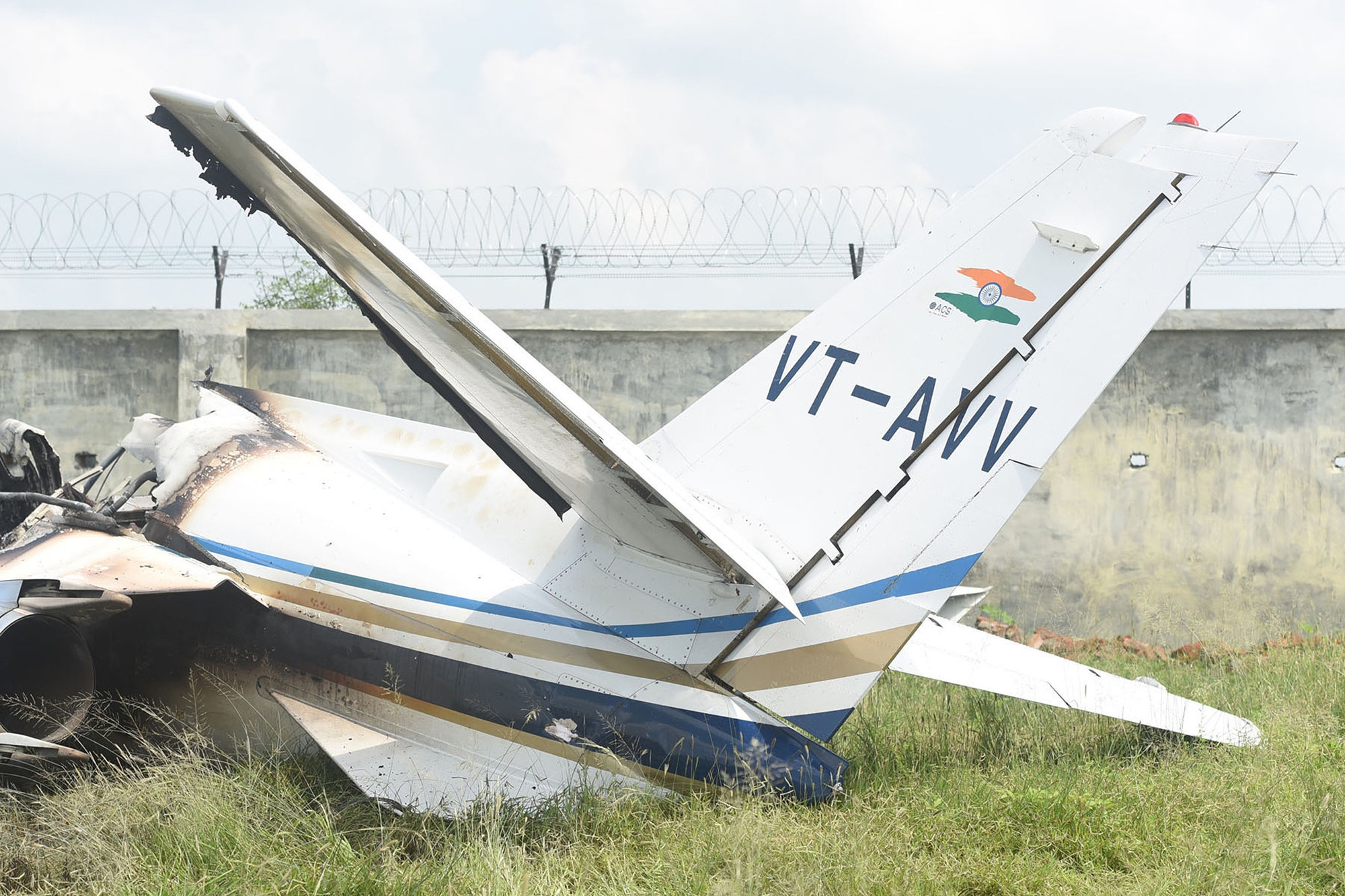
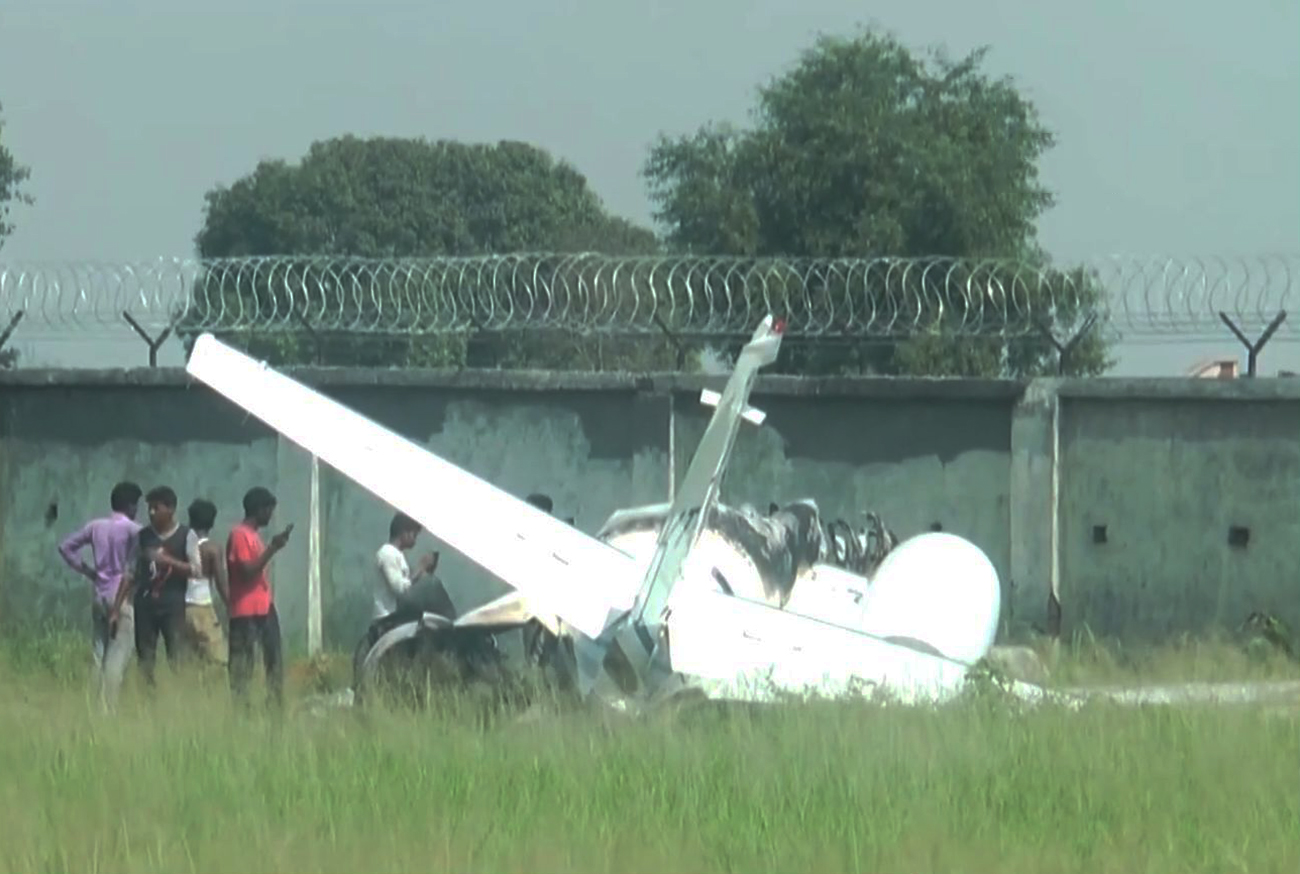
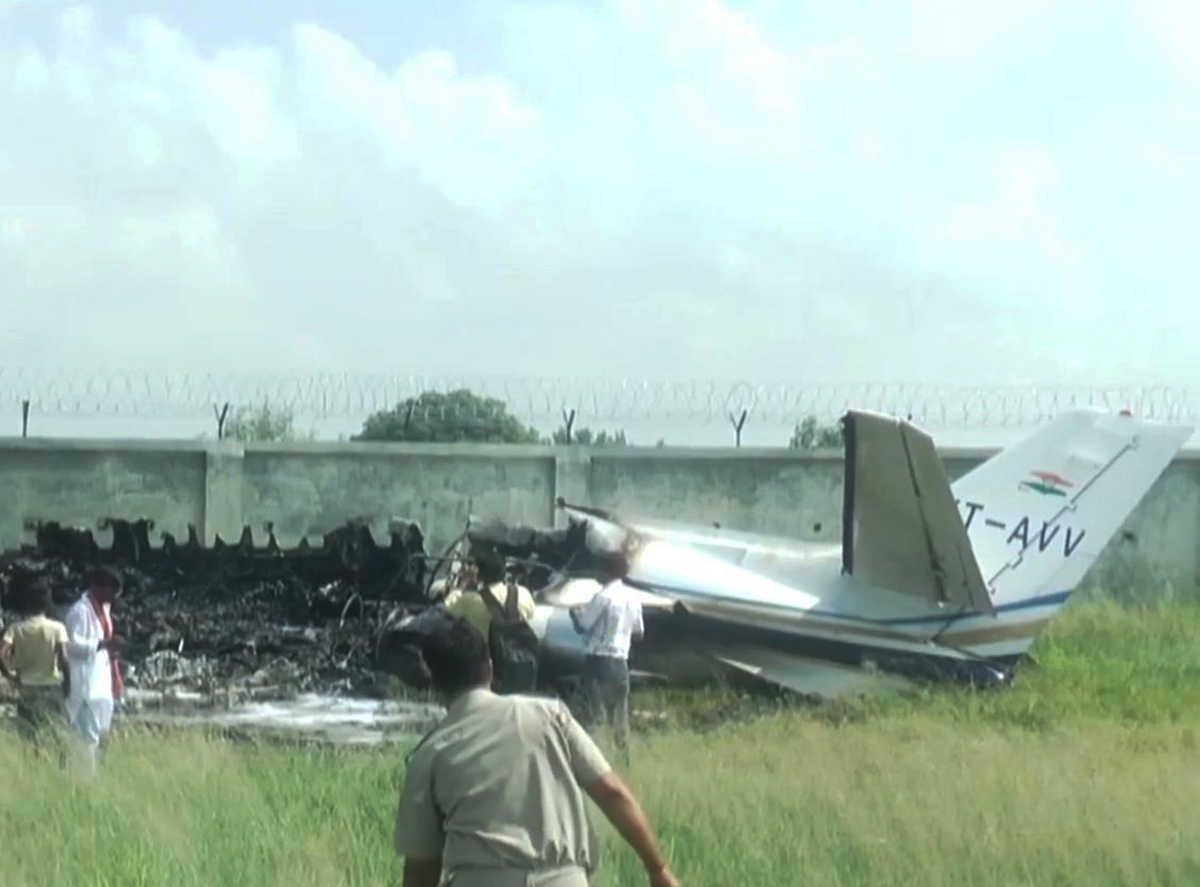
Crash of a Cessna 560XL Citation Excel in Aligarh
Date & Time:
Aug 27, 2019 at 0840 LT
Operator:

Registration:
VT-AVV
Survivors:
Yes
Schedule:
New Delhi - Aligarh
MSN:
560-5259
YOM:
2002
Crew on board:
2
Crew fatalities:
Pax on board:
4
Pax fatalities:
Other fatalities:
Total fatalities:
0
Captain / Total hours on type:
1064.00
Copilot / Total hours on type:
1060
Aircraft flight hours:
7688
Circumstances:
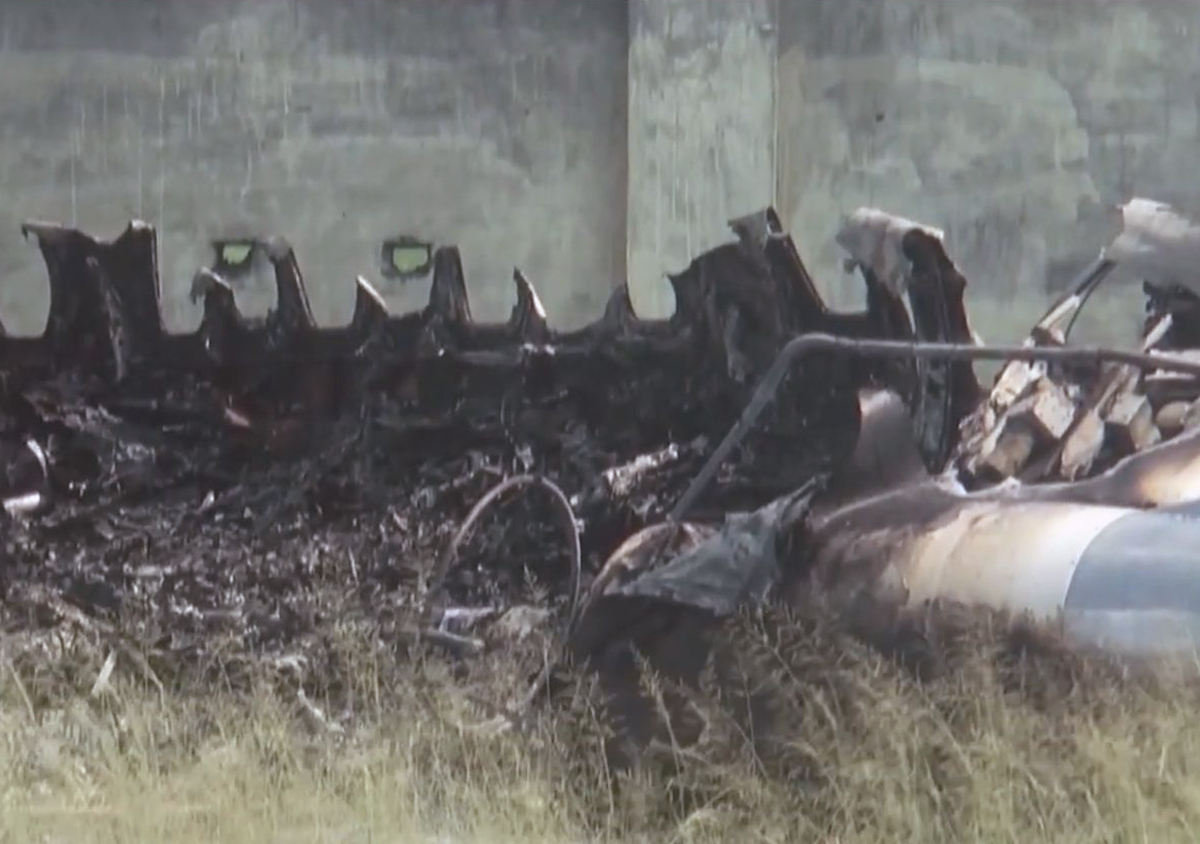
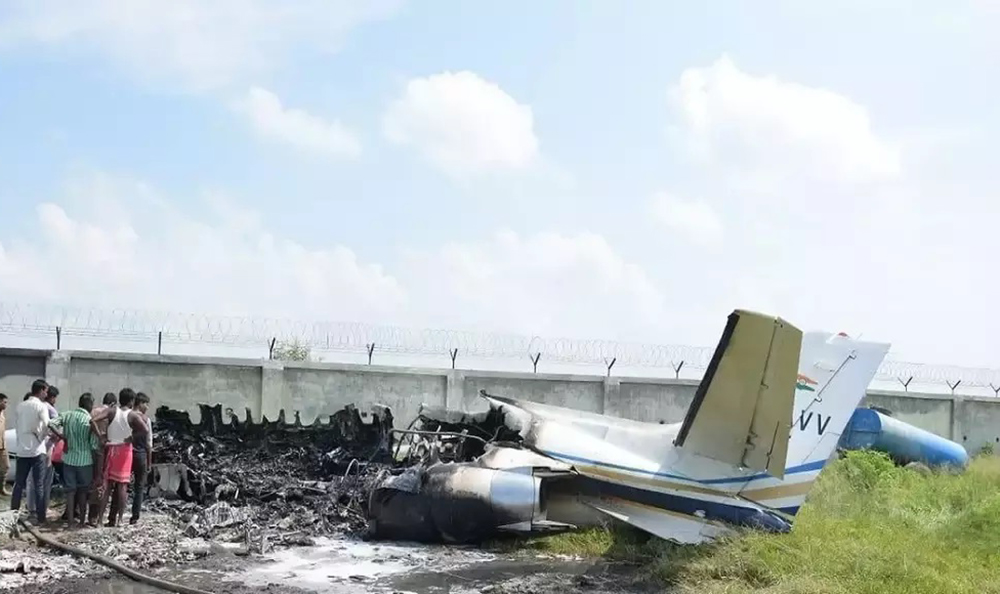
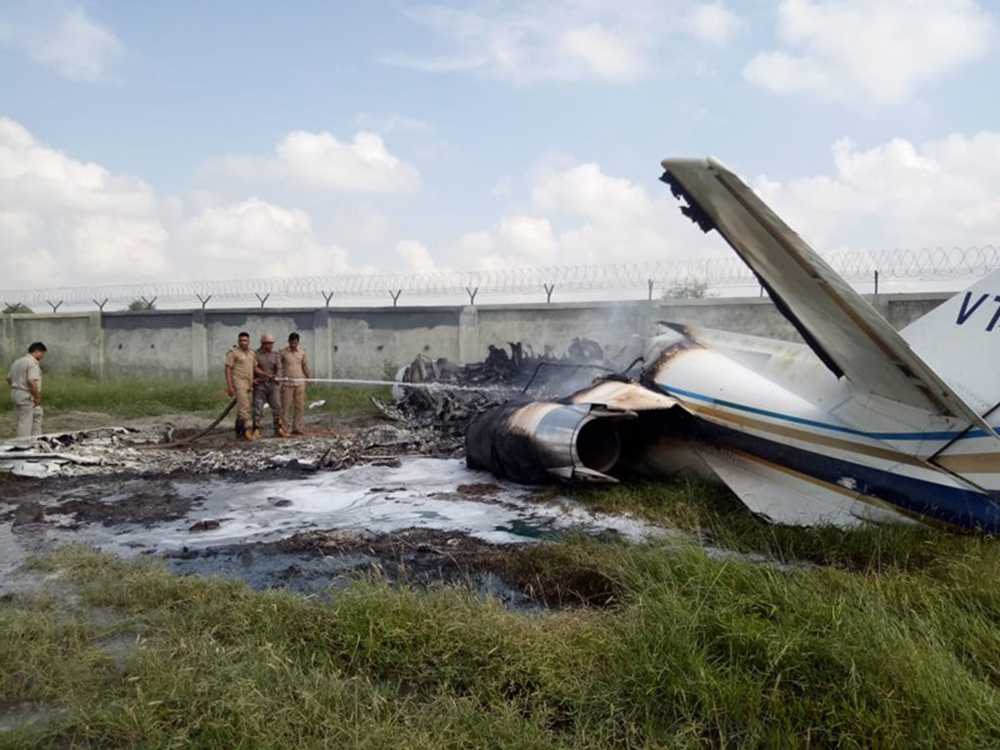
On 27 Aug 19, M/s Air Charter Services Pvt Ltd Cessna Citation 560 XL aircraft (VTAVV), while operating a flight from Delhi to Aligarh (Dhanipur Airstrip) was involved in an accident during landing on runway 11.The operator is having a maintenance facility at Aligarh Airport and aircraft was scheduled to undergo ADS-B modification. There were 02 cockpit crew and 04 SOD onboard the aircraft. The aircraft was under the command of a PIC, who was an ATPL holder duly qualified on type with a CPL holder co-pilot, duly qualified on type as Pilot Monitoring. This was the first flight of the day for both pilots. Both, PIC and Co-Pilot had prior experience of operating to Aligarh airport, which is an uncontrolled airport. As per the flight plan, ETD from Delhi was 0800 IST and ETA at Aligarh was 0820 IST. The crew had reported around 0630 IST at Delhi airport and underwent BA test. The MET report to operate the aircraft to Aligarh was well within the VFR conditions. The aircraft Take-off weight was within limits including 1900 Kgs of fuel on board. As per the statement of PIC, the Co-pilot was briefed about pre departure checklists including METAR before approaching the aircraft. Once at the aircraft, prefight checks were carried out by PIC before seeking clearance from Delhi delivery (121.95 MHz). Aircraft was accorded start up clearance by Delhi ground (121.75 Mhz) at 0800 IST.ATC cleared the aircraft to line up on runway 11 and was finally cleared for takeoff at 0821 IST. After takeoff, aircraft changed over to Delhi radar control from tower frequency for further departure instructions. Aircraft was initially cleared by Radar control to climb to FL090 and was given straight routing to Aligarh with final clearance to climb to FL130. Thereafter, aircraft changed to Delhi area control for further instructions. While at approximately 45 Nm from Aligarh, VT-AVV made contact with Aligarh (personnel of M/s Pioneer Flying Club manning radio) on 122.625 MHz. Ground R/T operator informed “wind 100/2-3 Kts, QNH 1005, Runway 11 in use” and that flying of Pioneer Flying Club is in progress. Further, he instructed crew to contact when at 10 Nm inbound. After obtaining initial information from ground R/T operator, VT-AVV requested Delhi area control for descent. The aircraft was cleared for initial descent to FL110 and then further to FL080. On reaching FL080, aircraft was instructed by Delhi area control to change over to Aligarh for further descent instruction in coordination with destination. At approx 10 Nm, VT-AVV contacted ground R/T operator on 122.625 MHz and requested for long finals for runway 11. In turn, ground R/T operator asked crew to report when at 5 Nm inbound. As per PIC, after reaching 5 Nm inbounds, Aligarh cleared VTAVV to descend to circuit altitude and land on runway 11. Aircraft had commenced approach at 5 Nm at an altitude of 2200 ft. Approach and landing checks briefing including wind, runway in use were carried out by PIC. During visual approach, Co-pilot called out to PIC “Slightly low on profile”. As per PIC, Co-pilot call out was duly acknowledged and ROD was corrected. Thereafter, PIC was visual with runway and took over controls on manual. Co-pilot was monitoring instruments and parameters. While PIC was focused on landing, a loud bang from left side of the aircraft was heard by PIC when the aircraft was below 100 feet AGL. Aircraft started pulling towards left and impacted the ground short of runway 11 threshold. After impact, aircraft veered off the runway and its left wing caught fire. The aircraft stopped short of airfield boundary wall. Crew carried out emergency evacuation. Co-pilot opened main exit door from inside of the aircraft for evacuation of passengers. Aircraft was destroyed due to post crash fire. The fire tender reached the crash site after 45 Minutes.
Probable cause:
While landing on runway 11, aircraft main landing gears got entangled in the powerline crossing extended portion of runway , due to which aircraft banked towards left and crash landed on extended portion of runway 11.
Contributory factors:
- It appears that there was a lack of proper pre-flight briefing, planning, preparation and assessment of risk factors.
- Non-Adherence to SOP.
- Sense of complacency seems to have prevailed.
Contributory factors:
- It appears that there was a lack of proper pre-flight briefing, planning, preparation and assessment of risk factors.
- Non-Adherence to SOP.
- Sense of complacency seems to have prevailed.
Final Report: