Country
Operator Image

Crash of a Boeing 737-3B7 in Aliquippa: 132 killed
Date & Time:
Sep 8, 1994 at 1903 LT
Operator:
Registration:
N513AU
Survivors:
No
Schedule:
Chicago – Pittsburgh
MSN:
23699
YOM:
1987
Flight number:
US427
Crew on board:
5
Crew fatalities:
Pax on board:
127
Pax fatalities:
Other fatalities:
Total fatalities:
132
Captain / Total hours on type:
3269.00
Copilot / Total hours on type:
3644
Aircraft flight hours:
23846
Aircraft flight cycles:
14489
Circumstances:
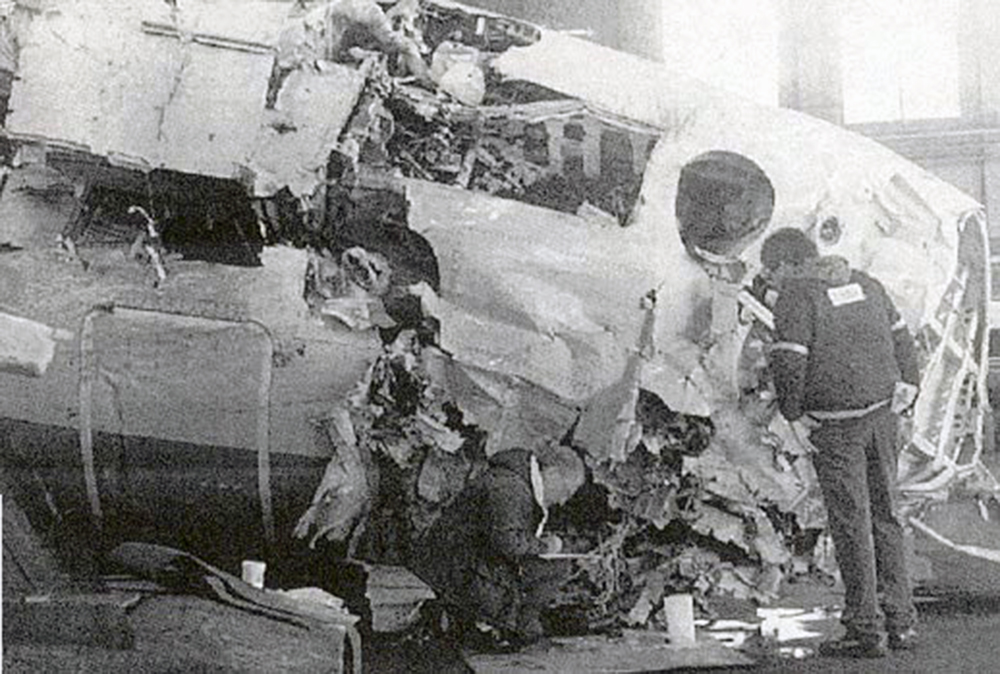
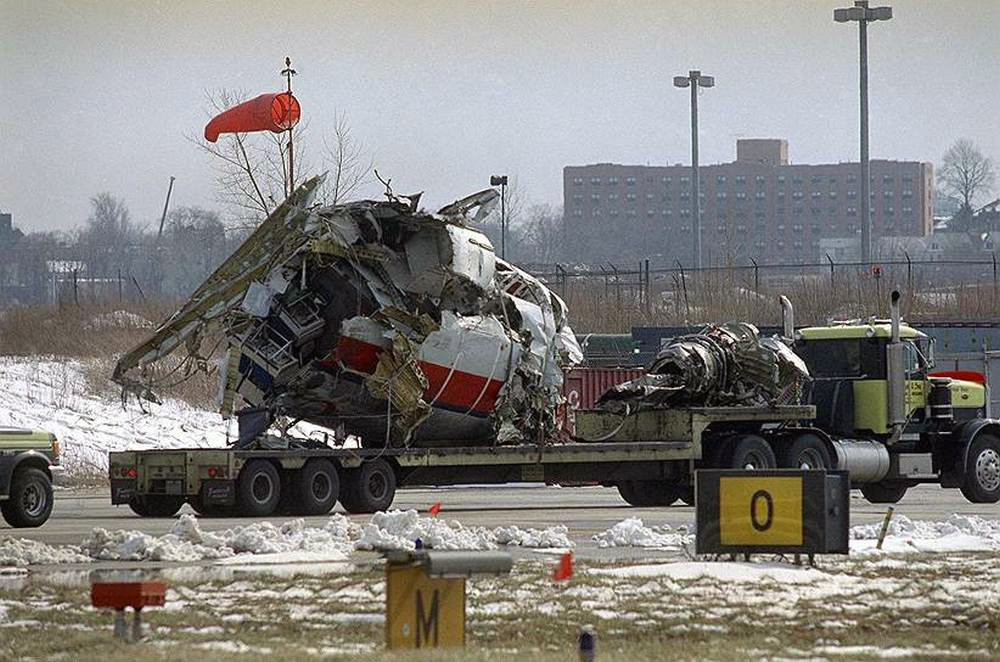
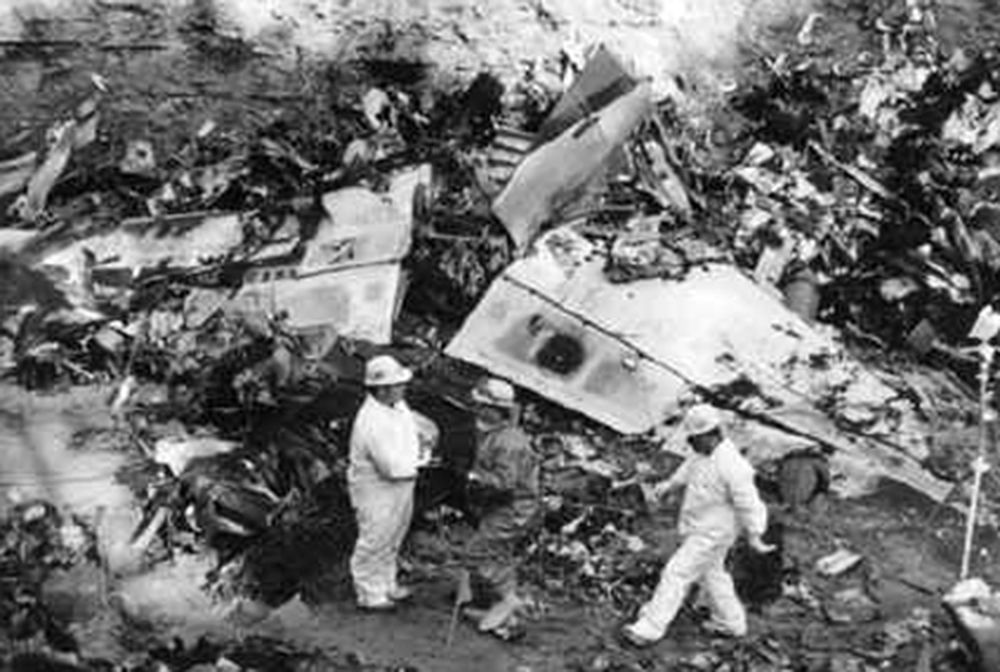
The aircraft crashed while maneuvering to land at Pittsburgh International Airport, Pittsburgh, Pennsylvania. Flight 427 was operating under the provisions of 14 Code of Federal Regulations Part 121 as a scheduled domestic passenger flight from Chicago-O'Hare International Airport, Chicago, Illinois, to Pittsburgh. The flight departed about 1810, with 2 pilots, 3 flight attendants, and 127 passengers on board. The airplane entered an uncontrolled descent and impacted terrain near Aliquippa, Pennsylvania, about 6 miles northwest of the destination airport. All 132 people on board were killed, and the airplane was destroyed by impact forces and fire. Visual meteorological conditions prevailed for the flight, which operated on an instrument flight rules flight plan.
Probable cause:
A loss of control of the airplane resulting from the movement of the rudder surface to its blowdown limit. The rudder surface most likely deflected in a direction opposite to that commanded by the pilots as a result of a jam of the main rudder power control unit servo valve secondary slide to the servo valve housing offset from its neutral position and overtravel of the primary slide.
Final Report:

Crash of a Douglas DC-9-31 in Charlotte: 37 killed
Date & Time:
Jul 2, 1994 at 1843 LT
Operator:
Registration:
N954VJ
Survivors:
Yes
Schedule:
Columbia - Charlotte
MSN:
47590
YOM:
1973
Flight number:
US1016
Crew on board:
5
Crew fatalities:
Pax on board:
52
Pax fatalities:
Other fatalities:
Total fatalities:
37
Captain / Total hours on type:
1970.00
Copilot / Total hours on type:
3180
Aircraft flight hours:
53917
Aircraft flight cycles:
63147
Circumstances:
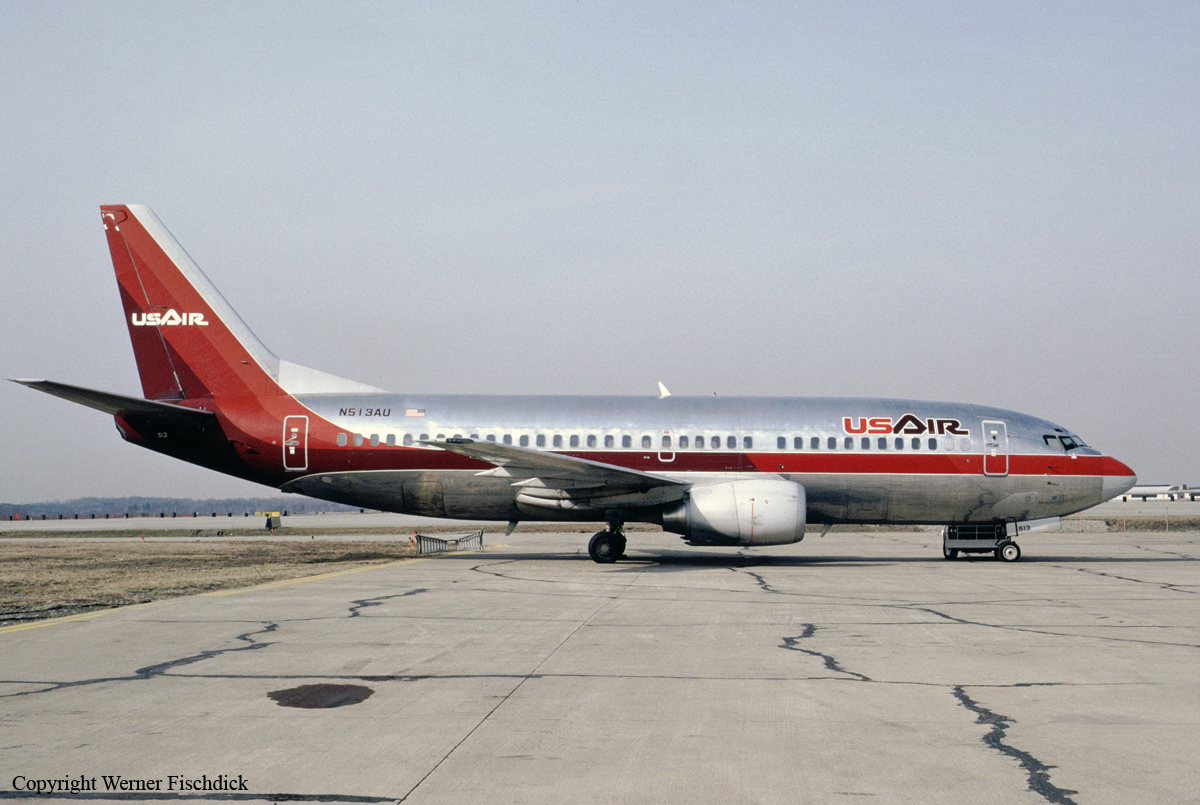
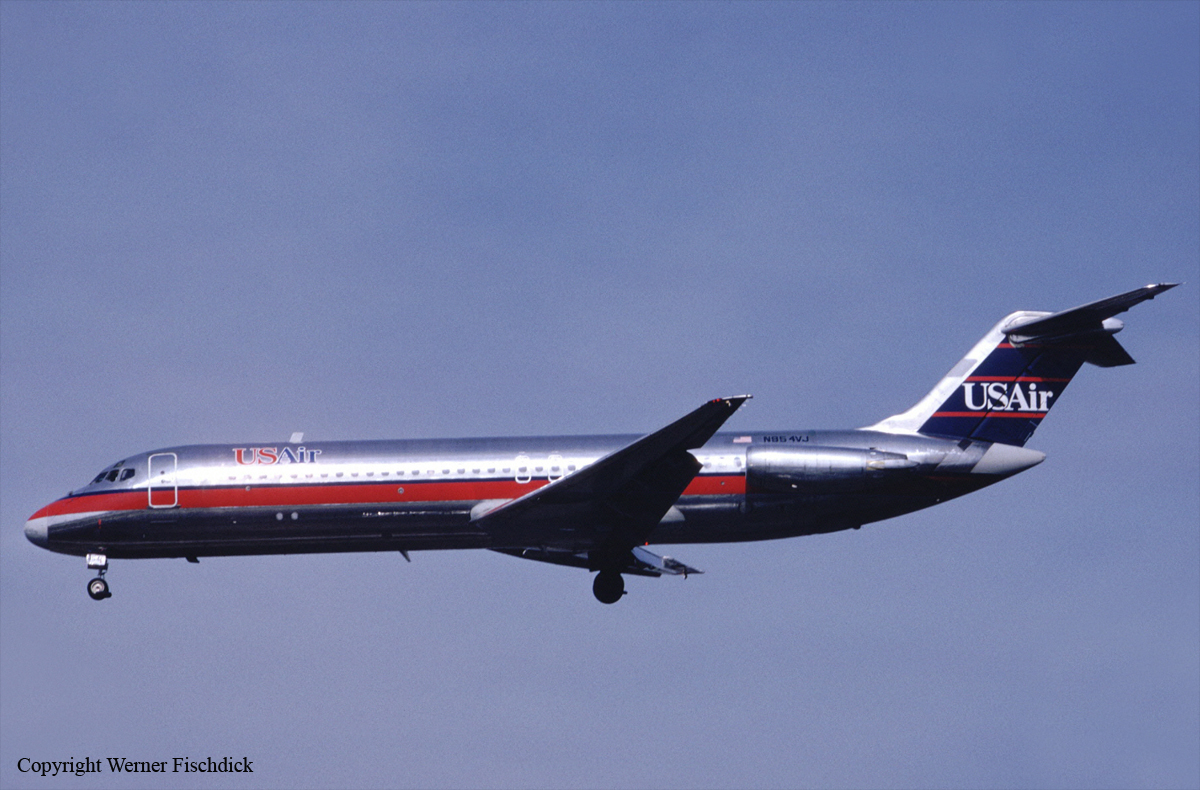
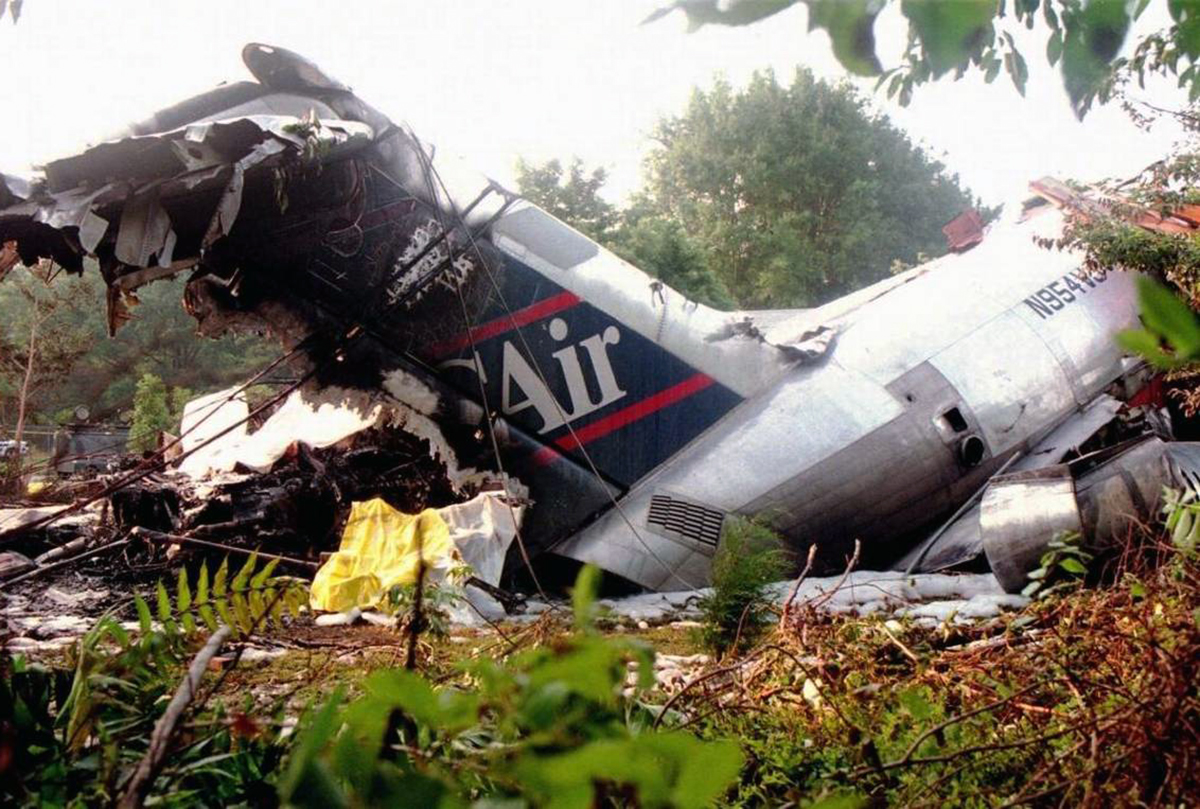
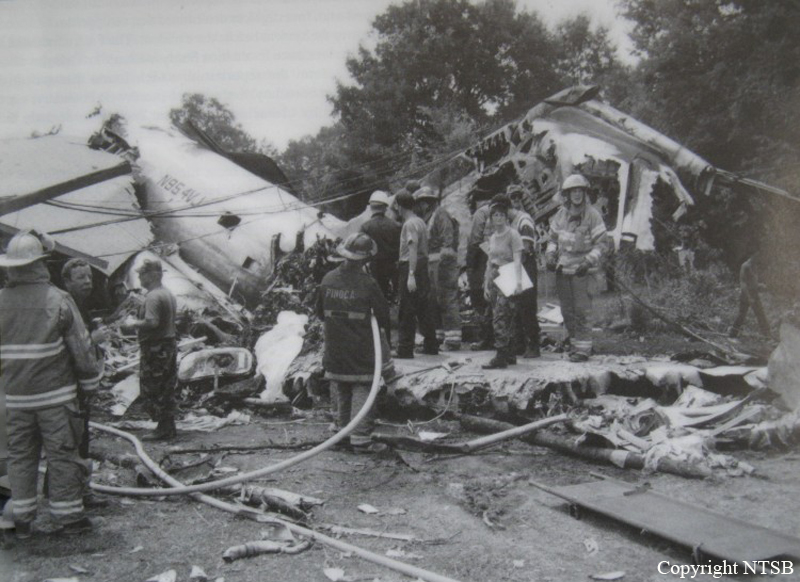
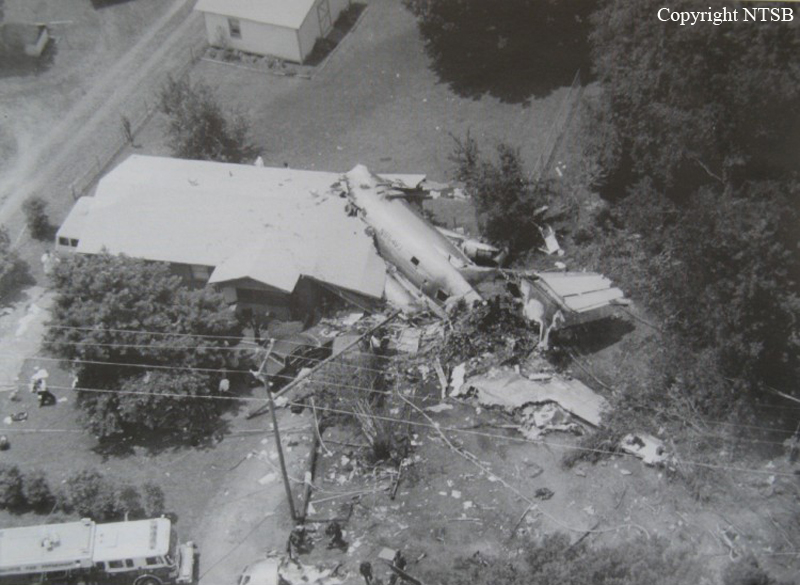
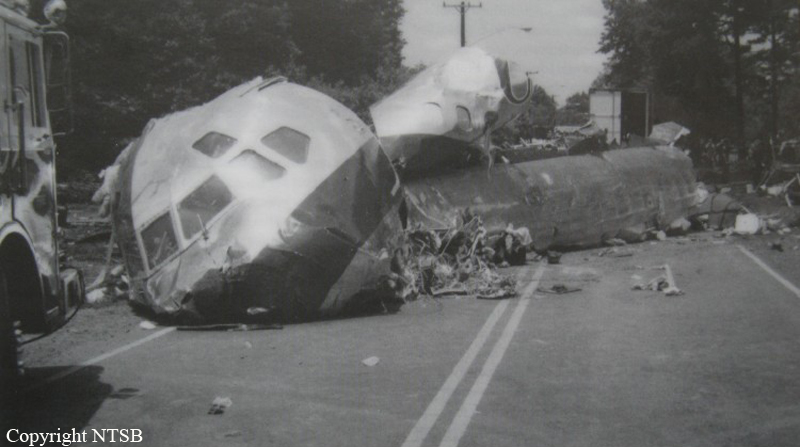
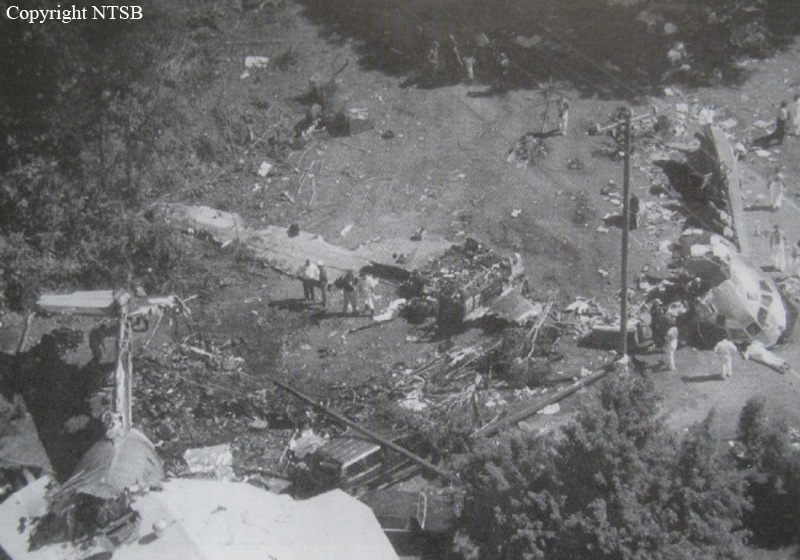
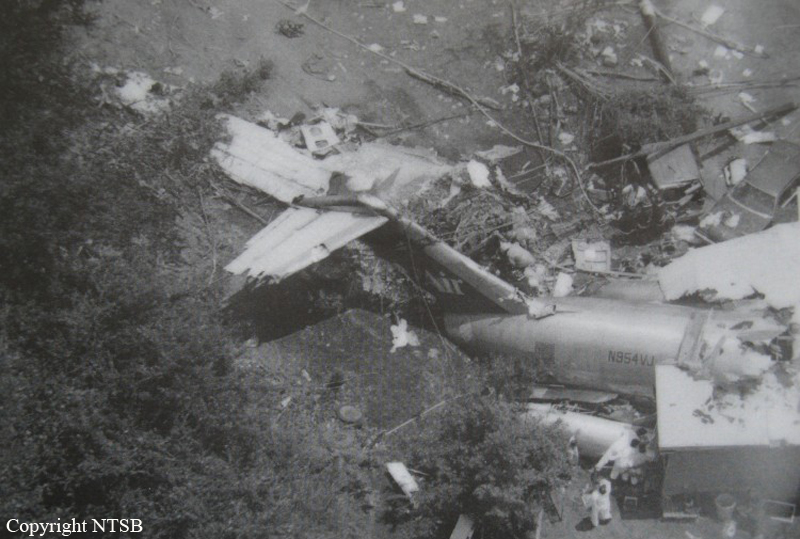
USAir Flight 1016 was a domestic flight from Columbia (CAE) to Charlotte (CLT). The DC-9 departed the gate on schedule at 18:10. The first officer was performing the duties of the flying pilot. The weather information provided to the flightcrew from USAir dispatch indicated that the conditions at Charlotte were similar to those encountered when the crew had departed there approximately one hour earlier. The only noted exception was the report of scattered thunderstorms in the area. Flight 1016 was airborne at 18:23 for the planned 35 minute flight. At 18:27, the captain of flight 1016 made initial contact with the Charlotte Terminal Radar Approach Control (TRACON) controller and advised that the flight was at 12,000 feet mean sea level (msl). The controller replied "USAir ten sixteen ... expect runway one eight right." Shortly afterward the controller issued a clearance to the flightcrew to descend to 10,000 feet. At 18:29, the first officer commented "there's more rain than I thought there was ... it's startin ...pretty good a minute ago ... now it's held up." On their airborne weather radar the crew observed two cells, one located south and the second located east of the airport. The captain said "looks like that's [rain] setting just off the edge of the airport." One minute later, the captain contacted the controller and said "We're showing uh little buildup here it uh looks like it's sitting on the radial, we'd like to go about five degrees to the left to the ..." The controller replied "How far ahead are you looking ten sixteen?" The captain responded "About fifteen miles." The controller then replied "I'm going to turn you before you get there I'm going to turn you at about five miles northbound." The captain acknowledged the transmission, and, at 18:33, the controller directed the crew to turn the aircraft to a heading of three six zero. One minute later the flightcrew was issued a clearance to descend to 6,000 feet, and shortly thereafter contacted the Final Radar West controller. At 18:35 the Final Radar West controller transmitted "USAir ten sixteen ... maintain four thousand runway one eight right.'' The captain acknowledged the radio transmission and then stated to the first officer "approach brief." The first officer responded "visual back up ILS." Following the first officer's response, the controller issued a clearance to flight 1016 to "...turn ten degrees right descend and maintain two thousand three hundred vectors visual approach runway one eight right.'' At 18:36, the Final Radar West controller radioed flight 1016 and said "I'll tell you what USAir ten sixteen they got some rain just south of the field might be a little bit coming off north just expect the ILS now amend your altitude maintain three thousand." At 18:37, the controller instructed flight 1016 to ''turn right heading zero niner zero." At 18:38, the controller said "USAir ten sixteen turn right heading one seven zero four from SOPHE [the outer marker for runway 18R ILS] ... cross SOPHE at or above three thousand cleared ILS one eight right approach." As they were maneuvering the airplane from the base leg of the visual approach to final, both crew members had visual contact with the airport. The captain then contacted Charlotte Tower. The controller said "USAir ten sixteen ... runway one eight right cleared to land following an F-K one hundred short final, previous arrival reported a smooth ride all the way down the final." The pilot of the Fokker 100 in front also reported a "smooth ride". About 18:36, a special weather observation was recorded, which included: ... measured [cloud] ceiling 4,500 feet broken, visibility 6 miles, thunderstorm, light rain shower, haze, the temperature was 88 degrees Fahrenheit, the dewpoint was 67 degrees Fahrenheit, the wind was from 110 degrees at 16 knots .... This information was not broadcast until 1843; thus, the crew of flight 1016 did not receive the new ATIS. At 18:40, the Tower controller said "USAir ten sixteen the wind is showing one zero zero at one nine." This was followed a short time later by the controller saying "USAir ten sixteen wind now one one zero at two one." Then the Tower controller radioed a wind shear warning "windshear alert northeast boundary wind one nine zero at one three.'' On finals the DC-9 entered an area of rainfall and at 18:41:58, the first officer commented "there's, ooh, ten knots right there." This was followed by the captain saying "OK, you're plus twenty [knots] ... take it around, go to the right." A go around was initiated. The Tower controller noticed Flight 1016 going around "USAir ten sixteen understand you're on the go sir, fly runway heading, climb and maintain three thousand." The first officer initially rotated the airplane to the proper 15 degrees nose-up attitude during the missed approach. However, the thrust was set below the standard go-around EPR limit of 1.93, and the pitch attitude was reduced to 5 degrees nose down before the flightcrew recognized the dangerous situation. When the flaps were in transition from 40 to 15 degrees (about a 12-second cycle), the airplane encountered windshear. Although the DC-9 was equipped with an on-board windshear warning system, it did not activate for unknown reasons. The airplane stalled and impacted the ground at 18:42:35. Investigation revealed that the headwind encountered by flight 1016 during the approach between 18:40:40 and 18:42:00 was between 10 and 20 knots. The initial wind component, a headwind, increased from approximately 30 knots at 18:42:00 to 35 knots at 18:42:15. The maximum calculated headwind occurred at 18:42:17, and was calculated at about 39 knots. The airplane struck the ground after transitioning from a headwind of approximately 35 knots, at 18:42:21, to a tailwind of 26 knots (a change of 61 knots), over a 14 second period.
Probable cause:
The board determines that the probable cause of the accident was:
- The flight crew's decision to continue an approach into severe convective activity that was conducive to a microburst,
- The flight crew's failure to recognize a windshear situation in a timely manner,
- The flight crew's failure to establish and maintain the proper airplane attitude and thrust setting necessary to escape the windshear,
- The lack of real-time adverse weather and windshear hazard information dissemination from air traffic control, all of which led to an encounter with and failure to escape from a microburst-induced windshear that was produced by a rapidly developing thunderstorm located at the approach end of runway 18R.
The following contributing factors were reported:
- The lack of air traffic control procedures that would have required the controller to display and issue ASR-9 radar weather information to the pilots of flight 1016,
- The Charlotte tower supervisor's failure to properly advise and ensure that all controllers were aware of and reporting the reduction in visibility and the RVR value information, and the low level windshear alerts that had occurred in multiple quadrants,
- The inadequate remedial actions by USAir to ensure adherence to standard operating procedures,
- The inadequate software logic in the airplane's windshear warning system that did not provide an alert upon entry into the windshear.
- The flight crew's decision to continue an approach into severe convective activity that was conducive to a microburst,
- The flight crew's failure to recognize a windshear situation in a timely manner,
- The flight crew's failure to establish and maintain the proper airplane attitude and thrust setting necessary to escape the windshear,
- The lack of real-time adverse weather and windshear hazard information dissemination from air traffic control, all of which led to an encounter with and failure to escape from a microburst-induced windshear that was produced by a rapidly developing thunderstorm located at the approach end of runway 18R.
The following contributing factors were reported:
- The lack of air traffic control procedures that would have required the controller to display and issue ASR-9 radar weather information to the pilots of flight 1016,
- The Charlotte tower supervisor's failure to properly advise and ensure that all controllers were aware of and reporting the reduction in visibility and the RVR value information, and the low level windshear alerts that had occurred in multiple quadrants,
- The inadequate remedial actions by USAir to ensure adherence to standard operating procedures,
- The inadequate software logic in the airplane's windshear warning system that did not provide an alert upon entry into the windshear.
Final Report:

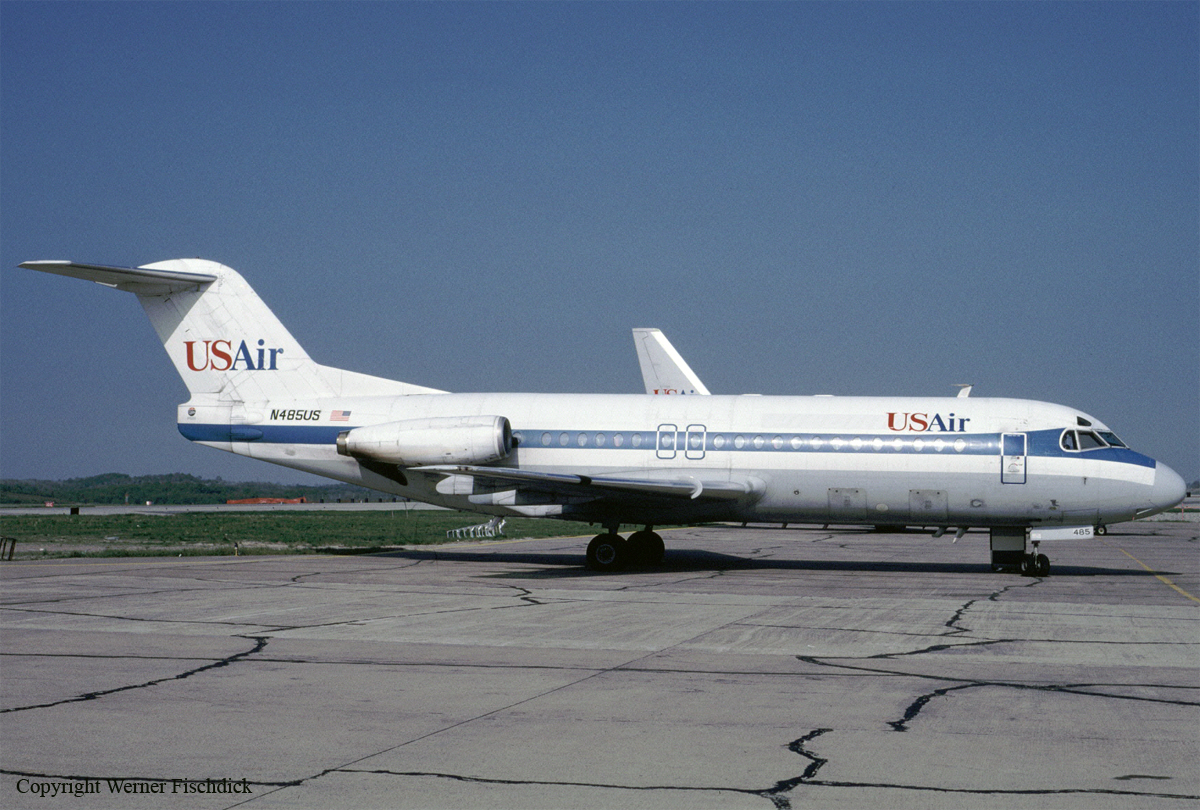
Crash of a Fokker F28 Fellowship 4000 in New York: 27 killed
Date & Time:
Mar 22, 1992 at 2135 LT
Operator:
Registration:
N485US
Survivors:
Yes
Schedule:
Jacksonville – New York – Cleveland
MSN:
11235
YOM:
1986
Flight number:
US405
Crew on board:
4
Crew fatalities:
Pax on board:
47
Pax fatalities:
Other fatalities:
Total fatalities:
27
Captain / Total hours on type:
2200.00
Copilot / Total hours on type:
29
Aircraft flight hours:
12462
Aircraft flight cycles:
16280
Circumstances:
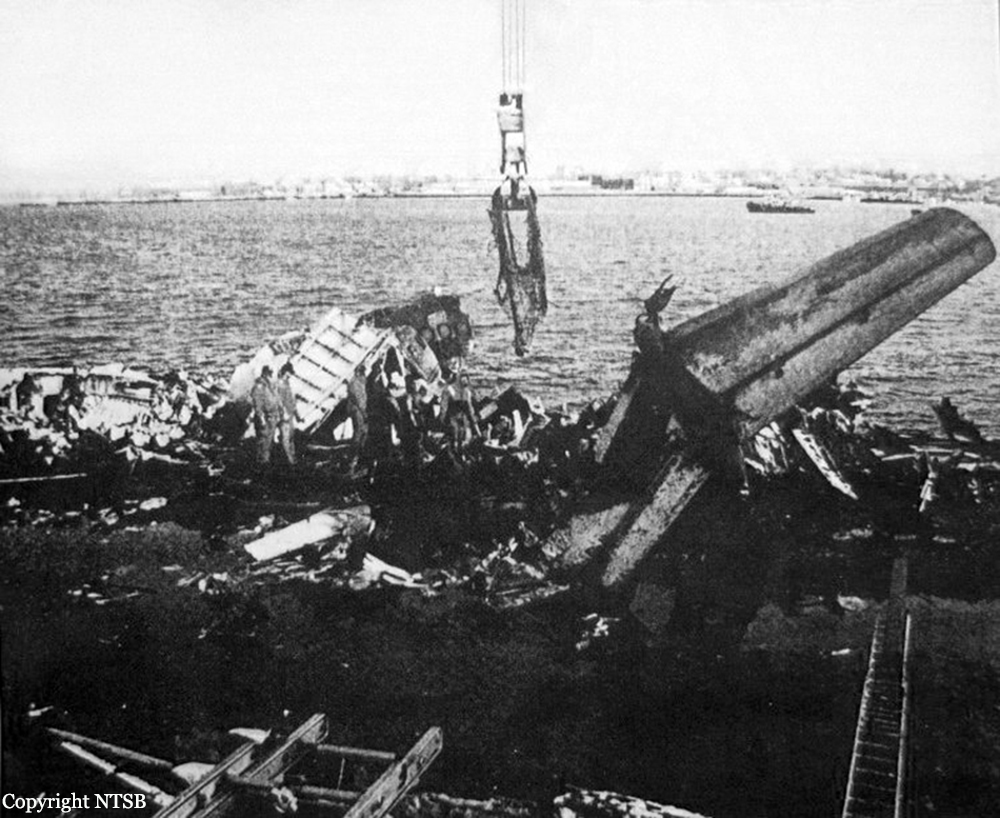
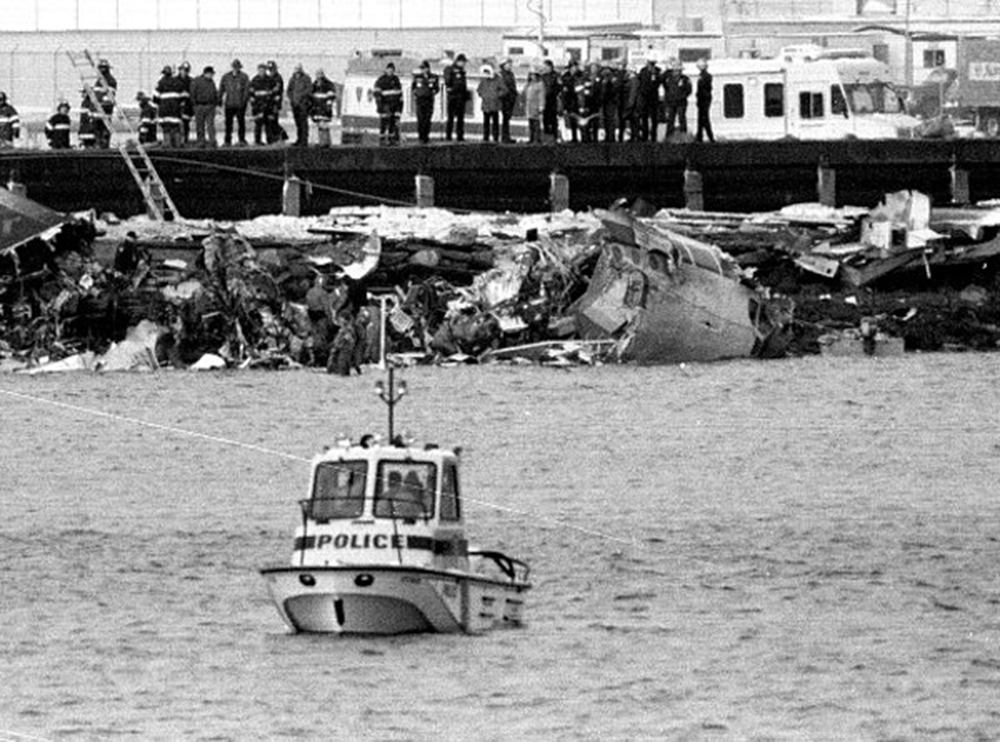
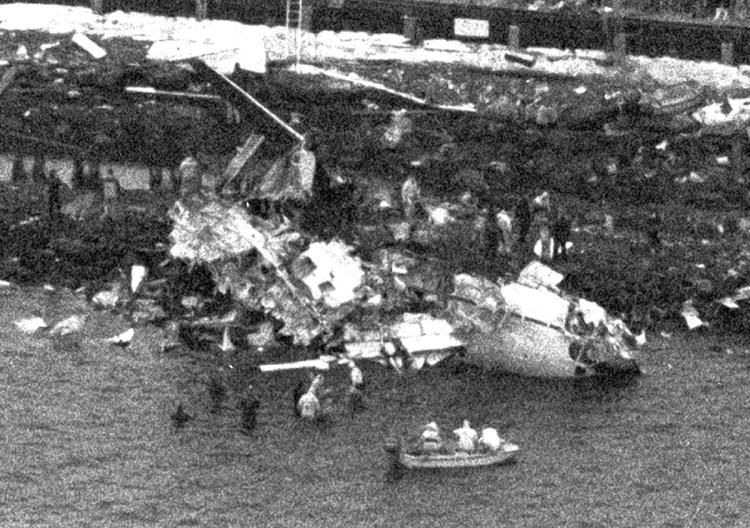
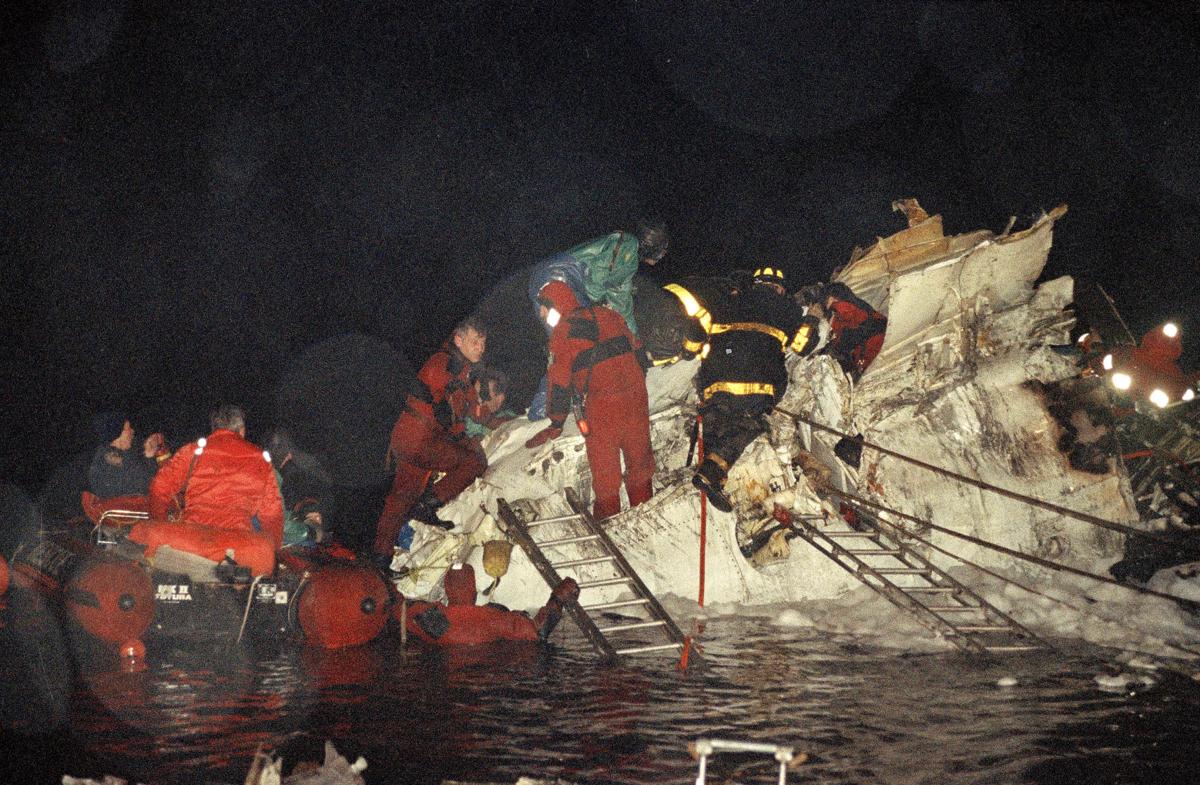
USAir flight 405 was scheduled to depart Jacksonville, FL (JAX) at 16:35 but was given a ground delay because of poor weather in the New-York-LaGuardia (LGA) area and was further delayed in order to remove the baggage of a passenger who chose to deplane. The Fokker F-28 jet departed Jacksonville at 17:15 and was cleared into the LaGuardia area without significant additional delays. The first officer accomplished an ILS approach to LaGuardia's runway 04 to minimums and initiated braking on the landing roll. Ramp congestion delayed taxiing to the parking gate. The airplane was parked at Gate 1 at approximately 19:49, 1 hour and 6 minutes behind schedule. After the airplane was parked at Gate 1, the line mechanic who met the flight was advised by the captain that the aircraft was "good to go." The captain left the cockpit and the first officer prepared for the next leg to Cleveland , OH (CLE) that had originally been scheduled to depart at 19:20. Snow was falling as the F-28 was prepared for departure. The airplane was de-iced with Type I fluid with a 50/50 water/glycol mixture, using two trucks. After the de-icing, about 20:26, one of the trucks experienced mechanical problems and was immobilized behind the airplane, resulting in a pushback delay of about 20 minutes. The captain then requested a second de-icing of the airplane. The airplane was pushed away from the gate to facilitate de-icing by one de-icing truck. The second de-icing was completed at approximately 21:00. At 21:05:37, the first officer contacted the LaGuardia ground controller and requested taxi clearance. The airplane was cleared to taxi to runway 13. At 21:07:12, the flightcrew switched to the LaGuardia ground sequence controller, which they continued to monitor until changing to the tower frequency at 21:25:42. The before-takeoff checklist was completed during the taxi. Engine anti-ice was selected for both engines during taxi. The captain announced that the flaps would remain up during taxi, and he placed an empty coffee cup on the flap handle as a reminder. The captain announced they would use US Air's contaminated runway procedures that included the use of 18 degrees flaps. They would use a reduced V1 speed of 110 knots. The first officer used the ice (wing) inspection light to examine the right wing a couple of times. He did not see any contamination on the wing or on the black strip and therefore did not consider a third de-icing. Flight 405 was cleared into the takeoff and hold position on runway 13 at 21:33:50. The airplane was cleared for takeoff at 21:34:51. The takeoff was initiated and the first officer made a callout of 80 knots, and, at 21:35:25, made a V1 callout. At 21:35:26, the first officer made a VR callout. Approximately 2.2 seconds after the VR callout, the nose landing gear left the ground. Approximately 4.8 seconds later, the sound of stick shaker began. Six stall warnings sounded. The airplane began rolling to the left. As the captain leveled the wings, they headed toward the blackness over the water. The crew used right rudder to maneuver the airplane back toward the ground and avoid the water. They continued to try to hold the nose up to impact in a flat attitude. The airplane came to rest partially inverted at the edge of Flushing Bay, and parts of the fuselage and cockpit were submerged in water. After the airplane came to rest, several small residual fires broke out on the water and on the wreckage debris.
Probable cause:
The failure of the airline industry and the Federal Aviation Administration to provide flight crews with procedures, requirements, and criteria compatible with departure delays in conditions conducive to airframe icing and the decision by the flight crew to take off without positive assurance that the airplane's wings were free of ice accumulation after 35 minutes of exposure to precipitation following de-icing. The ice contamination on the wings resulted in an aerodynamic stall and loss of control after lift-off. Contributing to the cause of the accident were the inappropriate procedures used by, and inadequate coordination between, the flight crew that led to a takeoff rotation at a lower than prescribed air speed.
Final Report: