Operator Image

Crash of a Piper PA-31T3-T1040 Cheyenne in Nuiqsut: 5 killed

Date & Time: Sep 18, 2000 at 1510 LT
Type of aircraft:
Operator:
Registration:
N220CS
Survivors:
Yes
Schedule:
Deadhorse – Nuiqsut
MSN:
31-8275013
YOM:
1982
Flight number:
6C181
Location:
Crew on board:
1
Crew fatalities:
Pax on board:
9
Pax fatalities:
Other fatalities:
Total fatalities:
5
Captain / Total flying hours:
2517
Captain / Total hours on type:
165.00
Aircraft flight hours:
10157
Circumstances:
The airline transport certificated pilot was landing at a remote village on a scheduled domestic commuter flight with nine passengers. The accident airplane, a twin-engine turboprop certified for single-pilot operations, was equipped with a fuselage-mounted belly cargo pod. Witnesses saw the airplane touch down on the gravel runway with the landing gear retracted. The belly pod lightly scraped the runway for about 40 feet before the airplane transitioned to a climb. The propeller tips did not contact the runway. As the airplane began climbing away from the runway, the landing gear was extended. The airplane climbed to about 100 to 150 feet above the ground, and then began a descending left turn, colliding with tundra-covered terrain. A postcrash fire destroyed the fuselage, right wing, and the right engine. The flaps were found extended to 40 degrees. The balked landing procedure for the airplane states, in part: "power levers to maximum, flaps to 15 degrees, landing gear up, and then retract the flaps." Five passengers seated in the rear of the airplane survived the crash. The survivors did not recall hearing a gear warning horn before ground contact. The airplane was landed gear-up eight months before the accident. The airplane was nearly landed gear-up four months before the accident. Each time, a landing gear warning horn was not heard by the pilot or passengers. A postcrash examination of the airplane and engines did not locate any preimpact mechanical malfunction. The FAA's Fairbanks, Alaska, FSDO conducted an inspection of the operator six months before the accident, and recommended the operator utilize two pilots in the accident airplane. Following the accident, the Fairbanks FSDO required the operator to utilize two pilots for passenger flights in the accident airplane make and model.
Probable cause:
The pilot's failure to extend the landing gear, his improper aborted landing procedure, and inadvertent stall/mush. Factors in the accident were an improper adjustment of the landing gear warning horn system by company maintenance personnel, and the failure of the pilot to utilize the pre-landing checklist.
Final Report:

Crash of a Piper PA-31T3-T1040 Cheyenne in Kotzebue

Date & Time: Feb 21, 2000 at 1123 LT
Type of aircraft:
Operator:
Registration:
N219CS
Survivors:
Yes
Schedule:
Point Lay - Kotzebue
MSN:
31-8275005
YOM:
1982
Crew on board:
1
Crew fatalities:
Pax on board:
0
Pax fatalities:
Other fatalities:
Total fatalities:
0
Captain / Total flying hours:
13500
Captain / Total hours on type:
4900.00
Aircraft flight hours:
11098
Circumstances:
The airplane collided with frozen pack ice, three miles from the airport, during a GPS instrument approach. Instrument conditions of 3/4 mile visibility in snow and fog were reported at the time of the accident. The pilot stated that he began a steep descent with the autopilot engaged. He indicated that as the airplane crossed the final approach course, the autopilot turned the airplane inbound toward the airport. He continued the steep descent, noted the airplane had overshot the course, and the autopilot was not correcting very well. He disengaged the autopilot and manually increased the correction heading to intercept the final approach course. During the descent he completed the landing checklist, extended the landing gear and flaps, and was tuning both the communications and navigation radios. The pilot said he looked up from tuning the radios to see the sea ice coming up too quickly to react, and impacted terrain. The pilot relayed there were no pre accident anomalies with the airplane, and that he 'did not stay ahead of the airplane.'
Probable cause:
The pilot descended below the minimum descent altitude. Factors associated with this accident were the task overload of the pilot during the instrument approach, and not performing a level off.
Final Report:

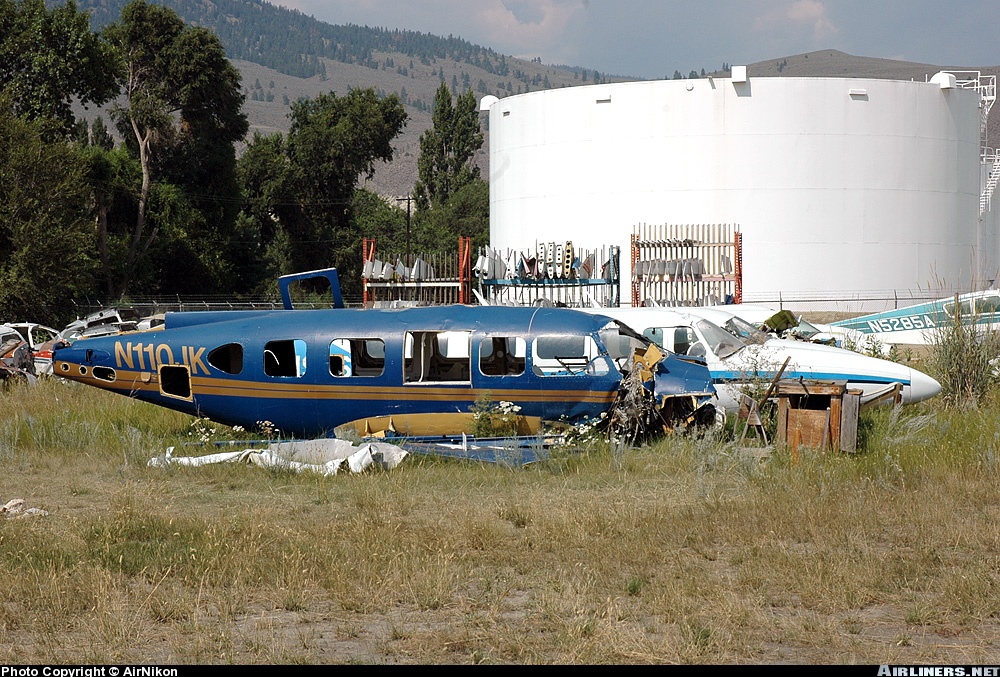
Crash of a Piper PA-31T3-T1040 Cheyenne in Wales

Date & Time: Feb 9, 2000 at 1205 LT
Type of aircraft:
Operator:
Registration:
N110JK
Survivors:
Yes
Schedule:
Nome – Wales
MSN:
31-8375005
YOM:
1983
Location:
Crew on board:
1
Crew fatalities:
Pax on board:
8
Pax fatalities:
Other fatalities:
Total fatalities:
0
Captain / Total flying hours:
4600
Captain / Total hours on type:
195.00
Aircraft flight hours:
12385
Circumstances:
The airline transport certificated pilot was landing a twin-engine turboprop airplane at a remote airport on a scheduled air taxi flight. Rising hilly terrain is located east of the airport. The pilot said that during the approach for landing, he noticed the airport wind sock indicating a wind from the east about 25 knots. When the pilot descended to 500 feet, about mid-base, the airplane encountered moderate turbulence and an increased rate of descent. He added engine power to arrest the descent. As he turned toward the runway, the airplane encountered 3 to 4 rolling oscillations with a bank angle up to 90 degrees while descending toward the runway. According to a company mechanic who traveled to the scene, it appeared that the airplane struck the runway about 1,200 feet from the approach end with the left wing and left elevator, while yawed about 45 degrees to the left of the runway centerline. The airplane then slid off the left side of the runway. After the collision, the pilot evacuated the passengers, and noticed the airport wind sock was indicating a tailwind. The Airport/Facility Directory contains the following in the airport remarks: 'Unattended. Easterly winds may cause severe turbulence in vicinity of runway.'
Probable cause:
The pilot's inadequate evaluation of the weather conditions, and his inadvertent flight into adverse weather conditions. Factors in the accident were terrain induced turbulence and a tailwind.
Final Report:

Crash of a Piper PA-31-350 Navajo Chieftain in Point Lay

Date & Time: Dec 3, 1998 at 1038 LT
Operator:
Registration:
N3542H
Flight Type:
Survivors:
Yes
Schedule:
Kotzebue - Point Lay
MSN:
31-7952233
YOM:
1979
Crew on board:
1
Crew fatalities:
Pax on board:
0
Pax fatalities:
Other fatalities:
Total fatalities:
0
Captain / Total flying hours:
3069
Captain / Total hours on type:
311.00
Aircraft flight hours:
15638
Circumstances:
A witness observed the airplane circle to land at the completion of an NDB approach. The nighttime meteorological conditions were an 800 feet ceiling, 1 mile visibility in blowing snow, and 26 knot winds. The surrounding terrain was essentially flat, snow covered, and featureless. The witness saw the airplane on final approach misaligned for the runway, and then disappear below an 18 feet msl bluff. He transmitted on the radio to 'get out of there,' and heard no response. About 10 minutes later the accident pilot walked up to the witness' airplane. The pilot told the investigator-in-charge that he was 'beat around by the winds, ...it was snowing pretty hard, I always had the lights, and I was concentrating on the runway. The next thing I knew I was on the ground short of the runway.' The pilot's previous experience to this airport was during daytime, and during visual conditions. The airport, which was being transferred from the Air Force to the North Slope Borough, has medium intensity runway lights (MIRL), and runway end identifier lights (REILS). It does not have visual approach slope indicator (VASI) lights.
Probable cause:
Failure of the pilot to maintain a proper glidepath. Factors associated with this accident were the airport not having a VASI system installed, and the lack of visual perception for the pilot.
Final Report: