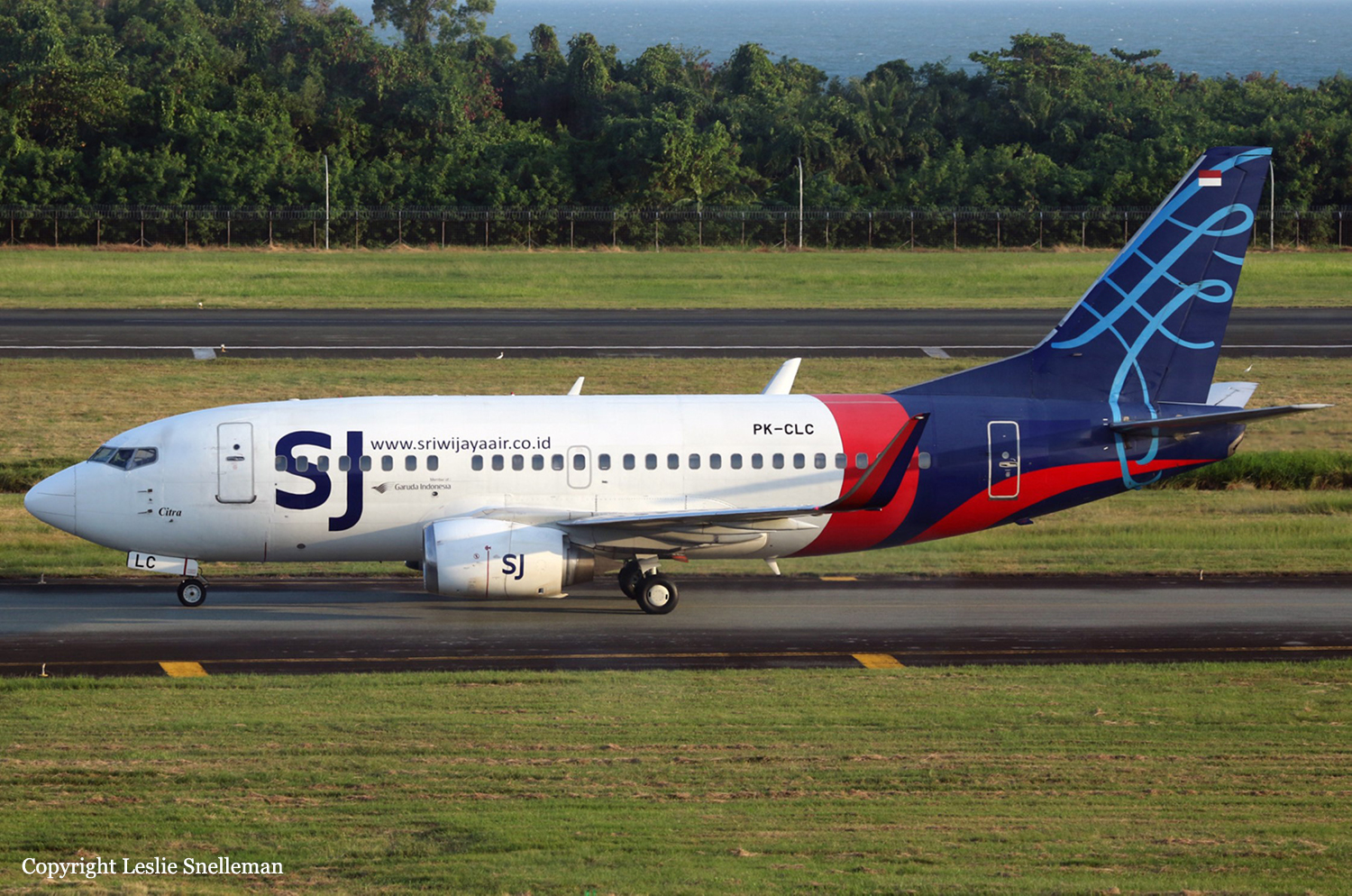
Crash of a Boeing 737-524 off Jakarta: 62 killed

Date & Time: Jan 9, 2021 at 1440 LT
Type of aircraft:
Operator:
Registration:
PK-CLC
Flight Phase:
Survivors:
No
Schedule:
Jakarta - Pontianak
MSN:
27323/2616
YOM:
1994
Flight number:
SJY182
Country:
Region:
Crew on board:
6
Crew fatalities:
Pax on board:
56
Pax fatalities:
Other fatalities:
Total fatalities:
62
Captain / Total flying hours:
17904
Captain / Total hours on type:
9023.00
Copilot / Total flying hours:
5107
Copilot / Total hours on type:
4957
Aircraft flight hours:
62983
Aircraft flight cycles:
40383
Circumstances:
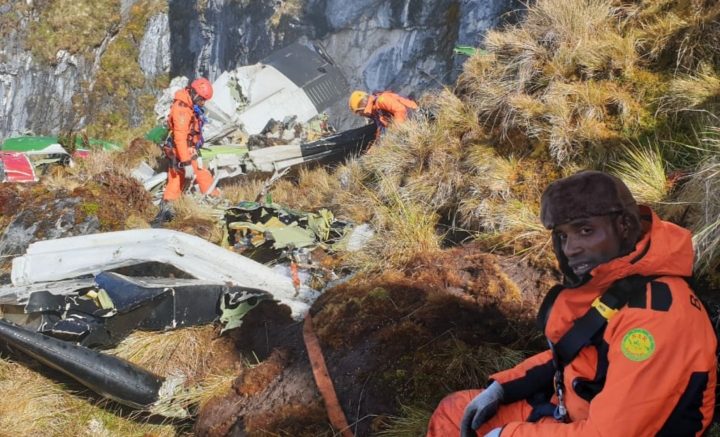
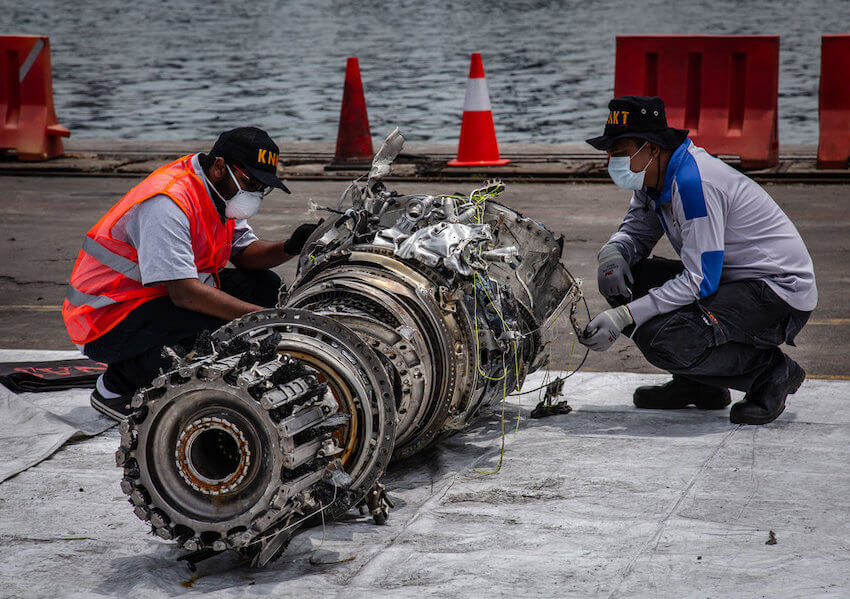
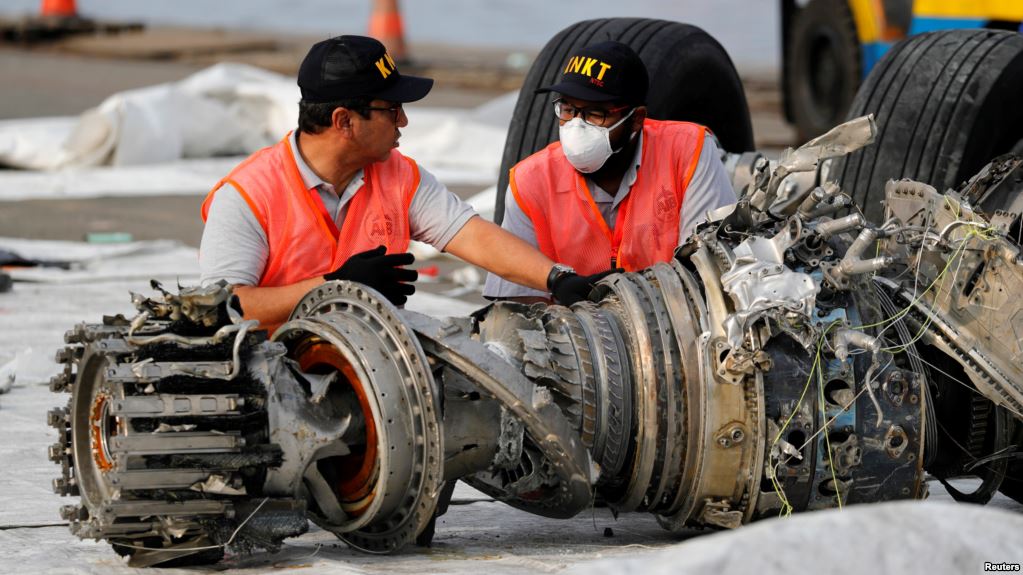
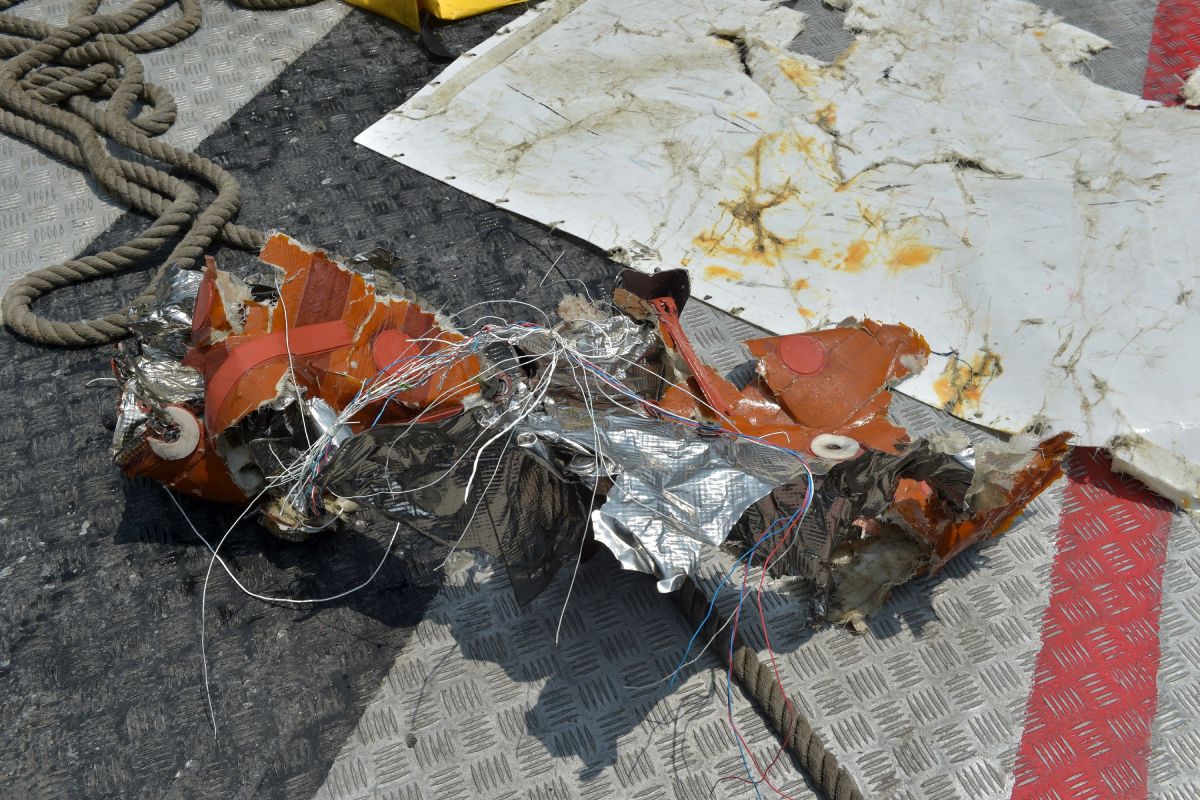
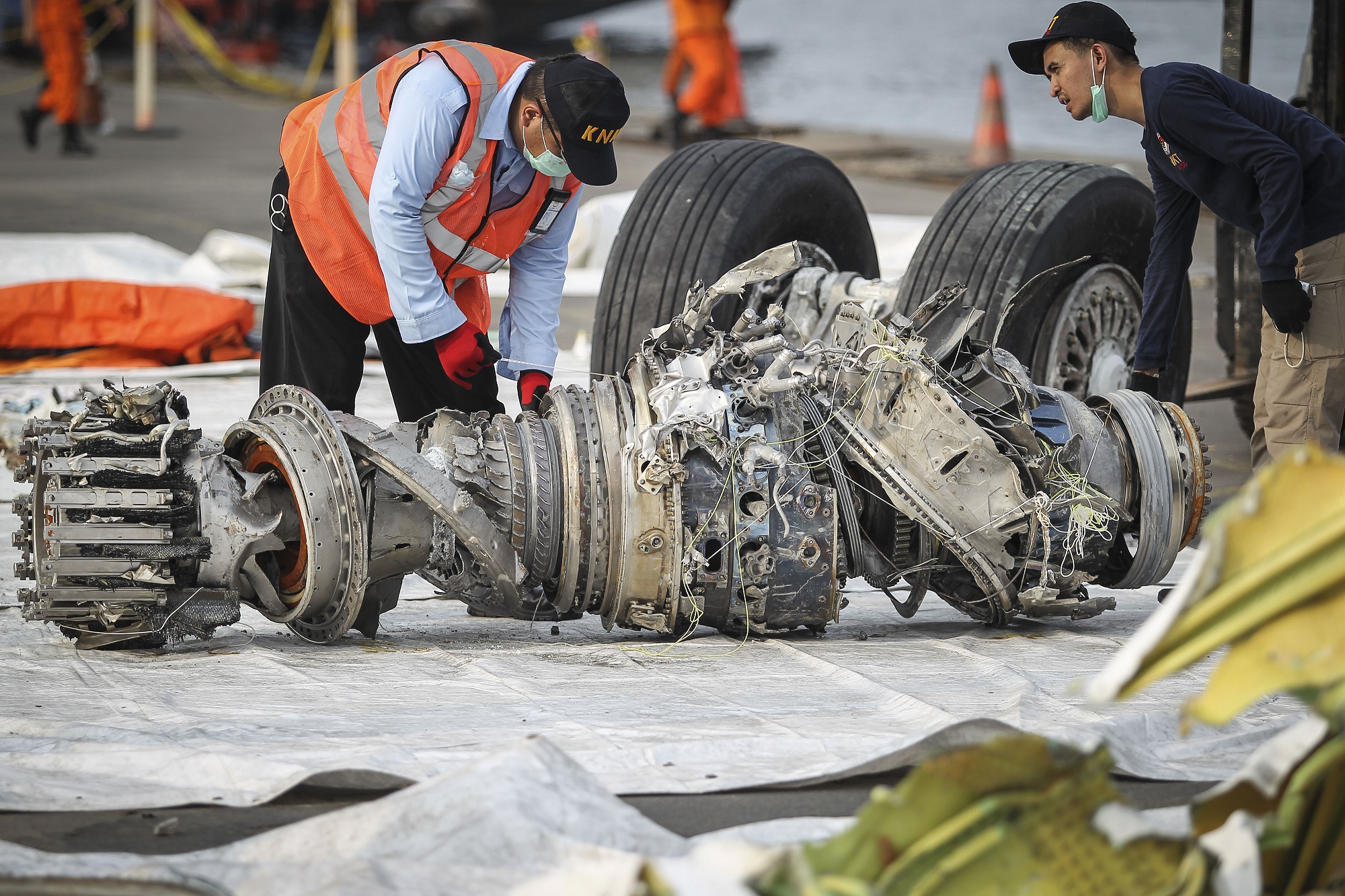
On 9 January 2021, a Boeing 737-500 aircraft, registration PK-CLC, was being operated by PT. Sriwijaya Air on a scheduled passenger flight from Soekarno-Hatta International Airport (WIII), Jakarta to Supadio International Airport (WIOO), Pontianak . The flight number was SJY182. According to the flight plan filed, the fuel endurance was 3 hours 50 minutes. At 0736 UTC (1436 LT) in daylight conditions, Flight SJY182 departed from Runway 25R of Jakarta. There were two pilots, four flight attendants, and 56 passengers onboard the aircraft. At 14:36:46 LT, the SJY182 pilot contacted the Terminal East (TE) controller and was instructed “SJY182 identified on departure, via SID (Standard Instrument Departure) unrestricted climb level 290”. The instruction was read back by the pilot. At 14:36:51 LT, the Flight Data Recorder (FDR) data recorded that the Autopilot (AP) system engaged at altitude of 1,980 feet. At 14:38:42 LT, the FDR data recorded that as the aircraft climbed past 8,150 feet, the thrust lever of the left engine started reducing, while the thrust lever position of the right engine remained. The FDR data also recorded the left engine N1 was decreasing whereas the right engine N1 remained. At 14:38:51 LT, the SJY182 pilot requested to the TE controller for a heading change to 075° to avoid weather conditions and the TE controller approved the request. At 14:39:01 LT, the TE controller instructed SJY182 pilot to stop their climb at 11,000 feet to avoid conflict with another aircraft with the same destination that was departing from Runway 25L. The instruction was read back by the SJY182 pilot. At 14:39:47 LT, the FDR data recorded the aircraft’s altitude was about 10,600 feet with a heading of 046° and continuously decreasing (i.e., the aircraft was turning to the left). The thrust lever of the left engine continued decreasing. The thrust lever of the right engine remained. At 14:39:54 LT, the TE controller instructed SJY182 to climb to an altitude of 13,000 feet, and the instruction was read back by an SJY182 pilot at 14:39:59 LT. This was the last known recorded radio transmission by the flight. At 14:40:05 LT, the FDR data recorded the aircraft altitude was about 10,900 feet, which was the highest altitude recorded in the FDR before the aircraft started its descent. The AP system then disengaged at that point with a heading of 016°, the pitch angle was about 4.5° nose up, and the aircraft rolled to the left to more than 45°. The thrust lever position of the left engine continued decreasing while the right engine thrust lever remained. At 14:40:10 LT, the FDR data recorded the autothrottle (A/T) system disengaged and the pitch angle was more than 10° nose down. About 20 seconds later the FDR stopped recording. The last aircraft coordinate recorded was 5°57'56.21" S 106°34'24.86" E. At 14:40:37 LT, the TE controller called SJY182 to request for the aircraft heading but did not receive any response from the pilot. At 14:40:48 LT, the radar target of the aircraft disappeared from the TE controller radar screen. At 14:40:46 LT, the TE controller again called SJY182 but did not receive any response from the pilot. The TE controller then put a measurement vector on the last known position of SJY182 and advised the supervisor of the disappearance of SJY182. The supervisor then reported the occurrence to the operation manager. The TE controller repeatedly called SJY182 several times and also asked other aircraft that flew near the last known location of SJY182 to call the SJY182. The TE controller then activated the emergency frequency of 121.5 MHz and called SJY182 on that frequency. All efforts were unsuccessful to get any responses from the SJY182 pilot. About 1455 LT, the operation manager reported the occurrence to the Indonesian Search and Rescue Agency (Badan Nasional Pencarian dan Pertolongan/BNPP). At 1542 LT, the Air Traffic Services (ATS) provider declared the uncertainty phase (INCERFA) of the SJY182. The distress phase of SJY182 (DETRESFA) was subsequently declared at 1643 LT.
Probable cause:
The following contributing factors were identified:
• The corrective maintenance processes of the A/T problem were unable to identify the friction or binding within the mechanical system of the thrust lever and resulted in the prolonged and unresolved of the A/T problem.
• The right thrust lever did not reduce when required by the A/P to obtain selected rate of climb and aircraft speed due to the friction or binding within the mechanical system, as a result, the left thrust lever compensated by moving further backward which resulted in thrust asymmetry.
• The delayed CTSM activation to disengage the A/T system during the thrust asymmetry event due to the undervalued spoiler angle position input resulted in greater power asymmetry.
• The automation complacency and confirmation bias might have led to a decrease in active monitoring which resulted in the thrust lever asymmetry and deviation of the flight path were not being monitored.
• The aircraft rolled to the left instead of to the right as intended while the control wheel deflected to the right and inadequate monitoring of the EADI might have created assumption that the aircraft was rolling excessively to the right which resulted in an action that was contrary in restoring the aircraft to safe flight parameters.
• The absence of the guidance of the national standard for the UPRT, may have contributed to the training program not being adequately implemented to ensure that pilots have enough knowledge to prevent and recover of an upset condition effectively and timely.
Final Report:

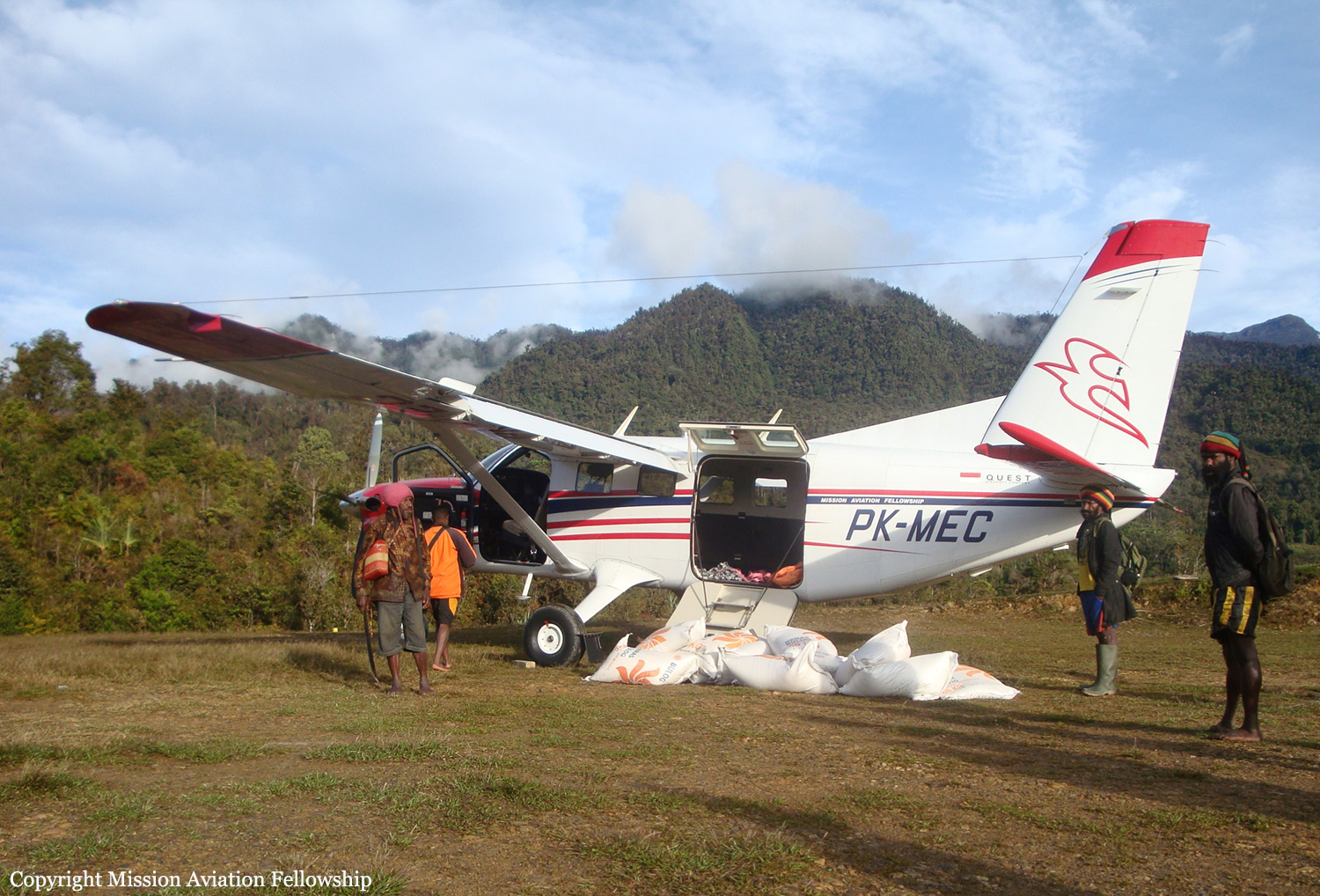
Crash of a Quest Kodiak 100 off Sentani: 1 killed

Date & Time: May 12, 2020 at 0628 LT
Type of aircraft:
Operator:
Registration:
PK-MEC
Flight Phase:
Flight Type:
Survivors:
No
Schedule:
Jayapura - Mamit
MSN:
100-0026
YOM:
2009
Country:
Region:
Crew on board:
1
Crew fatalities:
Pax on board:
0
Pax fatalities:
Other fatalities:
Total fatalities:
1
Captain / Total flying hours:
1357
Captain / Total hours on type:
185.00
Aircraft flight hours:
4707
Aircraft flight cycles:
9379
Circumstances:
On 12 May 2020, a Quest Kodiak 100 aircraft, registration PK-MEC, was being operated by Mission Aviation Fellowship (MAF) as a cargo flight from Sentani Airport (WAJJ), Jayapura, Papua with intended destination of Mamit Airstrip (WAVS) Tolikara, Papua. The pilot was the only person on board for this flight and the aircraft carried 694 kgs of cargo goods. At 0622 LT (2122 UTC), the pilot of PK-MEC aircraft requested clearance to the Sentani Tower controller to start aircraft engine and flying to Mamit at radial 241° with intended cruising altitude 10,000 feet. The Sentani Tower controller approved the request. At 0627 LT, on daylight condition, the aircraft took off from runway 12 of Sentani Airport, thereafter, the Sentani Tower controller advised to the pilot of PK-MEC to contact Jayapura Radar controller. At 0628LT, the pilot of PK-MEC declared “MAYDAY” on Jayapura Radar radio frequency. The Jayapura Radar controller tried to contact pilot of PK-MEC four times but no answer. At 0630 LT, the Jayapura Radar Controller requested the pilot of PK-RCE that was just took off from Sentani to visually observe the position of PK-MEC aircraft. Few minutes later, the pilot of PK-RCE reported to Jayapura Radar controller that some debris were seen on Sentani Lake and some boats were moving toward the debris location. The pilot of PK-RCE assumed that PK-MEC aircraft had crashed to the lake. The pilot fatally injured. The wreckages have been recovered including the Global Positioning System (GPS) data card.

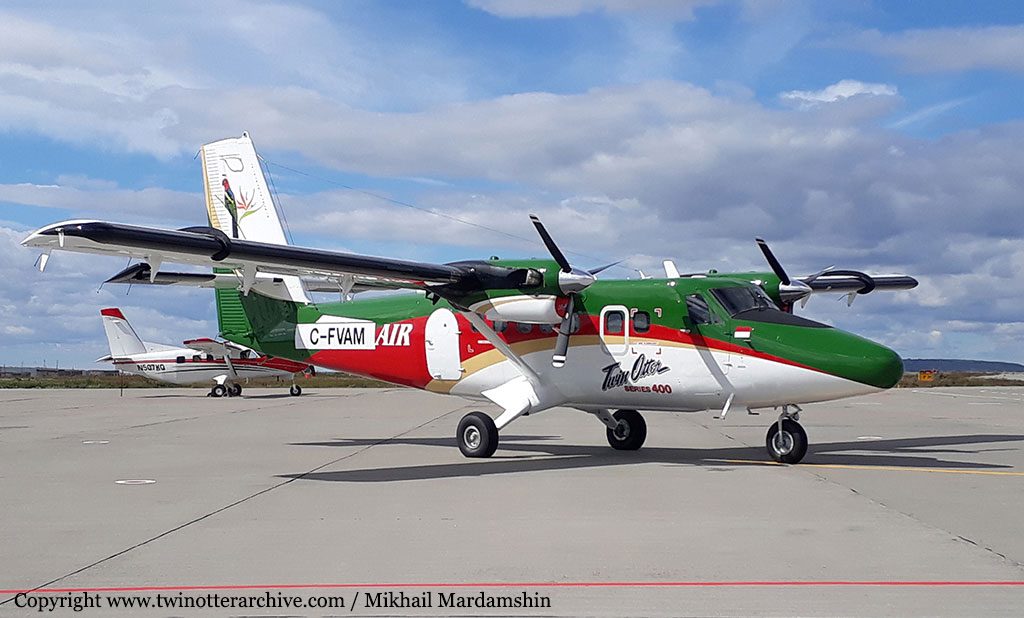
Crash of a Viking Air DHC-6 Twin Otter 400 near Kampung Mamontoga: 4 killed

Date & Time: Sep 18, 2019 at 1100 LT
Operator:
Registration:
PK-CDC
Flight Phase:
Flight Type:
Survivors:
No
Site:
Schedule:
Timika - Ilaga
MSN:
950
YOM:
2016
Country:
Region:
Crew on board:
3
Crew fatalities:
Pax on board:
1
Pax fatalities:
Other fatalities:
Total fatalities:
4
Circumstances:
The twin engine airplane departed Timika Airport at 1036LT on a cargo flight to Ilaga, carrying one passenger, a crew of four and a load of 1,7 ton of rice. At 1054LT, the crew gave his ETA at Ilaga Airport when the contact was lost about six minutes later. As the airplane failed to arrive at destination, SAR operations were initiated. The wreckage was found four days later in a mountainous terrain, at an altitude of 4,115 meters, about 10 km from Kampung Mamontoga. The aircraft was totally destroyed and all four occupants were killed.

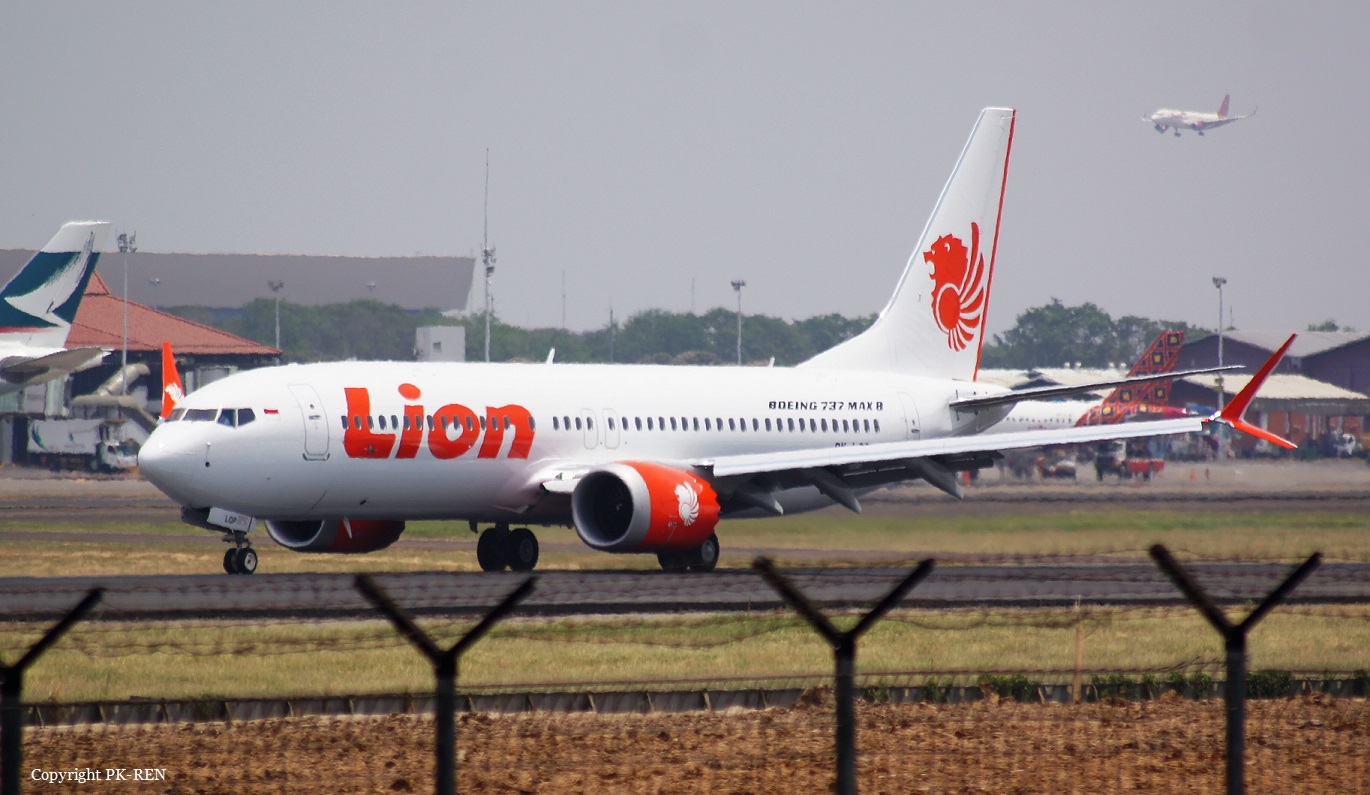
Crash of a Boeing 737 MAX 8 off Jakarta: 189 killed

Date & Time: Oct 29, 2018 at 0631 LT
Type of aircraft:
Operator:
Registration:
PK-LQP
Flight Phase:
Survivors:
No
Schedule:
Jakarta - Pangkal Pinang
MSN:
43000
YOM:
2018
Flight number:
JT610
Country:
Region:
Crew on board:
8
Crew fatalities:
Pax on board:
181
Pax fatalities:
Other fatalities:
Total fatalities:
189
Captain / Total flying hours:
6028
Captain / Total hours on type:
5176.00
Copilot / Total flying hours:
5174
Copilot / Total hours on type:
4286
Aircraft flight hours:
895
Aircraft flight cycles:
443
Circumstances:
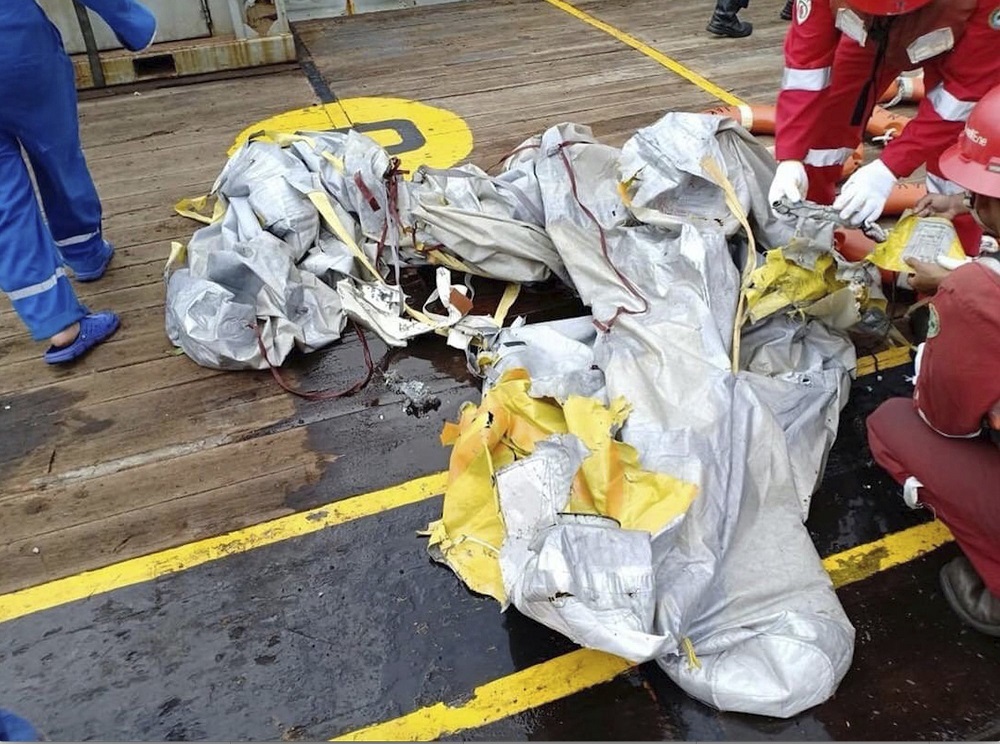
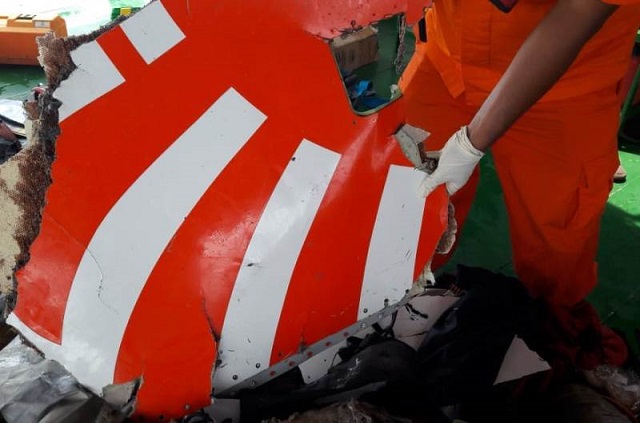
The aircraft departed runway 25L at Jakarta-Soekarno-Hatta Airport at 0621LT bound for Pangkal Pinang, carrying 181 passengers and 8 crew members. The crew was cleared to climb but apparently encountered technical problems and was unable to reach a higher altitude than 5,375 feet. At this time, the flight shows erratic speed and altitude values. The pilot declared an emergency and elected to return to Jakarta when control was lost while at an altitude of 3,650 feet and at a speed of 345 knots. The airplane entered a dive and crashed 12 minutes after takeoff into the Kerawang Sea, about 63 km northeast from its departure point. The airplane disintegrated on impact and few debris were already recovered but unfortunately no survivors. It has been reported that the aircraft suffered various technical issues during the previous flight on Sunday night but was released for service on Monday morning. Brand new, the airplane was delivered to Lion Air last August 18. At the time of the accident, weather conditions were considered as good. The Cockpit Voice Recorder (CVR) was found on 14 January 2019. In the initial stages of the investigation, it was found that there is a potential for repeated automatic nose down trim commands of the horizontal stabilizer when the flight control system on a Boeing 737 MAX aircraft receives an erroneously high single AOA sensor input. Such a specific condition could among others potentially result in the stick shaker activating on the affected side and IAS, ALT and/or AOA DISAGREE alerts. The logic behind the automatic nose down trim lies in the aircraft's MCAS (Maneuvering Characteristics Augmentation System) that was introduced by Boeing on the MAX series aircraft. This feature was added to prevent the aircraft from entering a stall under specific conditions. On November 6, 2018, Boeing issued an Operations Manual Bulletin (OMB) directing operators to existing flight crew procedures to address circumstances where there is erroneous input from an AOA sensor. On November 7, the FAA issued an emergency Airworthiness Directive requiring "revising certificate limitations and operating procedures of the airplane flight manual (AFM) to provide the flight crew with runaway horizontal stabilizer trim procedures to follow under certain conditions.
Probable cause:
Contributing factors defines as actions, omissions, events, conditions, or a combination thereof, which, if eliminated, avoided or absent, would have reduced the probability of the accident or incident occurring, or mitigated the severity of the
consequences of the accident or incident. The presentation is based on chronological order and not to show the degree of contribution.
1. During the design and certification of the Boeing 737-8 (MAX), assumptions were made about flight crew response to malfunctions which, even though consistent with current industry guidelines, turned out to be incorrect.
2. Based on the incorrect assumptions about flight crew response and an incomplete review of associated multiple flight deck effects, MCAS’s reliance on a single sensor was deemed appropriate and met all certification requirements.
3. MCAS was designed to rely on a single AOA sensor, making it vulnerable to erroneous input from that sensor.
4. The absence of guidance on MCAS or more detailed use of trim in the flight manuals and in flight crew training, made it more difficult for flight crews to properly respond to uncommanded MCAS.
5. The AOA DISAGREE alert was not correctly enabled during Boeing 737-8 (MAX) development. As a result, it did not appear during flight with the mis-calibrated AOA sensor, could not be documented by the flight crew and was therefore not available to help maintenance identify the mis-calibrated AOA sensor.
6. The replacement AOA sensor that was installed on the accident aircraft had been mis-calibrated during an earlier repair. This mis-calibration was not detected during the repair.
7. The investigation could not determine that the installation test of the AOA sensor was performed properly. The mis-calibration was not detected.
8. Lack of documentation in the aircraft flight and maintenance log about the continuous stick shaker and use of the Runaway Stabilizer NNC meant that information was not available to the maintenance crew in Jakarta nor was it available to the accident crew, making it more difficult for each to take the appropriate actions.
9. The multiple alerts, repetitive MCAS activations, and distractions related to numerous ATC communications were not able to be effectively managed. This was caused by the difficulty of the situation and performance in manual handling, NNC execution, and flight crew communication, leading to ineffective CRM application and workload management. These performances had previously been identified during training and reappeared during the accident flight.
Final Report:

Crash of a Pacific Aerospace PAC 750XL near Oksibil: 8 killed

Date & Time: Aug 11, 2018 at 1420 LT
Operator:
Registration:
PK-HVQ
Survivors:
Yes
Site:
Schedule:
Tanah Merah – Oksibil
MSN:
144
YOM:
2009
Country:
Region:
Crew on board:
2
Crew fatalities:
Pax on board:
7
Pax fatalities:
Other fatalities:
Total fatalities:
8
Captain / Total flying hours:
13665
Captain / Total hours on type:
1468.00
Aircraft flight hours:
4574
Aircraft flight cycles:
5227
Circumstances:
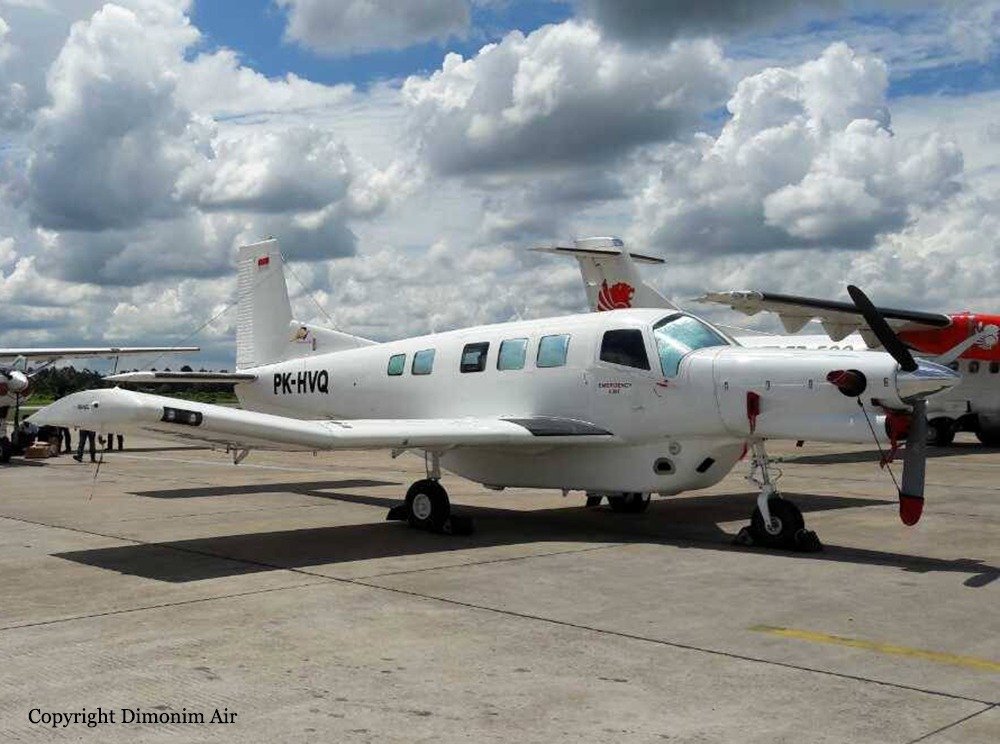
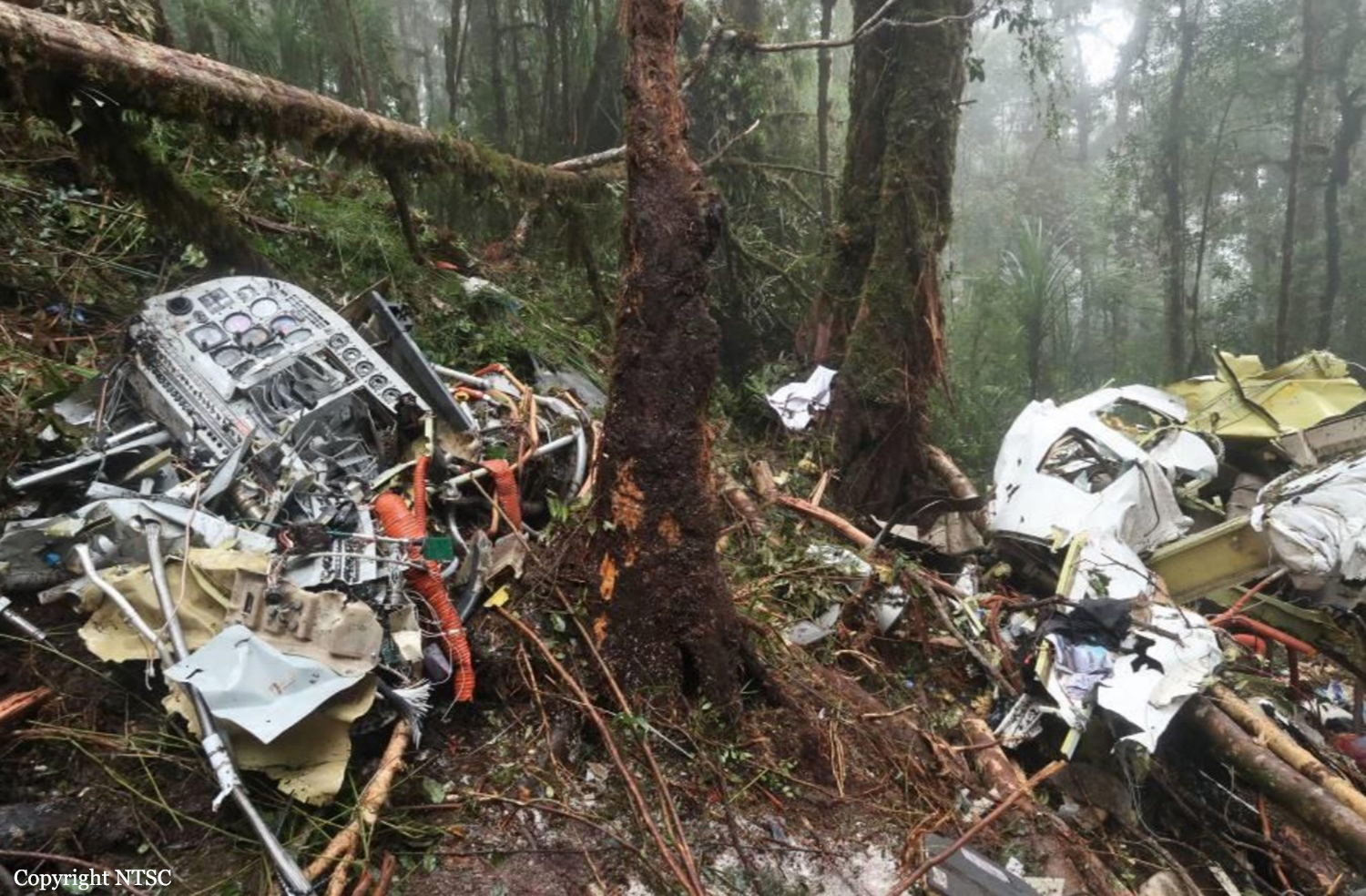
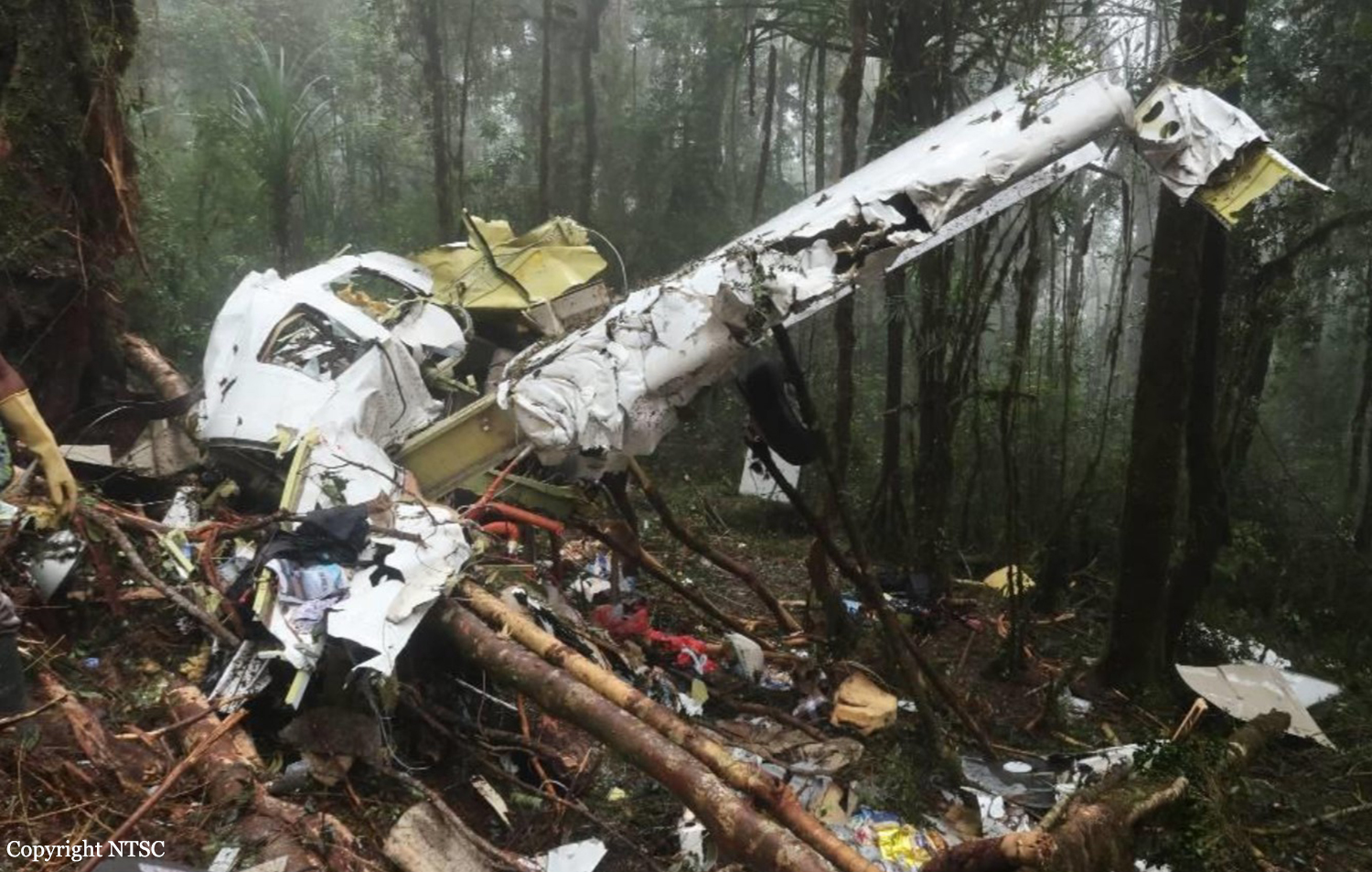
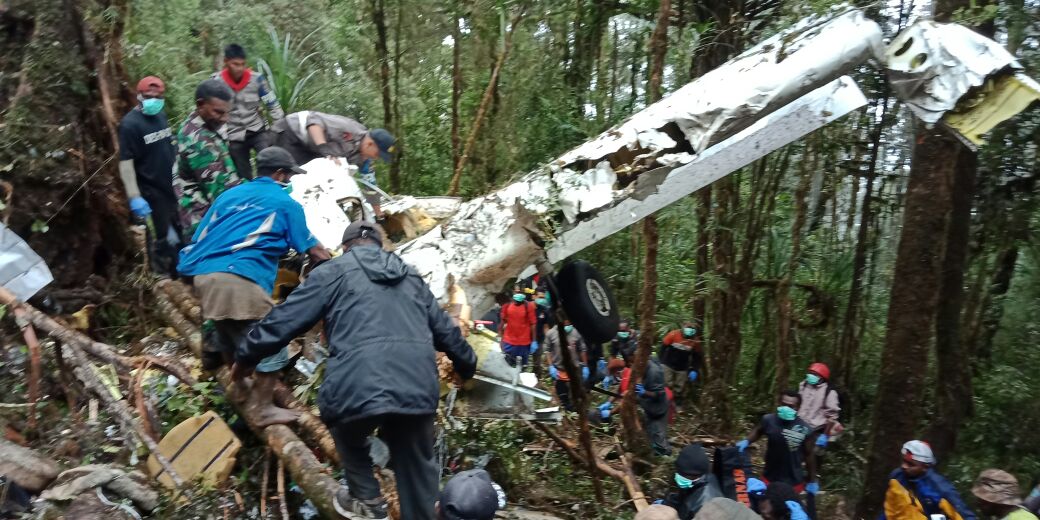
On 11 August 2018, a PAC 750XL aircraft registered PK-HVQ was being operated by PT. Marta Buana Abadi (Dimonim Air) on unscheduled passenger flight from Tanah Merah to Oksibil. At the day of the occurrence the meteorological condition at Oksibil was below the requirement of Visual Flight Rule (VFR) weather minima and did not improve. Being aware that some flights had performed flight to Tanah Merah to Oksibil and returned, the pilot decided to fly to Oksibil. At 1342 LT, on daylight condition the PK-HVQ aircraft departed from Tanah Merah to Oksibil, on board the aircraft were one pilot, one observer pilot and 7 passengers. According to the passenger and cargo manifest, the total weight of passenger and the baggage were 473 kg. Prior to the departure, there was no record or report of aircraft system malfunction. At 1411 LT, the PK-HVQ pilot made initial contact to Oksibil Tower controller and reported that the aircraft was maintaining altitude of 7,000 feet over and the estimate time arrival at Oksibil would be 0520 UTC (1420 LT). The Oksibil Tower controller advised the pilot of the latest meteorological condition that the visibility was 1 up to 2 km and most of the area were covered by cloud. At 1416 LT, the pilot reported that the aircraft position was over Oksibil Aiport and the Oksibil Tower controller instructed the pilot to continue the flight to the final runway 11 and to report when the runway had in sight. The Oksibil Tower controller and pilots of other aircraft called the pilot but no reply. On the following day, the aircraft was found on a ridge of mountain about 3.8 Nm north west of Oksibil on bearing 331° with elevation about 6,800 feet. Eight occupants were fatally injured and one occupant was seriously injured.
Probable cause:
The KNKT concluded the contributing factors as follows:
- The VFR weather minimum requirement that was not implemented properly most likely had made the pilot did not have a clear visual to the surrounding area.
- Considering that the Pilot in Command (PIC) had lack knowledge of the terrain surrounding the Oksibil area, and the absence of voice alert from the TAWS when the aircraft flying close to terrain, resulted in the PIC did not have adequate awareness to the surrounding terrain while flying into clouds and continued to fly below the terrain height until the aircraft impacted the terrain.
Final Report:

Ground collision with an ATR72-500 in Medan

Date & Time: Aug 3, 2017 at 1100 LT
Type of aircraft:
Operator:
Registration:
PK-WFF
Flight Phase:
Survivors:
Yes
Schedule:
Medan – Meulaboh
MSN:
869
YOM:
2009
Flight number:
IW1252
Country:
Region:
Crew on board:
5
Crew fatalities:
Pax on board:
67
Pax fatalities:
Other fatalities:
Total fatalities:
0
Captain / Total flying hours:
13006
Captain / Total hours on type:
624.00
Copilot / Total flying hours:
263
Copilot / Total hours on type:
109
Aircraft flight hours:
14321
Aircraft flight cycles:
16132
Circumstances:
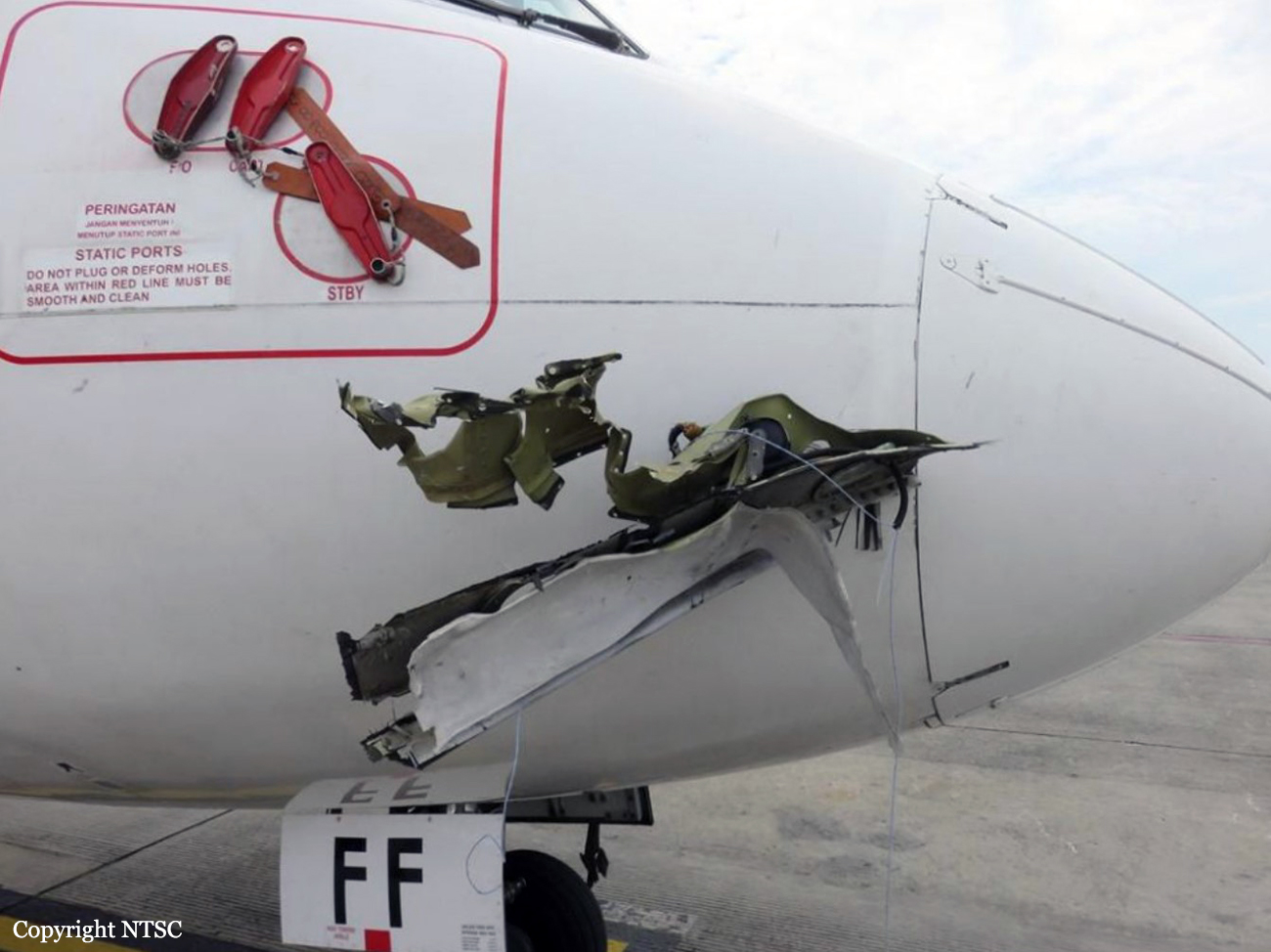
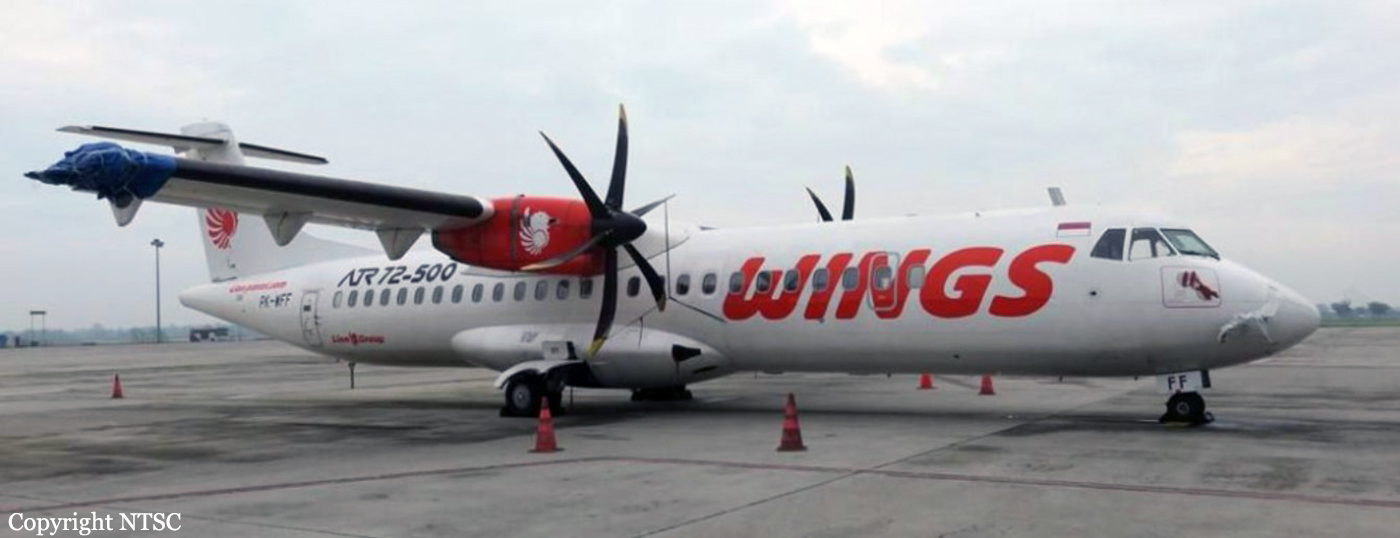
On 3 August 2017, a Boeing 737-900 ER aircraft, operated by PT. Lion Mentari Airlines (Lion Air) as a scheduled passenger flight from Sultan Iskandar Muda International Airport, Banda Aceh (WITT) to Kualanamu International Airport, Medan (WIMM) as flight number JT 197. JT197 departed at 1010 LT (0310 UTC) in daylight condition, with 151 persons on board. Meanwhile, an ATR 72-500 aircraft, operated by PT. Wings Abadi Airlines (Wings Air) as scheduled passenger flight from Medan with intended destination to Cut Nyak Dien Airport, Meulaboh (WITC) as flight number IW1252. On board IW1252 were two pilots, one observer pilot, two flight attendants and 67 passengers. At 0356 UTC, the IW1252 pilot requested taxi clearance to runway 23 from the Medan Ground controller and was instructed to follow U2 taxi route, the IW1252 pilot requested to depart via intersection taxiway D which was approved by Medan Tower controller. At 0357 UTC, JT197 was on landing approach and received landing clearance. At 04:00:01 UTC, the Medan Tower controller issued conditional clearance to the IW1252 pilot, to enter the runway after the JT197 had landed. This conditional clearance was combined with the air traffic control route clearance. IW1252 continued to taxi and entered the runway. At 04:00:50 UTC, JT197 touched down on runway 23 and a few second later impacted with the IW1252. There were no injuries during this occurrence, but both aircraft were substantially damaged. After impact, debris from the impact aircraft remained on the runway. Prior to the runway inspection, one aircraft departed and one aircraft landed.
Probable cause:
The communication misunderstanding of the conditional clearance to enter runway while the IW1252 pilots did not aware of JT197 had received landing clearance and the unobserved IW1252 aircraft movement made the IW1252 aircraft entered the runway.
Final Report:

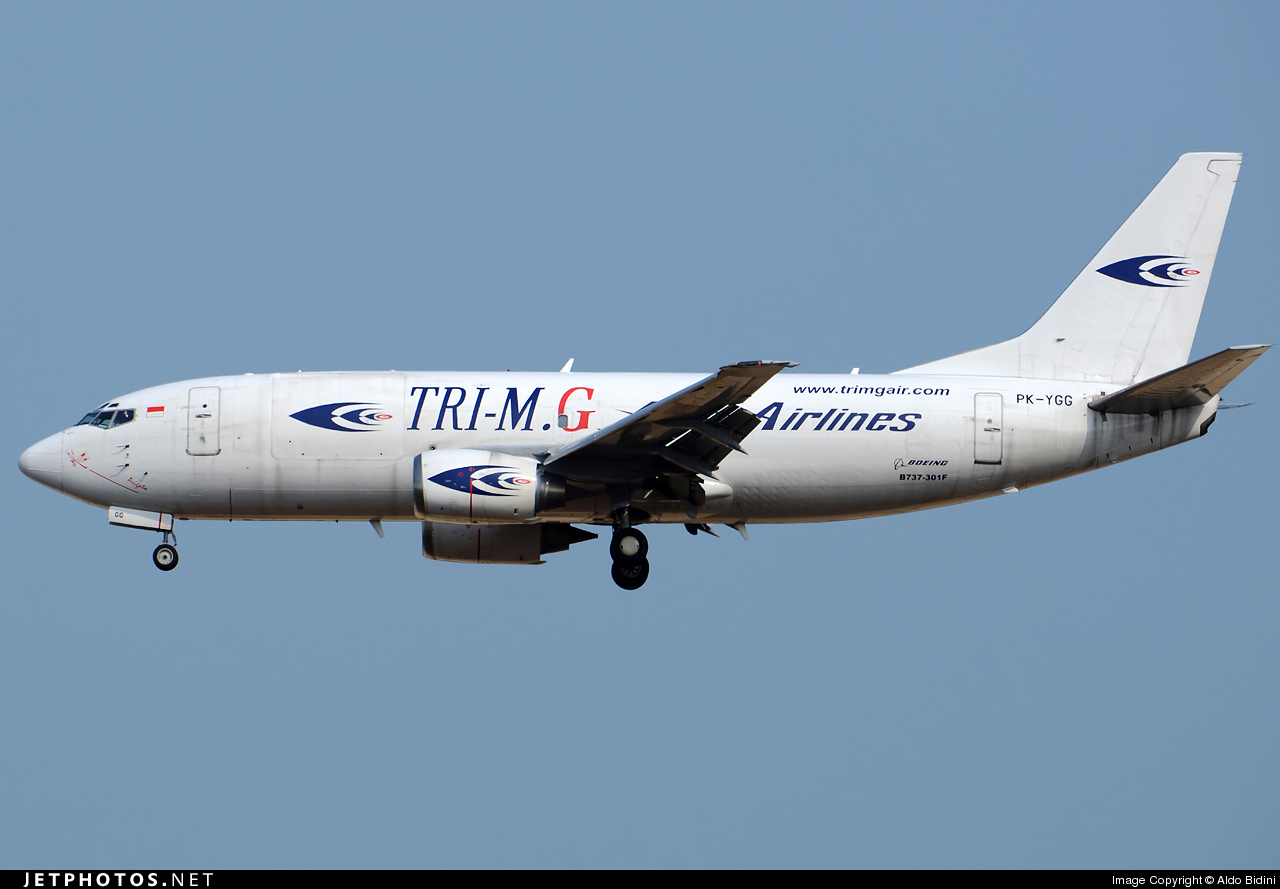
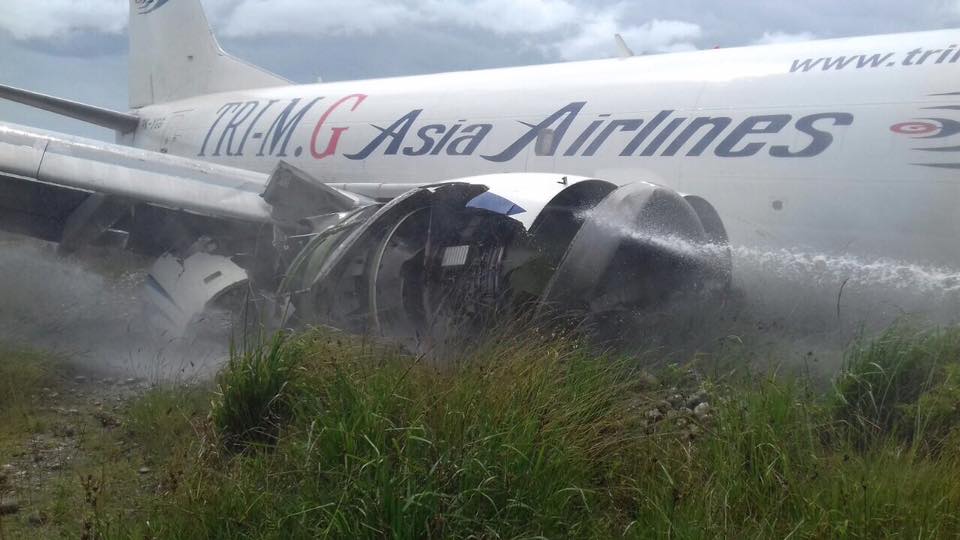
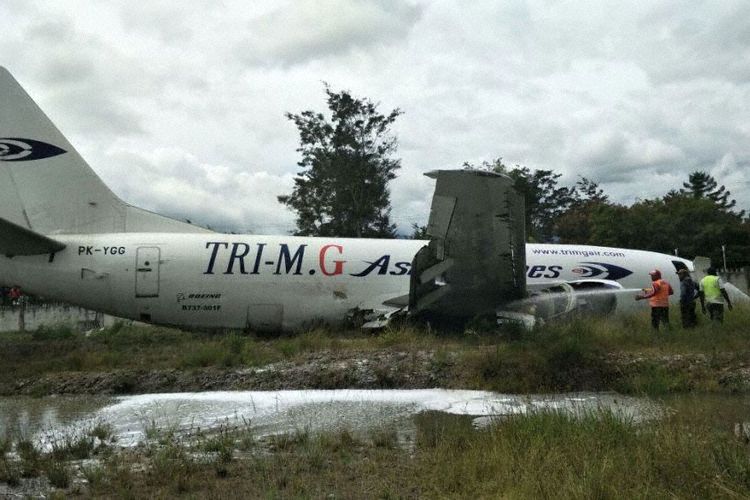
Crash of a Boeing 737-301F in Wamena

Date & Time: Jul 18, 2017 at 1239 LT
Type of aircraft:
Operator:
Registration:
PK-YGG
Flight Type:
Survivors:
Yes
Schedule:
Timika – Wamena
MSN:
23743/1510
YOM:
1988
Flight number:
TMG103
Country:
Region:
Crew on board:
5
Crew fatalities:
Pax on board:
0
Pax fatalities:
Other fatalities:
Total fatalities:
0
Circumstances:
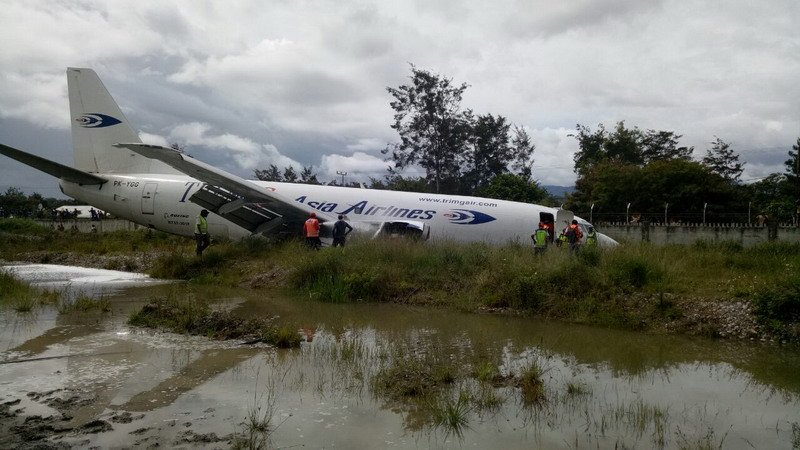
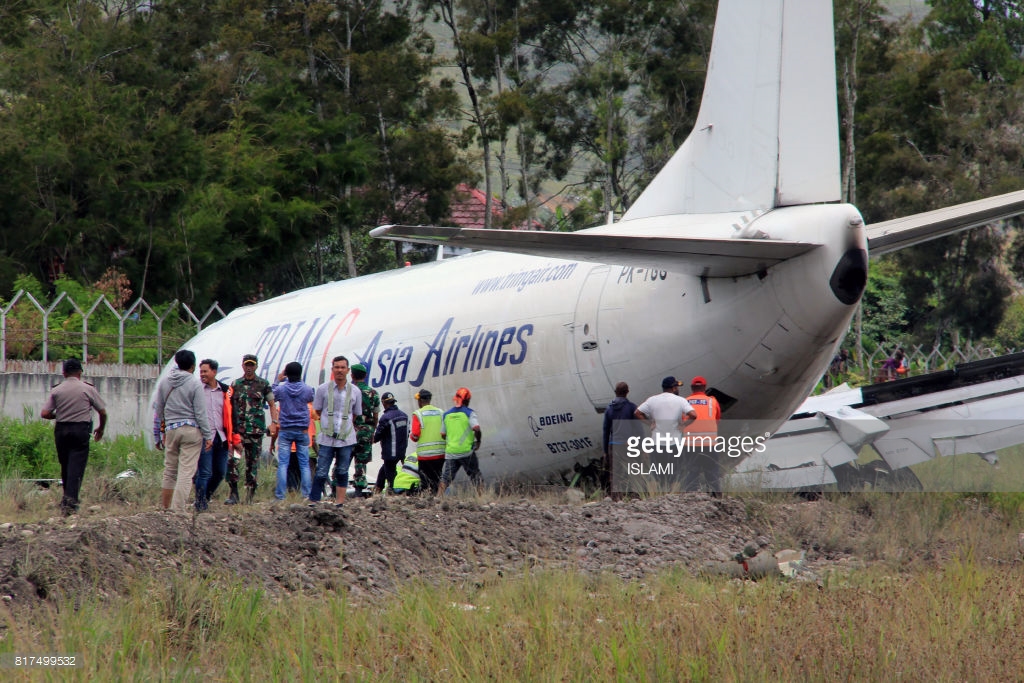
The aircraft was performing a cargo flight from Timika, carrying five crew members and a load of various goods including constructioin materials. Upon landing on runway 15, the airplane bounced twice. It went out of control and veered off runway to the left. While contacting soft ground, both main landing gear were torn off and the aircraft slid for few dozen metres before coming to rest. All five crew members evacuated safely while the aircraft was damaged beyond repair.

Crash of a Pilatus PC-6/B2-H4 Turbo Porter near Wamena: 5 killed

Date & Time: Jul 5, 2017 at 1110 LT
Operator:
Registration:
PK-RCX
Flight Phase:
Survivors:
No
Site:
Schedule:
Wamena – Derakma
MSN:
922
YOM:
1998
Country:
Region:
Crew on board:
2
Crew fatalities:
Pax on board:
3
Pax fatalities:
Other fatalities:
Total fatalities:
5
Circumstances:
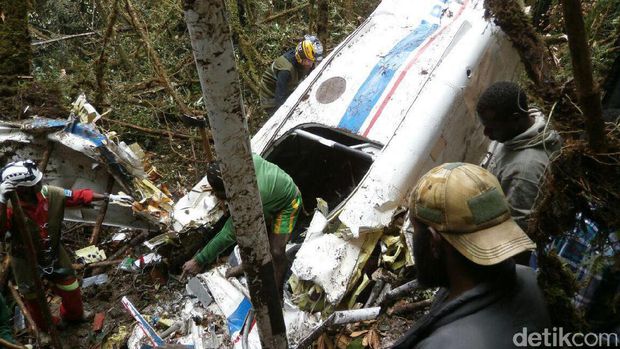
The single engine aircraft departed Wamena Airport at 1100LT with three passengers, two pilots and 508 kg of various goods. About 10 minutes later, the airplane struck the slope of a mountain at an altitude of 2,300 metres. It was scheduled to arrive at Derakma at 1125LT. The wreckage was found a day later by the crew of a helicopter. All five occupants were killed. At the time of the accident, VMC conditions prevailed.

Crash of a Boeing 737-33A in Manokwari

Date & Time: May 31, 2017 at 0851 LT
Type of aircraft:
Operator:
Registration:
PK-CJC
Survivors:
Yes
Schedule:
Ujung Pandang – Sorong – Manokwari
MSN:
24025/1556
YOM:
1988
Flight number:
SJY570
Country:
Region:
Crew on board:
6
Crew fatalities:
Pax on board:
146
Pax fatalities:
Other fatalities:
Total fatalities:
0
Captain / Total flying hours:
13371
Captain / Total hours on type:
3110.00
Copilot / Total flying hours:
5570
Copilot / Total hours on type:
2523
Aircraft flight hours:
60996
Circumstances:
On 31 May 2017, a Boeing 737-300 aircraft registration PK-CJC was being operated by PT. Sriwijaya Air as a scheduled passenger flight from Hasanuddin Airport (WAHH), Makassar, South Sulawesi to Rendani Airport (WAUU), Manokwari, West Papua, with one transit stop at Domine Eduard Osok Airport (WASS) Sorong, West Papua. The flight was uneventful since the first departure from Makassar until commencing the approach at Manokwari. At 0815 LT (2315 UTC), the aircraft departed Sorong to Manokwari. On board in the flight were two pilots, four flight attendants and 146 passengers. On this flight, the Second in Command (SIC) acted as Pilot Flying (PF) and the Pilot in Command (PIC) acted as Pilot Monitoring (PM). At 2331 UTC, the pilot made first contact to Rendani Tower controller and informed that the aircraft was descending from FL 230 (altitude 23,000 feet) and requested the weather information. The Rendani Tower controller informed to the pilot that the wind was calm, ground visibility 6 km, cloud FEW CB 1,400 feet, temperature and dew point 26/25°C. At 2336 UTC, Rendani Tower controller instructed to the pilot to descend to 11,000 feet and to report when on Visual Meteorological Condition (VMC). At 2338 UTC, the pilot informed that they were on VMC condition and passed altitude 13,000 feet while position was 32 Nm from ZQ NDB (Non-Directional Beacon). Rendani Tower controller instructed to fly maintain on visual condition, fly via overhead, descend to circuit altitude, join right downwind runway 35, and to report when overhead Manokwari. At 2344 UTC, the pilot reported that the aircraft was over Manokwari and Rendani Tower controller informed to the pilot that the visibility changed to 5 km. Two minutes later Rendani Tower controller instructed to the pilot to continue approach and to report on right base runway 35. At 2349 UTC, at approximately 600 feet, the PIC as PM took over control by called “I have control” and the SIC replied “You have control”. A few seconds later the pilot reported that the aircraft was on final runway 35, and Rendani Tower controller instructed to the pilot to report when the runway 35 insight. The pilot immediately replied that the runway was in sight and acknowledged by Rendani Tower controller who then issued landing clearance with additional information that the wind was calm and the runway condition wet. At approximately 550 feet, the PIC instructed the SIC turn on the wiper and reconfirmed to SIC that the runway was in sight. Between altitude 500 feet to 200 feet, the EGPWS aural warnings “Sink Rate” and “Pull Up” sounded. At 2350 UTC, the aircraft touched down and rolled on runway 35. The spoiler deployed and the pilot activated the thrust reversers. The crew did not feel significant deceleration. The aircraft stopped at approximate 20 meters from the end of runway pavement. After the aircraft stopped, the PIC commanded “Evacuate” through the Passenger Address (PA) system. The Rendani Tower Controller saw that the aircraft was overrun and activated the crash bell then informed the Airport Rescue and Fire Fighting (ARFF) that there was an aircraft overrun after landing on runway 35. All the flight crew and passengers evacuated the aircraft and transported to the terminal building safely.

Probable cause:
According to factual information during the investigation, the Komite Nasional Keselamatan Transportasi identified initial findings as follows:
1. The aircraft was airworthy prior to the accident, there was no report or record of aircraft system abnormality during the flight. The aircraft had a valid Certificate of Airworthiness (C of A) and Certificate of Registration (C of R).
2. The aircraft operator had a valid Air Operator Certificate (AOC) to conduct a scheduled passenger transport.
3. The crew held valid licenses and medical certificates.
4. The weather conditions during aircraft approach and landing was slight rain with cumulonimbus viewed nearby the airport, wind was calm and runway was wet.
5. In this flight Second in Command (SIC) acted as Pilot Flying (PF) and the Pilot in Command (PIC) acted as Pilot Monitoring (PM). The PIC took over control from the SIC during approach at altitude approximately 600 feet.
6. At approximate 550 feet, the PIC instructed the SIC to turn on the wiper and reconfirmed to SIC that the runway was in sight.
7. Between altitude 500 feet to 200 feet, the EGPWS aural warnings “Sink Rate” and “Pull Up” sounded.
8. The CCTV recorded water splash when aircraft on landing roll.
9. Several area of the runway warp in approximate 2 - 5 meters square meters with standing waters on the runway of Rendani Airport.
10. Several runway lights covered by grass with the height approximately of 30-40 cm.
11. Rendani Aerodrome Manual (AM) as general guidelines in the airport operation had not been approved by the DGCA at the time of accident.
12. Rendani Airport (WAUU), Fire fighting category III refer to AIP amended on April 2015.
Final Report:

Crash of a Cessna 208 Caravan I near Oksibil: 1 killed

Date & Time: Apr 12, 2017 at 1240 LT
Type of aircraft:
Operator:
Registration:
PK-FSO
Flight Phase:
Flight Type:
Survivors:
No
Site:
Schedule:
Tanah Merah – Oksibil
MSN:
208-0313
YOM:
1999
Country:
Region:
Crew on board:
1
Crew fatalities:
Pax on board:
0
Pax fatalities:
Other fatalities:
Total fatalities:
1
Captain / Total flying hours:
4236
Captain / Total hours on type:
2552.00
Aircraft flight hours:
6226
Aircraft flight cycles:
9371
Circumstances:
On 12 April 2017, a Cessna C208 aircraft registered PK-FSO was being operated by PT. Spirit Avia Sentosa (FlyingSAS) for unscheduled cargo flight. The flights of the day scheduled for the aircraft were Mopah Airport (WAKK) – Tanah Merah Airport (WAKT) – Oksibil Airport (WAJO) – Tanah Merah – Oksibil – Tanah Merah. The estimated time departure of first flight from Mopah Airport to Tanah Merah was 0800 LT and the flight departed at 0848 LT, on board the aircraft were two pilots and seven passengers. The aircraft arrived in Tanah Merah at about 0943 LT. At 1012 LT, the flight departed from Tanah Merah to Oksibil. About 10 Nm from Oksibil the pilot contacted the Oksibil tower controller to get air traffic services and landed at 1044 LT. The flight then departed from Oksibil to Tanah Merah at 1058 LT and arrived about 1126 LT. These flights were single pilot operation. At 1144 LT on daylight condition, the aircraft departed Tanah Merah with intended cruising altitude of 7,000 feet. Prior to departure, there was no report or record of aircraft system malfunction. On board the aircraft was one pilot, 1,225 kg of general cargo and 800 pounds of fuel which was sufficient for about 3 hours of flight time. After departure, the pilot advised Tanah Merah tower controller of the estimate time arrival at Oksibil would be 1224 LT. At 1149 LT, the pilot advised Tanah Merah tower controller that the aircraft position was about 10 Nm from Tanah Merah and passing altitude of 3,500 feet. The Tanah Merah tower controller acknowledged the message and advised the pilot to monitor radio communication on frequency 122.7 MHz for traffic monitoring. At about 29 Nm from Oksibil, the PK-FSO aircraft passed a Cessna 208B aircraft which was flying on opposite direction from Oksibil to Tanah Merah at altitude 6,000 feet. At this time, the aircraft ground speed recorded on the flight following system was about 164 knots. The Cessna 208B pilot advised to the pilot on radio frequency 122.7 MHz that the PK-FSO aircraft was in sight. The pilot responded that the aircraft was maintaining 7,000 feet on direct route to Oksibil. At 1230 LT, the Oksibil tower controller received phone call from the FlyingSAS officer at Jakarta which confirming whether the PK-FSO aircraft has landed on Oksibil. The Oksibil tower controller responded that there was no communication with the PK-FSO pilot. The Oksibil tower controller did not receive the flight plan for the second flight of the PK-FSO flight. Afterwards, the Oksibil tower controller called Tanah Merah tower controller confirming the PK-FSO flight and was informed that PK-FSO departed Tanah Merah to Oksibil at 1144 LT and the reported estimate time of arrival Oksibil was 1224 LT. At 1240 LT, the Oksibil tower controller received another phone call from the FlyingSAS officer at Jakarta which informed that the FlyingSAS flight following system received SOS signal (emergency signal) from PK-FSO aircraft and the last position recorded was on coordinate 04°48’47.7” S; 140°39’31.7” E which located approximately 6 Nm north of Oksibil. Afterwards, the Oksibil air traffic controller advised the occurrence to the Search and Rescue Agency. On 13 April 2017, at 0711 LT, the PK-FSO aircraft was found on ridge of Anem Mountain which located about 7 Nm north of Oksibil. The following figure showed the illustration of the aircraft track plotted on the Google earth refer to the known coordinates of Tanah Merah, Oksibil and the crash site.
Probable cause:
The possibility of the pilot being fatigue, physical and environment condition increased pilot sleepiness which might have made the pilot inadvertently falling asleep indicated by no pilot activity. The absence of GA-EGPWS aural alert and warning was unable to wake up the pilot.
Final Report: