Circumstances:
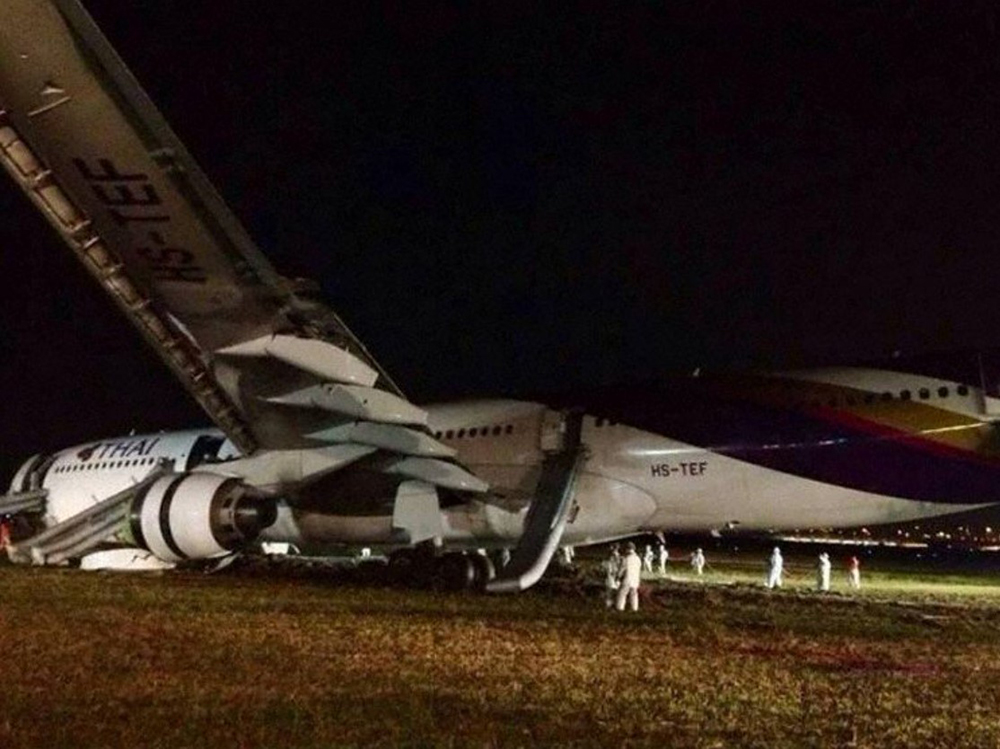
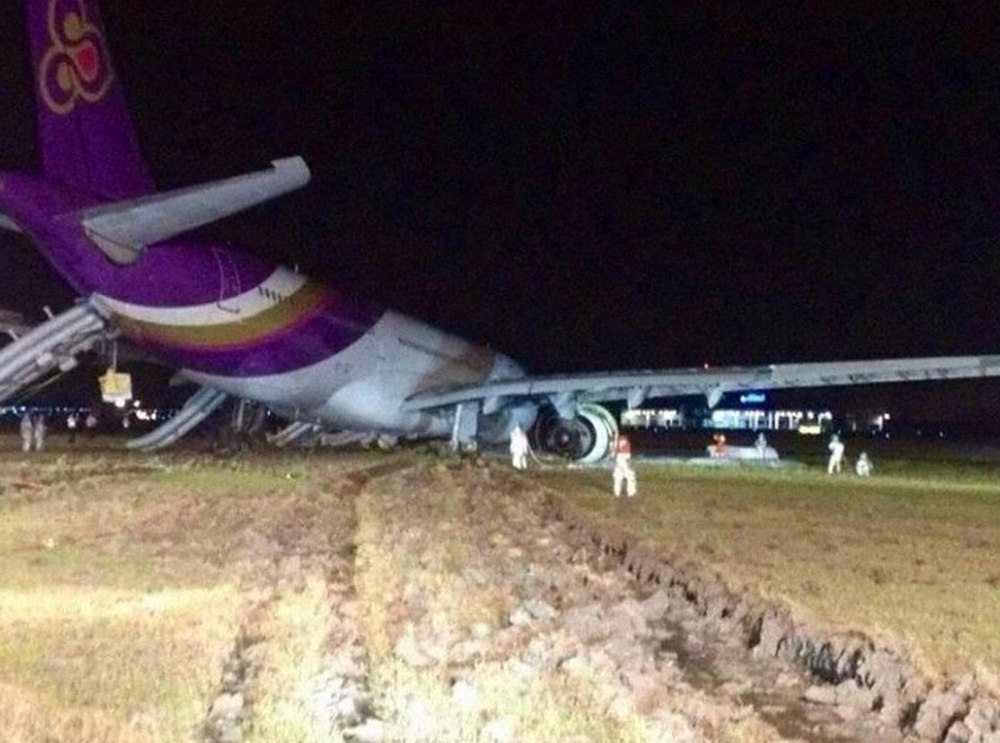
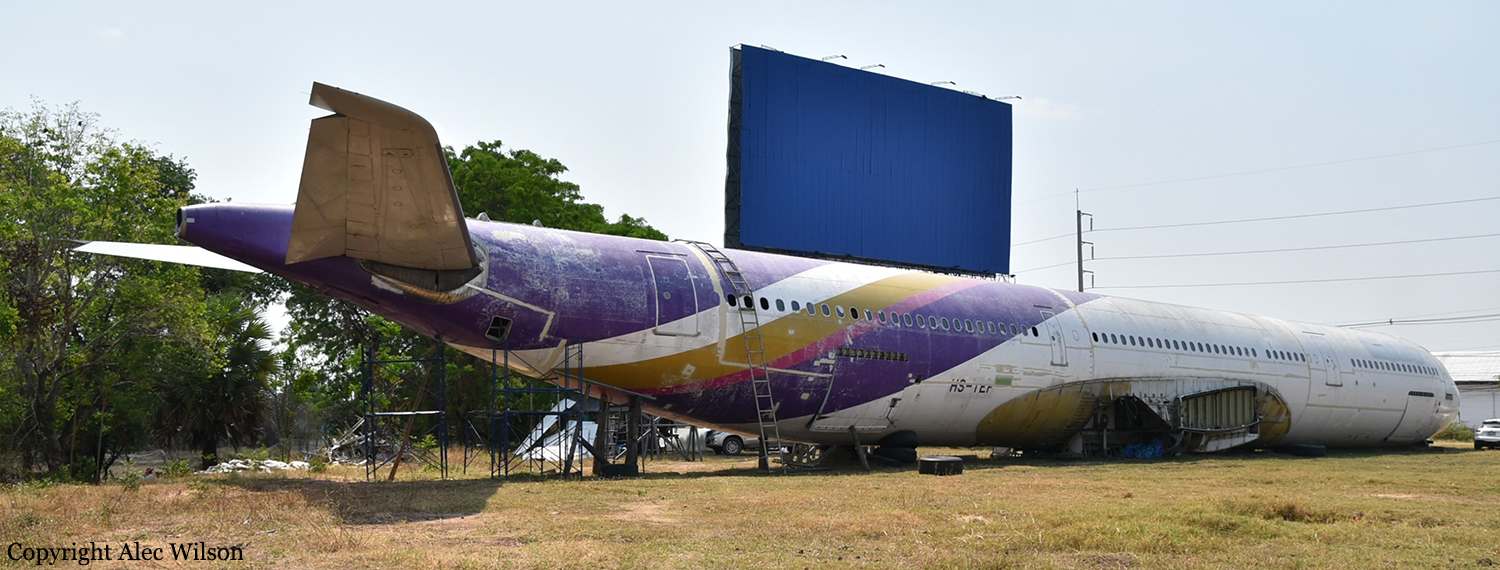
On 8 September 2013 at 13:25 UTC, the pilot and the co-pilot operated the Airbus A330-321 aircraft of Thai Airways International Public Company Limited (Thai Airways), nationality and registration mark HS-TEF, flight number TG 679, with 12 cabin crew and 288 passengers in total 302 persons, departed from Guangzhou Baiyun International Airport, People’s Republic of China to Suvarnabhumi Airport, Thailand. At approximately 16:26 UTC, while landing on runway 19L at Suvarnabhumi Airport, two main landing gears and the nose landing gear touched down on the runway at approximately 440 metres from the runway threshold. After the aircraft continued rolling on the runway for another 760 metres, the right main landing gear (RH MLG) bogie beam broke. The aircraft then collapsed on the right and veered off the right side of the runway centre line. The pilot attempted to control the aircraft to be on the runway, however, the aircraft continued veering to the right. The damaged RH MLG bogie beam scraped the runway surface and made two 365-metre-long deep grooves on the runway, along the aircraft movement. The aircraft, at that time, veered off the runway edge between taxiways B5 and B8 into the runway strip for 100 metres before it came to stop. The Air Traffic Controller (ATC), who was monitoring this aircraft, saw fire sparked from the aircraft while it was leaving the runway. The ATC then notified the Rescue and Fire Fighting Service of Suvarnabhumi Airport to provide assistance. After the aircraft had completely stopped, both pilots heard and saw the right engine fire warning. At that time, they received message from the ATC that the Rescue and Fire Fighting Service was approaching the aircraft and the fire spark was seen but its exact location could not be identified. During the passenger evacuation, the pilot ordered the co-pilot and the crew members to follow the On Ground Emergency Evacuation procedure. The co-pilot and the pilot were the last group who left the aircraft. At the same time, the Rescue and Fire Fighting Service reached the aircraft, contained the fire and assisted in evacuating all the crew and passengers from the aircraft to the designated area in the passenger terminal building according to the Airport Emergency Plan. The aircraft was destroyed. 15 passengers suffered minor injuries.
Probable cause:
This accident caused by the fragmentation of the RH MLG bogie beam, made the aircraft veered off the runway. The aircraft fuselage and both engines were damaged, the right engine was on fire. However, the cause of damaged MLG bogie beam could not be found due to the cracks were damaged while the aircraft was scraping the runway surface.
Contributing Factors:
- Errors occurred during the overhaul of the RH MLG bogie beam.
- Errors occurred during the inspection of the RH MLG bogie beam pivot pin bore.
- Errors occurred during the repetitive inspection of the RH MLG bogie beam internal surfaces, as per the EASA AD No. 2007-0314R1, issued on 31 January 2008, the EASA AD No. 2008-0093, issued on 20 May 2008, the EASA AD No. 2011-0141, issued on 25 July 2011 and the EASA AD No. 2012-0015, issued on 23 January 2012, due to misinterpretation.
- The DCA has the power to regulate the six-monthly maintenance report form, as prescribed in Section 41/80 (2) of the Air Navigation Act B.E.2497. However, the maintenance review checklist did not specify what items had been performed, only a clause mentioned that the maintenance had been completed. The air operator then had no guidance to create maintenance list of items that had completely and correctly been performed.
- The content in the EASA ADs firstly states that unless already accomplished or required as indicated, unless accomplished previously which might cause confusion among the operators.
- Airbus S.A.S has the data on which MLG bogie beam had the internal surfaces inspection done before the designated time frame prescribed in new ADs. However, the company did not notify those air operators.