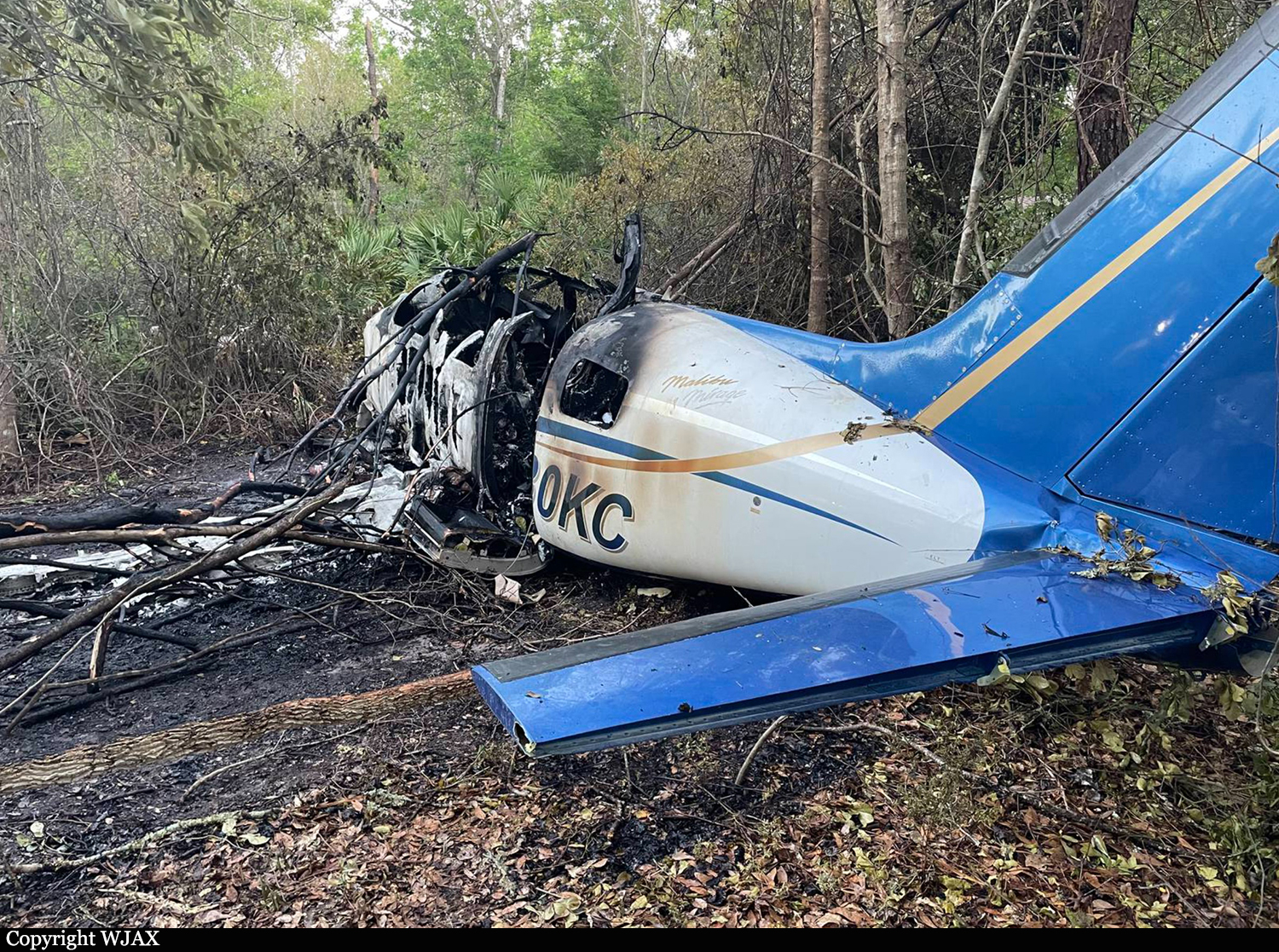
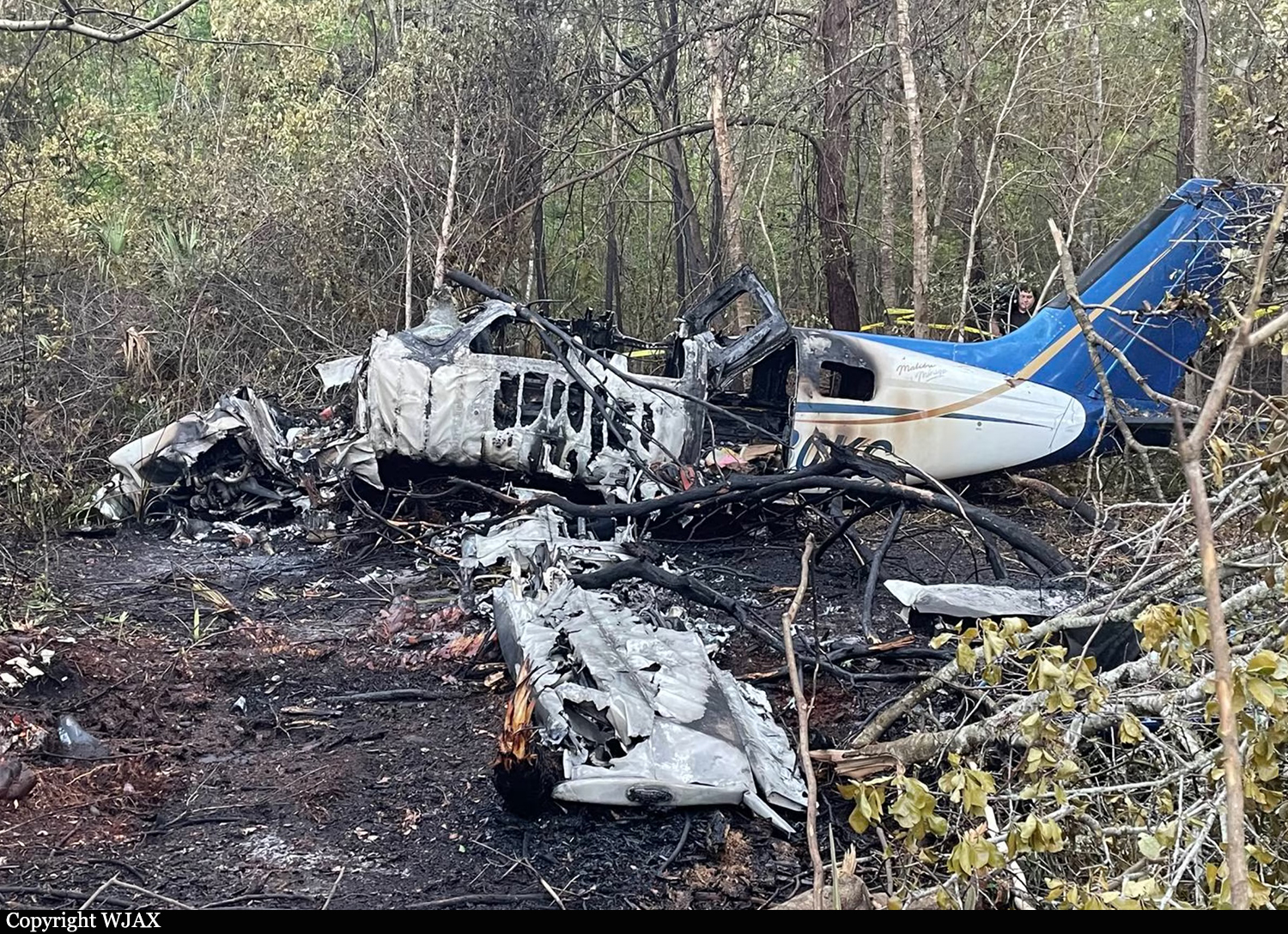
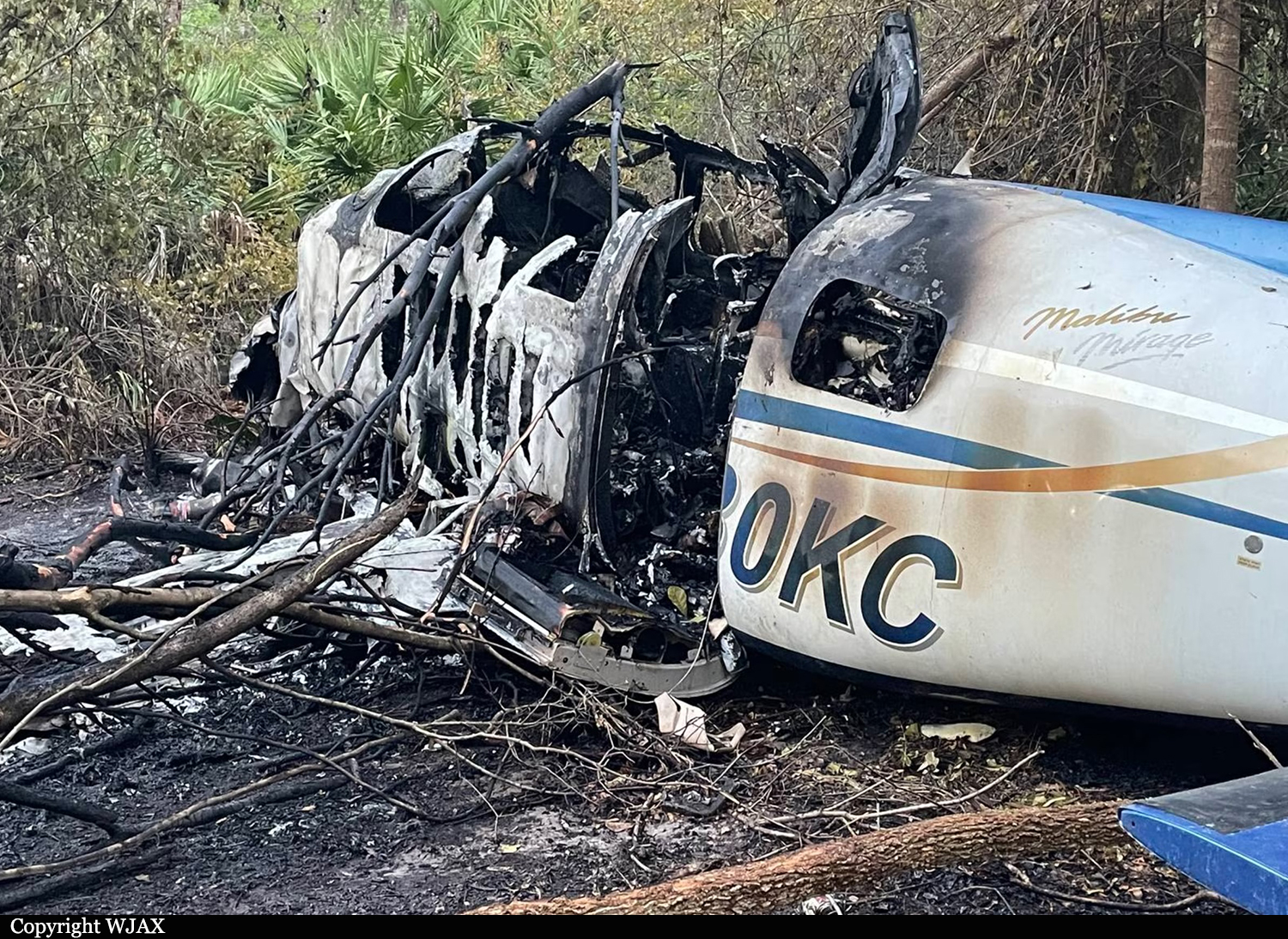
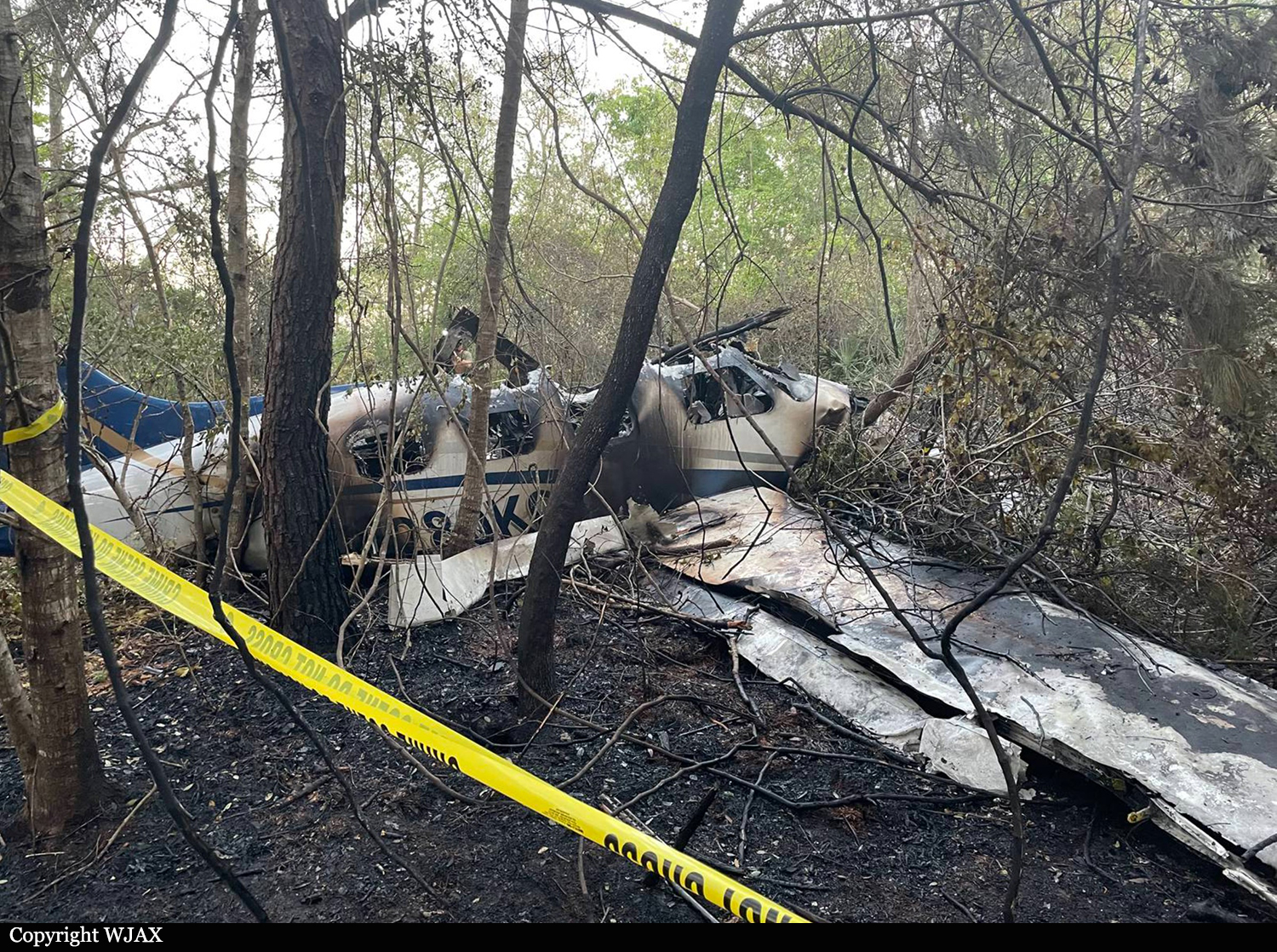
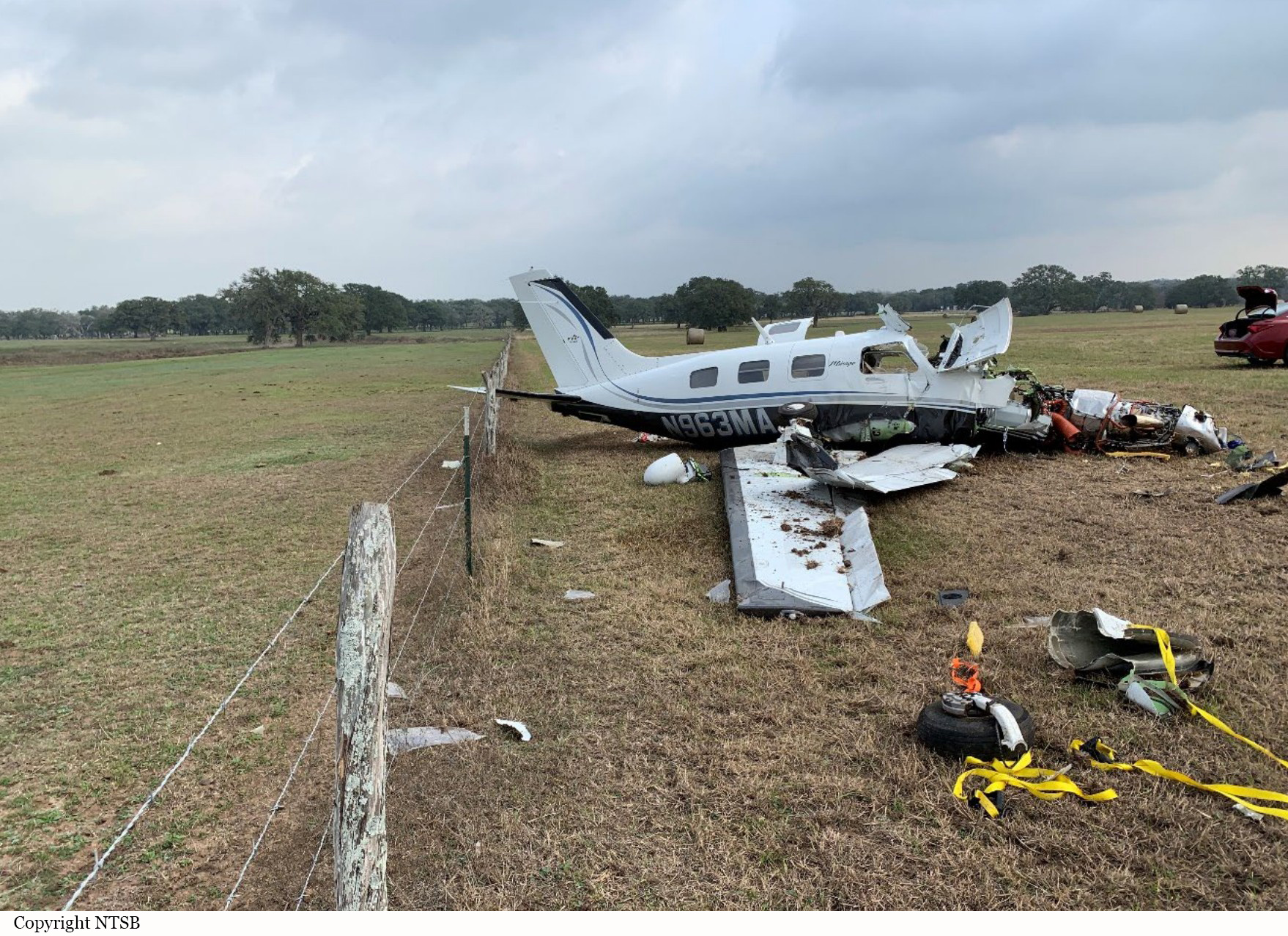
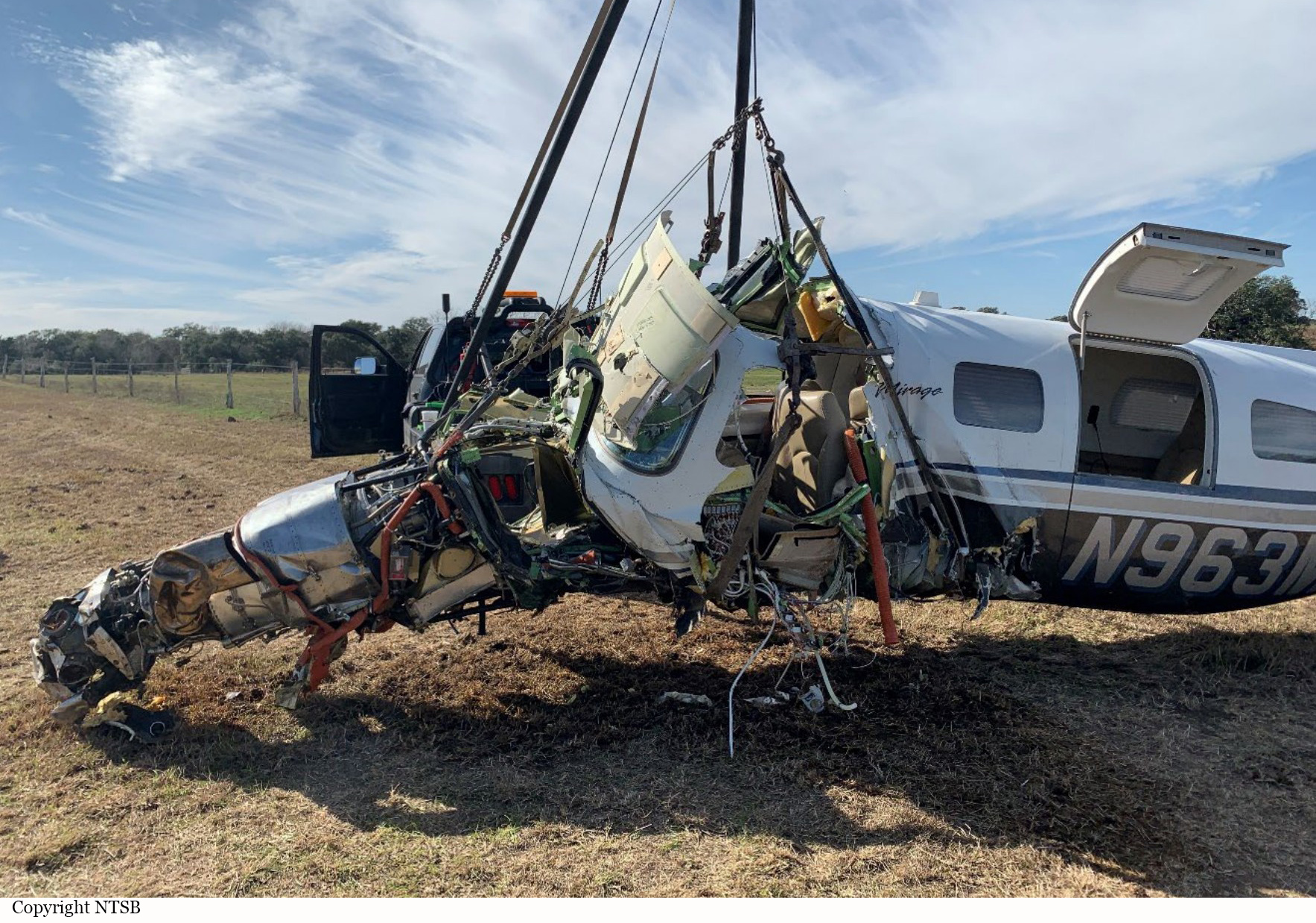
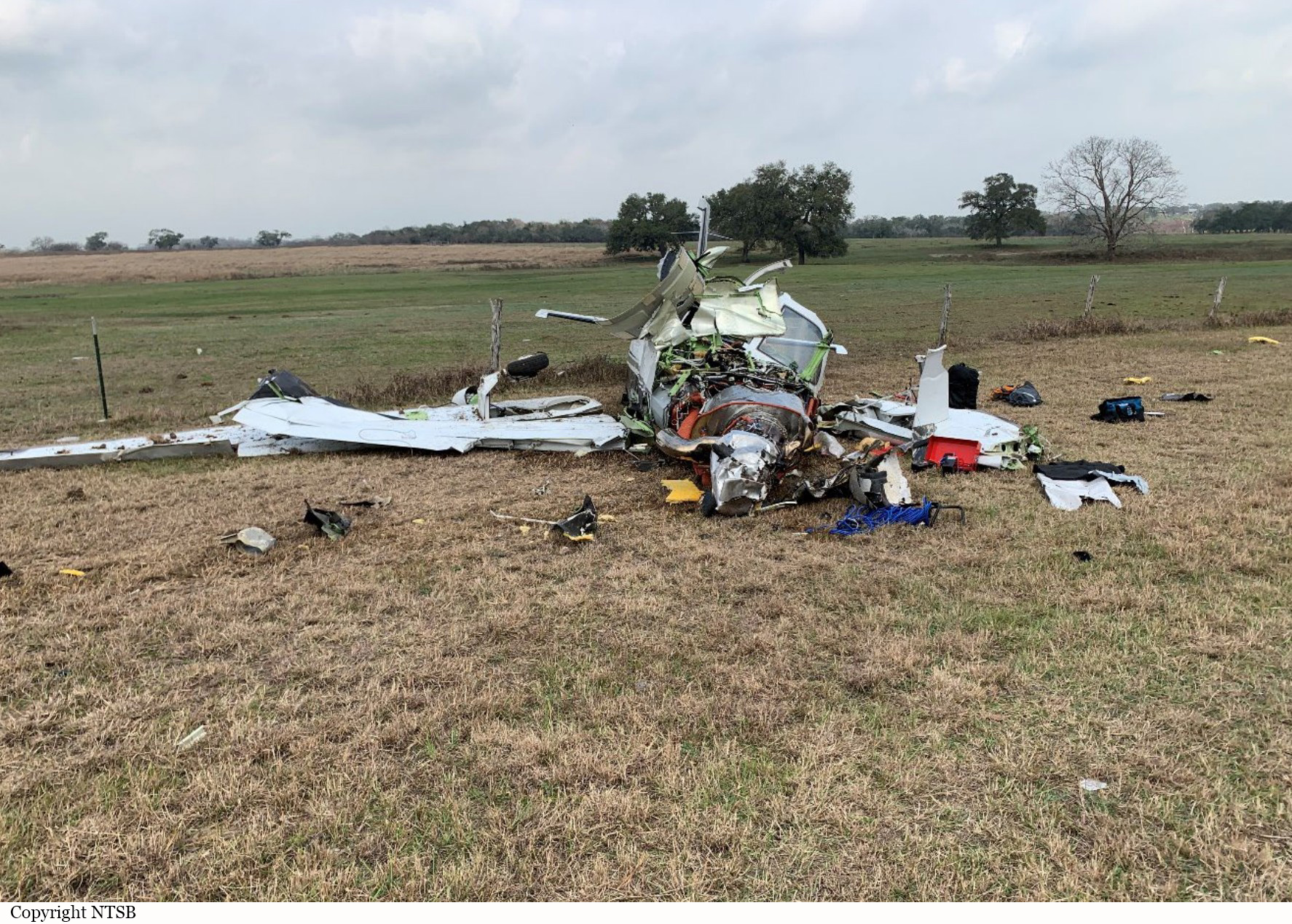
Crash of a Piper PA-46-350P Malibu Mirage in Yoakum: 4 killed

Date & Time: Jan 17, 2023 at 1036 LT
Registration:
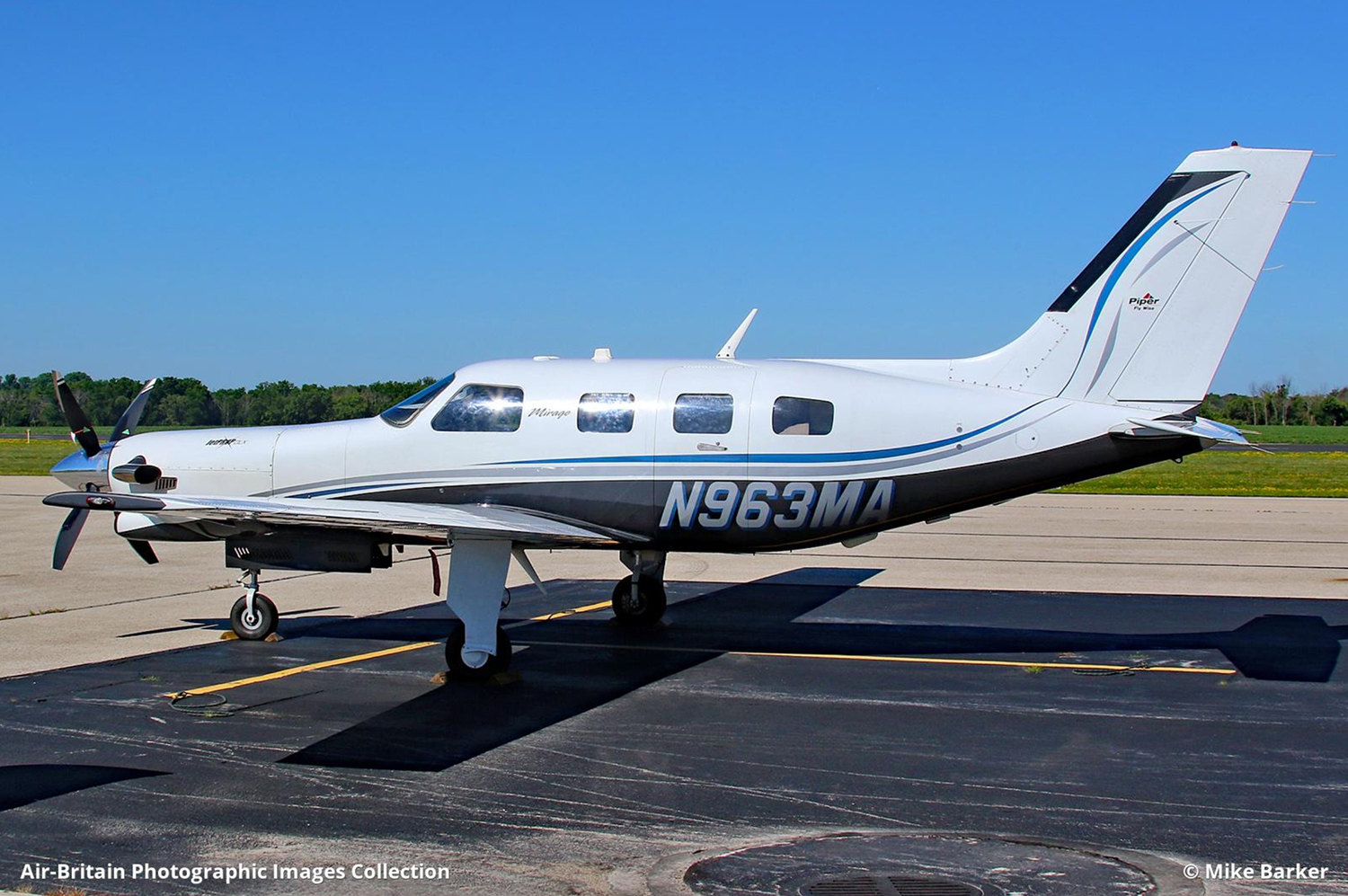
N963MA
Flight Type:
Survivors:
Yes
Schedule:
Memphis – Yoakum
MSN:
46-36453
YOM:
2008
Location:
Crew on board:
1
Crew fatalities:
Pax on board:
4
Pax fatalities:
Other fatalities:
Total fatalities:
4
Captain / Total flying hours:
3295
Copilot / Total flying hours:
700
Aircraft flight hours:
1714
Circumstances:
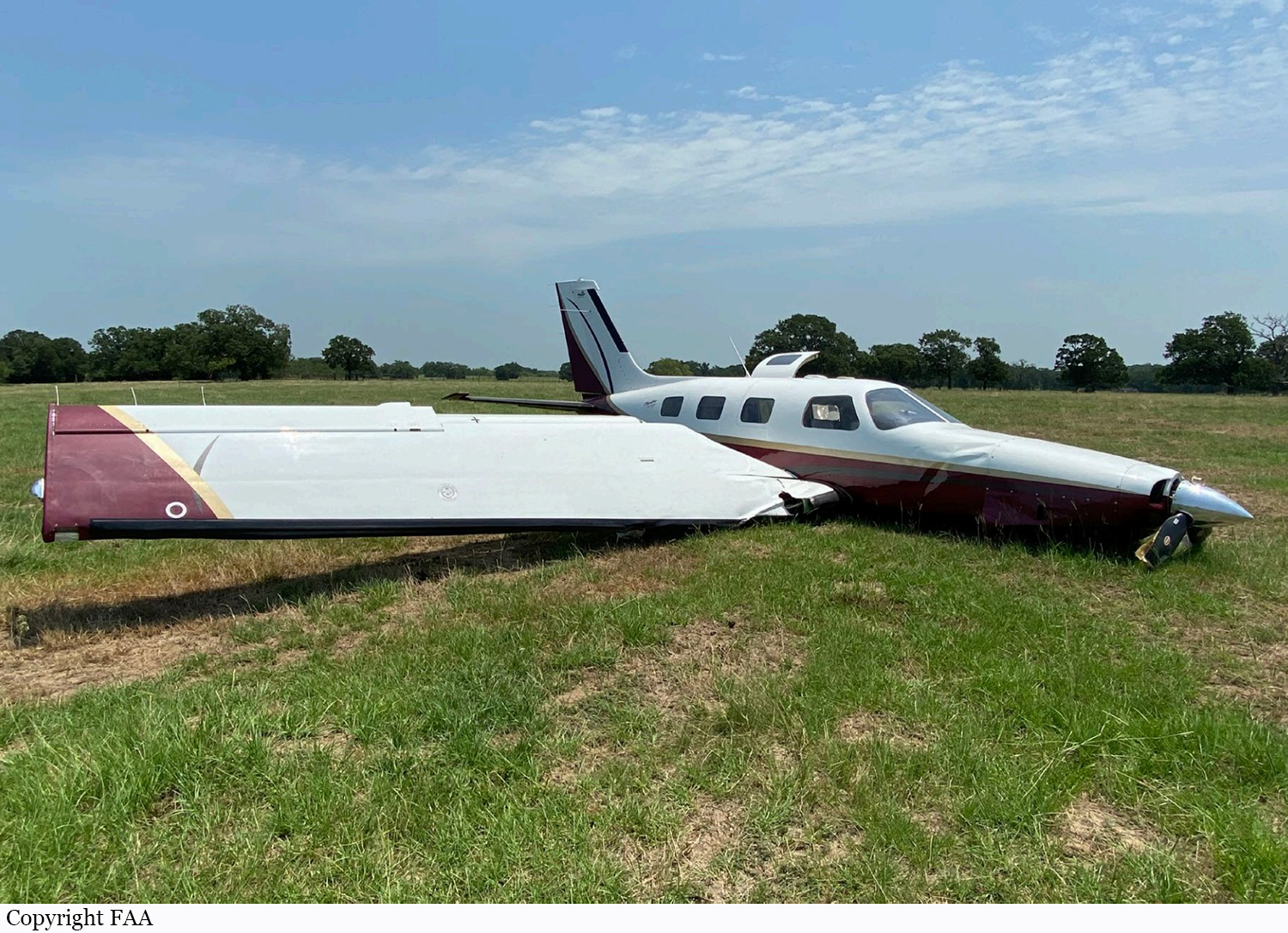
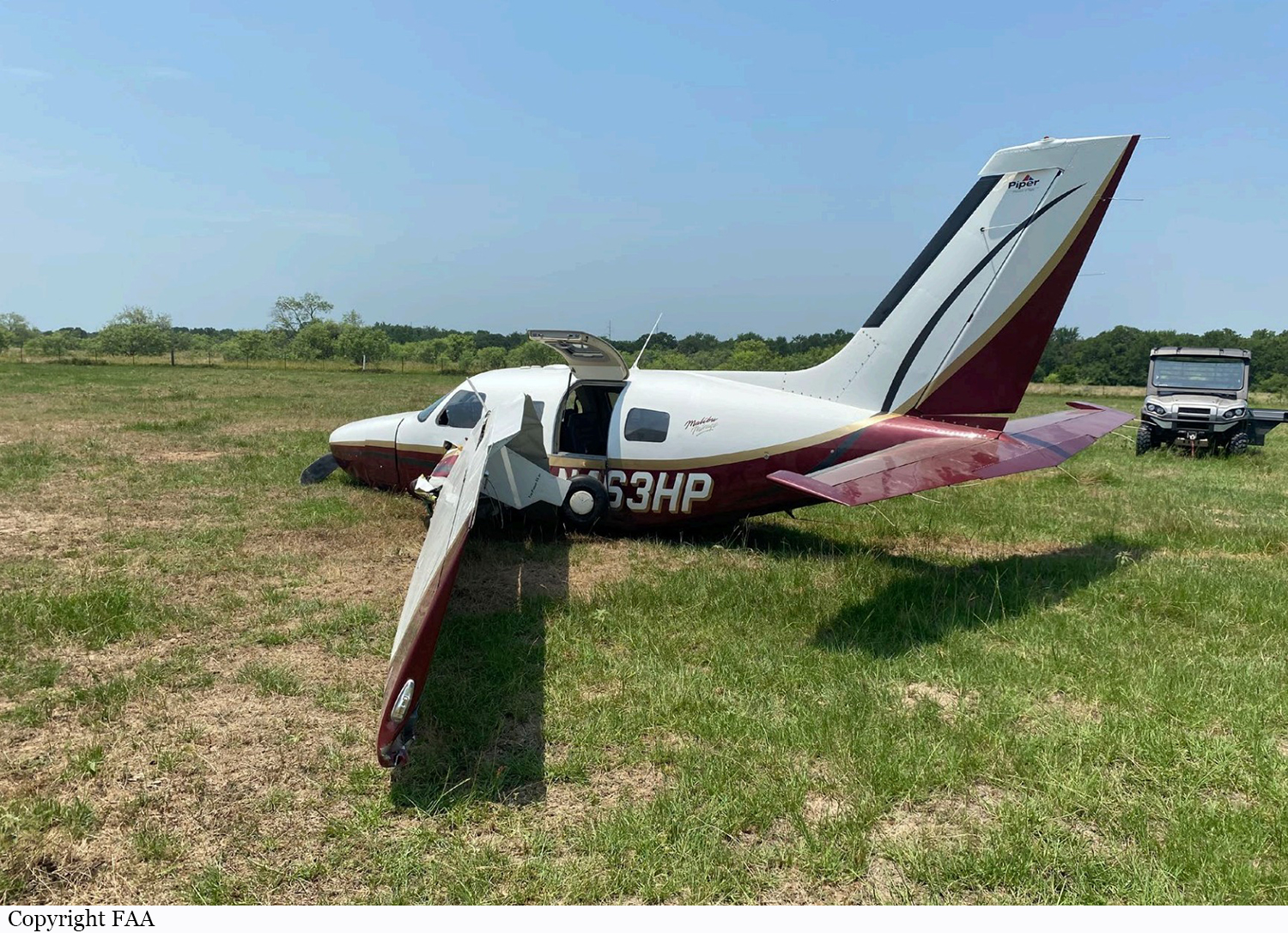
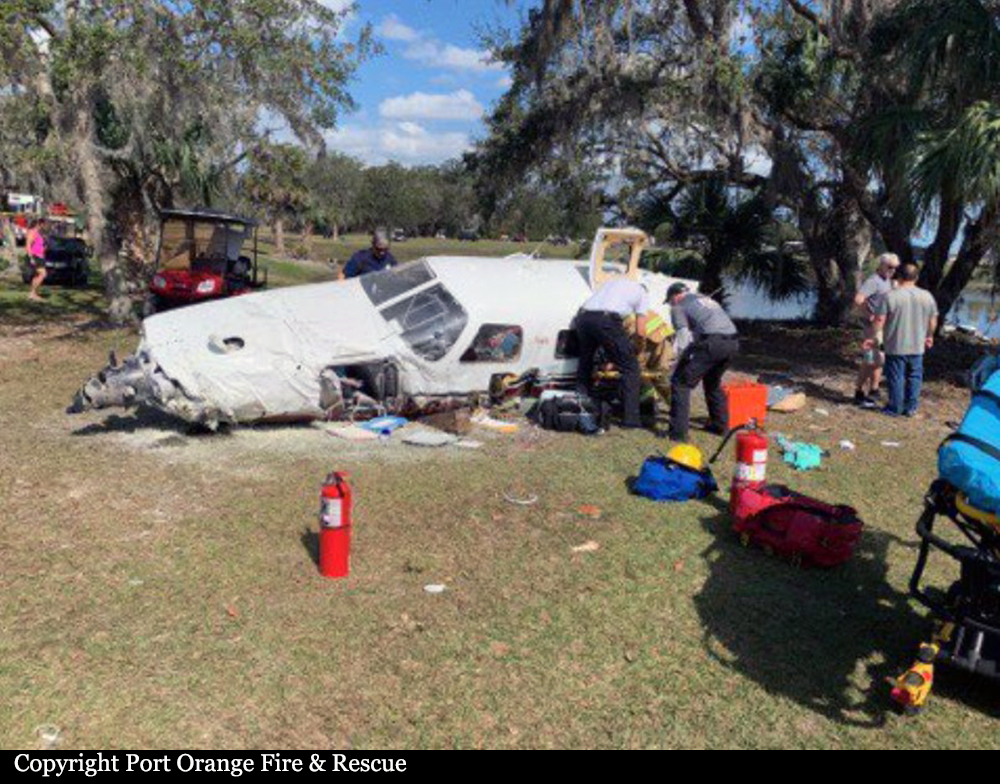
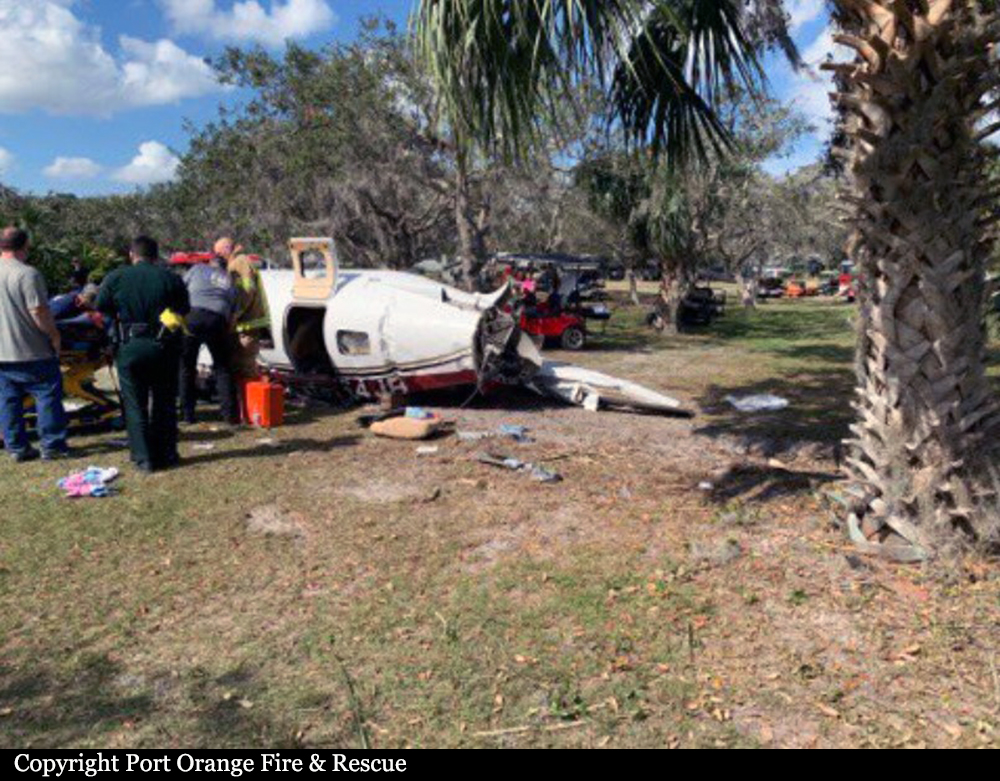
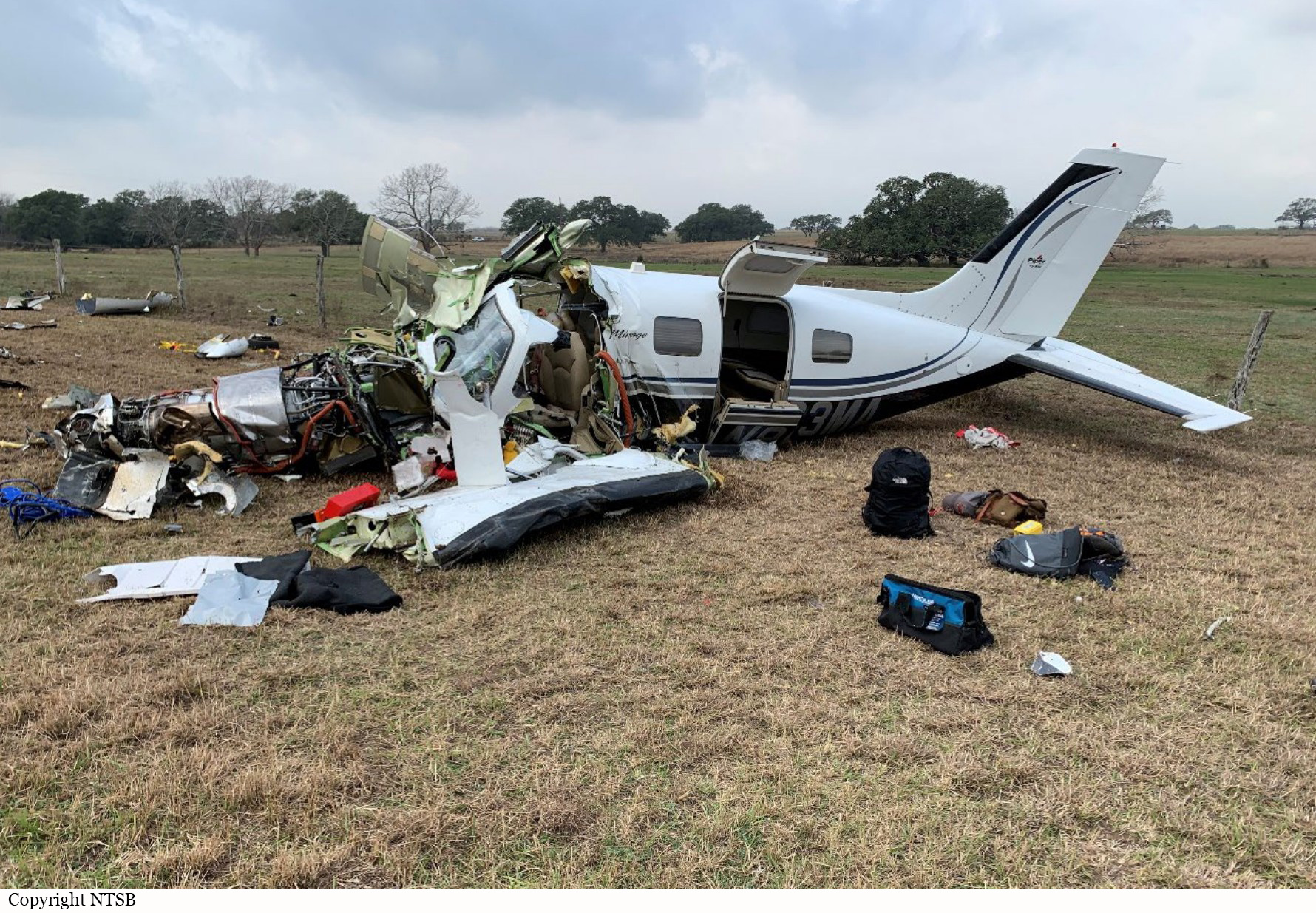
A review of air traffic control (ATC) data showed that the airplane departed with an instrument flight rules (IFR) clearance for the destination airport. The pilot requested and was cleared for an RNAV (GPS) approach into the destination airport. When the airplane was descending through 3,500 ft msl , the controller instructed the pilot to report cancelling the IFR clearance and approved a radio frequency change. There was no further communication from the pilot; the ATC facility reported that radar contact was lost when the airplane reached 2,000 ft msl, which was normal for the approach. The sole surviving passenger reported the airplane was off course during the approach, and the pilot was struggling with the airplane to get it back on course. The passenger remembered hearing a warning alarm several times and the airplane “aggressively pitching up” with more warning alarms and then “aggressively pitching down.” He observed the pilot pulling hard on the yoke and he believed he heard the copilot calling for the pilot to try and get the nose of the airplane up and straightened out. He said that he couldn’t see anything out of the windows due to the clouds and fog until right before the airplane impacted the ground. The airplane came to rest in an open pasture about 1.5 miles from the destination airport. Low IFR (LIFR) conditions were forecast for the area of the accident site and the destination airport. The National Weather Service (NWS) forecasts were consistent with the weather conditions encountered by the pilot on the approach. Data recovered from the airplane’s autopilot indicate that the pilot began the approach with the autopilot engaged. When the airplane was about 1 mile from the runway and 500 ft above the airport elevation, the pilot initiated a right climbing turn and disconnected the autopilot. This action was consistent with the initiation of the missed approach procedure. Autopilot datas indicate that the airplane’s pitch then increased as high as +20° and roll to +47° (right) during the climbing right turn. These angles suggest that the pilot likely had difficulty controlling the airplane. The pilot then engaged the autopilot’s unusual attitude recovery mode. The autopilot made inputs to return to a level flight attitude; however, autopilot data indicate that the pilot made conflicting flight control inputs. As a result, the airplane entered a brief descent, followed by a rapid climb. Indicated airspeed at the top of the climb was 16 knots, well below the airplane’s stall speed for any flap configuration. Thus, the airplane likely entered an aerodynamic stall followed by a rapid descent to impact with the terrain. The airplane impacted an open field at a shallow pitch angle, which suggests that the pilot may have attempted a stall recovery maneuver. However, altitude was insufficient for a full recovery. Postaccident examination revealed no anomalies with the airframe, engine, or autopilot. Toxicology testing showed trace levels of pheniramine, naltrexone, naltrexol, and CBD in the pilot’s system. Although postmortem toxicological testing indicates that the pilot had used these substances, his performance was not likely impaired by effects of those substances at the time of the accident. Based on the level of meclizine detected in the copilot’s heart blood, it is reasonably likely he was experiencing some effects of this medication at the time of the accident. However, whether such effects impaired his performance in a way that contributed to the accident is unknown, particularly considering his uncertain role on the flight and the presence of the other pilot. The copilot’s toxicology testing also indicated he had used cetirizine, but this medication was not detected in his blood, so it was not likely causing impairing effects at the time of the accident. The pilot’s difficulty in controlling the airplane when initiating the climbing turn in instrument conditions, along with the activation of the autopilot’s unusual attitude recovery mode, and his continued inappropriate control inputs suggest that pilot was experiencing spatial disorientation during the missed approach procedure.
Probable cause:
The pilot’s spatial disorientation during a missed approach in instrument meteorological conditions, which led to an exceedance of the airplane’s critical angle of attack and a subsequent aerodynamic stall.
Final Report:

Crash of a Piper PA-46-350P Jetprop DLX in Goose Bay: 1 killed

Date & Time: Dec 14, 2022 at 1002 LT
Registration:
N5EQ
Flight Type:
Survivors:
Yes
Schedule:
Nashua – Goose Bay – Nuuk
MSN:
46-36051
YOM:
1996
Country:
Crew on board:
1
Crew fatalities:
Pax on board:
1
Pax fatalities:
Other fatalities:
Total fatalities:
1
Captain / Total flying hours:
2260
Captain / Total hours on type:
1046.00
Circumstances:
The single engine airplane departed Nashua Airport, New Hampshire, on December 13 on a flight to Nuuk, Greenland, with an intermediate stop in Goose Bay. Due to poor weather conditions at destination, the pilot diverted to Seven Islands Airport, Quebec, where the couple passed the overnight. On the morning of December 14, the airplane departed Seven Islands Airport at 0820LT bound for Goose Bay. At about 0958LT, the aircraft crossed the final approach fix / final approach waypoint FAFKO at 2,800 feet ASL, travelling at a ground speed of 104 knots, and began the final descent. Although the descent remained steady on a 3° profile, the ground speed decreased continuously for about 60 seconds. At 1000:31, the occurrence pilot reported at waypoint SATAK, and the ground speed had increased to above 80 knots. The tower provided the pilot with updated wind information and cleared the aircraft to land on Runway 08. The pilot acknowledged the clearance at 1000:49. Soon after, the ground speed began to decrease at a rate similar to the previous rate. At 1002:47, it had decreased to 51 knots. The aircraft departed controlled flight and impacted terrain when it was about 2.5 NM southwest of the airport along the extended centreline for Runway 08. The 406 MHz emergency locator transmitter activated, and the signal was received by the Joint Rescue Coordination Centre in Halifax, Nova Scotia, at 1006. A helicopter search and rescue mission was launched from Canadian Forces Base 5 Wing Goose Bay at 1036; the helicopter arrived at the accident site 3 minutes later. Medical technicians extricated the 2 occupants, who were both seriously injured. The occupants were airlifted to a waiting ambulance and then transported to the local hospital. The pilot later died of his injuries. The aircraft was destroyed.
Probable cause:
Given the absence of data for the last minute of the occurrence flight, the investigation could not determine the complete sequence of events that led to the loss of control and collision with terrain.
Final Report:

Crash of a Piper PA-46-500TP Malibu Meridian in North Platte: 2 killed

Date & Time: Nov 9, 2022 at 0934 LT
Registration:
N234PM
Flight Type:
Survivors:
No
Schedule:
Lincoln – North Platte
MSN:
46-97200
YOM:
2005
Crew on board:
1
Crew fatalities:
Pax on board:
1
Pax fatalities:
Other fatalities:
Total fatalities:
2
Captain / Total flying hours:
505
Captain / Total hours on type:
24.00
Aircraft flight hours:
649
Circumstances:
The pilot obtained a preflight weather briefing about 2.5 hours before departing on an instrument flight rules (IFR) cross-country flight. Automatic dependent surveillance-broadcast (ADS-B) and weather data indicated the flight encountered low IFR (LIFR) conditions during the approach to the destination airport. These conditions included low ceilings, low visibility, localized areas of freezing precipitation, low-level turbulence and wind shear. The ADS-B data revealed that during the last minute of data, the airplane’s descent rate increased from 500 ft per minute to 3,000 ft per minute. In the last 30 seconds of the flight the airplane entered a 2,000 ft per minute climb followed by a descent that exceeded 5,000 ft per minute. The last data point was located about 1,000 ft from the accident site. There were no witnesses to the accident. A postaccident examination of the airframe and engine revealed no evidence of mechanical malfunctions or failures that would have precluded normal operation. The airplane’s flight instruments and avionics were destroyed during the accident and were unable to be functionally tested. The rapid ascents and descents near the end of the flight track were consistent with a pilot who was experiencing spatial disorientation, which resulted in a loss of control and high-speed impact with terrain. The pilot purchased the airplane about 3 weeks before the accident and received about 15 hours of transition training in the airplane, including 1 hour of actual instrument conditions during high-altitude training. The pilot’s logbook indicated he had 5.2 hours of actual instrument flight time. At the time of the pilot’s weather briefing, the destination airport was reporting marginal visual flight rules (MVFR) conditions with the terminal area forecast (TAF) in agreement, with MVFR conditions expected to prevail through the period of the accident flight. LIFR conditions were reported about 40 minutes before the airplane’s departure and continued to the time of the accident. Light freezing precipitation was reported intermittently before and after the accident, which was not included in the TAF. The destination airport’s automated surface observing system (ASOS) reported LIFR conditions with overcast ceilings at 300 ft above ground level (agl) and light freezing drizzle at the time of the accident. Low-level turbulence and wind shear were detected, which indicated a high probability of a moderate or greater turbulence layer between 3,600 and 5,500 ft mean sea level (msl) in the clouds. During the approach, the airplane was in instrument meteorological conditions with a high probability of encountering moderate and greater turbulence, with above freezing temperatures. The National Weather Service (NWS) had issued conflicting weather information during the accident time period. The pilot’s weather briefing indicated predominately MVFR conditions reported and forecasted by the TAFs along the route of flight, while both the NWS Aviation Weather Center (AWC) AIRMET (G-AIRMET) and the Graphic Forecast for Aviation (GFA) were depicting IFR conditions over the destination airport at the time of the briefing. The TAFs, GAIRMET, and Current Icing Product (CIP)/Forecast Icing Products (FIP) were not indicating any forecast for icing conditions or freezing precipitation surrounding the accident time. The pilot reviewed the TAF in his briefing, expecting MVFR conditions to prevail at his expected time of arrival. The TAF was amended twice between the period of his briefing and the time of the accident to indicate IFR to LIFR conditions with no mention of any potential freezing precipitation or low-level wind shear (LLWS) during the period. Given the pilot’s low actual instrument experience, minimal amount of flight experience in the accident airplane, and the instrument conditions encountered during the approach with a high probability of moderate or greater turbulence, it is likely that the pilot experienced spatial disorientation and lost control of the airplane.
Probable cause:
The pilot’s flight into low instrument flight rules conditions and turbulence, which resulted in spatial disorientation, loss of control, and an impact with terrain. Contributing to the accident was the pilot’s lack of total instrument experience.
Final Report:

Crash of a Piper PA-46-310P Malibu near Seligman: 2 killed

Date & Time: Sep 13, 2022 at 1100 LT
Registration:
N43605
Flight Phase:
Flight Type:
Survivors:
No
Schedule:
Albuquerque – Henderson
MSN:
46-8408052
YOM:
1984
Crew on board:
1
Crew fatalities:
Pax on board:
1
Pax fatalities:
Other fatalities:
Total fatalities:
2
Captain / Total flying hours:
47
Circumstances:
The student pilot was enroute at an altitude about 17,700 ft mean sea level (msl) on a crosscountry flight with a passenger in his high-performance airplane. The pilot was receiving visual flight rules flight following services from air traffic control, who advised him of an area of moderate to heavy precipitation at the airplane’s 12 o’clock position. The pilot replied that he had been able to “dodge” the areas of precipitation, but that they were getting bigger. There were no further communications from the pilot. Shortly thereafter, the airplane entered a left turn that continued through 180° before the airplane began a descent from its cruise altitude. The flight track ended in an area of moderate to extreme reflectivity as depicted on weather radar and indicated that the airplane was in a rapidly descending right turn at 13,900 ft when tracking information was lost. The wreckage was scattered across a debris field about 2 miles long. Examination of the wreckage revealed lateral crushing along the left side of the fuselage and the separation of both wings and the empennage. Wing spar signatures and empennage and wing impact marks suggested positive wing loading before the wing separation and in-flight breakup. The area of the accident site was included in a Convective SIGMET advisory for thunderstorms, hail, and wind gusts of up to 50 kts. A model atmospheric sounding near the accident site indicated clouds between about 15,000 ft and 27,000 ft, as well as the potential for light rime icing from 15,500 ft to 23,000 ft. Review of the pilot’s logbook revealed that he had about 47 total hours of flight experience, with about 4 hours of instruction in simulated instrument conditions. A previous flight instructor reported that the pilot displayed attitudes of “anti-authority” and “impulsivity.” Ethanol was detected in two postmortem tissue specimens; however, based on the distribution and amount detected, the ethanol may have been from postmortem production, and it is unlikely to have contributed to the crash. Fluoxetine, trazodone, and phentermine were also detected in the pilot’s postmortem toxicology specimens. The pilot had reported his use of fluoxetine for anger and irritability. Anger and irritability are nonspecific symptoms that may or may not be associated with mental health conditions, including depression, certain personality disorders, and bipolar disorder. These conditions may be associated with impulsive behavior, increased risk taking, lack of planning, not appreciating consequences of actions, and substance use disorders. Both trazodone and phentermine have the potential for impairing effects; however, an unimpaired pilot with the pilot’s relative inexperience would have been likely to lose aircraft control during an encounter with instrument meteorological conditions (IMC). It is therefore unlikely that the pilot’s use of trazodone and phentermine affected his handling of the airplane in a way that contributed to the crash. Based on review of the pilot’s Federal Aviation Administration (FAA) medical certification file, no specific conclusion can be drawn regarding any underlying psychiatric condition that may have contributed to his decision to attempt and continue the flight into IMC, as that decision was consistent with his previous pattern of risk-tolerant behavior. The pilot had not formally been diagnosed with a mental health disorder in his personal medical records reviewed other than substance use disorders. The psychological and psychiatric evaluations reviewed were not for diagnostic and treatment purposes, but for evaluation for FAA medical certification, and therefore did not generate diagnoses. There is evidence that the pilot had a pattern of poor decision-making, high-risk tolerance, and impulsive behavior. The circumstances of the accident are consistent with the student pilot’s decision to continue into an area of deteriorating weather conditions, his encounter with instrument meteorological conditions and convective activity, and loss of visual references, which resulted in spatial disorientation and a loss of aircraft control. During the descent, the airplane exceeded its design limitations, resulting in structural failure and an in-flight breakup.
Probable cause:
The student pilot’s continued visual flight into instrument meteorological conditions, which resulted in spatial disorientation, a loss of control, exceedance of the airplane’s design limitations, and in-flight breakup.
Final Report:

Crash of a Piper PA-46-350P Malibu Mirage in North Las Vegas: 2 killed

Date & Time: Jul 17, 2022 at 1203 LT
Registration:
N97CX
Flight Type:
Survivors:
No
Schedule:
Cœur d’Alene – North Las Vegas
MSN:
46-36128
YOM:
1997
Crew on board:
2
Crew fatalities:
Pax on board:
0
Pax fatalities:
Other fatalities:
Total fatalities:
2
Captain / Total flying hours:
6643
Copilot / Total flying hours:
1536
Copilot / Total hours on type:
280
Aircraft flight hours:
3212
Circumstances:
The commercial pilot and private-rated copilot on board the low-wing airplane were performing a visual approach to their home airport at the end of an instrument-flight-rules flight. They were instructed by the approach controller to cross the destination airport over midfield and enter the left downwind leg of the traffic pattern for landing on runway 30L. Meanwhile, the flight instructor and student pilot on board the high-wing airplane were conducting takeoffs and landings in the right traffic pattern for runway 30R and were cleared to conduct a short approach for landing on runway 30R. Upon contacting the airport tower controller, the crew of the low-wing airplane was instructed to proceed to runway 30L, and the copilot acknowledged. The controller subsequently confirmed the landing approach to runway 30L, and the copilot again acknowledged with a correct readback of the landing clearance. Automatic Dependent Surveillance-Broadcast (ADS-B) flight track data indicated that, after crossing over the runway, the low-wing airplane performed a continuous, descending turn through the final approach path for runway 30L and rolled out aligned with the final approach path for runway 30R. The airplanes collided about ¼ nautical mile from the approach end of the runway. Although day visual meteorological conditions prevailed at the airport at the time of the accident, a visibility study determined that it would have been difficult for the pilots of the two airplanes to see and avoid one another given the size of each airplane in the other’s windscreen and the complex backgrounds against which they would have appeared. The pilot of the low-wing airplane would likely have had to move his head position in the cockpit (e.g., by leaning forward) in order to see the approach ends of the runways during most of the turn. If looking in the direction of the runways, he would have been looking away from the direction of the oncoming high-wing airplane, which was also obscured from view by aircraft structure during a portion of the turn, likely including the final seconds before the collision. The visibility study indicated that sun glare was not likely a factor. The high-wing airplane was not equipped with a cockpit display of traffic information (CDTI). The low-wing airplane was equipped with a CDTI, which may have generated a visual and aural traffic alert concerning the high-wing airplane before the collision; however, this may not have provoked concern from the flight crew, since other aircraft are to be expected while operating in the airport traffic pattern environment. The circumstances of this accident underscored the difficulty in seeing airborne traffic (the foundation of the “see and avoid” concept in visual meteorological conditions), even when pilots might be alerted to traffic in the vicinity by equipment such as CDTI. Given the low-wing airplane pilots’ familiarity with the airport, it is unlikely that they misidentified the intended landing runway; however, it is possible that they were unfamiliar with their issued instructions to overfly the airport and join the traffic pattern, as this was a fairly new air traffic control procedure for routing inbound traffic to the airport that had been implemented on a test basis, for a period of about one week, about two months before the accident. Their lack of familiarity with the maneuver may have resulted in a miscalculation that resulted in the airplane rolling out of turn farther to the right of runway 30L than expected. A performance study indicated that, during the turn to final approach, the airplane was between 38 knots (kts) and 21 kts faster than its nominal landing approach speed of 85 kts. This excess speed may have contributed to the pilots’ alignment with runway 30R instead of runway 30L. Analysis of the turn radius required to align the airplane with runway 30L indicated a required roll angle of between 32° and 37° at the speeds flown; at 85 kts. While the wrong runway line up by the low-wing airplane may have been the crew’s misidentification of the runway to which they were cleared to land, it may also have been a miscalculation in performing a maneuver that was relatively new and that they may have never conducted before. Thus, resulting in a fast, short, and tight continuous descending turn to final that rolled them out farther right than expected. The high-wing configuration of the Cessna in a right turn to final, and the low-wing configuration of the Piper in a left turn to final, only exacerbated the conflict by reducing the ability of the pilots to see the other aircraft. The pilot of the low-wing airplane had cardiovascular disease that increased his risk of experiencing an impairing or incapacitating medical event, such as arrhythmia or stroke. Although such an event does not leave reliable autopsy evidence if it occurs just before death, given that the airplane was in controlled flight until the collision, and had two pilots on board, one of whom was communicating with air traffic control, it is unlikely that an incapacitating medical event occurred. The pilot also had advanced hearing impairment, which may have made it more difficult for him to discern speech; however, the circumstances of the accident are not consistent with a pilot comprehension problem; the crew correctly read back the instruction to land on runway 30L. Whether the pilot’s hearing loss impacted his ability to detect cues such as the high-wing airplane’s landing clearance to the parallel runway or a possible CDTI aural alert could not be determined based on the available information. Although both the pilot and copilot’s ages and medical conditions were risk factors for cognitive impairment, there was no specific evidence available to suggest that either of the pilots on board the low-wing airplane had cognitive impairment that contributed to the accident. Autopsy of the flight instructor on board the high-wing airplane identified some dilation of his heart ventricles; while this may have been associated with increased risk of an impairing or incapacitating cardiovascular event, given the circumstances of the accident, it is unlikely that such an event occurred. The instructor also had hydronephrosis of the left kidney, with stones in the left renal pelvis. This may have been asymptomatic (kidney stone pain typically is associated with passage of a stone through the ureter, not with stones in the renal pelvis). The instructor’s vitreous creatinine and potassium elevation cannot be clearly attributed to hydronephrosis of a single kidney. Additionally, the instructor was producing urine and had no elevation of vitreous urea nitrogen. The vitreous chemistry results should be interpreted cautiously given the extent of thermal injury. The instructor’s heart and kidney issues are unlikely to have affected his ability to see and avoid the other airplane. The student pilot on board the high-wing airplane also had heart disease identified at autopsy, including moderate coronary artery disease and an enlarged heart with dilated ventricles. While his heart disease was associated with increased risk of an impairing or incapacitating cardiovascular event, given the circumstances of the accident, it is unlikely that such an event occurred. The student pilot’s vitreous chemistry test indicated hyponatremic dehydration; however, it is unlikely that dehydration contributed to the accident. The controller did not issue traffic advisory information to either of the airplanes involved in the collision at any time during their respective approaches for landing, even though the lowing airplane crossed about 500 ft over the high-wing airplane as it descended over the airport toward the downwind leg of the traffic pattern. His reasoning for not providing advisories to the airplanes as they entered opposing base legs was that he expected the high-wing airplane to be over the runway numbers before the low-wing airplane would be able to visually acquire it; however, this was a flawed expectation that did not account for the differences in airplane performance characteristics. After clearing both airplanes for landing, he communicated with two uninvolved aircraft and did not monitor the progress of the accident airplanes to the two closely-spaced parallel runways. This showed poor judgement, particularly given that in the months before the accident, there had been a series of events at the airport in which pilots had mistakenly aligned with, landed on, or taken off from an incorrect runway. Interviews with personnel at the air traffic control tower indicated that staffing was deficient, and most staff were required to work mandatory overtime shifts, reaching an annual average of 400 to 500 hours of overtime per controller. According to the air traffic manager (ATM), the inadequate staffing had resulted in reduced training discissions, and the management team was unable to appropriately monitor employee performance. The ATM stated that everyone on the team was exhausted, and that work/life balance was non-existent. It is likely that the cumulative effects of continued deficient staffing, excessive overtime, reduced training, and inadequate recovery time between shifts took a considerable toll on the control tower workforce.
Probable cause:
The low-wing airplane pilot’s failure to ensure that the airplane was aligned with the correct runway, which resulted in a collision with the high-wing airplane on final approach. Contributing to the accident was the controller’s failure to provide timely and adequate traffic information to either airplane and his failure to recognize the developing conflict and to act in a timely manner. Also contributing was the Federal Aviation Administration’s insufficient staffing of the facility, which required excessive overtime that did not allow for proper controller training or adequate recovery time between shifts.
Final Report:

Crash of a Piper PA-46-500TP Malibu Meridian in Olathe: 1 killed

Date & Time: Feb 13, 2022 at 1020 LT
Registration:
N2445F
Flight Phase:
Flight Type:
Survivors:
No
Schedule:
Olathe - Albuquerque
MSN:
46-97480
YOM:
2012
Crew on board:
1
Crew fatalities:
Pax on board:
0
Pax fatalities:
Other fatalities:
Total fatalities:
1
Captain / Total flying hours:
354
Aircraft flight hours:
2170
Circumstances:
The airplane had recently undergone an annual inspection, and the pilot planned to fly the airplane back to his home base. After receiving clearance from air traffic control, the pilot proceeded to take off. The airplane accelerated and reached a peak groundspeed of 81 kts about 2,075 ft down the 4,097-ft runway. Once airborne, the airplane drifted slightly to the right and the pilot radioed an urgent need to return to the airport. The controller cleared the airplane to land and no further transmissions were received from the accident airplane. The airplane’s flight path showed that it slowed before turning back toward the left and the airplane’s speed continued to decrease throughout the remainder of the data. The final data point recorded the airplane at a groundspeed of 45 kts. The groundspeed would equate to 60 kts airspeed when considering the 15-kt headwind. The stall speed chart for the airplane listed the minimum stall speed for any configuration as 64 kts. Postaccident examinations of the airframe and engine revealed no evidence of mechanical malfunctions or failures that would have precluded normal operation. External and internal engine damage indicated that the engine was producing power at the time of impact, but the amount of power output could not be determined. Based on the available information, the pilot perceived an urgent need to return the airplane to the airport; however, due to the amount of damage from the impact and postimpact fire, the reason that the pilot was returning to the airport could not be determined. Stall speed information for the airplane, the recorded winds, and flight track data, indicated that the airplane encountered an aerodynamic stall before impacting the ground near the departure end of the runway. Since the airplane stalled and impacted the ground before reaching the perimeter of the airport, the pilot may not have had sufficient altitude to execute a forced landing to the empty field off the departure end of the runway.
Probable cause:
The unknown emergency that warranted a return to the airport and the airspeed decay which resulted in an aerodynamic stall.
Final Report:

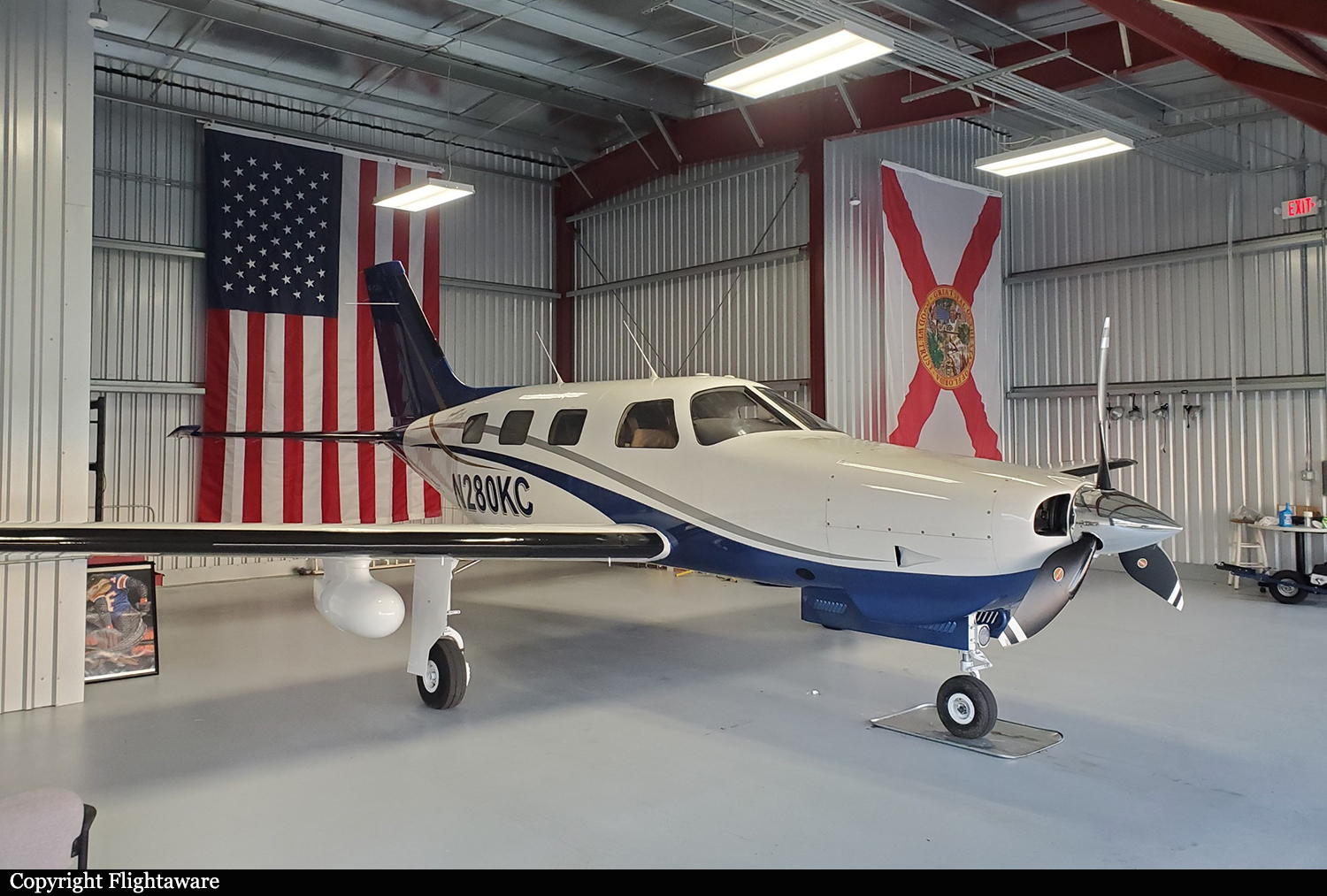
Crash of a Piper PA-46-350P Malibu Mirage in Mazatlán

Date & Time: Feb 13, 2022
Operator:
Registration:
XB-SUA
Flight Phase:
Flight Type:
Survivors:
Yes
MSN:
46-36378
YOM:
2006
Country:
Crew on board:
1
Crew fatalities:
Pax on board:
5
Pax fatalities:
Other fatalities:
Total fatalities:
0
Circumstances:
En route, the pilot encountered engine problems and elected to make an emergency landing on a motorway. Upon landing, the aircraft impacted the road bank, lost its left wing and came to rest. All six occupants evacuated with minor injuries and the aircraft was damaged beyond repair.

Crash of a Piper PA-46-500TP Malibu Meridian in Steamboat Springs: 1 killed

Date & Time: Dec 10, 2021 at 1809 LT
Operator:
Registration:
N744Z
Flight Type:
Survivors:
No
Site:
Schedule:
Cody – Steamboat Springs
MSN:
46-97134
YOM:
2002
Crew on board:
1
Crew fatalities:
Pax on board:
0
Pax fatalities:
Other fatalities:
Total fatalities:
1
Captain / Total flying hours:
581
Circumstances:
The pilot was conducting a solo night cross-country flight in low visibility through mountainous terrain. The pilot was then cleared by an air traffic controller to conduct a RNAV (GPS)-E instrument approach into the destination airport. After passing the final approach fix and before the missed approach point, the pilot, for an unknown reason, executed a left turn, consistent with the missed approach procedure. During the turn toward the holding waypoint, the airplane did not climb. Shortly thereafter, the airplane impacted steep rising terrain The local weather at the time of the accident indicated a cloud ceiling of 1,200 ft above ground level and 1 statute mile visibility, which was below the weather minimums for the approach. Data retrieved from the onboard avionics revealed that although the pilot flew the published route in accordance with the instrument approach procedure, the minimum required altitudes were not adhered to. A review of the ForeFlight weather briefing data indicated that a route weather briefing had been generated by the pilot with the filing of the instrument flight rules (IFR) flight plan. While no weather imagery was reviewed during the period, the pilot had checked METARs for the destination and another nearby airport before departure and viewed the RNAV (GPS)-E approach procedure at the destination airport. A review of the data that was presented to the pilot indicated that visual flight rules conditions prevailed at the destination with light snow in the vicinity at the time it was generated. Based on the preflight weather briefing the pilot obtained, he was likely unaware of the IFR conditions and below minimum weather conditions at the destination until he descended into the area and obtained the current local weather during the flight. It is probable that, based upon the weather and flight track information, as the pilot was on the instrument approach, he became aware of the below minimum weather conditions and elected to initiate the missed approach, as evident by the turn away from the airport similar to the missed approach procedure and the flaps and landing gear being in transition. This investigation was unable to determine why the missed approach procedure was prematurely initiated and why the airplane failed to climb. Additionally, there were no preimpact mechanical malfunctions or anomalies found during a postaccident examination that would have precluded normal operation.
Probable cause:
The pilot’s failure to adhere to the published instrument approach procedure, which resulted in controlled flight into terrain.
Final Report: