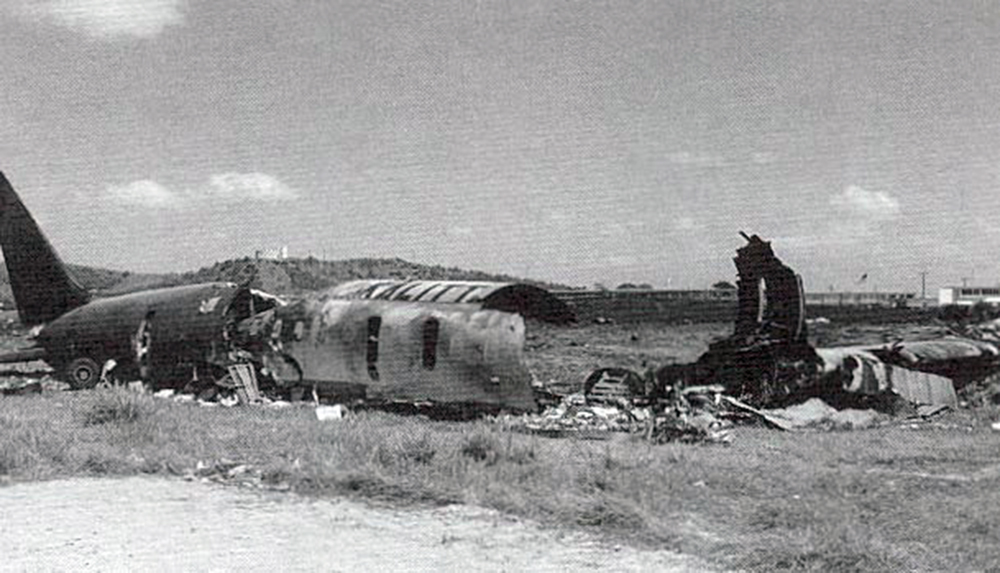
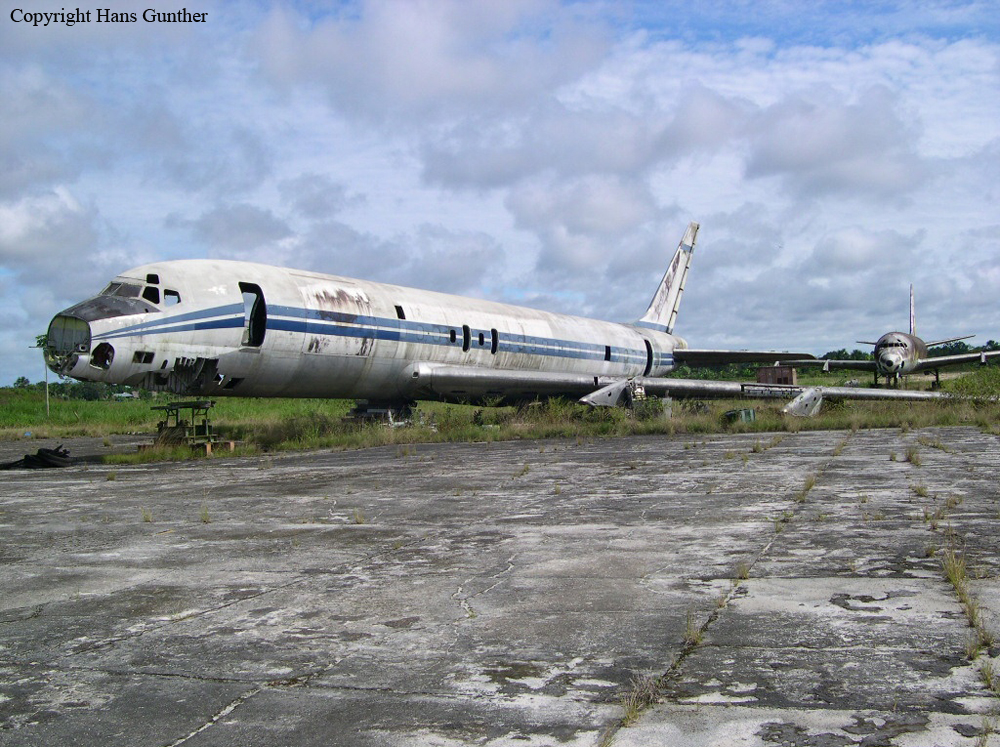
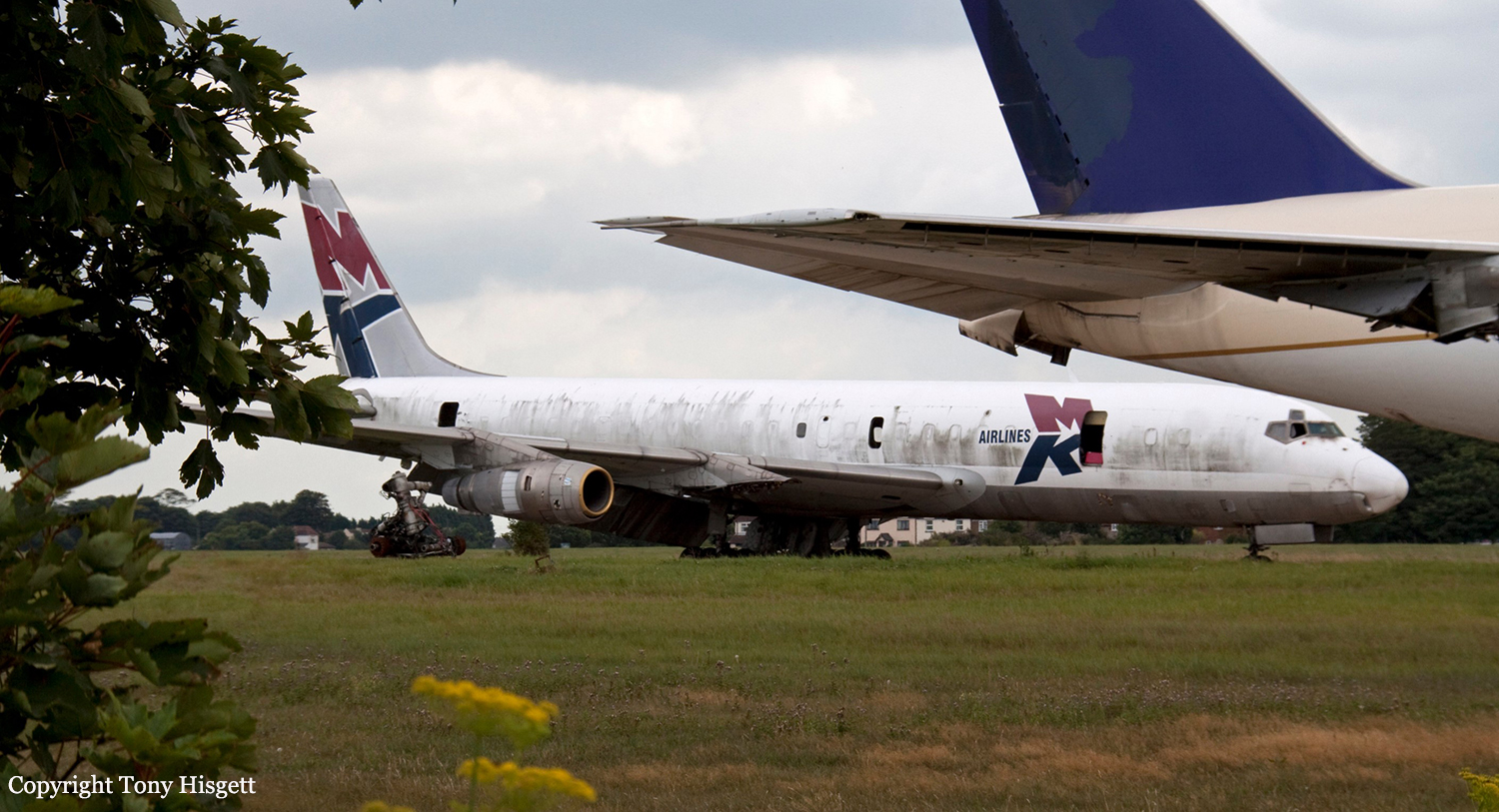
Crash of a Douglas DC-8-55F in Asunción: 22 killed

Date & Time: Feb 4, 1996 at 1412 LT
Type of aircraft:
Operator:
Registration:
HK-3979X
Flight Phase:
Flight Type:
Survivors:
No
Site:
Schedule:
Barranquilla - Asunción - Campinas
MSN:
45882
YOM:
1966
Flight number:
ALA028
Country:
Crew on board:
3
Crew fatalities:
Pax on board:
1
Pax fatalities:
Other fatalities:
Total fatalities:
22
Captain / Total flying hours:
9100
Captain / Total hours on type:
5919.00
Copilot / Total flying hours:
3500
Copilot / Total hours on type:
3158
Aircraft flight hours:
66326
Aircraft flight cycles:
20567
Circumstances:
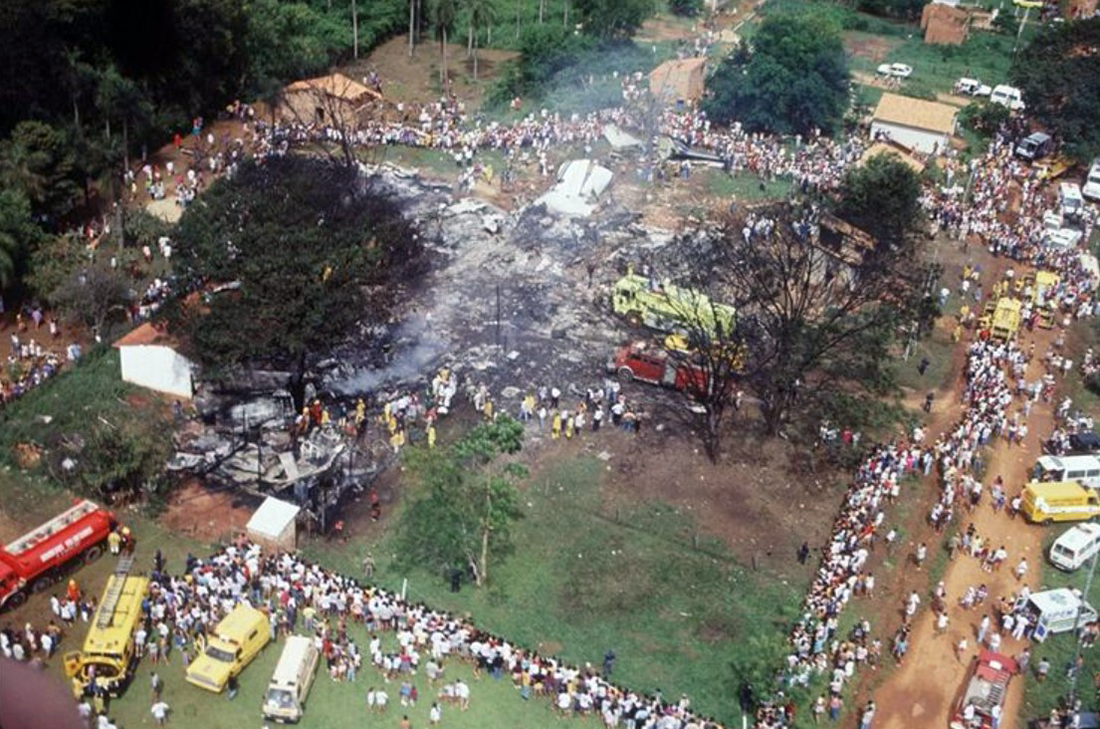
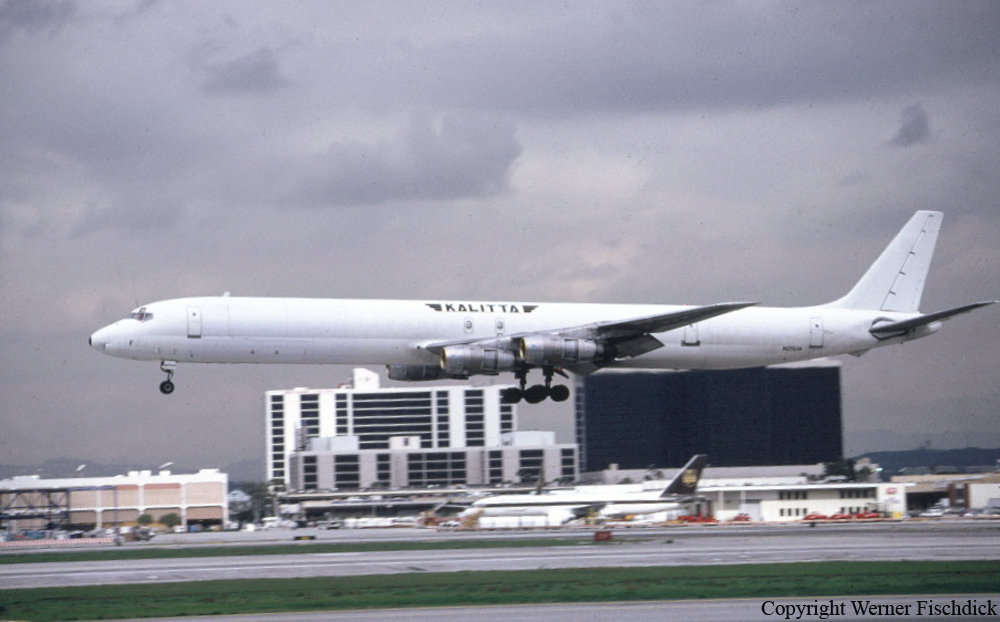
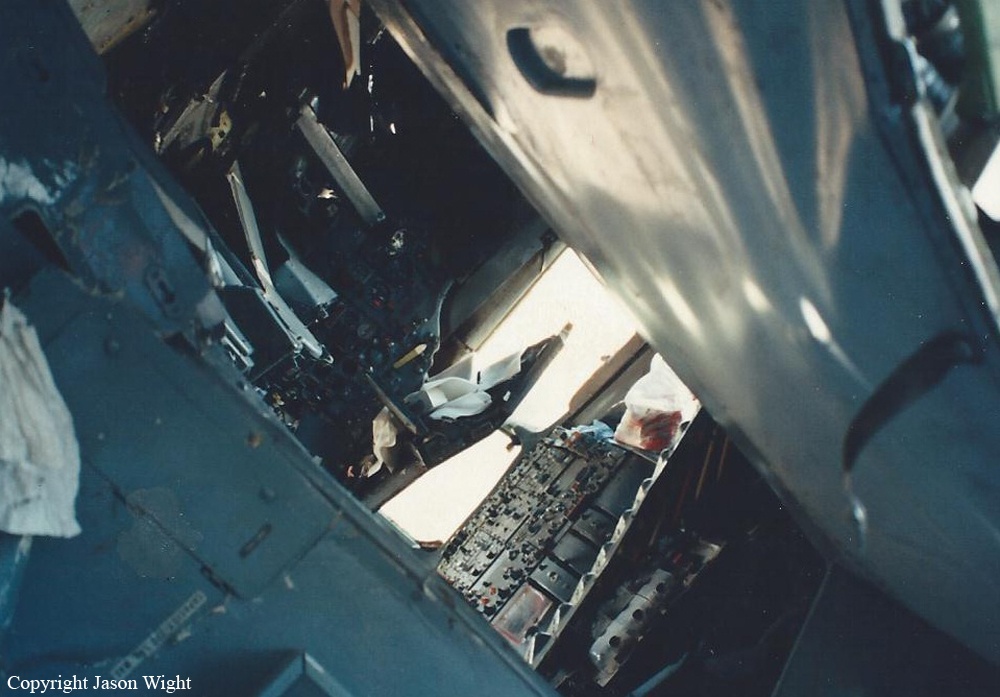
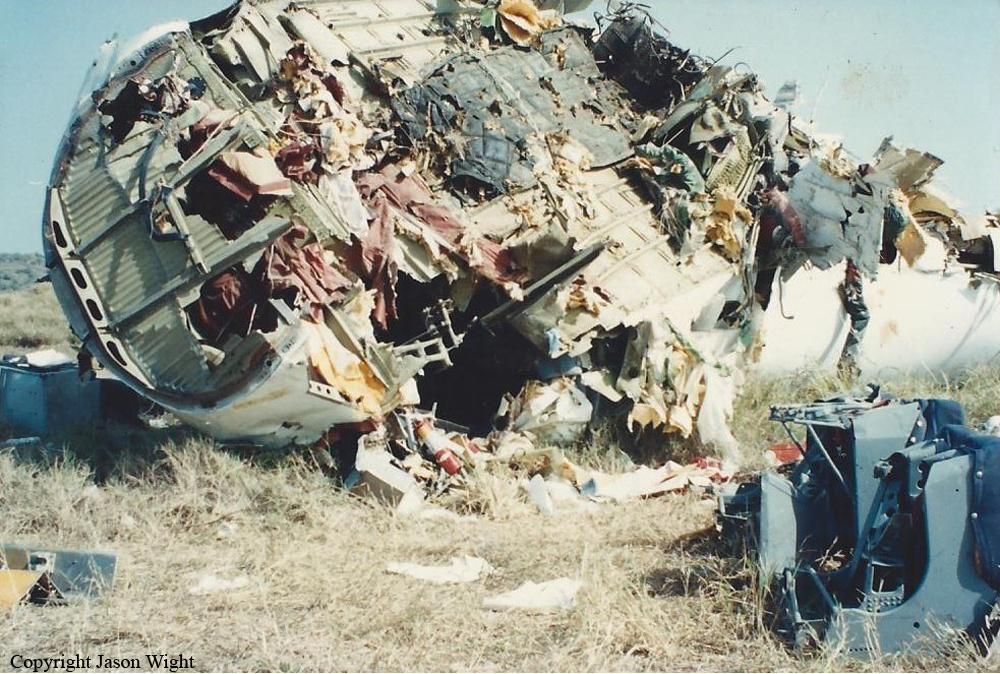
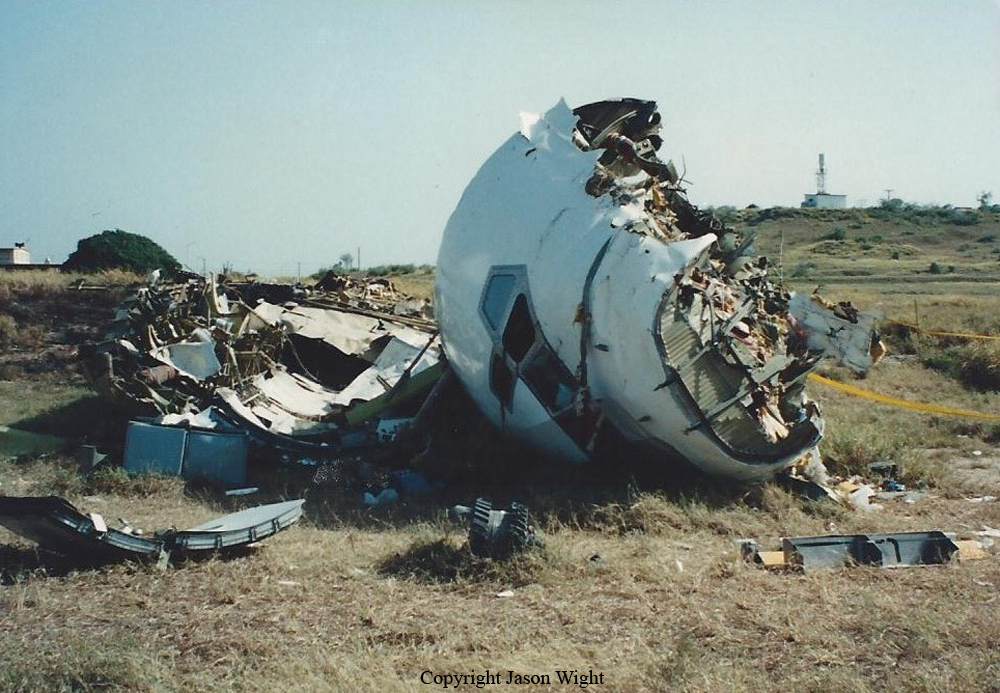
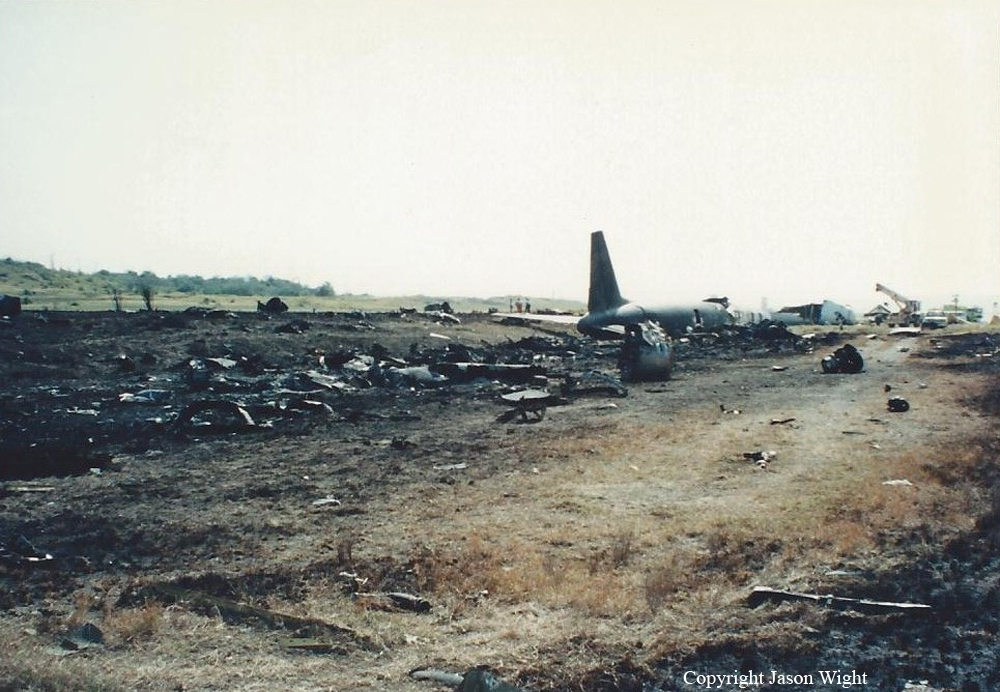
The aircraft was completing a positioning flight from Asunción to Campinas on behalf of Alas Paraguayas, under flight number ALA028. As there was no cargo on board, the crew decided to make profit of the situation to perform training upon takeoff. During the takeoff roll on runway 02, at Vr speed, the captain reduced the power on engine n°1 and after liftoff, he reduced power on engine n°2. With the undercarriage still down and the flaps at 15°, the aircraft became unstable, lost height and crashed in the district of Mariano Roque Alonso, about 1,500 metres past the runway end. The aircraft was destroyed by impact forces and a post crash fire and all four occupants were killed as well as 18 people on ground, most of them children taking part to a volleyball game.
Probable cause:
It was determined that the loss of control during initial climb was the consequence of the decision of the crew to perform training upon takeoff, intentionally reducing power on both engines n°1 and 2. This decision was taken at a critical phase of flight and the copilot-in-command was unable to maintain control of the aircraft, causing the aircraft to lose speed and to stall.
The following contributing factors were reported:
- The captain's experience in such configuration was low,
- Lack of flight safety doctrine in the cockpit during all flight,
- Execution of unauthorized takeoff training under uncontrolled conditions,
- Execution of such take-off training by a person who was not qualified as an instructor.
Final Report:
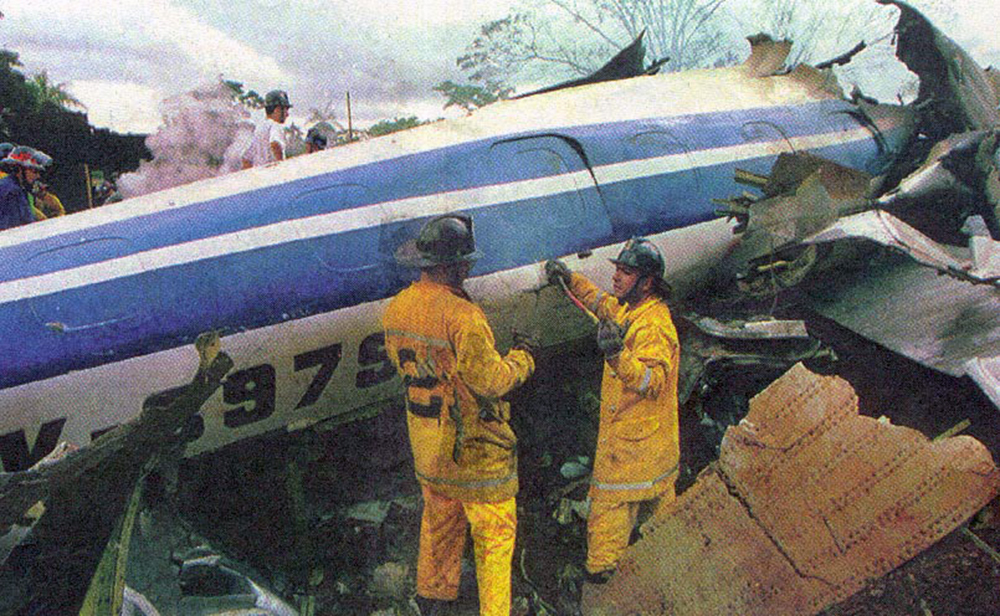
Crash of a Douglas DC-8-55F in Harare

Date & Time: Jan 28, 1996
Type of aircraft:
Operator:
Registration:
Z-WSB
Flight Type:
Survivors:
Yes
Schedule:
Johannesburg - Harare
MSN:
45805
YOM:
1965
Country:
Region:
Crew on board:
5
Crew fatalities:
Pax on board:
0
Pax fatalities:
Other fatalities:
Total fatalities:
0
Circumstances:
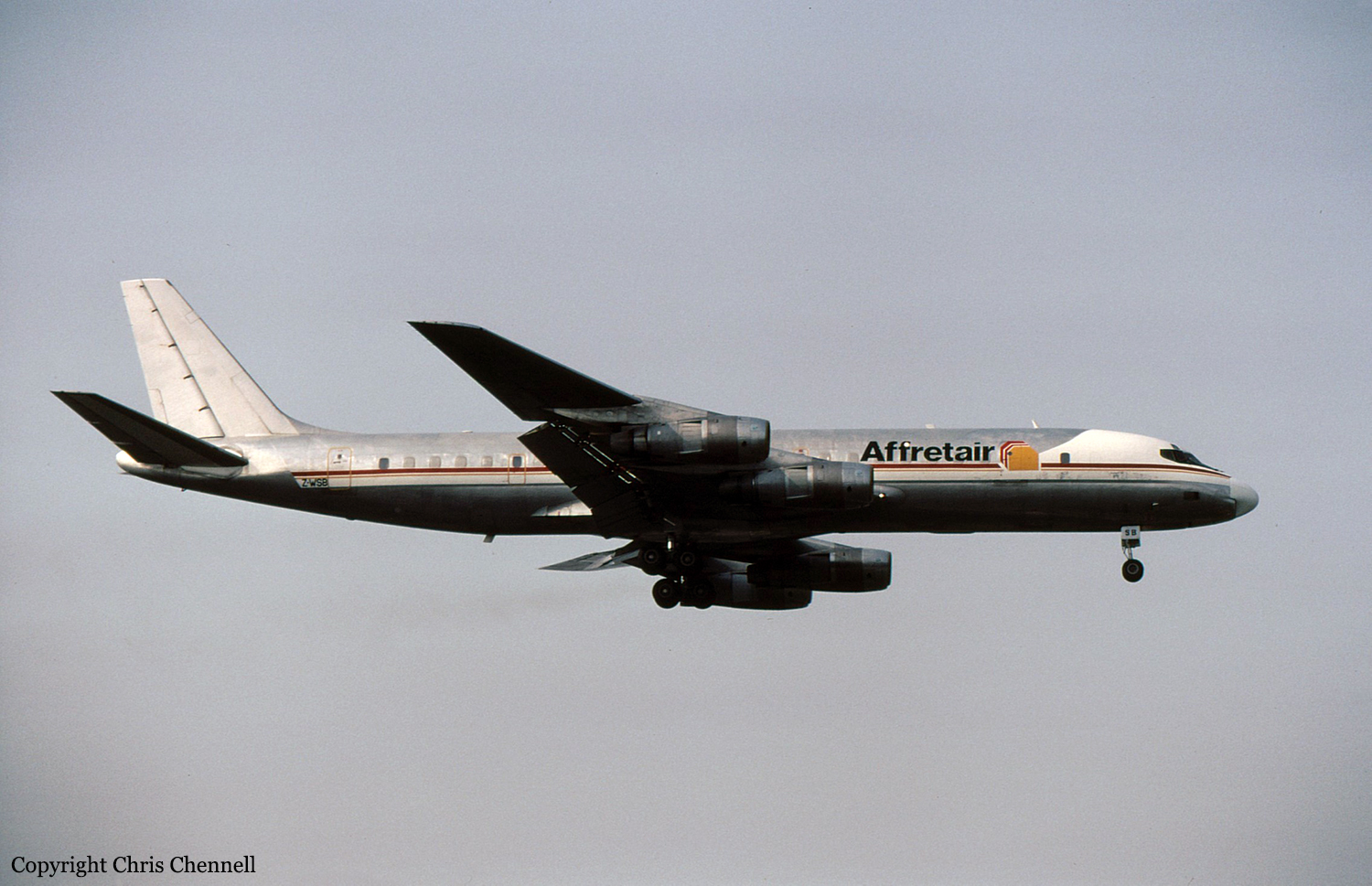
Following an uneventful cargo flight from Johannesburg, the crew started the approach to Harare Airport in poor weather conditions with heavy rain falls. After landing on runway 05, the aircraft encountered difficulties and was unable to stop within the remaining distance (runway 05 is 4,750 metres long). It overran, lost its nose gear and came to rest. All five crew members escaped uninjured and the aircraft was damaged beyond repair.
Probable cause:
The following findings were reported:
- Poor weather conditions with heavy rain falls,
- Limited visibility,
- The runway 05 was wet and the braking action was reduced,
- The aircraft suffered aquaplaning,
- The reverse thrust systems were unserviceable on engine n°2 and 4,
- The crew completed the landing without the spoilers being armed,
- The aircraft was not airworthy,
- The crew failed to follow the approach checklist.

Crash of a Douglas DC-8-54F in Guatemala City: 6 killed

Date & Time: Apr 28, 1995 at 1135 LT
Type of aircraft:
Operator:
Registration:
N43UA
Flight Type:
Survivors:
Yes
Schedule:
Miami – Guatemala City – Lima
MSN:
45677
YOM:
1964
Flight number:
OX705
Country:
Crew on board:
3
Crew fatalities:
Pax on board:
0
Pax fatalities:
Other fatalities:
Total fatalities:
6
Circumstances:
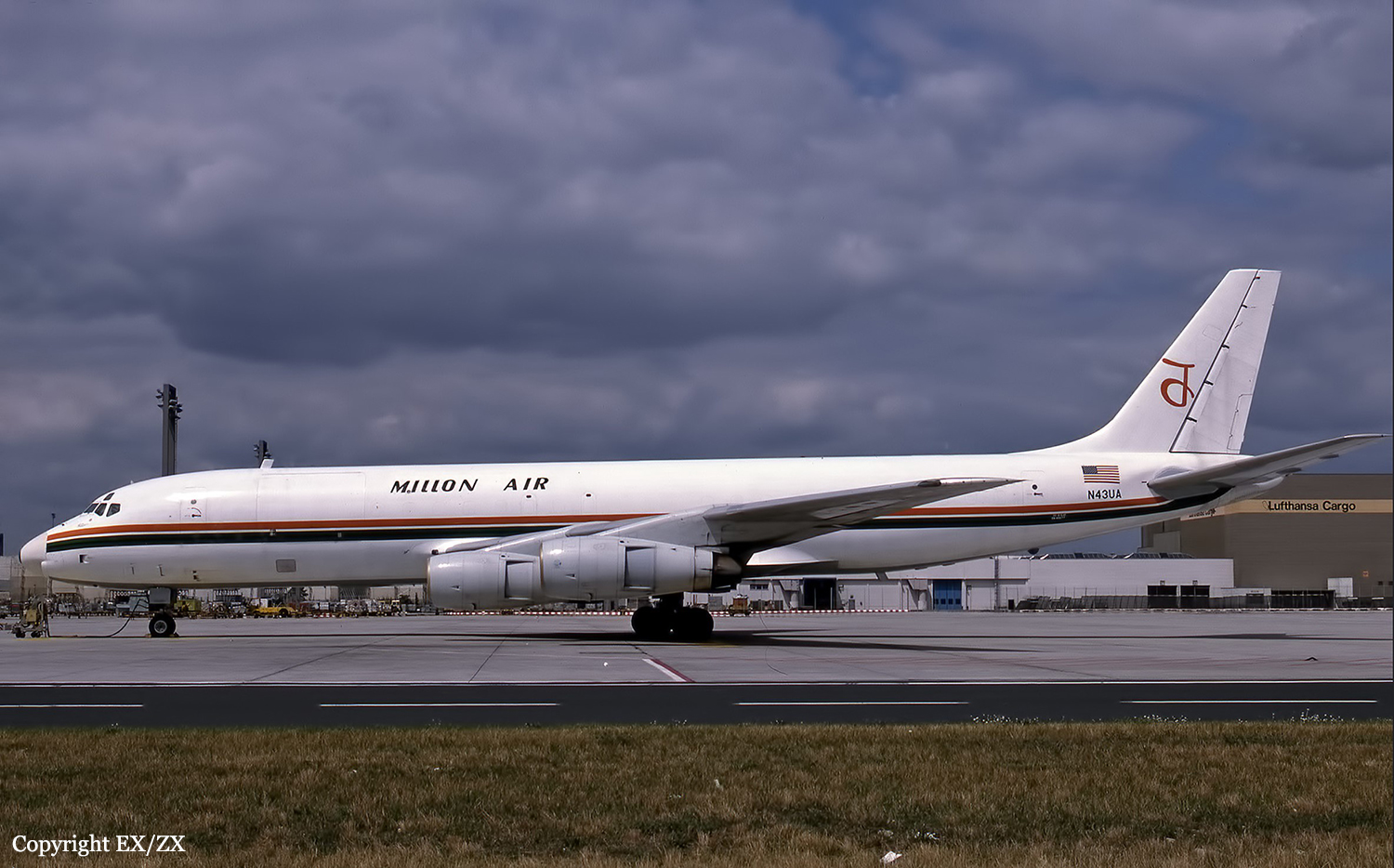
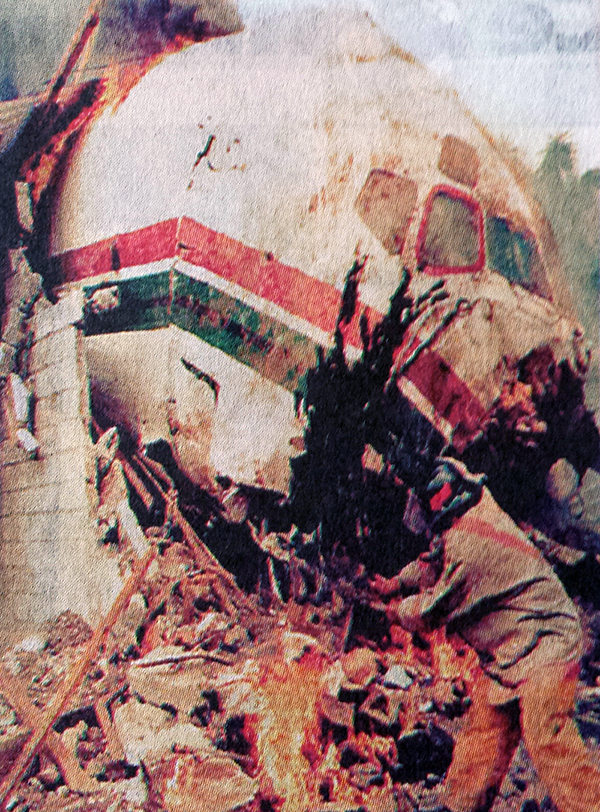
The aircraft departed Miami-Intl Airport on a cargo flight to Lima with an intermediate stop in Guatemala City, carrying three crew members and various goods on behalf of Lineas Aéreas Mayas. After touchdown on runway 19 at Guatemala City-La Aurora Airport, spoilers were deployed as well as reverse thrust on engine n°2 and 3. On a wet runway surface, the aircraft was unable to stop within the remaining distance, overran, went through a fence and down an embankment before crashing onto several houses. All three crew members were injured as well as seven people on the ground. Six other people on the ground were killed.
Probable cause:
Wrong approach configuration on part of the crew who landed at an excessive speed of 135 knots in marginal weather conditions. The following contributing factors were reported:
- The runway surface was wet,
- The braking action was poor,
- The crew failed to take corrective actions in time,
- Possible aquaplaning,
- The crew failed to use all available brake systems.

Crash of a Douglas DC-8-63CF in Kansas City: 3 killed

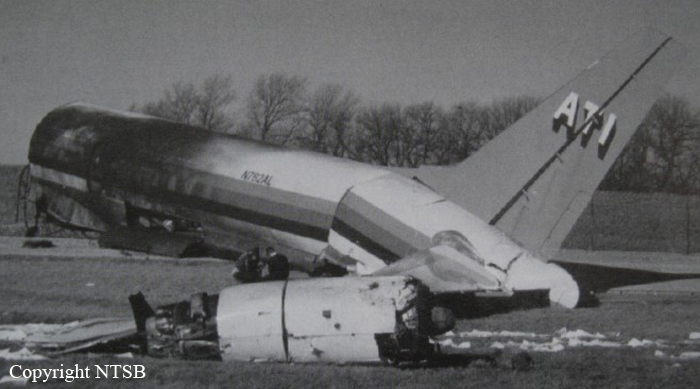
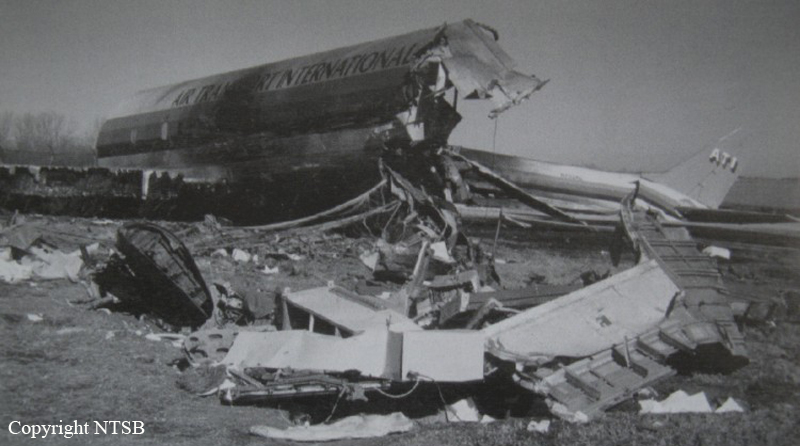
Date & Time: Feb 16, 1995 at 2027 LT
Type of aircraft:
Operator:
Registration:
N782AL
Flight Phase:
Flight Type:
Survivors:
No
Schedule:
Kansas City - Westover
MSN:
45929
YOM:
1968
Crew on board:
3
Crew fatalities:
Pax on board:
0
Pax fatalities:
Other fatalities:
Total fatalities:
3
Captain / Total flying hours:
9741
Captain / Total hours on type:
4483.00
Copilot / Total flying hours:
4460
Copilot / Total hours on type:
218
Aircraft flight hours:
77096
Aircraft flight cycles:
22404
Circumstances:
The airplane crashed immediately after liftoff during a three-engine takeoff. Flightcrew had shortened rest break; rest periods not required for ferry flights. Flight crew fatigue from lack of rest, sleep, and disruption of circadian rhythms. Flightcrew did not have adequate, realistic training in three-engine takeoff techniques or procedures. Flight crew did not adequately understand three-engine takeoff procedures, including significance of vmcg. Flight engineer improperly determined vmcg speed, resulting in value 9 knots too low. During first takeoff attempt, captain applied power to asymmetrical engine too soon, was unable to maintain directional control, and rejected the takeoff. Captain agreed to modify procedure by allowing flight engineer to advance throttle, a deviation of prescribed procedure. FAA oversight of operator was inadequate because the poi and geographic inspectors were unable to effectively monitor domestic crew training and international operations. Existing far part 121 flight time limits & rest requirements that pertained to the flights that the flightcrew flew prior to the ferry flights did not apply to the ferry flights flown under far part 91. Current one-engine inoperative takeoff procedures do not provide adequate rudder availability for correcting directional deviations during the takeoff roll compatible with the achievement of maximum asymmetric thrust at an appropriate speed greater than ground minimum control speed. All three crew members were killed.
Probable cause:
The accident was the consequence of the following factors:
- The loss of directional control by the pilot in command during the takeoff roll, and his decision to continue the takeoff and initiate a rotation below the computed rotation airspeed, resulting in a premature liftoff, further loss of control and collision with the terrain.
- The flightcrew's lack of understanding of the three-engine takeoff procedures, and their decision to modify those procedures.
- The failure of the company to ensure that the flightcrew had adequate experience, training, and rest to conduct the nonroutine flight. Contributing to the accident was the inadequacy of Federal Aviation Administration oversight of air transport international and federal aviation administration flight and duty time regulations that permitted a substantially reduced flightcrew rest period when conducting a non revenue ferry flight under 14 code of federal regulations part 91.
Final Report:

Crash of a Douglas DC-8-61F at Guantánamo Bay NAS

Date & Time: Aug 18, 1993 at 1656 LT
Type of aircraft:
Operator:
Registration:
N814CK
Flight Type:
Survivors:
Yes
Schedule:
Norfolk – Guantánamo Bay
MSN:
46127
YOM:
1969
Flight number:
CB808
Country:
Crew on board:
3
Crew fatalities:
Pax on board:
0
Pax fatalities:
Other fatalities:
Total fatalities:
0
Captain / Total flying hours:
20727
Captain / Total hours on type:
1527.00
Copilot / Total flying hours:
15350
Copilot / Total hours on type:
492
Aircraft flight hours:
43947
Aircraft flight cycles:
18829
Circumstances:
Flight 808 took off from Norfolk at 14:13 for a cargo flight to Guantánamo Bay. The flight and arrival into the Guantánamo terminal area was uneventful. At 16:34, while the flight was descending from FL320, radio contact was established with the Guantánamo radar controller. The radar controller instructed flight 808 to maintain VFR 12 miles off the Cuban coast and report at East Point. The runway in use was runway 10. The flight crew then requested a runway 28 approach, but changed this back to a runway 10 approach a couple of minutes later. Clearance was given at 16:46 with wind reported at 200°/7 knots. The runway 10 threshold was located 0,75 mile East of Cuban airspace, designated by a strobe light, mounted on a Marine Corps guard tower, located at the corner of the Cuban border and the shoreline. On the day of the accident, the strobe light was not operational (both controller and flight crew were not aware of this). The aircraft was approached from the south and was making a right turn for runway 10 with an increasing angle of bank in order to align with the runway. At 200-300 feet agl the wings started to rock towards wings level and the nose pitched up. The right wing appeared to stall, the aircraft rolled to 90deg. angle of bank and the nose pitched down. The aircraft then struck level terrain 1400 feet west of the approach end of the runway and 200 feet north of the extended centreline.
Probable cause:
The impaired judgement, decision-making, and flying abilities of the captain and flight crew due to the effects of fatigue; the captain's failure to properly assess the conditions for landing and maintaining vigilant situational awareness of the airplane while manoeuvring onto final approach; his failure to prevent the loss of airspeed and avoid a stall while in the steep bank turn; and his failure to execute immediate action to recover from a stall. Additional factors contributing to the cause were the inadequacy of the flight and duty time regulations applied to 14 CFR, Part 121, Supplemental Air Carrier, international operations, and the circumstances that resulted in the extended flight/duty hours and fatigue of the flight crew members. Also contributing were the inadequate crew resource management training and the inadequate training and guidance by American International Airways, Inc., to the flight crew for operations at special airports such as Guantanamo Bay; and the Navy's failure to provide a system that would assure that local tower controller was aware of the inoperative strobe light so as to provide the flight crew with such information.
Final Report:

Crash of a Douglas DC-8-55 in Medellín

Date & Time: Oct 15, 1992
Type of aircraft:
Operator:
Registration:
HK-3753X
Flight Type:
Survivors:
Yes
Schedule:
Miami – Medellín
MSN:
45765
YOM:
1966
Country:
Crew on board:
3
Crew fatalities:
Pax on board:
0
Pax fatalities:
Other fatalities:
Total fatalities:
0
Circumstances:
After touchdown at Medellín-Enrique Olaya Herrera Airport, the crew lost directional control and the airplane deviated to the left. Suspecting an asymmetrical thrust, the captain decided to deactivate the reverse thrust systems when the aircraft veered off runway, collided with runway lights, lost its nose gear and came to rest. All three crew members escaped uninjured while the aircraft was damaged beyond repair.
Probable cause:
Loss of directional control upon landing for unknown reasons.

Crash of a Douglas DC-8-33AF in Iquitos

Date & Time: Mar 28, 1992
Type of aircraft:
Registration:
OB-1456
Flight Type:
Survivors:
Yes
MSN:
45272
YOM:
1960
Country:
Crew on board:
3
Crew fatalities:
Pax on board:
3
Pax fatalities:
Other fatalities:
Total fatalities:
0
Circumstances:
After landing at Iquitos-Coronel Francisco Secada Vignetta runway 06, the crew started the braking procedure when, at a speed of about 100 knots, the nose gear collapsed. The aircraft slid for few dozen metres before coming to rest. All six occupants escaped uninjured and the aircraft was damaged beyond repair.
Probable cause:
Failure of the nose gear due to the fracture of the upper cap of the nose gear shock strut which in turn led to the failure of the control arms of the down lock safety mechanism.

Crash of a Douglas DC-8-63F in Toledo: 4 killed

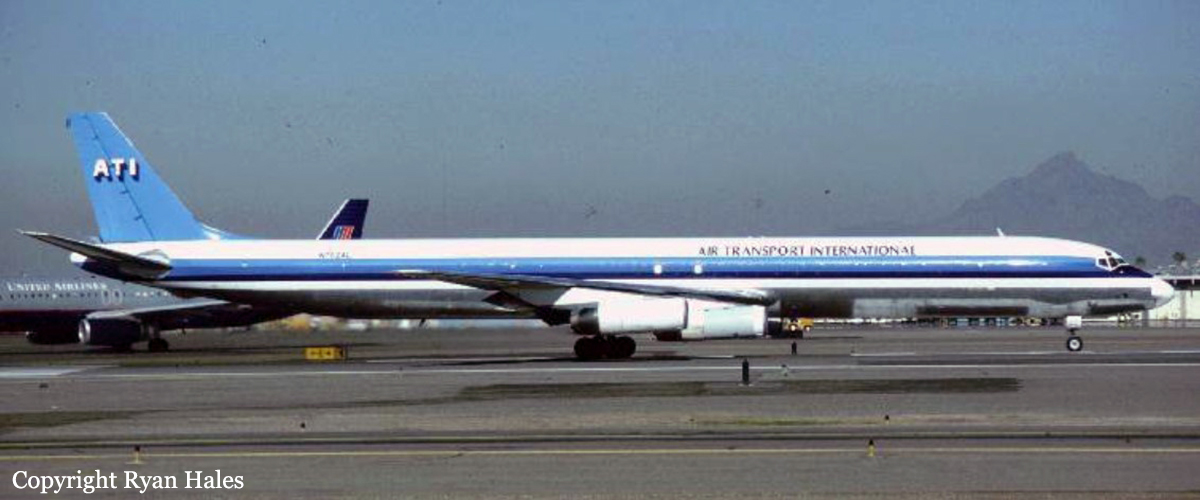
Date & Time: Feb 15, 1992 at 0326 LT
Type of aircraft:
Operator:
Registration:
N794AL
Flight Type:
Survivors:
No
Schedule:
Seattle - Toledo
MSN:
45923
YOM:
1968
Flight number:
ATI805
Crew on board:
3
Crew fatalities:
Pax on board:
1
Pax fatalities:
Other fatalities:
Total fatalities:
4
Captain / Total flying hours:
16382
Captain / Total hours on type:
2382.00
Copilot / Total flying hours:
5082
Copilot / Total hours on type:
1143
Aircraft flight hours:
70425
Aircraft flight cycles:
22980
Circumstances:
ATI Flight 805 departed from Seattle at 23:20 for a flight to Toledo. The 1st officer was flying the ILS approach to runway 07. For undetermined reasons, he failed to properly capture the ILS localizer and/or glide slope during the approach. At 03:13 the captain decided to carry out a go-around. The aircraft was vectored onto a base leg and given a heading of 100° to intercept the final approach course again. With a 35 knots crosswind (at 180°) on the approach the 1st officer had trouble capturing the localizer/glide slope. At 03:24, as the 1st officer was attempting to stabilize the approach, 3 GPWS glideslope warnings and sink rate warnings sounded. The captain took over control at 03:24:17 and performed another missed approach manoeuvre. He became spatially disoriented and inadvertently allowed an unusual attitude to develop with bank angles up to 80° and pitch angles up to 25°. When in a nose-low and left bank angle attitude, control of the airplane was transferred back to the 1st officer who began levelling the wings and raising the nose of the airplane. Impact with the ground occurred before the unusual attitude recovery was completed. All four occupants were killed.
Probable cause:
The failure of the flight crew to properly recognize or recover in a timely manner from the unusual aircraft attitude that resulted from the captain's apparent spatial disorientation, resulting from physiological factors and/or a failed attitude director.
Final Report:
Crash of a Douglas DC-8-54F in Kano

Date & Time: Feb 15, 1992
Type of aircraft:
Operator:
Registration:
9G-MKB
Flight Type:
Survivors:
Yes
Schedule:
Ostende - Kano
MSN:
45860
YOM:
1966
Location:
Country:
Region:
Crew on board:
5
Crew fatalities:
Pax on board:
0
Pax fatalities:
Other fatalities:
Total fatalities:
0
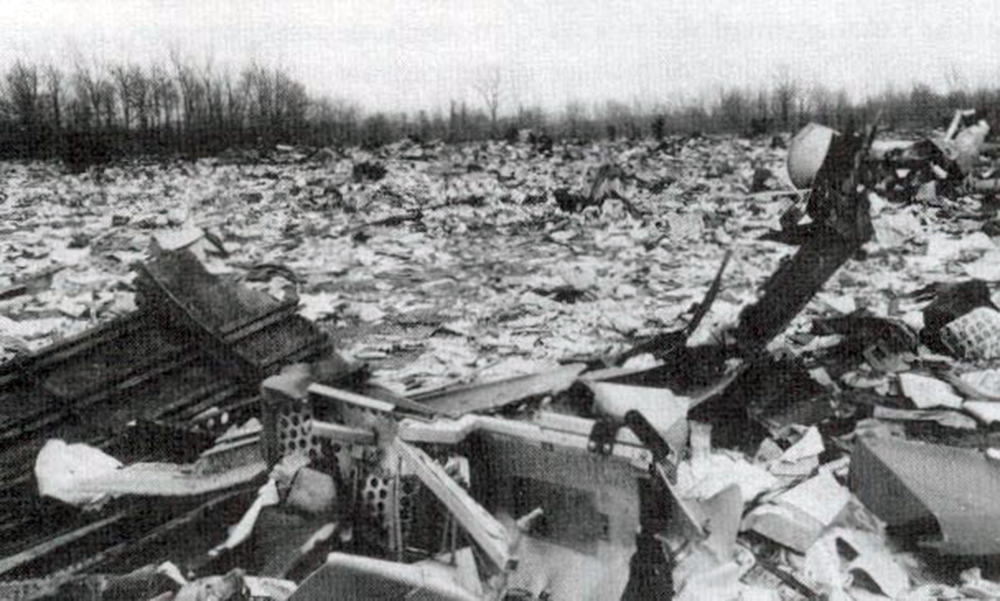
Circumstances:
On approach to Kano Airport, while in a flat attitude about 8 km from the runway threshold, the crew lowered the flaps when the aircraft lost height and struck trees. It descended into the ground, lost its undercarriage and slid for 150 metres before coming to rest, bursting into flames against trees. All five crew members escaped uninjured while the aircraft was damaged beyond repair.