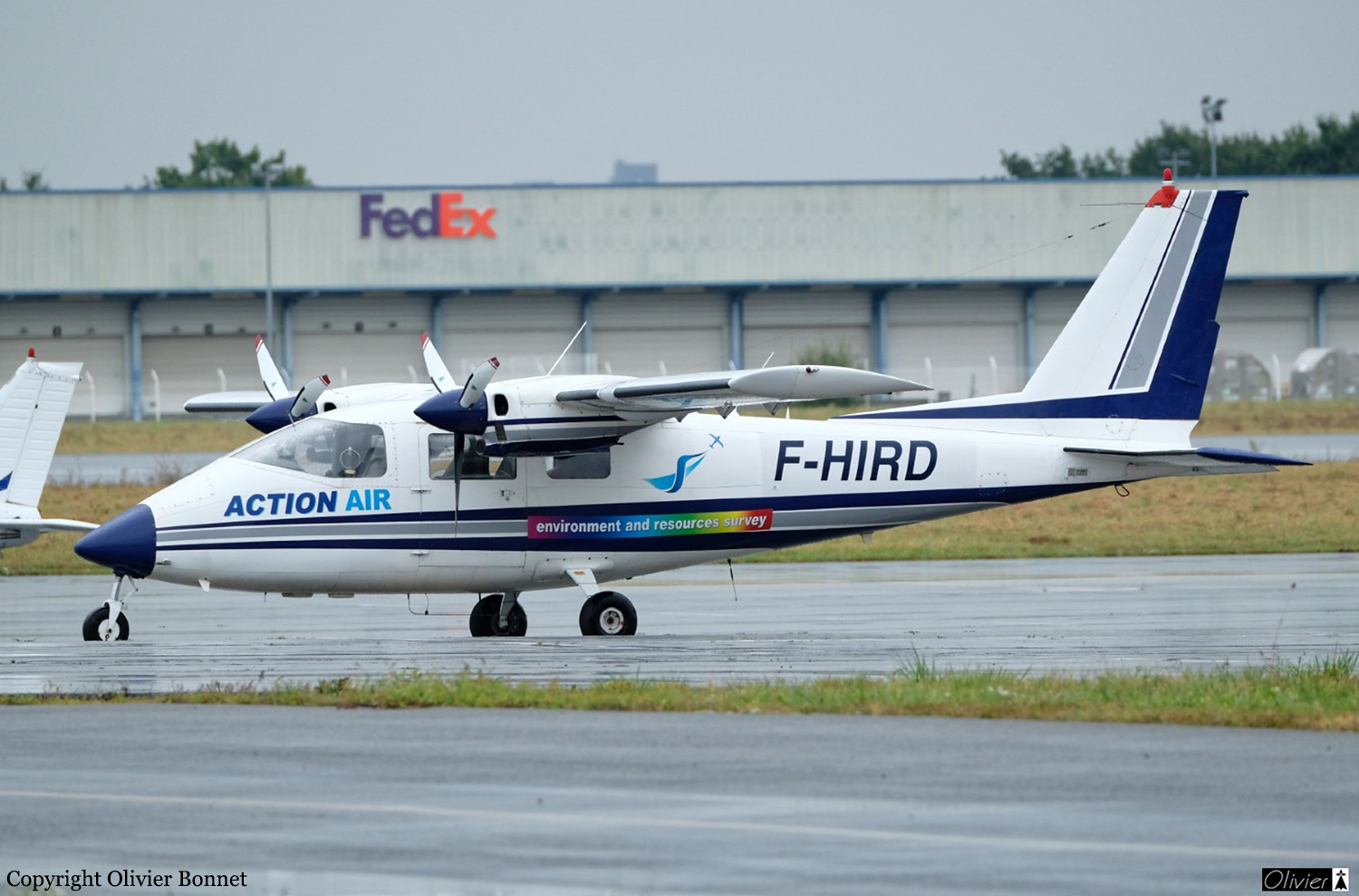
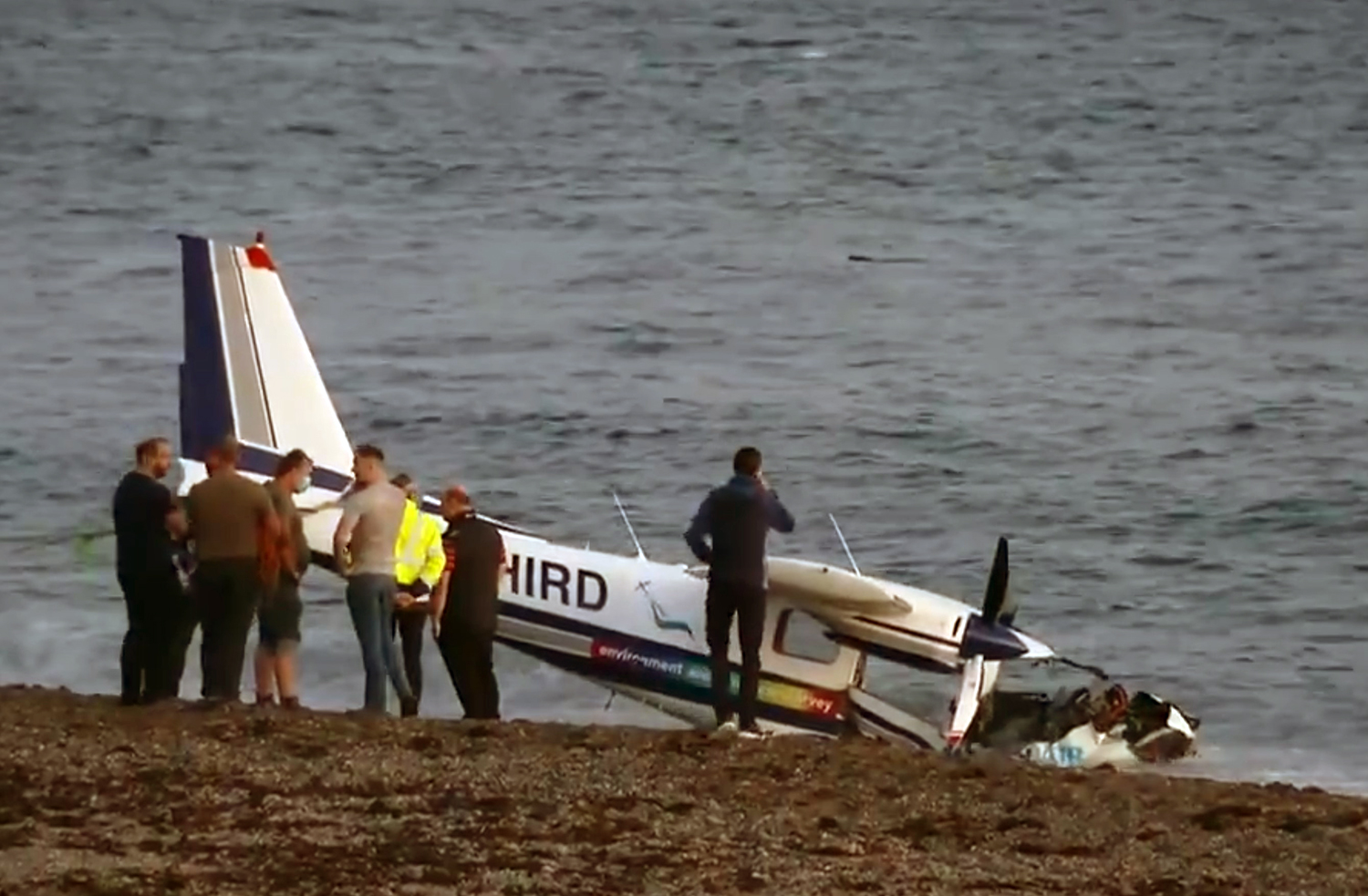
Crash of a Partenavia P.68 Victor in Carnsore Point
Date & Time:
Sep 23, 2021 at 1710 LT
Operator:

Registration:
F-HIRD
Survivors:
Yes
Schedule:
Waterford - Waterford
MSN:
14
YOM:
1975
Crew on board:
1
Crew fatalities:
Pax on board:
3
Pax fatalities:
Other fatalities:
Total fatalities:
0
Captain / Total hours on type:
325.00
Circumstances:
The twin engine aircraft, a Partenavia P.68 Victor, with one pilot and three Task Specialists on board, departed Waterford Airport (EIWF) at 11:08 hrs on 23 September 2021. The three Task Specialists were members of an environmental research team. The flight was part of a series of survey flights, the purpose of which was to record sightings of marine wildlife in the waters off the coast of Ireland. The aircraft seating layout was two rows of two seats and a benchtype seat in the rear of the aircraft. During the occurrence flight, one Task Specialist was seated in the front right seat next to the Pilot, and the two other Task Specialists were seated in the row directly behind. The rear bench seat was unoccupied. The plan for the flight was to fly over the sea along 16 pre-defined survey lines at a height of approximately 250 – 300 feet (ft) and a speed of approximately 100 knots (kt). Each line was approximately 45 km (24.3 NM) in length and the lines were spaced approximately 4 km (2.2 NM) apart. The planned 16 survey lines were completed in approximately 4 hours and 30 minutes. Following a discussion with the Task Specialists, and after assessing the remaining fuel, the Pilot determined that there was enough fuel to complete two more survey lines before returning to EIWF with his fuel reserves intact. Shortly after commencing the second of the two additional survey lines, the right engine stopped. At the time, the aircraft was reportedly travelling at a speed of approximately 105 kts and was at a height of approximately 300 ft. Recorded data shows that the aircraft then climbed to approximately 500 ft. The Pilot reported that the aircraft climbed more slowly than expected whilst operating on the left engine only. At approximately 500 ft whilst still in the climb, the left engine exhibited a significant loss of power but did not completely stop. The Task Specialists later reported that the aircraft dropped in height and turned to the left. The left engine power recovered but the power loss re-occurred. This sequence of climbing slightly, losing power, losing height, and recovering engine power when descending repeated several times. The Pilot then routed directly towards land and as the aircraft approached the shore, the left engine lost power again. The Pilot banked the aircraft to the left and carried out a forced landing on the beach during which the nose of the aircraft impacted with the loose shale surface. The aircraft sustained significant structural damage to the forward cabin area. The three Task Specialists exited the aircraft through the door on the left side. The Pilot and Task Specialists reported that when the aircraft was on the beach, the left engine ran briefly at what the Pilot said appeared to be full power. The Pilot pulled back the fuel mixture lever to shut down the engine. The Pilot exited the aircraft through the broken windscreen which had shattered during the impact. Two Coastguard helicopters attended the scene. The Pilot and the Task Specialist seated in the front right seat sustained serious injuries during the impact sequence and were airlifted to hospital. The two other Task Specialists sustained minor injuries and were taken to hospital by road ambulance.
Probable cause:
Separate interruptions to the fuel supply of each engine, while operating at or below a quarter of the aircraft’s fuel tank capacity, ultimately resulting in a forced landing.
Contributory factors:
- A lack of clarity in the aircraft Flight Manual limitations section regarding operations at less than ¼ tank fuel.
- The configuration of the fuel selector panel was potentially misleading and its operation was not intuitive.
Contributory factors:
- A lack of clarity in the aircraft Flight Manual limitations section regarding operations at less than ¼ tank fuel.
- The configuration of the fuel selector panel was potentially misleading and its operation was not intuitive.
Final Report: