Zone
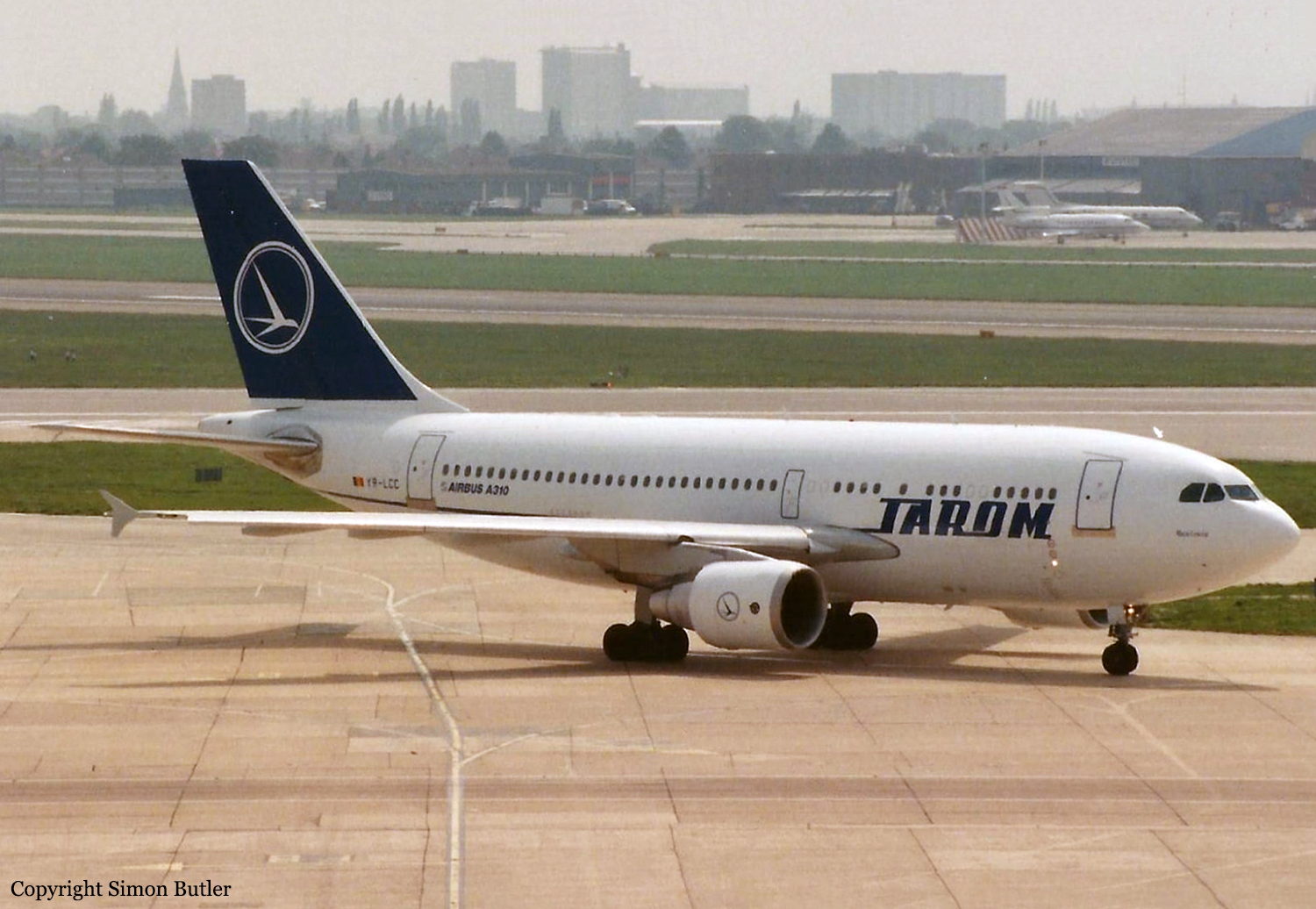
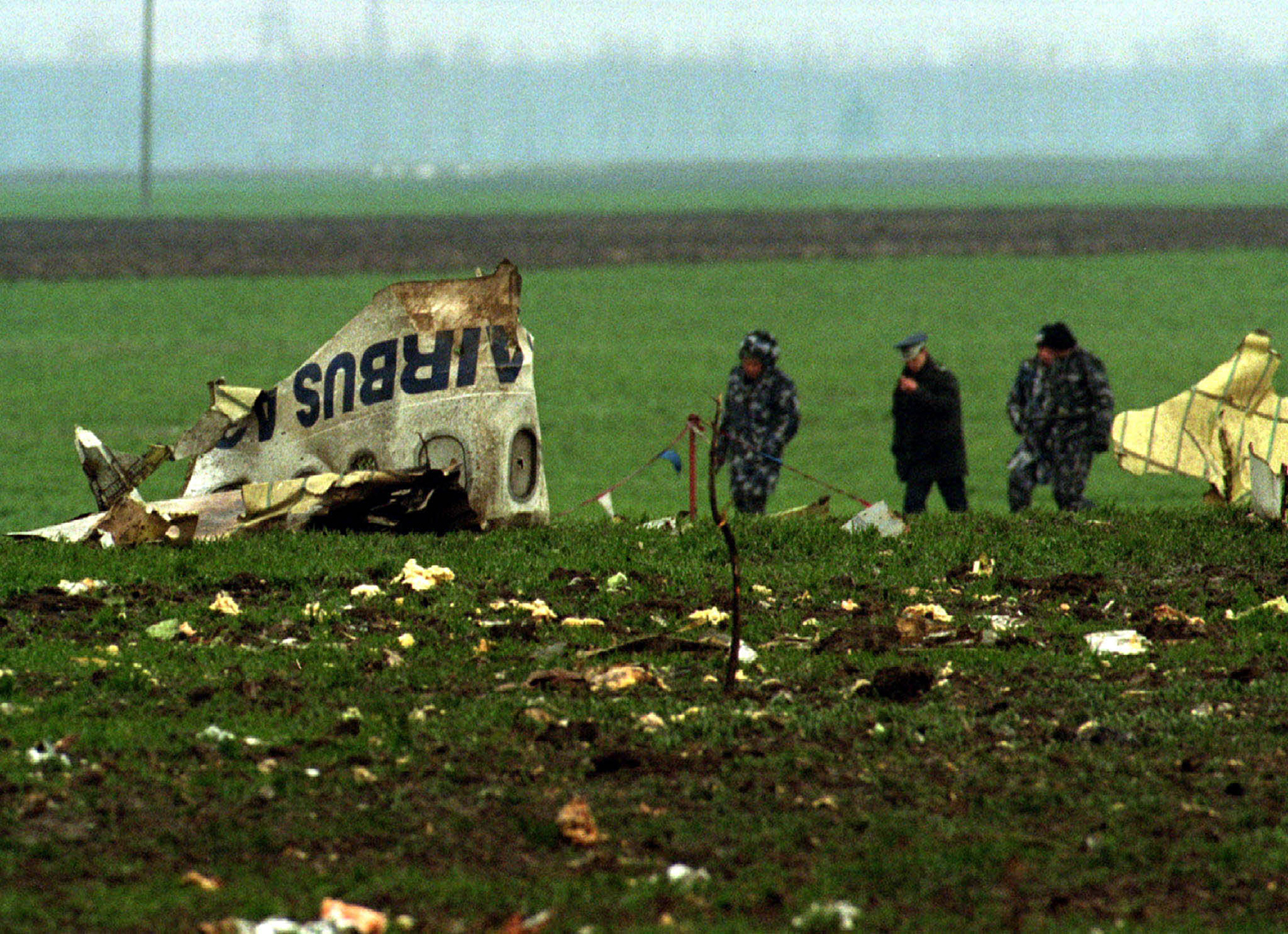
Crash of an Airbus A310-324 in Bucharest: 60 killed
Date & Time:
Mar 31, 1995 at 0908 LT
Operator:

Registration:
YR-LCC
Survivors:
No
Schedule:
Bangkok - Abu Dhabi - Bucharest - Brussels
MSN:
450
YOM:
1987
Flight number:
RO371
Crew on board:
11
Crew fatalities:
Pax on board:
49
Pax fatalities:
Other fatalities:
Total fatalities:
60
Captain / Total hours on type:
1735.00
Copilot / Total hours on type:
650
Aircraft flight hours:
31092
Aircraft flight cycles:
6216
Circumstances:
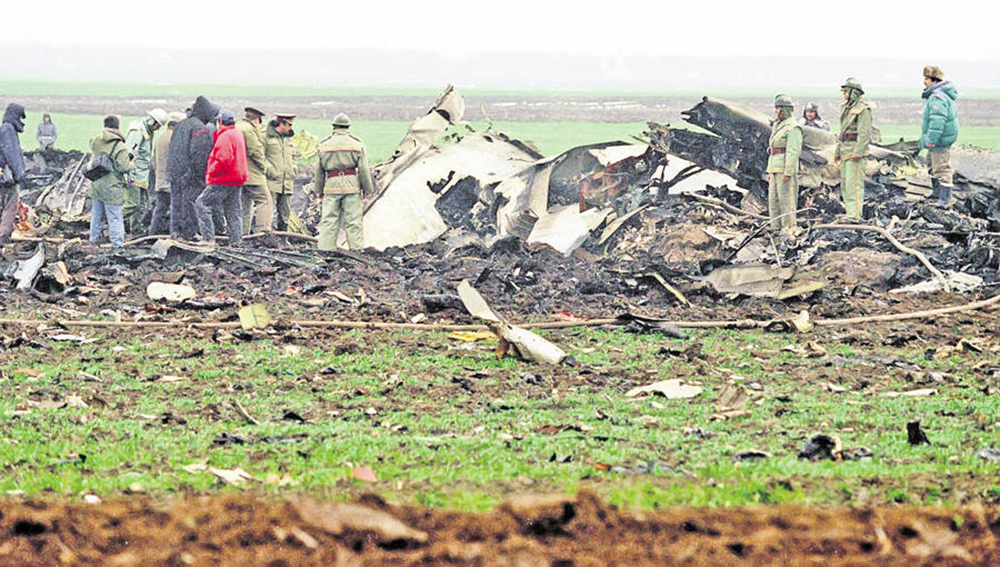
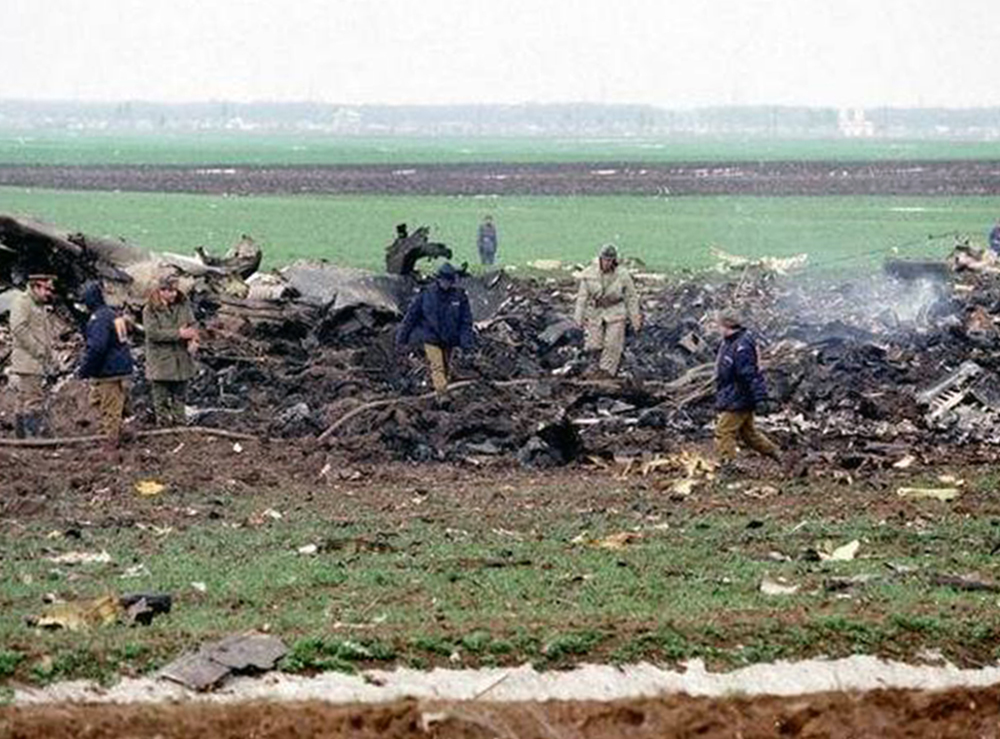
Tarom flight 371 was a scheduled passenger service from Bucharest Otopeni Airport (OTP) in Romania to Brussel Airport (BRU), Belgium. On board were 49 passengers and eleven crew members. The first officer was pilot flying, the captain was pilot monitoring. Following de-icing, the Airbus A310 taxied to runway 08R for departure. The flight was cleared via the Strejnic 'STJ' VOR/DME beacon and an initial climb to flight level 260. Takeoff was initiated at 09:04 hours local time. When airborne, the captain announced positive climb and co-pilot requested to retract the landing gear. At 09:07:20 the captain called the Otopeni Approach controller and received a clearance to turn left and proceed direct to STJ. The co-pilot asked the captain to select direct STJ on FMS. The captain confirmed a direct STJ selection and requested the co-pilot to move the control wheel slightly. At an altitude of 1700 feet and speed a 187 knots, with flaps 15/slats 15 and pitch angle of 17.6 degrees, the aircraft was turning left, with a bank angle of 12 degrees, flying towards STJ. At 09:07:36, when the aircraft crossed 2000 feet at 188 knots, an engine thrust asymmetry started developing with continuous decrease of the left engine thrust, approximately 1 degree TRA (throttle resolver angle)/second. At 09:07:53, when the aircraft was crossing 3300 feet altitude at 195 kts turning with a decreasing bank angle of 20 degrees, the first officer called "250 in sight" and asked the captain to retract the flaps. This was carried out. At that moment, the engine thrust asymmetry reached 14.5 TRA degrees and 0.19 for EPRs. The first officer then requested slats retraction, but this action which was not carried out by the captain. At this moment the aircraft was passing through 013 degrees magnetic heading, at 3800 feet altitude and a decreasing speed of 185 kts. The aircraft pitch angle was 16,5 degrees, decreasing, and the left bank angle was 18 degrees, also decreasing. At that time the thrust asymmetry reached was 28 TRA degrees and 0.27 for EPRs. At 09:08:02, the first officer asked the captain: "Are you all right?" The aircraft was passing through 330 degrees magnetic heading, 4200 ft altitude, a decreasing speed of 181 kts, and an increasing 17 degrees left bank angle. At 09:08:08, a noise like an uttering of pain or a metallic noise was heard. The aircraft was crossing 4460 ft altitude, 179 kts speed and an increasing bank angle of 22 degrees. At that time the engines thrust asymmetry reached 0.36 for EPRs. The bank angle continued to increase to 28 degrees and the engine thrust asymmetry reached 0.41 for EPRs. At 09:08:15, the first officer, with a stressed and agitated voice, requested engagement of autopilot no. 1. The aircraft was crossing 4620-ft altitude, continuing its turn at an increasing bank angle of 43 degrees and a steadily decreasing pitch angle of 3.5 degrees. One of the pilots attempted to engage autopilot no. 1 The aircraft started a descent with 45 degrees bank angle and the engine thrust asymmetry had reached the maximum value of 0.42 for EPRs, followed by a continuous thrust reduction of engine n°2. One second later, there was recorded autopilot disengagement followed by the aural warning a level 3 "cavalry charge" lasting several moments. From that moment on, the aircraft started diving, the speed increased and the aircraft performed a complete rotation around its roll axis. At 09:08.28, first officer cried out "THAT ONE HAS FAILED!" without any other comments. The aircraft was descending through 3600 ft at 258 kts speed and an increasing nose down pitch angle at 61.5 degrees. The aircraft continued until it impacted the ground at a nose down attitude of approximately 50 degrees pitch angle with both engines at idle power. The airplane was destroyed and all 60 occupants were sustained fatal injuries.
Probable cause:
The following factors were reported:
- Thrust asymmetry,
- Possible incapacitation of the captain,
- Insufficient corrective action from the copilot in order to cover the consequences of the first factors.
The French Ministry of Transport commented on the Romanian investigation report, stating that the pilot flying's actions that led to the loss of control could have been caused by the fact that the artificial horizon between Eastern and Western built aircraft is inverted in roll and that the first officer spent the majority of his career on Eastern-built aircraft.
- Thrust asymmetry,
- Possible incapacitation of the captain,
- Insufficient corrective action from the copilot in order to cover the consequences of the first factors.
The French Ministry of Transport commented on the Romanian investigation report, stating that the pilot flying's actions that led to the loss of control could have been caused by the fact that the artificial horizon between Eastern and Western built aircraft is inverted in roll and that the first officer spent the majority of his career on Eastern-built aircraft.
Final Report:

Crash of a Douglas DC-8-62F in New York
Date & Time:
Mar 12, 1991 at 0906 LT
Operator:

Registration:
N730PL
Survivors:
Yes
Schedule:
New York - Brussels
MSN:
46161
YOM:
1971
Flight number:
8C102
Crew on board:
3
Crew fatalities:
Pax on board:
2
Pax fatalities:
Other fatalities:
Total fatalities:
0
Captain / Total hours on type:
3000.00
Aircraft flight hours:
50145
Circumstances:
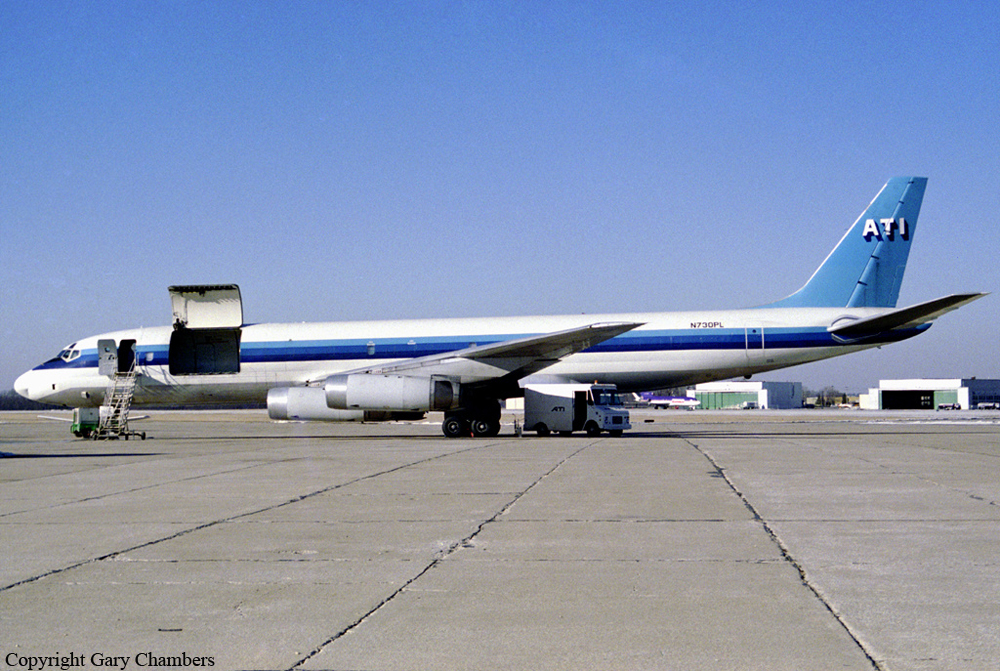
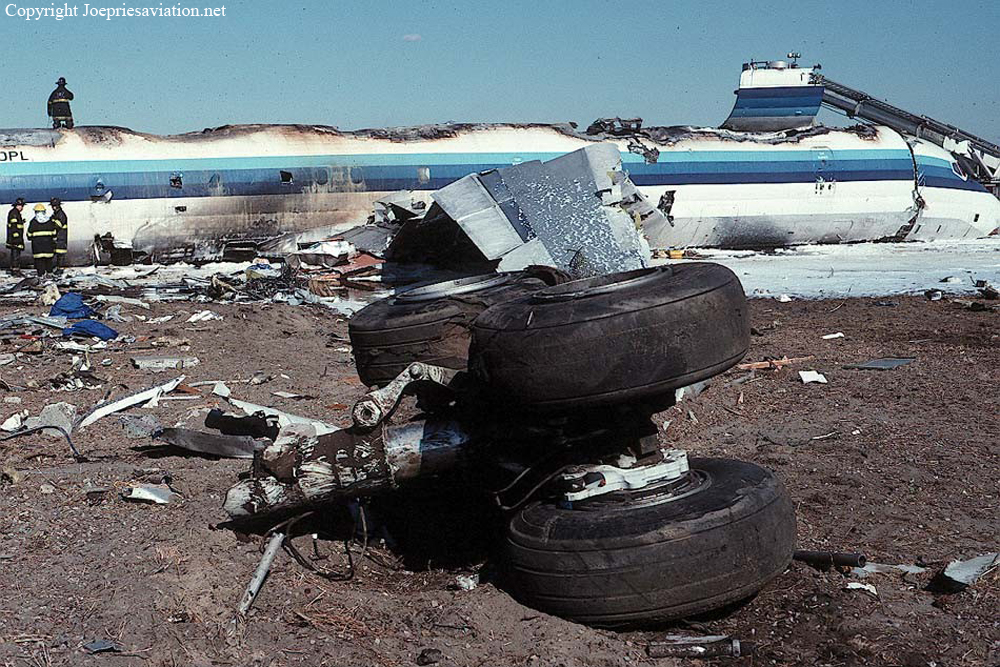
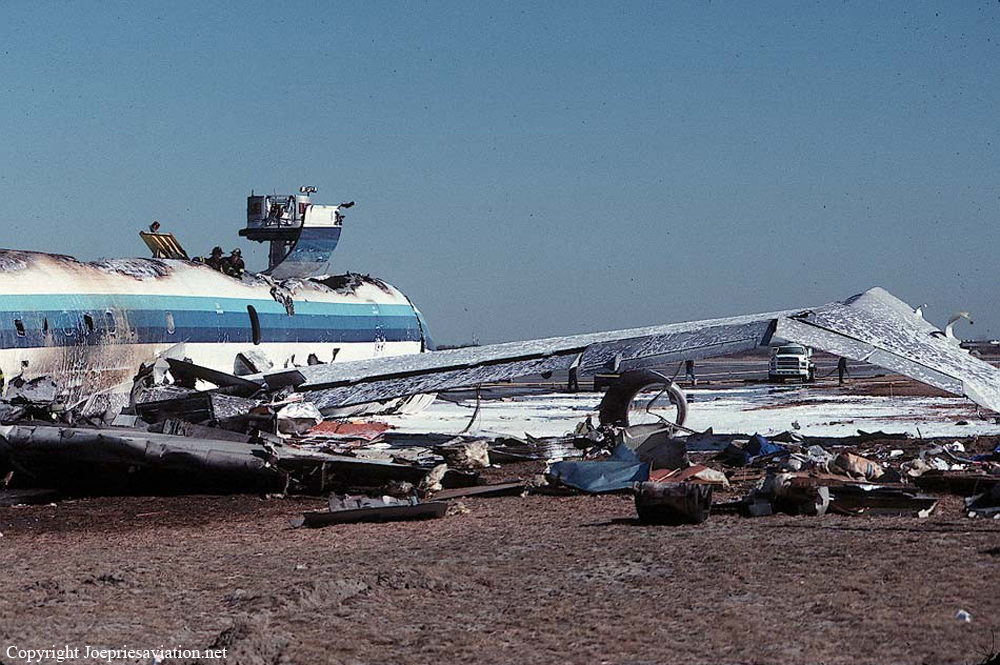
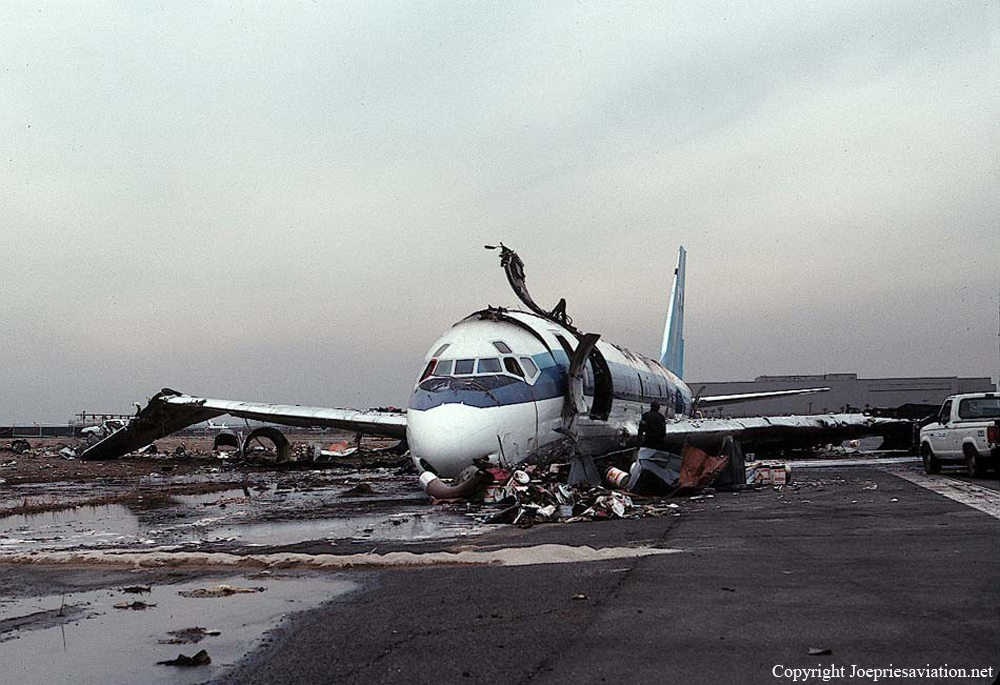
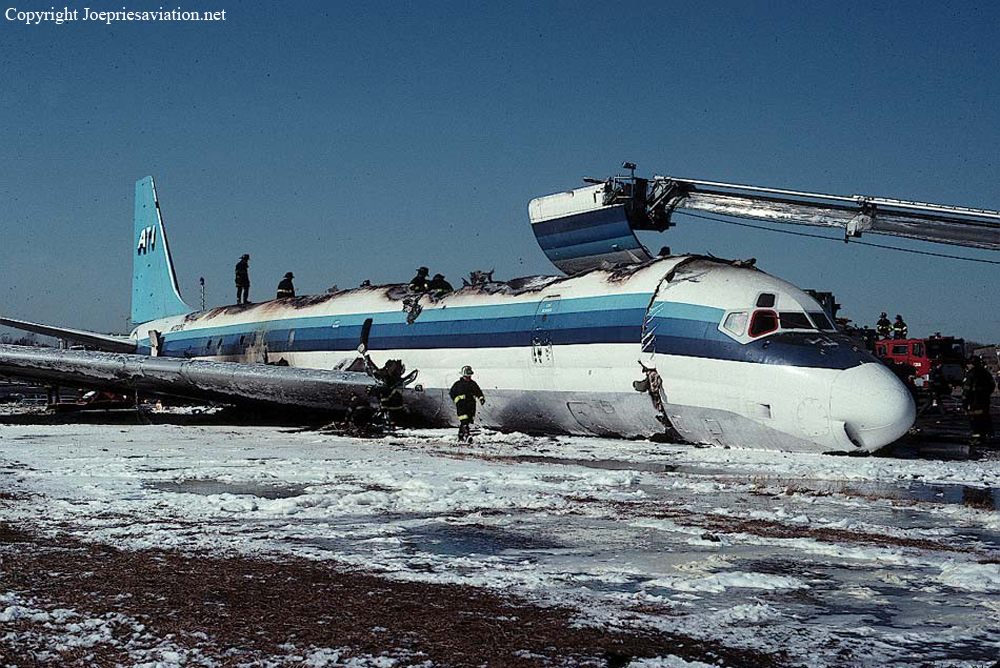
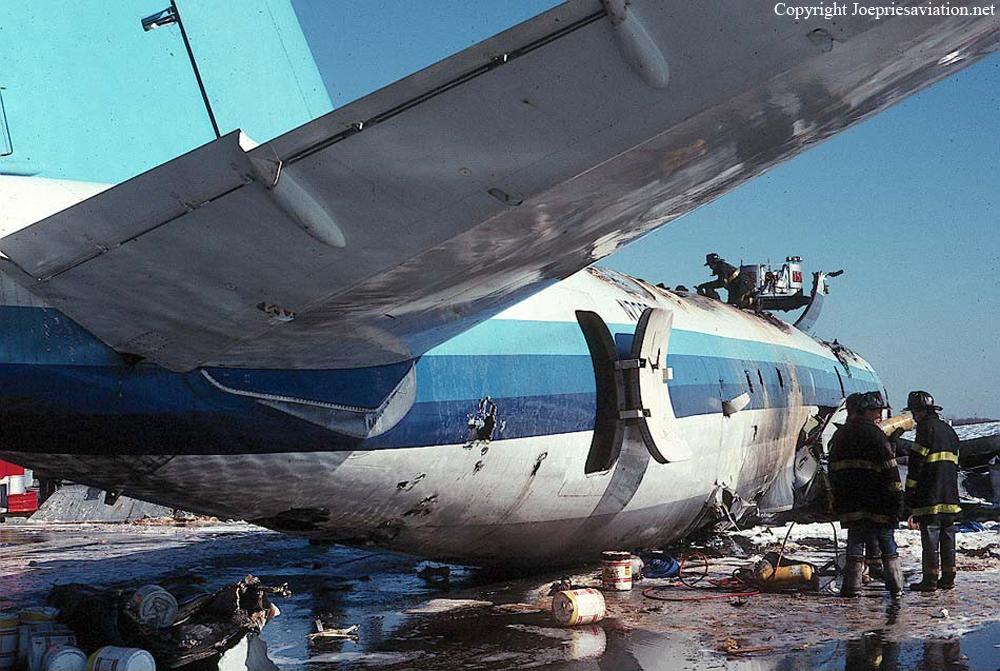
Before flight, the flight engineer (f/e) had calculated 'v' speeds and horizontal stabilizer trim setting for takeoff, but neither the captain nor the 1st officer (f/o) had verified them. During rotation for takeoff, the captain noted that the forced needed to pull the yoke aft was greater than normal and that the aircraft would not fly (at that speed). Subsequently, he aborted the attempted takeoff. Realizing the aircraft would not stop on the remaining runway, he elected to steer it to the right to avoid hitting traffic on a highway near the departure end. The aircraft struck ILS equipment; the landing gear collapsed and all 4 engines tore away. Subsequently, the aircraft was destroyed by fire. Investigations revealed the f/e had improperly computed the takeoff data. He had calculated the 'v' speeds and horizontal stabilizer trim setting for 242,000 lbs; however, the actual takeoff wt was 342,000 lbs. Rotation speed (Vr) for this weight was 28 knots above the speed that was used. Investigations revealed shortcomings in the operator's flightcrew training program and questionable scheduling of qualified (but marginally experienced) crew members for the accident flight.
Probable cause:
Improper preflight planning/preparation, in that the flight engineer miscalculated (misjudged) the aircraft's gross weight by 100,000 lbs and provided the captain with improper takeoff speeds; and improper supervision by the captain. Factors related to the accident were: improper trim setting provided to the captain by the flight engineer, inadequate monitoring of the performance data by the first officer, and the company management's inadequate surveillance of the operation.
Final Report:
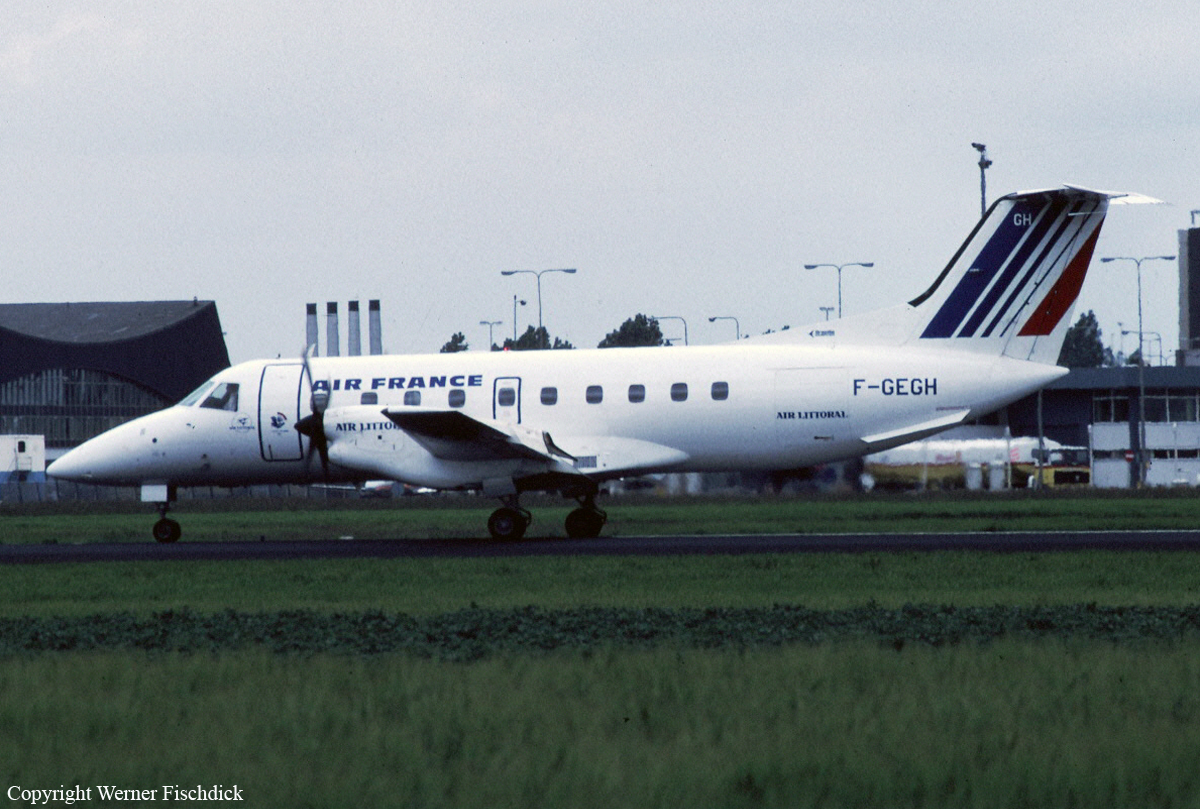
Crash of an Embraer EMB-120RT Brasília in Bordeaux: 16 killed
Date & Time:
Dec 21, 1987 at 1510 LT
Operator:

Registration:
F-GEGH
Survivors:
No
Schedule:
Brussels - Bordeaux
MSN:
120-033
YOM:
1986
Flight number:
AF1919
Crew on board:
3
Crew fatalities:
Pax on board:
13
Pax fatalities:
Other fatalities:
Total fatalities:
16
Captain / Total hours on type:
101.00
Copilot / Total hours on type:
215
Aircraft flight hours:
2505
Circumstances:
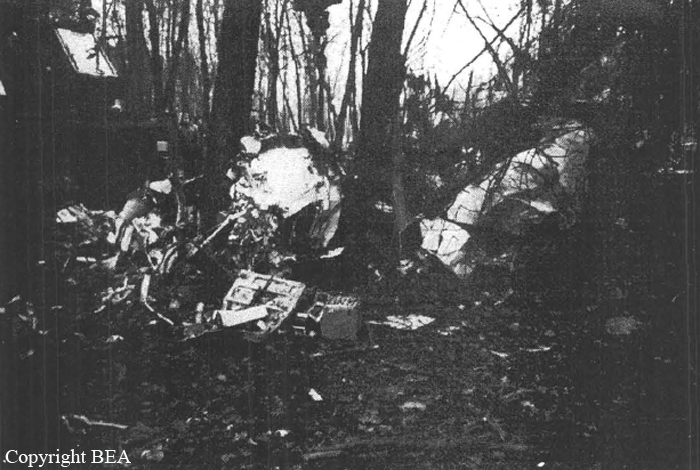
Following an uneventful flight from Brussels, the crew contacted Bordeaux Approach at 15:01 and was vectored for an ILS approach to runway 23. Visibility was poor with low clouds at 100 feet and a runway visual range (RVR) of between 650 and 350 metres. Flight 1919 crossed the KERAG beacon, the initial approach fix (IAF) at an altitude of FL144, at 15:04:40. Cloud base was still around 100 feet so the crew requested to enter a holding pattern to the south of the airport. The weather conditions slightly improved during the next few minutes and Bordeaux Approach reported a cloud base at 160 feet. Flight 1919 had not reached the holding pattern yet and the pilot decided to attempt to rejoin the ILS. At 15:06:38 the flight was cleared direct to the BD beacon and to descend down to 2000 feet. At the BD beacon, the flight was cleared for final approach and instructed to contact Bordeaux Tower. The airplane had overshot the centreline and was slightly right on the glidepath. Bordeaux Tower then instructed the flight to report over the Outer Marker, which was acknowledged by the captain. After crossing the Outer Marker, the airplane was still not properly established on the ILS. The airplane descended below the glideslope with the crew hurriedly deploying flaps and landing gear. The captain did not contact Bordeaux Tower as requested. Instead he took over control of the airplane, attempting to continue the approach. Both crew members had very little time to adapt to their new roles as the airplane was descending below the glide slope. The descent continued until the aircraft struck tree tops and crashed in the Eysines forrest, about 5 km short of runway. The aircraft was totally destroyed and all 16 occupants were killed.
Probable cause:
The accident was the direct result of poorly managed aircraft trajectory.
- The lack of vigilance with respect to altitude, by one pilot and then the other, when they were in a pilot-flying situation (PF, according to the Air Littoral Operations Manual) both when the aircraft descended out of the ILS beam through 2000 feet altitude and when it descended below 220 feet, the decision height.
- Inadequate coordination of tasks between the two pilots who formed the flight crew, neither of which had performed important tasks related to this function, such as monitoring and reporting ILS or altitude deviations, while in a nonpilot-flying situation (PNF, according to the same manual).
- The lack of vigilance with respect to altitude, by one pilot and then the other, when they were in a pilot-flying situation (PF, according to the Air Littoral Operations Manual) both when the aircraft descended out of the ILS beam through 2000 feet altitude and when it descended below 220 feet, the decision height.
- Inadequate coordination of tasks between the two pilots who formed the flight crew, neither of which had performed important tasks related to this function, such as monitoring and reporting ILS or altitude deviations, while in a nonpilot-flying situation (PNF, according to the same manual).
Final Report: