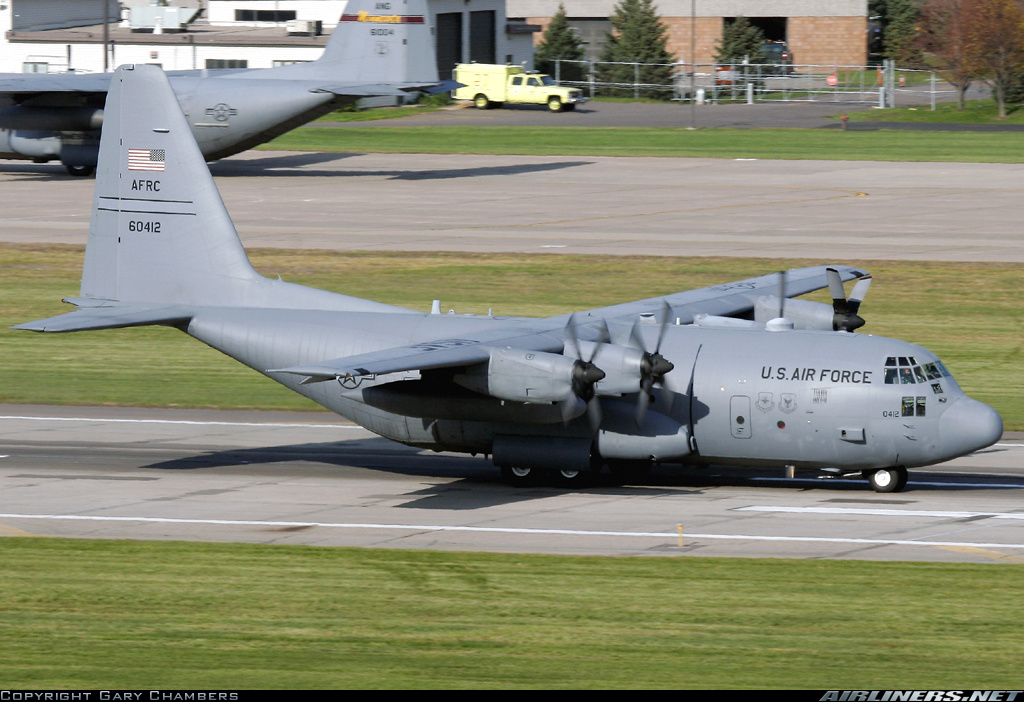
Crash of a Lockheed C-130H Hercules in Baghdad

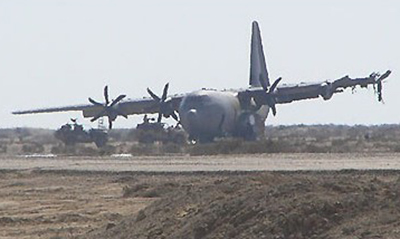
Date & Time: Jun 27, 2008 at 1235 LT
Type of aircraft:
Operator:
Registration:
86-0412
Flight Phase:
Flight Type:
Survivors:
Yes
MSN:
5098
YOM:
1987
Country:
Region:
Crew on board:
4
Crew fatalities:
Pax on board:
34
Pax fatalities:
Other fatalities:
Total fatalities:
0
Circumstances:
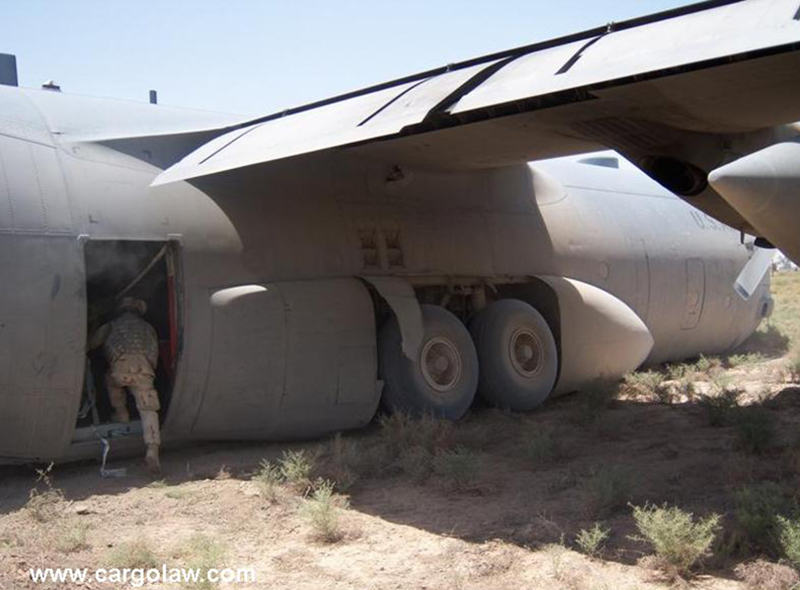
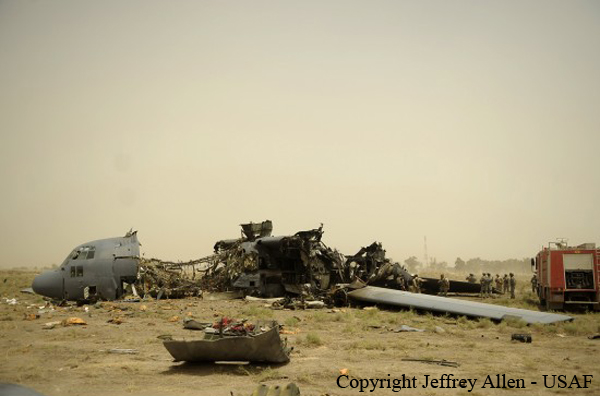
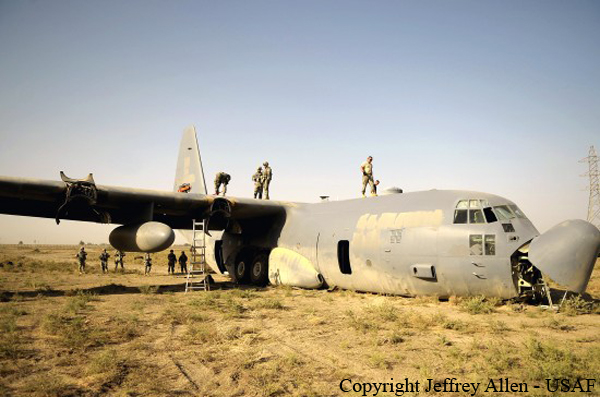
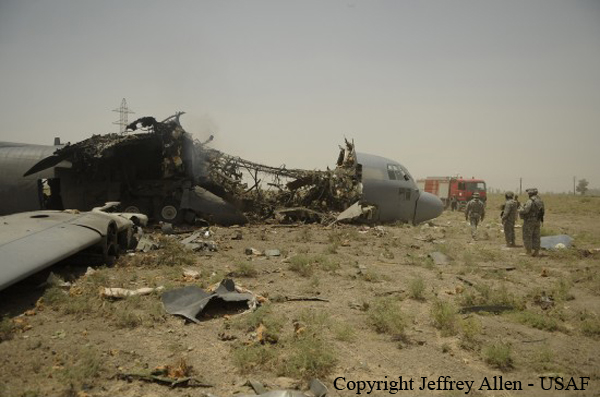
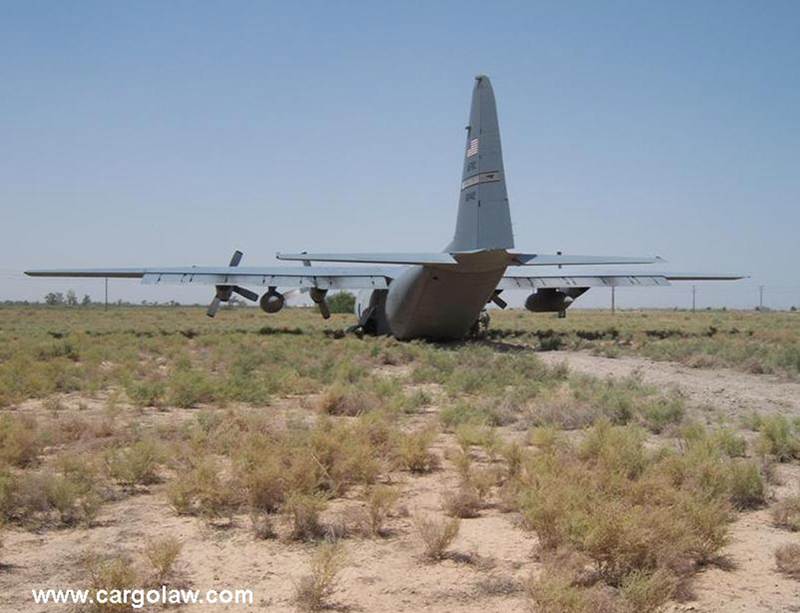
The four engine aircraft departed Baghdad Airport on a support mission, carrying 32 passengers and a crew of six. Sixty seconds after takeoff, while climbing to a height of 313 feet and at a speed of 163 knots, the airplane's defensive system activated. The pilot reacted in accordance with applicable directives and after reacting to the defensive alert, the crew realized that all three engines n°1, 3 and 4 lost 60% of power. The crew attempted an emergency landing in an open field located 7,5 km north of the airport. The aircraft was damaged beyond repair and all 38 occupants escaped uninjured. U.S. Air Force Maintenance and Explosive Ordnance Disposal personnel from the 447th Air Expeditionary Group were called in. They placed explosive charges on the plane and blew up the Hercules on July 7.
Probable cause:
The Board President could not find clear and convincing evidence to determine the exact cause of the engine power loss. He did find evidence to conclude that several factors combined to significantly contribute to the Mishap Airplane (MA) landing partially gear down. Specifically, a defensive system alert, the aircraft's low altitude and airspeed at the time of the malfunction, and the decision to respond to the alert at low altitude and airspeed combined to result in the MA landing partially gear down. All MA systems and performance were normal prior to the defensive system alert. An undetermined malfunction occurred during the defensive reaction that caused three of the MA's four engines to stabilize at an RPM (60%) which was not sufficient to maintain flight and the low altitude and airspeed at the time of the malfunction limited the time available for situation analysis and recovery. The Mishap Crew (MC) had never been exposed to a loss of three or four engines on takeoff in the C-130H2 simulator which resulted in an emergency situation the MC had not seen before at a low altitude and airspeed. Checklist actions taken by the MC did not recover the engines and the Mishap Pilot (MP) appropriately performed a limited power, controlled descent, and forced landing resulting in only minor injuries.
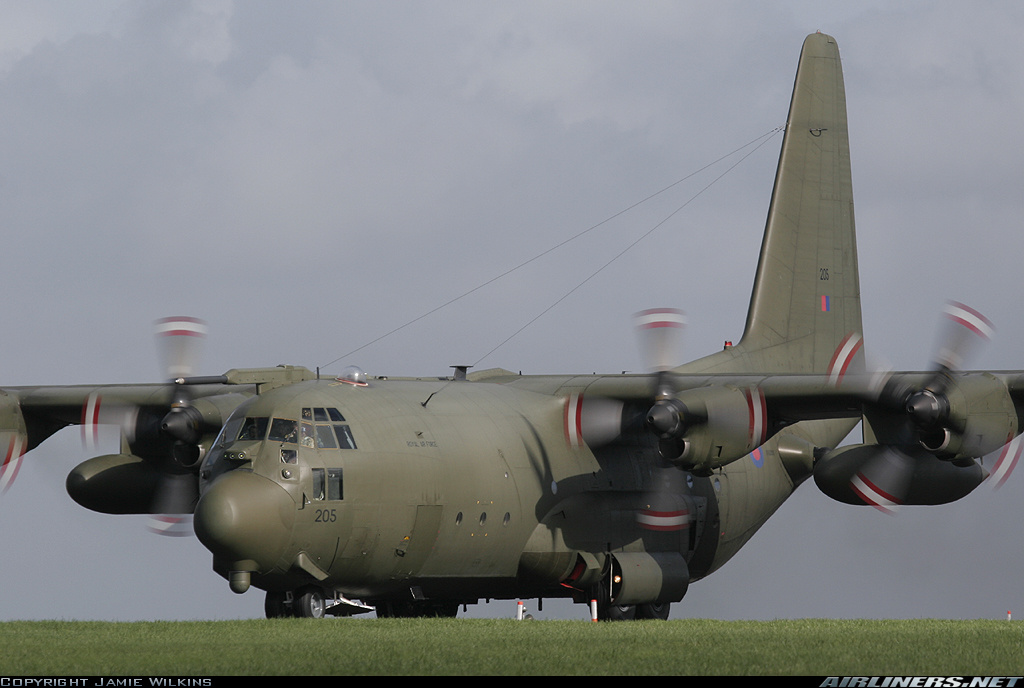
Crash of a Lockheed C-130K Hercules in Afghanistan

Date & Time: Aug 29, 2007
Type of aircraft:
Operator:
Registration:
XV205
Flight Type:
Survivors:
Yes
MSN:
4230
YOM:
1967
Country:
Region:
Crew on board:
0
Crew fatalities:
Pax on board:
0
Pax fatalities:
Other fatalities:
Total fatalities:
0
Circumstances:
The airplane landed hard on a rough airstrip located in the Helmand Province in Afghanistan. The aircraft was damaged beyond repair but all occupants escaped uninjured. Due to Taliban presence in the vicinity of the accident area, the airplane was deliberately destroyed by fire.

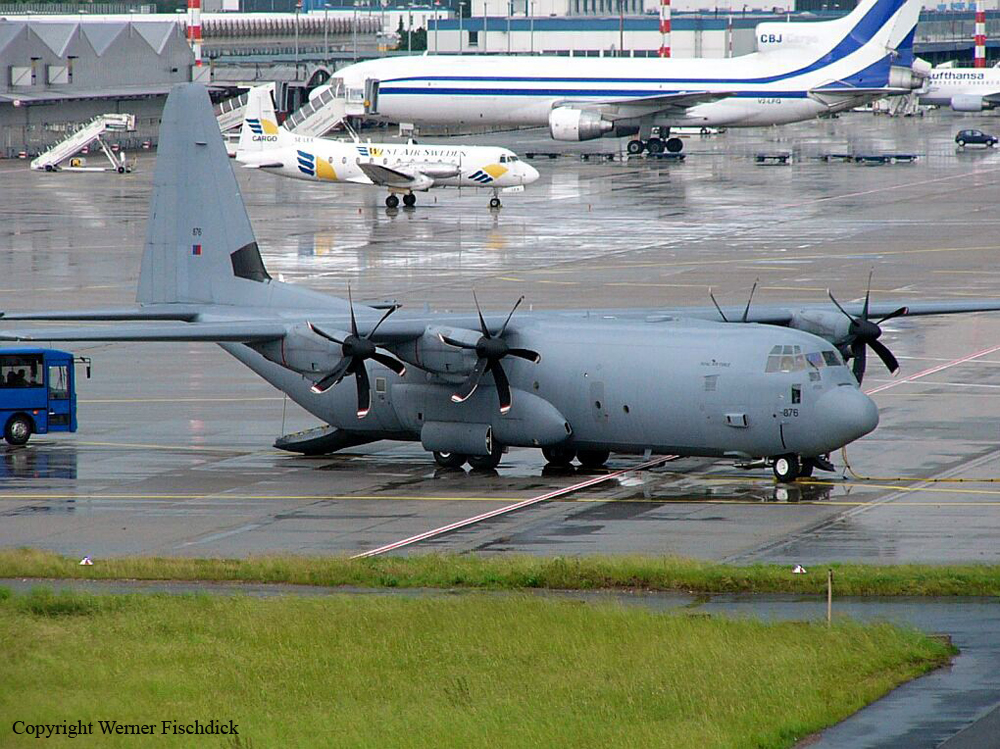
Crash of a Lockheed C-130J-30 Hercules in Amarah

Date & Time: Feb 12, 2007 at 2010 LT
Type of aircraft:
Operator:
Registration:
ZH876
Flight Type:
Survivors:
Yes
MSN:
5460
YOM:
1999
Country:
Region:
Crew on board:
6
Crew fatalities:
Pax on board:
58
Pax fatalities:
Other fatalities:
Total fatalities:
0
Circumstances:
The crew of ZH876 were tasked to fly a routine roulement of troops to a Tactical Landing Zone (TLZ) in Maysān province, Iraq. Weather at the TLZ was good, with a visibility of 25 km, no significant cloud and a light surface wind. The flight to the TLZ was routine and at approx 17:00 UTC the Hercules began to make its approach to the TLZ. Comms had already been established between ZH876 and the Tactical Air Traffic Controller (Tac ATC) at the TLZ, and the aircraft was subsequently cleared to land. An uneventful approach followed flown by the copilot. At 17:10:15 UTC, as the aircraft was about to touchdown at the TLZ, the crew experienced a load bang and a bright flash. The flash temporarily blinded the flight-deck crew. Virtually simultaneously, the aircraft touched down. The first flash was followed, a second later, by another flash and louder bang. The aircraft slewed off the left-hand side of the runway. The captain took over control of the aircraft. On regaining vision, the captain tried to steer the aircraft back onto the runway. However, the crew became aware of a fire on the port side, which was confirmed as a wing fire. The captain brought the aircraft to an immediate halt. The aircraft came to rest 50 m from the runway edge, some 700 m after touchdown. The aircraft sustained substantial damage and it was decided to blow up the plane because the damage was too difficult to repair and there was also a potential risk that anti-Iraqi forces might obtain information on specialist equipment.
Probable cause:
The evidence recovered from the incident site revealed that two IED [improvised explosive device] arrays had exploded in the near vicinity of ZH876's touchdown point at the TLZ. The Board quickly ruled out aircraft systems failure and other possible causes. The Board concluded that this deliberate enemy action was the sole cause of the damage sustained to ZH876 in this incident. The Board further concluded that there was a lack of understanding, by the Force Protection personnel, of TLZ sweep procedures and they had not received the appropriate training. This meant that the sweep procedures applied at the TLZ were inadequate to discover the IED arrays.

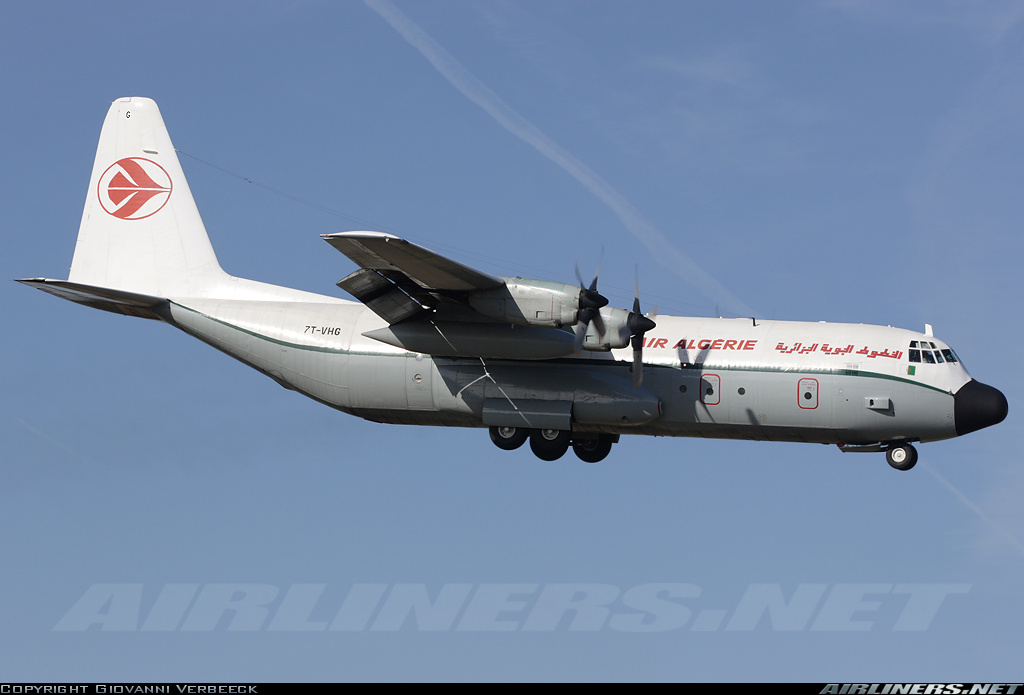
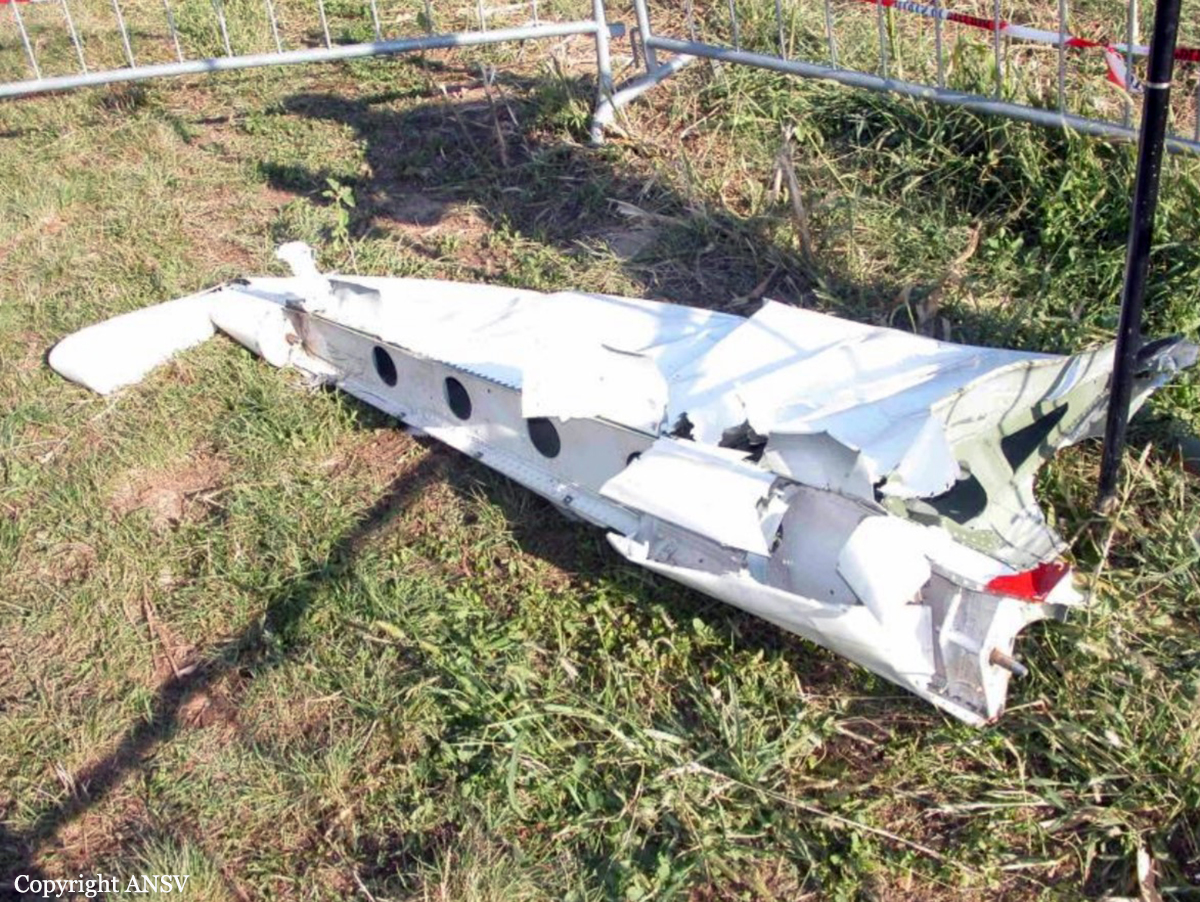
Crash of a Lockheed L-382G-51C Hercules in Piacenza: 3 killed

Date & Time: Aug 13, 2006 at 2015 LT
Type of aircraft:
Operator:
Registration:
7T-VHG
Flight Phase:
Flight Type:
Survivors:
No
Schedule:
Algiers - Frankfurt
MSN:
4880
YOM:
1981
Flight number:
AH2208
Country:
Region:
Crew on board:
3
Crew fatalities:
Pax on board:
0
Pax fatalities:
Other fatalities:
Total fatalities:
3
Captain / Total flying hours:
8200
Copilot / Total flying hours:
22800
Aircraft flight hours:
31889
Aircraft flight cycles:
13173
Circumstances:
The four engine aircraft departed Algiers-Houari Boumédiène Airport at 1705LT on a cargo flight to Frankfurt with a crew of three on board. While cruising at an altitude of 25,000 feet over north Italy, the copilot informed ATC about the failure of the automatic pilot system. Less than a minute later, the aircraft entered an uncontrolled descent during which the overspeed alarm sounded in the cockpit. In a nose down angle of 45-50° and at a speed of 850/900 km/h, the aircraft crashed in an open field located southwest of Piacenza. The aircraft totally disintegrated on impact and all three crew members were killed. A large crater was found at the point of impact and debris were found till 800 metres around.
Probable cause:
The very high state of fragmentation of the wreck and the substantial absence/utilisation of FDR data made the safety investigation very difficult and therefore could not acquire some indisputable certainties on certain aspects. The indications resulting from the examination of the acquired evidence and from the many technical analyses carried out lead to believe that the accident occurred because of the loss sudden control of the aircraft, induced, reasonably speaking, by a technical problem in the flight control system, which the pilots were unable to counter/manage and which the safety investigation could not detect with absolute certainty.
Final Report: