Crash of an ATR42-300 in Mérida: 46 killed

Date & Time: Feb 21, 2008 at 1700 LT
Type of aircraft:
Operator:
Registration:
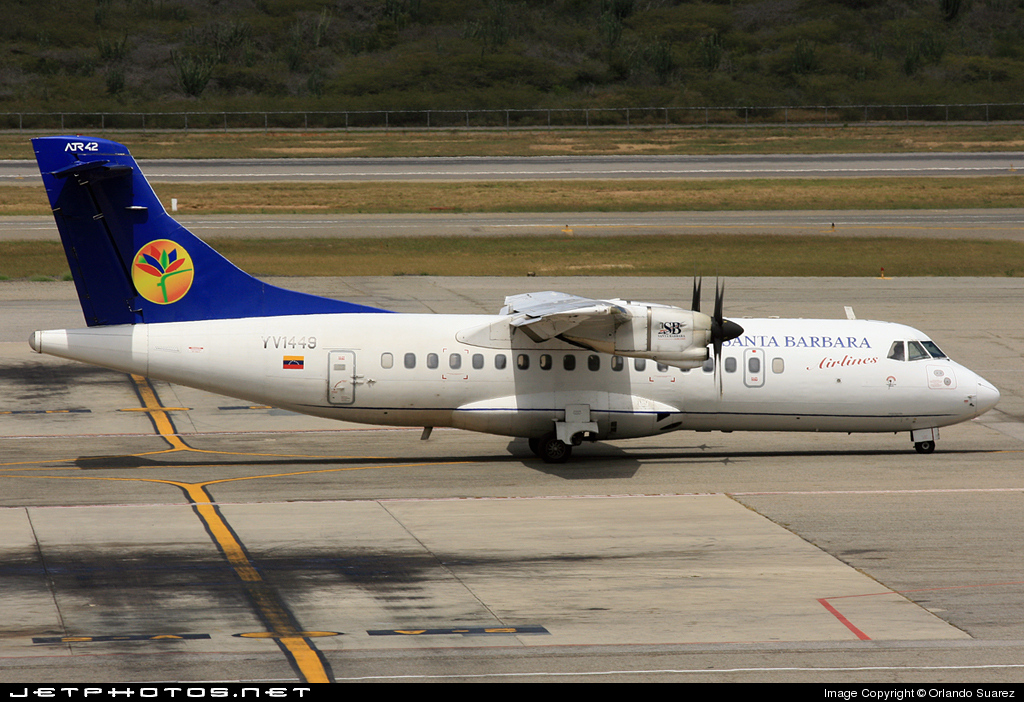
YV1449
Flight Phase:
Survivors:
No
Site:
Schedule:
Mérida – Caracas
MSN:
28
YOM:
1986
Flight number:
BBR518
Location:
Country:
Crew on board:
3
Crew fatalities:
Pax on board:
43
Pax fatalities:
Other fatalities:
Total fatalities:
46
Circumstances:
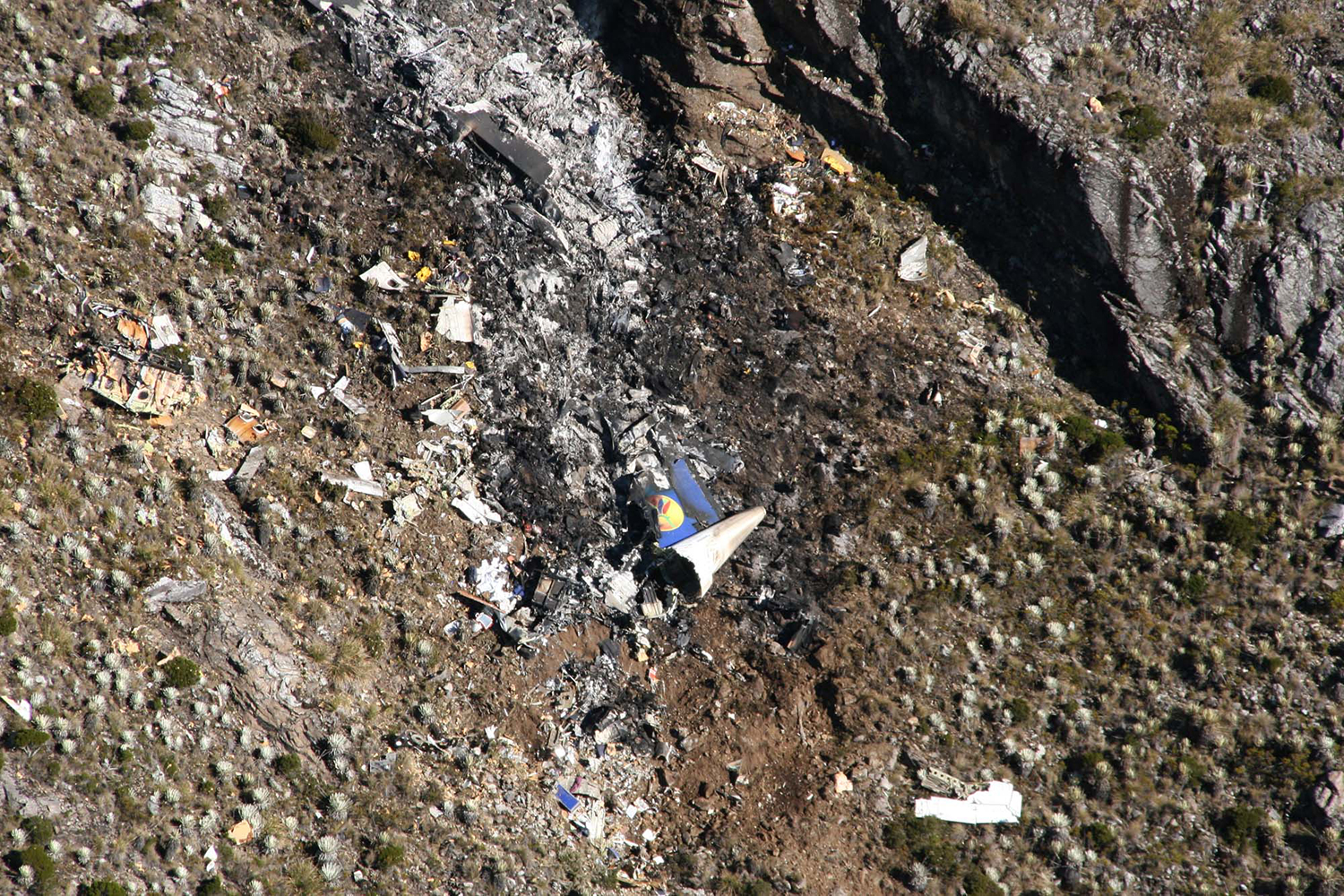
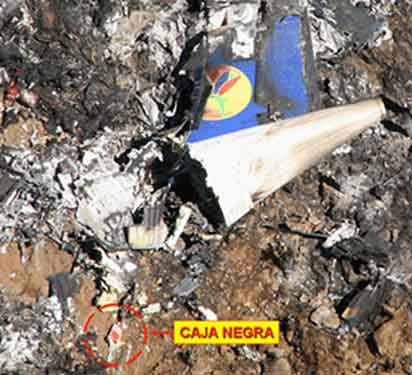
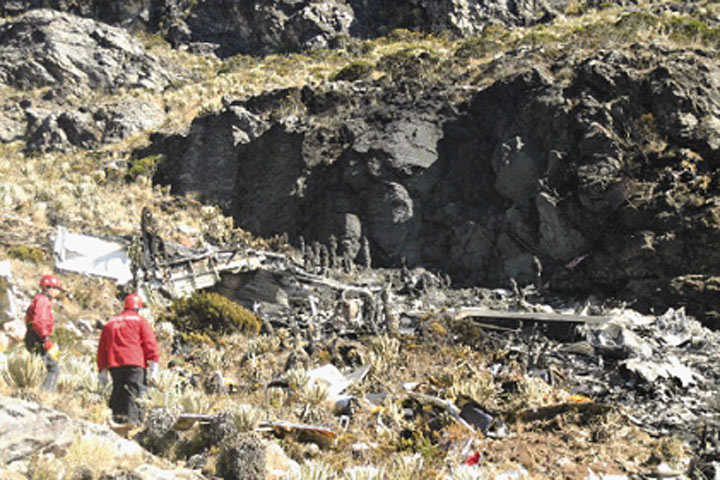
After takeoff from Mérida-Alberto Carnevalli Airport runway 25, the aircraft climbed in clouds when it collided with a mountain located 10 km northwest of the airport. The aircraft disintegrated on impact and all 46 occupants were killed. The wreckage was found at an altitude of 4,100 metres.
Probable cause:
After departure from runway 25, the crew planned to use an unpublished procedure. Climbing through clouds a 180-degree turn was initiated. Using the unreliable magnetic compass, the flight made a 270 degree turn, heading towards rising terrain. The captain took over control from the copilot. When visual contact with terrain was regained, the crew noted they were heading for mountains. The captain tried to avoid rising terrain but the aircraft impacted the side of a mountain at 4,100 metres.
Crash of an ATR42-300 in São Paulo

Date & Time: Jul 16, 2007 at 1242 LT
Type of aircraft:
Operator:
Registration:
PT-MFK
Survivors:
Yes
Schedule:
Araçatuba – Bauru – São Paulo
MSN:
225
YOM:
1991
Flight number:
PTN4763
Country:
Crew on board:
4
Crew fatalities:
Pax on board:
21
Pax fatalities:
Other fatalities:
Total fatalities:
0
Captain / Total flying hours:
7420
Captain / Total hours on type:
4993.00
Copilot / Total flying hours:
947
Copilot / Total hours on type:
797
Circumstances:
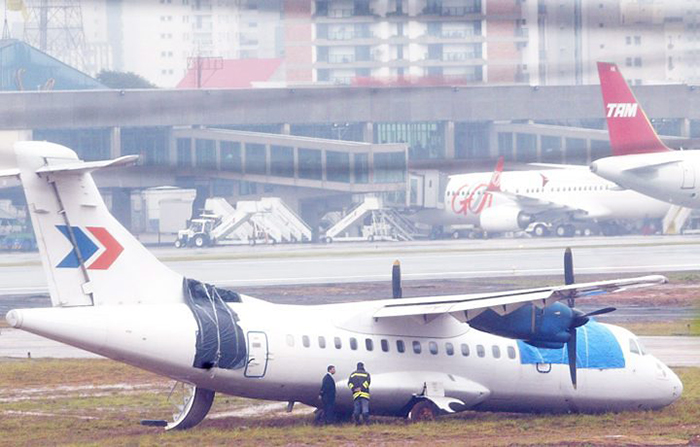
The aircraft departed Araçatuba on a flight to São Paulo with an intermediate stop in Bauru, carrying 21 passengers and a crew of four. After touchdown on wet runway 17R at Congonhas Airport, the crew started the braking procedure when the aircraft deviated to the left and veered off runway. While contacting soft ground, the aircraft collided with a concrete block housing the electrical device supplying the runway light system. On impact, the nose gear was torn off and the aircraft came to rest. All 25 occupants evacuated safely while the aircraft was damaged beyond repair.
Probable cause:
Loss of control upon landing after the aircraft suffered aquaplaning. The following contributing factors were identified:
- A light rain caused the presence of water on the runway, enabling the occurrence of hydroplaning.
- The accumulation of water on the surface of the runway, as a result of inadequate drainage, lack of "grooving", enabled the hydroplaning.
- The pilot applied full pressure on the right pedal, generating a force to the left that contributed to the departure off the runway.
- During hydroplaning, the pilot should not apply pedal to the opposite side to which the aircraft slides; this fact was not covered during the instruction of the pilot.
- In the face of hydroplaning, the pilot applied the right pedal, aggravating the departure of the aircraft to the left.
Final Report: