Country
Operator Image

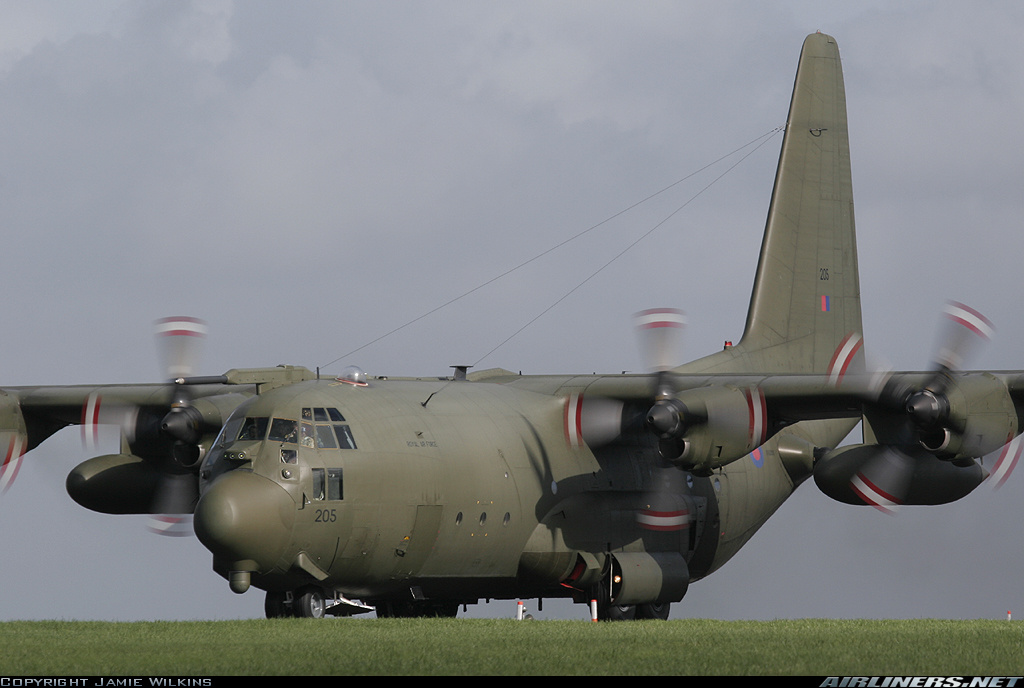
Crash of a Lockheed C-130K Hercules in Afghanistan
Date & Time:
Aug 29, 2007
Operator:
Registration:
XV205
Survivors:
Yes
MSN:
4230
YOM:
1967
Crew on board:
0
Crew fatalities:
Pax on board:
0
Pax fatalities:
Other fatalities:
Total fatalities:
0
Circumstances:
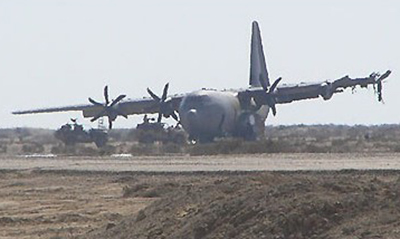
The airplane landed hard on a rough airstrip located in the Helmand Province in Afghanistan. The aircraft was damaged beyond repair but all occupants escaped uninjured. Due to Taliban presence in the vicinity of the accident area, the airplane was deliberately destroyed by fire.

Crash of a Lockheed C-130J-30 Hercules in Amarah
Date & Time:
Feb 12, 2007 at 2010 LT
Operator:
Registration:
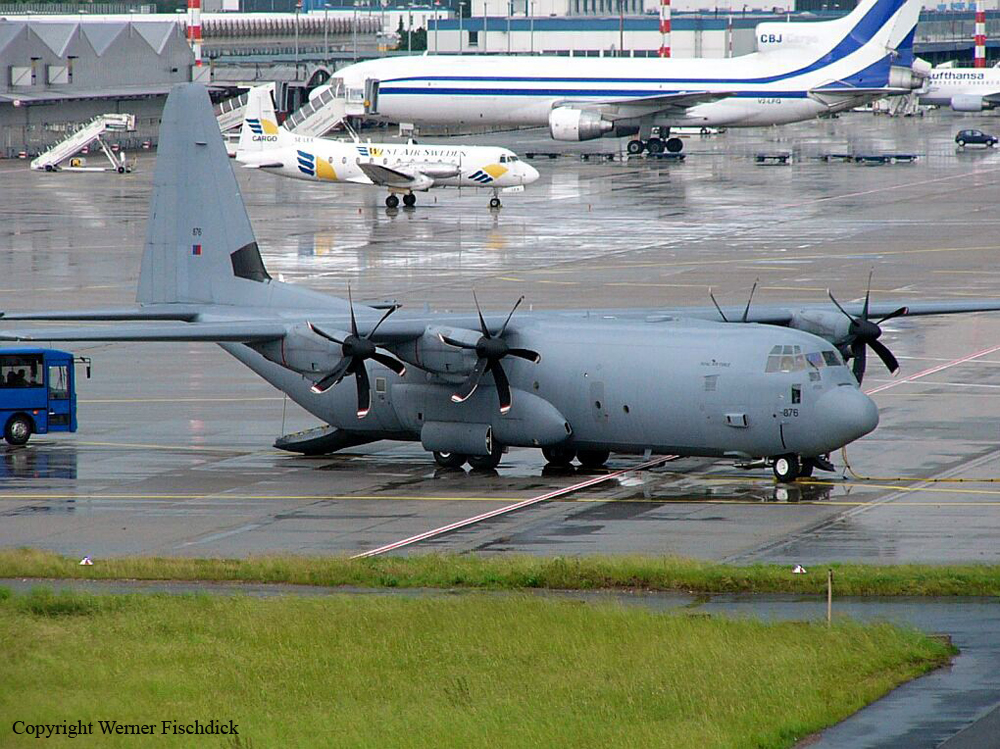
ZH876
Survivors:
Yes
MSN:
5460
YOM:
1999
Crew on board:
6
Crew fatalities:
Pax on board:
58
Pax fatalities:
Other fatalities:
Total fatalities:
0
Circumstances:
The crew of ZH876 were tasked to fly a routine roulement of troops to a Tactical Landing Zone (TLZ) in Maysān province, Iraq. Weather at the TLZ was good, with a visibility of 25 km, no significant cloud and a light surface wind. The flight to the TLZ was routine and at approx 17:00 UTC the Hercules began to make its approach to the TLZ. Comms had already been established between ZH876 and the Tactical Air Traffic Controller (Tac ATC) at the TLZ, and the aircraft was subsequently cleared to land. An uneventful approach followed flown by the copilot. At 17:10:15 UTC, as the aircraft was about to touchdown at the TLZ, the crew experienced a load bang and a bright flash. The flash temporarily blinded the flight-deck crew. Virtually simultaneously, the aircraft touched down. The first flash was followed, a second later, by another flash and louder bang. The aircraft slewed off the left-hand side of the runway. The captain took over control of the aircraft. On regaining vision, the captain tried to steer the aircraft back onto the runway. However, the crew became aware of a fire on the port side, which was confirmed as a wing fire. The captain brought the aircraft to an immediate halt. The aircraft came to rest 50 m from the runway edge, some 700 m after touchdown. The aircraft sustained substantial damage and it was decided to blow up the plane because the damage was too difficult to repair and there was also a potential risk that anti-Iraqi forces might obtain information on specialist equipment.
Probable cause:
The evidence recovered from the incident site revealed that two IED [improvised explosive device] arrays had exploded in the near vicinity of ZH876's touchdown point at the TLZ. The Board quickly ruled out aircraft systems failure and other possible causes. The Board concluded that this deliberate enemy action was the sole cause of the damage sustained to ZH876 in this incident. The Board further concluded that there was a lack of understanding, by the Force Protection personnel, of TLZ sweep procedures and they had not received the appropriate training. This meant that the sweep procedures applied at the TLZ were inadequate to discover the IED arrays.
Crash of a BAe Nimrod MR.2 near Kandahar: 14 killed
Date & Time:
Sep 2, 2006 at 1547 LT
Operator:
Registration:
XV230
Survivors:
No
Schedule:
Muscat - Muscat
MSN:
8005
YOM:
1969
Crew on board:
14
Crew fatalities:
Pax on board:
0
Pax fatalities:
Other fatalities:
Total fatalities:
14
Circumstances:
The aircraft departed at 13:43 for a mission over Afghanistan, in support of coalition forces engaging the Taliban. At 15:30 the airplane rendezvoused with an RAF Lockheed TriStar tanker and received fuel in an air-to-air refuelling procedure that lasted 10 minutes. Air-to-air refuelling appeared to pass without incident and XV230's crew prepared to turn east, towards their operational area. Eleven minutes later a bomb bay fire warning, either coincident with, or followed immediately by, an elevator bay underfloor smoke warning, was reported. The crew also reported smoke entering the aircraft’s cabin, from both elevator and aileron bays. Within a minute the aircraft depressurised as the fire breached the aircraft’s pressure hull requiring the crew to don their oxygen masks. The captain began to turn the aircraft towards Kandahar, declared a MAYDAY and began a descent. Meanwhile a crew member reported a fire 'from the rear of the starboard engines'. Another crew member reported a fire within the aileron bay. Last radio contact was at 15:46 when the crew acknowledged the Kandahar weather for landing. About the same time, a Harrier GR7 pilot, who was several thousand feet above, reported an intense fire close to the starboard fuselage and stretching out between where the wing joins the aircraft fuselage to the starboard engine; there was a second fire that stretched behind the aircraft from a point on the side of the rear body of the aircraft. At 15:47 the Harrier pilot reported that he saw the Nimrod explode. It broke into 4 sections, at a height of between 750 feet and 1000 feet. All 14 crew members were killed.
Crew:
F/Sgt Gary Wayne Andrews,
F/Sgt Stephen Beattie,
F/Sgt Gerard Martin Bell,
F/Sgt Adrian Davies,
L/Cpl Oliver Simon Dicketts,
F/Lt Steven Johnson,
Sgt Benjamin James Knight,
F/Lt Leigh Anthony Mitchelmore,
F/Lt Gareth Rodney Nicholas,
Sgt John Joseph Langton,
Sgt Gary Paul Quilliam,
F/Lt Allan James Squires,
F/Lt Steven Swarbrick,
Mne Joseph David Windall.
Crew:
F/Sgt Gary Wayne Andrews,
F/Sgt Stephen Beattie,
F/Sgt Gerard Martin Bell,
F/Sgt Adrian Davies,
L/Cpl Oliver Simon Dicketts,
F/Lt Steven Johnson,
Sgt Benjamin James Knight,
F/Lt Leigh Anthony Mitchelmore,
F/Lt Gareth Rodney Nicholas,
Sgt John Joseph Langton,
Sgt Gary Paul Quilliam,
F/Lt Allan James Squires,
F/Lt Steven Swarbrick,
Mne Joseph David Windall.
Probable cause:
As the Board was unable to investigate XV230's wreckage at the crash site and it proved impossible to recover more than a few small components from the aircraft, the Board has been unable to determine positively the source or cause of the fire which led to the loss of XV230 and its crew. Nonetheless, through investigation of the limited data available, the Board was able to deduce the most probable location of the fire, a number of probable causes of that event and factors which possibly contributed to it:
a. The escape of fuel during AAR, occasioned by an overflow from No 1 tank, or a leak from the fuel system (fuel coupling or pipe), led to an accumulation of fuel within the No 7 tank dry bay. Although of a lower probability, the fuel leak could have been caused by a hot air leak damaging fuel system seals.
b. The ignition of that fuel following contact with an exposed element of the aircraft's crossfeed/ SCP pipe work.
Contributory factors:
a. The age of the Nimrod MR2's non-structural system components.
b. Nimrod MR2 maintenance policy in relation to fuel and hot air systems.
c. The lack of a fire detection and suppression system within the No 7 tank dry bay.
d. The fact that hazard analysis did not correctly categorize the potential threat to the aircraft caused by the collocation of fuel and hot air system components within the No 7 tank dry bay.
e. The formal incorporation of AAR capability within the Nimrod did not identify the full implications of successive changes to the fuel system and associated procedures.
Aggravating factor:
a. The loss of flying controls through fire damage to the hydraulic systems or cables and pulleys.
a. The escape of fuel during AAR, occasioned by an overflow from No 1 tank, or a leak from the fuel system (fuel coupling or pipe), led to an accumulation of fuel within the No 7 tank dry bay. Although of a lower probability, the fuel leak could have been caused by a hot air leak damaging fuel system seals.
b. The ignition of that fuel following contact with an exposed element of the aircraft's crossfeed/ SCP pipe work.
Contributory factors:
a. The age of the Nimrod MR2's non-structural system components.
b. Nimrod MR2 maintenance policy in relation to fuel and hot air systems.
c. The lack of a fire detection and suppression system within the No 7 tank dry bay.
d. The fact that hazard analysis did not correctly categorize the potential threat to the aircraft caused by the collocation of fuel and hot air system components within the No 7 tank dry bay.
e. The formal incorporation of AAR capability within the Nimrod did not identify the full implications of successive changes to the fuel system and associated procedures.
Aggravating factor:
a. The loss of flying controls through fire damage to the hydraulic systems or cables and pulleys.

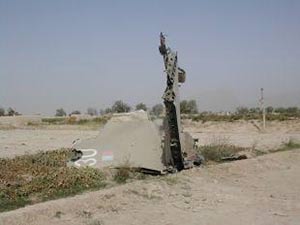
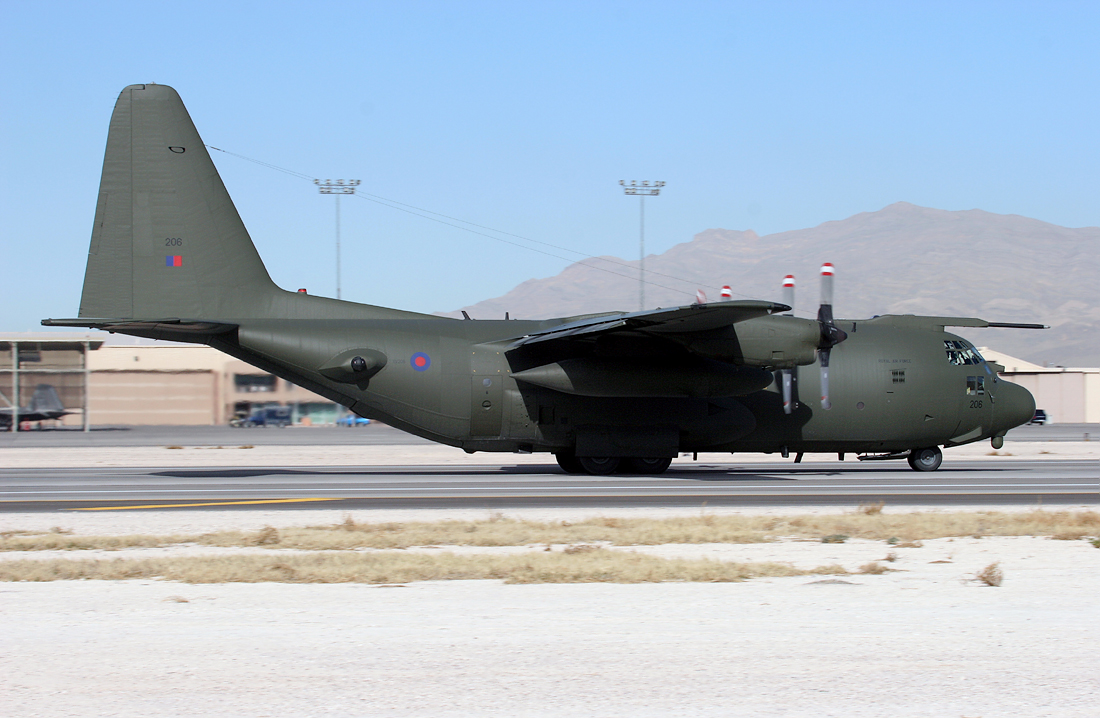
Crash of a Lockheed C-130 Hercules C.1P in Lashkar Gah
Date & Time:
May 24, 2006 at 1530 LT
Operator:
Registration:
XV206
Survivors:
Yes
Schedule:
Kabul - Lashkar Gah
MSN:
4231
YOM:
1967
Crew on board:
7
Crew fatalities:
Pax on board:
20
Pax fatalities:
Other fatalities:
Total fatalities:
0
Circumstances:
The RAF Hercules was on a routine operational flight providing support to the Provincial Reconstruction Team (PRT) at Lashkar Gar, Afghanistan at the time of the accident. The LKG Tactical Landing Zone (TLZ) is 6,800 feet long by 150 feet wide with a surface of compacted sand and gravel located on the south side of LKG town. The TLZ is used by UK forces and other agencies including the UN and Red Cross. The aircraft took off at 08:50 UTC from Kabul International Airport (KBL) to fly a routine logistics sortie to deliver cargo and personnel to LKG TLZ. After an uneventful medium level transit the aircraft landed at LKG at 10:20 UTC. Using a standard tactical landing technique the aircraft touched down some 500ft in from the runway threshold, reverse thrust was selected and speed reduced without the need for wheel braking. After 3 seconds, as the speed was nearing 70 kts there was a loud bang from the port side of the aircraft in the vicinity of the port main landing gear, the force of which was felt throughout the aircraft. At the same time the flight deck crew saw tyre debris flying up in front of the aircraft and then became aware of structural damage to the number 2 engine. The captain ordered the Emergency Engine Shutdown Drill (EESD) on the number 2 engine. He maintained directional control with nosewheel steering. Immediately after the shutdown of number 2 engine crew members observed a large amount of fuel leaking from the port wing area in the vicinity of the external tank pylon and that there was a fire in the vicinity of No.1 engine. The captain ordered the shut down of the No.1 engine using the EESD. Whilst this drill was carried out crew members observed that the fire was spreading across the whole wing. Realising the severity of the situation the captain brought the aircraft to a halt near the northern end of the landing zone some 6,400 feet from the touchdown point. He ordered the passengers and crew to immediately carry out the Emergency Evacuation Drill. Once all personnel had evacuated the aircraft, fire rapidly destroyed the aircraft and cargo.
Probable cause:
The Board concluded that XV206 was destroyed after detonating an explosive device that was buried in the surface of the LKG TLZ. After extensive investigation the Board concluded that the device was an anti-tank landmine. This resulted in aircraft debris puncturing the port wing fuel tanks, causing a major leak of fuel that ignited, leading to an uncontrollable fire originating in the port wing in the vicinity of the n°1 engine.
The Board concluded that the following contributed to the loss of XV206:
a. The lack of permanent force protection at LKG TLZ allowed uncontrolled access to persons wishing to carry out a hostile act;
b. The TLZ clearance procedures proved to be inadequate for detecting subsurface mines.
The Board concluded that the following contributed to the loss of XV206:
a. The lack of permanent force protection at LKG TLZ allowed uncontrolled access to persons wishing to carry out a hostile act;
b. The TLZ clearance procedures proved to be inadequate for detecting subsurface mines.