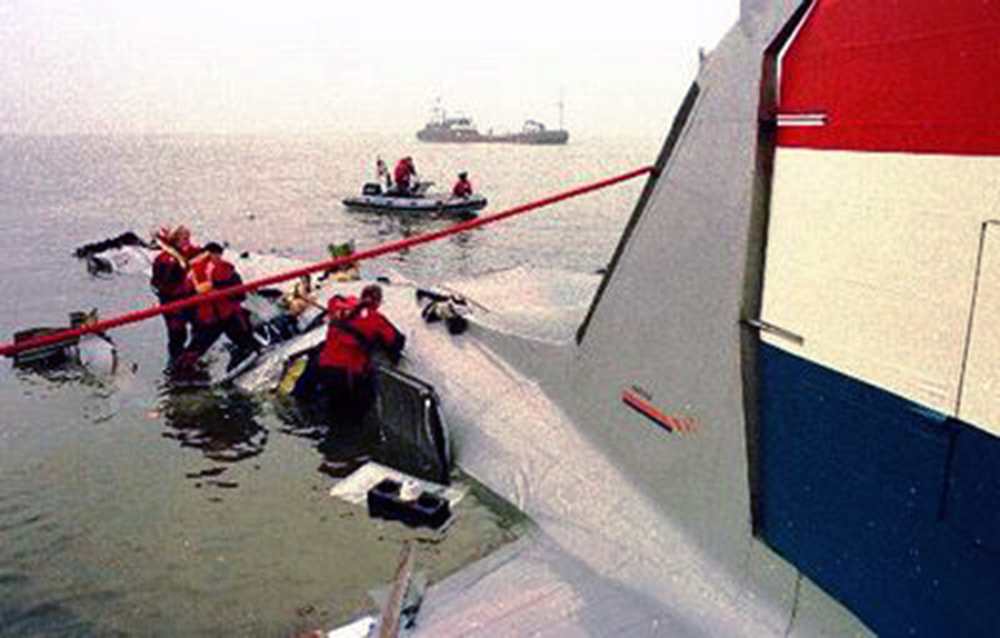
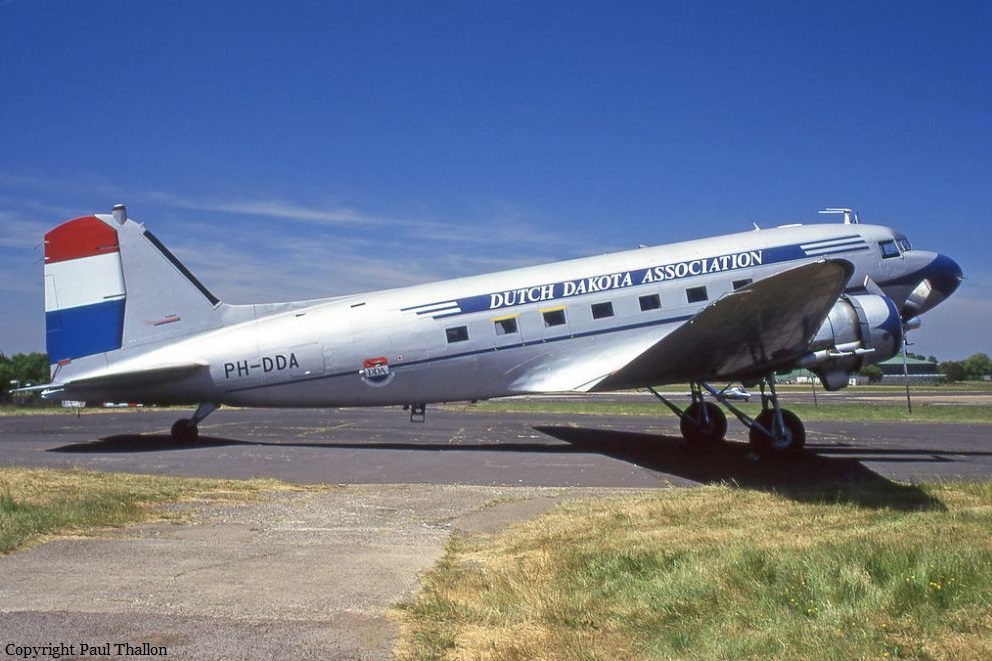
Crash of a Douglas C-47A-70-DL off Den Oever: 32 killed

Date & Time: Sep 25, 1996 at 1637 LT
Operator:

Registration:
PH-DDA
Flight Phase:
Survivors:
No
Schedule:
Texel - Amsterdam
MSN:
19109
YOM:
1943
Country:
Region:
Crew on board:
6
Crew fatalities:
Pax on board:
26
Pax fatalities:
Other fatalities:
Total fatalities:
32
Captain / Total flying hours:
19070
Captain / Total hours on type:
400.00
Copilot / Total flying hours:
20273
Copilot / Total hours on type:
280
Aircraft flight hours:
38388
Circumstances:
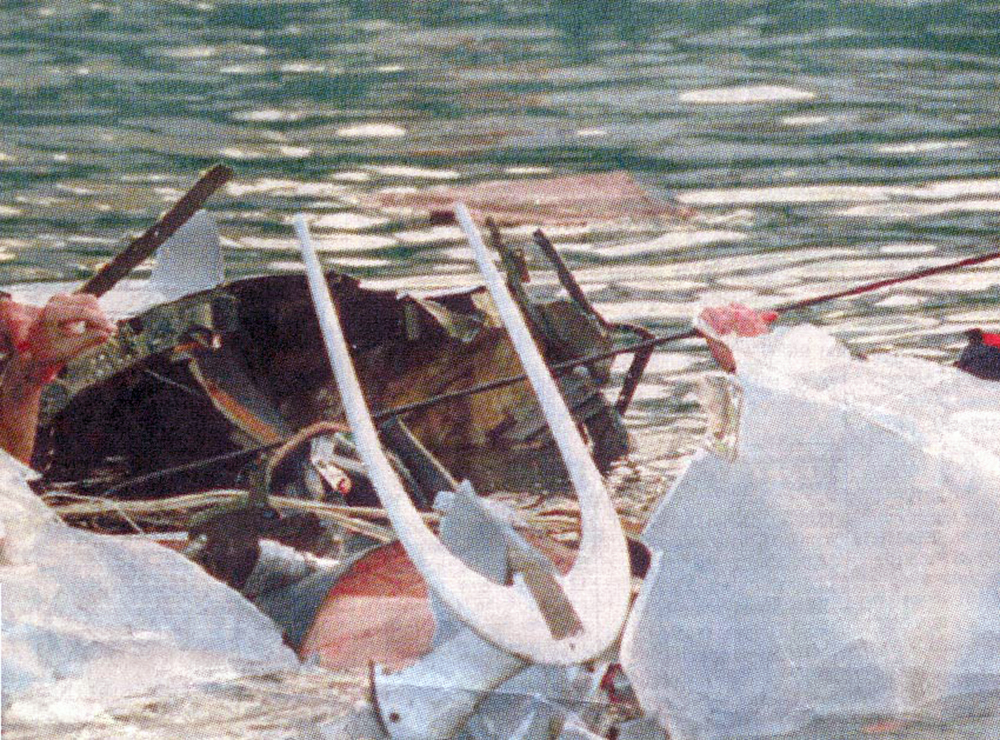
The aircraft took off at 14.28 from Texel International Airport for the return flight to Amsterdam-Schiphol Airport. Before take-off the airport manager of Texel International Airport requested the crew of PH-DDA to squawk transponder-code 0060. The take-off was considered normal by several witnesses, including the Airport Manager, without deviations from what they had seen during previous take-offs from Texel. Several witnesses observed the aircraft passing outbound over the east coast of the island of Texel. One witness reported a short-lived orange colored fire streak emanating from the underside of the left engine, another mentioned a shrieking noise on one engine. The weather situation over the Waddenzee was : a visibility of about 1 .5 km in haze without a distinct horizon. The sun was obscured. There was a glassy smooth water surface without any references. At approximately 14.33, the crew reported to Texel Radio that they had problems with an engine. They were advised to switch over to De Kooy Approach. There is no radio telephony (RT) recording available of this phase of the flight. Naval Air Station (NAS) De Kooy is not equipped with primary radar. No primary radar recordings from other sources were available. The aircraft became visible on the secondary radar of NAS De Kooy at 14.34:33, squawking 0060 and flying at an altitude of 800 feet on a heading of 155°, which changed gradually to 175°. Most likely the transponder had been switched on at that time. Refer to the radar plot in Appendix 1. At 14.35:32 the flight crew reported to De Kooy Approach : "Uh, PDA is uh..., at 600 feet and approaching uh..., De Kooy, we want to make an emergency landing on De Kooy". The position of the aircraft at that moment was approximately 11 mn northeast of NAS De Kooy. Shortly thereafter the aircraft made a sudden left turn to a heading of 110°. The aircraft was then at an altitude of 700 feet. The flight crew reported that they had feathered the left engine. De Kooy Approach instructed to set Secondary Surveillance Radar (SSR) code 4321 instead of the then used VFR code 0060, gave QNH and reported that runway 22 was in use ; the pilot did not respond to this message. De Kooy Approach twice repeated the advise to squawk and advised to proceed inbound runway 22. During the transmission of this message the aircraft was turning to approximately the required heading of 225°, at an altitude of 500 feet. The aircraft maintained heading 225° at 500 feet and the airspeed decreased. After several inquiring calls concerning the correct squawk, at 14.36:52 the pilot confirmed squawking 4321 and asked for a heading. Some parts of the radio communication were hindered by a whistle tone. In response to the question, De Kooy Approach requested the position ; the pilot reported 11 nm out to the northeast. Seven seconds later De Kooy Approach confirmed radar contact and advised a heading of 240° . During this conversation the aircraft turned left to a heading of 180°. At that time the altitude was still 500 feet and the airspeed had further decreased. The crew confirmed the advised heading of 240°, but the aircraft did not turn to this direction. This was the last message from the aircraft. The radar recording showed that at 14.37:28 the aircraft started to turn to the left at an increasing rate. At 14.37:47 the last radar echo showed an altitude of 200 feet. The approach controller stated that the aircraft disappeared from the radar screen. There was no reply on repeated calls from De Kooy Approach, upon which the controller initiated an emergency status. The aircraft crashed onto a flooded sand bank in the Waddenzee, where at that time the water had a depth of about 1.2 meter. Forty seconds after the aircraft had disappeared from the radar, the controller contacted a KLM ERA helicopter, approaching NAS De Kooy, informed the pilot of the situation with the PHDDA and requested the pilot to have a look at the approximate position ; about seven minutes later the helicopter reported the wreckage in sight. That started an extensive rescue action; one severely injured passenger was taken to a hospital by a Naval helicopter, but died the same evening. The other 31 occupants to all probability died instantaneously in the crash. There was no fire.
Probable cause:
The accident was initiated by a combined failure of the left engine and the left feathering system. The accident became inevitable when the flight crew allowed the speed to decrease below stall speed and lost control of the aircraft at an altitude from which recovery was not possible.
The following contributing factors were reported:
- Serious degradation of controllability and performance.
- A high work load imposed on the flight crew by the multiple failure, further increased by unfavourable flight conditions and a suboptimal cockpit lay-out.
- The inadequate level of skill and experience of the flight crew on the DC-3 to be able to cope with this specific emergency situation.
Final Report:
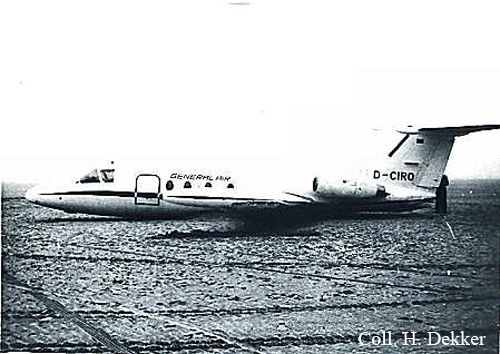
Crash of a MBB HFB-320 Hansa Jet in Texel

Date & Time: Dec 18, 1970
Type of aircraft:
Operator:
Registration:
D-CIRO
Flight Phase:
Flight Type:
Survivors:
Yes
Schedule:
Hamburg - Cologne - Paris
MSN:
1044
YOM:
1969
Country:
Region:
Crew on board:
2
Crew fatalities:
Pax on board:
0
Pax fatalities:
Other fatalities:
Total fatalities:
0
Circumstances:
The Hansa Jet departed Hamburg (HAM) at 0725LT on a positioning flight to Cologne (CGN) where it was to pick up some passengers who were to be taken to Paris for the signing of the Airbus treaty. While descending through a thick layer of clouds for Cologne, the right engine high pressure fuel pump failed. Some 22 seconds later the electrical system failed. The airplane entered a spiral descent until the first officer was able to light the instrument panel using a flash light. He noticed the severe right bank and told the captain to turn left and pull up. The airplane was brought under control and the crew climbed above the layer of clouds. It was decided to fly on a heading of 330° towards the North Sea, because the crew expected VFR weather there for an emergency landing. After flying for about half an hour the crew saw an island between the clouds, which turned out to be the Dutch island of Texel. Failing to see an airport in the area, it was decided to carry out a forced belly landing on the beach of Texel. The aircraft sustained additional substantial damage when being salvaged.

Crash of a Consolidated B-24D-120-CO Liberator off Texel: 10 killed

Date & Time: Dec 22, 1943
Operator:
Registration:
42-40974
Flight Phase:
Flight Type:
Survivors:
No
MSN:
2051
Country:
Region:
Crew on board:
10
Crew fatalities:
Pax on board:
0
Pax fatalities:
Other fatalities:
Total fatalities:
10
Circumstances:
While flying over the North Sea, the bomber was shot down by the pilot of a German fighter and crashed into the sea off Texel. All 10 crew members were killed and the aircraft christened 'Boomerang II' was lost.
Crew (93rd BG):
S/Sgt Robert D. Bogan, air gunner,
2nd Lt Orval Carder, copilot,
T/Sgt Arthur Demario, radio operator,
1st Lt Harry A. Daywalt Jr., pilot,
2nd Lt Robert E. McFaddin, navigator,
T/Sgt Colin Jones, air gunner,
S/Sgt Darrell V. Parrott, air gunner,
S/Sgt Pravdomil Sroubek,
2nd Lt Russell Unangst, bombardier 1.

Crash of a Boeing B-17F-125-BO Flying Fortress off Texel: 10 killed

Date & Time: Dec 16, 1943
Operator:
Registration:
42-30860
Flight Phase:
Flight Type:
Survivors:
No
MSN:
5974
YOM:
1942
Country:
Region:
Crew on board:
10
Crew fatalities:
Pax on board:
0
Pax fatalities:
Other fatalities:
Total fatalities:
10
Circumstances:
The crew was returning to his base in England following a bombing mission over Bremen. While cruising over the North Sea, the aircraft was hit by debris coming from another USAF aircraft that was shot down by the German Flak. Out of control, the aircraft crashed into the sea 10 km west of Texel. All ten crew members were killed.
Crew (96th BG):
S/Sgt Anthony Carpentieri,
2nd Lt Robert Paul Girvin,
S/Sgt John Burns Hull,
S/Sgt Clarence Eugene Kelly,
T/Sgt Arthur Lucien Lemieux,
S/Sgt Richard Wayne Rucker,
2nd Lt Elbert Wilkie Schanke,
1st Lt Merl LeRoy Schroeder,
2nd Lt Henry Albert Tracy,
T/Sgt Ivan J. Wade .
Probable cause:
Hit by the debris of a shot down aircraft.

Crash of a Boeing B-17F-80-BO Flying Fortress off Texel: 10 killed

Date & Time: Nov 26, 1943
Operator:
Registration:
42-29955
Flight Phase:
Flight Type:
Survivors:
No
MSN:
5069
YOM:
1942
Country:
Region:
Crew on board:
10
Crew fatalities:
Pax on board:
0
Pax fatalities:
Other fatalities:
Total fatalities:
10
Circumstances:
The aircraft was engaged in a bombing mission over Bremen when approaching the Dutch coast, it went out of control and crashed in unknown circumstances into the North Sea some 10 km west of Texel Island. All 10 crew members were killed.
Crew (303rd Squadron):
T/Sgt John R. Arter,
1st Lt Wilbur R. Barnhill,
2nd Lt Clarence C. Bixler,
Cpt Addell A. Cote,
S/Sgt Theadore Gomes,
S/Sgt Paul Gunsauls,
1st Lt John W. Hull,
S/Sgt Cecil M. May,
S/Sgt John M. Micek,
T/Sgt Vaughn Reaves.

Crash of a Handley Page H.P.57 Halifax II off Texel Island: 7 killed

Date & Time: Jun 13, 1943 at 0135 LT
Operator:
Registration:
JD145
Flight Phase:
Flight Type:
Survivors:
No
Schedule:
Linton-on-Ouse - Linton-on-Ouse
Country:
Region:
Crew on board:
7
Crew fatalities:
Pax on board:
0
Pax fatalities:
Other fatalities:
Total fatalities:
7
Circumstances:
The airplane departed RAF Linton-on-Ouse at 2257LT on June 12 on an operation to Bochum. Flying off the Dutch coast, it was shot down by a German fighter and crashed into the North Sea some 50 km west of Texel Island. All seven crew members were killed.
Crew:
F/Sgt Malcolm Baxter, pilot,
Sgt Alexander Mcdonald Young, flight engineer,
Sgt Wilbur Haldane Jordan, navigator,
Sgt Jack Norman Angus, bomb aimer,
Sgt Cecil William Payne, wireless operator,
Sgt Eric Wright, air gunner,
Sgt Edward George Westall, air gunner.
Probable cause:
Shot down by a German fighter.

Crash of a Junkers JU.88A-14 off Texel Island: 4 killed

Date & Time: May 30, 1943
Type of aircraft:
Operator:
Registration:
3E+BH
Flight Phase:
Flight Type:
Survivors:
No
Schedule:
Tours - Tours
MSN:
144680
Country:
Region:
Crew on board:
4
Crew fatalities:
Pax on board:
0
Pax fatalities:
Other fatalities:
Total fatalities:
4
Circumstances:
Crashed in unknown circumstances into the North Sea, probably off Texel Island. All four crew members were killed.
Crew:
Lt A. Glitzner, pilot,
Uffz A. Niebling, flight engineer,
Uffz H. Bischof, observer,
Uffz W. Kargel, radio operator.

Crash of a Vickers 440 Wellington X off Texel Island: 5 killed

Date & Time: May 28, 1943 at 0212 LT
Type of aircraft:
Operator:
Registration:
HE294
Flight Phase:
Flight Type:
Survivors:
No
Schedule:
Skipton-on-Swale - Skipton-on-Swale
Country:
Region:
Crew on board:
5
Crew fatalities:
Pax on board:
0
Pax fatalities:
Other fatalities:
Total fatalities:
5
Circumstances:
The airplane departed RAF Skipton-on-Swale at 2252LT on May 27 on an operation to Essen. Flying off the Dutch coast, it was shot down by a German fighter and crashed into the North Sea 35 km west of Texel Island. All five crew members were killed.
Crew:
P/O Ralph Edgar Taylor, pilot,
P/O Ralph Grant Allan,
F/O John Arlo Farnham,
P/O Ross Marshall Murray,
W/O Albert George Bailey, air gunner.
Probable cause:
Shot down by a German fighter.

Crash of a Short S.29 Stirling III off Texel Island: 7 killed

Date & Time: May 26, 1943 at 0300 LT
Type of aircraft:
Operator:
Registration:
BK710
Flight Phase:
Flight Type:
Survivors:
No
Schedule:
Lakenheath - Lakenheath
Country:
Region:
Crew on board:
7
Crew fatalities:
Pax on board:
0
Pax fatalities:
Other fatalities:
Total fatalities:
7
Circumstances:
The airplane departed RAF Lakenheath at 2344LT on May 25 on an operation to Düsseldorf. While cruising along the Dutch coast, it was shot down by a German fighter and crashed into the North Sea 30 km northwest of Texel Island. All seven crew members were killed.
Crew:
Sgt Jack Henry Uden, pilot,
Sgt Leslie George Hadden, flight engineer,
F/O Walter Edwin Lawrence Morse, navigator,
Sgt Frederick Arthur Williams, wireless operator.
F/O Howard Stephen Winchester, bomb aimer,
Sgt Charles John Percival, air gunner,
Sgt Horace Stephen Scott, air gunner.
Probable cause:
Shot down by a German fighter.

Crash of a Handley Page H.P.57 Halifax II off Texel Island

Date & Time: May 24, 1943 at 0341 LT
Operator:
Registration:
W7926
Flight Phase:
Flight Type:
Survivors:
Yes
Schedule:
Linton-on-Ouse - Linton-on-Ouse
Country:
Region:
Crew on board:
7
Crew fatalities:
Pax on board:
0
Pax fatalities:
Other fatalities:
Total fatalities:
0
Circumstances:
The airplane departed RAF Linton-on-Ouse at 2249LT on May 23 on an operation to Dortmund. While returning to base the following night, it was shot down by a German fighter and crashed into the Waddenzee, 4 km east of Texel Island. All seven crew members were rescued and became PoW.
Crew:
Sgt Bernard William Thomas Horn, pilot,
Sgt Richard Ferrie Cumming, flight engineer,
Sgt George Irving, navigator,
Sgt William Hall Allely, bomb aimer,
Sgt Douglas Raymond Wilcox, wireless operator,
Sgt Frederick Churchyard, air gunner,
Sgt George James Uriah Stevens, air gunner.
Probable cause:
Shot down by a German fighter.