Crash of an Airbus A321-211 in Moscow
Date & Time:
Aug 15, 2019 at 0615 LT
Operator:

Registration:
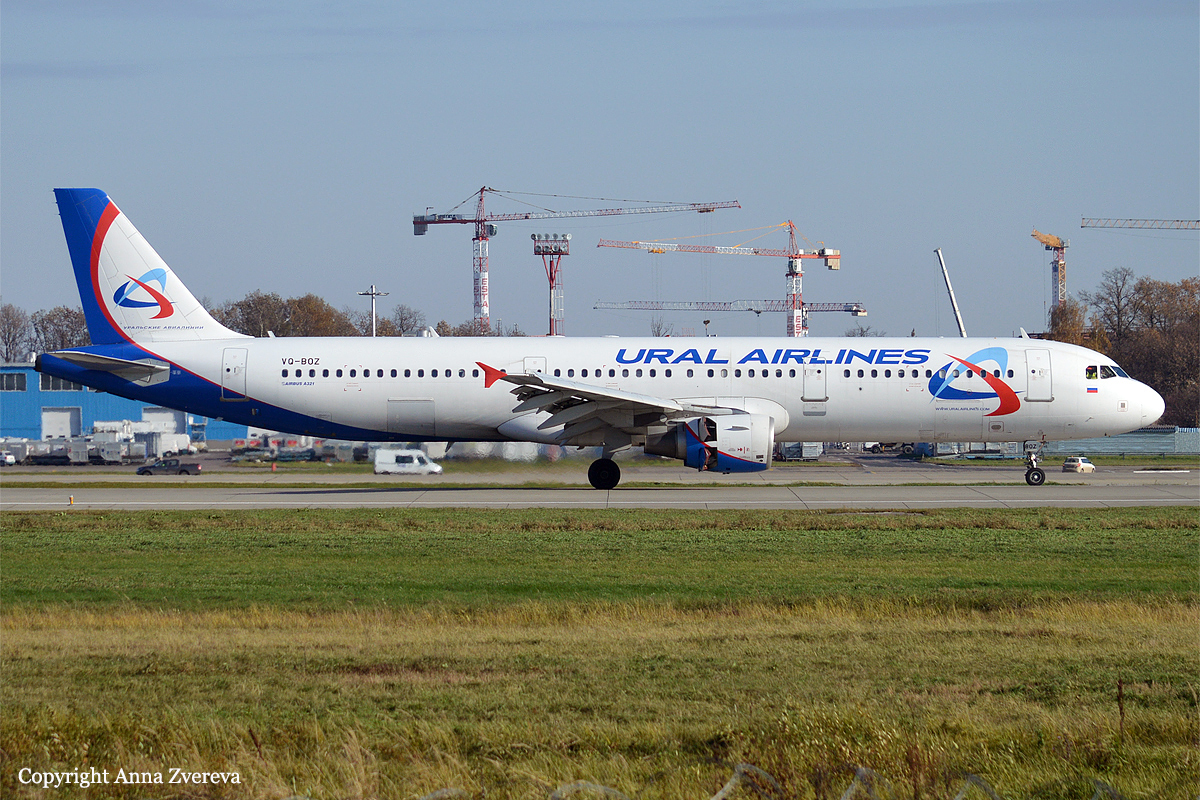
VQ-BOZ
Survivors:
Yes
Schedule:
Moscow - Simferopol
MSN:
2117
YOM:
2003
Flight number:
U6178
Crew on board:
7
Crew fatalities:
Pax on board:
226
Pax fatalities:
Other fatalities:
Total fatalities:
0
Captain / Total hours on type:
4125.00
Copilot / Total hours on type:
624
Aircraft flight hours:
48980
Aircraft flight cycles:
20132
Circumstances:
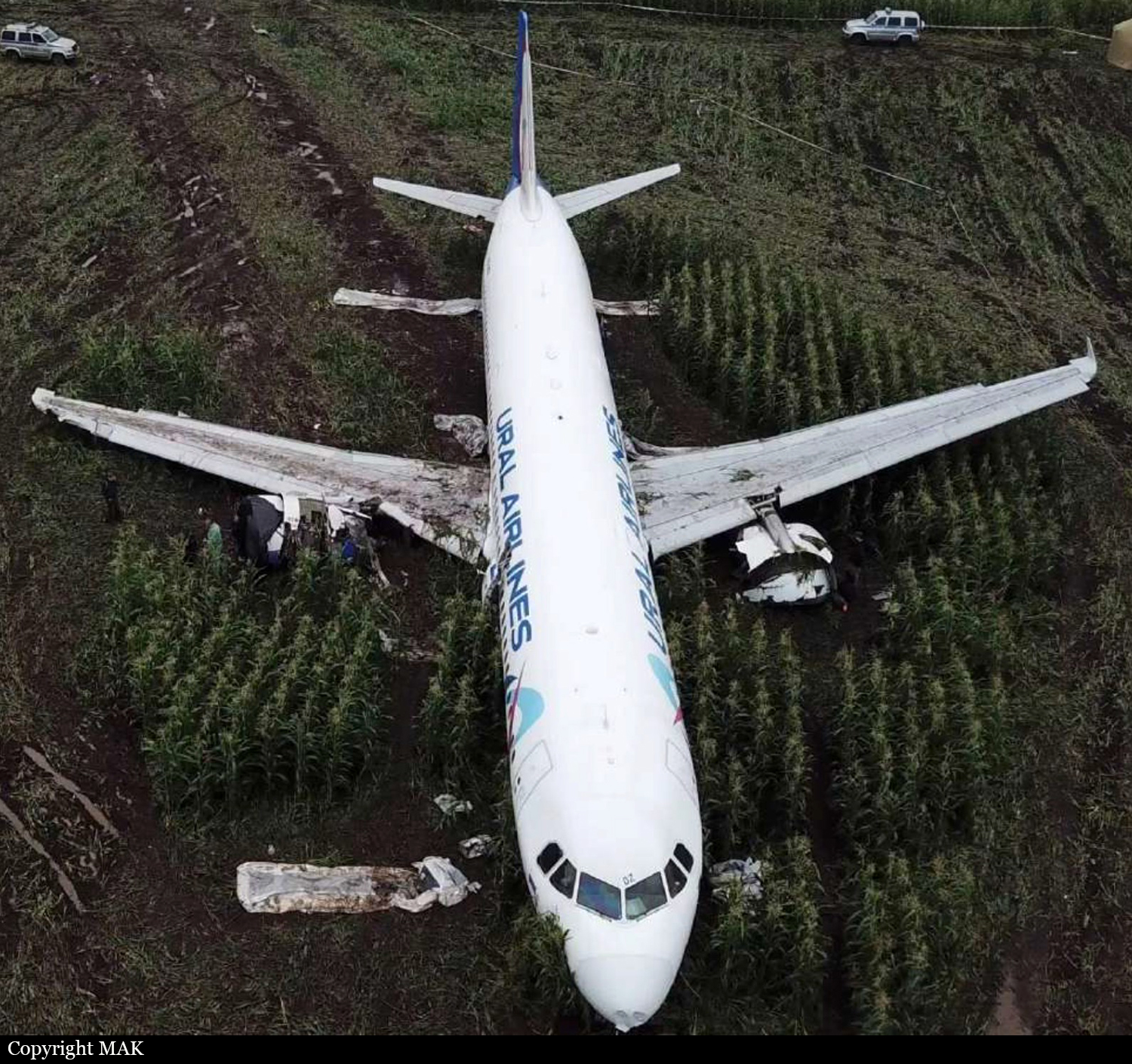
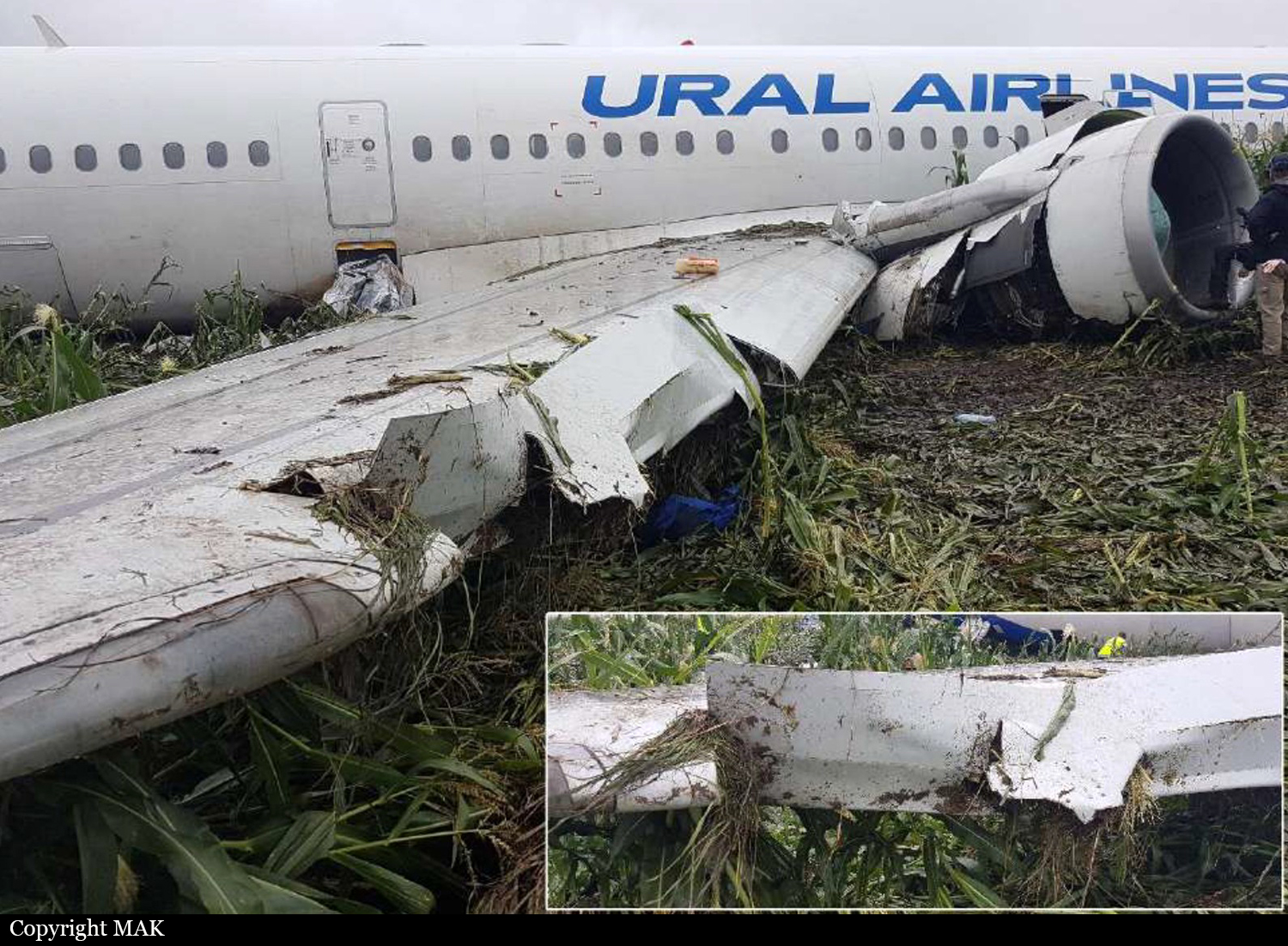
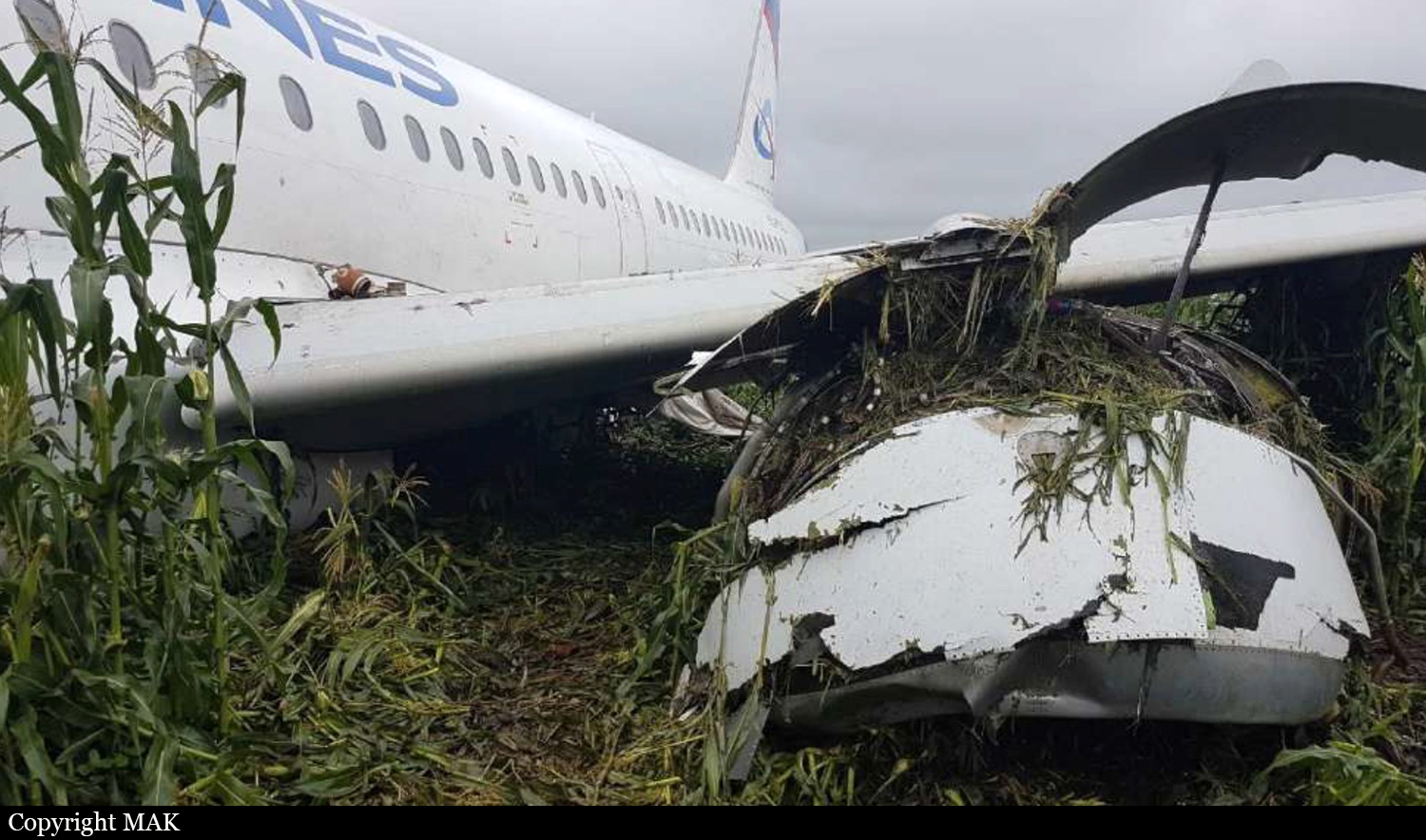
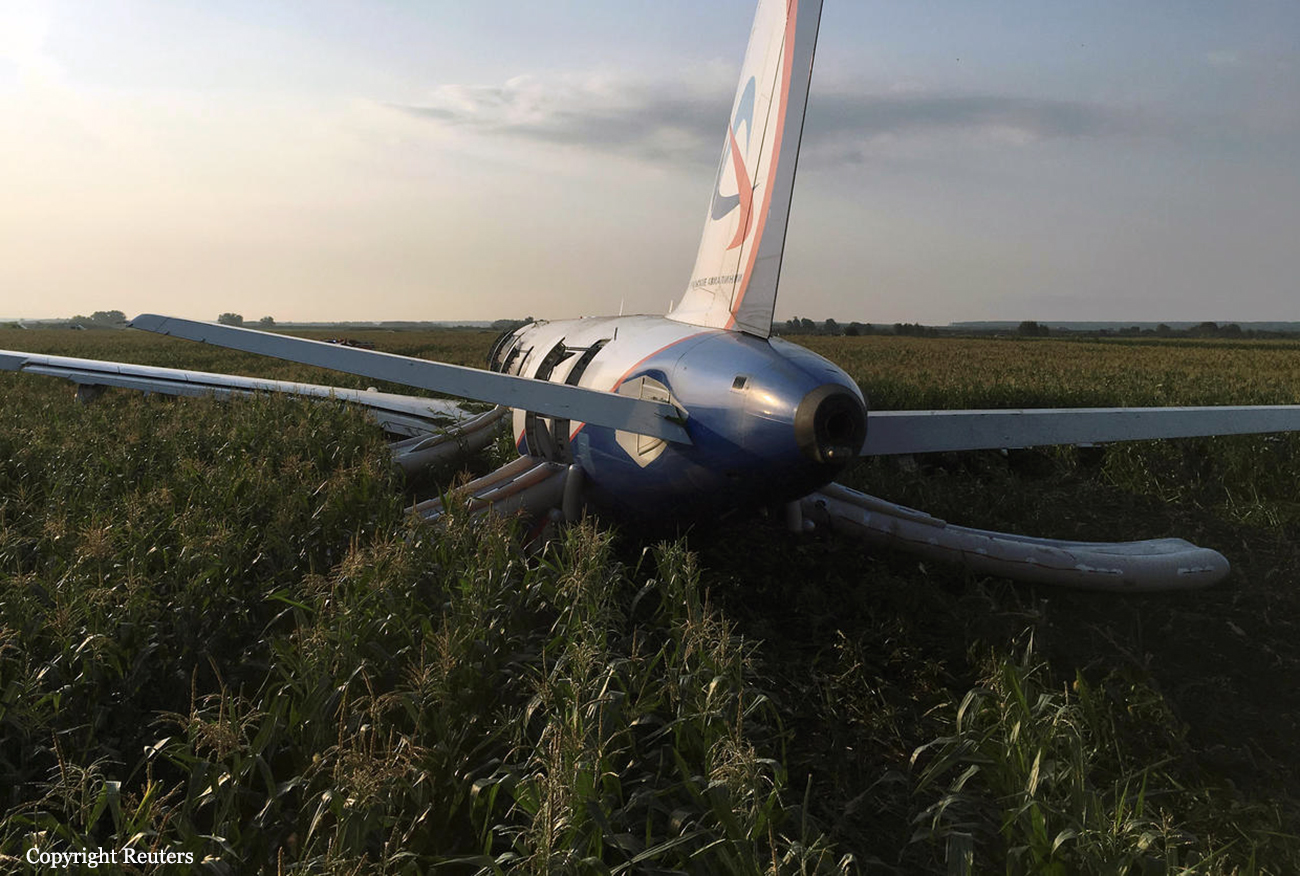
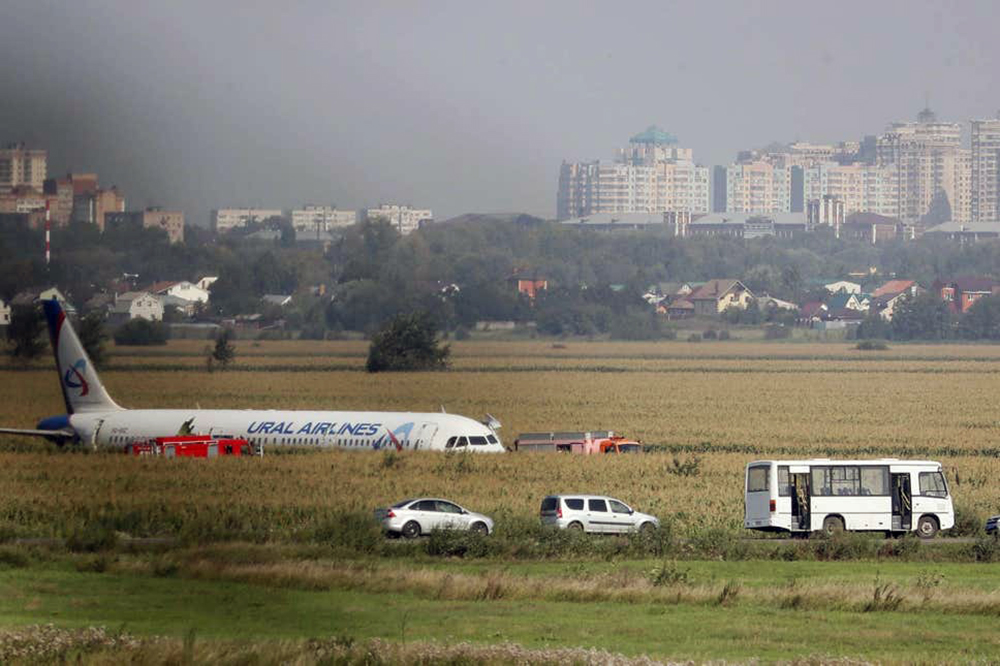
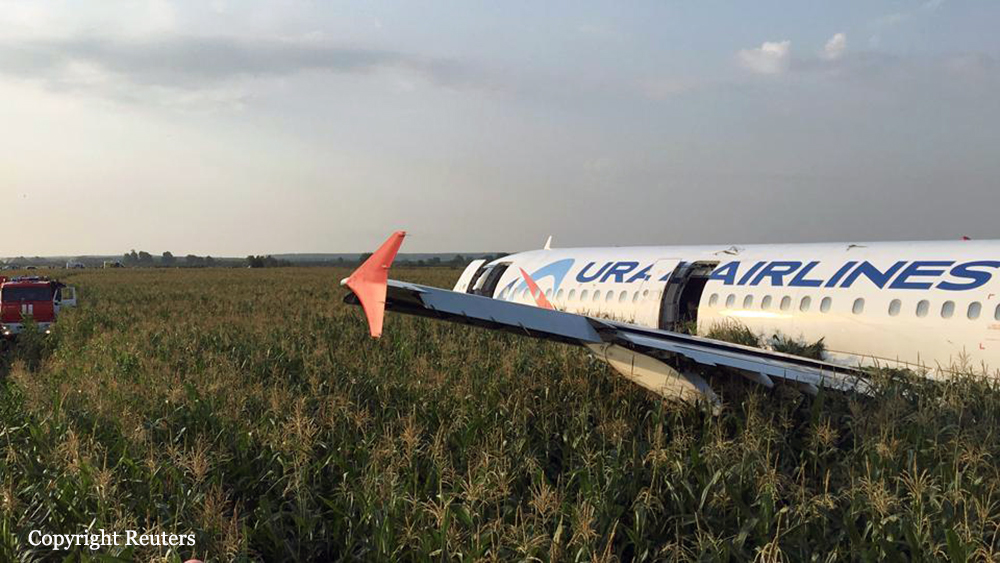
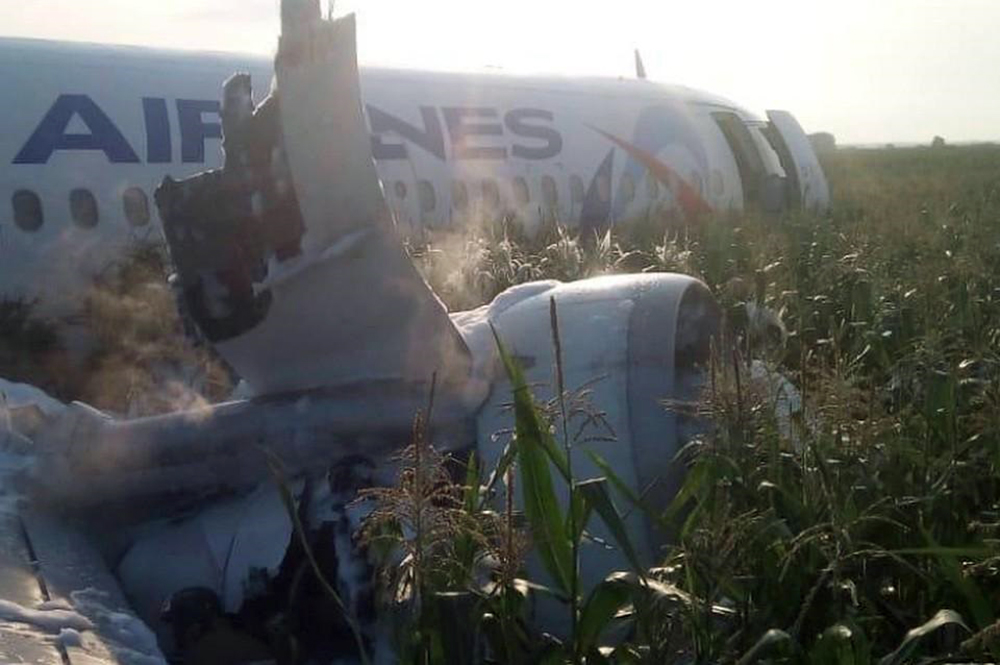
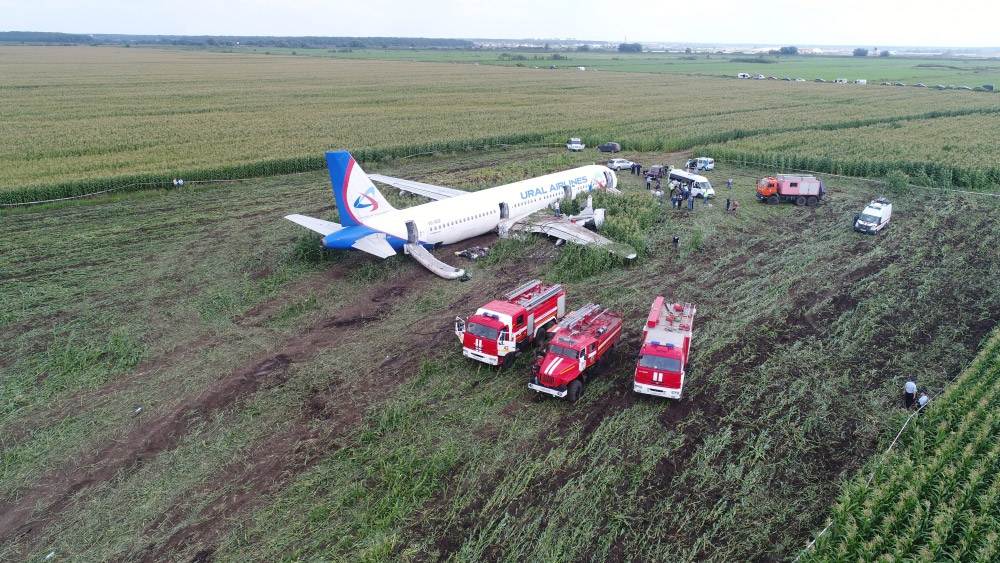
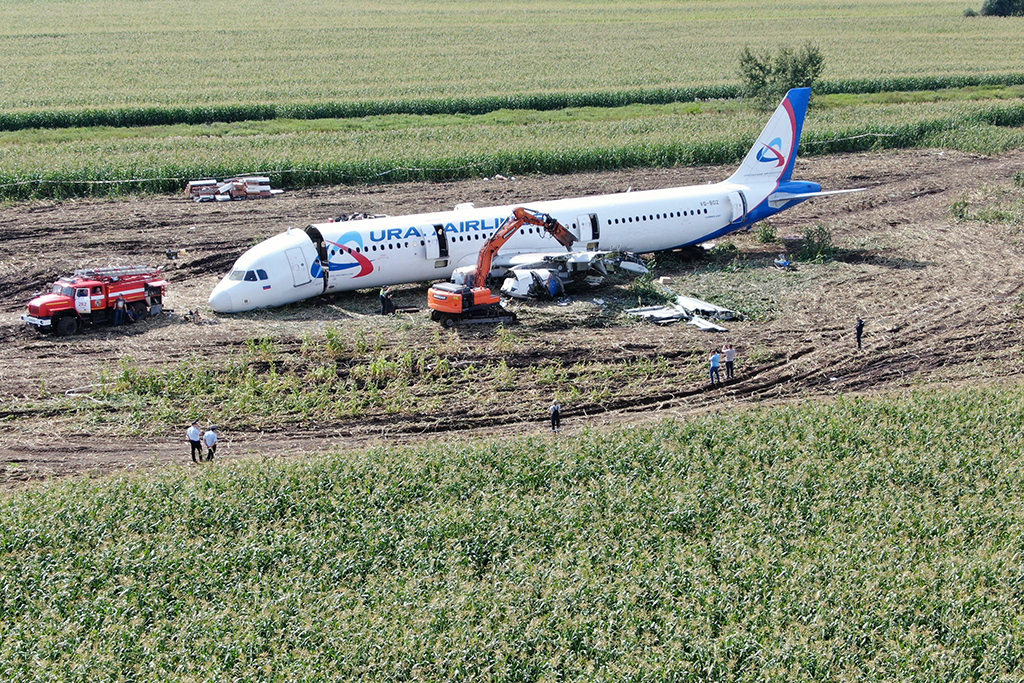
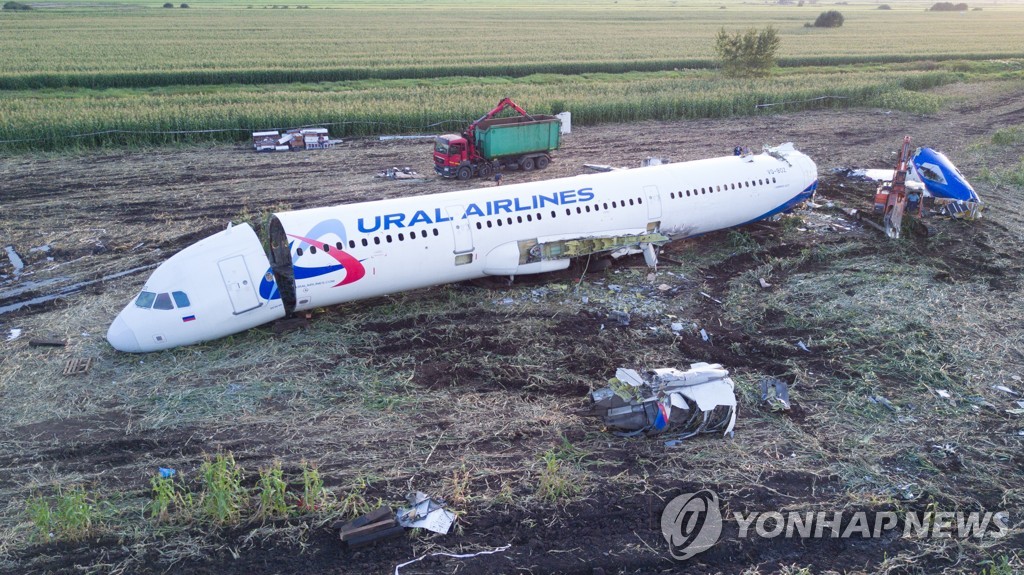
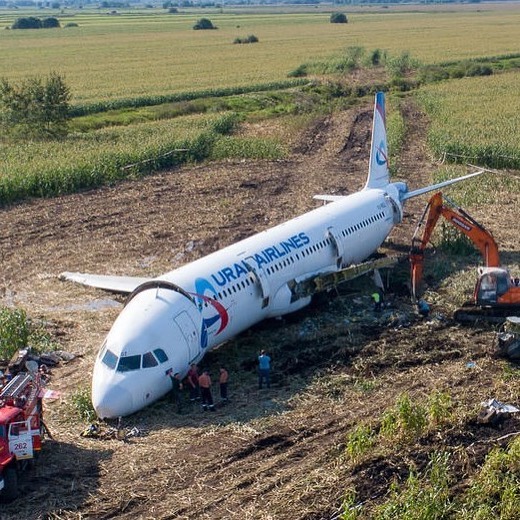
The airplane departed Moscow-Zukhovski (Ramenskoye) Airport runway 12 at 0615LT on a flight to Simferopol, carrying 226 passengers and a crew of 7. Immediately after takeoff, while climbing to a height estimated between 60 cm and 1,2 meter, the airplane collided with a flock of birds (sea gulls). Some of them were ingested by both engines that lost power. It was later reported by the crew that the left engine stopped almost immediately while the right engine lost power and run irregularly. Unable to maintain a positive rate of climb, the captain decided to attempt an emergency landing in a cornfield. The airplane belly landed approximately 3,5 km past the runway end and slid for few dozen metres before coming to rest with its both engines partially torn off. All 233 occupants were able to evacuate the cabin and it is reported that 23 people were slightly injured. The airplane was damaged beyond repair.
Probable cause:
The accident occurred during takeoff, in daytime (06:15 local time), under visual meteorological conditions, as a result of the aircraft striking a flock of seagulls immediately after liftoff, at an altitude of 0.6–1.2 m (2–4 ft). Some of the birds had an individual mass exceeding 1.13 kg (2.5 lbs), which corresponds to the certification category of a “large bird.” The bird strike caused mechanical damage to both engines, reducing their combined available thrust to a level below that of a single functioning engine operating at FLEX 49 (the takeoff setting used). This made it impossible to continue the flight in the aircraft’s actual configuration (landing gear not yet retracted), resulting in a forced landing outside the airport. In terms of available engine thrust, the situation exceeded the operational conditions anticipated during the aircraft type certification. Given the extent of the engine damage, even maintaining the limited available thrust could not be guaranteed had the crew attempted to continue the flight. Taking into account that the situation exceeded expected operational conditions—meaning there were no standard operating procedures for such circumstances—and considering the aircraft manufacturer’s position during the investigation that the ability to safely continue the flight would have depended critically on extremely precise pilot handling (control inputs during maneuvering, turns, etc.) and external factors (wind gusts, turbulence), it is not possible to unambiguously classify the hazards identified in the investigation as contributing factors. However, because these hazards pose clear risks to flight safety and require risk-reduction measures, they are listed below:
- Non-compliance of the main regulatory document in force at the time of the accident (ROOP GA-89, governing wildlife hazard management at civil aerodromes of the Russian Federation) with ICAO documentation, best international practice, and modern ornithological knowledge. This document was declared invalid by the Russian Ministry of Transport on 04.12.2020 (Order No. 541). No replacement document defining the procedure for airport wildlife hazard management has been issued, creating unacceptable risks given the complex bird-strike environment at many Russian aerodromes.
- The presence of a significant number of bird-attracting features (bodies of water, landfills, agricultural fields, etc.) in close proximity to the aerodrome, and landfills located in violation of the requirements of the Ramenskoye Airport Wildlife Hazard Management Instruction.
- Deficiencies in the organization of wildlife hazard management at Ramenskoye Airport, including ecological-ornithological assessment, implementation of bird-scaring measures, and runway inspections.
- A widespread practice (not only at Ramenskoye) of routinely informing crews about “bird movements” regardless of the actual threat level, which caused the warnings to lose their alerting value and become mere background noise.
- Lack of regulatory provisions and/or standard operating procedures describing required crew actions when the presence of birds on or near the runway is suspected (but cannot be visually confirmed) that could pose a risk to flight safety.
- Limited ability of airlines to assess avian-hazard risks due to the lack of reliable data sources on the bird environment at the aerodrome, resulting in insufficient information provided to flight crews about ornithological hazards at Ramenskoye.
- A discrepancy between the actual in-flight situation and scenarios practiced in simulators, caused by a false momentary indication of an “open thrust-reverser door” on the left engine triggered by the bird strike. This contributed to a psychophysiological surge (stress spike) and temporary disorganization of the crew’s actions during the continued takeoff procedure, including the omission of landing gear retraction.
- Non-compliance of the main regulatory document in force at the time of the accident (ROOP GA-89, governing wildlife hazard management at civil aerodromes of the Russian Federation) with ICAO documentation, best international practice, and modern ornithological knowledge. This document was declared invalid by the Russian Ministry of Transport on 04.12.2020 (Order No. 541). No replacement document defining the procedure for airport wildlife hazard management has been issued, creating unacceptable risks given the complex bird-strike environment at many Russian aerodromes.
- The presence of a significant number of bird-attracting features (bodies of water, landfills, agricultural fields, etc.) in close proximity to the aerodrome, and landfills located in violation of the requirements of the Ramenskoye Airport Wildlife Hazard Management Instruction.
- Deficiencies in the organization of wildlife hazard management at Ramenskoye Airport, including ecological-ornithological assessment, implementation of bird-scaring measures, and runway inspections.
- A widespread practice (not only at Ramenskoye) of routinely informing crews about “bird movements” regardless of the actual threat level, which caused the warnings to lose their alerting value and become mere background noise.
- Lack of regulatory provisions and/or standard operating procedures describing required crew actions when the presence of birds on or near the runway is suspected (but cannot be visually confirmed) that could pose a risk to flight safety.
- Limited ability of airlines to assess avian-hazard risks due to the lack of reliable data sources on the bird environment at the aerodrome, resulting in insufficient information provided to flight crews about ornithological hazards at Ramenskoye.
- A discrepancy between the actual in-flight situation and scenarios practiced in simulators, caused by a false momentary indication of an “open thrust-reverser door” on the left engine triggered by the bird strike. This contributed to a psychophysiological surge (stress spike) and temporary disorganization of the crew’s actions during the continued takeoff procedure, including the omission of landing gear retraction.
Final Report: