Crash of a Beechcraft AT-7 Navigator near Roncesvalles: 8 killed

Date & Time: Jun 23, 1947 at 0912 LT
Type of aircraft:
Operator:
Registration:
507
Flight Phase:
Flight Type:
Survivors:
No
Site:
Schedule:
Cali – Bogotá
MSN:
6708
YOM:
1944
Country:
Crew on board:
2
Crew fatalities:
Pax on board:
6
Pax fatalities:
Other fatalities:
Total fatalities:
8
Circumstances:
The twin engine aircraft left Cali at 0827LT on a routine flight to Bogotá-Techo Airport. Some 45 minutes into the flight, the crew encountered icing conditions and the aircraft went out of control and crashed in a mountainous area located near the village of Roncesvalles, about 50 km southwest of Ibagué. All eight occupants were killed.

Crash of a Consolidated PBY-5A Catalina in Buenaventura: 1 killed

Date & Time: Dec 20, 1946
Type of aircraft:
Operator:
Registration:
C-406
Survivors:
Yes
Schedule:
Cali - Buenaventura
Country:
Crew on board:
0
Crew fatalities:
Pax on board:
0
Pax fatalities:
Other fatalities:
Total fatalities:
1
Circumstances:
After landing in the harbor of Buenaventura, the seaplane hit a floating tree trunk, went out of control and came to rest. At least one occupant was killed.
Probable cause:
Collision with a tree trunk.

Crash of a Sikorsky S-43 off Cristóbal: 14 killed

Date & Time: Aug 2, 1937 at 1938 LT
Type of aircraft:
Operator:
Registration:
NC15065
Survivors:
No
Schedule:
Lima – Guayaquil – Tumaco – Cali – Cristóbal – Panama City
MSN:
4305
YOM:
1936
Location:
Country:
Crew on board:
3
Crew fatalities:
Pax on board:
11
Pax fatalities:
Other fatalities:
Total fatalities:
14
Captain / Total hours on type:
991.00
Circumstances:
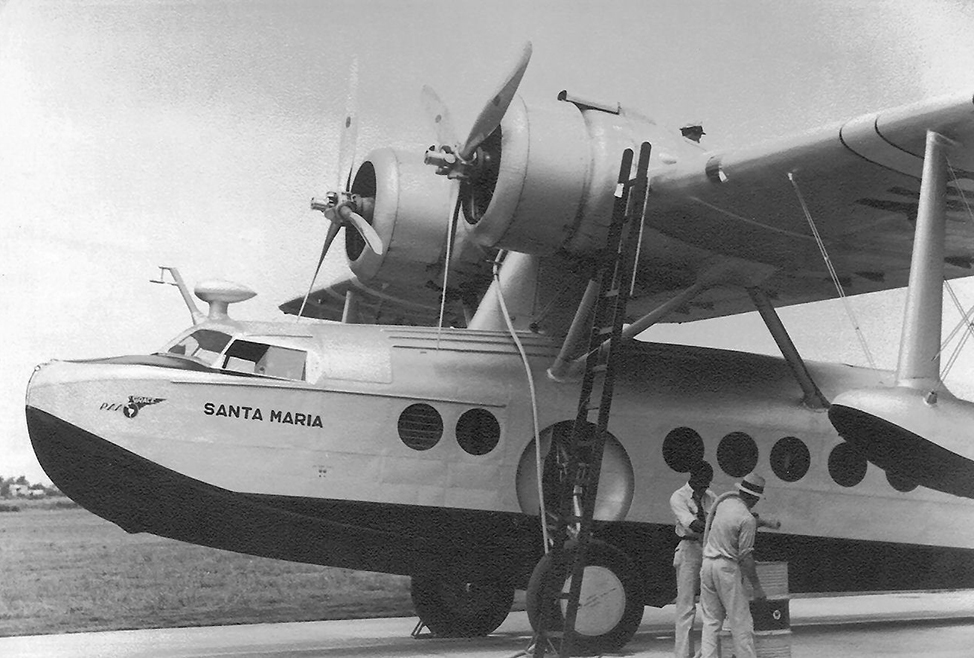
While descending to Cristóbal-France Field (Colón) at an altitude of some 2,000 feet, the pilot informed ATC that he was approaching the city via the Bahía Limón Bay. In limited visibility due to rain falls, the float plane named 'Santa Maria' went out of control and crashed into the sea few km offshore. Debris were found the following floating on water and all 14 occupants were killed.
Probable cause:
The Board is conclusively of the opinion that the accident was caused by the NC15065 striking the water while moving less then 90 miles per hour, tearing the ship to pieces, causing the death of all aboard and that a fire resulted from the impact with the water. The Board is convinced that at the time of the collision the plane had a minimum of 80 gallons of gas which would have burned on the water a sufficient length of time to cause all burns or scorches found one any recovered wreckage. The specific contributing cause of this aircraft colliding with the water is beyond the knowledge of man. However, there must have been a specific contributing cause or causes, and the Board is of the opinion that the most probable contributing cause is one of the following and in the order named:
- Failure of one or both engines due to faulty gasoline system, occurring during the spiraling down mentioned in the pilot's last radio message.
- The encountering of a sudden severe rain, as altitude was being lost by the plane in the spiraling descent, resulting in the blanking out of all visual contact.

Crash of a De Havilland DH.60G Gipsy Moth in Cali: 2 killed

Date & Time: Feb 16, 1930
Type of aircraft:
Operator:
Registration:
C-39
Flight Phase:
Survivors:
No
Schedule:
Cali - Cali
Country:
Crew on board:
2
Crew fatalities:
Pax on board:
0
Pax fatalities:
Other fatalities:
Total fatalities:
2
Circumstances:
The crew was supposed to drop promotion materials over the area of Cali. En route, the pilot lost control of the airplane that crashed in unknown circumstances. The airplane named 'Garza' was destroyed and both crew members were killed, among them pilot von Burchardt.