Country

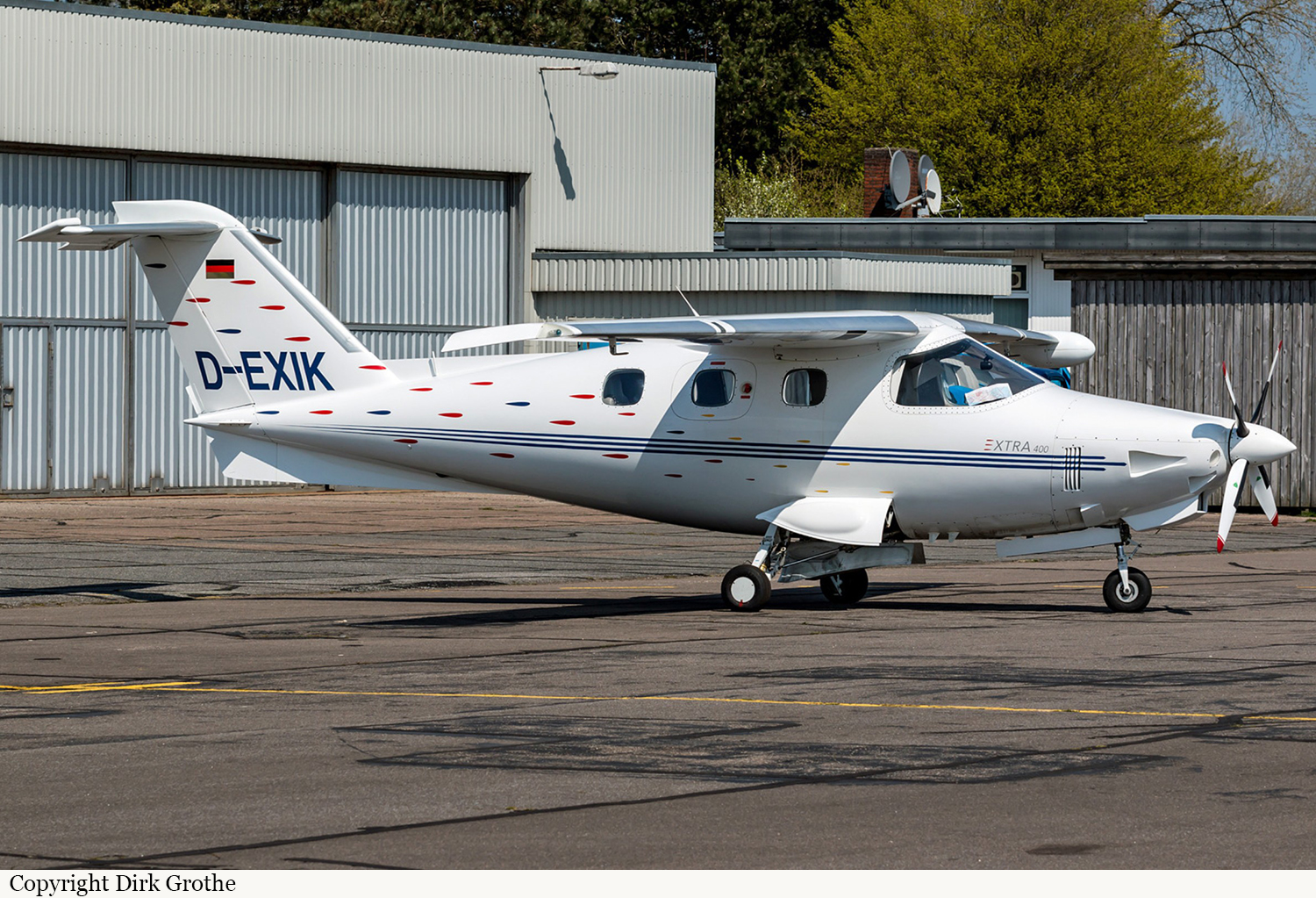
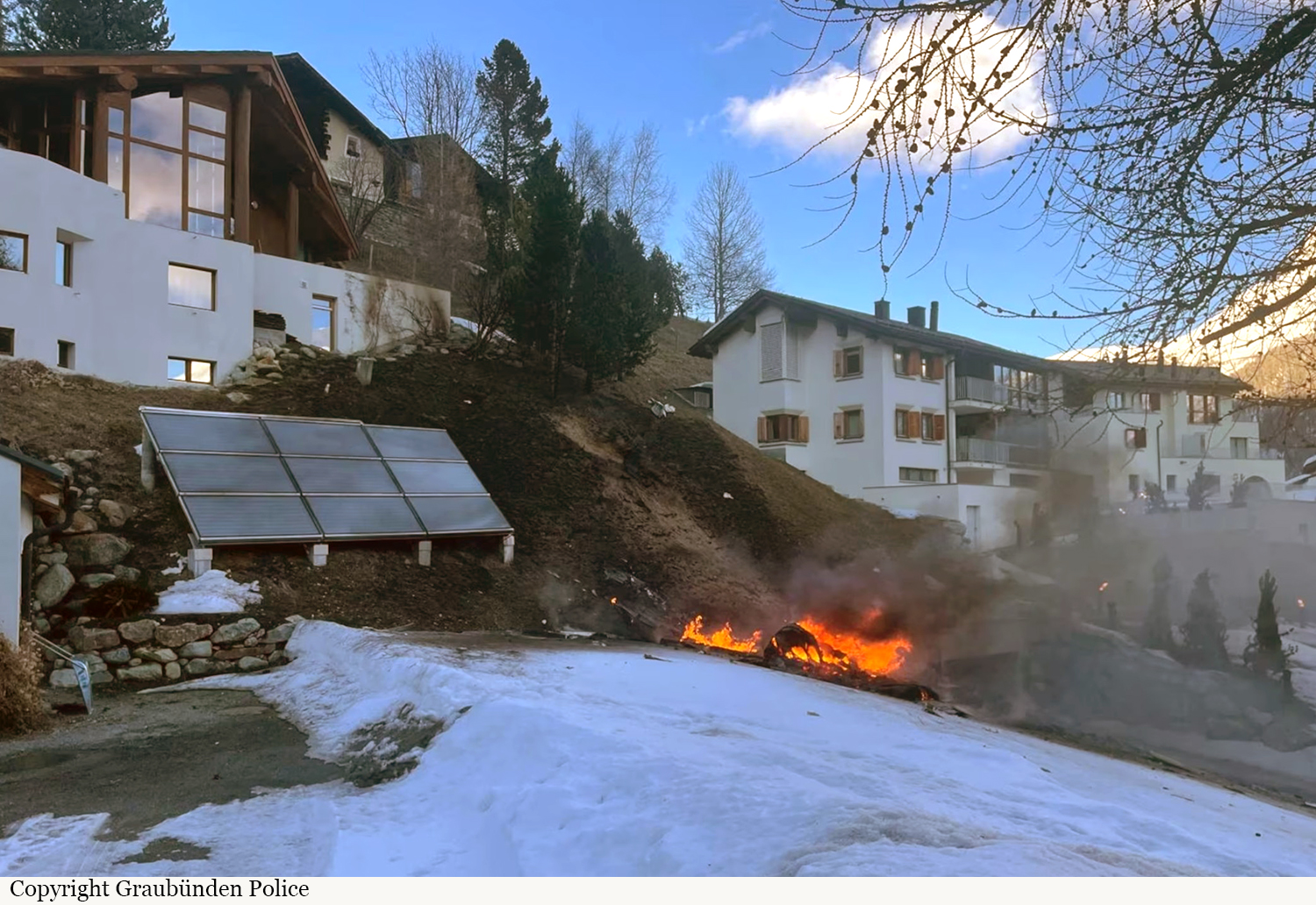
Crash of an Extra EA-400 in La Punt-Chamues-ch: 3 killed

Date & Time: Mar 17, 2025 at 1722 LT
Type of aircraft:
Operator:
Registration:
D-EXIK
Flight Phase:
Flight Type:
Survivors:
No
Site:
Schedule:
Samedan - Roskilde
MSN:
13
YOM:
2000
Country:
Region:
Crew on board:
1
Crew fatalities:
Pax on board:
2
Pax fatalities:
Other fatalities:
Total fatalities:
3
Aircraft flight hours:
870
Circumstances:
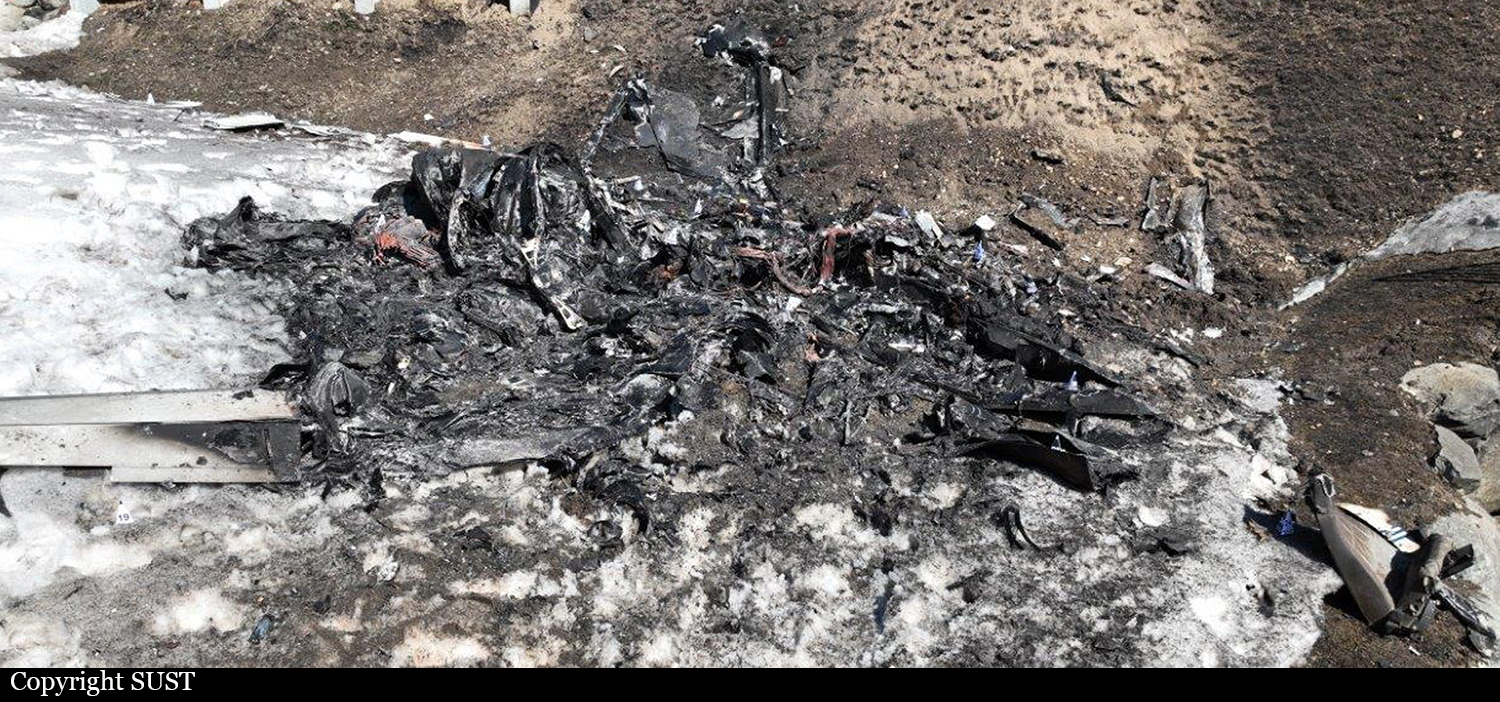
The single engine airplane departed Samedan Airport Runway 03 at 1720LT on a private VFR flight to Roskilde. On board were two passengers and one pilot. Following a straight-in climb for about two minutes, while flying over La Punt-Chamues-ch, the pilot initiated a turn to the left to enter the Albula Valley when he lost control of the airplane that crashed near houses, bursting into flames. The wreckage was found some 6 km northeast of the airport. The airplane was totally destroyed by a post crash fire and all three occupants were killed.
Probable cause:
Given the aircraft's performance and considering the weather conditions at the time of the accident, the aircraft should have reached its maximum altitude of 7,700 feet after approximately two minutes of flight. It was determined that upon takeoff, the aircraft's total weight exceeded its maximum permissible weight by 5%, while its center of gravity was beyond the aft center of gravity limit specified in the pilot's operating handbook (POH). During refueling, a fuel leak occurred at the wing overflow valves. This leak persisted during the taxi to the runway, and the pilot was alerted by flight information services. The leak ceased before the aircraft reached the threshold of runway 03.
Final Report:
Crash of an Extra EA-400 in Vrchotovy Janovice

Date & Time: Jun 12, 2020 at 1342 LT
Type of aircraft:
Operator:
Registration:
OK-EKO
Flight Phase:
Flight Type:
Survivors:
Yes
Schedule:
Příbram – Moravská Třebová
MSN:
17
YOM:
2001
Region:
Crew on board:
1
Crew fatalities:
Pax on board:
0
Pax fatalities:
Other fatalities:
Total fatalities:
0
Captain / Total flying hours:
336
Captain / Total hours on type:
196.00
Aircraft flight hours:
487
Circumstances:
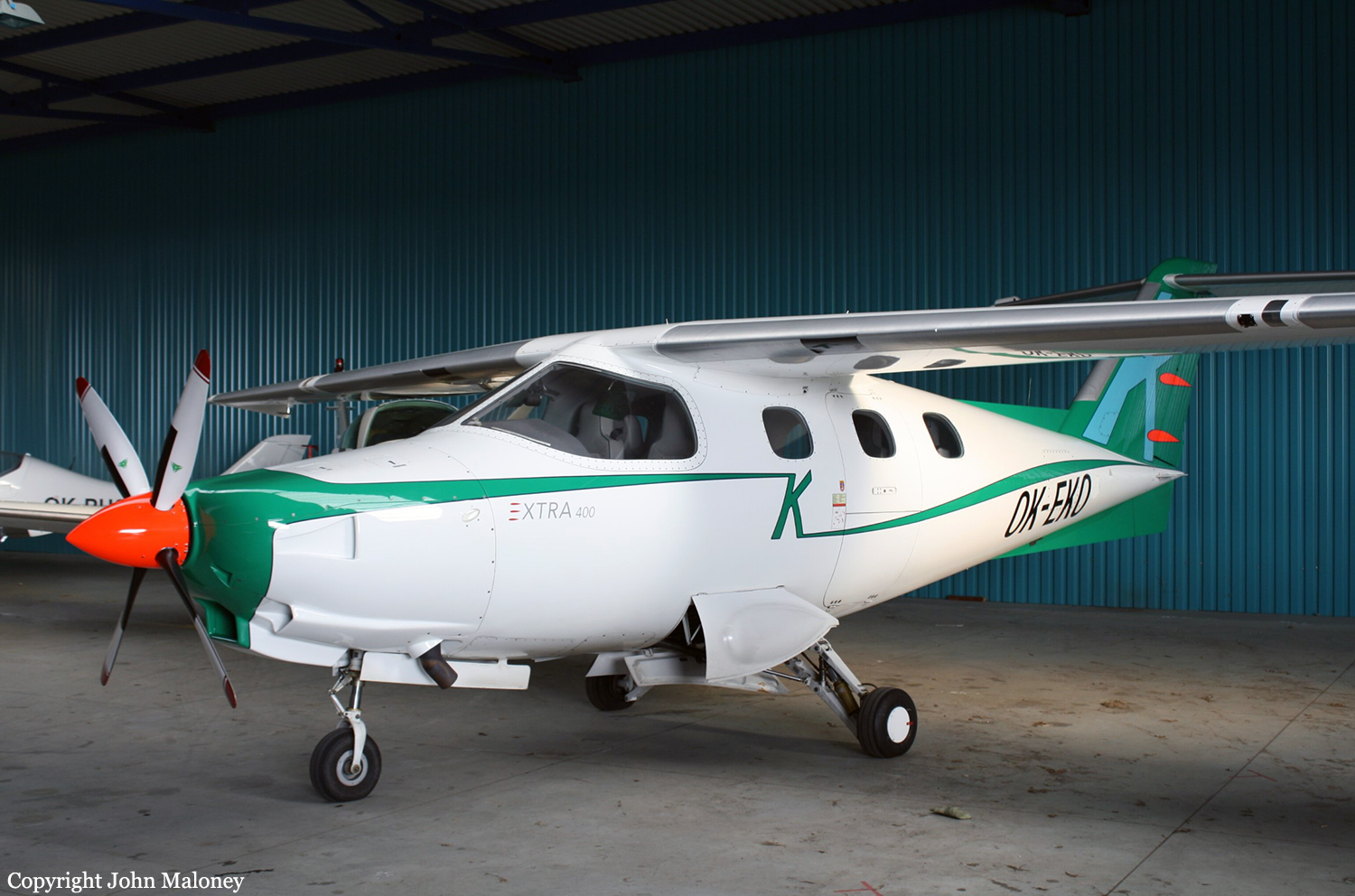
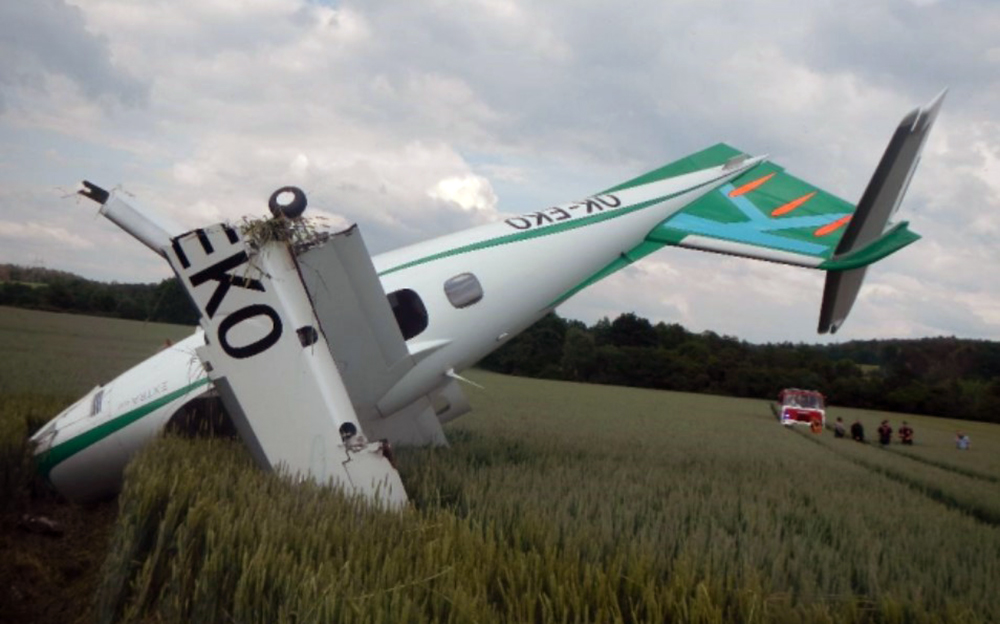
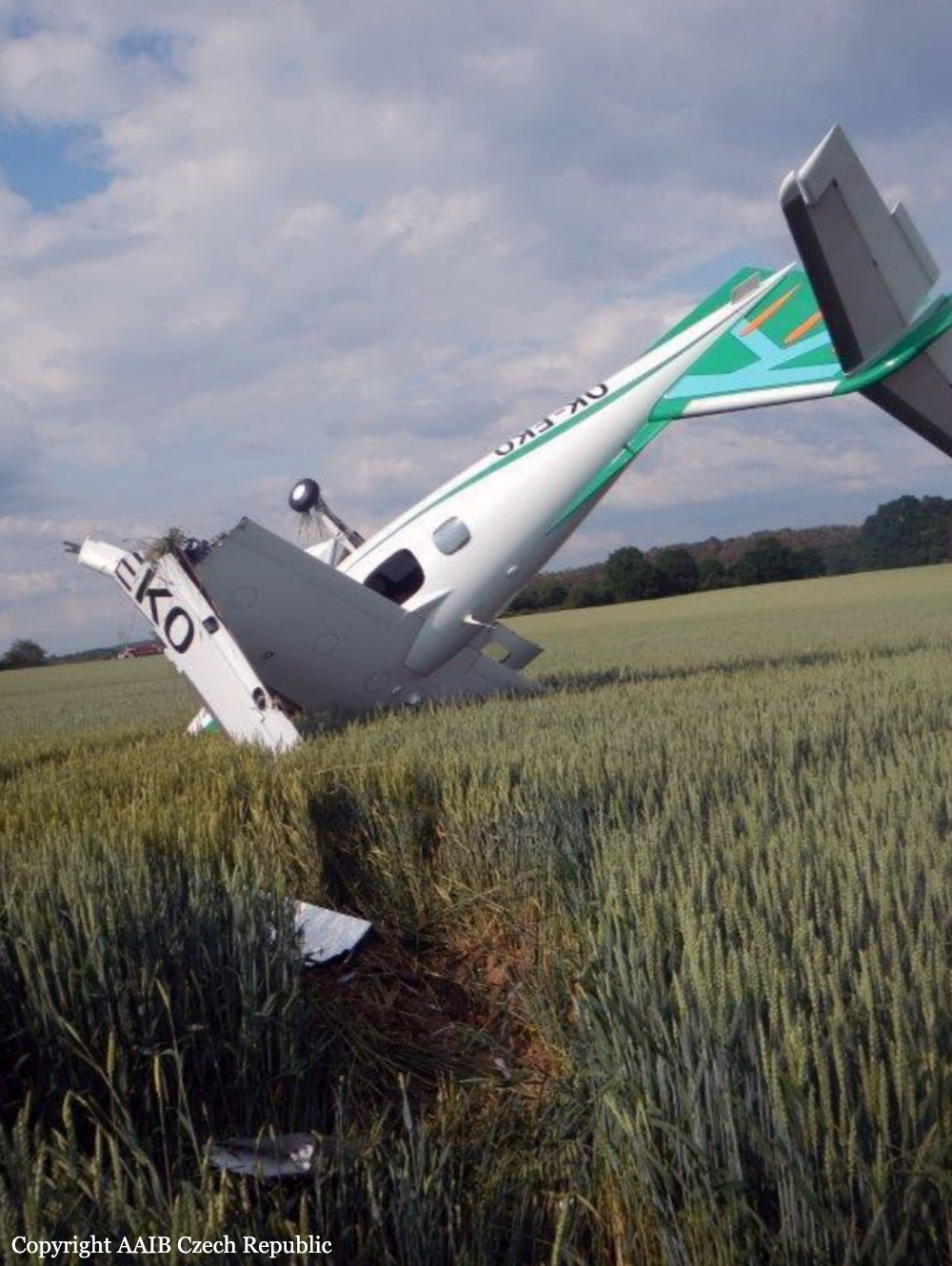
The pilot, sole on board, departed Příbram Airport in the early afternoon on a private flight to Moravská Třebová. About 15 minutes into the flight, while cruising in good weather conditions, he encountered engine problems and elected to divert to Benešov Airfield. Shortly later, some cooling liquid leaked from the engine into the cabin and on the windshield, reducing the pilot's vision. He elected to make an emergency landing in a cornfield when, upon touchdown, the aircraft crashed and came to rest upside down with its right wing torn off. There was no fire. The pilot was injured and the aircraft was damaged beyond repair.
Probable cause:
The cause of the plane crash was a leak of coolant from the space of cylinder n°5. The leaked coolant penetrated into the cabin where it splashed the windshield. This made it impossible for the pilot to look ahead. For this reason, the pilot was forced to make an emergency landing.
Final Report:

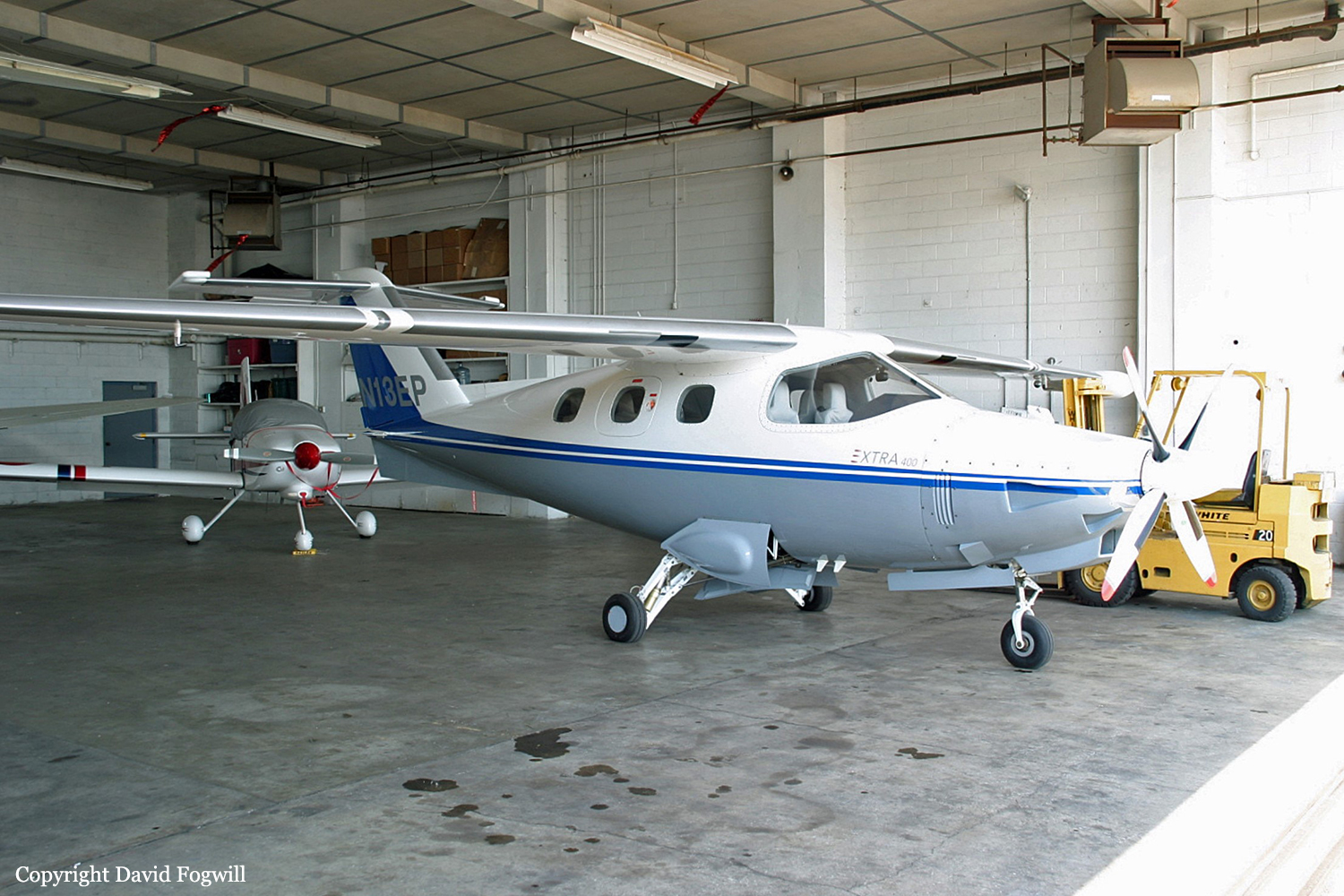
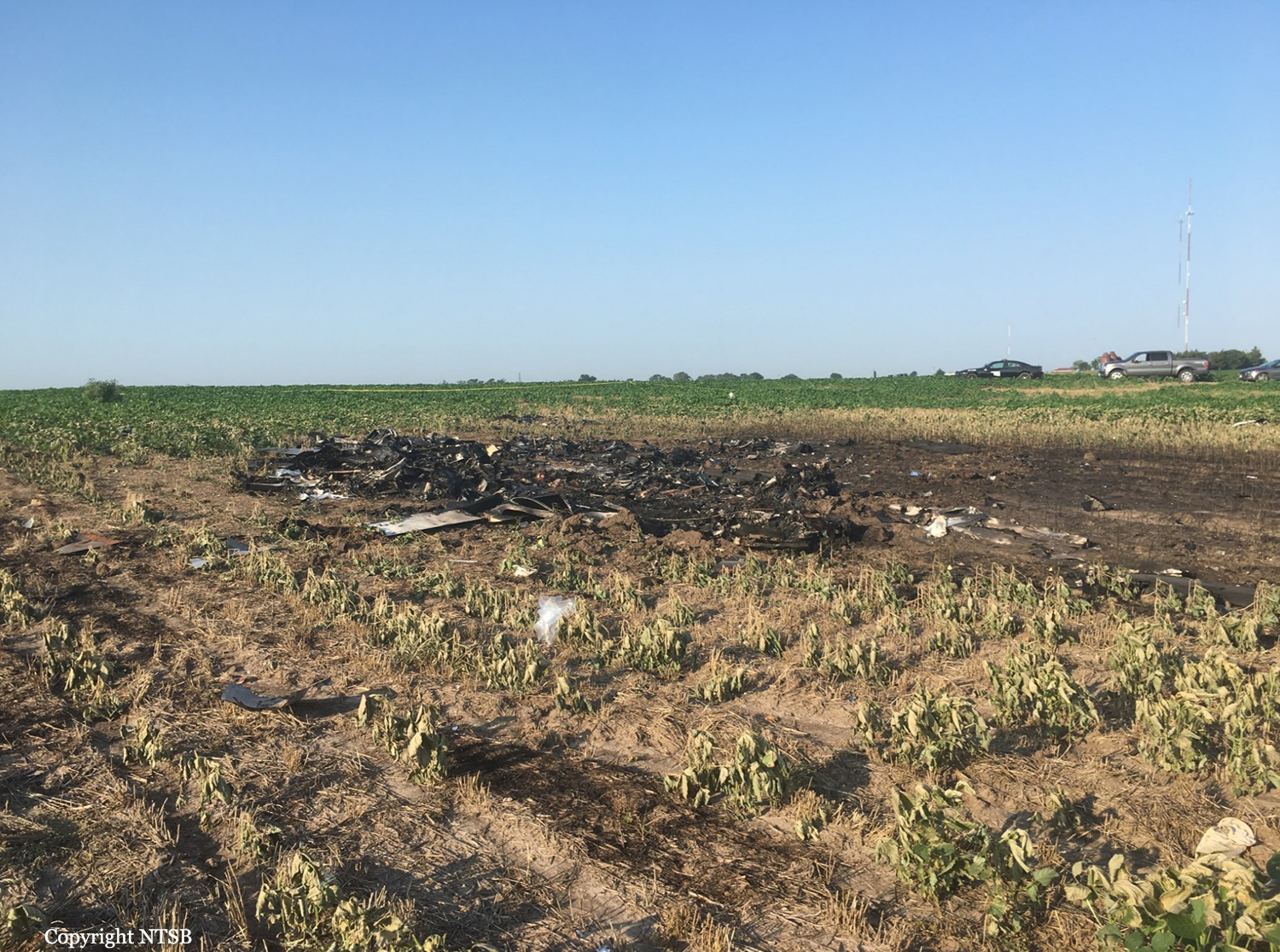
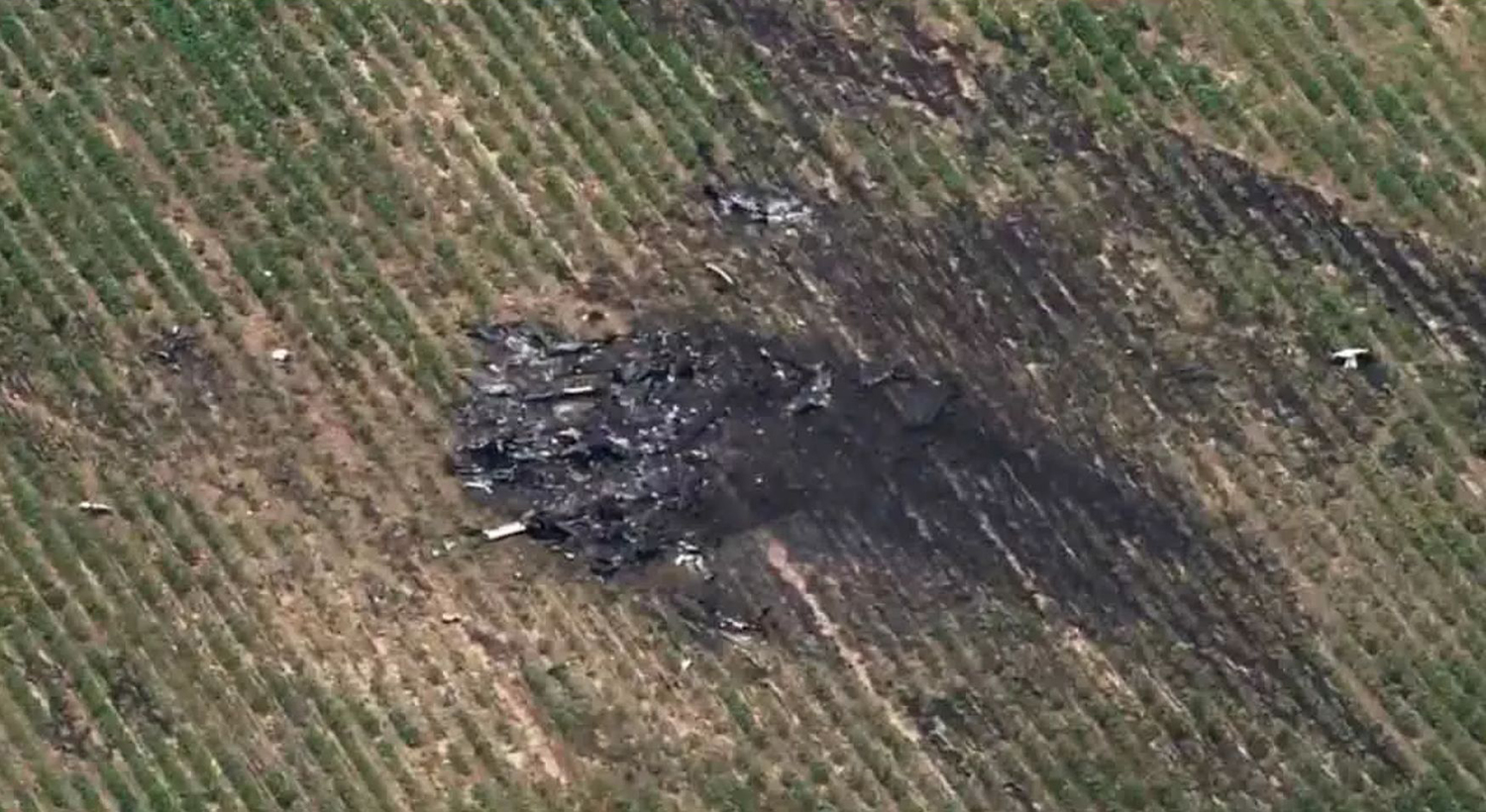
Crash of an Extra EA-400 in Ponca City: 5 killed

Date & Time: Aug 4, 2018 at 1045 LT
Type of aircraft:
Operator:
Registration:
N13EP
Flight Phase:
Flight Type:
Survivors:
No
Schedule:
Ponca City - Independence
MSN:
10
YOM:
2000
Crew on board:
1
Crew fatalities:
Pax on board:
4
Pax fatalities:
Other fatalities:
Total fatalities:
5
Captain / Total flying hours:
4200
Captain / Total hours on type:
200.00
Aircraft flight hours:
1198
Circumstances:
The pilot was conducting a personal flight with four passengers. A witness observed the airplane take off and climb slowly from the airport. A pilot flying in the vicinity observed the airplane maneuver erratically before the airplane impacted terrain in a near-vertical attitude. The airplane was destroyed by impact forces and a postimpact fire. The wreckage was contained to a confined area in the field and the remains of the major airplane components were all accounted for. Extensive thermal damage to the airframe and engine limited the scope of the postaccident examination. The impact energy needed to drive the engine into the ground suggested that the engine was producing power at the time of the accident. A postaccident examination of the remaining airframe and engine components did not reveal any anomalies which would have precluded normal operation of the airplane. Depending on the amount of fuel, baggage and equipment on board, and the location of the adult passenger, the center of gravity (CG) could have been within or aft of the recommended CG. Since fuel load and location of the passengers could not be determined or may have shifted during flight, it is not known if loading contributed to the accident. The pilot was not operating with valid medical certification. His second-class medical certificate had expired several years prior to the accident and Federal Aviation Administration records did not indicate that he had obtained BasicMed medical certification. A pilot-rated passenger was seated in the rightfront seat. Investigators were unable to determine who was manipulating the flight controls of the airplane at the time of the accident. The circumstances of the accident are consistent with the pilot’s loss of control. However, the reason for the loss of control could not be determined with the available evidence.
Probable cause:
The pilot's loss of control for reasons that could not be determined with the available evidence.
Final Report:

Crash of an Extra EA-400 in Rørvik

Date & Time: Sep 2, 2001 at 1050 LT
Type of aircraft:
Operator:
Registration:
D-ETAW
Flight Phase:
Flight Type:
Survivors:
Yes
Schedule:
Rørvik - Nuremberg
MSN:
08
YOM:
2000
Country:
Region:
Crew on board:
1
Crew fatalities:
Pax on board:
2
Pax fatalities:
Other fatalities:
Total fatalities:
0
Captain / Total flying hours:
705
Captain / Total hours on type:
50.00
Aircraft flight hours:
248
Aircraft flight cycles:
215
Circumstances:
The pilot went through the checklist “BEFORE STARTING ENGINE CHECKLIST” and then started the engine. Everything was normal and, after going through the subsequent points on the checklist, he taxied out to the end of runway 04 where he performed the “BEFORE TAKEOFF CHECK”. In the position at the end of the runway, an engine check was carried out. All was set at 10:50 hrs. As the accident happened outside opening hours, the Airport was unmanned and no AFIS or recovery services were available. The pilot held the aircraft back on brakes and gave “full power”. All indications were normal, according to the pilot. All the instruments indicated “high power”. He released the brakes and checked the acceleration. At 50% of the runway’s length, the passenger in the right front seat called an airspeed of 60 kts IAS, and at 75% of the runway, the pilot rotated the aircraft. At that point the speed was 78 kts. The pilot estimates that the aircraft had gained a height of approx. 25 m when he experienced a loss of power (“leistungsverlust”), which he thought was related to a loss of turbo power, shortly after the stall warning light came on. The pilot realized that it was impossible to continue the flight, so he attempted to land on the remaining runway. 150 m of the runway still remained, and the aircraft landed hard at a steep angle on the runway. The aircraft hit the runway hard on the main wheels and the tail. When the pilot realized that it would be difficult to stop on the remaining portion of the runway, he retracted the landing gear. The aircraft continued past the end of the runway, where it hit several large rocks along the breakwater, where the approach lights for runway 04 are positioned. Following hitting the rocks, the pilot registered fire in the engine, which was quickly extinguished when the aircraft entered the water along the breakwater. The left wing hit so hard into the breakwater that the aircraft rotated 180° and stopped in the opposite direction of the take-off. The aircraft half filled with water immediately. The passengers and pilot unfastened their seat belts and evacuated through the emergency hatch on the right-hand side of the aircraft. The passenger seated in the cabin received only minor injuries during the evacuation, mainly caused by the jagged rocks.
Probable cause:
The AAIB/N’s investigations, in cooperation with an expert from the engine manufacturer, conclude that the experienced loss of engine power was caused by the grounding of one of the magnetos as a result of fire. The fire started when fuel began to leak from the fuel manifold valve and from there sprayed out over the engine’s crank casing, wires, pipes etc. Thereafter it is most probable that alternator no. 2 ignited the fuel. The fire spread rapidly and the insulation around the first magneto and subsequently the second were destroyed with the result that they became permanently connected to ground. This first led to the engine losing power and then failing altogether. The blue staining of the crankcase’s top and the presence of yellow putty indicate that this loose connection dates from the time after the engine’s shock loading inspection, following the gear up landing approx. 175 hrs previous to the accident. During this inspection the fuel manifold valve and fuel pipes were dismantled and reinstalled. Presumably the leakage started gradually. Initially the extent of the leakage might have been so minor that the fuel had vaporized without being set alight. The blue staining of the cylinders conveys that there have been pools of fuel in the area, and that significant leakage undoubtedly occurred during the flight from Germany to Norway. On start-up from Rørvik Airport Ryum, the leakage continued and it is most probable that the fire started just before take-off. The pilot did not observe the fire before he hit the large stones at the end of the runway, i.e. shortly before the aircraft continued out into the sea. This is explained by the engine cowling being unusually tight fitted on this liquid-cooled engine aircraft. The flames could not be seen before the engine cowling was struck sideways in the crash. The sea extinguished the fire immediately.
Final Report:

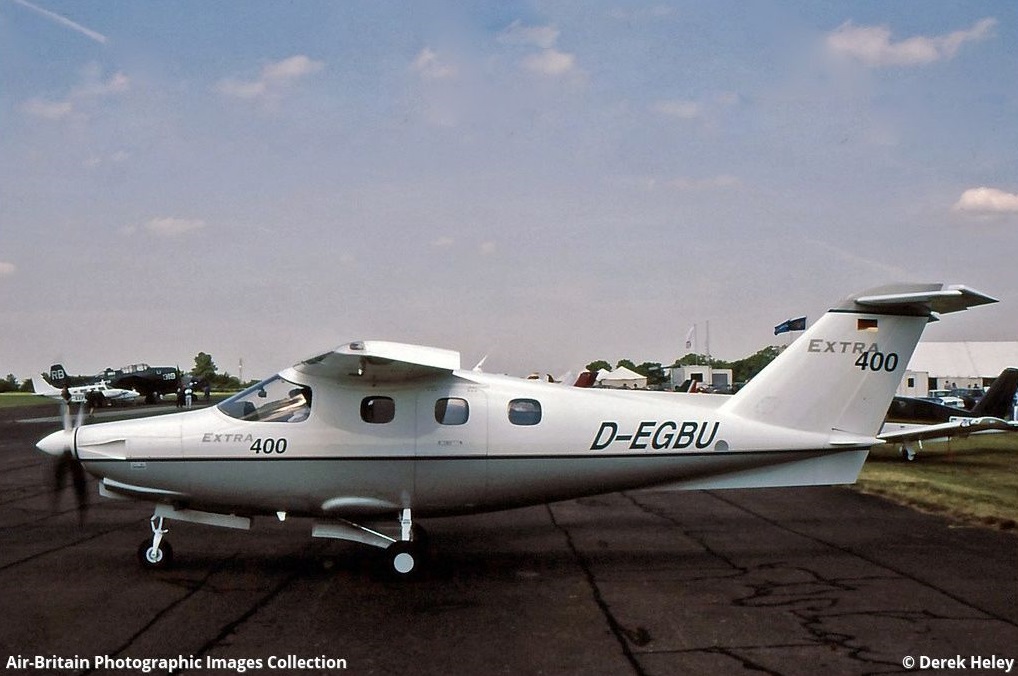
Crash of an Extra EA-400 in Hagen: 1 killed

Date & Time: Aug 21, 1998 at 1703 LT
Type of aircraft:
Operator:
Registration:
D-EGBU
Flight Phase:
Flight Type:
Survivors:
No
Schedule:
Dinslaken – Donaueschingen
MSN:
02
YOM:
1998
Country:
Region:
Crew on board:
1
Crew fatalities:
Pax on board:
0
Pax fatalities:
Other fatalities:
Total fatalities:
1
Circumstances:
The pilot, sole on board, departed Dinslaken-Schwarze Heide Airport on a flight to Donaueschingen. While in cruising altitude in poor weather conditions, the aircraft entered an uncontrolled descent and crashed in Hagen. The aircraft was destroyed and the pilot was killed. He was supposed to deliver the aircraft to his new owner.
Probable cause:
The pilot operated this aircraft for the first time and was surprised when the aircraft lost height in flight, probably because the speed was too low.
Final Report: