Crash of a Beechcraft 100 King Air in Jeffersonville

Date & Time: Oct 30, 2016 at 1235 LT
Type of aircraft:
Operator:
Registration:
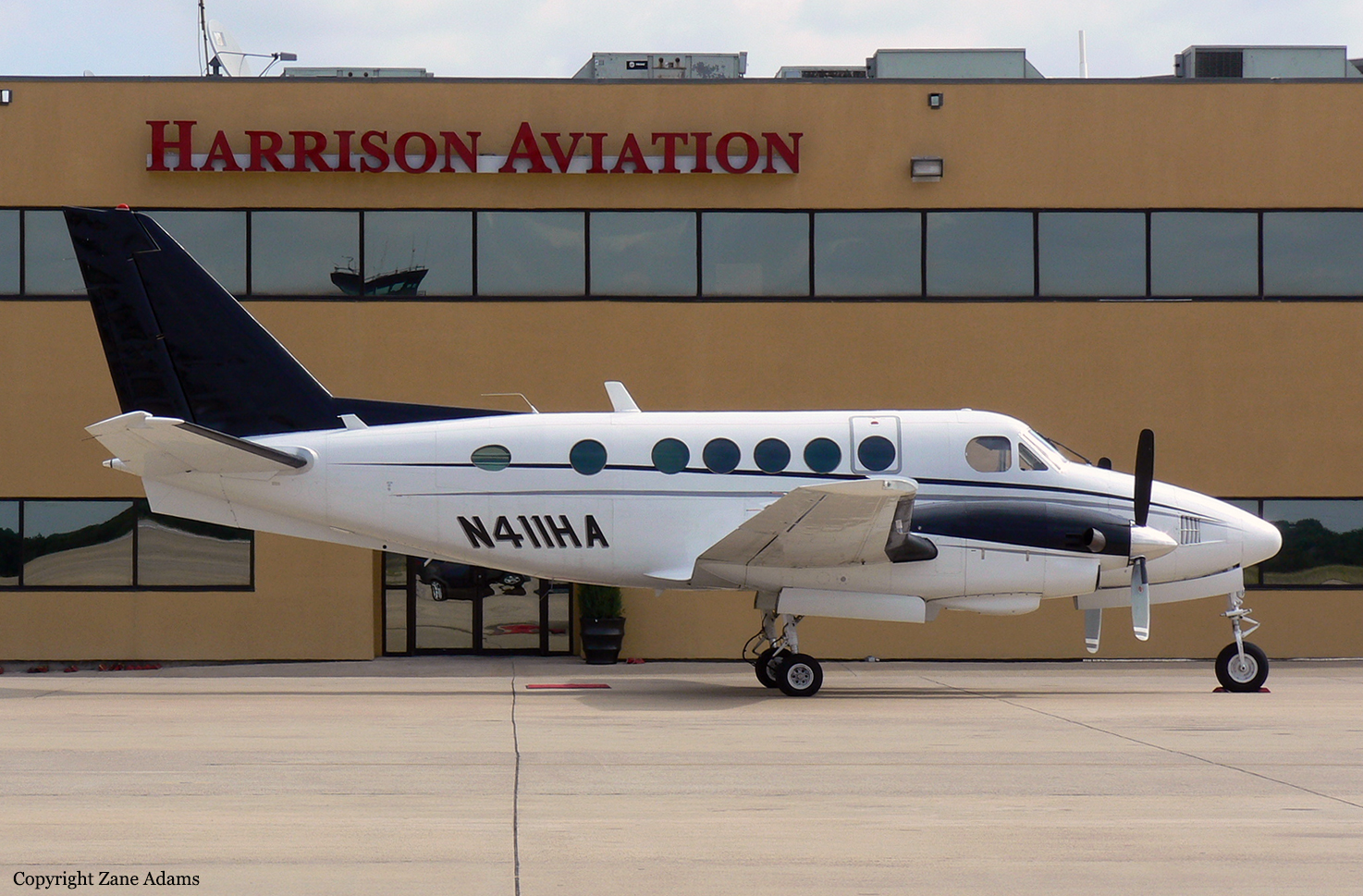
N411HA
Flight Phase:
Flight Type:
Survivors:
Yes
Schedule:
Jeffersonville – Brunswick
MSN:
B-21
YOM:
1970
Crew on board:
2
Crew fatalities:
Pax on board:
8
Pax fatalities:
Other fatalities:
Total fatalities:
0
Captain / Total flying hours:
13142
Captain / Total hours on type:
34.00
Copilot / Total flying hours:
1605
Copilot / Total hours on type:
3
Aircraft flight hours:
12583
Circumstances:
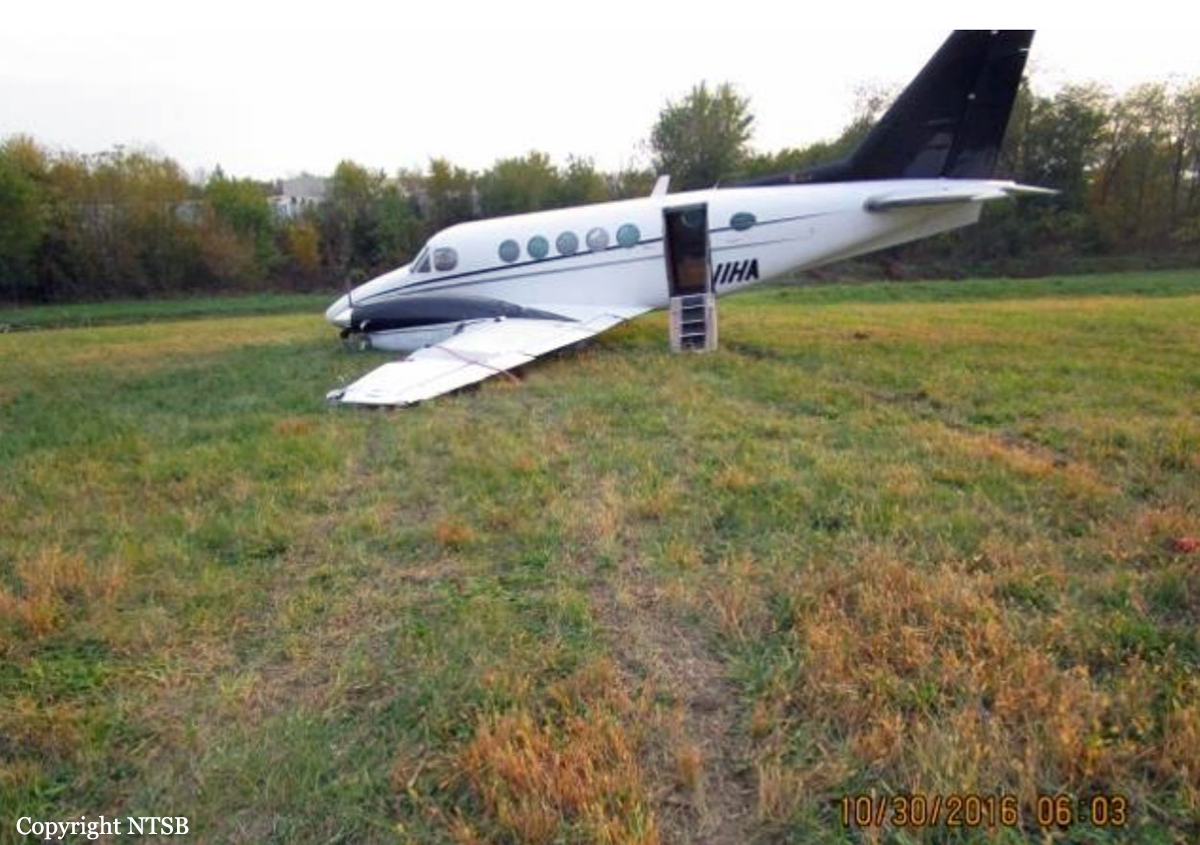
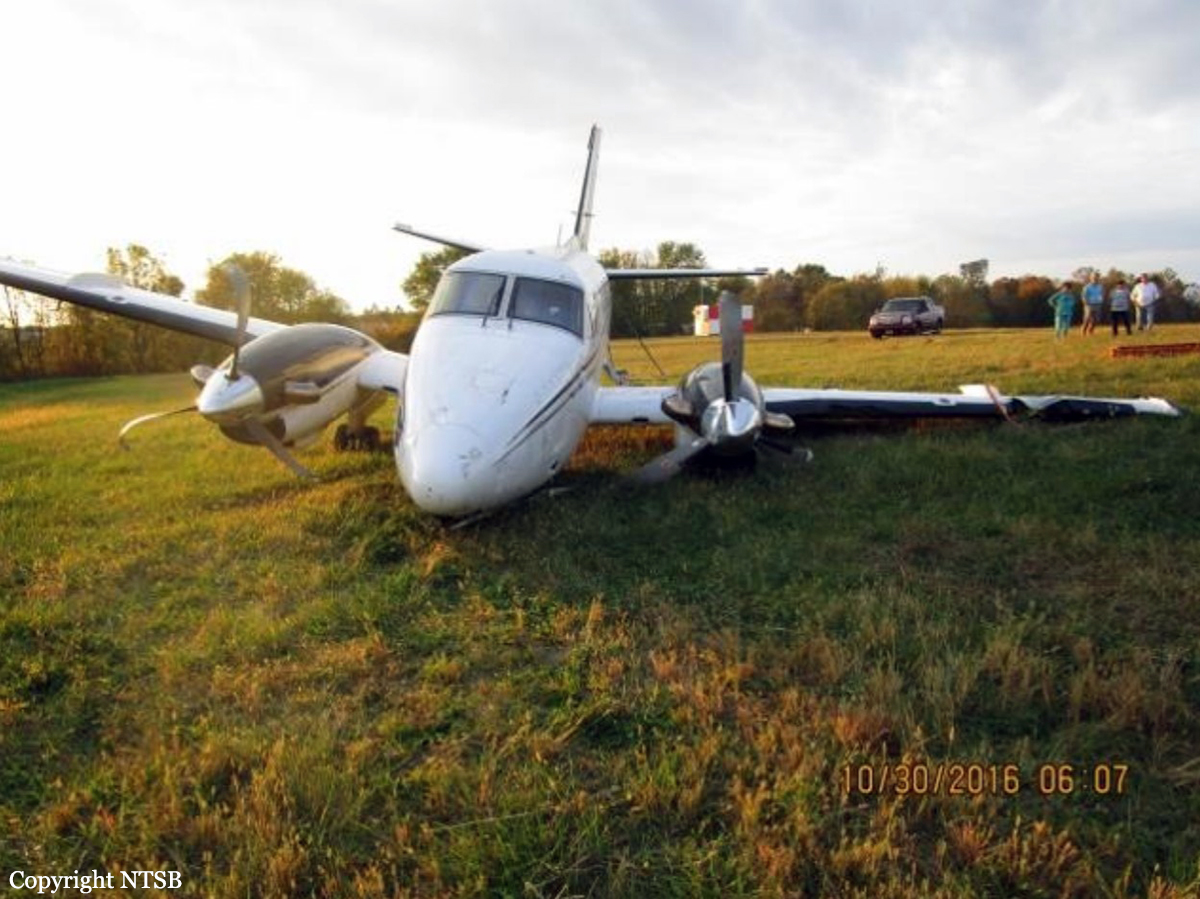
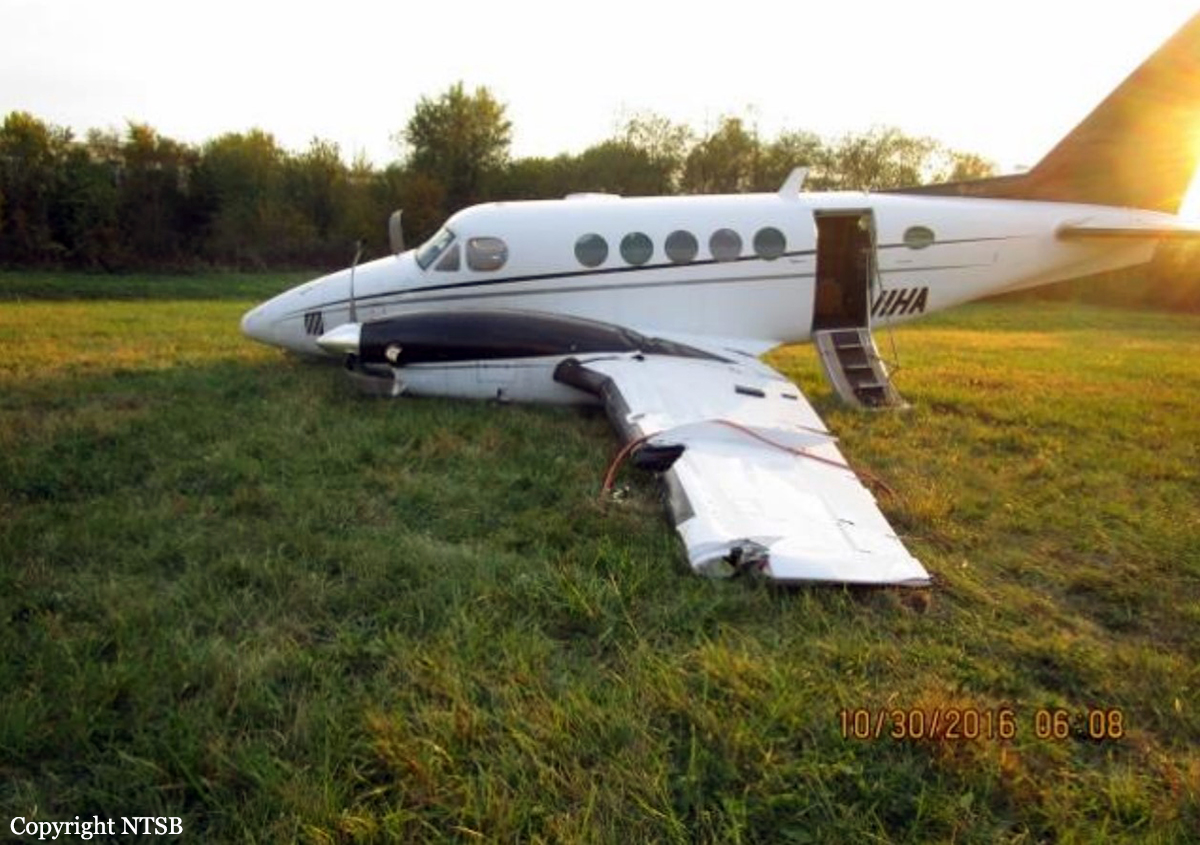
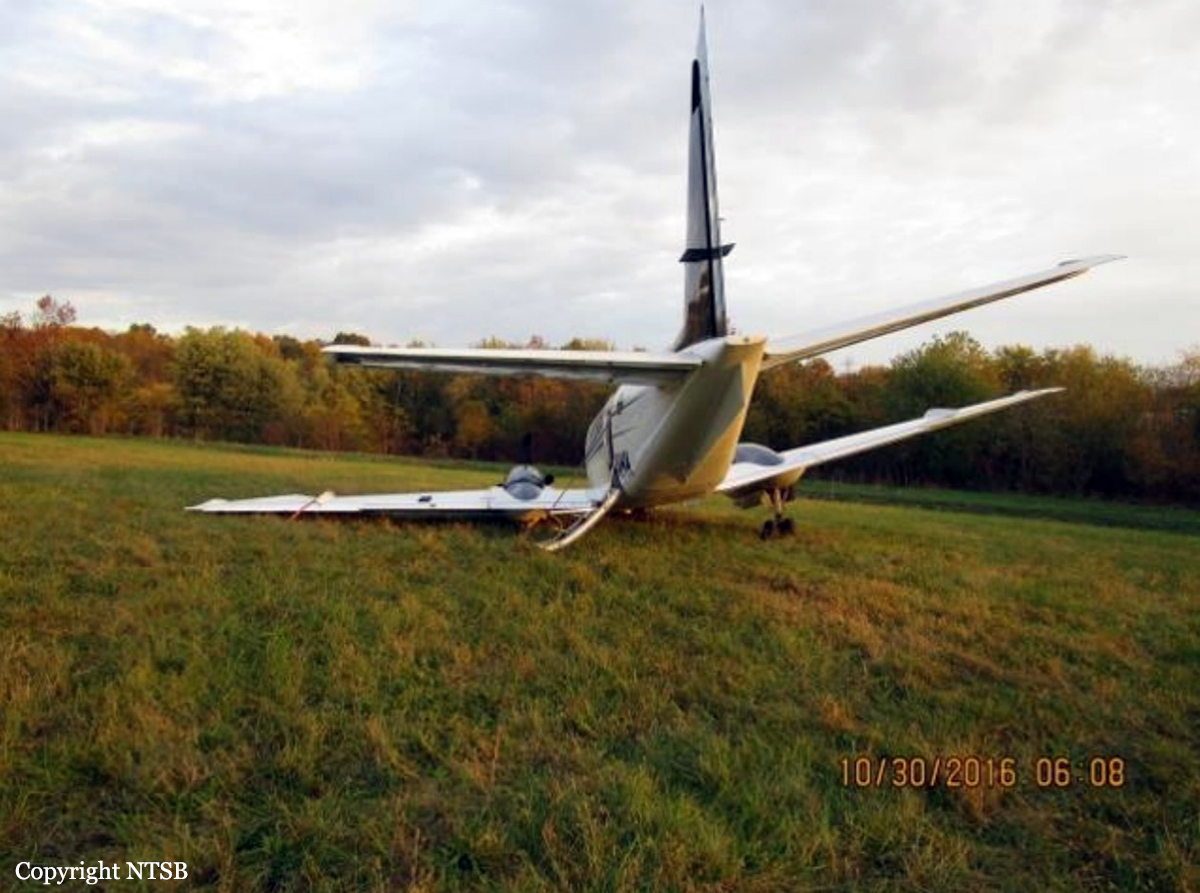
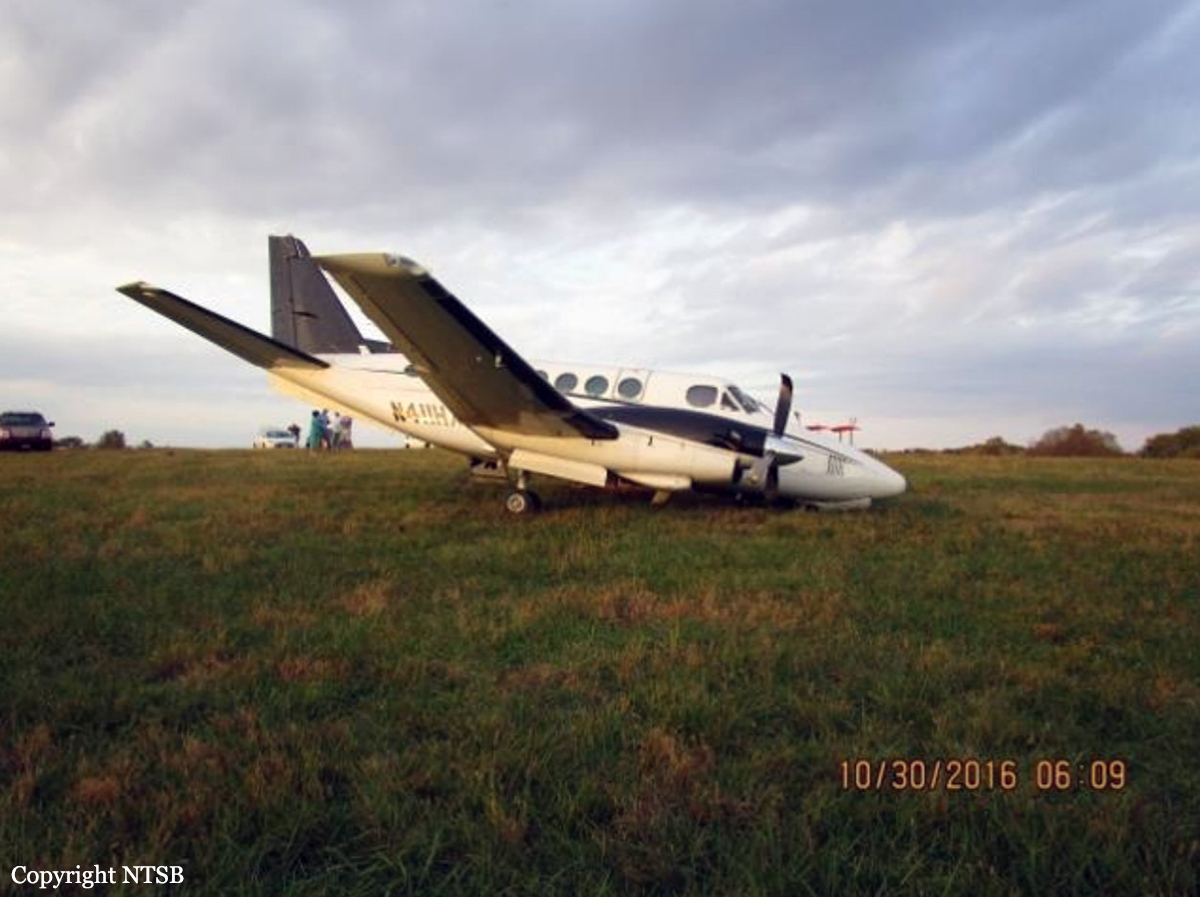
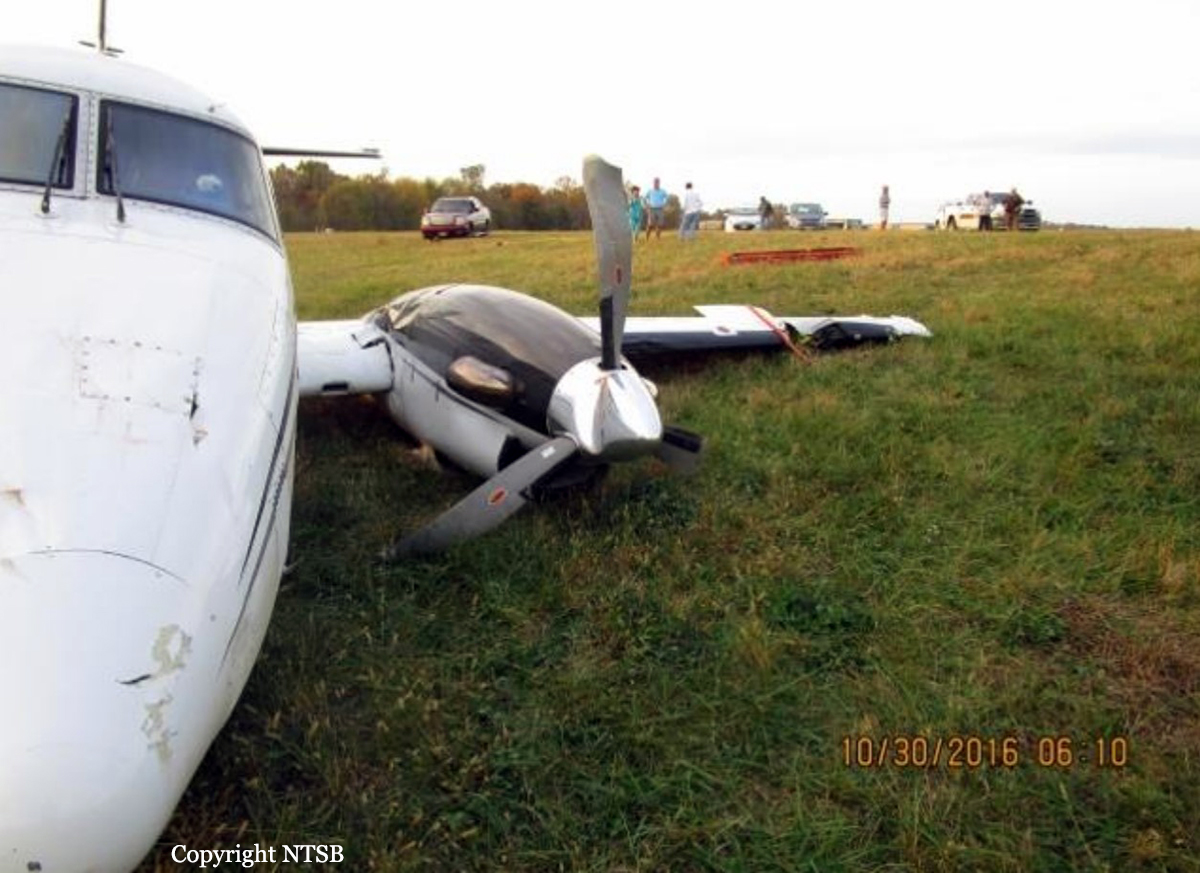
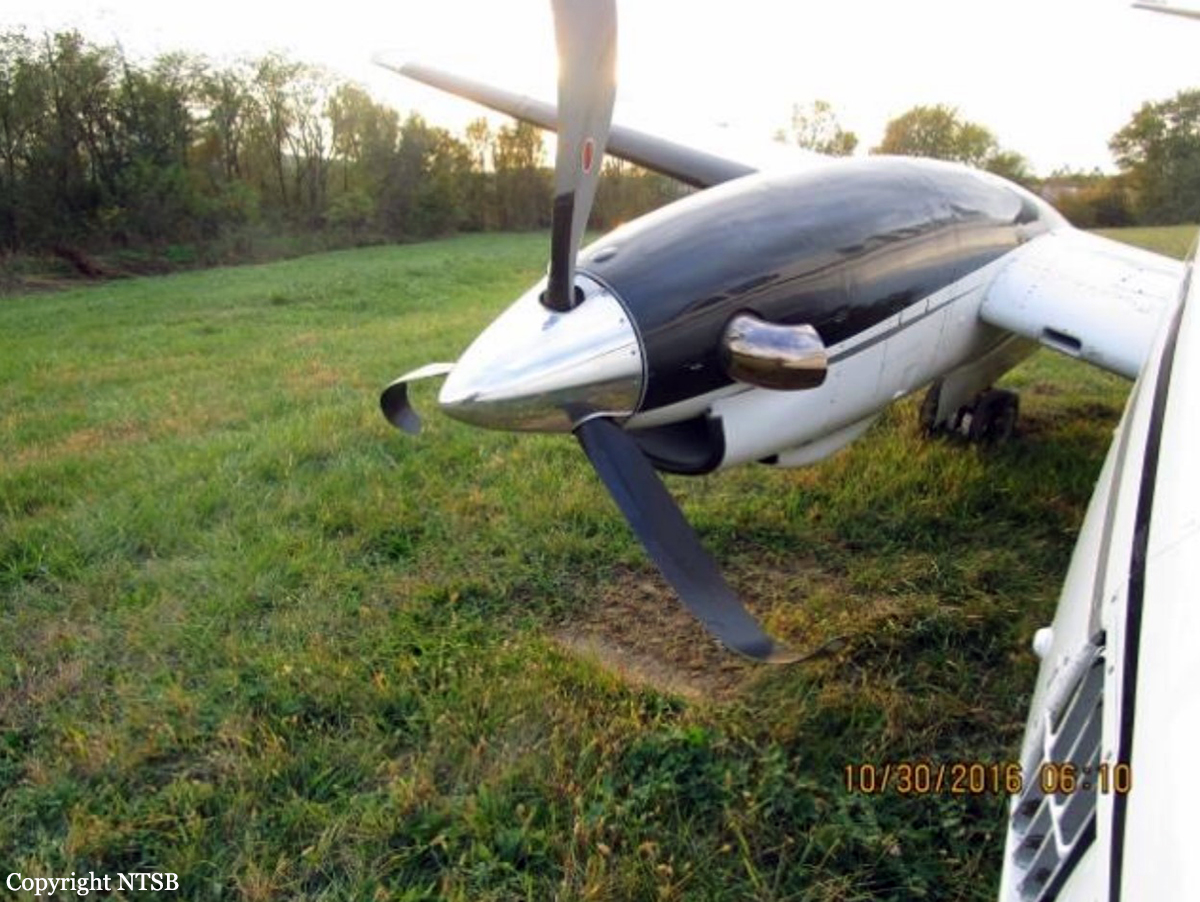
The airline transport pilot, who was the pilot flying, and commercial pilot, who was the pilot not flying and was acting as a safety pilot and was not expected to know the airplane's systems, limitations, or characteristics, were preparing to depart for a personal flight with eight passengers on board. When the pilot arrived at the airport, he determined that the airplane had 900 lbs of fuel onboard. He instructed the lineman to fuel the airplane with 211 gallons of fuel (1,413.7 lbs) for a fuel total of 2,313.7 lbs. The pilot reported that he was aware that the total weight of the eight passengers, their bags, and the fuel caused the airplane to be overweight but that he did not complete a weight and balance form or determine the expected takeoff performance before the flight. He informed the other pilot that the flight would be heavy, but he did not tell him how much the airplane exceeded the airplane's maximum gross takeoff weight. After the accident, the pilot determined that the airplane was 623 lbs over the maximum gross takeoff weight. The pilot reported that the airplane's flight controls and engines were operating normally during the pretakeoff check and that the elevator pitch trim was positioned in the "green" range. The pilot taxied the airplane onto the runway and applied the brakes and increased the throttles to takeoff power before releasing the brakes for the takeoff roll. However, he did not confirm the power settings that he applied when he advanced the throttles. The airplane did not accelerate as quickly as the pilot expected during the takeoff roll. When the airplane was about halfway down the runway, the airspeed was 80 kts, so the pilot continued the takeoff roll, but the airplane was still not accelerating as expected. He stated that he heard the other pilot say "redline," so he decreased the power. At this point, the airplane had reached the last third of the runway, and the pilot pulled back on the control yoke to lift the airplane off the runway, but the stall warning sounded. He lowered the nose, but the airplane was near the end of the runway. He added that he did not get "on" the brakes or put the propellers into reverse pitch and that the airplane then departed the runway. The pilot veered the airplane right to avoid the instrument landing system antenna, which was 500 ft from the end of the 5,500-ft-long runway, but the left wing struck the antenna, the left main landing gear and nose gear collapsed, and both propellers contacted the ground. The airplane then skidded left before stopping about 680 ft from the end of the runway. The pilot reported that the airplane did not have any preaccident mechanical malfunctions or failures. The evidence indicates that the pilot decided to depart knowing that the airplane was over its maximum gross takeoff weight and without determining the expected takeoff performance. During the takeoff roll, he did not check his engine instruments to determine if he had applied full takeoff power, although the acceleration may have been sluggish because of the excess weight onboard. The other pilot was not trained on the airplane and was not able to provide the pilot timely performance information during the takeoff. Neither the pilot nor the other pilot called out for an aborted takeoff, and when they recognized the need to abort the takeoff, it was too late to avoid a runway excursion.
Probable cause:
The pilot's inadequate preflight planning, his decision to take off knowing the airplane was over its gross takeoff weight, and his failure to abort the takeoff after he realized that the airplane was not accelerating as expected, which resulted in a runway excursion.
Final Report:
Crash of a Beechcraft B100 King Air in Jackson

Date & Time: Sep 21, 2016 at 1620 LT
Type of aircraft:
Registration:
N66804
Flight Type:
Survivors:
Yes
Schedule:
Memphis – Jackson
MSN:
BE-82
YOM:
1980
Crew on board:
1
Crew fatalities:
Pax on board:
0
Pax fatalities:
Other fatalities:
Total fatalities:
0
Captain / Total flying hours:
11295
Captain / Total hours on type:
570.00
Aircraft flight hours:
4013
Circumstances:
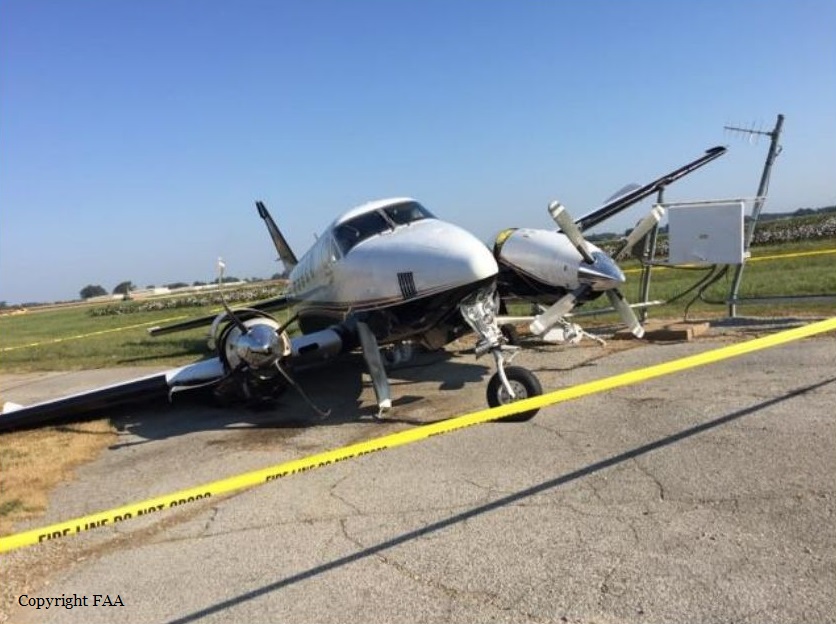
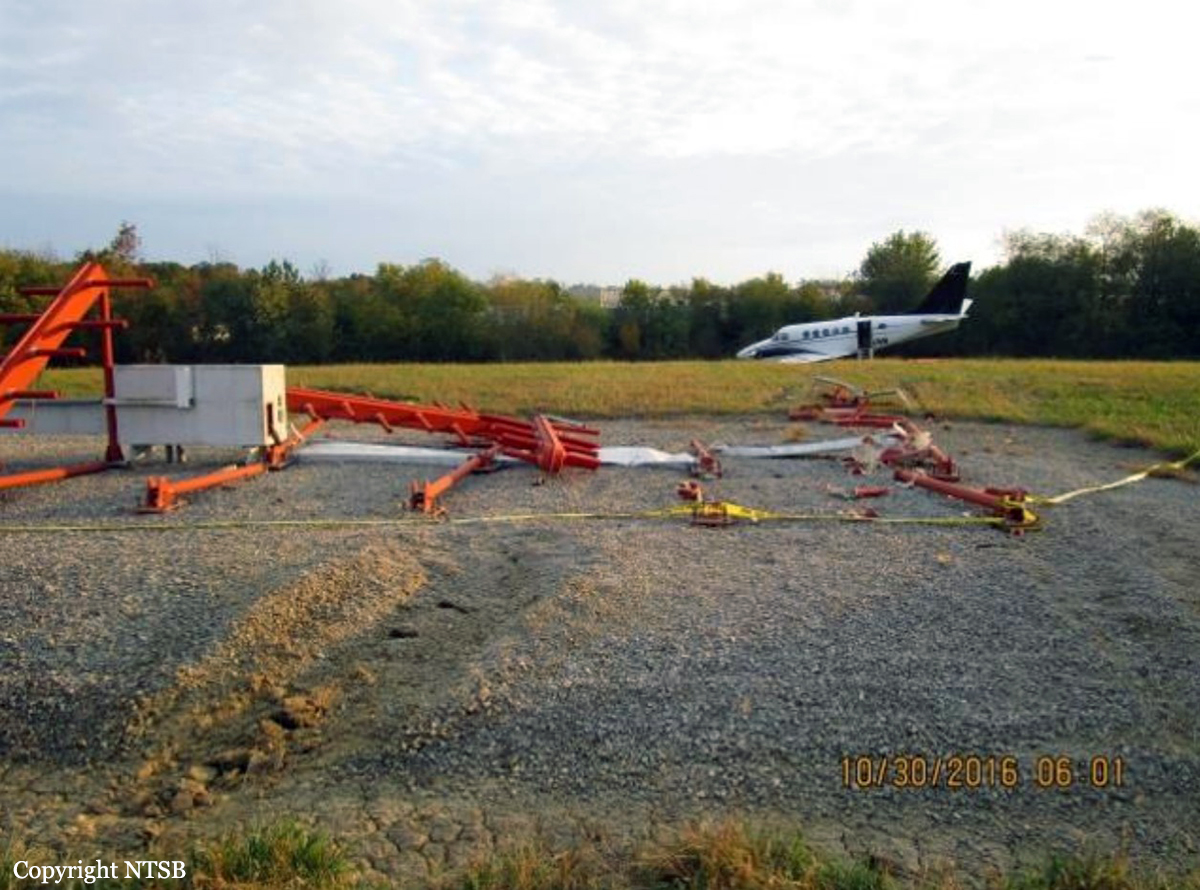
The commercial pilot reported that he had completed several uneventful flights in the multiengine airplane earlier on the day of the accident. He subsequently took off for a return flight to his home airport. He reported that the en route portion of the flight was uneventful, and on final approach for the traffic pattern for landing, all instruments were indicating normal. He stated that the airplane landed "firmly," that the right wing dropped, and that the right engine propeller blades contacted the runway. He pulled back on the yoke, and the airplane became airborne again momentarily before settling back on the runway. The right main landing gear (MLG) collapsed, and the airplane then veered off the right side of the runway and struck a runway sign and weather antenna. Witness reports corroborated the pilot's report. Postaccident examination revealed that the right MLG actuator was fractured and that the landing gear was inside the wheel well, which likely resulted from the hard landing. The pilot reported that there were no preimpact mechanical failures or malfunctions with the airframe or engine that would have precluded normal operation. Based on the pilot and witness statements and the wreckage examination, it is likely that the pilot improperly flared the airplane, which resulted in the hard landing and the collapse of the MLG.
Probable cause:
The pilot's improper landing flare, which resulted in a hard landing.
Final Report:

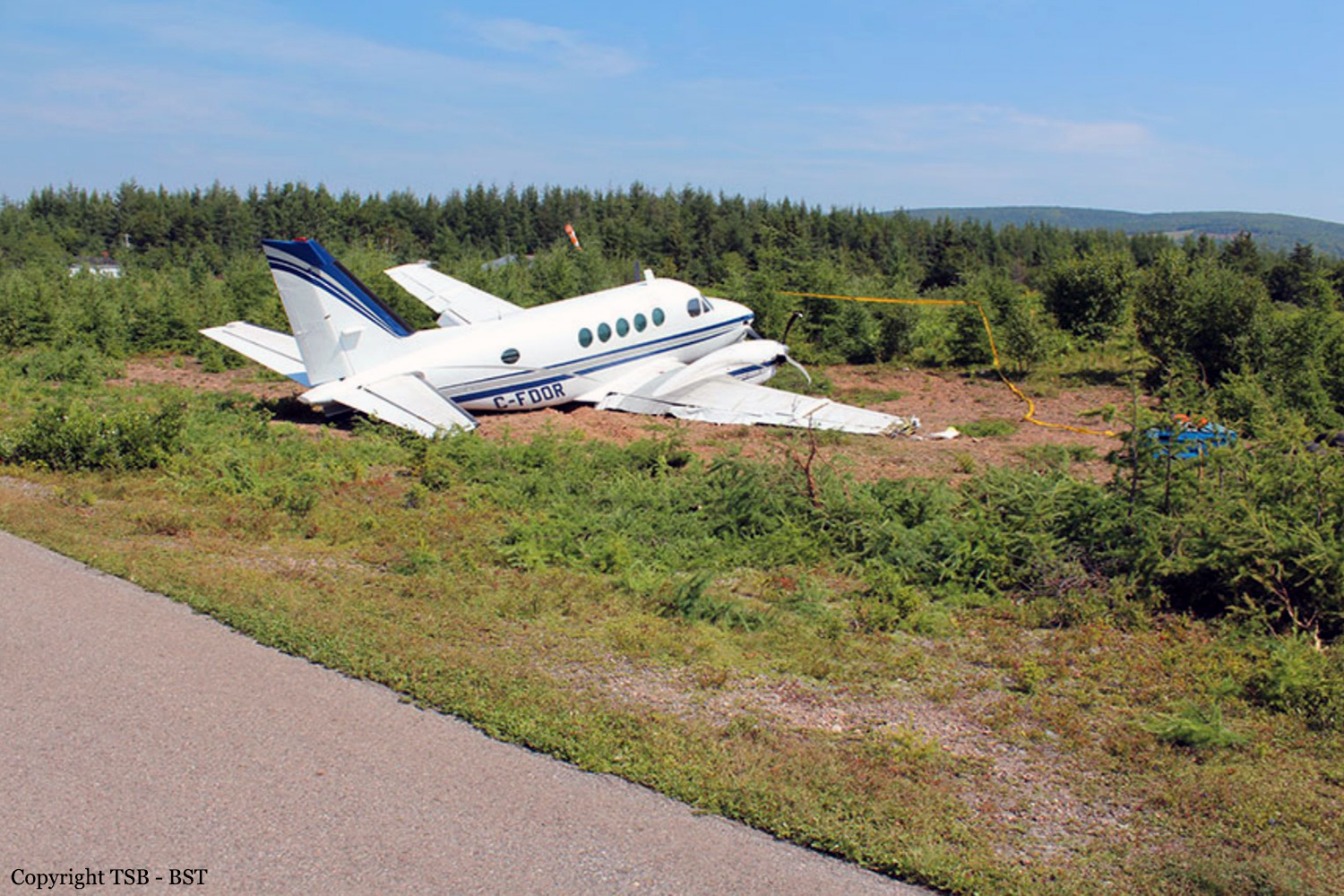
Crash of a Beechcraft A100 King Air in Margaree

Date & Time: Aug 16, 2015 at 1616 LT
Type of aircraft:
Operator:
Registration:
C-FDOR
Survivors:
Yes
Schedule:
Halifax – Margaree
MSN:
B-103
YOM:
1972
Country:
Crew on board:
2
Crew fatalities:
Pax on board:
2
Pax fatalities:
Other fatalities:
Total fatalities:
0
Captain / Total flying hours:
1723
Captain / Total hours on type:
298.00
Copilot / Total flying hours:
532
Copilot / Total hours on type:
70
Aircraft flight hours:
14345
Circumstances:
On 16 August 2015, a Maritime Air Charter Limited Beechcraft King Air A100 (registration C-FDOR, serial number B-103) was on a charter flight from Halifax Stanfield International Airport, Nova Scotia, to Margaree Aerodrome, Nova Scotia, with 2 pilots and 2 passengers on board. At approximately 1616 Atlantic Daylight Time, while conducting a visual approach to Runway 01, the aircraft touched down hard about 263 feet beyond the threshold. Almost immediately, the right main landing gear collapsed, then the right propeller and wing contacted the runway. The aircraft slid along the runway for about 1350 feet, then veered right and departed off the side of the runway. It came to rest about 1850 feet beyond the threshold and 22 feet from the runway edge. There were no injuries and there was no post-impact fire. The aircraft was substantially damaged. The occurrence took place during daylight hours. The 406-megahertz emergency locator transmitter did not activate.
Probable cause:
Findings:
Findings as to causes and contributing factors:
1. Neither pilot had considered that landing on a short runway at an unfamiliar aerodrome with known high terrain nearby and joining the circuit directly on a left base were hazards that may create additional risks, all of which would increase the crew’s workload.
2. The presence of the tower resulted in the pilot not flying focusing his attention on monitoring the aircraft’s location, rather than on monitoring the flight or the actions of the pilot flying.
3. The crew’s increased workload, together with the unexpected distraction of the presence of the tower, led to a reduced situational awareness that caused them to omit the Landing Checks checklist.
4. At no time during the final descent was the engine power increased above about 400 foot-pounds of torque.
5. Using only pitch to control the rate of descent prevented the pilot flying from precisely controlling the approach, which would have ensured that the flare occurred at the right point and at the right speed.
6. Neither pilot recognized that the steep rate of descent was indicative of an unstable approach.
7. Advancing the propellers to full would have increased the drag and further increased the rate of descent, exacerbating the already unstable approach.
8. The aircraft crossed the runway threshold with insufficient energy to arrest the rate of descent in the landing flare, resulting in a hard landing that caused the right main landing gear to collapse.
Findings as to risk:
1. If data recordings are not available to an investigation, then the identification and communication of safety deficiencies to advance transportation safety may be precluded.
2. If organizations do not use modern safety management practices, then there is an increased risk that hazards will not be identified and risks will not be mitigated.
3. If passenger seats installed in light aircraft are not equipped with shoulder harnesses, then there is an increased risk of passenger injury or death in the event of an accident.
4. If the experience and proficiency of pilots are not factored into crew selection, then there is a risk of suboptimal crew pairing, resulting in a reduction of safety margins.
5. If pilots do not carry out checklists in accordance with the company’s and manufacturer’s instructions, then there is a risk that a critical item may be missed, which could jeopardize the safety of the flight.
6. If crew resource management is not used and continuously fostered, then there is a risk that pilots will be unprepared to avoid or mitigate crew errors encountered during flight.
7. If organizations do not have a clearly defined go-around policy, then there is a risk that flight crews will continue an unstable approach, increasing the risk of an approach-and-landing accident.
8. If pilots are not prepared to conduct a go-around on every approach, then there is a risk that they may not respond to situations that require a go-around.
9. If operators do not have a stable approach policy, then there is a risk that an unstable approach will be continued to a landing, increasing the risk of an approach-andlanding accident.
10. If an organization’s safety culture does not fully promote the goals of a safety management system, then it is unlikely that it will be effective in reducing risk.
Other findings:
1. There were insufficient forward impact forces to automatically activate the emergency locator transmitter.
Final Report:

Crash of a Beechcraft A100 King Air in Timmins

Date & Time: Sep 26, 2014 at 1740 LT
Type of aircraft:
Operator:
Registration:
C-FEYT
Survivors:
Yes
Schedule:
Moosonee – Timmins
MSN:
B-210
YOM:
1975
Flight number:
CRQ140
Location:
Country:
Crew on board:
2
Crew fatalities:
Pax on board:
7
Pax fatalities:
Other fatalities:
Total fatalities:
0
Captain / Total flying hours:
2400
Captain / Total hours on type:
1000.00
Copilot / Total flying hours:
580
Copilot / Total hours on type:
300
Aircraft flight hours:
14985
Aircraft flight cycles:
15570
Circumstances:
The aircraft was operating as Air Creebec flight 140 on a scheduled flight from Moosonee, Ontario, to Timmins, Ontario, with 2 crew members and 7 passengers on board. While on approach to Timmins, the crew selected “landing gear down,” but did not get an indication in the handle that the landing gear was down and locked. A fly-by at the airport provided visual confirmation that the landing gear was not fully extended. The crew followed the Quick Reference Handbook procedures and selected the alternate landing-gear extension system, but they were unable to lower the landing gear manually. An emergency was declared, and the aircraft landed with only the nose gear partially extended. The aircraft came to rest beyond the end of Runway 28. All occupants evacuated the aircraft through the main entrance door. No fire occurred, and there were no injuries to the occupants. Emergency services were on scene for the evacuation. The accident occurred during daylight hours, at 1740 Eastern Daylight Time.
Probable cause:
Findings as to causes and contributing factors:
1. During the extension of the landing gear, a wire bundle became entangled around the landing-gear rotating torque shaft, preventing full extension of the landing gear.
2. The entanglement by the wire bundle also prevented the alternate landing-gear extension system from working. The crew was required to conduct a landing with only the nose gear partially extended.
Other findings:
1. The wire bundle consisted of wiring for the generator control circuits, and when damaged, disabled both generators. The battery became the only source of electrical power until the aircraft landed.
Final Report:

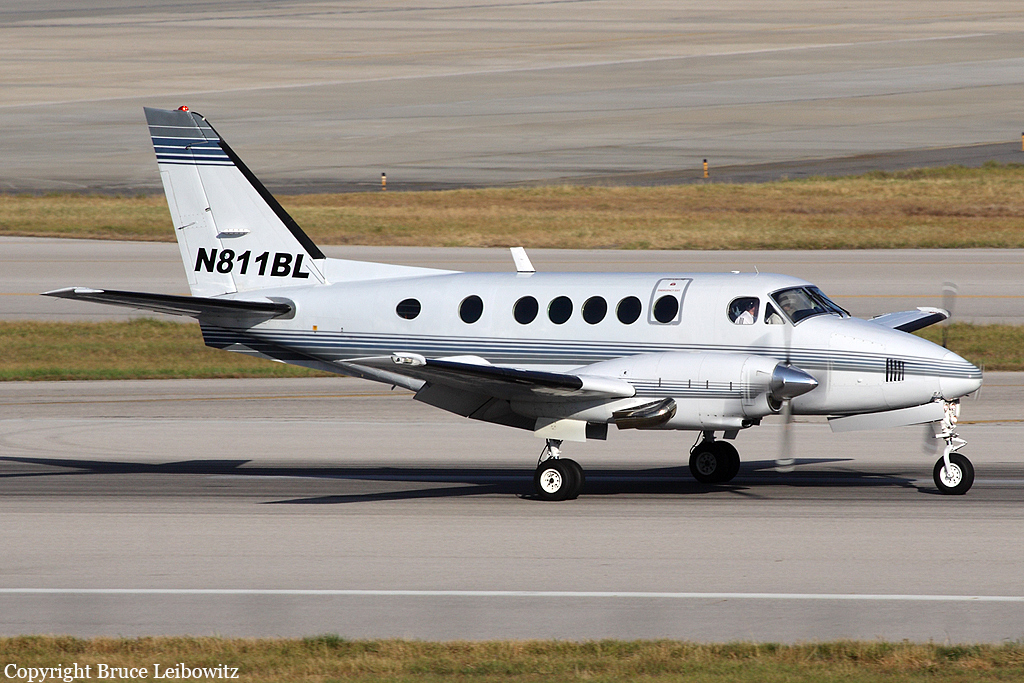
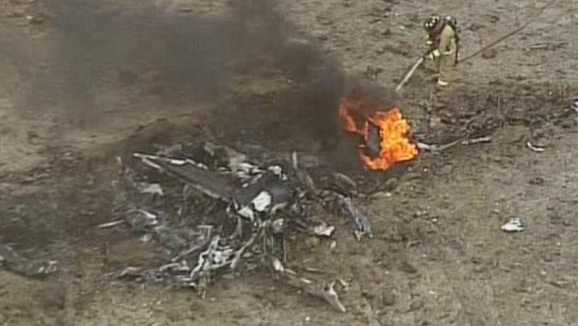
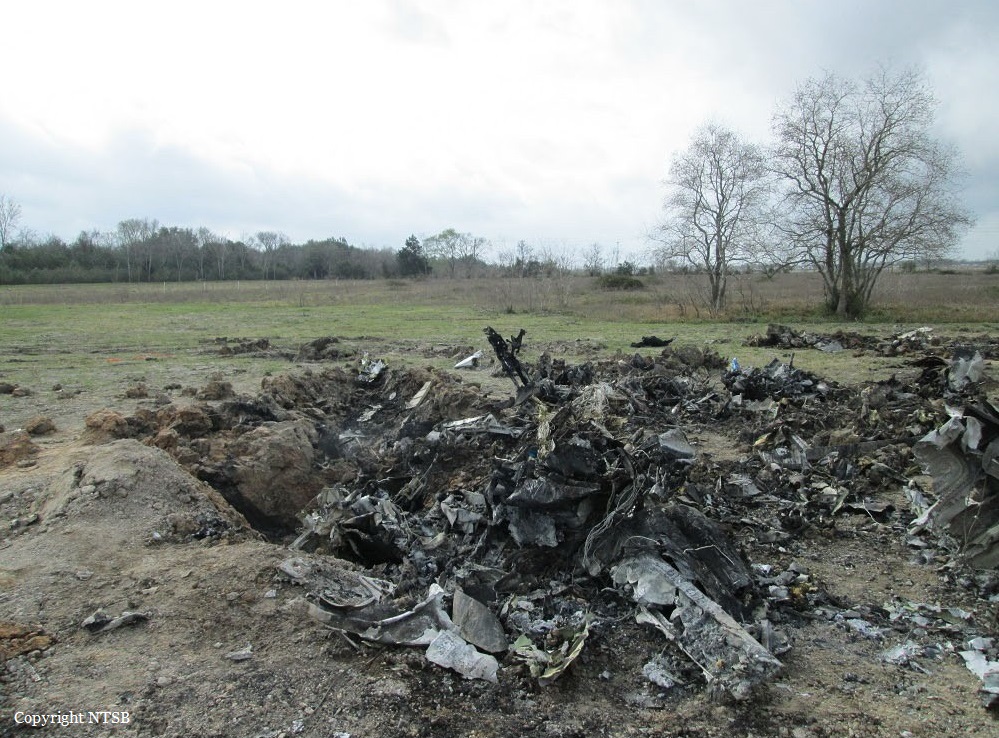
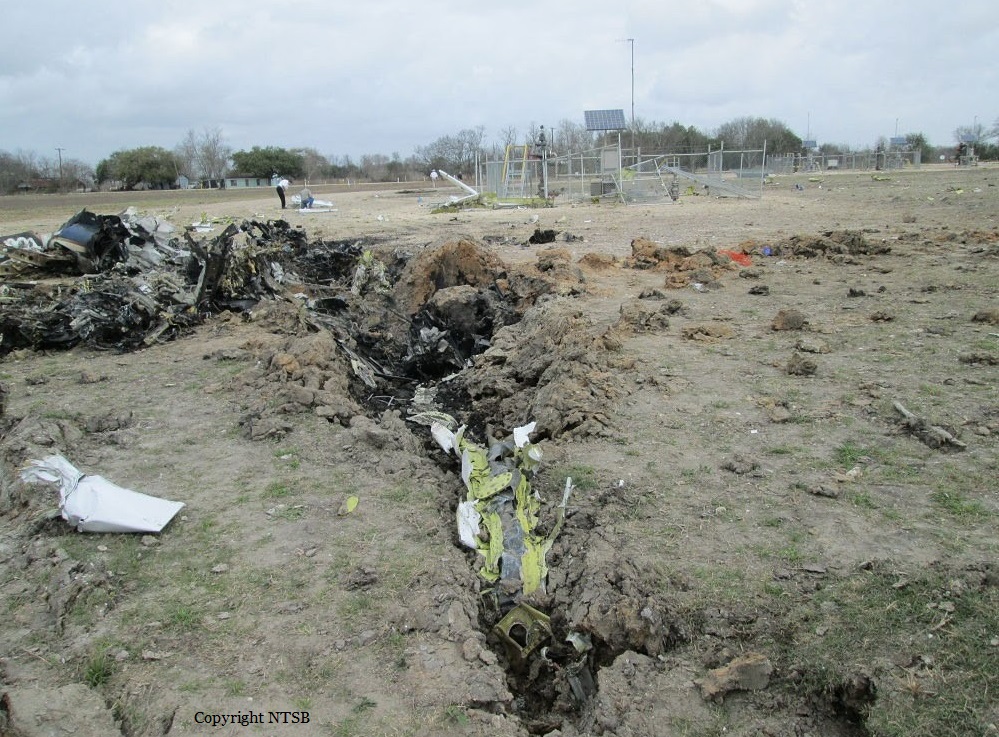
Crash of a Beechcraft B100 King Air in Pearland: 1 killed

Date & Time: Feb 19, 2014 at 0845 LT
Type of aircraft:
Operator:
Registration:
N811BL
Flight Type:
Survivors:
No
Schedule:
Austin – Galveston
MSN:
BE-15
YOM:
1976
Location:
Crew on board:
1
Crew fatalities:
Pax on board:
0
Pax fatalities:
Other fatalities:
Total fatalities:
1
Captain / Total flying hours:
1281
Captain / Total hours on type:
192.00
Circumstances:
The non-instrument-rated pilot departed on a cross-country flight in a twin-engine turboprop airplane on an instrument flight plan. As the pilot neared his destination airport, he received heading and altitude vectors from air traffic control. The controller cleared the flight for the approach to the airport; shortly afterward, the pilot radioed that he was executing a missed approach. The controller then issued missed approach instructions, which the pilot acknowledged. There was no further communication with the pilot. The airplane collided with terrain in a near-vertical angle. About the time of the accident, the automated weather reporting station recorded a 300-foot overcast ceiling, and 5 miles visibility in mist. Examination of the wreckage did not reveal any anomalies that would have precluded normal operation. Additionally, both engines displayed signatures consistent with the production of power at the time of impact. The pilot's logbook indicated that he had a total of 1,281.6 flight hours, with 512.4 in multi-engine airplanes and 192.9 in the accident airplane. The logbook also revealed that he had 29.7 total hours of actual instrument time, with 15.6 of those hours in the accident airplane. Of the total instrument time, he received 1 hour of instrument instruction by a flight instructor, recorded about 3 years before the accident. The accident is consistent with a loss of control in instrument conditions.
Probable cause:
The noninstrument-rated pilot's loss of airplane control during a missed instrument approach. Contributing to the accident was the pilot's decision to file an instrument flight rules flight plan and to fly into known instrument meteorological conditions.
Final Report: