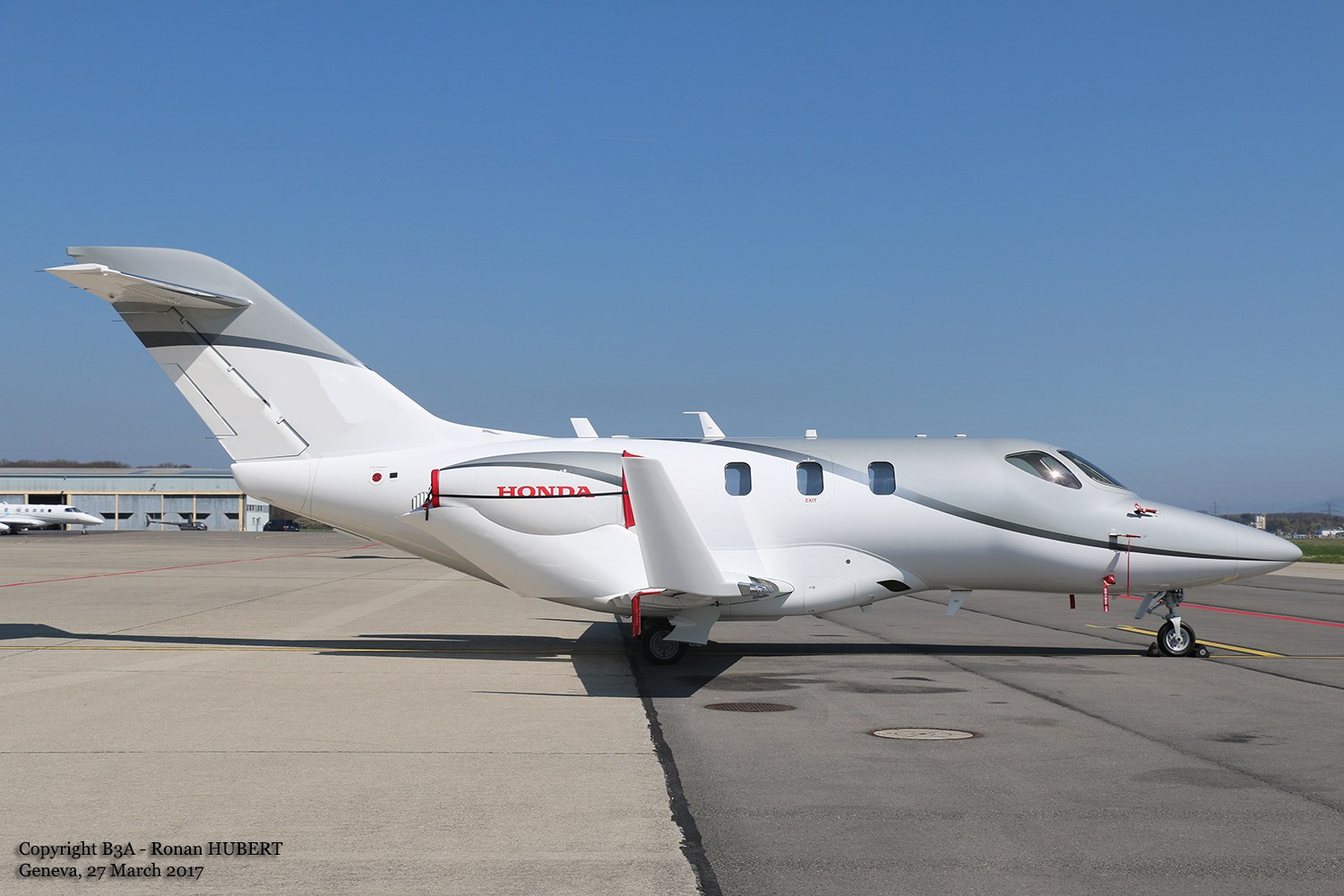
Crash of a Honda HA-420 HondaJet in Summerville
Date & Time:
May 18, 2023 at 0014 LT
Registration:
N255HJ
Survivors:
Yes
Schedule:
Wilkesboro – Summerville
MSN:
420-00055
YOM:
2017
Crew on board:
1
Crew fatalities:
Pax on board:
5
Pax fatalities:
Other fatalities:
Total fatalities:
0
Circumstances:
The pilot was attempting to land on a wet, 5,000-ft-long asphalt runway in night conditions with calm wind. He stated that the airplane touched down before the 1,000 ft markers and that he immediately applied full brake pressure. The brakes began to cycle in anti-skid mode, but the pilot said the cycling felt slower than normal. The pilot considered a go-around, but the left brake “grabbed” suddenly, and the airplane yawed left and began a sequence of left and right skids before it continued off the end of the runway. The airplane traveled down an embankment onto a rocky berm and came to rest about 360 ft from the end of the runway. The pilot and the passengers egressed the airplane uninjured before a post-impact fire consumed the cockpit, center fuselage, and the right wing. The pilot stated that he used the airplane’s cockpit display unit (CDU) computer to calculate the airplane’s landing reference speed (Vref) of 120 knots (kts) and reported that the airplane touched down at this speed. Although recorded data for the flight was not available due to thermal damage to the avionics, ADS-B data last captured the airplane on final approach at a ground speed of 120 kts, about 200 ft above the runway, consistent with the pilot’s statement. However, when the conditions that existed at the time of the accident were entered into an exemplar CDU, the calculated Vref was 112 kts, and the required landing distance for a wet/contaminated runway was 4,829 ft. To determine the landing distance required at a Vref of 120 kts, a Vref increment of Vref+5 (117 kts) and Vref+10 (122 kts) were entered into the CDU; the results were 5,311 ft and 5,794 ft, respectively. When these landing distances were calculated, the CDU, which had already been programmed for a 5,000-ft-long runway, displayed a prominent caution below the Vref number that stated: “LANDING FIELD LENGTH INSUFFICIENT.” How the accident pilot achieved a Vref of 120 kts via the CDU based on the conditions that existed at the time of the accident could not be determined. Postaccident examination of the braking system revealed no evidence of any preimpact anomalies or malfunctions that would have precluded normal operation; however, a testing anomaly was observed when the power brake and antiskid valve were tested. An initial test on an exemplar bench stand produced hysteresis that could not be produced when it was tested on a certified bench at the manufacturer. According to the manufacturer, the anomaly observed would not prevent the application of brakes nor the removal of pressure during skidding events; however, significant hysteresis may lead to braking performance degradation due to a decreased pressure application for a given current input. The reason for the anomaly was unknown, and therefore, it could not be determined if it played a role in the loss of braking action reported by the pilot. Despite this anomaly, and based on all other available information, the pilot landed the airplane faster than the prescribed landing speed with insufficient runway length available given the wet runway condition, which resulted in a runway excursion.
Probable cause:
The pilot’s improper calculation of the airplane’s landing approach speed and required landing distance, which resulted in the airplane touching down fast with inadequate runway available, and a subsequent runway excursion.
Final Report: