Crash of a Cessna 208A Cargomaster in Pierson: 1 killed
Date & Time:
Feb 14, 2025 at 1840 LT
Operator:

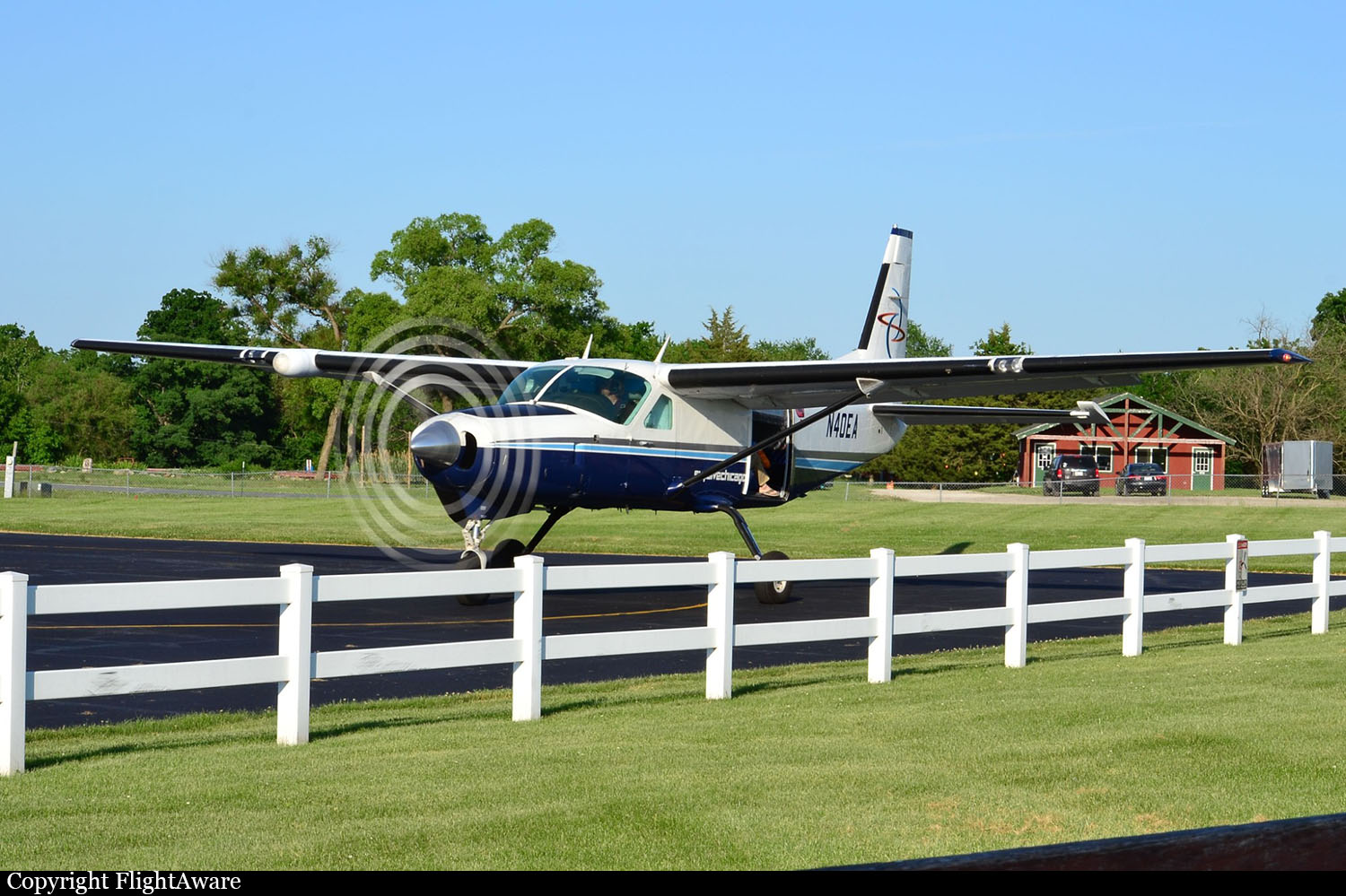
Registration:
N40EA
Survivors:
No
Schedule:
Sebastian – Palatka
MSN:
208-0065
YOM:
1985
Crew on board:
1
Crew fatalities:
Pax on board:
0
Pax fatalities:
Other fatalities:
Total fatalities:
1
Captain / Total hours on type:
3000.00
Aircraft flight hours:
17716
Circumstances:
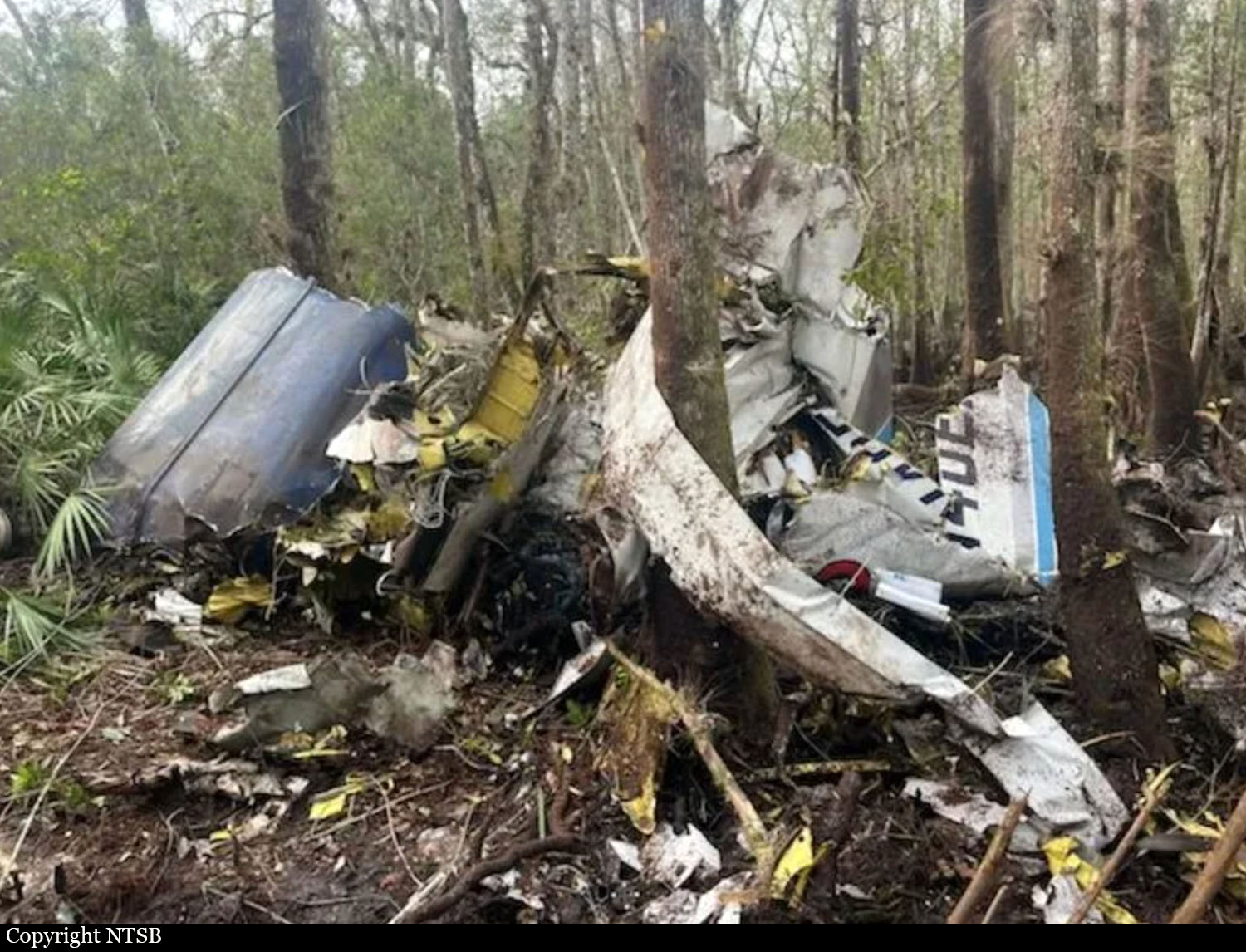
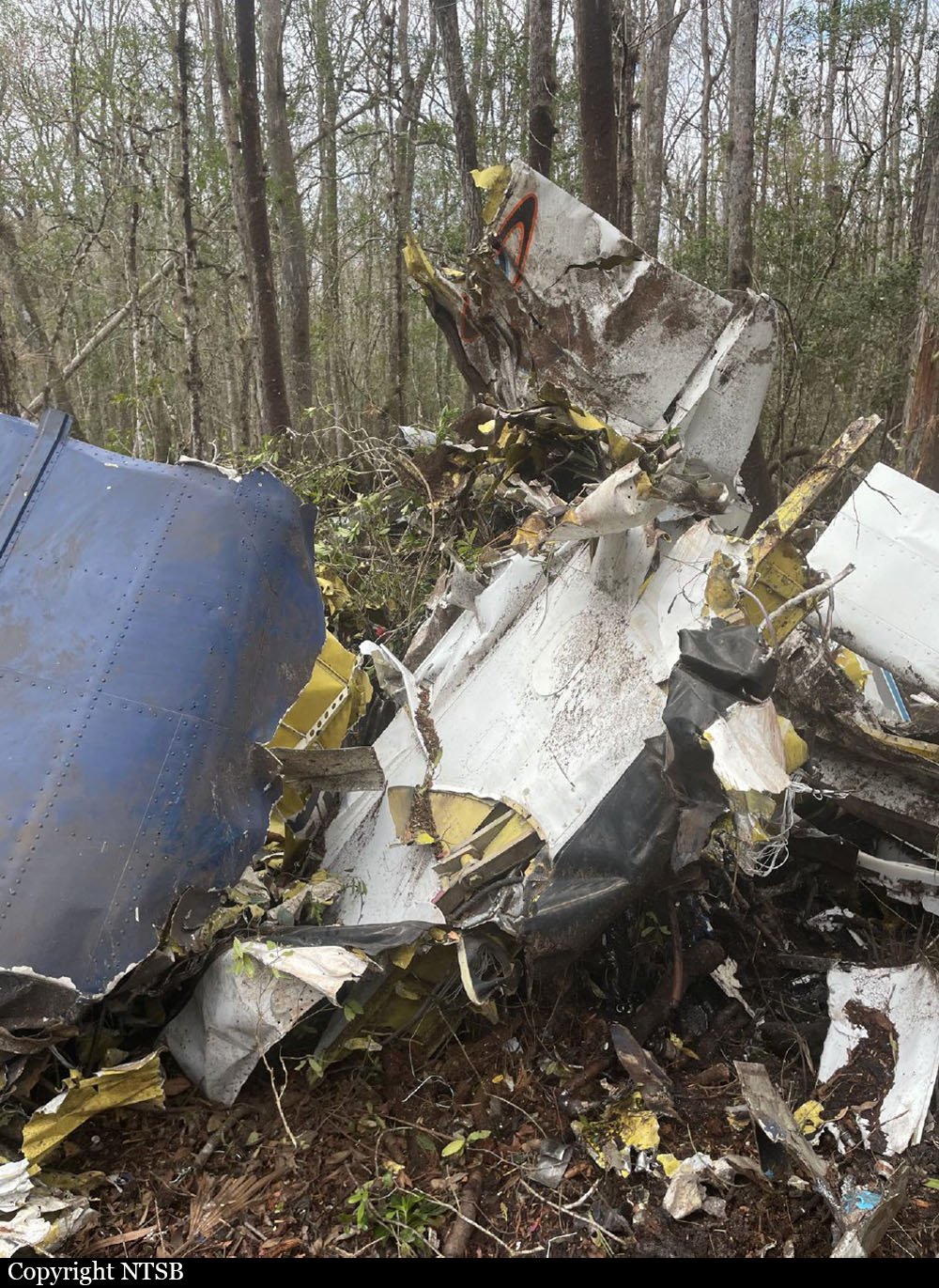
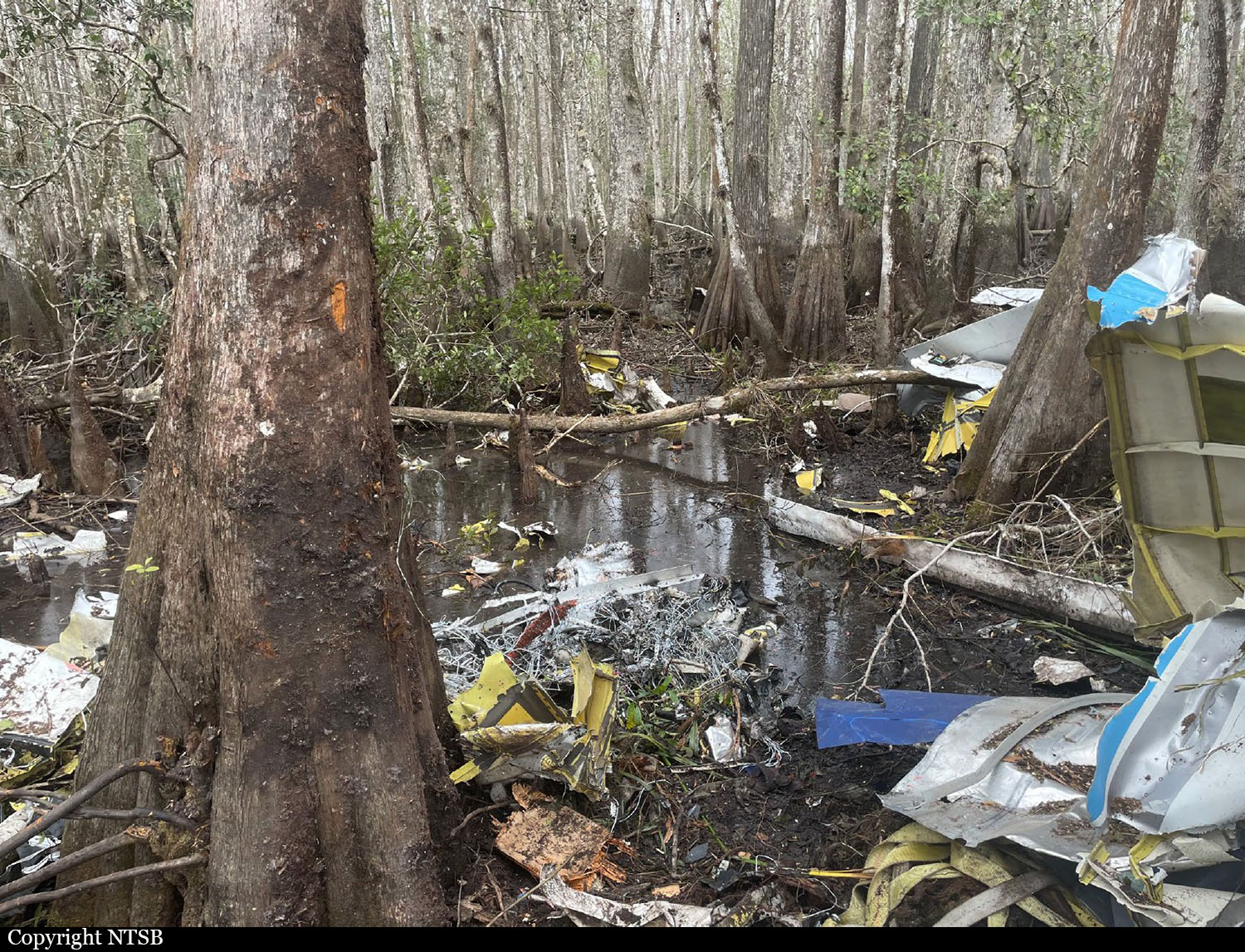
The pilot was conducting a visual flight rules (VFR) cross-country repositioning flight at dusk in preparation for skydiving activities the following morning. Although he had accumulated more than 8,600 total flight hours, he did not hold an instrument rating. The ADS-B data for the flight showed that the pilot did not fly a direct route to the destination airport and that the airplane’s altitude varied throughout the flight. During the first half of the flight, the pilot flew the airplane northbound along a major interstate at an altitude of about 1,700 ft mean sea level (msl). He then turned left and flew the airplane west over a city and climbed to 3,100 ft msl before turning right to the north-northeast. Weather conditions along the latter portion of the route included areas of low ceilings and cloud cover. The airplane’s meandering flight path was consistent with a pilot attempting to avoid entering instrument meteorological conditions (IMC) and/or using ground lighting and roadways to navigate and maintain visual references. The ADS-B data showed that, in the final minute of the flight, the airplane entered a descending 180° turn to the right, and the descent rate increased steadily to greater than 12,000 ft per minute (fpm) until the data ended. Although the pilot’s initiation of the right turn may have been an attempt to avoid or exit IMC, a review of available weather information revealed that, about the time of the right turn, the airplane likely encountered and remained in IMC consisting of significantly reduced visibility and low ceilings while flying over a rural area with few ground lights or other visual references. The airplane was destroyed and the pilot was killed.
Probable cause:
The non-instrument-rated pilot’s continued visual flight into instrument meteorological conditions, which resulted in spatial disorientation and a subsequent loss of control.
Final Report: