Zone

Crash of a Bristol 142 Blenheim IV into the Gulf of Oman: 3 killed

Date & Time: Sep 17, 1942 at 0844 LT
Type of aircraft:
Operator:
Registration:
Z7418
Flight Phase:
Survivors:
No
Schedule:
Sharjah - Sharjah
Country:
Region:
Crew on board:
3
Crew fatalities:
Pax on board:
0
Pax fatalities:
Other fatalities:
Total fatalities:
3
Circumstances:
The airplane departed RAF Sharjah at 0630LT on an antisubmarine patrol flight over the Gulf of Oman. The last radio contact was recorded at 0844LT. The airplane failed to return to base and was lost without trace.
Crew:
Sgt Hunter Rutledge McGowan, pilot,
P/O Anthony Hollis Pontius, observer,
Sgt Arthur Henry George Genny, wireless operator and air gunner.

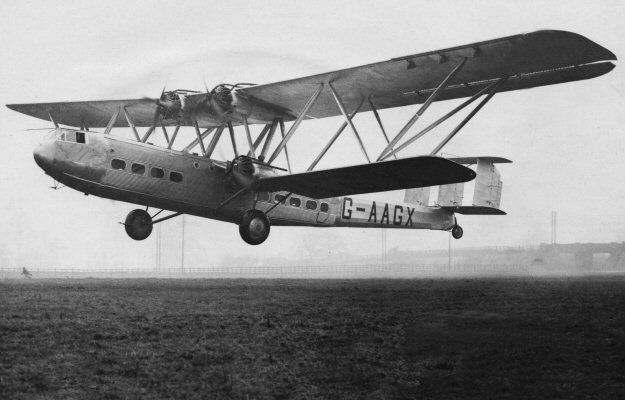
Crash of a Handley Page H.P.42E into the Gulf of Oman: 8 killed

Date & Time: Mar 1, 1940 at 1320 LT
Type of aircraft:
Operator:
Registration:
G-AAGX
Flight Phase:
Survivors:
No
Schedule:
Calcutta – Jask – Sharjah – Alexandria – London
MSN:
HP.42/1
YOM:
1929
Flight number:
CW197
Country:
Region:
Crew on board:
4
Crew fatalities:
Pax on board:
4
Pax fatalities:
Other fatalities:
Total fatalities:
8
Circumstances:
While overflying the Gulf of Oman, the aircraft named 'Hannibal' crashed into the sea in unknown circumstances. SAR operations failed to find any trace of the aircraft nor the crew and were suspended after few days.
Crew:
N. Townsend, pilot,
C. J. Walsh, copilot,
A. H. H. Tidbury, radio operator,
C. A. F. Steventon, steward.
Passengers:
A. T. Pannirselvam,
Harold A. Whistler,
Alf Bryn,
Henry Hutchison.
Probable cause:
The UK Air Ministry considered as improbable that the crash had resulted from sabotage, hostile action or inflight fire. Also considered improbable was complete fuel exhaustion, although the starvation of the supply of gasoline attributed to improper activation of the corresponding controls could not be ruled out. Other possible causes were a bird strike damaging a propeller and leading to the failure of the engine mounting or even an entire wing; some type of structural failure, especially considering the age of aircraft and the history of vibration experienced with the type, or multiple power plant malfunction, which also could have preceded structural failure. Two months after the disappearance, and in following one of the recommendations made in the investigative report, it was announced by the British government that the HP.42 would no longer be used in passenger operations. It was also recommended that commercial aircraft used in long over-water flights be equipped with personal and group life-saving gear, which would later be standard throughout the industry.