Zone

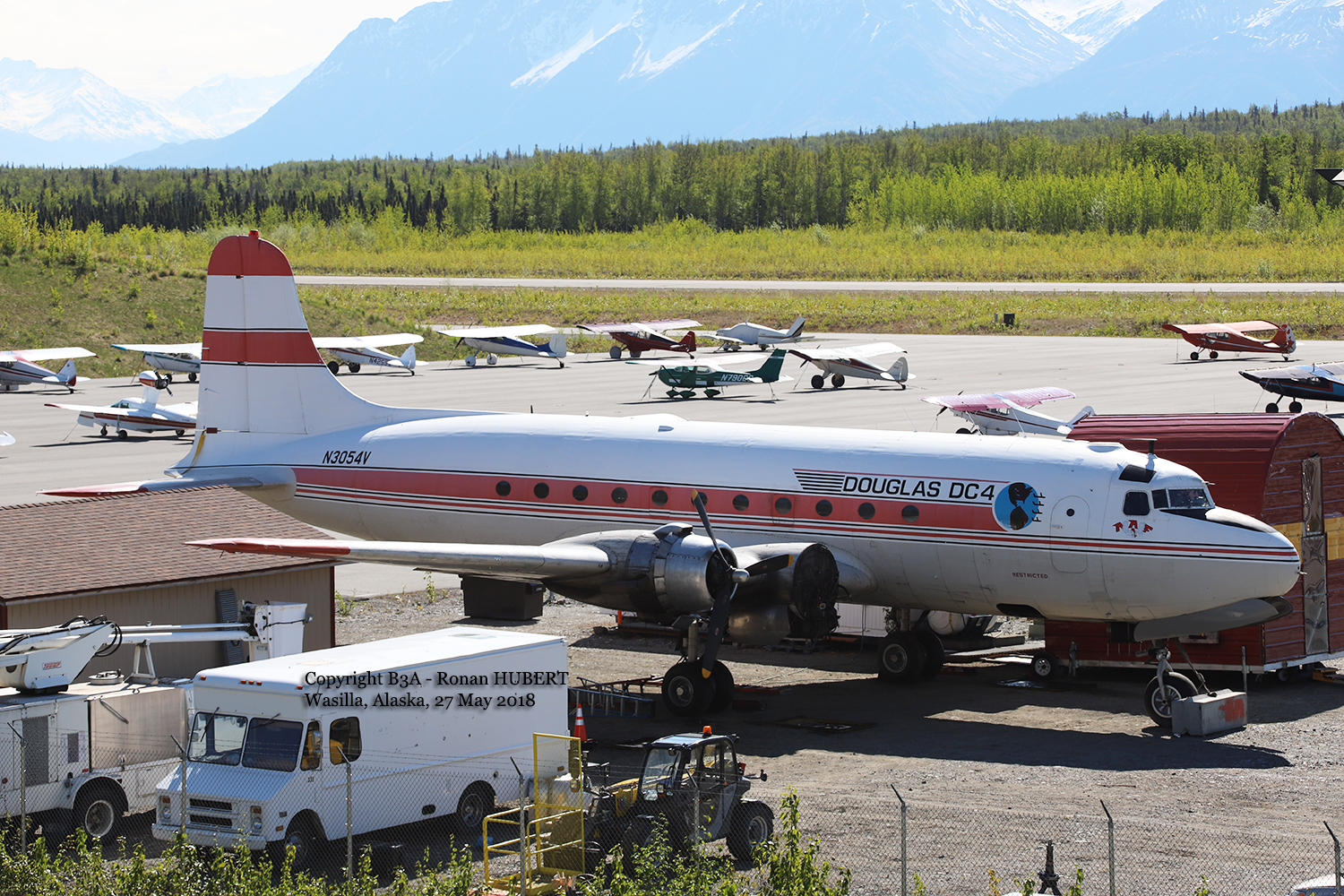
Crash of a Douglas C-54D-DC Skymaster in Fairbanks: 2 killed

Date & Time: Apr 23, 2024 at 1003 LT
Type of aircraft:
Operator:
Registration:
N3054V
Flight Phase:
Flight Type:
Survivors:
No
Schedule:
Fairbanks – Kobuk
MSN:
10547
YOM:
1945
Crew on board:
2
Crew fatalities:
Pax on board:
0
Pax fatalities:
Other fatalities:
Total fatalities:
2
Captain / Total flying hours:
35547
Copilot / Total flying hours:
10769
Aircraft flight hours:
24726
Circumstances:
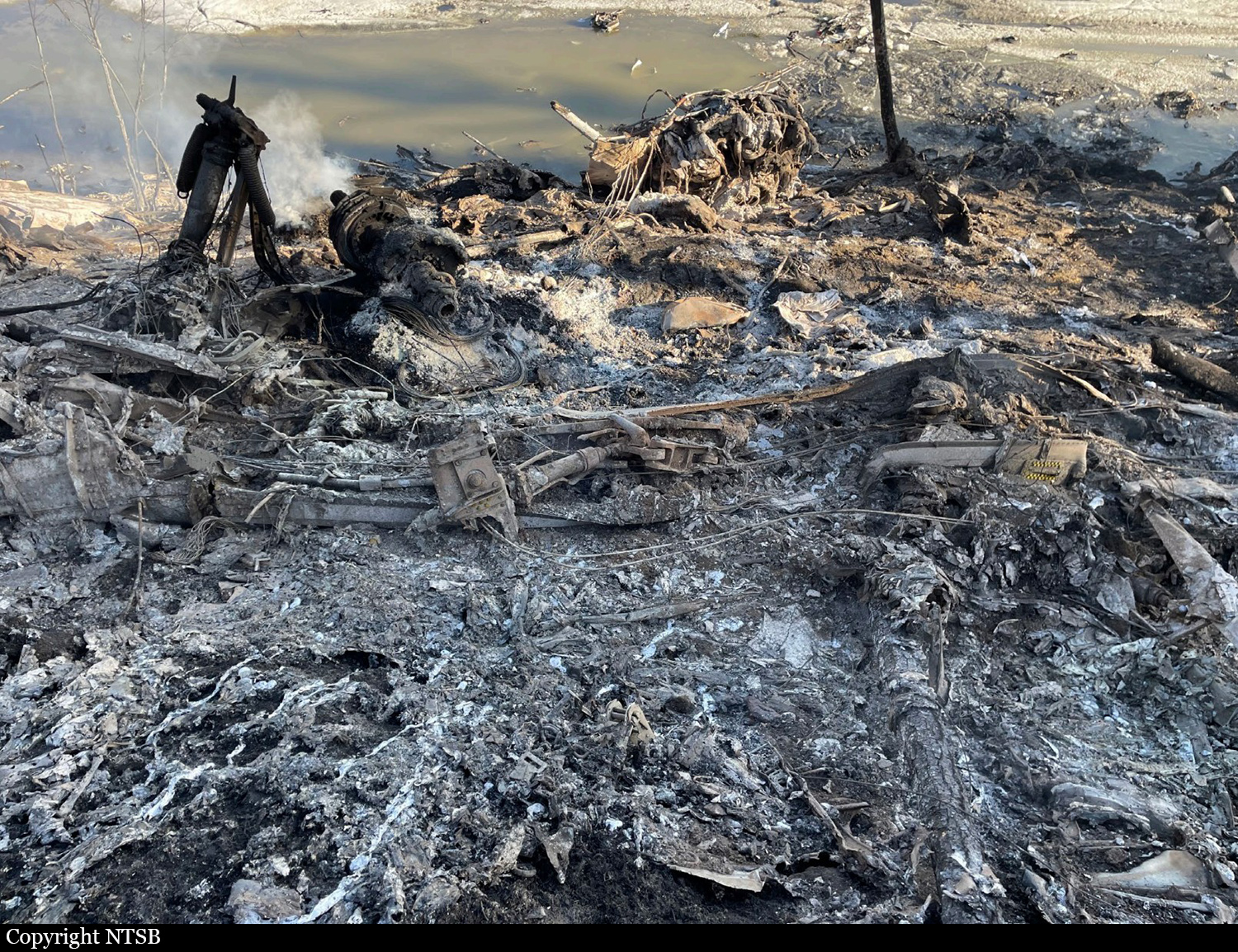
The purpose of the flight was to transport 3,400 gallons of unleaded fuel and two 100-gallon propane tanks from Fairbanks International Airport (FAI), to Kobuk Airport (OBU), Kobuk, Alaska. The airplane departed about 0955. An eyewitness reported seeing the airplane flying to the west and stated that the far left engine was not running. They also noticed a small, white plume of smoke coming from that engine. The airplane started to turn to the south, and at that point he noticed that the engine was on fire. About three minutes after departure, the pilot reported to air traffic control that there was a fire onboard and began a left turn back to the airport. Video surveillance showed white smoke begin to develop behind the No. 1 engine, followed by flames. Seconds later, a bright white explosion could be seen just behind the No. 1 engine. The airplane then entered an uncontrolled, descending left turn into terrain. The No. 1 engine separated from the wing about 100 ft above the ground and landed on a frozen river. About two minutes later, the video showed a large explosion. The University of Alaska Fairbanks (UAF) detected multiple low frequency sound (infrasound) signals associated with the accident. Based on the data collected by UAF, the first explosion was at 1001, the airplane impacted terrain at 1003, and the second explosion was at 1006. The airplane was totally destroyed by impact forces and a post crash fire and both crew members were fatally injured.
Probable cause:
A loss of power of the No. 1 engine for reasons that could not be determined, and the incorrect installation of a B-nut fitting in the propeller feathering system, which allowed engine oil to spray onto the exhaust system when the propeller was feathered following the loss of engine power. Contributing to the accident was an incorrectly repaired fuel leak, which resulted in an explosion that separated the aileron bell housing that resulted in a loss of control and subsequent impact with terrain.
Final Report:
Crash of a Douglas C-118A Liftmaster in Candle

Date & Time: Aug 1, 2019 at 1400 LT
Type of aircraft:
Operator:
Registration:
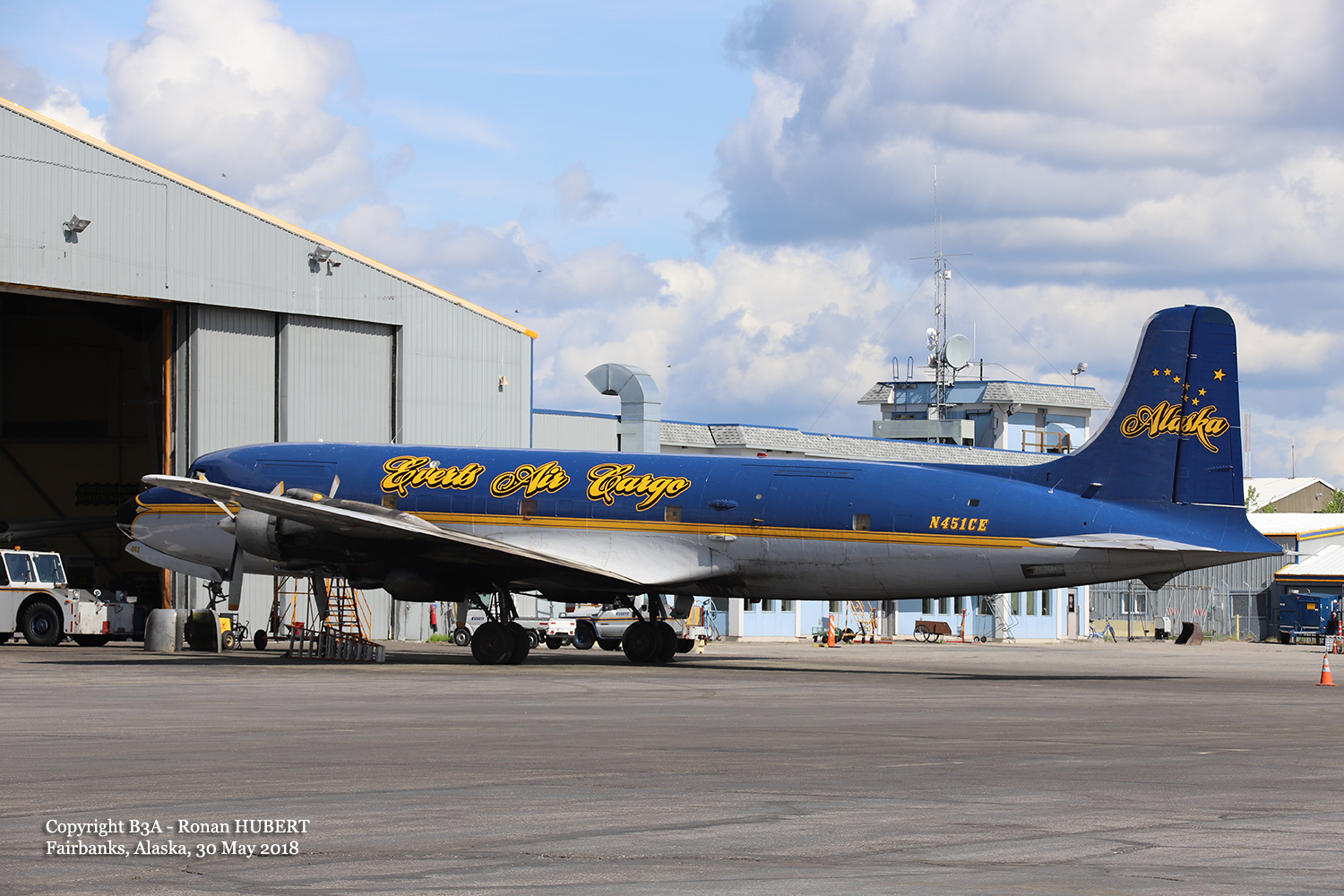
N451CE
Flight Type:
Survivors:
Yes
Schedule:
Fairbanks – Candle
MSN:
43712/358
YOM:
1953
Location:
Crew on board:
3
Crew fatalities:
Pax on board:
0
Pax fatalities:
Other fatalities:
Total fatalities:
0
Captain / Total flying hours:
9910
Captain / Total hours on type:
147.00
Copilot / Total flying hours:
8316
Copilot / Total hours on type:
69
Aircraft flight hours:
42037
Circumstances:
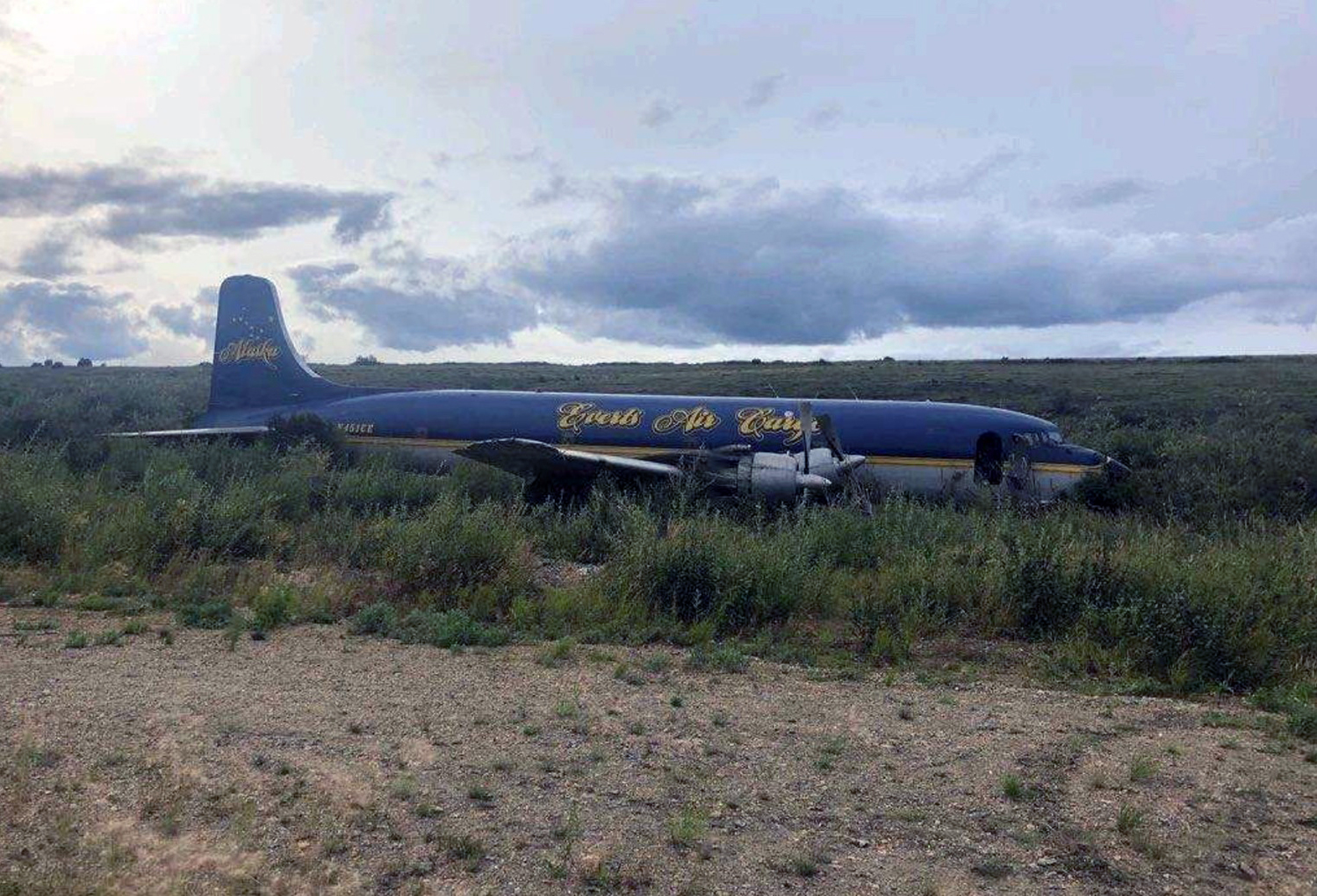
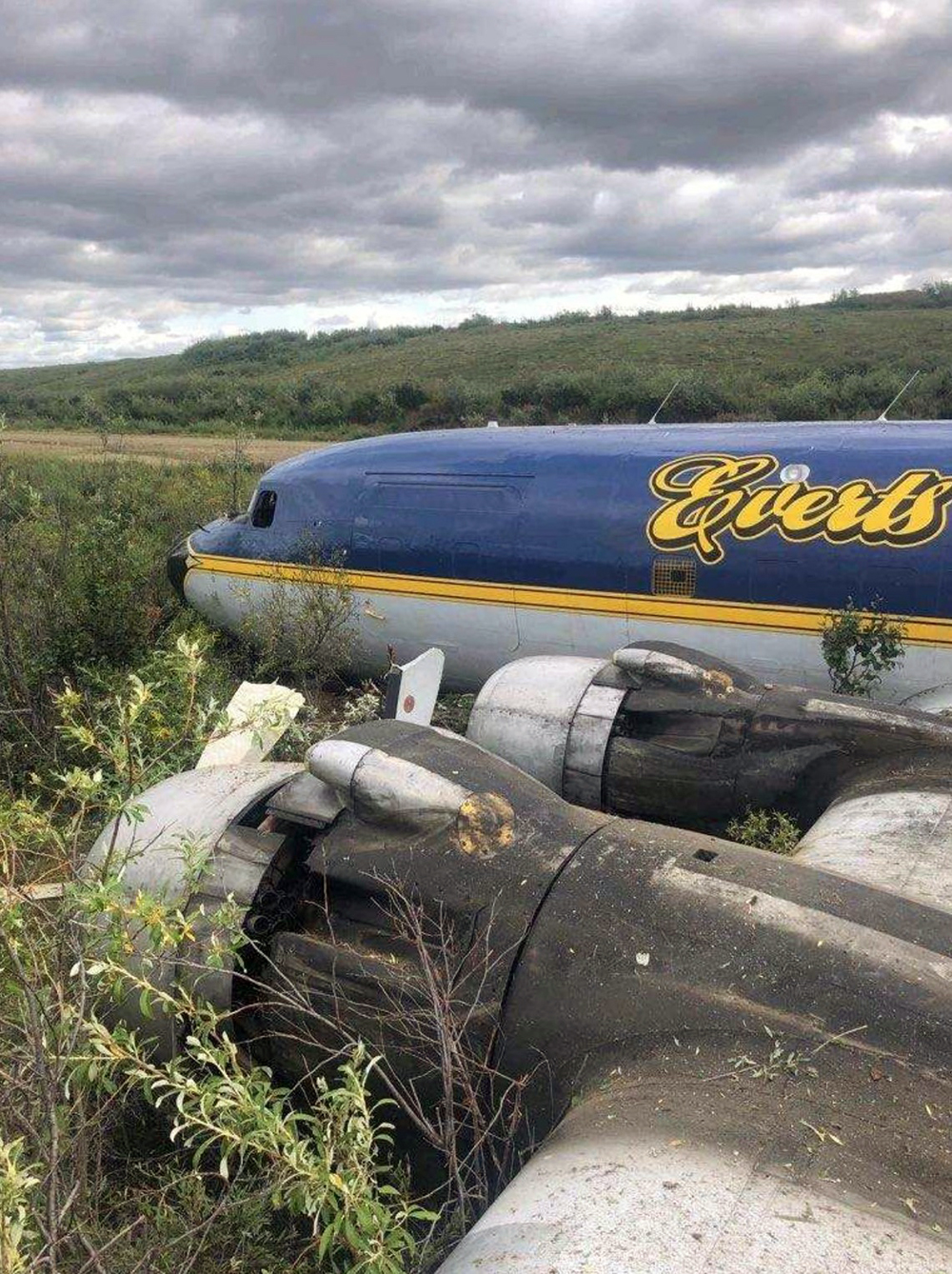
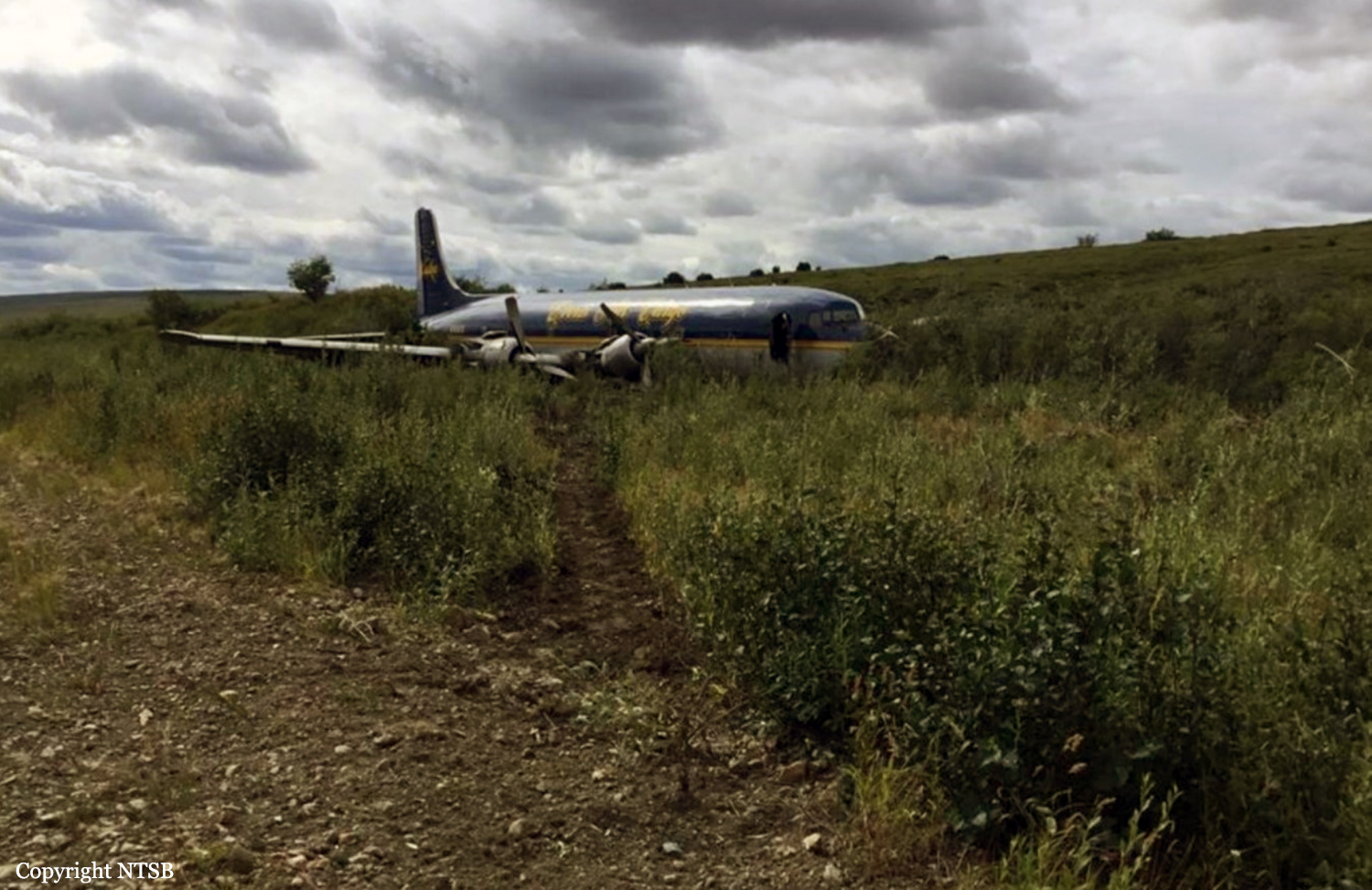
The flight crew was landing the transport-category airplane at a remote, gravel-covered runway. According to the captain, the terrain on the approach to the runway sloped down toward the approach end, which positioned the airplane close to terrain during the final stages of the approach. A video recorded by a bystander showed that while the airplane was on short final approach, it flew low on the glidepath and dragged its landing gear through vegetation near the approach end of the runway. The video showed that, just before the main landing gear wheels reached the runway threshold, the right main landing wheel impacted a dirt and rock berm. The captain said that to keep the airplane from veering to the right, he placed the No. 1 and No. 2 engine propellers in reverse pitch. The flight engineer applied asymmetric reverse thrust to help correct for the right turning tendency, and the airplane tracked straight for about 2,000 ft. The video then showed that the right main landing gear assembly separated, and the airplane continued straight down the runway before veering to the right, exiting the runway, and spinning about 180°, resulting in substantial damage to the fuselage. On-site examination of the runway revealed several 4-ft piles of rocks and dirt at the runway threshold, which is likely what the right main landing wheel impacted. Given that the airplane landing gear struck vegetation and rocks on the approach to the runway, it is likely that they were below the proper glidepath for the approach. The crew stated there were no preaccident mechanical malfunctions or anomalies that would have precluded normal operation.
Probable cause:
The pilot's failure to maintain an adequate glidepath during the approach, which resulted in the airplane impacting rocks and dirt at the runway threshold, a separation of the right main landing gear, and a loss of directional control.
Final Report:

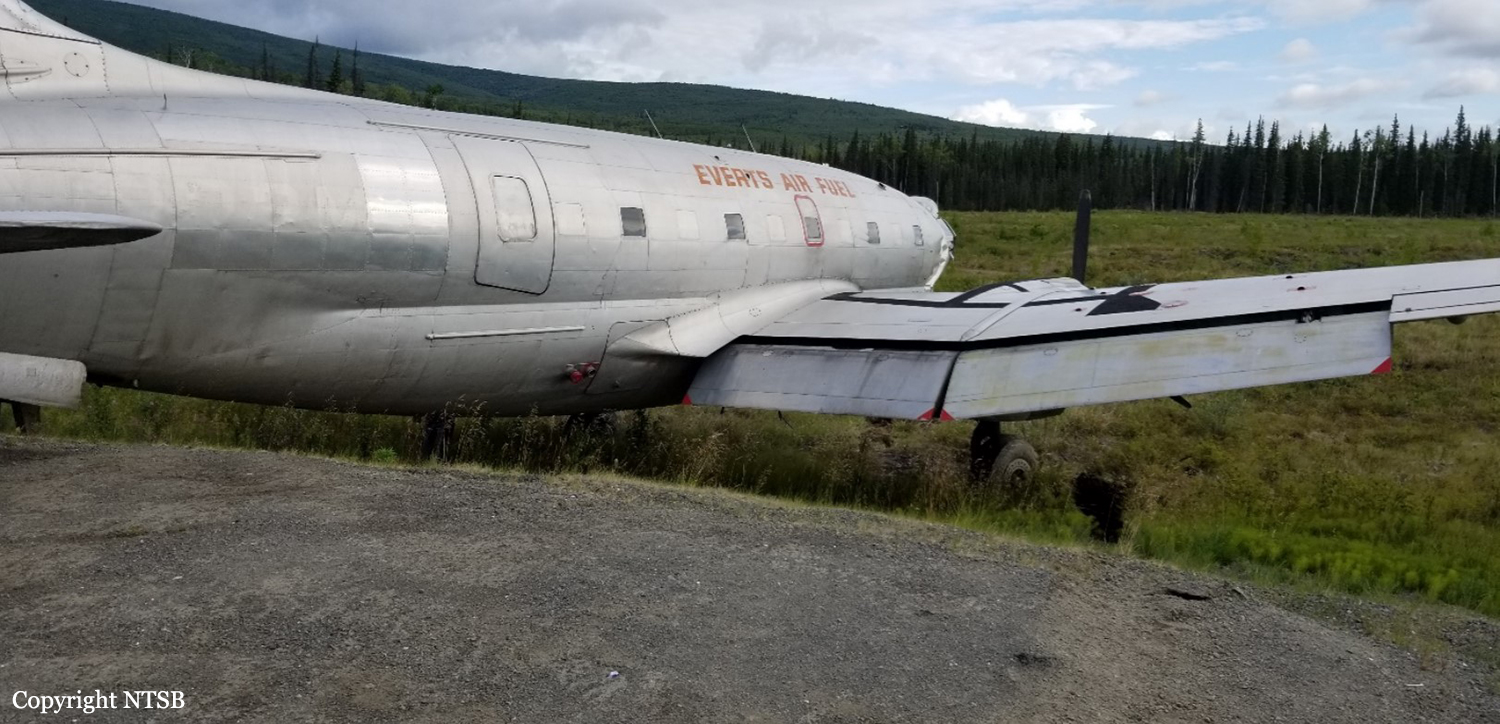
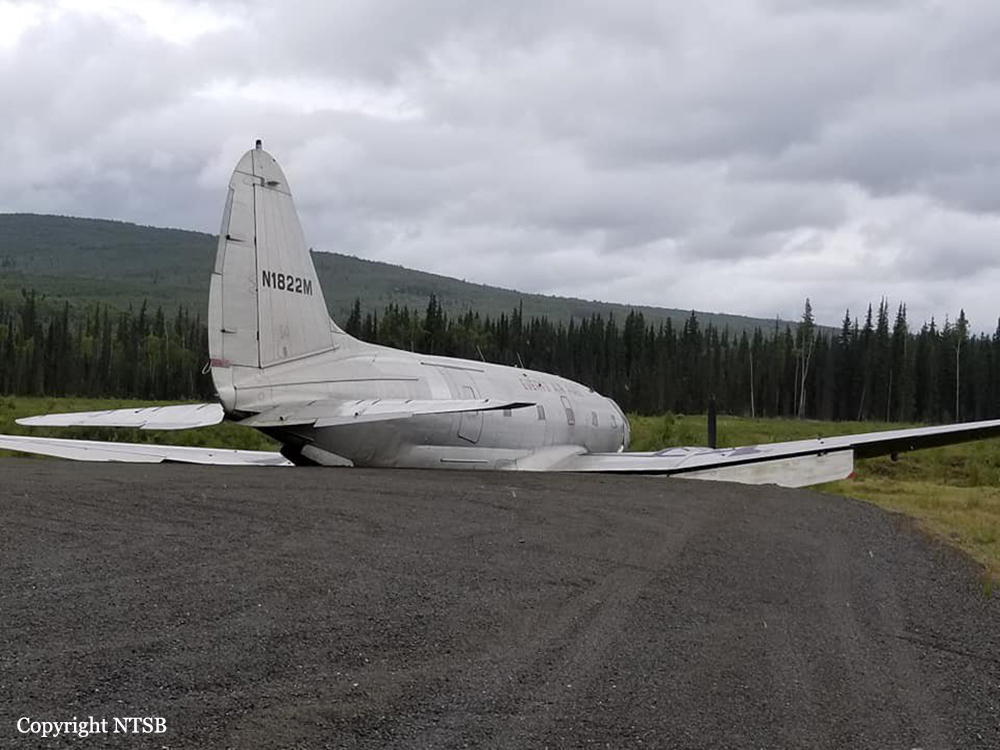
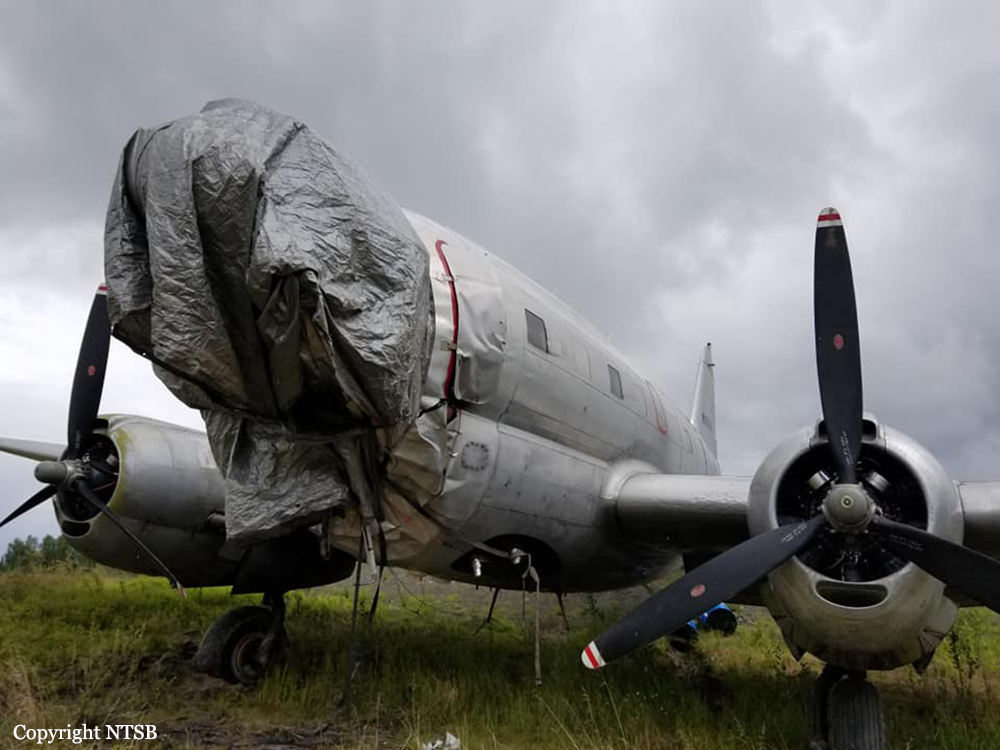
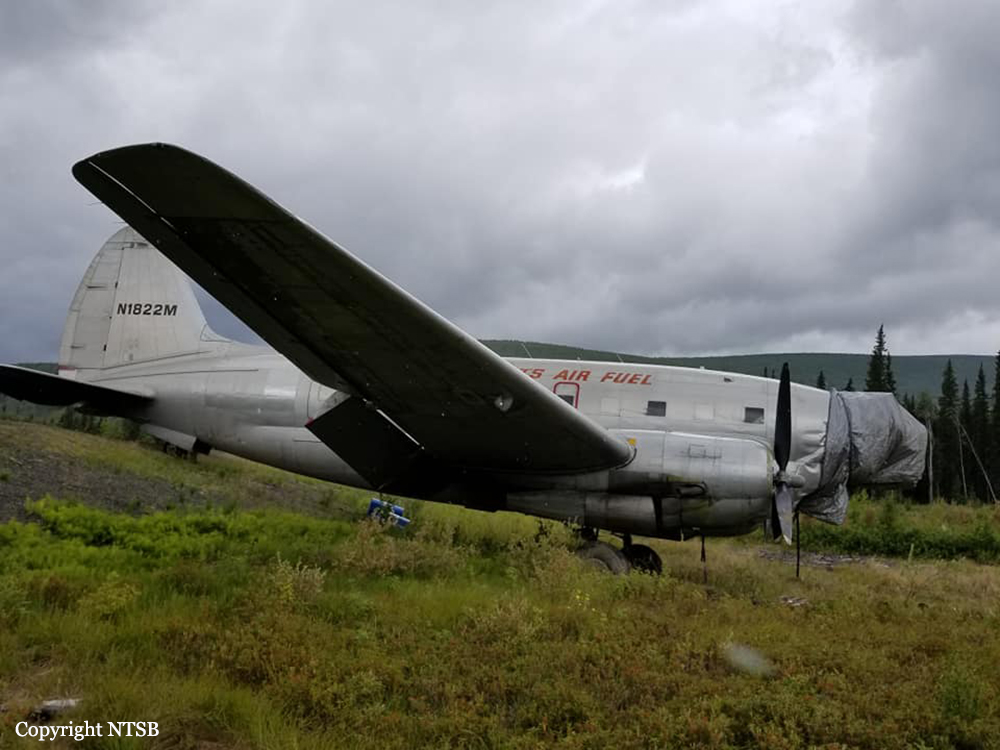
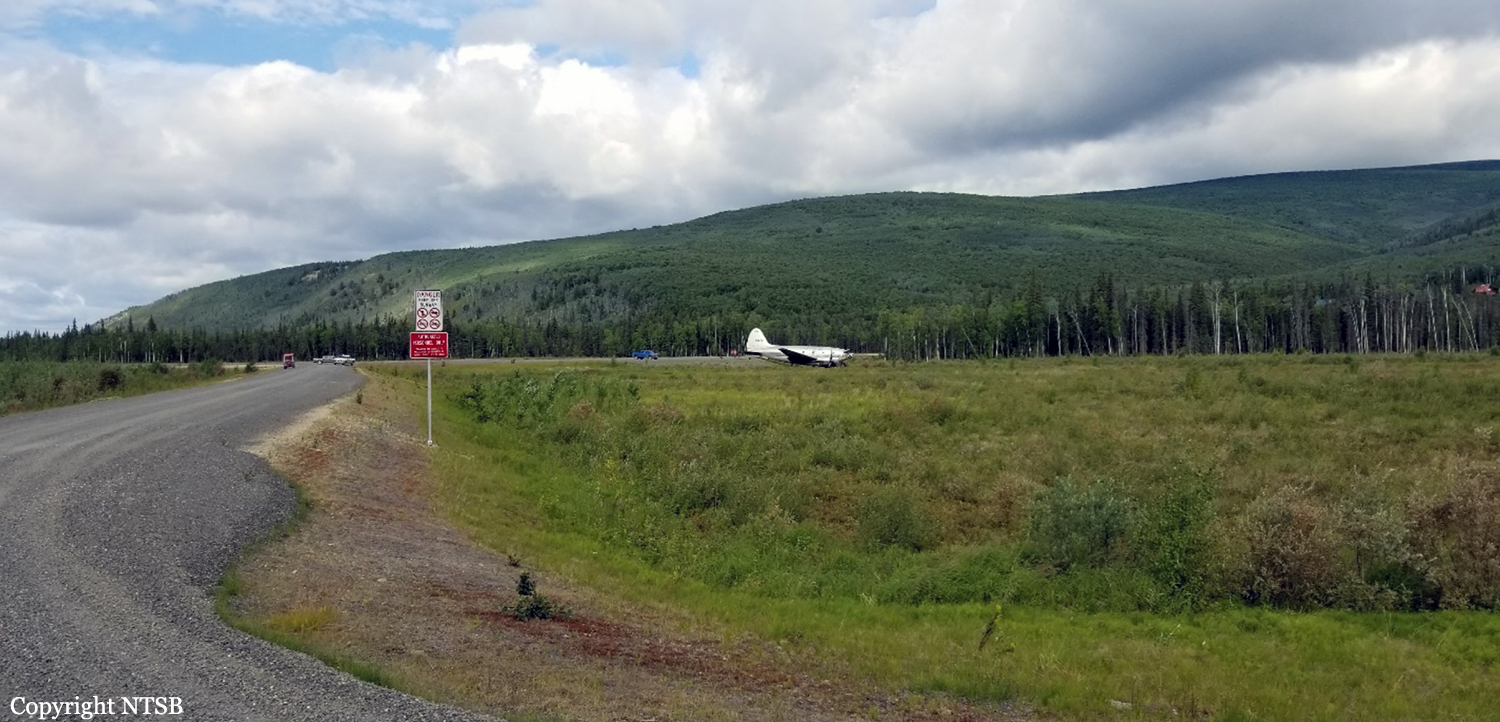
Crash of a Curtiss C-46F-1-CU Commando in Manley Hot Springs

Date & Time: Jul 16, 2018 at 0925 LT
Type of aircraft:
Operator:
Registration:
N1822M
Flight Type:
Survivors:
Yes
Schedule:
Fairbanks – Kenai
MSN:
22521
YOM:
1945
Crew on board:
2
Crew fatalities:
Pax on board:
0
Pax fatalities:
Other fatalities:
Total fatalities:
0
Captain / Total flying hours:
6500
Captain / Total hours on type:
3500.00
Copilot / Total flying hours:
300
Copilot / Total hours on type:
135
Aircraft flight hours:
37049
Circumstances:
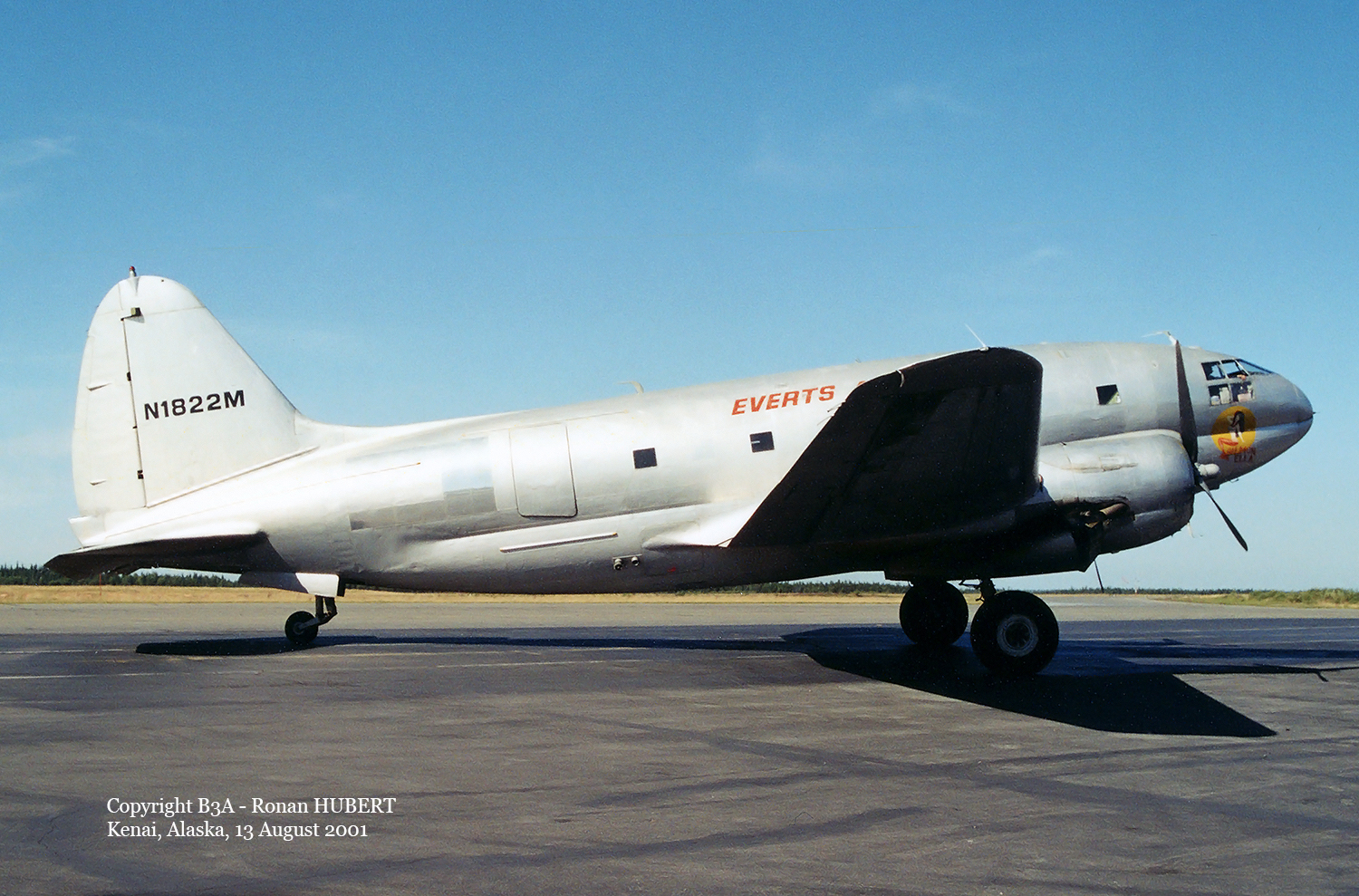
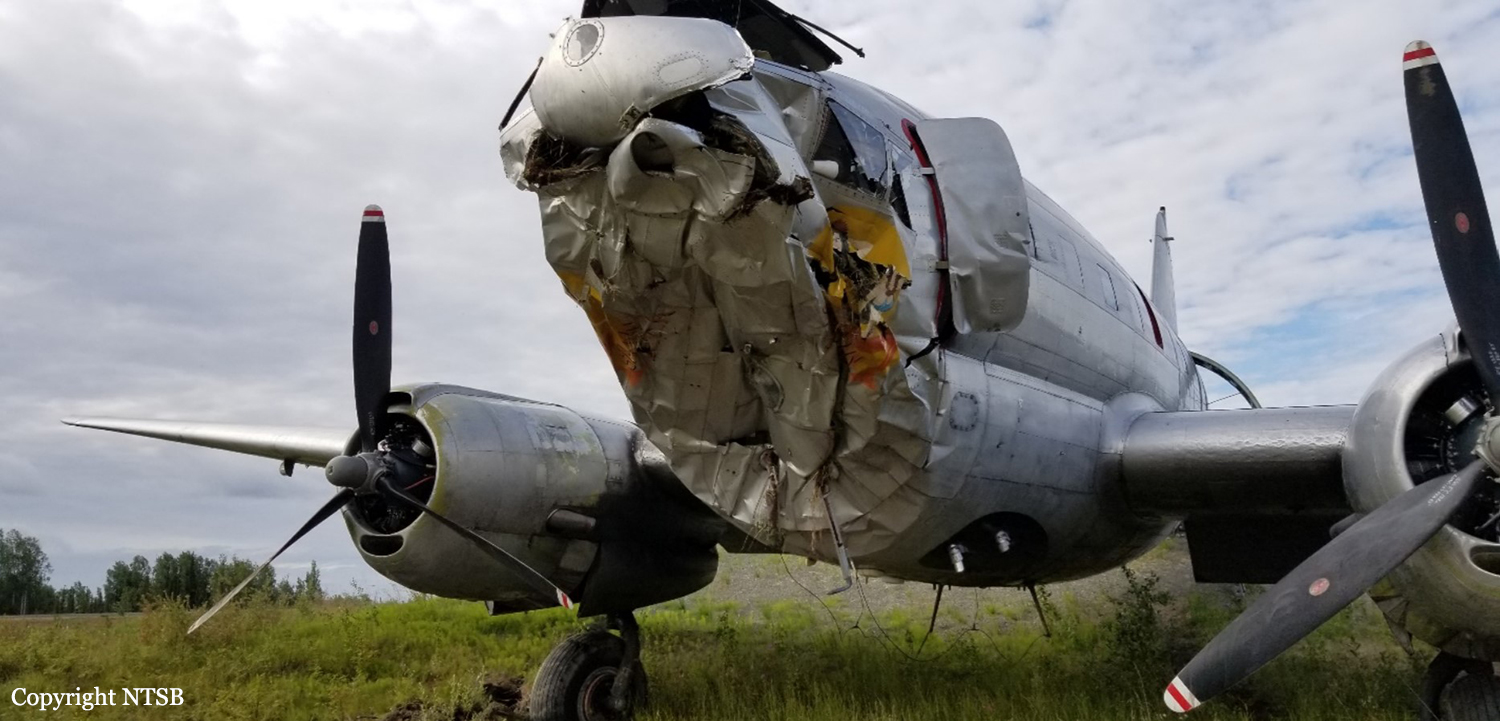
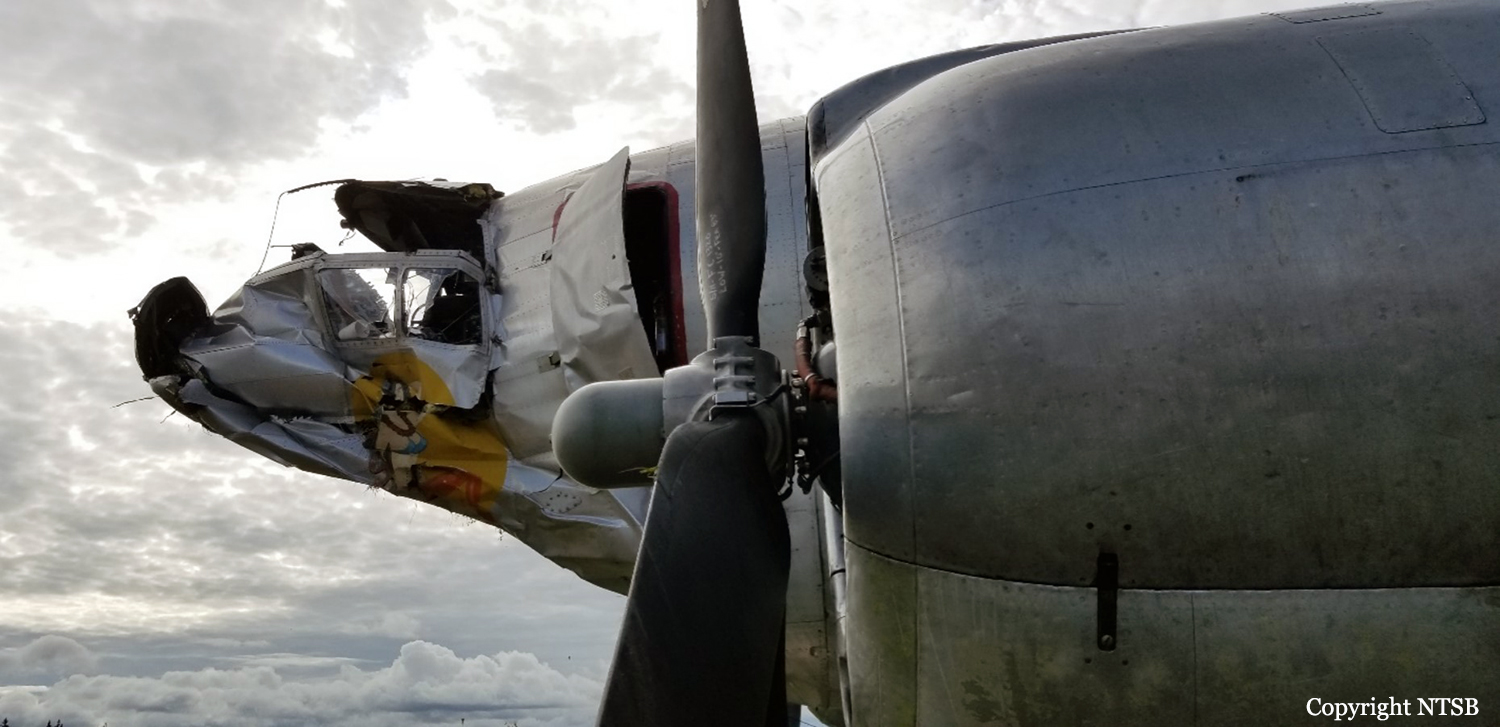
The pilot reported that, following a precautionary shutdown of the No. 2 engine, he diverted to an alternate airport that was closer than the original destination. During the landing in tailwind conditions, the airplane touched down "a little fast." The pilot added that, as the brakes faded from continuous use, the airplane was unable to stop, and it overran the end of the runway, which resulted in substantial damage to the fuselage. The pilot reported that there were no mechanical malfunctions or failures with the airplane that would have precluded normal operation.
Probable cause:
The pilot's failure to attain the proper touchdown speed and his decision to land with a tailwind without ensuring that there was adequate runway length for the touchdown.
Final Report: