Crash of a Saab 340B in Udon Thani
Date & Time:
Oct 6, 2013 at 0907 LT
Operator:

Registration:
HS-GBG
Survivors:
Yes
Schedule:
Chiang Mai - Udon Thani
MSN:
453
YOM:
1998
Flight number:
5E950
Crew on board:
3
Crew fatalities:
Pax on board:
25
Pax fatalities:
Other fatalities:
Total fatalities:
0
Captain / Total hours on type:
662.00
Copilot / Total hours on type:
148
Aircraft flight hours:
29042
Circumstances:
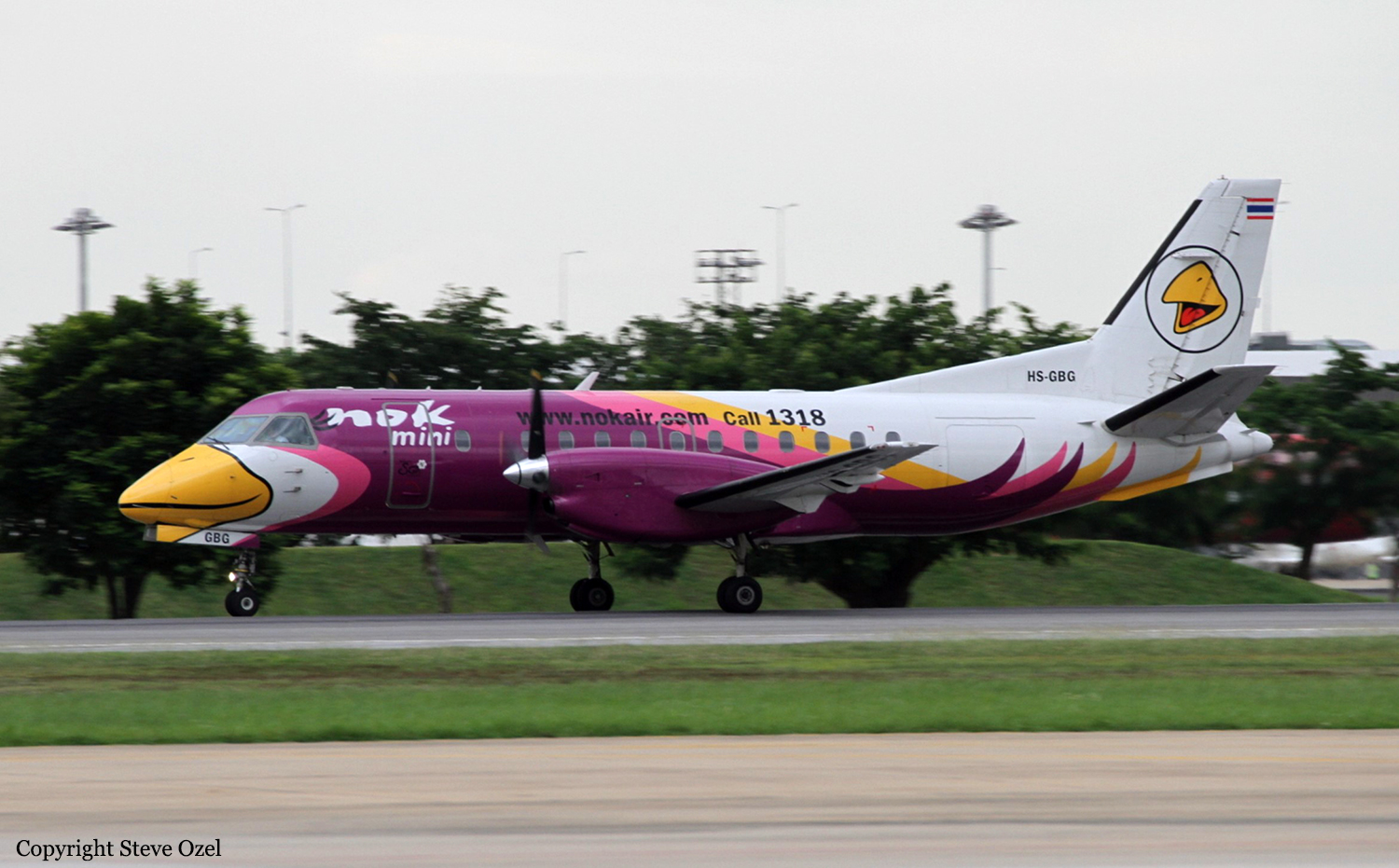
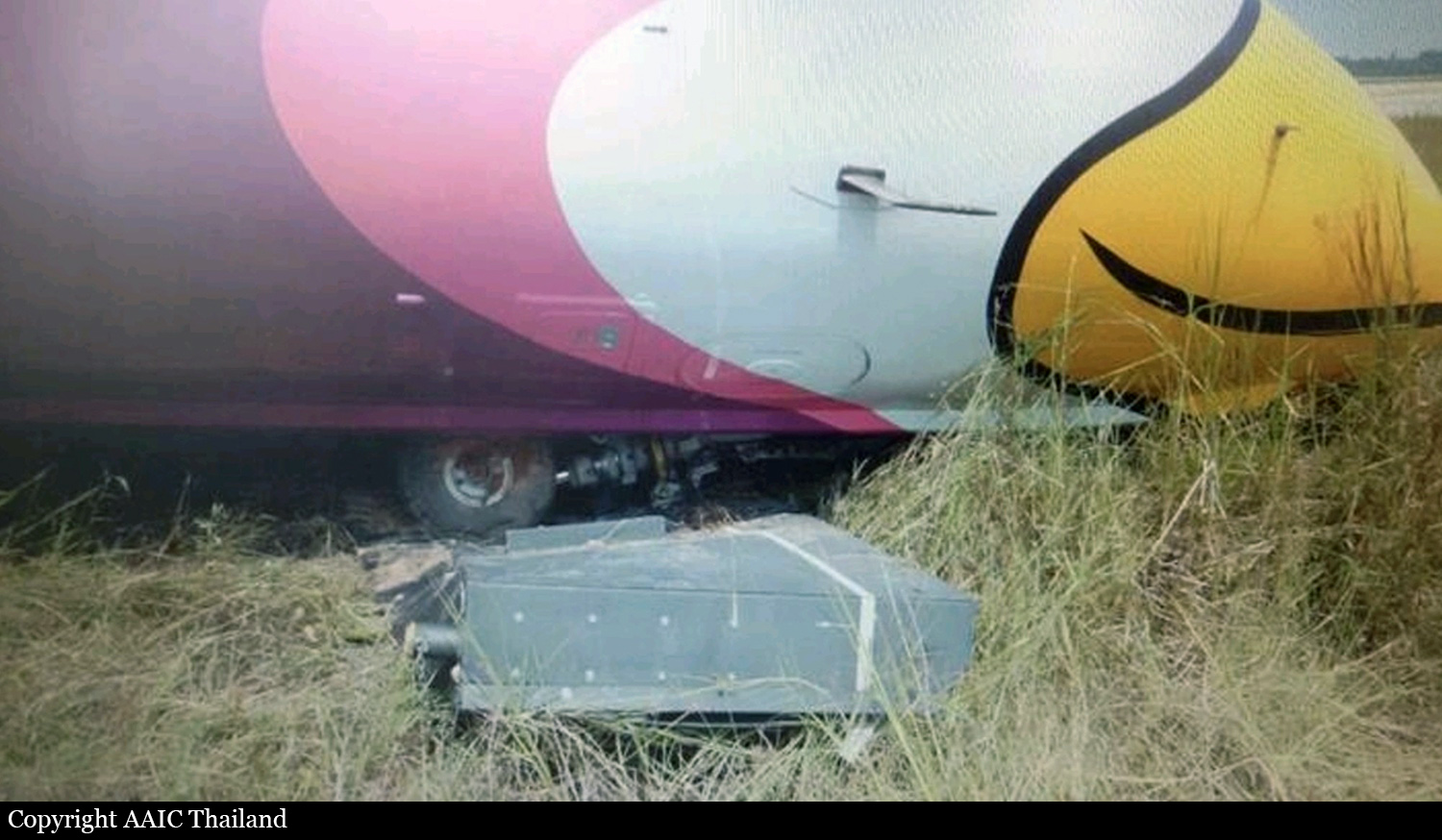
On 6 October 2013 at 07:25 hours, the pilot and the co-pilot operated the SAAB 340B aircraft of Siam General Aviation Company Limited (Co., Ltd.), nationality and registration mark HS-GBG, in operation of the domestic flight number 5E950 as Nok Mini Airlines, with one cabin crew and 25 passengers, 28 persons in total, from Chiang Mai International Airport to Udon Thani Airport. At 07:23:44 hours, after starting both engines, a single chime came on for the first time. The pilot expressed doubtfulness of the malfunction occurred. Before continuing to operate the flight, the pilot assigned the co-pilot to be a Pilot Flying responsible for taking off the aircraft. At 07:30:18 hours, after the aircraft took off from runway 36, while the landing gear was in retraction process, the single chime came on for the second time. Both pilot and co-pilot discussed that the warning was caused from losing of the hydraulic system. However, the pilot considered disregarding this problem and continuing to operate the flight because the landing gear was in down position. At 07:35:31 hours, the single chime came on for the third time. The pilot was curious about the illuminated warning light that had never happened before. At 08:37:14 hours, Udon Thani Approach cleared the aircraft to descend to 3,500 feet, perform Instrument Landing System (ILS) approach runway 30 and report over Intermediate Fix (IF). At 08:43:05 hours, the pilot reported over IF. The pilot then contacted Udon Thani Tower, as instructed by Udon Thani Approach, to request ILS approach runway 30. At 08:43:41 hours, the single chime came on for the fourth time. The pilot suspected about the repeated hydraulic system malfunctions. Both pilots were discussing on how to fix insufficient hydraulic pressure by selecting the hydraulic pump control switch to OVRD (Override) position to extend the flaps and the landing gear. The pilot said there was no time to perform the Normal Operating Procedures indicated in the Aircraft Operations Manual (AOM), and mentioned that hydraulic pressure was at zero. At 08: 45: 35 hours, while the aircraft was at five nautical miles from runway 30, the pilot contacted the Air Traffic Controller (ATC) to report the landing gear problem and request to hold at altitude 2,500 feet. While climbing to the requested altitude, the pilot took control from the co-pilot. The co-pilot was trying to retract the landing gear and the flaps but the retraction could not be done. At that time, the autopilot disengage warning came on twice. At 08:48:01 hours, both pilots followed the Abnormal Checklist, Hydraulic Light ON, Emergency Pressure Normal and Main Pressure Low in the AOM, by using hand pump (auxiliary system). They were able to extend the landing gear and retract the flaps. At 08:51:08 hours, the pilot informed the ATC that the aircraft was reaching altitude 3,500 feet. At that time, another autopilot disengage warning came on. The ATC informed the pilot that there was another aircraft requesting to take off from runway 30, the pilot requested that mentioned aircraft to wait. The ATC asked the pilot whether the aircraft required any assistance, the pilot denied and requested to return to the Very High Frequency Omnidirectional Range (VOR). Both pilots discussed about the landing gear extension, the autopilot disengagement system and the insufficiency of hydraulic pressure. At 08:52:12 hours, the single chime periodically came on for three consecutive times. At that time, the aircraft was flying over the VOR. The co-pilot requested the ATC to hold at altitude 3,500 feet over the VOR. Both pilots were discussing about the problem of the flap and the landing gear extension. The co-pilot asked the pilot whether the green light should illuminate when the landing gear was extended. After that, they were able to extend the flaps. At 08:55:00 hours, the pilot contacted the ATC to request outbound to 4 DME position in order to go to IF to perform ILS approach and also informed the ATC that the landing gear and the flaps had already been extended. The ATC asked whether the aircraft need any assistance, the pilot only requested the fuel truck for refueling the aircraft upon arrival. The co-pilot asked the pilot whether the green light would not illuminate when the landing gear was extended. Both of them made a conclusion that this problem had been occurred since take-off phase. At 09:02:52 hours, both pilots performed landing procedure. The pilot gave control to the co-pilot to control the aircraft and ordered to use full reverse thrust due to the brake may be inoperative. At 09:05:05 hours, while the aircraft was vacating from the runway to taxiway C, the pilot was controlling the aircraft. The co-pilot suggested twice to use hand pump (auxiliary system). After that, the co-pilot suggested to stop the aircraft and request for the aircraft towing tractor to tow the aircraft. At 09:06:14 hours, the co-pilot reported the ATC about the hydraulic system malfunction and the inoperative brake, and added that the aircraft might need to stop on taxiway N. The pilot said the aircraft had to stop at the present position because it could not continue. The co-pilot said that the aircraft was still moving. Then, the pilot asked whether the engines should be shut down. The co-pilot suggested turning the aircraft first. The pilot replied that he was unable to steer the aircraft and ordered to shut down the engines. At 09:07:04 hours, a triple chime came on, the co-pilot said that the aircraft hit something. The pilot gave the order to shut down the engines. The co-pilot read back the order to shut down the engines and said parking brake. The aircraft was destroyed from this occurrence. All crew and passengers were safe. The accident occurred at 09:07 hours.
Probable cause:
The Aircraft Accident Investigation Committee considered that the accident is caused by both pilots did not follow the Abnormal Procedures in the Aircraft Operations Manual to solve the hydraulic system malfunction when the single chime came on several times, during the flight. Until commencing the holding, the pilots performed the Abnormal Procedures on Hydraulic Fluid Lost but not complete and correct. After landing, the pilot taxied the aircraft from the runway to the apron, during that time, the nose landing gear steering and the brake systems were inoperative because hydraulic pressure in two accumulators decreased until unable to supply to those two systems. Subsequently, the pilots were unable to control the direction and stop the aircraft. The aircraft veered off the taxiway and hit the concrete base of the aerodrome information sign. The aircraft was destroyed.
Final Report: