Crash of a Piper PA-60 Aerostar (Ted Smith 600) in San Juan: 1 killed

Date & Time: Jun 20, 1988 at 1252 LT
Registration:
N90360
Flight Phase:
Flight Type:
Survivors:
No
Schedule:
San Juan - San Juan
MSN:
60-0212-093
YOM:
1975
Country:
Crew on board:
1
Crew fatalities:
Pax on board:
0
Pax fatalities:
Other fatalities:
Total fatalities:
1
Captain / Total flying hours:
7391
Captain / Total hours on type:
11.00
Aircraft flight hours:
2958
Circumstances:
As the aircraft was taxiing for takeoff, witnesses noted the left rear baggage door was unlocked and hanging down. A warning was relayed to the pilot via the tower, but by then the aircraft was airborne and the pilot had reported a control problem. During lift-off, the aircraft pitched up sharply and entered an immediate right bank of about 45°. As the gear retracted, the bank angle decreased to about 20°. The aircraft was reported to yaw slightly from side to side and circle to the right while climbing to about 1,000 feet. A witness (in radio contact) asked the pilot about the problem; the pilot replied the controls (ctls) were locked to one side. On advice of others, the pilot tried to control the aircraft with engine power adjustments, but the aircraft lost altitude to about 200 feet agl. Subsequently, while maneuvering, it struck a tree, then hit a utility pole and crashed. During impact the lower fuselage, which housed the flight control linkages, was badly damaged. No preimpact mechanical problem was verified concerning the flight controls, autopilot or trim. A pilot, who had previously flown the aircraft with the baggage door open, said he experienced no adverse control problems. The pilot, sole on board, was killed.
Probable cause:
Occurrence #1: airframe/component/system failure/malfunction
Phase of operation: takeoff - initial climb
Findings
1. (f) aircraft preflight - improper - pilot in command
2. (f) door - open
3. (c) flight control system - undetermined
----------
Occurrence #2: loss of control - in flight
Phase of operation: maneuvering
----------
Occurrence #3: in flight collision with object
Phase of operation: maneuvering
Findings
4. (f) object - tree(s)
5. (f) object - utility pole
----------
Occurrence #4: in flight collision with terrain/water
Phase of operation: descent - uncontrolled
Final Report:

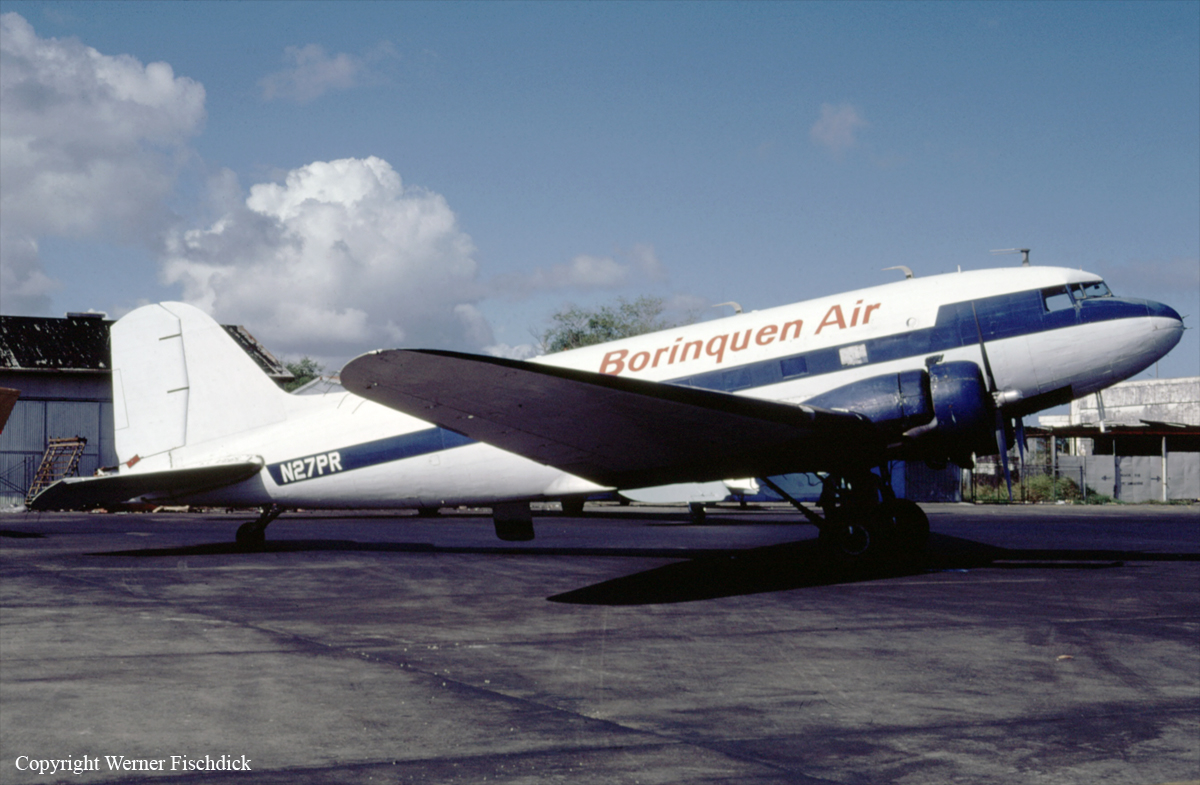
Crash of a Douglas DC-3 in San Juan: 1 killed

Date & Time: Jul 22, 1986 at 1353 LT
Type of aircraft:
Operator:
Registration:
N27PR
Flight Phase:
Flight Type:
Survivors:
Yes
Schedule:
San Juan - Basseterre
MSN:
11776
YOM:
1943
Country:
Crew on board:
2
Crew fatalities:
Pax on board:
0
Pax fatalities:
Other fatalities:
Total fatalities:
1
Captain / Total flying hours:
29100
Captain / Total hours on type:
2000.00
Aircraft flight hours:
44394
Circumstances:
Shortly after takeoff, the aircraft's climb performance began to deteriorate and the right engine started to overheat. Subsequently, the right engine was feathered and the crew attempted to return to the airport. The radio transmitter became unintelligible, so the tower personnel cleared the aircraft to land on runway 10 and asked the crew to key their mike twice, if they understood. The mike waskeyed twice. The aircraft entered a right downwind for runway 10 at a very low altitude. According to witnesses, the aircraft went into a steep bank as it was turning onto a base leg over water, the right wing tip hit the water and the aircraft cartwheeled and crashed. The copilot reported that after feathering the right engine, the vmc of 84 kts was maintained; however, he believed the aircraft stalled just prior to impact. A teardown of the right engine revealed the edge of the #8 piston and its piston rings had failed. Metal filings were found in the oil and the oil pump was scored. There was evidence of oil starvation to the crankshaft journal, as well as piston slap associated with the ring failure.
Probable cause:
Occurrence #1: loss of engine power (total) - mech failure/malf
Phase of operation: climb - to cruise
Findings
1. (f) engine assembly, ring - failure, total
2. (f) engine assembly, bearing - failure, total
3. (f) engine assembly, master rod - failure, total
4. Propeller feathering - performed
5. Precautionary landing - initiated
----------
Occurrence #2: airframe/component/system failure/malfunction
Phase of operation: approach
Findings
6. (f) comm/nav equipment, transmitter - failure, total
----------
Occurrence #3: loss of control - in flight
Phase of operation: approach - vfr pattern - base turn
Findings
7. Maneuver - initiated
8. (c) airspeed - inadequate - pilot in command
9. (c) aircraft handling - improper - pilot in command
----------
Occurrence #4: in flight collision with terrain/water
Phase of operation: descent - uncontrolled
Findings
10. (f) terrain condition - water, rough
Final Report:

Crash of a Beechcraft A100 King Air in Vieques

Date & Time: Aug 17, 1983 at 1640 LT
Type of aircraft:
Registration:
N129D
Flight Phase:
Flight Type:
Survivors:
Yes
Schedule:
Christiansted - San Juan
MSN:
B-134
YOM:
1972
Country:
Crew on board:
2
Crew fatalities:
Pax on board:
9
Pax fatalities:
Other fatalities:
Total fatalities:
0
Captain / Total flying hours:
7558
Captain / Total hours on type:
28.00
Aircraft flight hours:
9420
Circumstances:
The aircraft crash landed during a touch and go landing. The pilot said that the aircraft was caught in a windshear or violent downdraft and would not climb. He did not say why he was doing a touch and go landing with 9 passengers on board. The pilots account of the accident was: after touchdown I raised the flaps and set takeoff power. At 103 knots and with 500 feet of runway remaining the aircraft was lifted off. At about 150 feet agl and climbing I started to raise landing gear but the aircraft started to sink so I left gear down. The trees were moving violently. I felt I was caught in a windshear because of a sharp drop in airspeed and the aircraft quit performing. The aircraft continued sinking and I decided on a controlled crash to save the passengers. A witness stated he (the pilot) took off without enough power. I saw the plane with its nose high and tail low and I lost the plane when it went into the trees. The aircraft hit several citrus trees at a shallow angle of descent 1,200 feet from the end of the runway. The aircraft went 150 feet through the trees and 350 feet on the ground before stopping. All 11 occupants escaped uninjured.
Probable cause:
Occurrence #1: in flight collision with terrain/water
Phase of operation: takeoff - initial climb
Findings
1. (f) object - tree(s)
2. (c) judgment - poor - pilot in command
3. (c) lift-off - premature - pilot in command
4. (c) distance - inadequate - pilot in command
5. (c) airspeed (vlof) - below - pilot in command
Final Report:

Crash of a Britten-Norman BN-2A-6 Islander in San Juan

Date & Time: Jul 20, 1981 at 2207 LT
Type of aircraft:
Operator:
Registration:
N116DW
Flight Phase:
Survivors:
Yes
Schedule:
San Juan - Dorado
MSN:
202
YOM:
1970
Country:
Crew on board:
1
Crew fatalities:
Pax on board:
4
Pax fatalities:
Other fatalities:
Total fatalities:
0
Captain / Total flying hours:
3577
Captain / Total hours on type:
3000.00
Circumstances:
At liftoff at San Juan-Luis Muñoz Marín Airport runway 10, the twin engine airplane banked left then crashed. All five occupants were injured, the pilot seriously.
Probable cause:
Uncontrolled collision with ground during initial climb following a premature liftoff. It was determined that the airplane crashed 3 minutes and 55 seconds after a Lockheed L-1011 TriStar took off from the same runway 10.
Final Report:

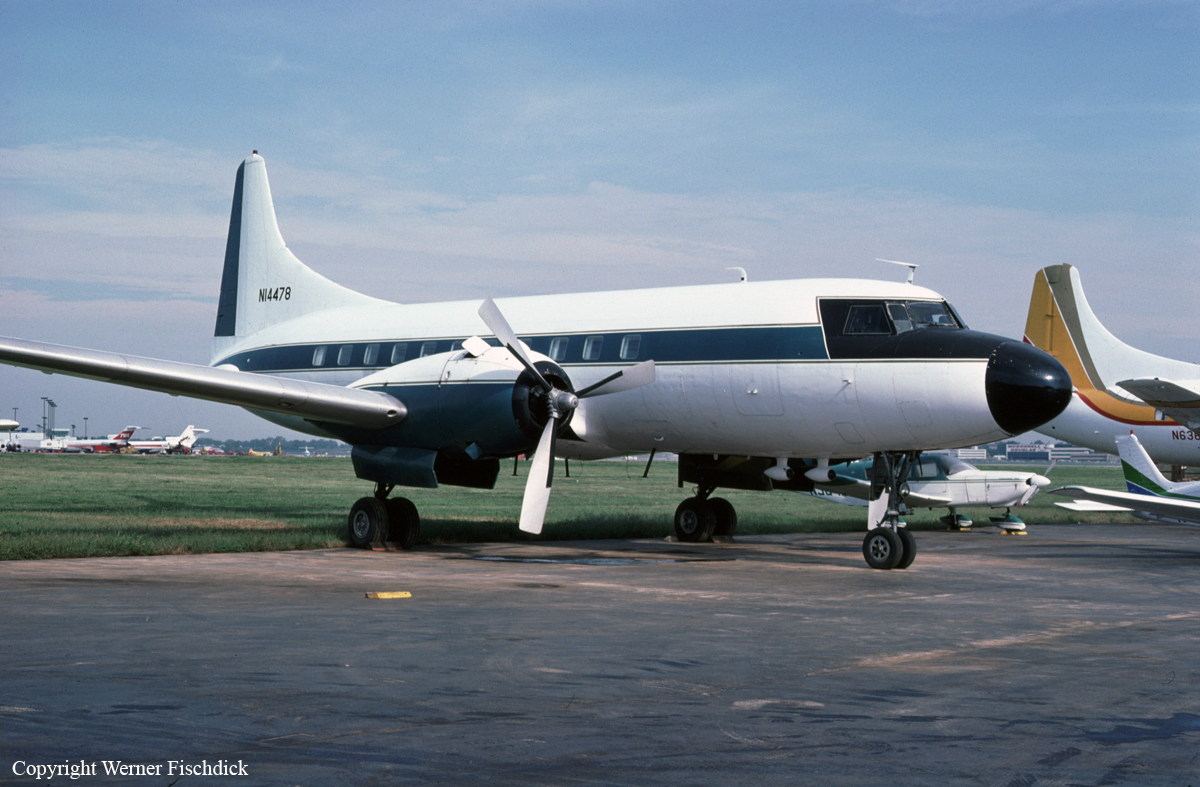
Crash of a Convair CV-440 Metropolitan in San Juan

Date & Time: Aug 26, 1979 at 0450 LT
Registration:
N14478
Flight Type:
Survivors:
Yes
MSN:
103
YOM:
1953
Country:
Crew on board:
2
Crew fatalities:
Pax on board:
1
Pax fatalities:
Other fatalities:
Total fatalities:
0
Circumstances:
On approach to San Juan-Isla Verde Airport, the right main landing failed to extend. The captain decided to complete two touch-and-go but the right main gear remained blocked in its wheel well. The decision to complete a belly landing was taken. After landing on runway 10, the airplane slid for few dozen meters before coming to rest. All three occupants escaped the scene and were not recovered. It was later reported that parts of the right main gear and the outboard five feet from the right horizontal stabilizer were missing.
Probable cause:
Suspected collision with object and subsequent wheels-up landing. The following findings were reported:
- Failed to see and avoid objects or obstructions,
- Intentional wheels-up landing,
- Forced landing on airport,
- Suspected or known aircraft damage,
- Right main landing gear struck unknown object.
Final Report:

Crash of a Beechcraft D18S in San Juan: 6 killed

Date & Time: Sep 26, 1978 at 1845 LT
Type of aircraft:
Operator:
Registration:
N500L
Survivors:
No
Site:
Schedule:
Aguadilla – San Juan
MSN:
A-415
YOM:
1948
Country:
Crew on board:
1
Crew fatalities:
Pax on board:
5
Pax fatalities:
Other fatalities:
Total fatalities:
6
Captain / Total flying hours:
4365
Captain / Total hours on type:
46.00
Circumstances:
On final approach to San Juan-Isla Verde Airport, the pilot lost control of the airplane that crashed onto several houses located in the district of Barrio Obrero, about 4 km short of runway 10 threshold. The aircraft was destroyed and all six occupants were killed. Few people on the ground were injured.
Probable cause:
Uncontrolled descent on final approach due to wake turbulences. The following contributing factors were reported:
- Failed to follow approved procedures,
- Vortex turbulences,
- Communications and navigation equipment: transmitters and/or receivers malfunction,
- Unable to communicate on terminal radar service area frequency.
Final Report:

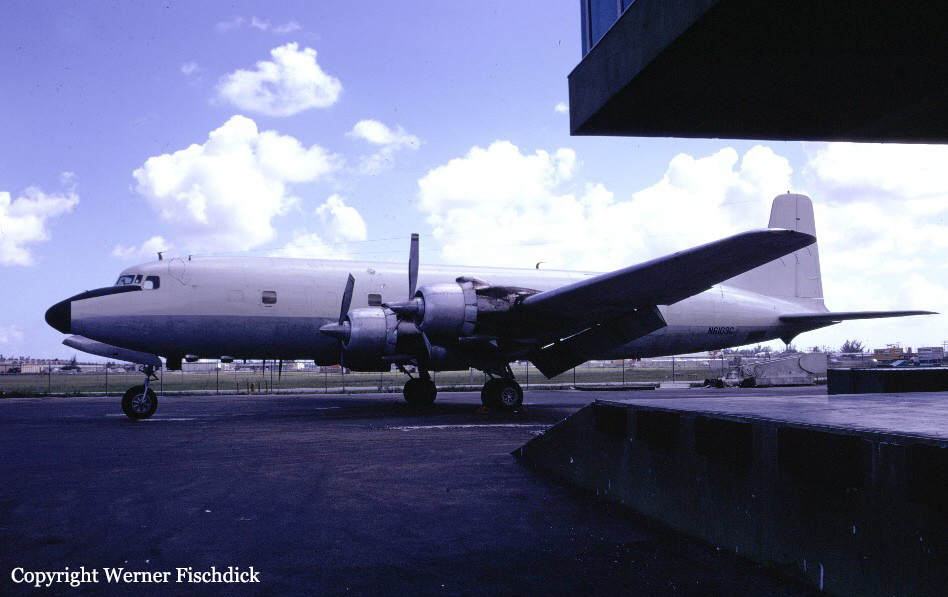
Crash of a Douglas DC-6B in San Juan

Date & Time: Feb 24, 1978 at 0826 LT
Type of aircraft:
Operator:
Registration:
N6103C
Flight Type:
Survivors:
Yes
Schedule:
Miami - San Juan
MSN:
44103/392
YOM:
1953
Country:
Crew on board:
3
Crew fatalities:
Pax on board:
0
Pax fatalities:
Other fatalities:
Total fatalities:
0
Captain / Total flying hours:
45202
Captain / Total hours on type:
10000.00
Circumstances:
On approach to San Juan-Isla Verde Airport, the crew recycled the landing gear but the right main gear remained retracted. The crew was contacted by the tower controller but the captain decided to continue the approach. The airplane partially slid on its belly for about 4,300 feet then veered off runway to the right and came to rest in a drainage ditch. All three occupants escaped uninjured while the aircraft was damaged beyond repair.
Probable cause:
Wheels-up landing after the crew failed to assure the gear was down and locked. The following contributing factors were reported:
- Failed to follow approved procedures,
- Improper emergency procedures,
- Landing gear: normal retraction/extension assembly.
Final Report:

Crash of a Britten-Norman BN-2A-6 Islander in San Juan

Date & Time: Sep 15, 1975 at 1141 LT
Type of aircraft:
Operator:
Registration:
N122DW
Flight Phase:
Survivors:
Yes
Schedule:
San Juan - Dorado
MSN:
234
YOM:
1971
Country:
Crew on board:
1
Crew fatalities:
Pax on board:
0
Pax fatalities:
Other fatalities:
Total fatalities:
0
Captain / Total flying hours:
955
Captain / Total hours on type:
105.00
Circumstances:
While on a taxiway at San Juan-Isla Verde Airport for takeoff, the airplane collided with a ground vehicle and came to rest. The pilot and the driver were uninjured while the aircraft and the vehicle were damaged beyond repair.
Probable cause:
Collision with ground vehicle while taxiing for takeoff. The following contributing factors were reported:
- Failure of the driver who crossed the active taxiway,
- Failure of the pilot to see and avoid objects or obstructions,
- Rain.
Final Report:

Crash of a Douglas DC-7CF off San Juan: 5 killed

Date & Time: Dec 31, 1972 at 1923 LT
Type of aircraft:
Operator:
Registration:
N500AE
Flight Phase:
Flight Type:
Survivors:
No
Schedule:
Miami - San Juan - Managua
MSN:
45130
YOM:
1957
Country:
Crew on board:
3
Crew fatalities:
Pax on board:
2
Pax fatalities:
Other fatalities:
Total fatalities:
5
Captain / Total flying hours:
12400
Captain / Total hours on type:
3000.00
Circumstances:
The four engine airplane was engaged in a humanitarian flight from Miami to Managua with an intermediate stop in San Juan, carrying three crew members, two passengers (among them the famous American Baseball player Roberto Clemente aged 38) and various goods for the victims of the recent earthquake in Nicaragua. The crew was cleared to takeoff from runway 08 at 1920LT. After rotation, the crew was instructed to turn to left according to departure procedures. Three minutes after takeoff, while in initial climb by night, the airplane suffered various technical problems, lost height, stalled and crashed into the sea few hundred meters offshore. Some debris were found floating on water and all five occupants were killed.
Probable cause:
It was determined that the loss of control was caused by the failure of the engine n°2 and a loss of power on engine n°3. The failure of the engine n°2 was caused by engine structure problems with master and connecting rods, cylinder assembly and piston rings. Investigations also determined that the aircraft was not properly maintained and inspected in accordance with the rules in force. Also, the flight engineer was not qualified for this type of aircraft. The following factors were reported:
- The aircraft was overloaded by 4,193 pounds (1,902 kg),
- Improperly loaded aircraft,
- Powerplant structure,
- Inadequate maintenance and inspection,
- Deficiency in the company maintenance program, violating services regulation,
- Previous damages.

Crash of a Douglas C-47A-25-DK off San Juan

Date & Time: Jun 13, 1970 at 0936 LT
Registration:
N1549V
Flight Phase:
Flight Type:
Survivors:
Yes
Schedule:
San Juan – Charlotte Amalie
MSN:
13480
YOM:
1944
Country:
Crew on board:
2
Crew fatalities:
Pax on board:
0
Pax fatalities:
Other fatalities:
Total fatalities:
0
Captain / Total flying hours:
3000
Captain / Total hours on type:
1100.00
Circumstances:
Shortly after takeoff from San Juan-Isla Verde Airport, the crew ditched the aircraft into the sea. Both occupants were rescued while the aircraft was lost.
Probable cause:
The crew intentionally ditched the aircraft for unknown reason. Investigations revealed there was no emergency landing needed and that the aircraft was capable to continue normal operations.
Final Report: