Crash of a Douglas C-47B-25-DK in Sydney

Date & Time: Jun 27, 1945 at 1346 LT
Operator:

Registration:
A65-77
Flight Phase:
Flight Type:
Survivors:
Yes
Schedule:
Sydney – Melbourne
MSN:
15931/32679
YOM:
1945
Country:
Region:
Crew on board:
3
Crew fatalities:
Pax on board:
14
Pax fatalities:
Other fatalities:
Total fatalities:
0
Aircraft flight hours:
624
Circumstances:
The aircraft commenced takeoff and reached 40 mph when a cross wind gust (stated 57 mph) lifted the starboard wing up, causing the aircraft to swing to port. The pilot straightened the aircraft and tried to take off at 100 mph which was insufficient to remain airborne. Another gust of wind hit the aircraft causing the aircraft to again swing to port. The pilot at this stage closed the engine throttles, touched down and attempted to stop the aircraft with the brakes. The slippery nature of the aerodrome surface prevented the tyres to grip, with the aircraft overshooting the end of the runway into an embankment at a ground speed of 20 mph, causing the undercarriage to collapse.
Crew:
F/O L. F. G. Bugg, pilot,
F/O P. A. McPherson, copilot,
F/O C. M. McInnes, wireless operator.
Source: http://www.adf-gallery.com.au/

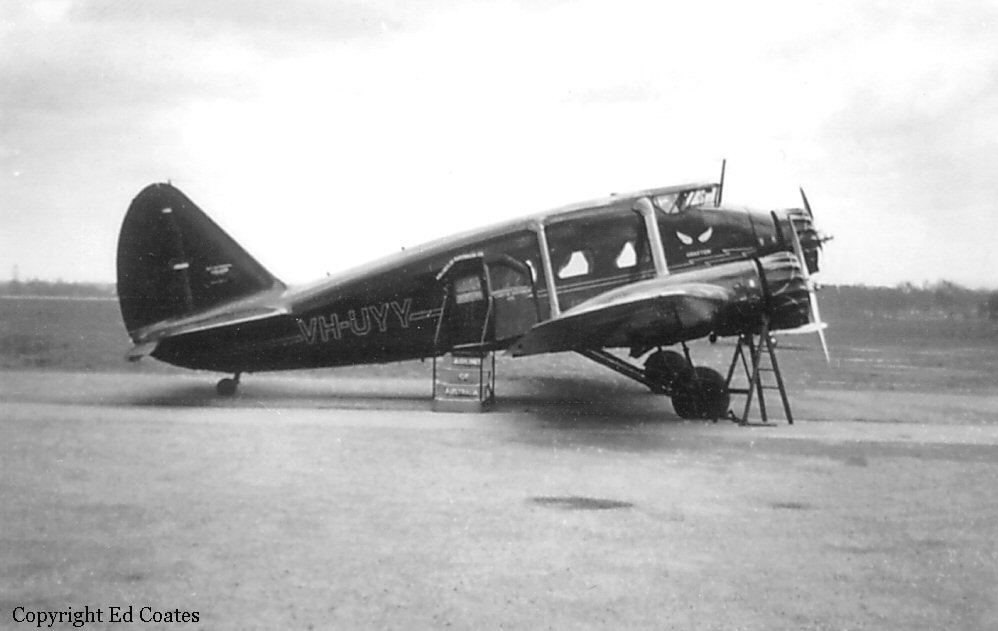
Crash of a Stinson Model A-2W near Redesdale: 10 killed

Date & Time: Jan 31, 1945 at 0825 LT
Type of aircraft:
Operator:
Registration:
VH-UYY
Flight Phase:
Survivors:
No
Schedule:
Melbourne – Kerang – Mildura – Broken Hill
MSN:
9130
YOM:
1936
Country:
Region:
Crew on board:
2
Crew fatalities:
Pax on board:
8
Pax fatalities:
Other fatalities:
Total fatalities:
10
Circumstances:
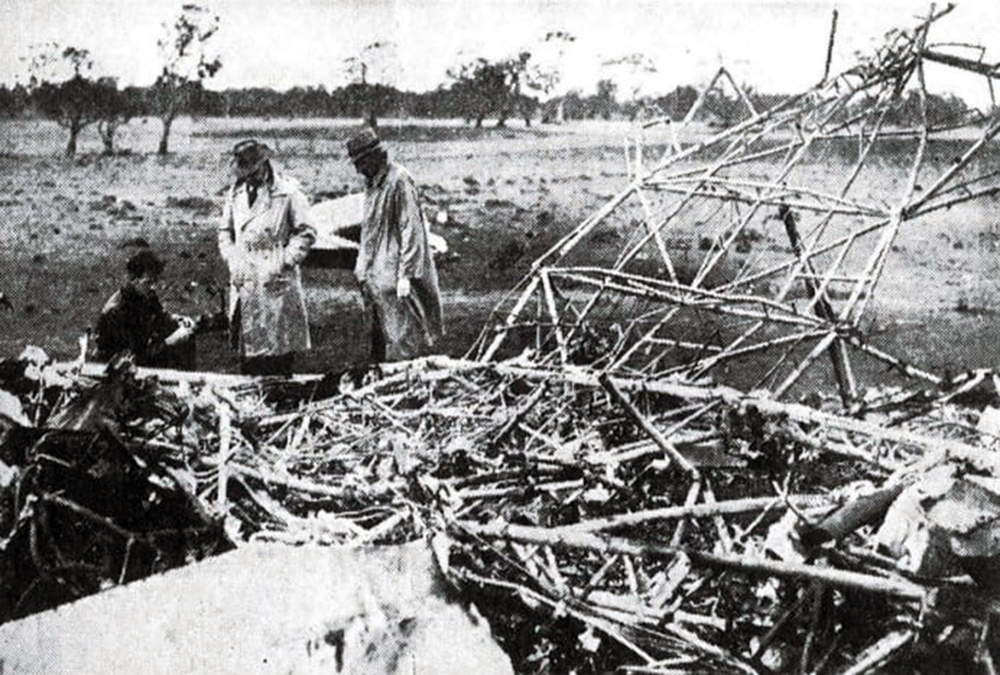
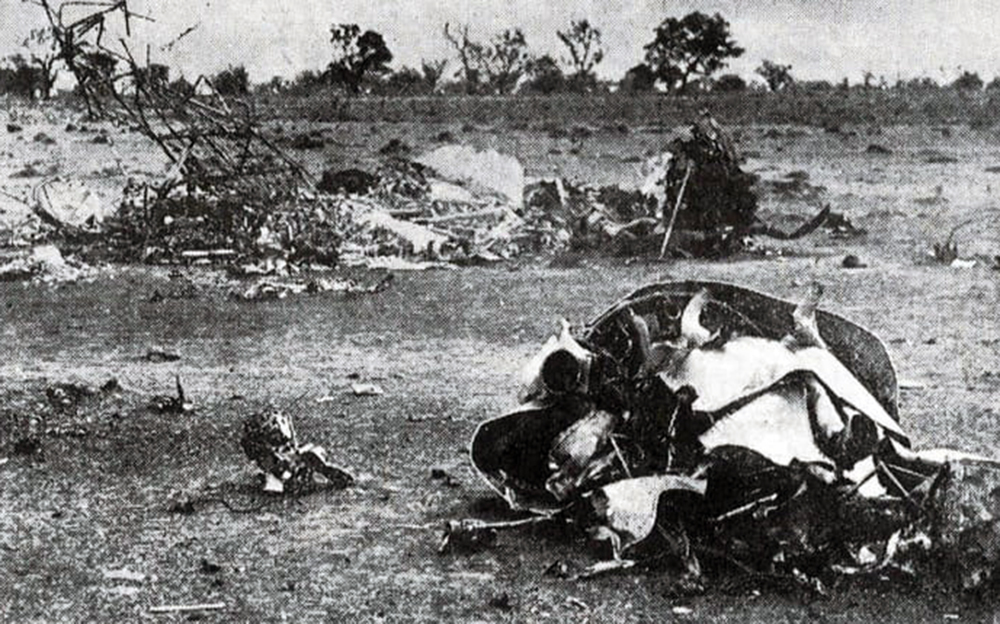
Enroute, the outer port wing broke off. The three engine aircraft christened 'Tokana' dove into the ground and crashed near Redesdale, killing all 10 occupants.
Crew:
Alan Murn, pilot,
Orville Openshaw, copilot.
Probable cause:
It appears that the physical loss of the port wing was caused by a structural failure due to the presence of fatigue cracks. Following this accident, it was decreed that all aircraft should henceforth be x-rayed for signs of cracks and structural weaknesses. The presence of turbulence and strong winds at the time of the accident was considered as a contributory factor.

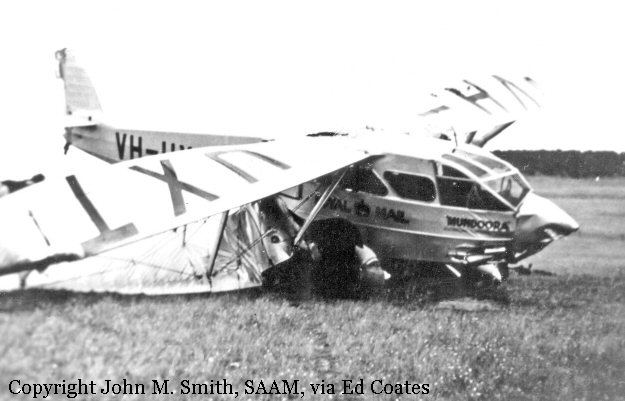
Crash of a De Havilland DH.89A Dragon Rapide near Cape Sidmouth

Date & Time: Jan 26, 1944
Operator:
Registration:
VH-ADE
Flight Phase:
Survivors:
Yes
Schedule:
Melbourne - Cairns
MSN:
6341
Country:
Region:
Crew on board:
2
Crew fatalities:
Pax on board:
4
Pax fatalities:
Other fatalities:
Total fatalities:
0
Circumstances:
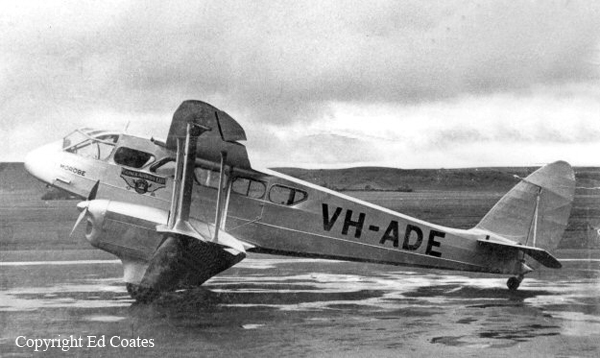
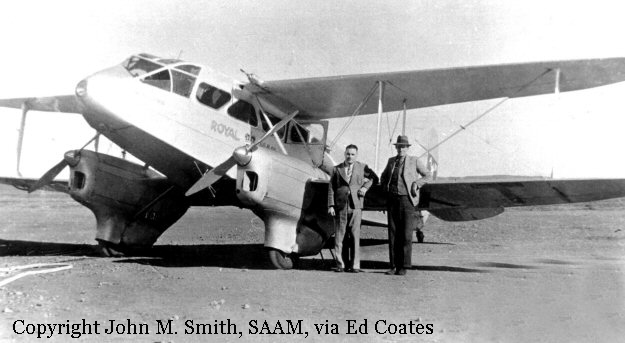
En route, crew was forced to attempt an emergency landing for unknown reason. Aircraft ended up on a beach located 13 miles south of Cape Sidmouth, near the Princess Charlotte Bay. The crew of a RAAF Catalina spotted the aircraft a day later and was able to land and to evacuate all six occupants uninjured. The aircraft was damaged beyond repair.

Crash of a De Havilland DH.89 Dragon Rapide in Wynyard

Date & Time: Aug 18, 1943
Operator:
Registration:
VH-UXT
Survivors:
Yes
Schedule:
Melbourne – Wynyard
MSN:
6346
YOM:
1937
Country:
Region:
Crew on board:
1
Crew fatalities:
Pax on board:
3
Pax fatalities:
Other fatalities:
Total fatalities:
0
Circumstances:
On touchdown at Wynyard Airport, the aircraft went out of control, veered off runway and collided with a ditch before coming to rest. While all four occupants were uninjured, the aircraft was damaged beyond repair.
Crew:
Cpt F. H. Dawson.

Crash of a Douglas DC-3-232A in Melbourne

Date & Time: Mar 19, 1943
Type of aircraft:
Operator:
Registration:
VH-ACB
Flight Phase:
Survivors:
Yes
Schedule:
Melbourne – Sydney – Brisbane
MSN:
2030
YOM:
1938
Country:
Region:
Crew on board:
3
Crew fatalities:
Pax on board:
12
Pax fatalities:
Other fatalities:
Total fatalities:
0
Circumstances:
Shortly after takeoff from Melbourne-Essendon Airport, the crew encountered technical problems with the engines. Unable to gain sufficient altitude, the captain decided to attempt an emergency landing. The airplane belly landed in an open field located 7 km north of the airport, slid for few dozen metres and came to a halt. All 15 occupants escaped uninjured. The airplane named 'Warana' was damaged beyond repair.
Crew:
Cpt D. E. Barker, pilot +2.
Probable cause:
Engine failure caused by carburetor problems.

Crash of a Lockheed L-414 Hudson I in Canberra: 10 killed

Date & Time: Aug 13, 1940 at 1015 LT
Type of aircraft:
Operator:
Registration:
A16-97
Flight Type:
Survivors:
No
Schedule:
Melbourne – Canberra
MSN:
414-1951
YOM:
1940
Country:
Region:
Crew on board:
4
Crew fatalities:
Pax on board:
6
Pax fatalities:
Other fatalities:
Total fatalities:
10
Circumstances:
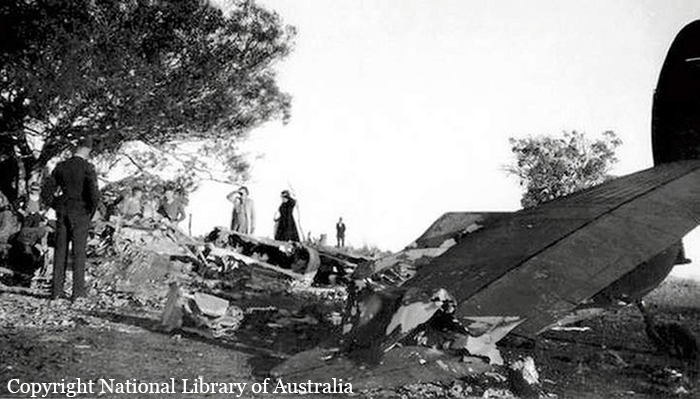
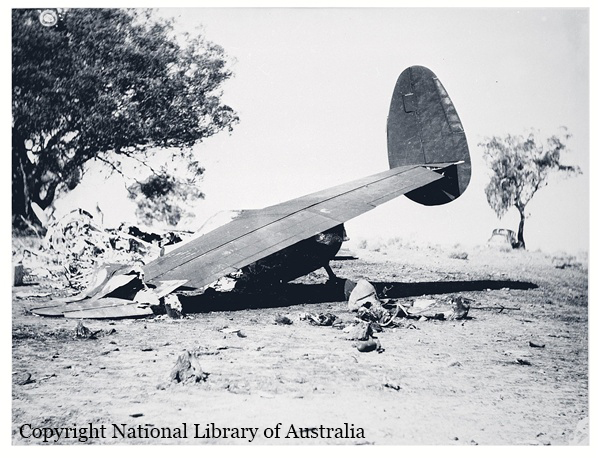
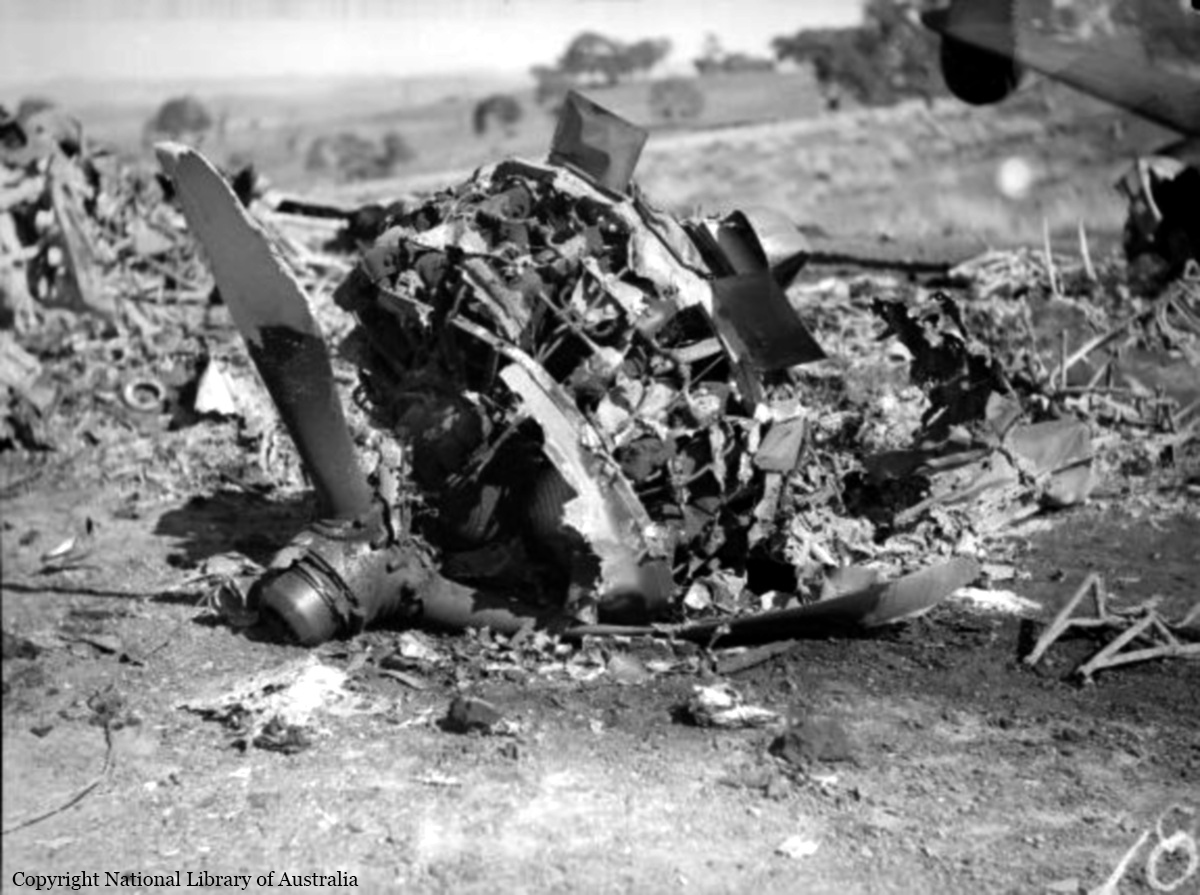
The aircraft was performing a flight from Melbourne-Moorabbin to Canberra on behalf of the Australian Government, carrying three Ministers and their staff. On final approach to Canberra in ideal weather conditions, the twin engine aircraft stalled and crashed in a huge explosion some 2 km short of runway. Emergency teams were promptly at the scene but nothing could be done to save the 10 occupants.
Crew:
F/L Robert Edward Hitchcock,
P/O Richard Frederick Wiesener,
Cpl John Frederick Palmer,
AC1 Charles Joseph Crosdale.
Passengers:
Brig Geoffrey Austin Street, Minister for the Army and Repatriation,
James Valentine Fairbairn, Minister for Air and Civil Aviation,
Sir Henry Somer Gullett, Vice-President of the Executive Council and Minister in charge of Scientific and Industrial Research,
Gen Sir Cyril Brudenell Bingham White, Chief of the General Staff,
Lt Col Francis Thornthwaite, Staff Officer to General White,
Richard Edwin Elford, Fairbairn's private secretary.
Probable cause:
The exact cause of the accident could not be determined with certainty. Nevertheless, the Board of Inquiry found that it was most likely due to the aircraft stalling on approach, resulting in loss of control at a height that was insufficient for recovery.

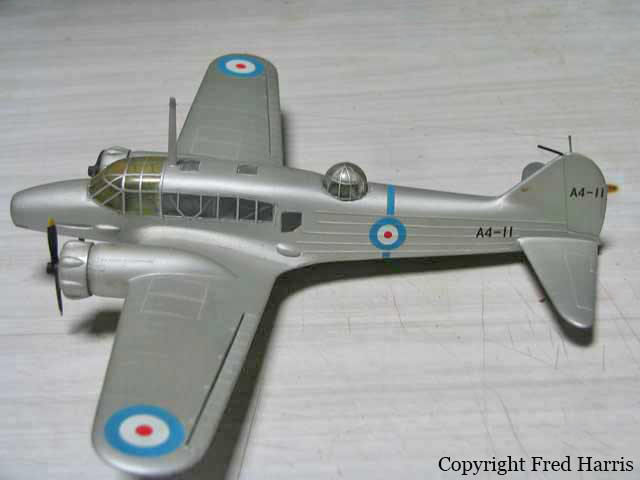
Crash of an Avro 652 Anson I off Elwood: 3 killed

Date & Time: May 2, 1939
Type of aircraft:
Operator:
Registration:
A4-11
Flight Type:
Survivors:
No
Schedule:
Laverton - Laverton
MSN:
977
YOM:
1936
Country:
Region:
Crew on board:
2
Crew fatalities:
Pax on board:
1
Pax fatalities:
Other fatalities:
Total fatalities:
3
Circumstances:
The crew was performing a training flight following recent modification on the communication systems. While returning to his base at Laverton, the crew encountered poor visibility due to fog and reduced his altitude to maintain a visual contact with the ground when the aircraft impacted the water surface and crashed into the Port Phillip Bay off Elwood, south of Melbourne. All three crew members were killed.
Crew:
P/O Ronald Davies,
Cpl Gordon Peake,
AC1 John Quinn.
Probable cause:
Too low approach in foggy conditions.

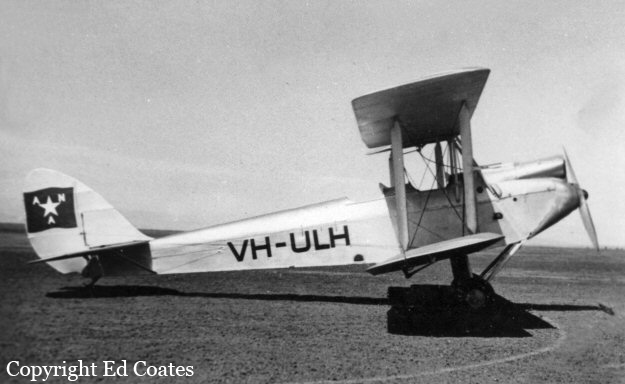
Crash of a De Havilland DH.60G Gipsy Moth in Malvern

Date & Time: Jun 9, 1937 at 1840 LT
Type of aircraft:
Operator:
Registration:
VH-ULH
Flight Phase:
Survivors:
Yes
Site:
Schedule:
Benalla – Melbourne
MSN:
Genairco 7
Country:
Region:
Crew on board:
1
Crew fatalities:
Pax on board:
1
Pax fatalities:
Other fatalities:
Total fatalities:
0
Circumstances:
The aircraft was being flown by Jack Macalister who was attempting a night landing at Essendon Airport, Melbourne. Due to heavy fog, he flew over the city looking for an alternate landing ground. Attempting to land at the Malvern Oval, he struck the spire of St. George's Anglican church and crashed. Both occupants were injured and the aircraft was destroyed.

Crash of a De Havilland DH.60G Moth in Mount Waverley: 1 killed

Date & Time: May 16, 1936
Type of aircraft:
Operator:
Registration:
VH-UII
Flight Phase:
Flight Type:
Survivors:
No
Site:
Schedule:
Melbourne - Melbourne
MSN:
895
YOM:
1929
Country:
Region:
Crew on board:
1
Crew fatalities:
Pax on board:
0
Pax fatalities:
Other fatalities:
Total fatalities:
1
Circumstances:
The pilot Norman K. Field was performing a local training flight out from Essendon Airport. While cruising at low altitude over East Oakleigh, near Mount Waverley, in the suburb of Melbourne, the single engine aircraft hit telephone wires and a chimney then crashed onto a house, bursting into flames. The pilot was killed while nobody on the ground was hurt.

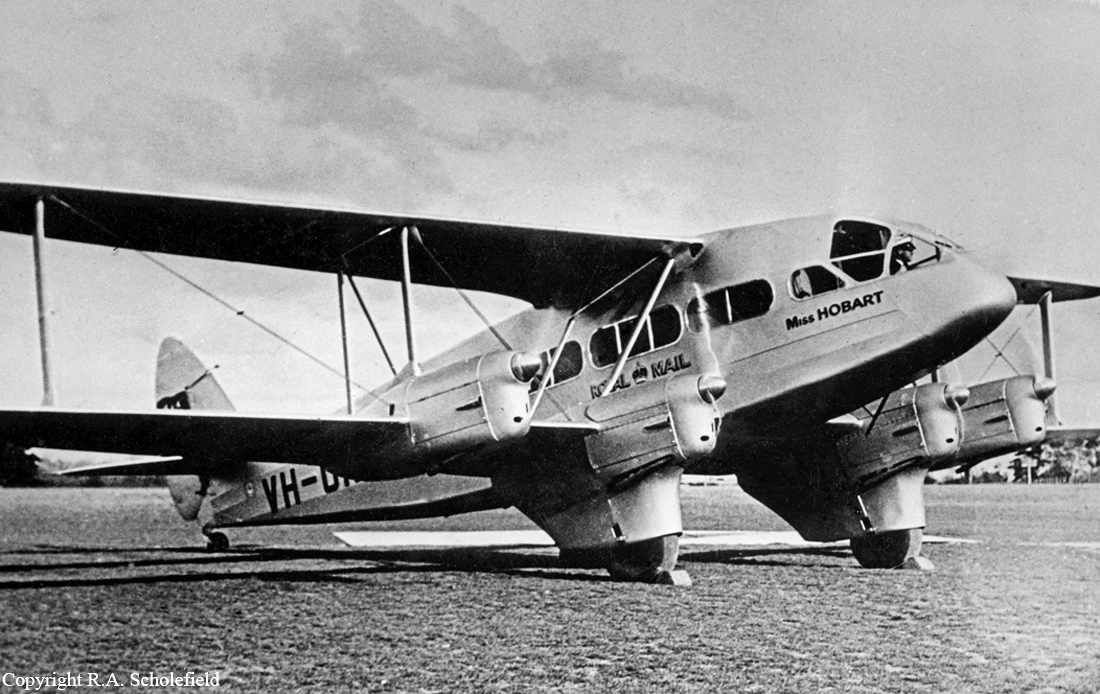
Crash of a De Havilland DH.86 in Bass Strait: 11 killed

Date & Time: Oct 19, 1934
Type of aircraft:
Operator:
Registration:
VH-URN
Flight Phase:
Survivors:
No
Schedule:
Launceston – Melbourne
MSN:
2301
YOM:
1934
Country:
Region:
Crew on board:
2
Crew fatalities:
Pax on board:
9
Pax fatalities:
Other fatalities:
Total fatalities:
11
Circumstances:
While overflying Bass Strait, the four engine aircraft named 'Miss Hobart' crashed in unknown circumstances some 16 km off the coast of the Wilsons Promontory National Park. SAR teams found some debris and oil leak at the surface of the water a day later but no trace of the 11 occupants was ever found.
Crew:
Cpt Victor C. Holyman, pilot and cofounder of the airliner,
Cpt Gilbert Jenkins.
Probable cause:
The cause of the crash could not be determined. However, one of the recommendations made by the accident investigative commission was to prohibit the changing of pilots in an aircraft while in flight, since one theory into the disappearance of VH-URN pointed to a loss of control resulting from such action by the crew.