Crash of a Cessna 207 Stationair 7 in Cayenne

Date & Time: Jan 25, 2019 at 1435 LT
Operator:

Registration:
F-OSIA
Flight Phase:
Flight Type:
Survivors:
Yes
Schedule:
Cayenne – Maripasoula
MSN:
207-0042
YOM:
1969
Crew on board:
1
Crew fatalities:
Pax on board:
0
Pax fatalities:
Other fatalities:
Total fatalities:
0
Captain / Total flying hours:
3620
Circumstances:
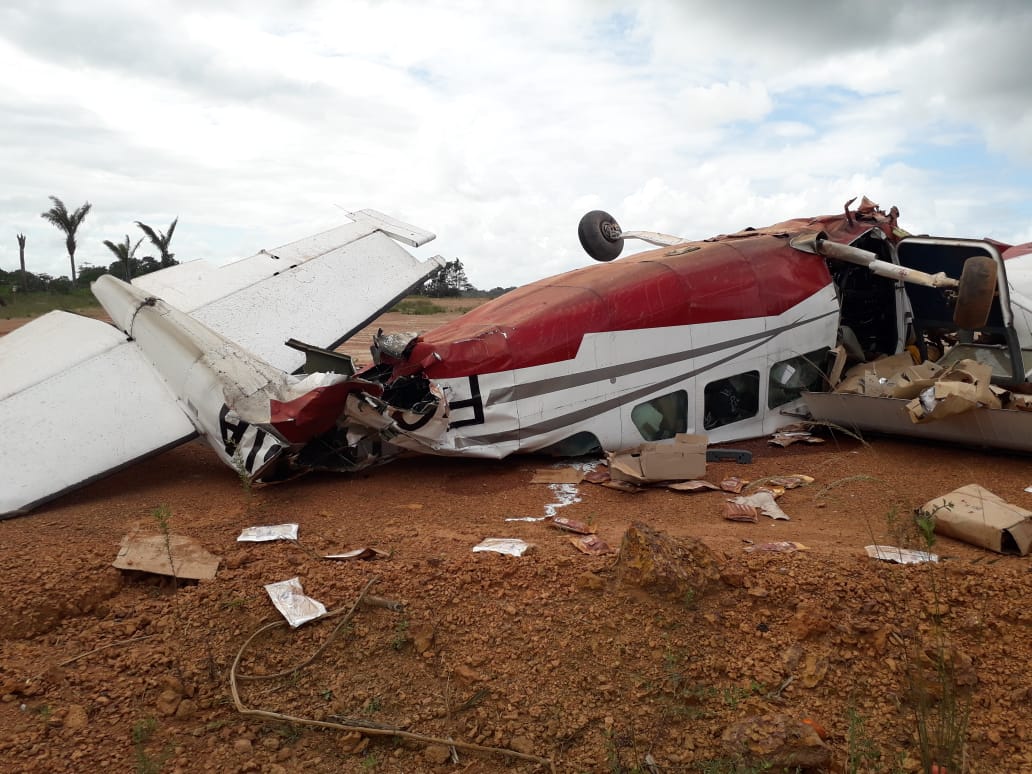
The single engine airplane departed Cayenne-Rochambeau-Félix Eboué Airport on a cargo flight to Maripasoula, carrying a load of foods on behalf of a restaurant. The pilot was sole on board. Shortly after takeoff, while in initial climb, the engine lost power. The pilot reduced his altitude and attempted an emergency landing on a known open area located near the airport. But on short final, the aircraft struck a embankment and came to rest upside down. The pilot was seriously injured and the aircraft was destroyed.
Probable cause:
The flight was undertaken with an airplane whose center of gravity was beyond the rear center of gravity limits and a mass greater than the maximum take-off mass. The load was not secured. As a result, the performance of the aircraft was degraded and piloting made more difficult. The BEA investigation did not reveal any major failure that could explain a loss of power. Engine performance may have been lower than the manufacturer's standards, due in particular to improper adjustment of the mechanical fuel pump, probably resulting from unsuitable maintenance. This defect was most likely already present on previous flights. It is likely that the power required for the initial climb was greater than what the engine could deliver. This brought the aircraft into a situation where the speed gradually decreased. When the pilot turned, the stall warning sounded and the pilot sensed the engine was losing power.
Final Report:

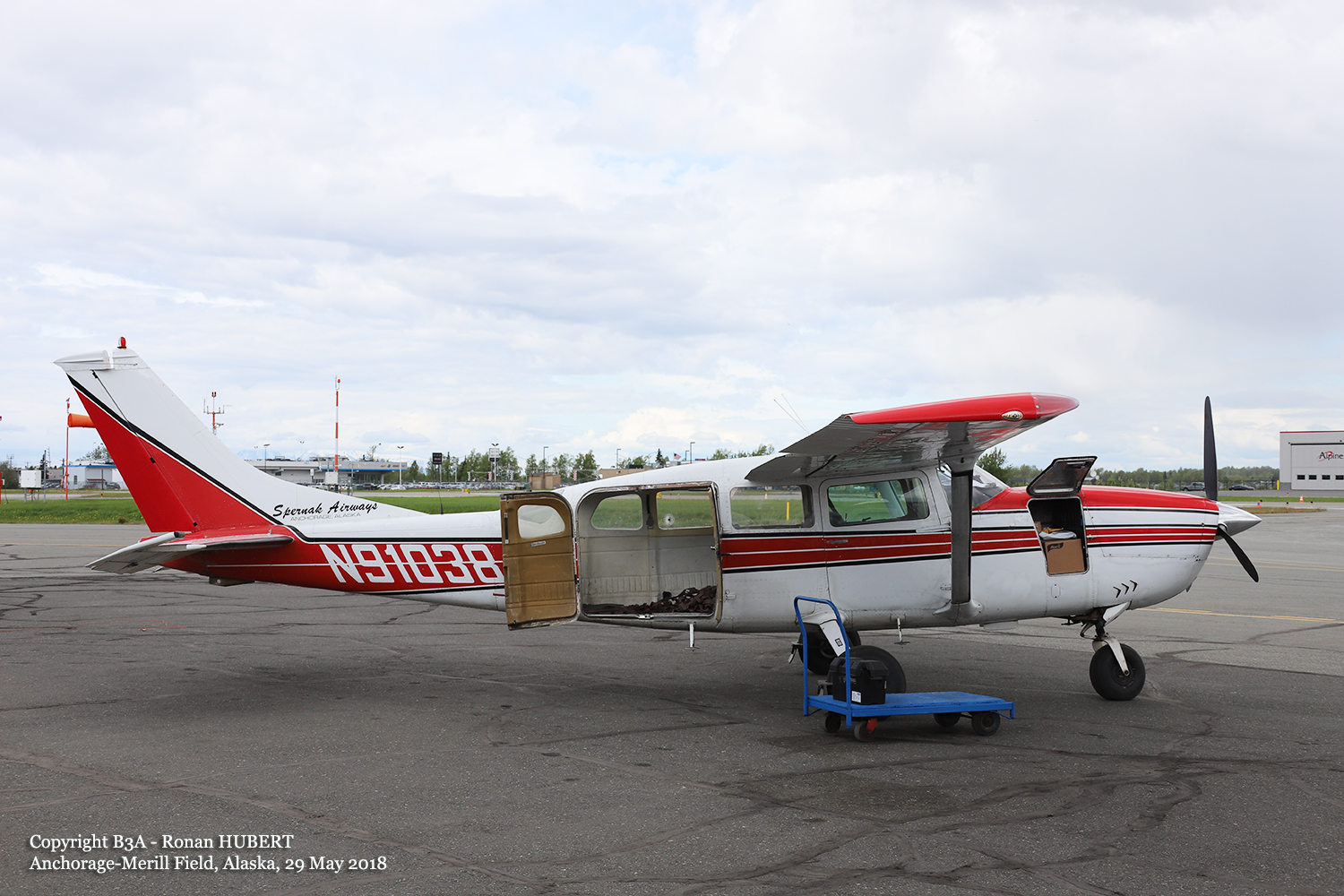
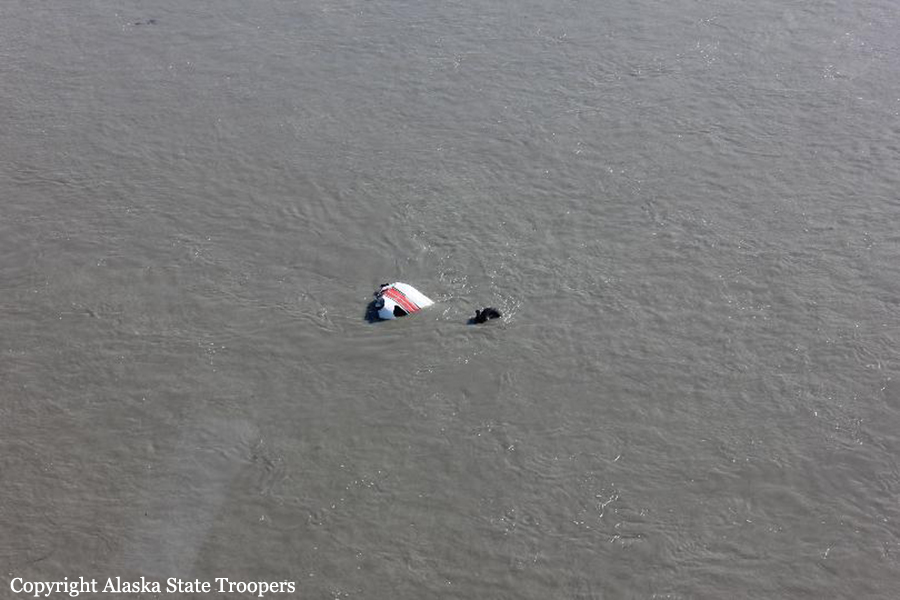
Crash of a Cessna 207 Skywagon in the Susitna River: 1 killed

Date & Time: Jun 13, 2018 at 1205 LT
Operator:
Registration:
N91038
Flight Phase:
Flight Type:
Survivors:
No
Schedule:
Anchorage - Tyonek
MSN:
207-0027
YOM:
1969
Crew on board:
1
Crew fatalities:
Pax on board:
0
Pax fatalities:
Other fatalities:
Total fatalities:
1
Captain / Total flying hours:
1442
Captain / Total hours on type:
514.00
Aircraft flight hours:
31711
Circumstances:
Two wheel-equipped, high-wing airplanes, a Cessna 207 and a Cessna 175, collided midair while in cruise flight in day visual meteorological conditions. Both airplanes were operating under visual flight rules, and neither airplane was in communication with an air traffic control facility. The Cessna 175 pilot stated that he was making position reports during cruise flight about 1,000ft above mean sea level when he established contact with the pilot of another airplane, which was passing in the opposite direction. As he watched that airplane pass well below him, he noticed the shadow of a second airplane converging with the shadow of his airplane from the opposite direction. He looked forward and saw the spinner of the converging airplane in his windscreen and immediately pulled aft on the control yoke; the airplanes subsequently collided. The Cessna 207 descended uncontrolled into the river. Although damaged, the Cessna 175 continued to fly, and the pilot proceeded to an airport and landed safely. An examination of both airplanes revealed impact signatures consistent with the two airplanes colliding nearly head-on. About 4 years before the accident, following a series of midair collisions in the Matanuska Susitna (MatSu) Valley (the area where the accident occurred), the FAA made significant changes to the common traffic advisory frequencies (CTAF) assigned north and west of Anchorage, Alaska. The FAA established geographic CTAF areas based, in part, on flight patterns, traffic flow, private and public airports, and off-airport landing sites. The CTAF for the area where the accident occurred was at a frequency changeover point with westbound Cook Inlet traffic communicating on 122.70 and eastbound traffic on 122.90 Mhz. The pilot of the Cessna 175, which was traveling on an eastbound heading at the time of the accident, reported that he had a primary active radio frequency of 122.90 Mhz, and a nonactive secondary frequency 135.25 Mhz in his transceiver at the time of the collision. The transceivers from the other airplane were not recovered, and it could not be determined whether the pilot of the Cessna 207 was monitoring the CTAF or making position reports.
Probable cause:
The failure of both pilots to see and avoid the other airplane while in level cruise flight, which resulted in a midair collision.
Final Report: